Latin and the other languages used to designate botanical names can make the mundane seem compelling, and the unpleasant sound appealing. ‘Nasturtium’ certainly sounds better than ‘nose twister’, which refers to the reaction to the unpleasant fragrance of the flowers. Horticultural professionals can use such language to our advantage, and for more than designating real genera and specie. ‘Necrodendron’ certainly sounds more interesting than ‘dead tree’, and is less likely to offend tree huggers. ‘Pseudodendron’ is a euphemism for ‘fake tree’. Brent, my colleague in Southern California, sometimes points them out in interiorscapes, or worse, in real exterior landscapes. We sometimes analyze them as if they are real. We both are amused to see fake bananas or fake pineapples, or both, hanging from fake cocoanut palms. Sometimes, someone who overhears our conversation feels compelled to inform us that the pseudodendrons that we are so intrigued by are fake. Sometimes, someone…
Yucca brevifolia is commonly known as Joshua tree. It is native to the Mojave Desert. It is very rare in home gardens because it is so extremely susceptible to rot with irrigation, or even where it gets more rain than it is accustomed to in the Mojave Desert. Besides, it is very difficult to work with, and even with impeccable maintenance, even the healthiest of specimens develop weirdly and unpredictably irregular form that too many find to be unappealing. Nonetheless, whether appealing or otherwise, whether in a landscape or in the wild, it is a fascinating species of Yucca. Rhody and I encountered these Joshua trees and many others west of Boron last Thursday.
1. Joshua tree is the tallest tree in this region, but does not get as tall as utility poles. The scarcity of moisture limits vegetation here. That is not wildlife in the lower right corner.
2. Zooming in on the specimen to the right in the previous picture reveals that there are many more in the distance. Many are solitary. Most live socially, in otherworldly forests.
3. If there were an exemplary Joshua tree, it might look something like this. The shabby specimen in the background to the right is also rather typical. They are weirdly variable.
4. These short and rigid leaves are extremely sharp! They look somewhat like the foliage of common giant yucca, but are very difficult to handle. Joshua tree is better in the wild.
5. Old foliage decays very slowly. It folds back and lingers on the limbs like this for many years. Joshua tree grows very slowly, so this foliage may have been like this for decades.
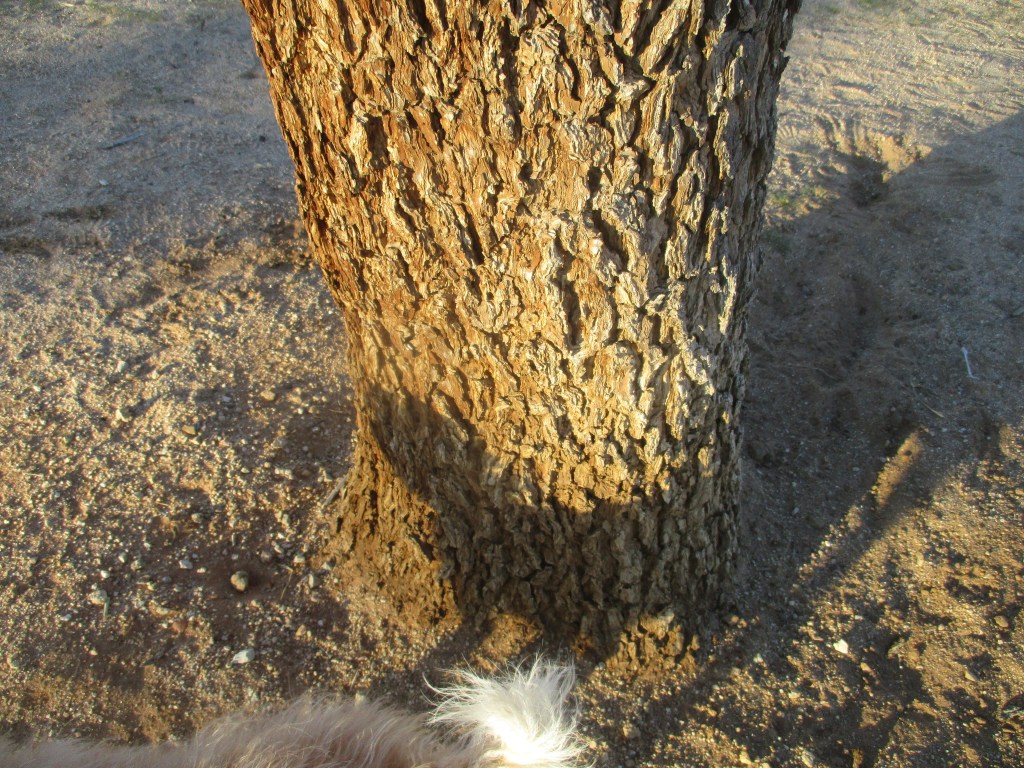
6. Trunks eventually shed deteriorated old leaves as they widen and develop this roughly textured exterior that resembles bark. Again, that is not wildlife in the lower left corner.
Thisis the link for Six on Saturday, for anyone else who would like to participate:
Big glossy leaves of the familiar rubber tree like a sunny spot in the home, away from sources of heat.
Pruning a rubber tree, Ficus elastica, in the home takes a bit of acrobatics, since any wound immediately bleeds staining white latex. While pruning with one hand, the other hand must catch the latex with a rag. A third hand is needed to catch the bleeding piece of stem that gets pruned away. To make things more complicated, all three hands should avoid the potentially caustic latex. Even if it is harmless to the skin, it is a painful irritant if it gets into the eyes.
Young trees have larger glossy leaves that may be as long as a foot and half as broad, although most are about half as long and broad. Many modern cultivars have variegated or bronzy foliage. Where it gets enough sunlight as a houseplant, rubber tree will eventually need to be pruned for confinement. After all, in the wild, it can get more than a hundred feet tall and almost two hundred feet tall, with trunks more than six feet wide! In the garden, it needs shelter from frost. Aerial roots can develop in humid environments.
Air layering big houseplants, like these lanky rubber trees, keeps them proportionate to limited space while also propagating new plants.
Most of the favorite houseplants are grown for dense evergreen foliage. Stems of Chinese evergreen, anthuriums, bromeliads and most ferns should never be seen. Yet, there are many houseplants that grow like small trees or coarse vines. Various ficus, dracaenas and philodendrons can get too big for their situations if not pruned. Palms can not be pruned down, so can only be moved or given to friends with higher ceilings.
Pruning and discarding overgrown but slowly growing stems seems like such a waste. Technically, stems from almost any overgrown houseplant can be rooted as cuttings. In reality though, most rot before they develop roots.
‘Air layering’ is probably the most efficient technique of propagation of houseplants from overgrown stems. It involves rooting the stems while still attached to the original plant. In the end, an unwanted stem gets pruned away as a freshly rooted new plant.
Air layering needs a bare and manageable section of stem that is at least a few inches long. This section does not necessarily need to be where the stem will eventually get pruned away from. It can be a bit higher (or farther out from the origin) if a shorter copy (new rooted plant) is desired. The extra length of stem in between can be pruned out when the copy gets separated.
The stem should be notched up to a third of the way through. This notch will develop roots better if rubbed with rooting hormone. A big wad of wrung out damp sphagnum moss a bit larger than a softball then gets wrapped around the notch, and then wrapped in plastic film. A cut up freezer bag should work nicely. The bag should be held in place with plant tie tape or something as simple as electrical tape, wrapped firmly around the stem above and below the sphagnum moss. Smaller stems can get smaller wads of sphagnum moss.
Unfortunately, there is no way to disguise the unappealing wrapped moss during the few months that may be needed for roots to develop. Eventually, roots become visible through the plastic, or the moss becomes firm with roots. The newly rooted stem can then be cut below the roots, unwrapped and potted as a new copy of the old houseplant. The stub below can be pruned away, or left to develop new shoots.
Although relevant to the same disdainful weed that I wrote about earlier in https://tonytomeo.com/2018/10/24/horridculture-weed/ this article is about a completely different topic. That is why it is not a sequel. Nor is it a rant. It is instead an explanation of why so many of us choose to not use marijuana. It was written by an admired colleague who has much more experience with such matters than I do, and is therefore much more qualified to write about it. So, for today, I will deviate from standard procedure by refraining from my typical Wednesday rant, and by posting an article written by someone else. In fact, you can ignore the title above. This article below already has one.
Should the followers of Christ use Cannabis?J.S.Wilkinson 2016
Cannabis seems to keep coming up in conversations people around me are having. Watching the current trends of well-meaning people giving themselves to…
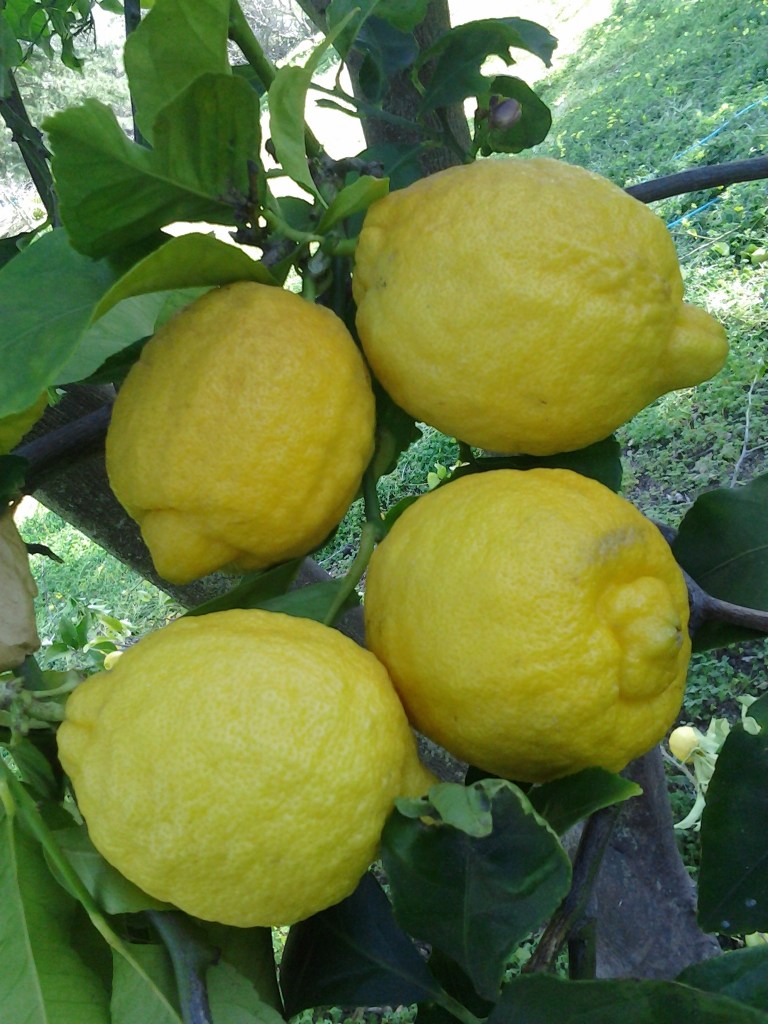
Of all the cultivars of citrus that are popular for home gardens, the ‘Meyer’ lemon is likely the most popular. However, it is not overly common in markets. That may be an incentive for growing it at home. Technically, it is not totally lemon. It is an odd hybrid of lemon and orange. Hence, its fruit has a distinctly rich flavor, but a bit less acidity than other lemons.
‘Meyer’ lemon is distinct among citrus trees. It grows more like rigid shrubbery, with a few irregular trunks. Because it naturally develops compact form, it does not require dwarfing understock. Most old trees therefore grew from cuttings on their own roots. Modern trees commonly grow on understock though, so can develop suckers below their graft unions.
‘Meyer’ lemon fruit is abundant during autumn and winter. Minor quantities ripen through spring and summer also. All ‘Meyer’ lemon trees from nurseries nowadays are ‘Improved Meyer’, whether or not their labels say so. Their improvement was selection of stock that lacks a particular tristeza virus that was inherent to the original cultivar prior to the 1940s.
Winter is the primary season for citrus fruits. Some ripen significantly earlier. Some ripen significantly later. Many citrus trees continue to produce a few fruits randomly throughout the year. Nonetheless, citrus fruits are collectively most abundant during winter. It seems odd that trees that are vulnerable to frost are so productive during the coolest of weather.
Citrus trees are fortunately only marginally susceptible to frost in only the cooler climates here. They mostly recover from minor damage where they get a bit too much chill. Those in coastal climates may never experience damaging frost. Some types of citrus are more resilient to frost than others. Vulnerable citrus trees may need frost protection when new.
Home garden citrus trees are different from orchard trees. Most orchard trees, particularly older trees, are ‘standard’ trees. They grow on standard rootstock that allows them to get larger, and therefore produce more fruit than ‘dwarf’ trees. Most home garden citrus trees are ‘dwarf’ trees. They grown on dwarfing rootstock that keeps them dense and compact.
Furthermore, the many cultivars of citrus that are available for home gardening are more diverse than those that commonly grow in orchards. ‘Lisbon’ lemon is very profuse within season, so is preferable for orchards. ‘Eureka’ lemon, although a bit less productive, may be a preferable option for home gardens because it produces a few random fruit all year.
Now that citrus are in season, some last longer than others. Grapefruit can hang on their trees for months. They actually develop richer flavor with mellowing tartness as they age. Conversely, Mandarin orange and tangerine are the most perishable citrus. Because the rind is loose, their pulp within begins to oxidize after ripening. Lime eventually gets pithy.
Although this is the time of year to enjoy fresh citrus fruits, it is not the season to do much else with citrus trees. Pruning and application of fertilizer will be more timely after winter. Premature pruning or use of fertilizer is likely to stimulate premature growth. Such growth either languishes through cool weather, or succumbs to mild frost.
The big wide medians of San Vicente Boulevard in western Los Angeles had been lacking trees since the Red Car Streetcar rails were removed decades earlier. My colleague, Brent Green, had been wanting to add trees to the medians since he was a little kid, and then became intent on doing so after he became a renowned landscape designer in the region.
At about the same time, I was a nurseryman. In my work, it was not uncommon to dispose of a few items that were unsaleable. Sometimes there were entire crops of unsaleable plants; and in 1997, I needed to dispose of a group of coastal redwoods that had very minor kinks in their trunks.
That gave Brent an idea.
He wanted me to bring some of the trees to Los Angeles to plant them in the medians of San Vicente Boulevard just south of the Miracle Mile District…
Just before getting back here to reblog this, I encountered a big herd of crows dispersing trash from a trash receptacle that they should not have gotten into. Someone stuffed too much trash into the receptacle, so that the door was stuck open.
Those of us who work in public landscapes find litter in the strangest of places. It gets everywhere. It is not necessarily put everywhere. It just has a sneaky way of getting everywhere. By nature, litter blows about and gets washed into creeks and rivers that flow out to the bays and oceans. Of course, there is much more litter in public spaces with the most traffic, such as city parks, than there is out in remote places where fewer people go, such as hiking trails in state parks. People are not necessarily slobs, and most put their trash into the appropriate receptacles. There just happens to be more litter where people are because that is where most of the trash that becomes litter happens to originate. Most litter that accumulates on the sides of roadways was blown there from the open beds of pickups. Not much is discarded out…
There is not much time to finish all of the winter chores. Deciduous plants defoliate a bit late and refoliate a bit early. They do not stay bare for long. Roses were a priority for this week. We managed to prune all of them, and relocate several of them as well. Their buds are plump but still dormant. Although the weather has been pleasantly mild for the past several days, it has been more seasonably cool and even frosty for night. Seriously, there was genuine frost and even ice! It would not impress those who are familiar with wintry weather, but it makes our work a bit less rushed. All that we need now is a bit more rain.
1. Pruning roses is one of my favorite winter chores. It is almost as much fun as pruning fruit trees. Just a few are my favorite hybrid tea roses though. This is merely understock.
2. Carpet roses are the most common roses in our landscapes. I loathe them. However, I have been enjoying some of them. The smaller of two big colonies generated this debris.
3. Salvia greggii appeared mysteriously near some of the roses last year. Seriously, it is a mystery. I like it enough to layer the stems from the right for little new plants to the left.
4. White fir appeared mysteriously behind the Salvia greggii just recently. It lacks roots! Excellent! It can not damage pavement or septic systems! I should propagate more of it.
5. Angel’s trumpet has been confused since it arrived. It bloomed before developing new foliage last spring, stopped blooming before autumn, and now, is trying to bloom again!
6. Winter is famously mild here. Nonetheless, the weather sometimes gets cool and even frosty. On rare occasion, it gets cold enough for icicles. This appeared here on January 2.
This is the link for Six on Saturday, for anyone else who would like to participate:

 Latin and the other languages used to designate botanical names can make the mundane seem compelling, and the unpleasant sound appealing. ‘Nasturtium’ certainly sounds better than ‘nose twister’, which refers to the reaction to the unpleasant fragrance of the flowers. Horticultural professionals can use such language to our advantage, and for more than designating real genera and specie. ‘Necrodendron’ certainly sounds more interesting than ‘dead tree’, and is less likely to offend tree huggers.






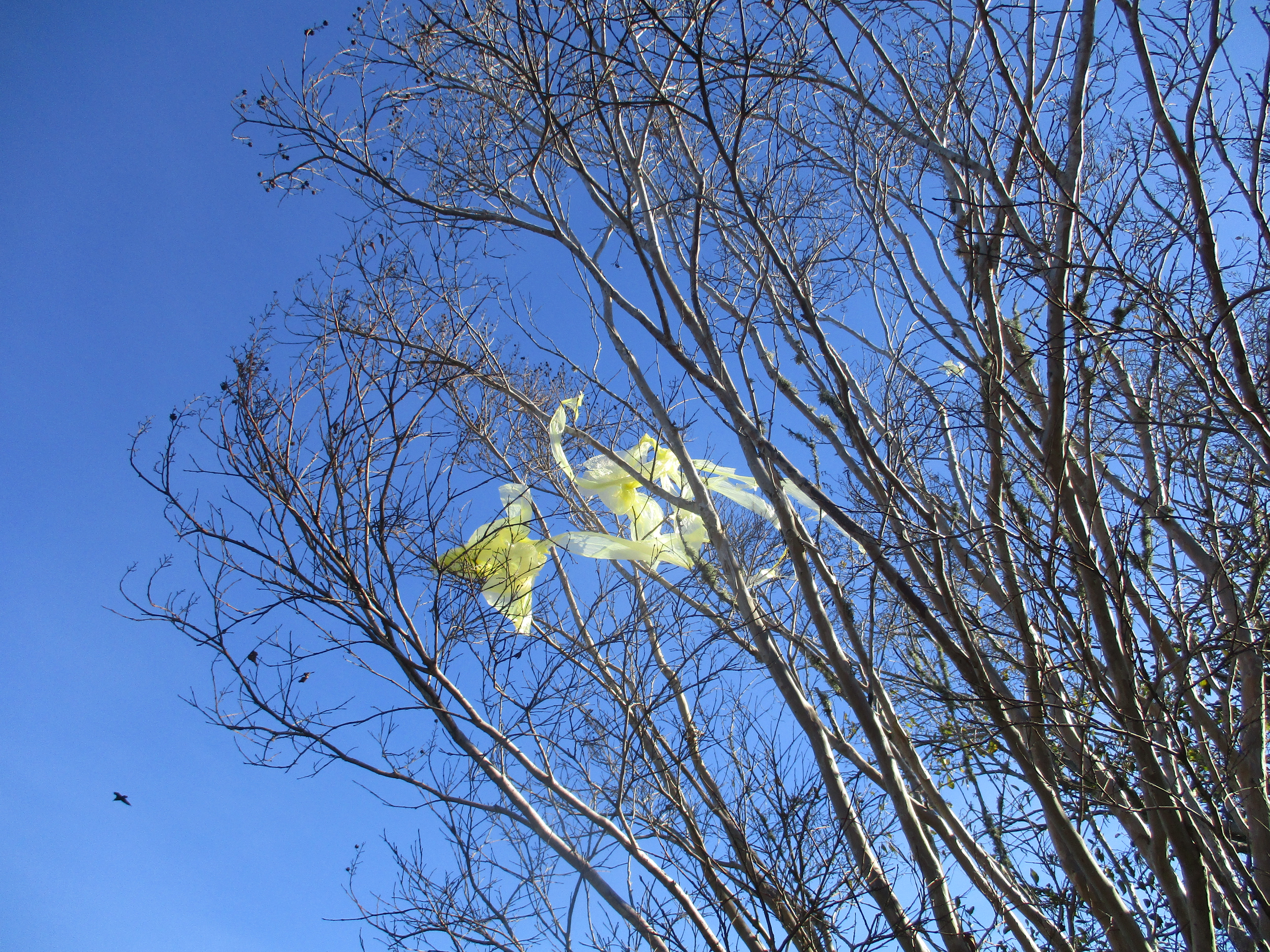 Those of us who work in public landscapes find litter in the strangest of places. It gets everywhere. It is not necessarily put everywhere. It just has a sneaky way of getting everywhere. By nature, litter blows about and gets washed into creeks and rivers that flow out to the bays and oceans.


 Tony Tomeo