Horridculture – Stinky Flowers

Three years later, this particular dragon lily is right outside, and continues to bloom annually. It remains canned until I find an appropriate situation for it, and even then, it will likely remain potted for containment. I do not want it to naturalize.

tonytomeo's avatarTony Tomeo

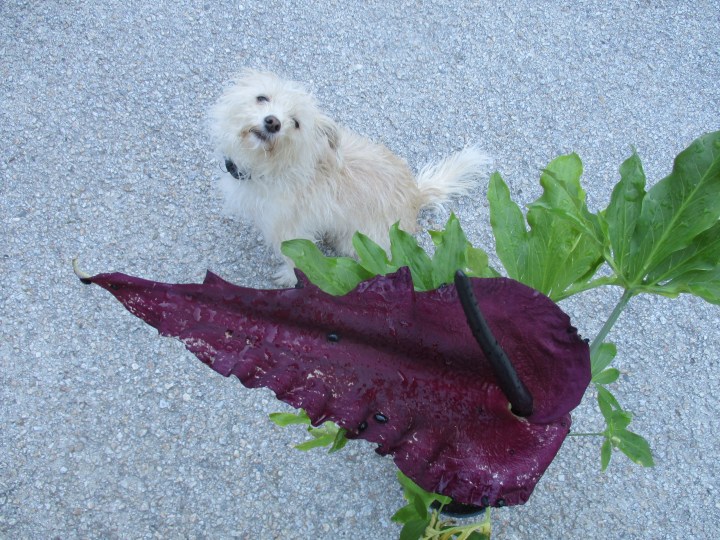
P00527-1 Rhody was not impressed, and he is an expert on fragrance.

Dracunculus vulgaris – dragon lily. It was featured in the gardening column for next week, both as an illustration for the main topic, and as the ‘highlight’ species. It is as unappealing as the name and the pictures suggest, but it sure is interesting. It has several more equally unappealing common names. We know it as ‘death arum’ because that is the first name we came up with.

Besides, it smells like death. Yes, it stinks. It does so to attract flies for pollination. Actually, it attracts quite a few annoying insects. I can not explain why, but insects who congregate around stinky flowers are as unappealing as the fragrance that draws them. They are certainly very different from the appealing bees and butterflies who pollinate flowers with appealing fragrance.

The first of these death arums mysteriously appeared in…

View original post 179 more words
Punchbowl Godetia

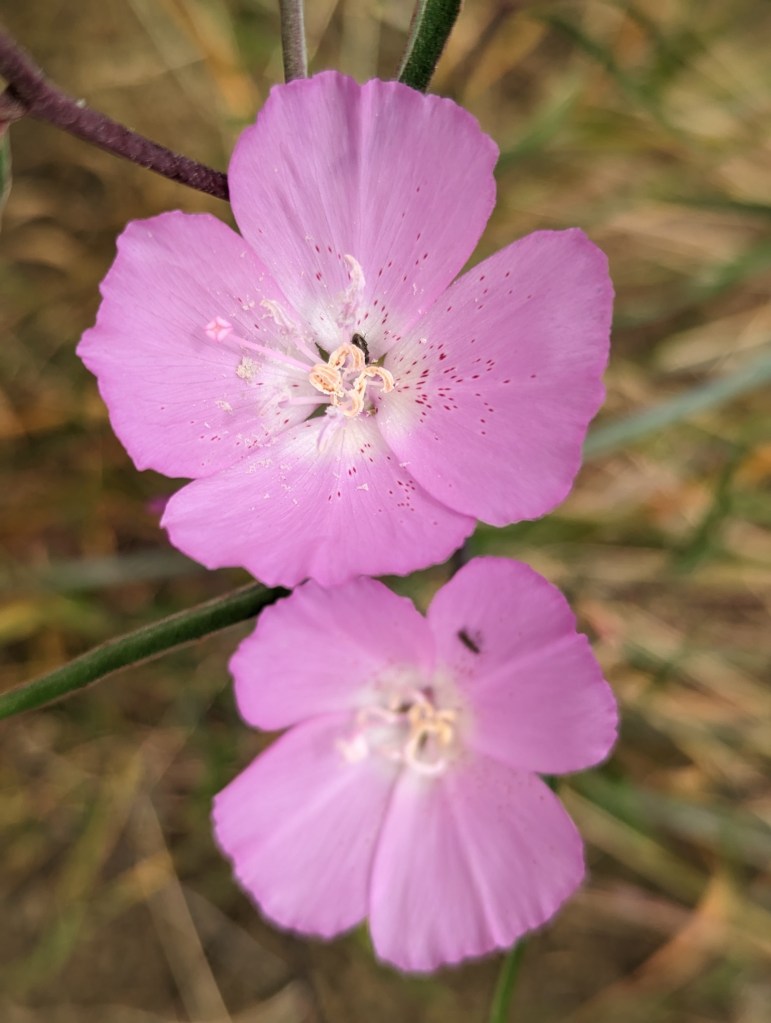
Bloom is brief for wild godetia.

All forty-one species of Clarkia that are native to North America are native to California. Punchbowl godetia, Clarkia bottae, inhabits almost all counties of Southern California. It is absent only from Imperial County. It also inhabits Monterey and San Benito Counties. Its name may allude to its floral shape, or its bloom in Devil’s Punchbowl near Valyermo.

Punchbowl godetia is an ephemeral annual that blooms briefly for spring. Bloom is early in some regions but late in other regions. Also, its schedule is variably from year to year. Because it does not transplant easily, it is rarely available from nurseries. It grows better from seed, which is available online. Within favorable situations, it self sows after bloom.

Bloom is delicate and airy, on limber and lightly foliated stems less than three feet high. Individual flowers are barely an inch wide. Floral color is slightly purplish pink with white centers and tiny red spots. It is variable though, so might be a bit more purplish or lighter pink. Leaves are very narrow. New seedlings do not compete well with other vegetation.

Arid Weather Increases Water Consumption

Chaparral vegetation naturally tolerates arid weather.

Superbloom is brief for two main reasons. It involves native species that know to bloom quickly before arid weather of summer. Also, wildflowers in the wild receive no irrigation to sustain bloom through arid weather. With irrigation, some of such species are capable of prolonging bloom. A few can disperse seed for subsequent generations to bloom later.

That is why California poppy blooms for a longer season within home gardens. It easily performs through much of summer with irrigation. Also, with irrigation, it might regenerate to bloom for autumn after summer dormancy. Seed from earlier spring bloom might grow to also bloom for autumn. Some godetias and lupines perform similarly within cultivation.

Most species within home gardens are exotic though. In other words, they are not native. Those that are native to a similar mediterranean climate respond similarly to cultivation. Generally, some from desert climates do so also, although many dislike extra irrigation. The majority of exotic species actually rely on some degree of cultivation and irrigation.

Such species are native to climates with cooler and less arid weather through summer. Rainfall here is too limited to winter to sustain them through summer. Minimal humidity and warmth increase the need for moisture while it is least available. Cooling summer breezes actually accelerate desiccation. Arid weather certainly has its disadvantages.

As spring relinquishes to warmer and drier summer, irrigation becomes more important. Frequency and duration of automated irrigation must adjust to increasingly arid weather. Shallow root systems, such as those of turf grass lawns, require more frequent irrigation. Deep root systems, such as those of maturing trees, require more voluminous irrigation.

However, irrigation should not be so excessive that soil remains saturated. Many mature trees and shrubs need none at all. Some receive enough from what adjacent vegetation does not consume. Some are satisfied with only occasional irrigation. Turf and annuals require the most frequent irrigation. Yet, even they can rot if their soil is always saturated. Calibration of irrigation requires diligence.

Buckeye

I am very fortunate to be able to grow many species at work that I would not grow within my own garden. Also, I am very fortunate to be able to grow many species in my own garden that I would not grow at work, such as this. It is not much to look at while defoliated through the warmest part of summer, but I do like it for various reasons.

tonytomeo's avatarTony Tomeo

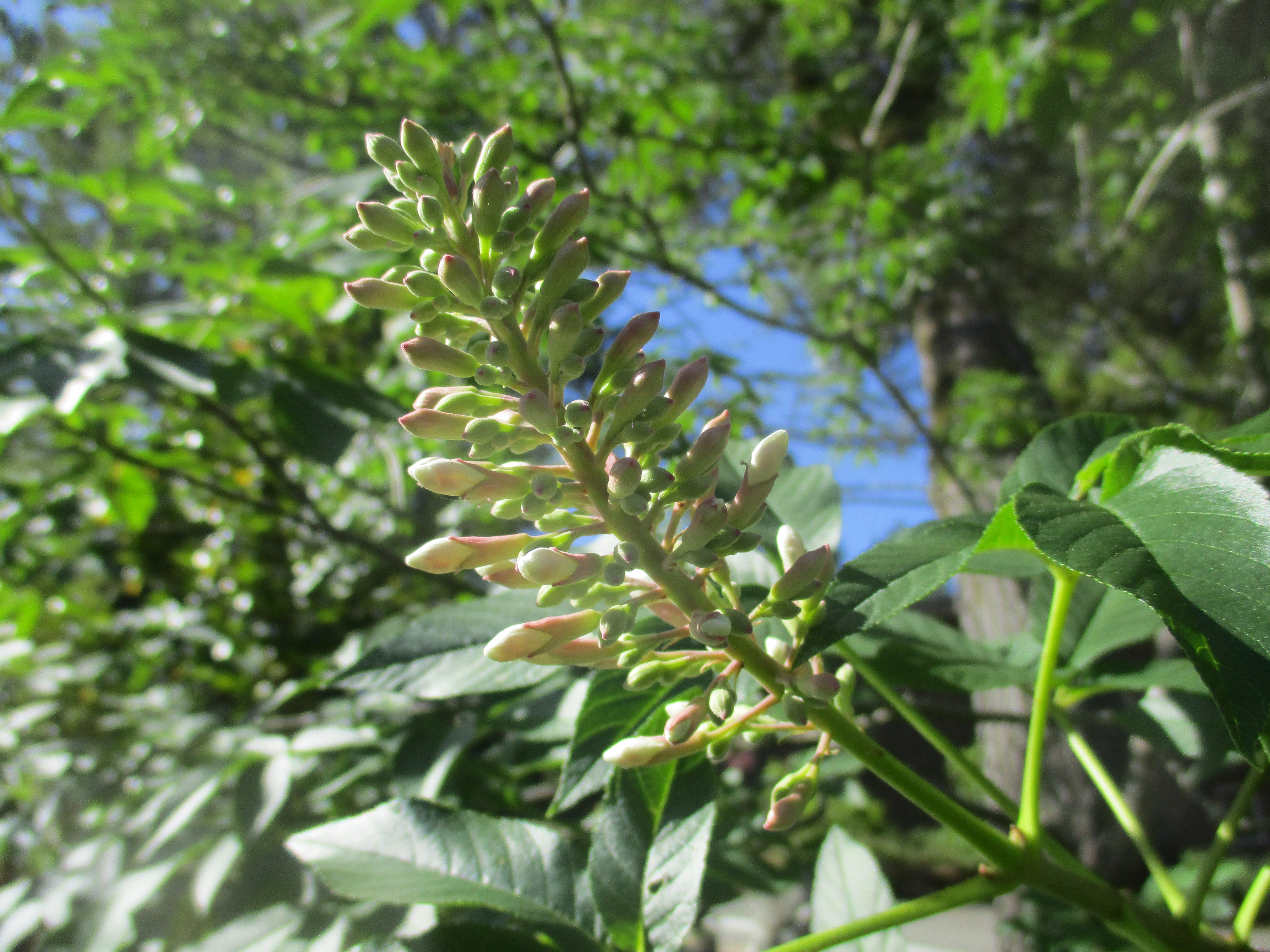
P00524-1 Buckeye starts to bloom like lilac, or upside down wisteria.
Ohio is the Buckeye State. The Ohio buckeye that is native there must be very special. Perhaps all other trees that are native to Ohio are just not very uninteresting. Whatever the situation, I sort of believe that the Ohio buckeye is more appealing in some regards than the California buckeye that is native here. However, the California buckeye might be more weirdly interesting.

The main reason that California buckeye is not popularly used in landscapes is that it is ‘twice deciduous’. That means exactly what it sounds like. Just like other deciduous trees, it defoliates in response to cooling autumn weather, and refoliates in response to warming spring weather. Unlike other deciduous trees, it repeats the process through the warmest weather of summer.

When summer weather gets too warm and arid, the foliage of California buckeye shrivels and sort…

View original post 169 more words

Horridculture – Green Is The New Black

Well, . . . I do not remember why I posted a Horridculture article on a Saturday rather than a Wednesday three years ago, but it is what I have to recycle now for today.

tonytomeo's avatarTony Tomeo

P00523K-1 Foliage does not get any blacker than this.

This is not another of my many racial slurs for the renowned Southern Californian landscape designer, Brent Green. Believe or not, I endure many more of such slurs from him; so will not even bother putting something else out there that compels his retaliation. This is about Japanese laurel, Aucuba japonica, which is incidentally rather yellowish with rich golden variegation.

Japanese laurel, which is known as gold dust plant locally, is happy in partial shade, and will tolerate rather significant shade. That is a distinct advantage in landscapes that are dominated by so many big redwoods. Even without significant bloom, the bright yellowish foliage is an asset in visually dark parts of the landscapes. There probably should be more of it here than there is.

It is not one of my favorites though. It does not cooperate with pruning, and…

View original post 176 more words

Six on Saturday: Hollywood

Vacation complicates blogging. So does spring. There is too much to get pictures of now. The pictures that I get are difficult to process while traveling without internet access. As has become typical for the past few weeks, these six pictures are already outdated. I took them prior to last Saturday, but I am only able to post them now. That is not the worst of it though. Even with so much blooming now, the only bloom within my Six for this week is scarcely visible, and half of these Six lack identifiable vegetation. The last is essentially devoid of vegetation. Heck, when it was more foliated between 1966 and 1968, the most prominent vegetation was fake. I might share six more appropriately floral pictures from the same location next week.

1. Opuntia phaeacantha or Opuntia littoralis, prickly pear grows wild in the Hollywood Hills. I got a picture closer to another herd for next week, but it may be another species.

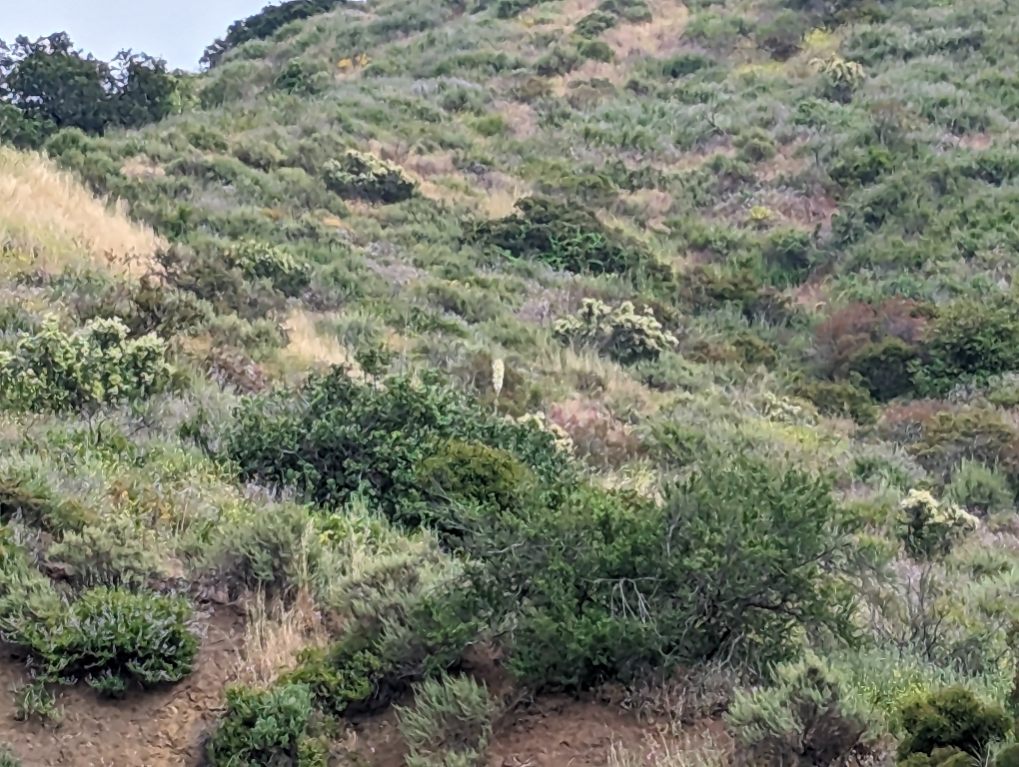
2. Hesperoyucca whipplei, our Lord’s candle blooms with an impressively tall and white floral stalk, but is barely visible at the center of this picture, taken from quite a distance.

3. Pinus pinea, Italian stone pine is obviously not native to the Hollywood Hills. I took a picture of this feral specimen because I thought it might be the legendary Wisdom Tree.

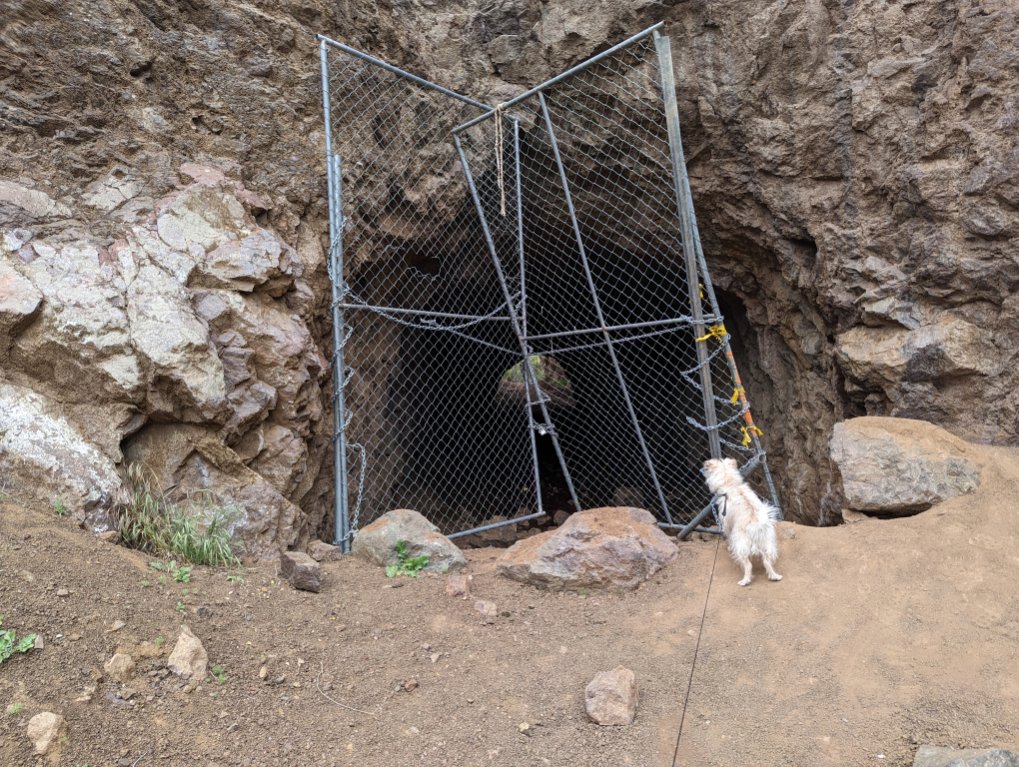
4. Not much vegetation is visible within this picture of an abandoned quarry, but Rhody directed me to this captivating scenery. Because of limited accessibility, we got no closer.

5. Zooming into the previous picture makes its scenery more captivating, and also shows a bit more vegetation within a residential landscape. Most of it is unidentifiable though.

6. Artificial English ivy with random native vegetation formerly inhabited this presently barren landscape. The busted fence is now quite uninviting. Does anyone recognize this?

This is the link for Six on Saturday, for anyone else who would like to participate: https://thepropagatorblog.wordpress.com/2017/09/18/six-on-saturday-a-participant-guide/

Black Locust

Black locust resembles white wisteria up a tree.

If only it were not such an invasive weed, black locust, Robinia pseudoacacia, might be appreciate for remarkably fragrant and abundant white bloom that resembles that of wisteria. The pinnately compound leaves are about five to ten inches long with rounded leaflets that individually are about one half to three quarters of an inch wide and twice as long. Autumn color is soft yellow. Trees can grow fast to more than fifty feet tall. Furrowed and fissured gray bark makes middle aged trees seem older and more distinguished than they really are. The wood is excellent firewood. All parts are toxic so should be kept out of reach of horses.

Black locust is native to a big area between Pennsylvania, Georgia and Kansas. It was brought to California both to produce firewood quickly, and because it is so appealing in gardens. Modern cultivars and other specie with purplish pink or pinkish purple flowers lack fragrance, but  are not invasive.

Fragrance Lacks Color

Mock orange compensates for its lack of flashy color with alluring fragrance.

Remember the smell of the neighbor’s kitchen that met you on the sidewalk as you occasionally walked by when you were young? Whether it was Momma Tomeo’s gnocchi, Mrs. Panagakos’ fresh bread or Mrs. Adam’s black eyed peas, it was so alluring, even from considerable distance. Fragrant flowers may not compare to black eyed peas (mmm), but they certainly can be alluring even without being seen.

Because flowers prefer to be efficient at their work of attracting pollinators, they tend to be either colorful or fragrant, but not both. Those that attract pollinators with color do not need to also use fragrance. Conversely, those that use fragrance to impress pollinators do not need flashy colors. Most fragrant flowers are pale shades of white, and bloom for a short time. However, there happen to a few flowers that are both fragrant and colorful.

Black locust is one of the most fragrant of trees, despite its many other problems. (It is invasive and weedy.) The flowers are bright white, and abundant enough to be quite impressive. Southern magnolia has a distinctive but more subdued fragrance. The flowers are impressively large and bloom randomly through the year, but pale and not very showy among the bold evergreen foliage.

Of the many shrubs with fragrant flowers, mock orange (Philadelphus spp.) has rampant growth with a good display of elegant and remarkably fragrant white flowers. Daphne produces a strongly sweet fragrance with clusters of small pale pink flowers. Both lilac and angel’s trumpet, although very different from each other, have the advantage of impressively fragrant flowers that are quite colorful. Roses offer a better variety of color, but not many are as fragrant.

Wisteria is an aggressive vine with flowers and fragrance like those of the black locust, with all the colors of lilac. Despite the advantage of a longer bloom season, fragrant honeysuckle lacks impressive color.

Earlier in spring, bulbs like freesia, hyacinth, lily, narcissus and some iris bloomed with some of the most fragrant flowers available, in all sorts of colors. Alyssum and flowering tobacco are nice fragrant annuals that bloom longer than most others. Sweet pea may not last as long as weather gets warmer, but compensates with richer and more varied fragrances.

Horridculture – Dust Bowl

After so historically abundant rain last winter, dust should be extinct. It will eventually be back though.

tonytomeo's avatarTony Tomeo

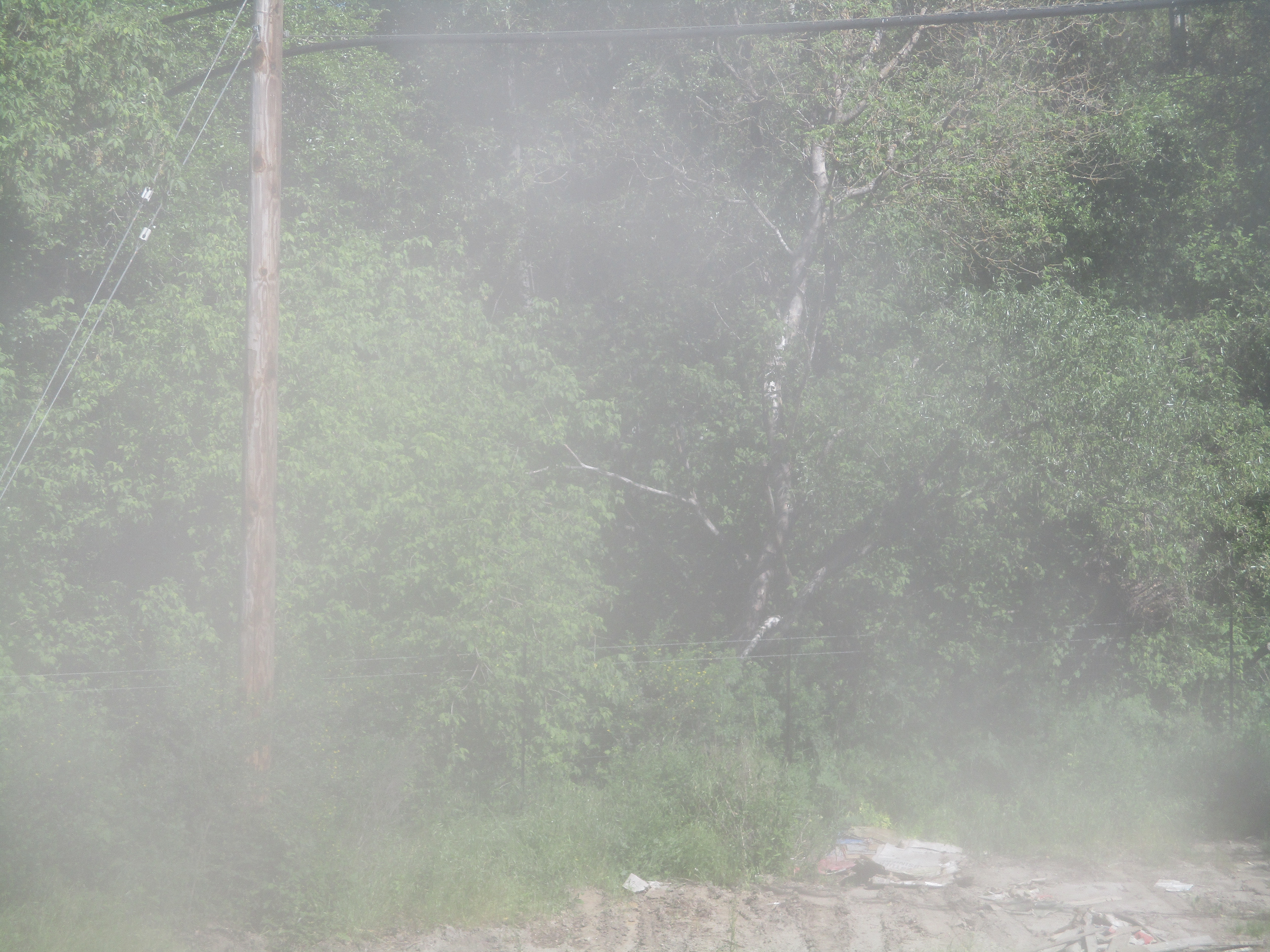
P00520 Cimarron County in 1940 or the road out back last Wednesday?

In a commotion that an Okie would flee from, the road out back got blown last week. What a mess! Dust was everywhere, and I mean, except for the road from which it was blown, it went ‘everywhere’. The engines of the two blowers at full throttle echoed loudly against pavement, the cinder block and metallic walls of the industrial buildings, and under the broad eaves above.

Fortunately, no one else was here to be bothered by it. Actually, no one would have been as bothered by it as we were by the crud that was on the road prior to getting blown. We know that blowing is sometimes necessary. There are only a few windows on the industrial buildings, and they were all closed. The few vehicles that happened to be parked nearby were already dirty.

Where I…

View original post 326 more words

Tree Houseleek

Tree houseleek can be dark bronze.

This must be one of the sillier horticultural names. Tree houseleek, Aeonium arboreum, is neither a tree nor related to leeks. The biggest cultivars can not stand much more than three feet tall. Above that, their succulent foliage gets too heavy for their fleshy stems and fine roots. They perform well as houseplants only within very sunny situations.

Formerly common tree houseleek, with simple green foliage, is not so common anymore. Almost all popular modern cultivars are variegated or bronzed, with wide foliar rosettes. Variegation ranges from bright lemony yellow to creamy white. Bronze ranges from light brown to very darkly purplish. Foliar rosettes are about four to eight inches wide.

Plumply conical trusses of tiny yellow or chartreuse flowers bloom for spring. They are neither numerous nor brightly colorful, but are weirdly interesting. Fresh spring foliage is most colorful and lush. It can fade and partially shed during arid summer weather. New plants propagate very easily from dragging stems or cuttings of pruning scraps.