Ornamental Foliage Augments Spring Color

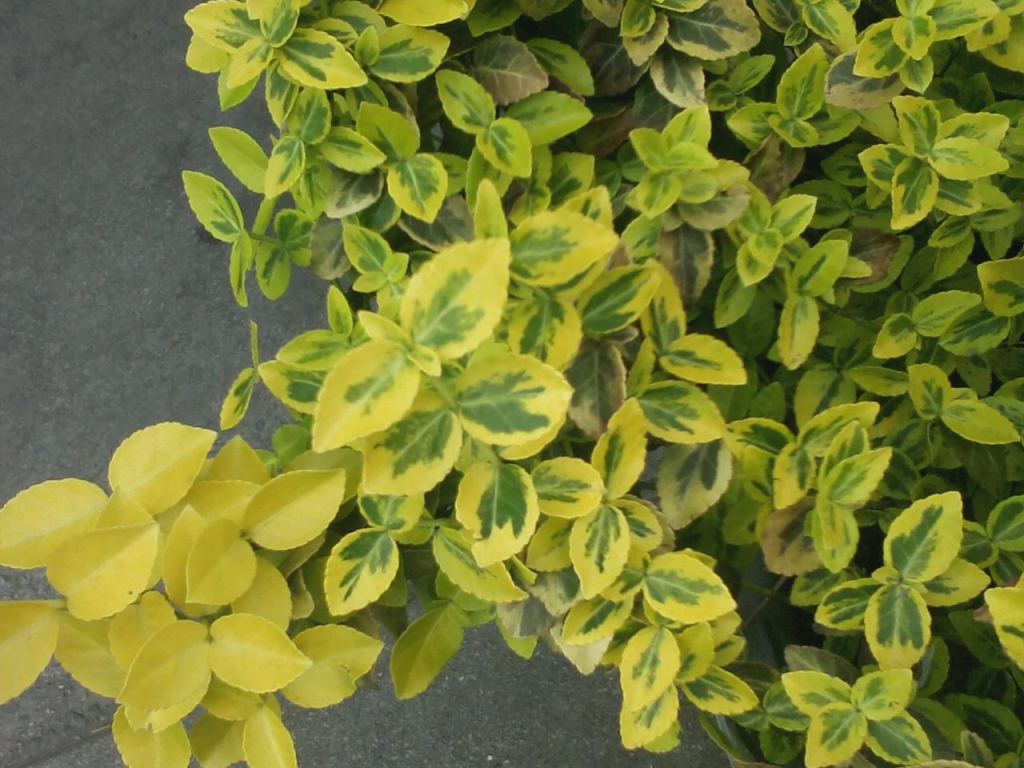
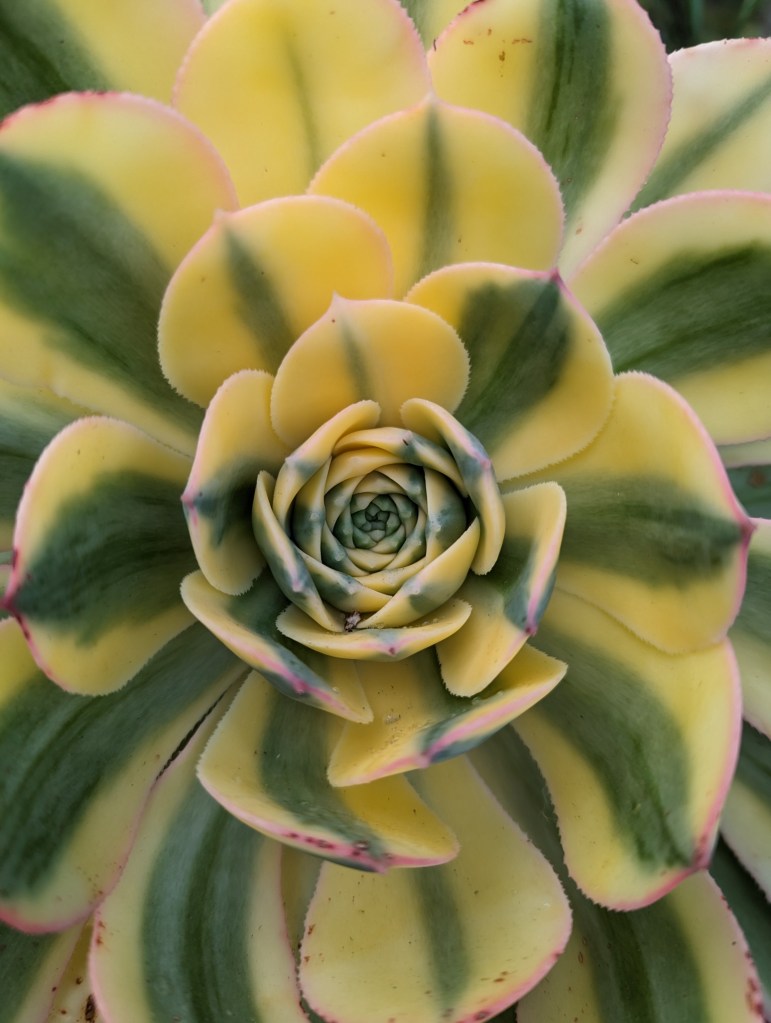
Variegation contrasts nicely with darker foliage.

Spring bloom is the most colorful color in the garden here. It is not the only color though. Some deciduous foliage will provide color at the opposite end of the year. Bark can add a bit of color, particularly while deciduous trees defoliate for winter. So can colorful fruit. Furthermore, ornamental foliage, both deciduous and evergreen, can contribute color.

Ornamental foliage is not the same as deciduous foliage that is colorful only for autumn. The distinction is that it is colorful from the beginning. Generally, it is most colorful while fresh during spring. If both deciduous and colorful for autumn, it changes from one color scheme to another. If evergreen, it may remain more or less colorful throughout the year.

Ornamental foliage of this sort displays various colors and patterns. Variant colors might be yellow, orange, red, purple, blue, pink, bronze, white or gray. They can be variegation such as stripes, margins, blotches, spots, patterns or blushes. Alternatively, they can be monochromatic. Most fade to some degree during the warm and dry weather of summer.

The colors of ornamental foliage are not as vibrant as floral color. They are not intended to attract pollinators. In fact, most of such color serves no practical purpose. Blue, gray or white foliage mostly originates from high altitudes or harsh desert climates. It reflects a bit of excessive sunlight to avert scorch. Most other ornamental foliage is mere mutation.

In the wild, such mutant foliage is generally a disadvantage. White portions of variegated leaves contain less chlorophyll. Consequently, they can not photosynthesize as much as green portions. Such foliage only perpetuates unnaturally within cultivation because it is appealing. Some mutant ornamental foliage can revert to more vigorous greener growth.

Ornamental foliage can be annual, perennial or woody. New Zealand flax, canna, coleus and caladium are the most variably colorful. Coprosma and various pittosporum are a bit more limited. Euonymus, hosta and ivy display white or yellow variegation. Smoke tree, redbud and some maples are surprisingly diverse. Agave blue spruce and some junipers can contribute gray and blue. There are too many options to mention.

Too Much Oregano

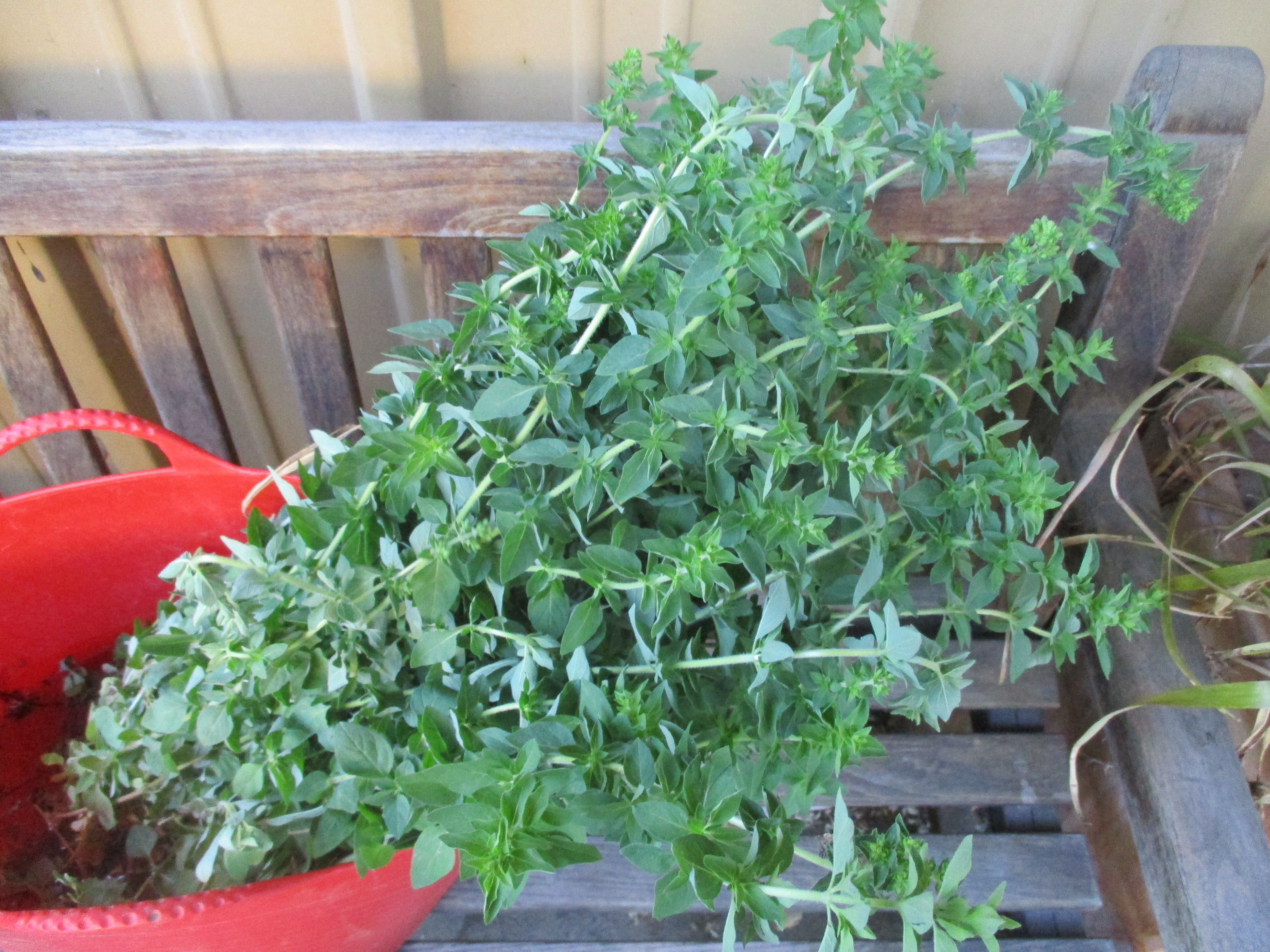
Perhaps I should not have put so much effort into eradicating this oregano. Now, there is not enough.

tonytomeo's avatarTony Tomeo

P00517 Herbs should do so well in an herb garden.
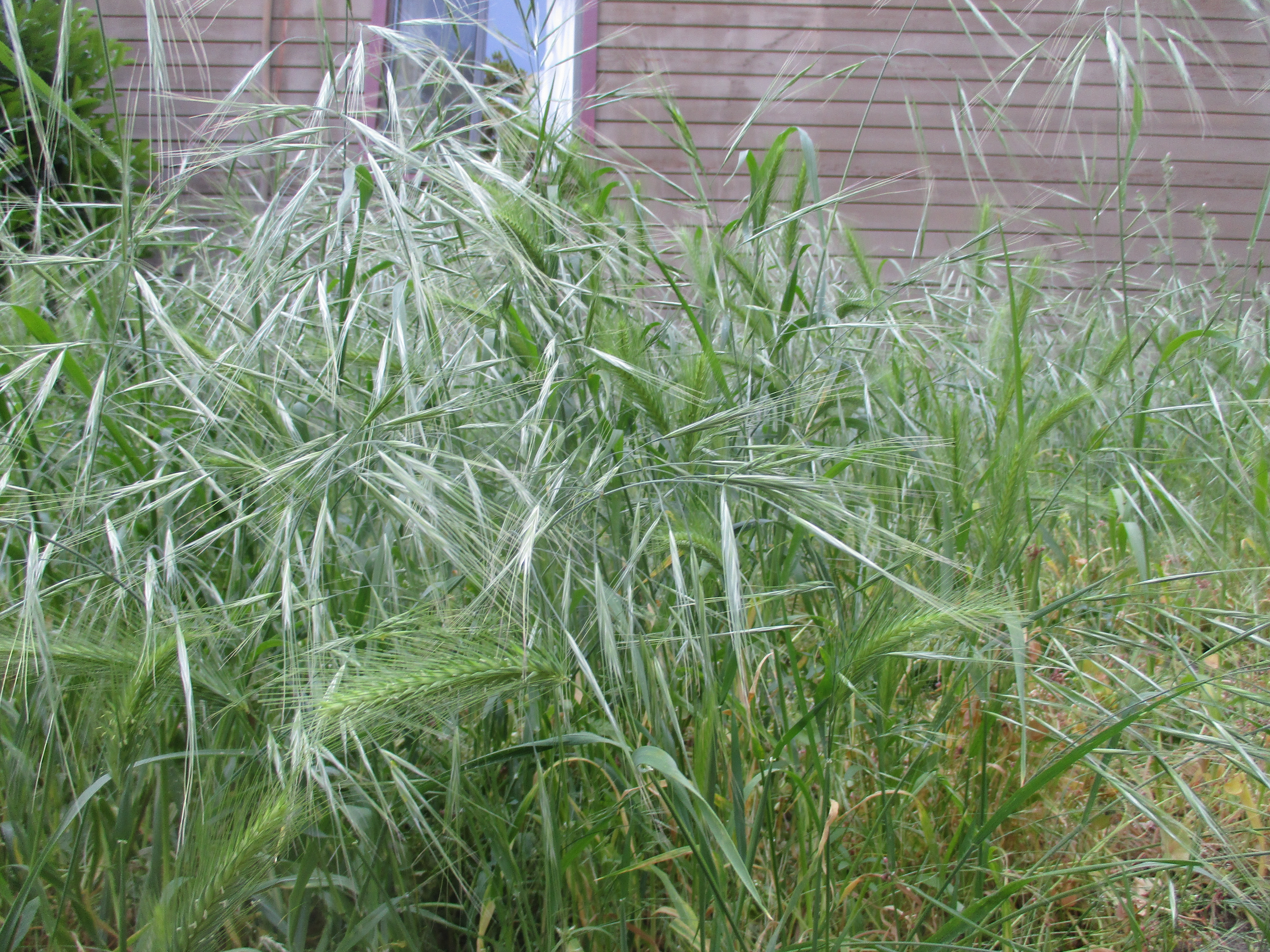
Vegetation management after several weeks of neglect has been . . . interesting. While we were unable to work, and during their most active growth of the year, weeds proliferated more than they had ever gotten away with before. As most get cut down by weed whackers, I pull those that mingled with desirable plants that weed whackers must avoid. It is a tedious process.

One of the more tedious of these projects, and perhaps the most tedious so far, required the removal of abundant weeds from a dense row of carpet roses. Fortunately, it was not as bad as I expected it to be. They young man who weeded this area during winter had done a remarkably thorough job, and eradicated most of the dreaded oxalis and tougher perennial grassy weeds.

The weeds that I pulled were big and impressive…

View original post 159 more words

While You Were Out

When this posted three years ago, many of us were unemployed by the COVID situation.

tonytomeo's avatarTony Tomeo

P00516K It’s a jungle out there!

Our work is the sort that could potentially continue as essential. Distancing is not a problem for us, since we generally work individually, and there are no guests here. However, work needed to be discontinued due to lack of revenue. A conference center can not generate revenue without big groups of guests. Even when groups can return, many potential guests can not afford to.

The chronology of this situation should have been documented more efficiently. We had been unable to work here for several weeks. I do not remember how long it had been. Work resumed two weeks ago, and can continue for six more weeks, for a total to two months. We will start no new projects during this time, but will primarily try to catch up on what was neglected earlier.

Salvage and preparation for resumption of neglect are presently the priorities. This…

View original post 155 more words

Six on Saturday: Rhody Obligation

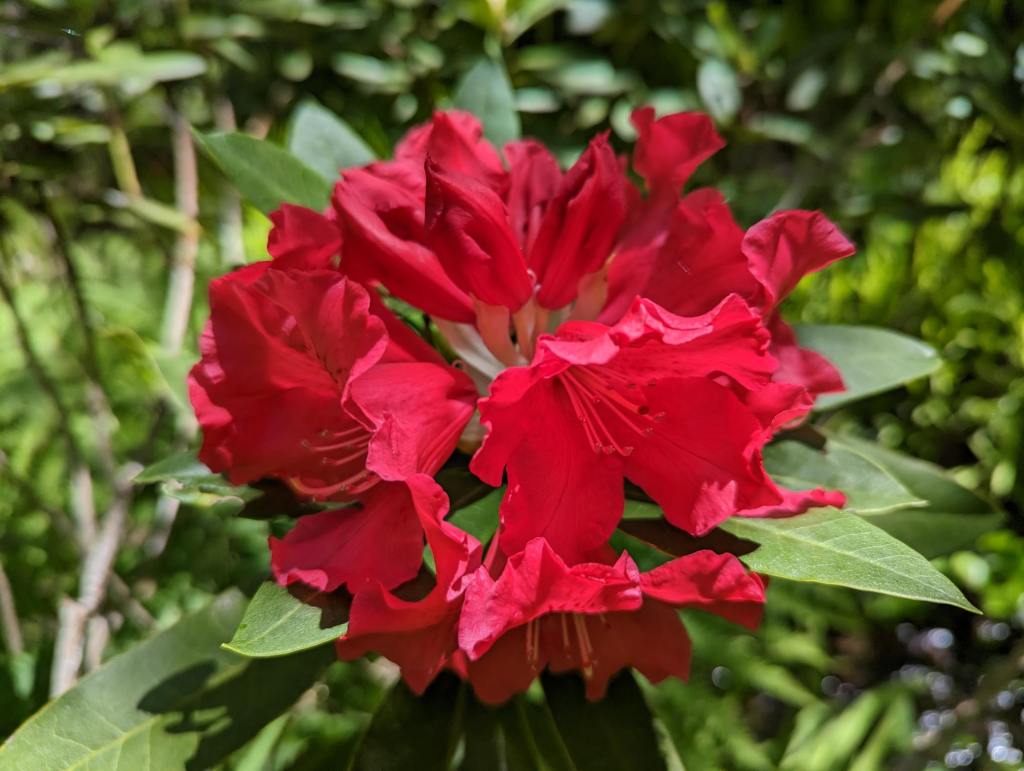
Rhododendrons bloom so spectacularly that I am obligated to share pictures of them for Six on Saturday. I can not share pictures of all of them though. There are too many, and there are also too many pictures of other flowers that bloom at this time of year. As it is, these pictures were delayed because I shared pictures of other flowers earlier. Therefore, these Six will be the first and last pictures of rhododendrons that I will share this season. None of them are of my roommate, Rhody. None of the cultivars are identified. I should share pictures from my vacation next week. I arrived in Los Angeles on Wednesday, and should leave for the Phoenix region on Sunday.

1. Anah Kruschke looks something like this; and this really is more purplish than it looks here. Bloom is so very late that some was still in bud, like those behind these two florets.

2. Floral trusses of this cultivar are huge! The branch structure is also big. The specimen that produced this bloom is more than twenty feet tall. It sags from its own floral weight.

3. Several rhododendrons here are white, but none are pure white. This one is somewhat spotty and blushed with a bit of lavender pink. It brightens its partially shaded situation.

4. Pink is likely the most common color among the rhododendrons here. Rich pink such as this mostly inhabits sunnier situations. Paler pink mostly inhabits shadier situations.

5. White with yellow spots seems to be somewhat whiter than lavender pink blushed and spotty white. A few specimens of this cultivar live here. Its foliage is not very impressive.

6. Red is a splendid color for rhododendrons. Red is not as splendid as lighter colors for shady situations though. That may be why it is uncommon within our shady landscapes.

This is the link for Six on Saturday, for anyone else who would like to participate: https://thepropagatorblog.wordpress.com/2017/09/18/six-on-saturday-a-participant-guide/

Euonymus fortunei

Euonymus fortunei can be shrubby or vining.

Like ivy, Euonymus fortunei creeps along the ground while juvenile, then climbs as a clinging vine where it finds support, and finally produces shrubby adult growth that can bloom and produce seed when it reaches the top of the support. Most cultivars (cultivated varieties) are juvenile plants that make good small scale ground cover that will eventually climb and mature to adulthood if not contained. As vines, they work nicely on concrete walls, but should not be allowed to climb wooden walls or painted surfaces that they can damage with their clinging rootlets. Cultivars that are grown from cuttings of adult growth are strictly shrubby.

The finely serrated, paired leaves are about three quarters to two inches long and about a quarter to one inch wide. The most popular cultivars of Euonymus fortunei that are grown for their variegated or yellow foliage do not grow too aggressively or get too large. Those with green, unvariegated foliage can slowly but eventually climb more than three stories high. Docile variegated plants can sometimes revert to unvariegated and become more aggressive. (Reversion is mutation to a more genetically stable state.)

Mixing Things Up

Annuals are nice, but so are a few more substantial or perennial plants.

Large pots, urns and planter boxes filled with ridiculously colorful blooming annuals are certainly nothing new. However, more small perennials and even a few small shrubs and trees are being planted along with the annuals, and allowed to stay indefinitely as fewer annuals get replaced around them as the seasons change.

These plants only need to be tolerant of confinement, regular watering and the comings and goings of the annuals around them. Upright plants should go in back, behind the lower annuals. Cascading and ground cover type plants should go in front.

Small forms of New Zealand flax and trunkless dracaena palms (Cordyline spp.) add texture, form and motion to large planters, but may eventually get too big if not properly pruned. Larger shoots can be pruned out to allow smaller shoots to take over. Alternatively, overgrown plants can be removed and put out in the landscape when they get too big.

Hollywood and Rocky Mountain junipers have striking form if pruned to show it off, and are easier to contain with selective pruning than reputed. Even without the interesting branch structure of junipers, arborvitaes are appreciated for their similar finely textured foliage and their rich green or yellow color. ‘Blue Rug’ juniper, a grayish ground cover juniper, cascades nicely from large planters.

Large succulents that tolerate water, such as good old fashioned jade plant and various aeoniums, offer bold texture and form in the background. They are easy to prune as they grow, and do not have aggressive roots. Low clumping aloes do the same in front.

Euonymus fortunei, English ivy, various iceplants and other ground cover plants do well cascading over the edges of large planters.

There really is not much limit to the variety of perennials and small shrubs and even trees that play well with others in planters of blooming annuals, and do not mind the confinement and regular watering. Annuals are still the best for flashy floral colors. Yet, the other plants excel in form, texture, foliar color and motion in the breeze.

Horridculture – Plastic Is Forever

Unfortunately or fortunately, environmentalism is part of my work.

tonytomeo's avatarTony Tomeo

P00513 Ah, the memories.

Horticulturists are environmentalists by definition. Whether we grow horticultural commodities, install such commodities into landscape, maintain such landscapes and associated trees, or design such landscapes, the vegetation that we work with affects the environment. Many of us should take our innately significant environmental responsibilities more seriously than we do.

We should also be realistic about our environmentalism. For example, there is no problem with designing a landscape that attracts butterflies for a client who enjoys butterflies in the garden. However, we should not promote butterfly gardening as something that benefits the environment and ecosystem by distracting insects from native flowers that rely on them for pollination.

I have never been one of ‘those’ extreme environmentalists. I do not want to save all vegetation. Some trees are too hazardous to those in the landscape below. Some exotic species are too aggressively invasive within a natural ecosystem, and therefore…

View original post 153 more words

Pincushion Protea

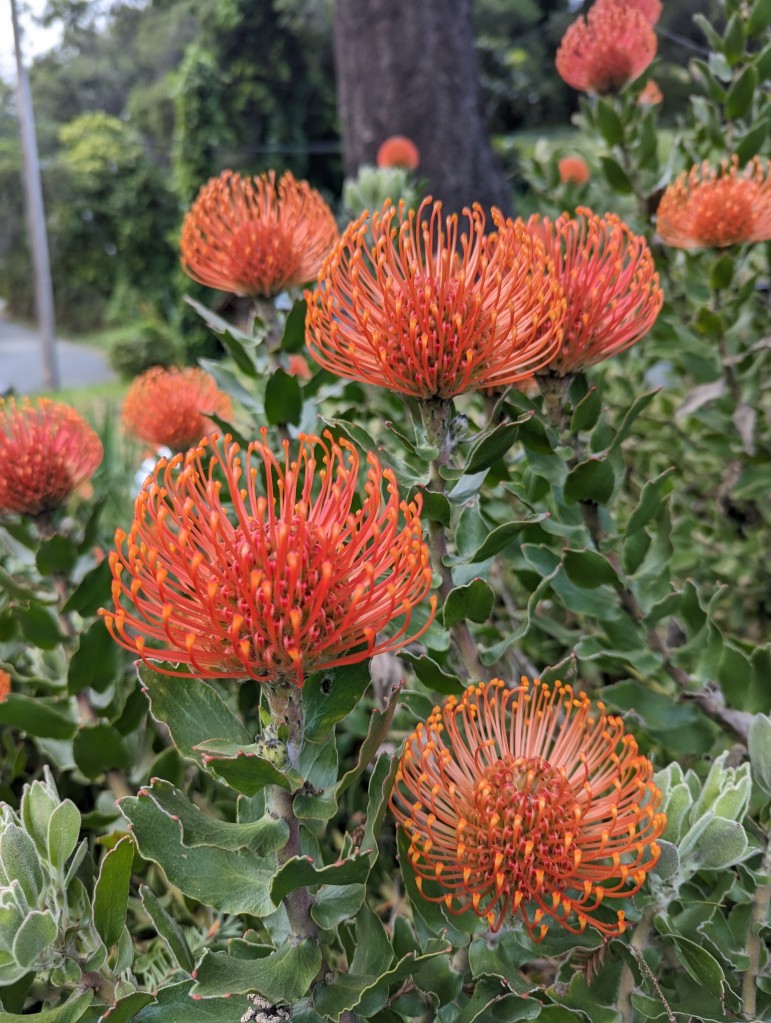
Pincushion protea is most certainly distinctive.

Proteas seem to be as happy locally as they are within their native range in South Africa. The Mediterranean climates there and here must be similar. Like most species from such climates, they are quite undemanding. They enjoy sunny and warm exposure with good drainage. They dislike fertilizer and frequent irrigation. Occasional irrigation is tolerable.

Pincushion protea, Leucospermum cordifolium, is the most popular protea here. Bloom can begin between late winter and early spring, and lasts for weeks. Many are presently blooming. Most are orange. Some are yellow or red. They are excellent cut flowers, both fresh and dried. Each rounded and four inch wide bloom contains many narrow flowers.

Pincushion protea develops stiff branches, but potentially wobbly roots. Sprawling stems that lean onto the ground improve stability. Pruning should remove undesirable stems at their origins, without leaving stubs. Shearing ruins form and texture, and inhibits bloom. Mature specimens can be about five feet tall and somewhat wider. Stiff evergreen leaves are about three inches long and half as wide.

Superbloom Highlights Local Mediterranean Climate

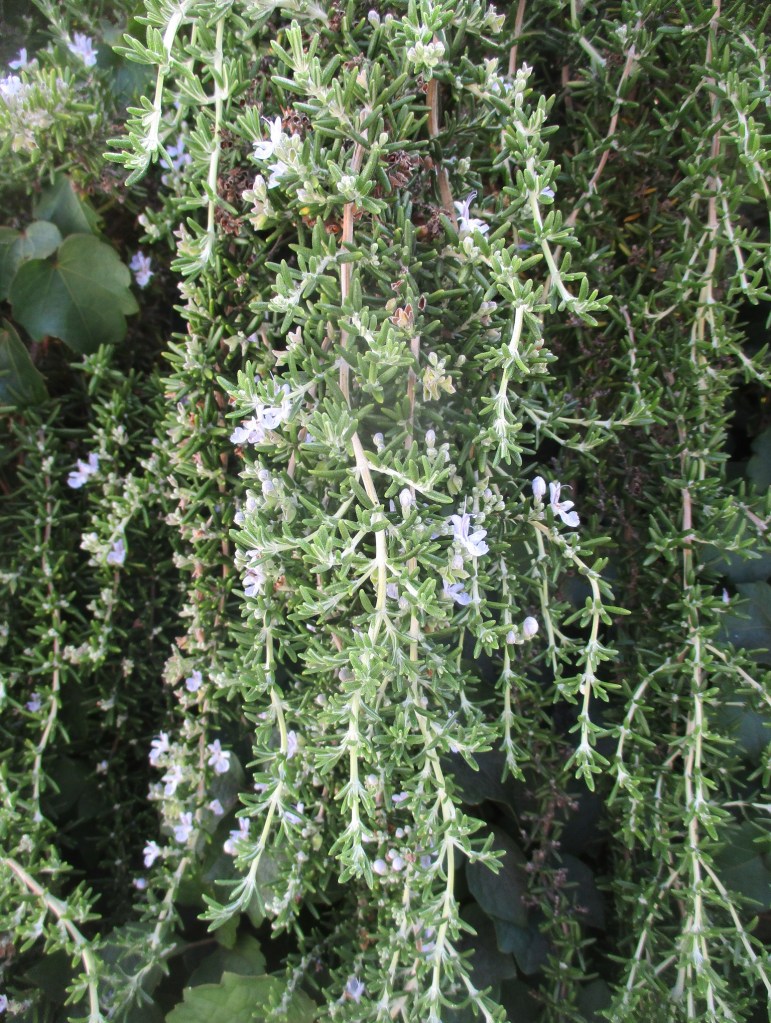
Rosemary can bloom longer with irrigation.

It does not happen often. The average frequency is about ten to fifteen years. However, it occurred in both 2017 and 2019, prior to this spring. That is enough for thirty to forty-five years! The current superbloom is only now finishing locally. It may continue through most of May near the coast farther North. The best bloomers enjoy the Mediterranean climate.

Climate is the typical and seasonal weather pattern of a region. The local Mediterranean climate is typically mild and somewhat arid. Almost all rain occurs between late autumn and early spring. Rain is otherwise rare. Winters are cool but not too cold. Summers are warm but not too hot. Native and some exotic flora knows how to exploit such climates.

Some exotic flora that prefers other climates also seemed to demonstrate a superbloom. Some merely responded to the unusually cool weather last winter. They appreciate more vernalization than they typically experience here. Some species enjoyed the unusually abundant rain last winter. Some species enjoyed both extra rain and extra vernalization.

Native species and exotic species from similar Mediterranean climates are a bit different. Their superbloom happens at the same time, and is also a response to earlier weather. However, it is also a response to later weather. They know that Mediterranean climates get warm and arid through summer. They are in a rush to finish blooming while they can.

Superbloom is how many species accomplish all their annual bloom within a brief time. They begin as soon as cool and stormy wintry weather finishes. They finish before warm and dry summer weather desiccates their flowers. Of course, such bloom may not be so spectacular after typical winters. It is only superbloom after exceptionally wintry winters.

Some species that exhibit superbloom in the wild bloom later for irrigated home gardens. This includes some exotic species from similar Mediterranean climates elsewhere. Such climates are present in small portions of Australia, South America and Africa. Obviously, most Mediterranean climates are around the Mediterranean Sea. Most exotic plants that are most adaptable here are from such climates.

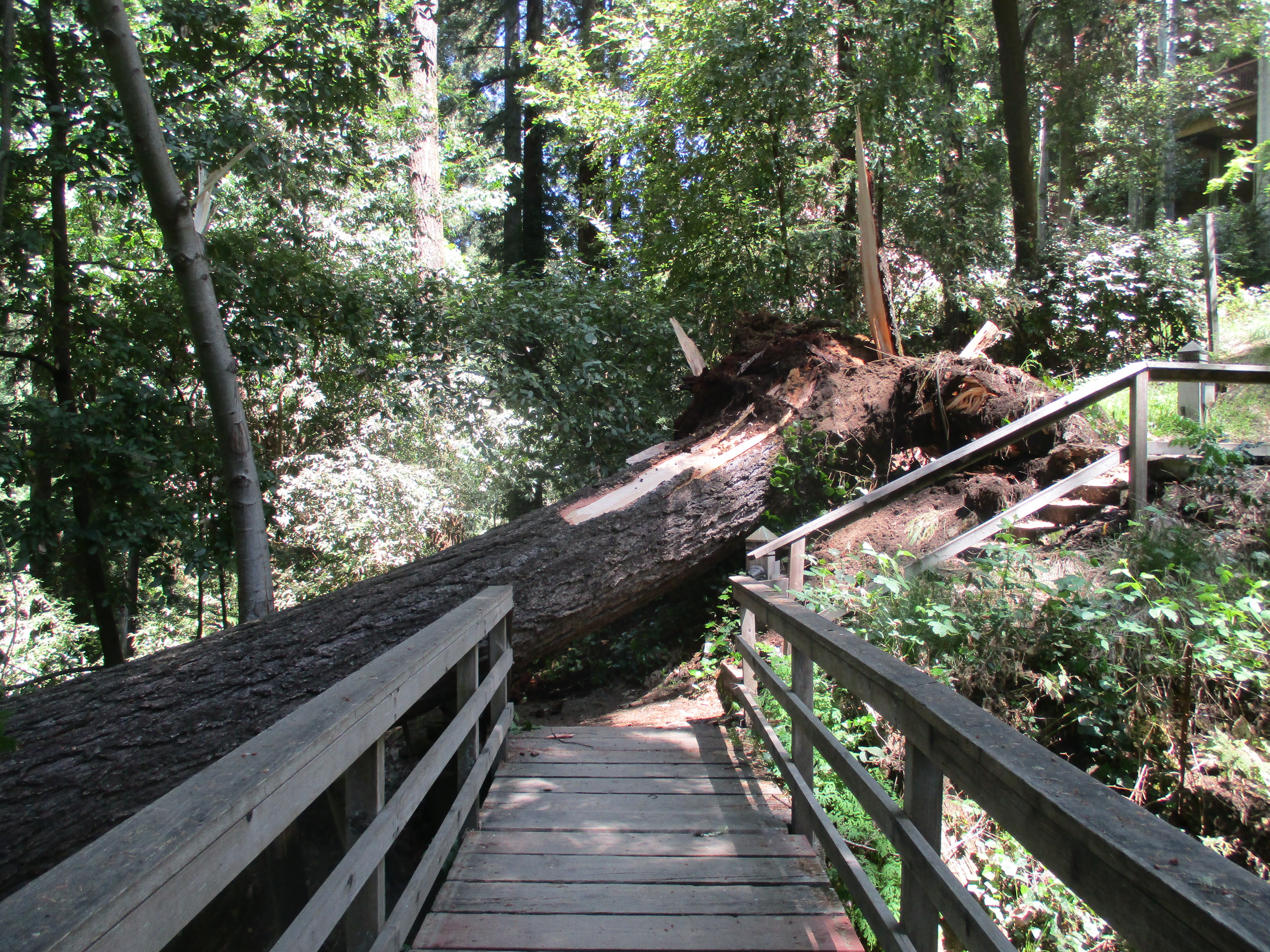
Timber!

As bad as this was three years ago, it is not as extreme as what came down this last winter.

tonytomeo's avatarTony Tomeo

P00510-1 This is a bit more than just slightly inconvenient. The trail continues forward from here, with another trail up the stairs to the right.

It is that time of year. Warming weather accelerates vascular activity, which makes foliage heavier. If evapotranspiration is inhibited by humidity and a lack of wind, the foliage can get too heavy to be supported by the trees that produce it. All that increasing weight can bring down big limbs or entire trees at the most unexpected times. The process is spontaneous limb failure.

By ‘unexpected’, I mean that it happens when there is no wind. It is startling because broken limbs and fallen trees are typically associated with wind rather than a lack of it. Gentle wind actually accelerates evapotranspiration, which relives affected vegetation of some of its weight and susceptibility to spontaneous limb failure. Aridity helps too, by absorbing more moisture.

Of course, even…

View original post 253 more words