Why do forests seem to be so peaceful? Perhaps it is because most of what goes on there happens in slow motion . . . very slow motion. It is difficult to see how violent and competitive the various plants are to each other as they grow. Ironically, by bringing the serenity of a forest into our own gardens, we also bring in a certain degree of the natural violence that we are not so aware of.
Vines are some of the nastiest of plants in the forest. Only a few, like bougainvillea, manage to climb to considerable heights by simply leaning harmlessly onto taller trees for support. However, vines like the various ivies and creeping fig, grip tightly to the trunks of the trees that support them. Once such a vine reaches the top of a tree, it develops its own supportive trunk while simultaneously strangling and shading out the tree that supported it.
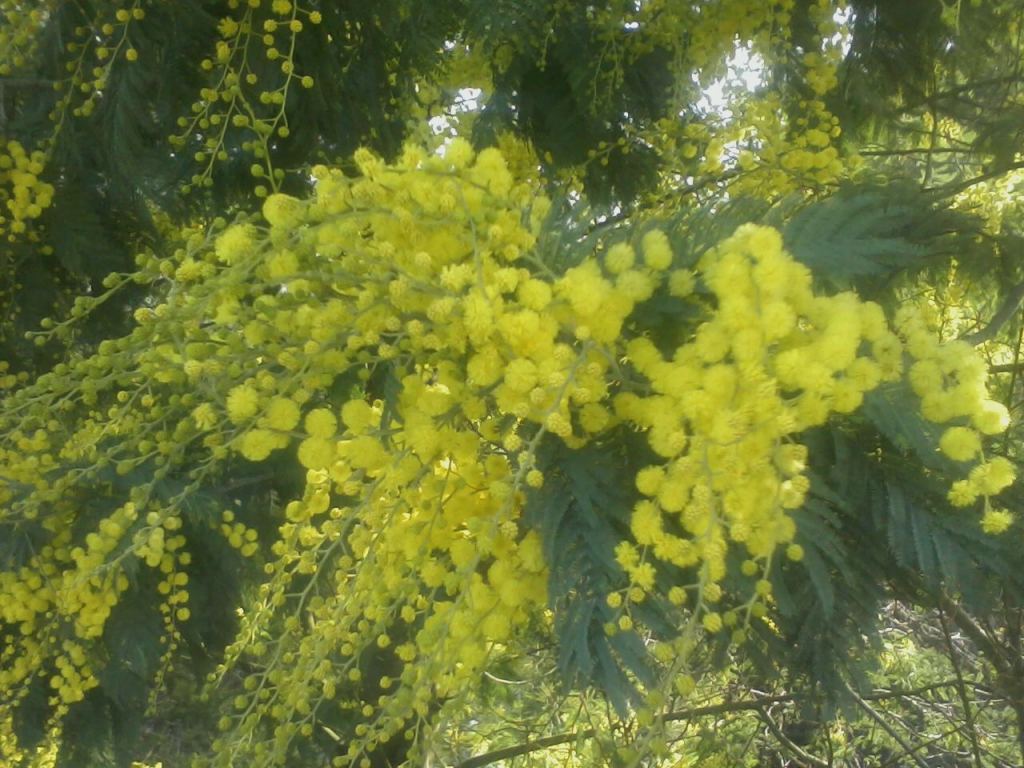
Some acacias and some willows have figured out how to take out some of their competition simply by clobbering them. For example, Acacia dealbata grows fast and big, but is innately unstable and does not live very long. Old trees invariably fall onto other trees, which clears patches of forest for their own seedlings.
All sorts of cypress, pine and walnut, as well as many eucalypti control their competition by overwhelming seedlings of other plants with foliar debris that leaches herbicidal chemicals into the surrounding soil. Their own seedlings do not seem to mind much, so are able to germinate and grow where space allows.
Monterey cypress, Monterey pine, California fan palm and Mexican fan palm use an even nastier technique, by incinerating their competition during forest fires. They retain as much of their own foliar debris as possible, so that during a forest fire, they burn hot enough to kill other plants and their seeds. Their own seeds though, survive the fire in protective fruiting structures. Monterey pine cones merely get cooked in a fire, and then open to disperse their seed as they begin to cool after a fire.
Like it or not, most gardens include at least some plants that are not as peaceful as they seem to be. Some have the potential to be downright violent. That is why is is important to know how the various plants behave and what they are capable of.
For examples, although bougainvillea can be trained up into arbors and trellises, creeping fig should not be allowed to climb into trees or any structures that might get damaged by its griping and strangling habits. Beards of dead fronds should be pruned from fan palms that are close enough to structures to be hazardous if they burn. Knowing our plants and maintaining them accordingly will promote the sort of harmony that we all want in the garden.
 Tony Tomeo
Beautifully put! Japanese Akebia is one of those vines that looks pretty in the catalog, but quickly grows into a violent beast, overwhelming and strangling everything nearby; including the secateurs wielding gardener! I keep tripping on vines along the ground that I didn’t see because they are the perfect shade of brown to grow invisibly. It is good to know how plants take advantage and create space for their progeny. Knowing about which plants make fires burn harder is critical information in these times of climate change.
LikeLiked by 1 person
Combustibility is something that should be considered more while designing landscape within ecosystems such as these. Native vegetation is trendy, but also generally combustible.
LikeLiked by 1 person