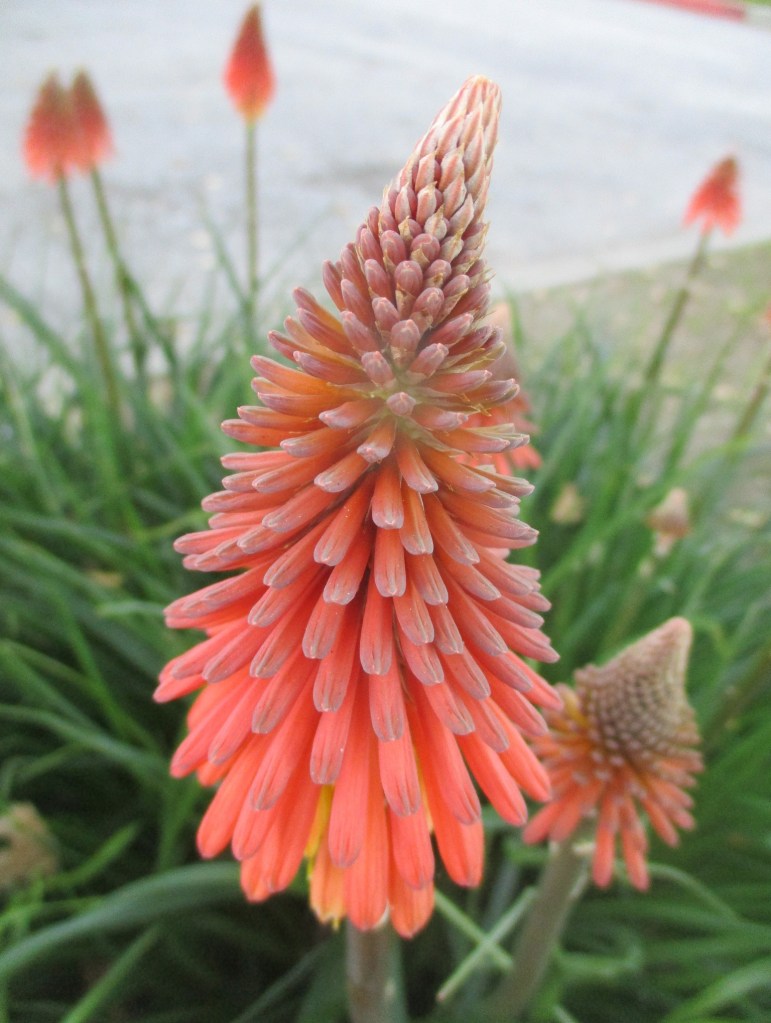
Most flowers bloom during spring. That seems to be most practical. It maximizes the time for their seed to develop prior to the following winter. It conforms to the schedules of their naturally preferred pollinators. Bloom is less likely to succumb to weather through spring. Deviancy is natural though. Many functional flowers quite naturally prefer autumn bloom.
Deviancy, of course, is as complicated as it is natural. Autumn bloom occurs for a variety of reasons among a variety of species. Many can be delightful assets for home gardens. They provide more options for floral color than the most popular of cool season annuals. Some autumn bloom continues as autumn foliar color develops, and perhaps into winter.
Many flowers bloom randomly as warm weather allows them to do so. They may seem to bloom almost continually here. Cool weather may disrupt their bloom only during winter. As weather fluctuates, bloom might resume before a previously disrupted bloom finishes. African daisies provide autumn bloom because autumn is too mild to disrupt their bloom.
Technically, such flowers do not necessarily prefer to bloom during autumn. They merely bloom whenever they can. Most actually bloom most profusely during spring or summer. Canna produces summer and autumn bloom, as it regenerates from its winter dormancy. Otherwise, within frostless tropical climates, it blooms continuously. It is quite adaptable.
Some flowers that are actually more responsive to seasons simply prefer autumn bloom. Joe Pye weed and goldenrod grow only vegetatively through spring and earlier summer. They only begin to bloom about now. Perhaps their seed prefer to grow through cool and damp winter weather. Their seedlings may be vulnerable to desiccating summer warmth.
Naked lady is more extreme. It maintains dormancy through most of summer to bloom as summer ends. Then it grows through winter until spring warmth initiates dormancy again. It seems to believe that it still inhabits its native range within South Africa. Summer there is winter here. Actually, summer weather there is more severe than winter weather there.
 Tony Tomeo
I love the photo Tony. I am thinking of planting some next spring as they are not terribly hardy I have heard.
LikeLiked by 1 person
They are remarkably tough, and supposedly tolerate significant frost, but I do not really know what ‘significant’ means. I suspect that it is more significant than what they could experience here, but that does not mean much.
LikeLike
Well, they are supposedly hardy to -17°C, which is zone 7. I suspect they would be fine with a bit of mulch in our garden – we are officially zone 6 but we haven’t had a bad winter that cold for a few years now. (Is that good or bad?! LOL! It could mean we are due one!)
LikeLiked by 1 person
Gads! I sometimes think that it would be interesting to experience ‘normal’ weather, . . . but then, sometimes, I think otherwise.
LikeLike