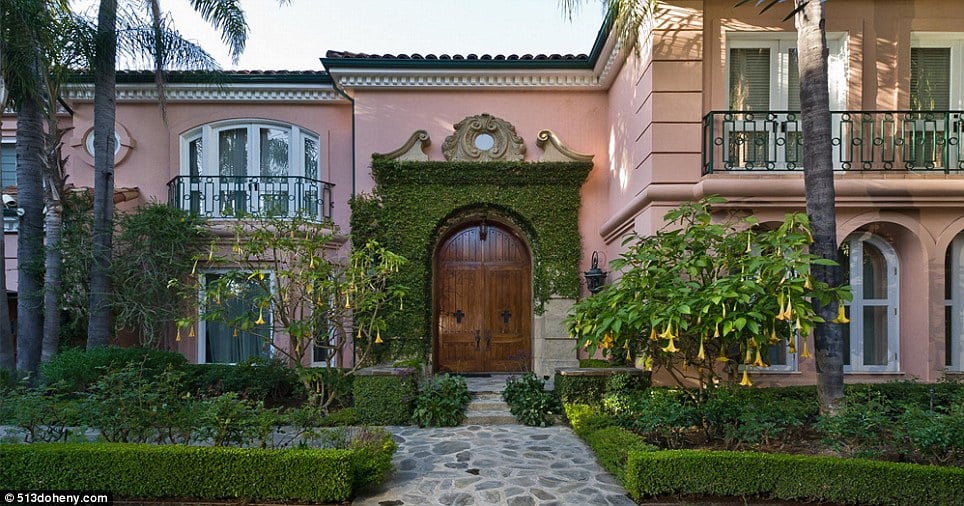
‘Charles Grimaldi’ is likely the most popular angel’s trumpet. It is very vigorous and very fragrant, with cheery yellow bloom. I plugged several cuttings last autumn, but then very unfortunately neglected to protect them from our unexpectedly and unusually cold frost. Of only two survivors, one grew so splendidly that it is now prominently displayed in the landscapes, rather than ignored in the nursery. It has an amusing history. (The first two pictures are not mine.)
1. This pair of ‘Charles Grimaldi’ angel’s trumpet might be familiar to those who watched television in the early 2000s. They were prettier while GreenArt managed the landscape back then. They are gone now. This was the best picture that I could find of them online. The third specimen that was omitted after it was delivered now inhabits Brent’s garden.
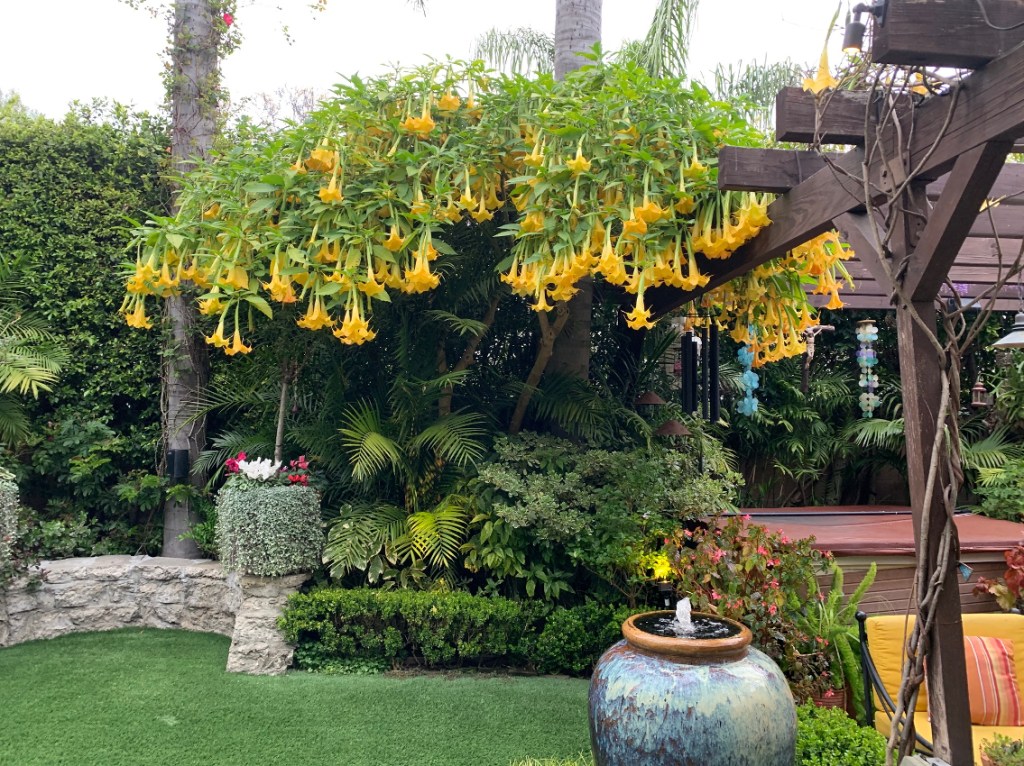
2. This omitted third specimen of ‘Charles Grimaldi’ angel’s trumpet is more impressive within Brent’s Dreamscape at the Jungalow. A picture of its bloom represents its species in the Sunset Western Garden Book from several years ago. It is the source of my copies.
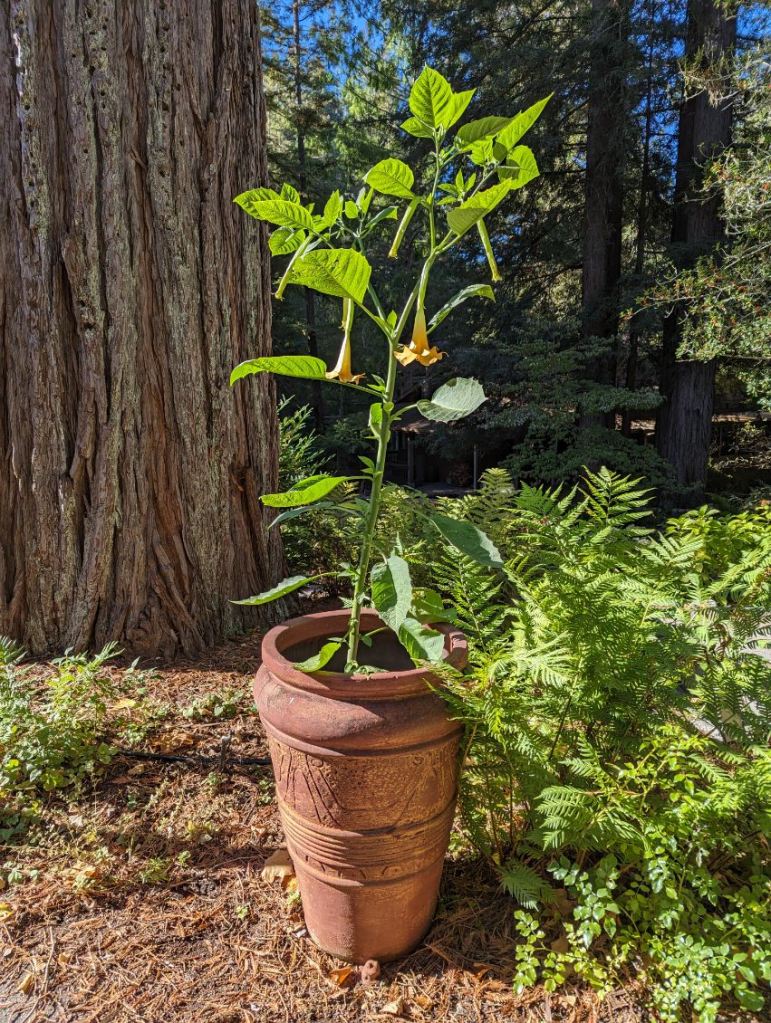
3. This copy grew more than six feet tall from a cutting that I plugged last winter. Its can sits on the bottom of its big urn. Its bloom was too pretty to leave unseen in the nursery.
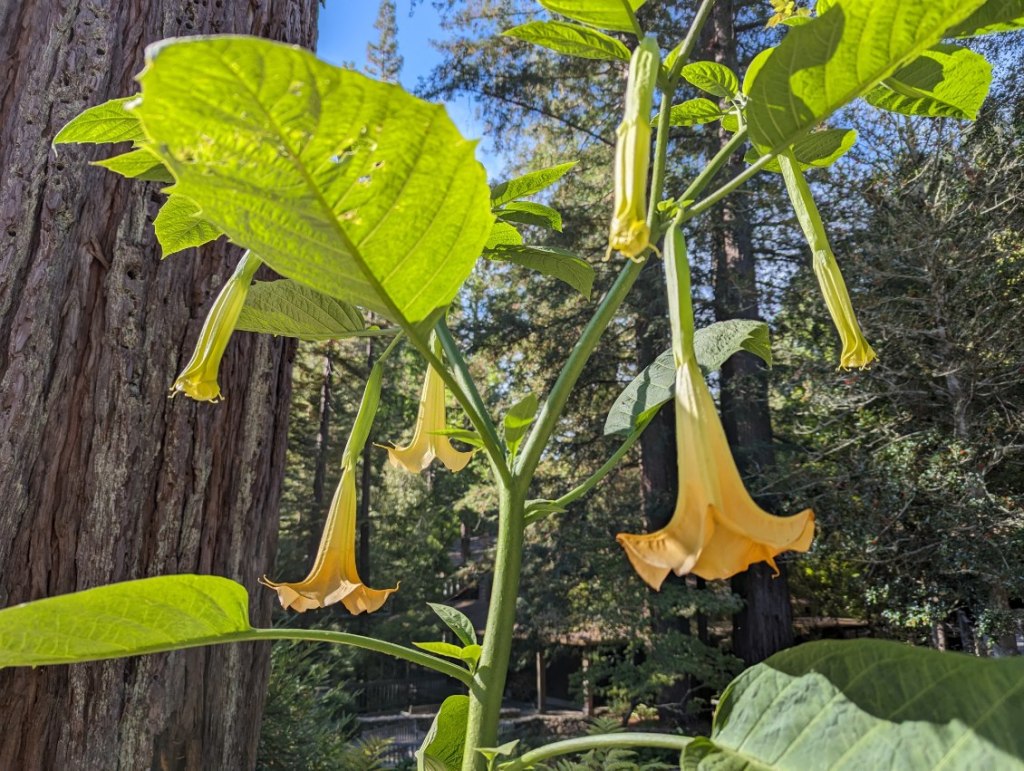
4. Bloom, which began only recently, will not likely continue much longer. The specimen might return to the nursery for winter, and then be installed into a landscape afterward.
5. A comparably tall copy of an unknown cultivar with orange flowers is about to bloom. Unfortunately, the weather will likely become too cool for these buds to finish blooming.
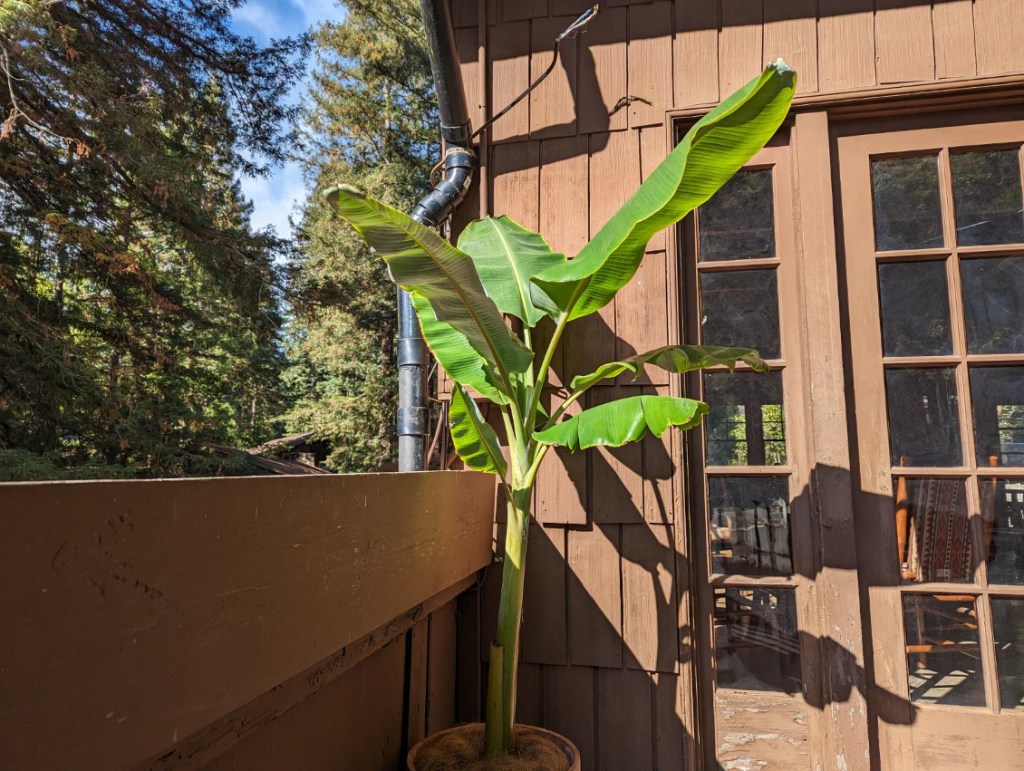
6. Young banana trees are likewise too striking to leave unseen within the nursery. Their cans were placed within more appealing pots within the landscapes at least until winter.
This is the link for Six on Saturday, for anyone else who would like to participate: https://thepropagatorblog.wordpress.com/2017/09/18/six-on-saturday-a-participant-guide/
 Tony Tomeo
All very impressive. Unfortunately mine died last winter, even though it was in the greenhouse and wrapped in fleece. Another shopping opportunity. 🙂
LikeLiked by 1 person
If it were possible, I would send you copies of two of our cultivars, single and double white. The single is not quite as pretty, but because it is my favorite, I grew a few too many. I did not expect them all to root, but they did.
LikeLiked by 1 person
What a great history and back-story on ‘Chuck’s’ heritage. Fascinating. Fingers crossed that the orange flowered Brugmansia has the opportunity to bloom this month.
LikeLiked by 1 person
The orange cultivar has been with me for several years, but is always recovering from some sort of trauma. By the time it is about to bloom, something else happens. I am not even certain if it is orange. That was my best guess when I found the original scrap of it on a greenwaste pile in front of a garden in eastern San Jose that was inhabited by what I believe to be the original orange angel’s trumpet.
LikeLiked by 1 person
I love that you rescue plants like that, and give what others discard a new life. My dad used to get in trouble with my mom for doing the same things from time to time. I’d pick up plants that landscapers were discarding when he was out and about, and find ways to add them to his yard.
It may be that by not blooming, your angel trumpet’s root is saving energy and bulking up faster. When it finally blooms it should be spectacular!
LikeLiked by 1 person
I do not consider it to be ‘rescue’. I just grow what I want from scraps, some of which probably should not be grown. At the moment, we are getting overwhelmed by such material that really should be in landscapes. We must wait until after winter to plant the angel’s trumpets.
LikeLiked by 1 person
Growing from ‘scraps’ is a great pleasure. I do it here, too, saving bits of plant material and seeds to watch them grow. It is wonderful when you can plant them out in a landscape or pass them along to someone who will enjoy them.
LikeLiked by 1 person
I prefer growing my own from scraps because they all have history. Just about everything in my garden came from somewhere important, . . . or perhaps unimportant, but I can remember where they came from. The orange angel’s trumpet really was from a scrap, which I found on a curbside greenwaste pile in San Jose. It is cool because it came from San Jose.
LikeLike
I love the way the banana throws shade with the lower light.
LikeLiked by 1 person
It is too pretty to not exploit. However, we do not want such vegetation to become prominent within our landscapes. It looks more jungly than foresty.
LikeLike
Fantastic Angels Trumpet, they are usually white here.
LikeLiked by 1 person
The second most common cultivar here blooms with very fragrant double white flowers. It is the only angel’s trumpet that has found a permanent situation within our landscapes, and it provides me with too many cuttings when I groom it. I brought back cuttings of a cultivar from Brent’s garden that blooms with single white flowers because I prefer the single flowers. However, it is not quite as pretty, and seems to be somewhat less fragrant. I have nine copies of it, but no plan for them within the landscapes.
LikeLiked by 1 person
Sounds wonderful. I think an Angel trumpet forest would be cool.
LikeLiked by 1 person
I dunno. They are . . . odd. They perform better if pollarded or coppiced annually, or every other year, so they look silly immediately afterward. We can not use too many in our landscapes because I do not want them to hang over pavement. Their flowers are a slipping hazard.
LikeLiked by 1 person
Pollarded? I’m going to have to think about that..
LikeLiked by 1 person
I prefer pollarding to coppicing because the flowers hang downward from below the foliage. Pollarded trunks suspend blooming stems higher. However, some cultivars tilt their flowers outward, to hang at about 45 degrees, from above the foliage. Coppicing generates basal growth that displays such bloom better. I do not like coppicing though, because it seems to me that the coppiced stump will eventually succumb to the procedure, and rot.
LikeLiked by 1 person
Lovely trumpets. Do you have any pictures of the orange one? I don’t know if either of mine even have proper names.
LikeLiked by 1 person
No. I got it from a greenwaste pile a few years ago, but it never gets the chance to bloom. If it is what I believe it to be, it blooms with huge orange flowers that hang at a bit of an angle, rather than hang vertically like the others do. However, they may lack fragrance.
LikeLiked by 1 person