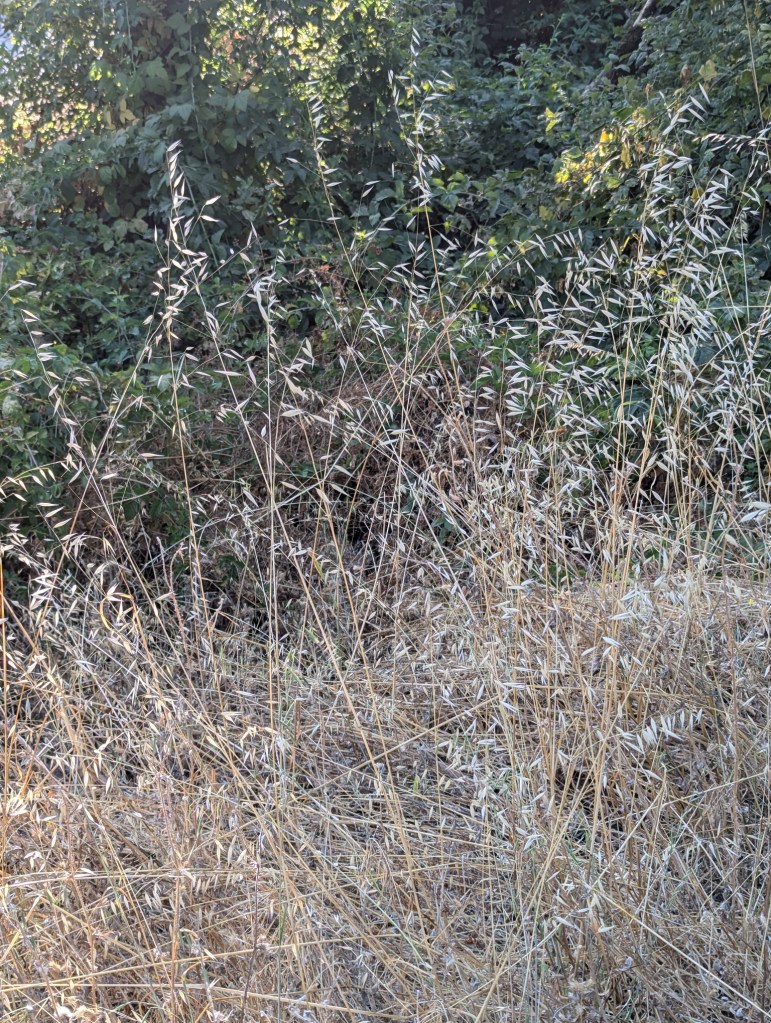
Gardening involves weeds. Gardening outside of refined gardens involves more weeds. A few of such weeds are native species which grow where they are undesirable. Most of the most aggressive are naturalized exotic species. Collectively, they are an unpleasant consequence of unmanageable external biodiversity. They necessitate weed abatement.
Weed abatement is a standard procedure within refined gardens. Most know it simply as weeding. Ideally, it is harmless to desirable vegetation. It may be a relatively simple task where desirable vegetation excludes weeds. Also, weeds are less abundant where they lack sources of seed to regenerate. Timely weeding should eliminate much of their seed.
Unfortunately, no garden is isolated from external influences. Weed seed sneaks in from uncultivated spaces, adjacent gardens or beyond. Suburban and rural gardens might be close to wildlands or forests. Many of such weed seed sources are beyond the control of their victims. Some are merely easy to ignore because they are out of view or not in use.
For some unused or unseen areas, weed whacking can be more practical than weeding. It entails cutting undesirable vegetation almost to grade with a motorized weed whacker. Manual weed whackers, although rare, are not extinct. Weed whackers are not selective. They can sever desirable annuals or perennials that mingle with undesirable vegetation.
The primary advantage of weed whacking is that it is fast and efficient. With good timing, it eliminates bloom or developing seed prior to dispersion of seed. Diminishment of seed inhibits subsequent proliferation, and is much safer for pets. Foxtail seed are notoriously hazardous. Besides, overgrown weed vegetation becomes a fire hazard as it desiccates.
Viable basal stems and roots that remain after weed whacking are not much of an asset. Many types of perennial and biennial weeds regenerate from such growth. However, to a very minor degree, such vegetation may contribute to healthy biodiversity. It may sustain some beneficial insects and soil microorganisms. Also, it can inhibit surface soil erosion.
 Tony Tomeo