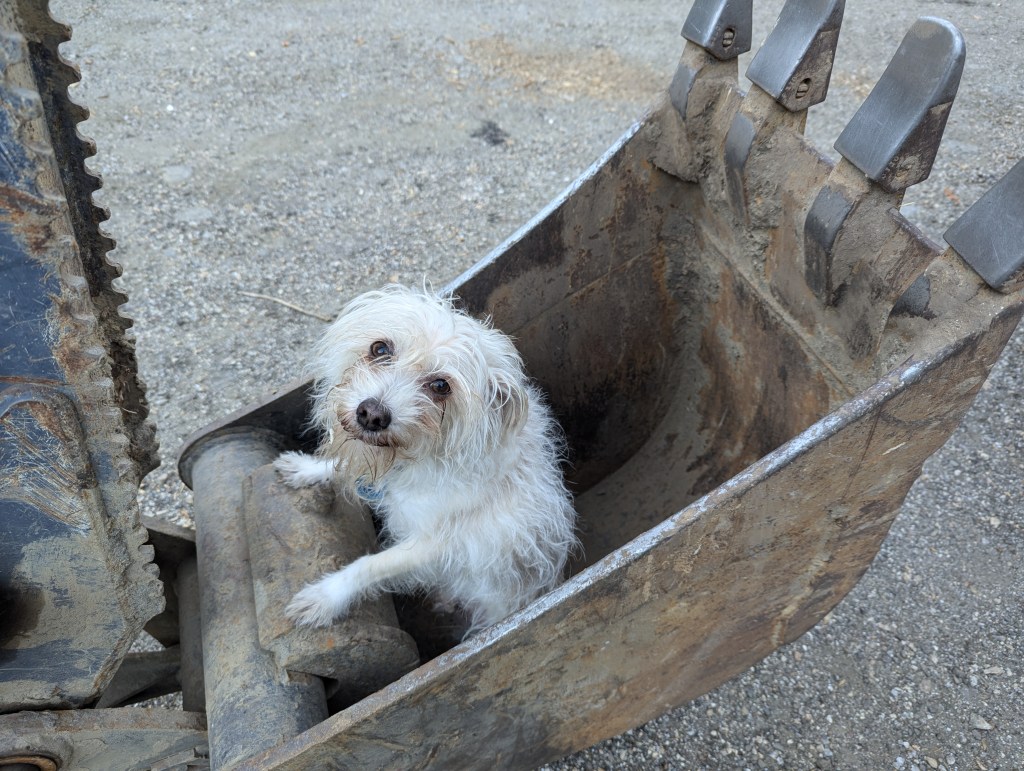
This is not about a machine that makes copies. It is five pictures of copies and a machine that Rhody could make very good use of.
1. Citrus paradisi ‘Marsh’ grapefruit was doing well until some sort of caterpillar that ate much of the foliage off of the passion fruit vines found it. This is an ungrafted cutting, so could eventually grow into a humongous shade tree if it survives this late without leaves.

2. Santolina virens, lavender cotton needed to be removed from one of the landscapes. I did not want it all to go completely, but none of it was salvageable, and I had not grown copies of it earlier. Happily, I found that this single dinky copy somehow got left behind.

3. Kniphofia uvaria, red hot poker is one of those common perennials that I had wanted to grow, but never did. Fancy cultivars are now more common than the common simple species. Finally, I managed to acquire three pups from an old and abandoned landscape.
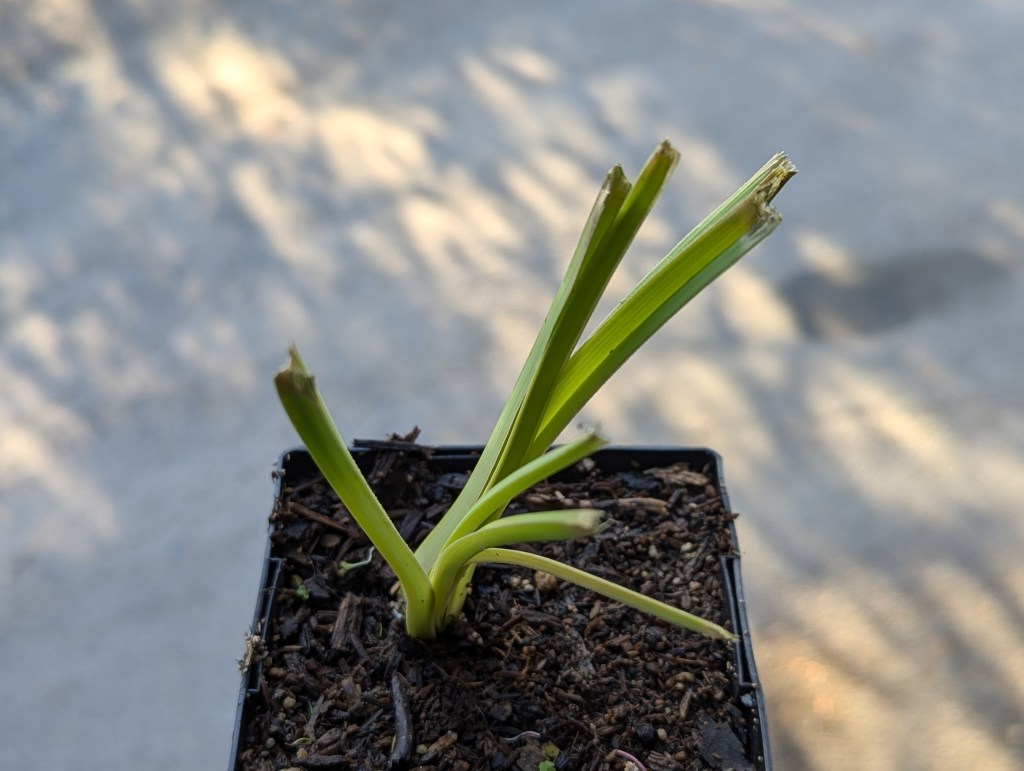
4. Archontophoenix cunninghamiana, king palm, or bangalow palm or piccabeen palm, is one of the popular palms of coastal Southern California that I would like to grow here. Naturally, but just as naturally without any plans, I procured about two dozen seedlings.
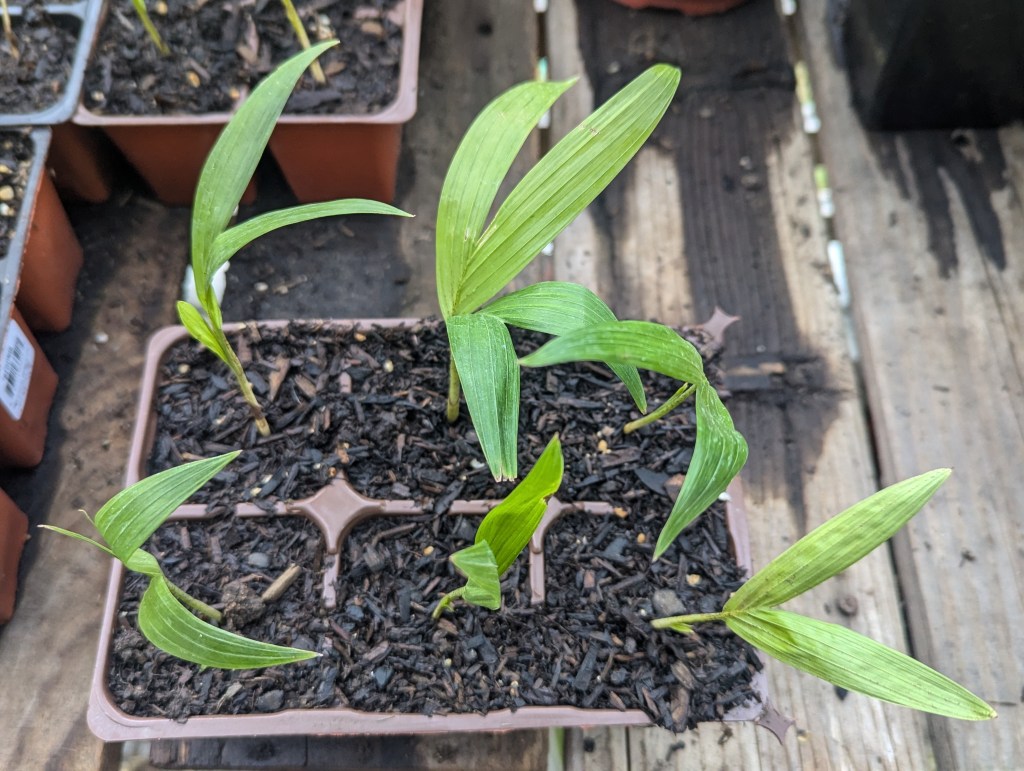
5. Musa acuminata ‘Golden Rhino Horn’ banana pups have grown like weeds since their arrival last June, and now, one of this pair is generating either another pair of pups very closely together, or a single pup that is already extending its first frond away from its tip.

6. Rhody is a terrier. In other words, he is terrestrial. Instinctively, he wants to dig in the earth. His type was bred for pursuit of terrestrial vermin, such as gophers. They need no excuse to dig, of course. Furthermore, Rhody requires no justification for his technique.
This is the link for Six on Saturday, for anyone else who would like to participate: https://thepropagatorblog.wordpress.com/2017/09/18/six-on-saturday-a-participant-guide/
 Tony Tomeo
Rhody!!!!!!
LikeLiked by 1 person
Of course!
LikeLiked by 1 person
I’m jealous of these king palms. Do you know if the seedlings were started directly in these small pots? Certainly the heat of California is enough to germinate easily… Here we have to use ziplock bags, have patience, but also have losses… of course, it is more for a collection than to have a beautiful palm of this variety in the garden( which would be impossible for this one for our area )
LikeLiked by 1 person
The seedlings were sent bare root from Whittier, in Los Angeles County. I plugged them in for the winter. They are not as happy here as they are in coastal Southern California. They can get slightly damaged by frost through winter, and by the time they recover, it is winter again. Frost does not kill them, but makes the foliage rather shabby. They can grow wild in riparian situations around Los Angeles, and are very lushly foliated. I hope to install these new seedlings on a slope that cool air drains from.
LikeLiked by 1 person
Great Rhody picture, as usual. I like those old Red Hot Pokers too. Unusual to find one.
LikeLiked by 1 person
They used to be so common. Modern cultivars are available from nurseries, but I prefer the simpler old fashioned sort that is so resilient. Modern sorts, although also resilient, seem to be weaker.
LikeLiked by 1 person
I agree..had one yellow and it’s no longer with us.
LikeLiked by 1 person
I can never decide if I like Red Hot Pokers or not. They need to be in the right place, which they seldom are when I see them in gardens here. Love the picture of Rhody doing some digging! LOL!
LikeLiked by 1 person
Yes; although I happen to be fond of them, the few that I noticed nowadays seem to be in odd situations. To me, they are like lily of the Nile. They are tough and sometimes colorful perennials that are suitable for roadsides and less refined landscapes. Although they are pretty enough for refined landscapes, they can look a bit odd there.
LikeLiked by 1 person
Lots of lovely plant recycling and a cute Rhody! You asked me a couple of weeks back about plums. I’ve looked into it and I think they are Czar. A culinary plum that can be eaten as a dessert plum when fully ripe. Thank you for making me look into it.
LikeLiked by 1 person
‘Czar’ is a cultivar of Prunus domestica, which is what was known either as European plum or prune in the Santa Clara Valley a long time ago. Its fruit can be dried. Prunus salicina is Japanese plum, which does not dry so well.
LikeLike