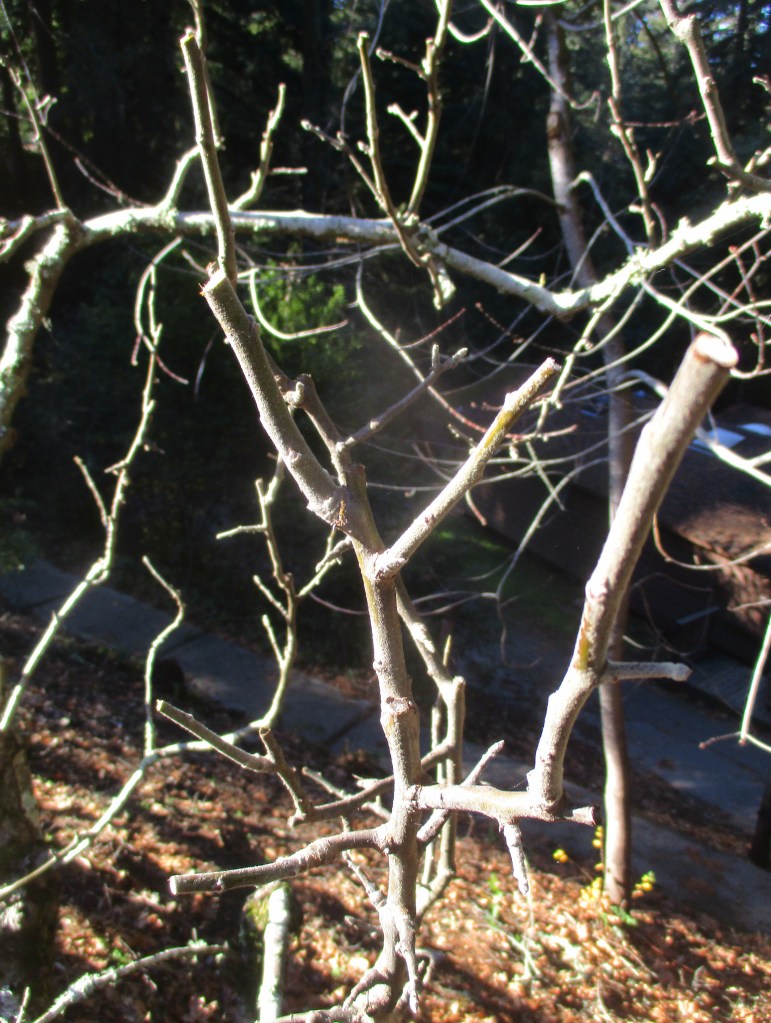
Bare root season is synchronous with winter for one simple reason. Winter is when bare root stock is dormant. Dormancy similarly justifies winter pruning of deciduous fruit trees. It functions like anesthesia for surgery. While dormant, deciduous fruit trees are unaware of relocation or pruning. They resume growth for spring as if nothing stressful happened.
Winter pruning, or dormant pruning, would be inappropriate at any time other than winter. It is both very specialized for particular deciduous fruit trees, and, for most, very extreme. Some trees that benefit from it could not survive such procedures while vascularly active. Such pruning would involve the removal of most or all foliage if it were not already gone.
Winter pruning is no more unnatural than major breeding that necessitated it. Because of breeding, fruit trees produce unnaturally heavy and abundant fruit. Many can not support the weight of the fruit that they could potentially generate. Major pruning limits production and improves structural integrity of stems. It also confines production to reachable stems.
Production of unnaturally big and abundant fruit consumes substantial resources. Winter pruning concentrates resources into less excessive fruit of better quality. Since fruit is not as congested as it would otherwise be, it is more resilient to pathogens. So are its stems, foliage and precursory bloom. Fruit is easier to harvest from less congested stem growth.
Stone fruit trees and pomme fruit trees are the most common that require winter pruning. Stone fruit include cherry, apricot, plum, prune, peach, nectarine and almond. They need distinct degrees of similar pruning. Large fruit like peach necessitate aggressive pruning. Cherry and almond do not require as much. Pomme fruit include apple, pear and quince.
Deciduous fruit trees are certainly not low maintenance. Their reliance on winter pruning is undeniable. Those who would like to grow such trees should be aware of their cultural requirements. Diligent research of pruning techniques is very helpful. Annual experience is even better. It is an opportunity to observe how trees respond to all earlier procedures.
 Tony Tomeo