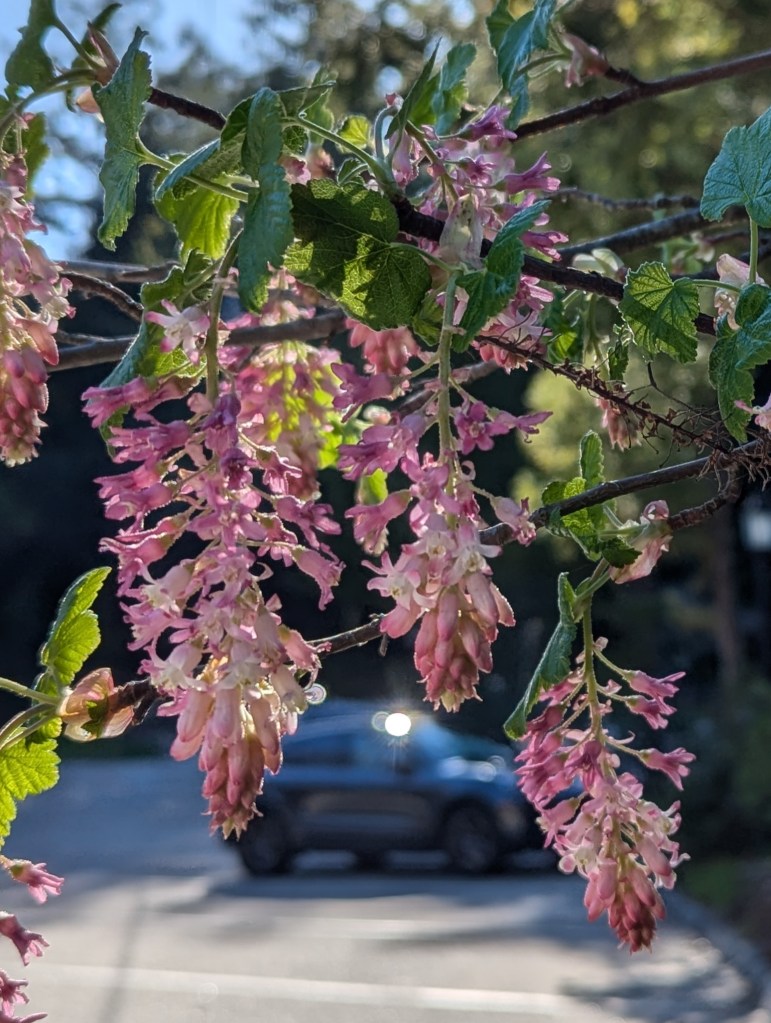
Its natural range extends from coastal Santa Barbara County to central British Columbia. Yet, red flowering currant, Ribes sanguineum, is elusive in the wild. It is more commonly observable within relaxed landscapes of native species. Individual specimens might not perform for more than a decade but can disperse seed. It behaves as if it is growing wild.
Mature specimens of red flowering currant can grow ten feet high and half as wide. Most stay lower. It is an understory species, so it tolerates a bit of shade. It may prefer shade to warm exposures. Young specimens may be wobbly enough to justify temporary staking. Removal of deteriorating old stems promotes more vigorous growth on fresh new stems.
Pendulous conical trusses of small pink flowers bloom by late winter or very early spring. Before anyone notices, birds are likely to take the few small currants that might develop. Small palmate leaves resemble those of scented geranium, and are somewhat aromatic. They turn yellow as they shed for autumn. Red flowering currant has a foresty character. It suits casual landscapes which border or merge into undeveloped areas.
 Tony Tomeo