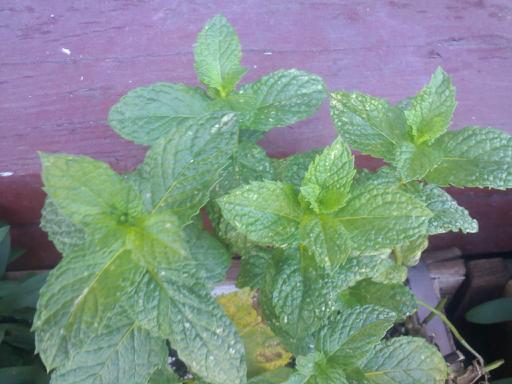
What most people who have grown the various mints remember about them is that they have a sneaky way of getting around the garden. They do not seem to be aggressive or weedy, but can be invasive with their subterranean stems nonetheless. That is why they are so commonly grown in pots, planter boxes or even pots sunken into the ground. Contained plants that get cut back at the end of winter every year look much better than unkempt plants that do what they want to anyway.
Once established, mint does not need any attention at all and only moderate watering. However, it performs much better with somewhat rich soil, regular watering and occasional grooming to remove old stems and spend flower stalks, (as well as getting cut to the ground in winter). Mints tolerate considerable shade or can be just as happy with full sun exposure.
Spearmint, Mentha spicata, is probably the most popular mint, with rich green serrate leaves that are a bit smaller than those of the second most common mint, peppermint. Minute pale blue flowers bloom in vertical trusses at high as two and a half feet. Most of the foliage stays lower, about a foot deep. The leaves can be used for flavoring fresh from the garden or dried. Like all mints, spearmint is very easy to propagate by division of rooted stems.
 Tony Tomeo