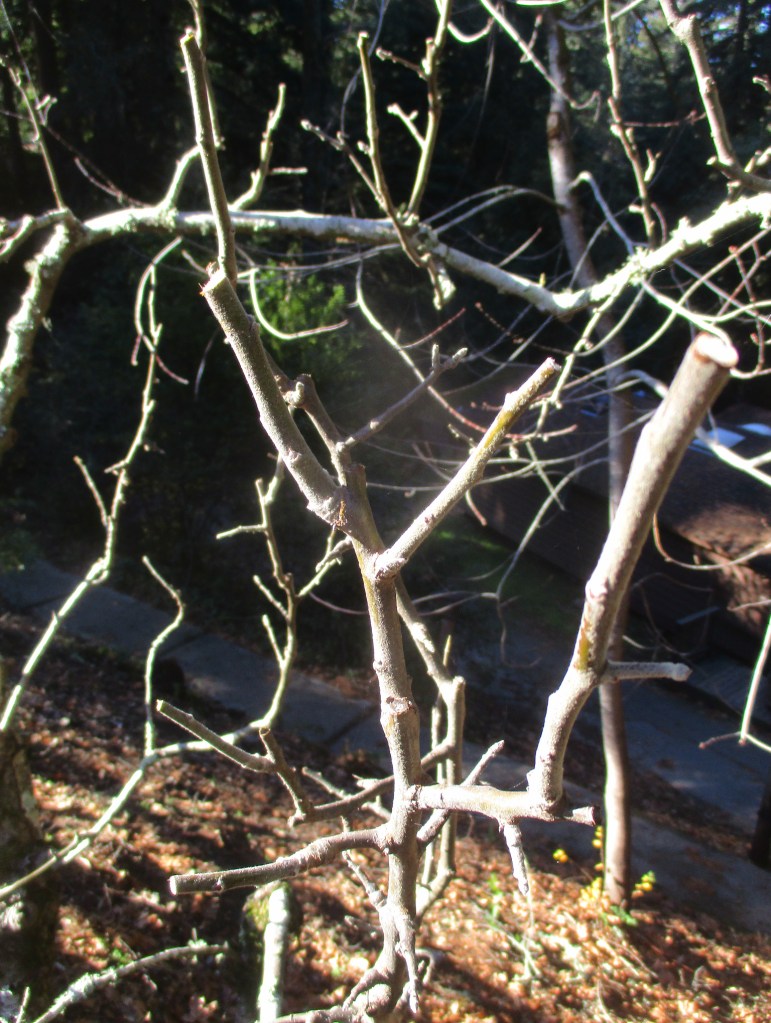
Bare root season begins now because bare root stock is so efficiently dormant for winter. Dormancy is the same reason that this is now also time for dormant pruning of fruit trees. It is comparable to anesthesia for surgery. Affected fruit trees waken from dormancy after winter with no idea of what happened. They then resume growth as if nothing happened.
Dormant pruning is important because of the unnatural breeding of most fruit trees. They have been bred to produce unnaturally large and unnaturally abundant fruit. Their fruit is so excessive that they can not support all that they could produce. Dormant pruning both limits production and concentrates resources. Resulting fruit is less abundant but bigger.
Bigger, better but less abundant fruits collectively weigh less than overly abundant fruits. Furthermore, dormant pruning improves structural integrity of affected trees. So, affected trees are able to support more weight but must support less. Ideally, they should need no propping for limbs that are too heavy with fruit. Limbs should not break from their weight.
Dormant pruning also directs and stimulates growth. It should prevent stems from getting so high that their fruit is beyond reach. Actually, most fruit should be within reach from the ground without a ladder. Vigorous growth is more resistant to pathogens than congested and less vigorous growth. There are actually quite a few advantages of dormant pruning.
Stone fruit trees and pome fruit trees are popular types that need dormant pruning. Stone fruit include apricot, cherry, nectarine, peach, plum and prune. They need similar pruning but to varying degrees. Peach needs more severe pruning because its fruit is so big and heavy. Cherry needs less aggressive pruning. Apple, pear and quince are all pome fruit.
Deciduous fruit trees are quite demanding, and reliant on timely dormant pruning. Those who would like to grow them should first be aware of their cultural requirements. Diligent research of pruning technique is helpful. Practical and annual experience is even better. Each year, it is an opportunity to observe how subject trees respond to dormant pruning.
 Tony Tomeo