Horticulturists are by nature, nonconforming. I happen to find it difficult to conform to what makes us nonconforming. Trends are fleeting. Old technology that has worked for decades or centuries is still best. Although I am not totally against chemicals, I find that almost all are unnecessary for responsible home gardening. Pruning is underappreciated, and fixes many problems.
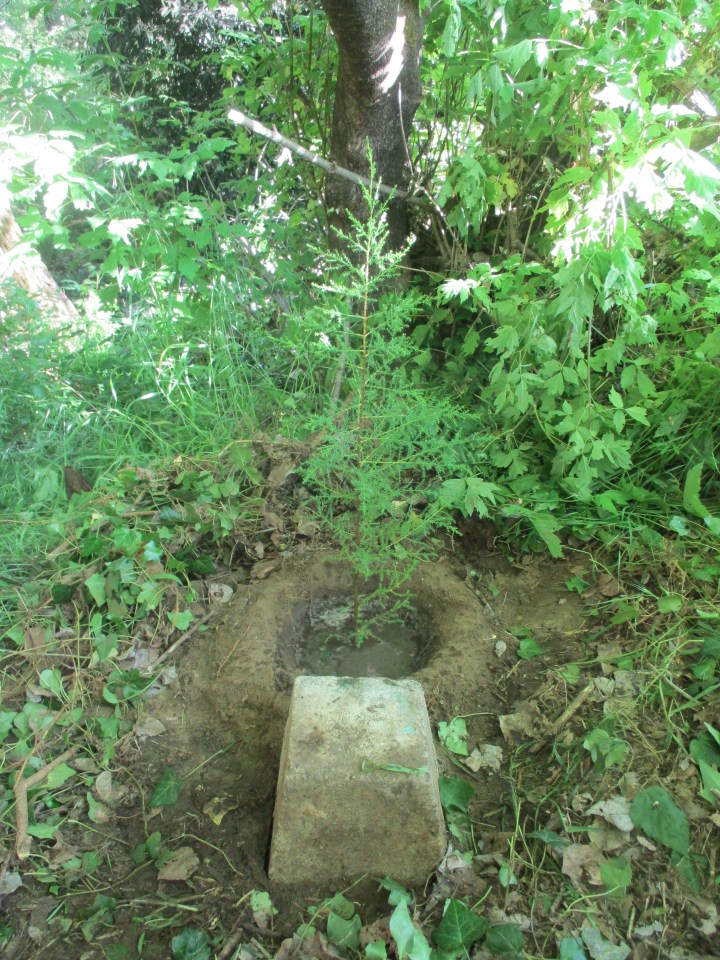
Steven Michael Ralls Memorial Tree is mostly camouflaged by the surrounding forest.
Steven Michael Ralls got his Memorial Tree this morning, three years after he passed away on May 2, 2017. The circumstances that coincided for this event were impossible to ignore. Just like the other Memorial Tree, which was installed to replace an oak that was missing from a parking lot island, the Steven Michael Ralls Memorial Tree also has a practical application.
The small tree is a young Monterey Cypress, Cupressus macrocarpa, that needed to be removed from one landscape, and was waiting in the recovery nursery to be installed into another. Of course, a Monterey cypress in no easy tree to accommodate. It is too big and too dark to be compatible with most of the landscapes into which we add smaller and mostly deciduous trees.
Just coincidentally, a few of the flowers that have been blooming here are State Flowers. These are four of them. Grand specimens of the State Tree of California live here, but the picture here shows unimpressive specimens that are not here, which is actually why they are amusing. The four State Flowers are those of California, Alaska, Idaho and Oregon. State Flowers of Washington and West Virginia are lacking.
1. Sequoia sempervirens, coastal redwood is not actually a State Flower, but is the State Tree of California. The two specimens at the center of this picture are unremarkable, but happen to be in Poulsbo in Washington, nearly five hundred miles north of their natural range. They seem to be three specimens only because the specimen on the right has two trunks. They are from the same old crop that went to become street trees in Los Angeles.
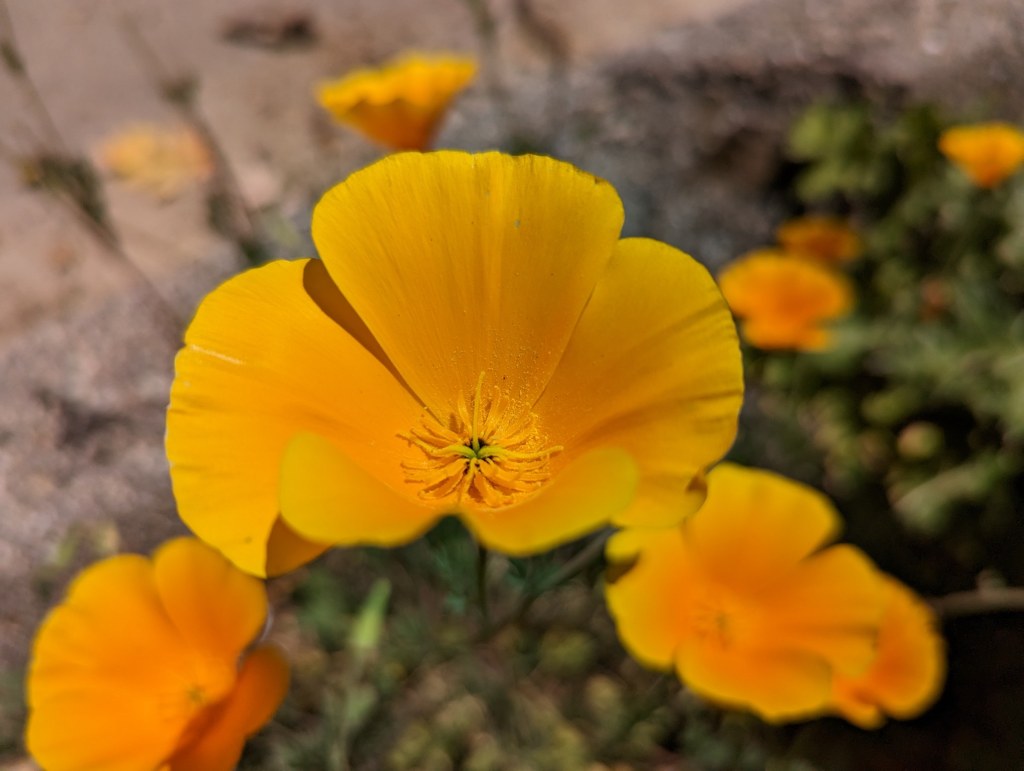
2. Eschscholzia californica, California poppy, as its name suggests, is the State Flower of California. It exemplifies Californian diversity, and in native to all but only two counties.
3. Myosotis sylvatica var. alpestris, forget-me-not is the State Flower of Alaska! It is not native, but it and Myosotis latifolia are naturalized. I do not know which species this is.
4. Philadelphus lewisii, mock orange is the State Flower of Idaho! It is native nearby but is naturalized here. Some bloom with fluffier double flowers like fancy modern cultivars.
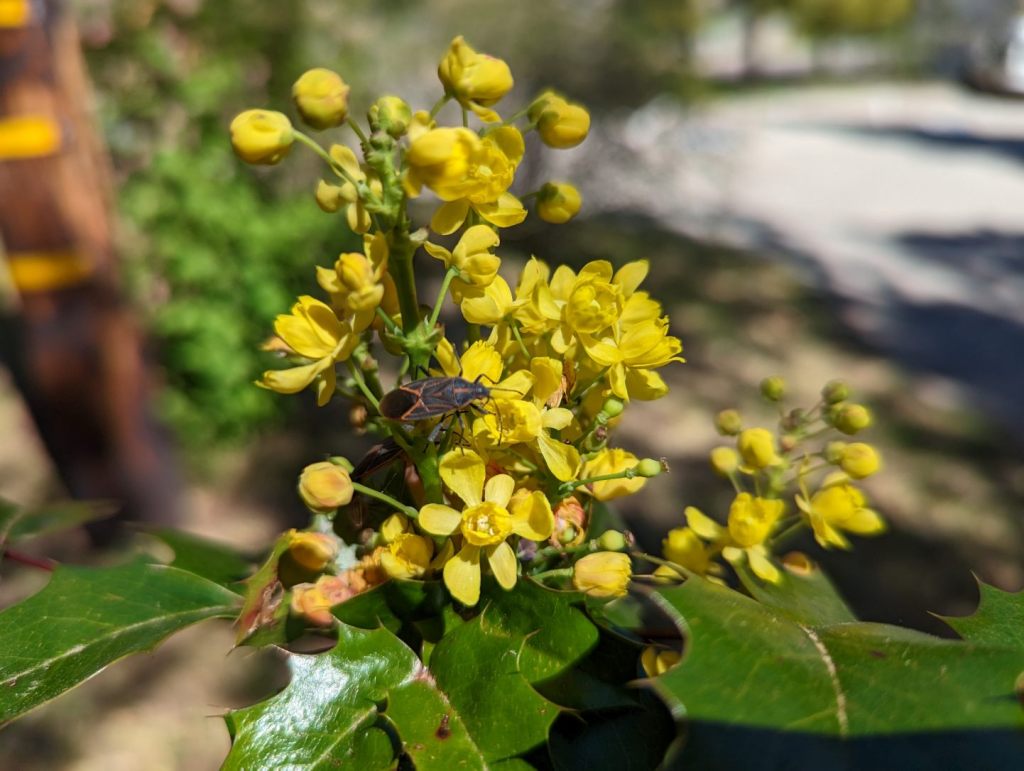
5. Mahonia aquifolium, Oregon grape, like California poppy, is named for the State that it is the State Flower of, which is Oregon. It is unrelated to actual grape. It is native here.
6. Rhody is similarly unrelated to Rhododendron macrophyllum, Pacific rhododendron, which is the State Flower of Washington, or Rhododendron maximum, great or rosebay rhododendron, which is the State Flower of West Virginia. The former of these is native.
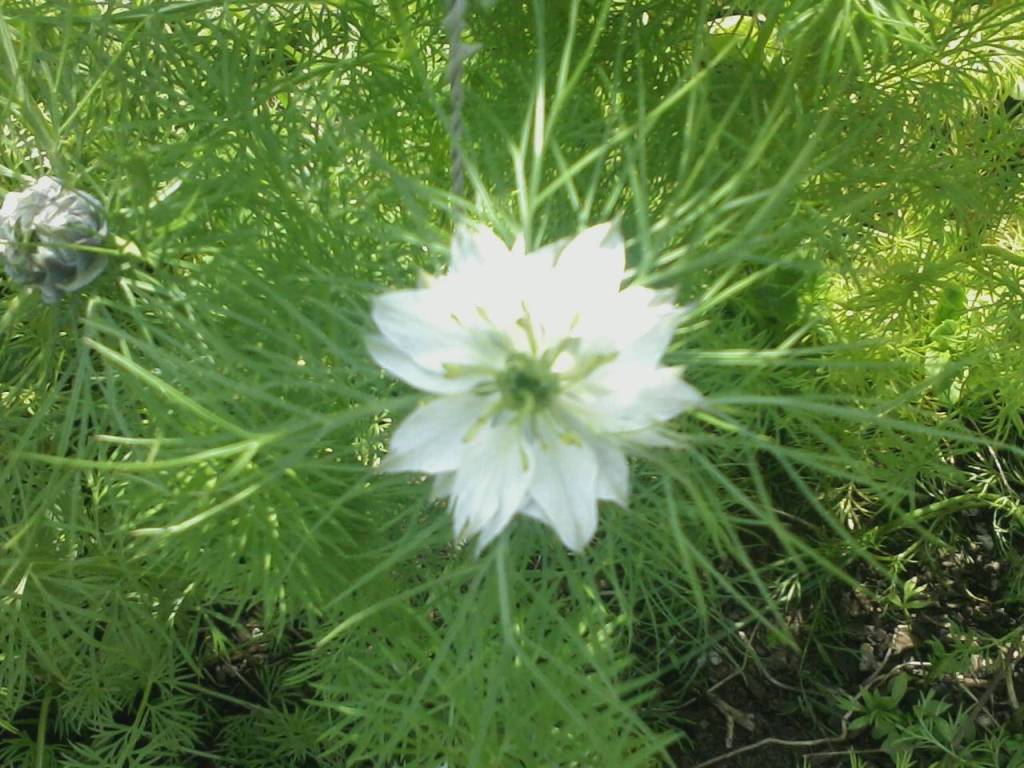
Nigella is more typically blue, but can alternatively bloom white, pink or lavender.
Those who crave blue for the garden probably know nigella, or ‘love-in-a-mist’, Nigella damascena. It blooms in May and June, typically with various shades of pastel blue, or can alternatively bloom pink, lavender or white. The lacy flowers are surrounded by lacier bracts, and suspended on thin stems among delicate pinnately lobed foliage, with very narrow (‘thread-like’) lobes. The plump brown seed capsules that appear over summer after bloom are commonly used as dried flowers. The plants can be half a foot to a foot and a half tall. Although annual, nigella self sows easily, so can grow in the same location for many years if allowed to.
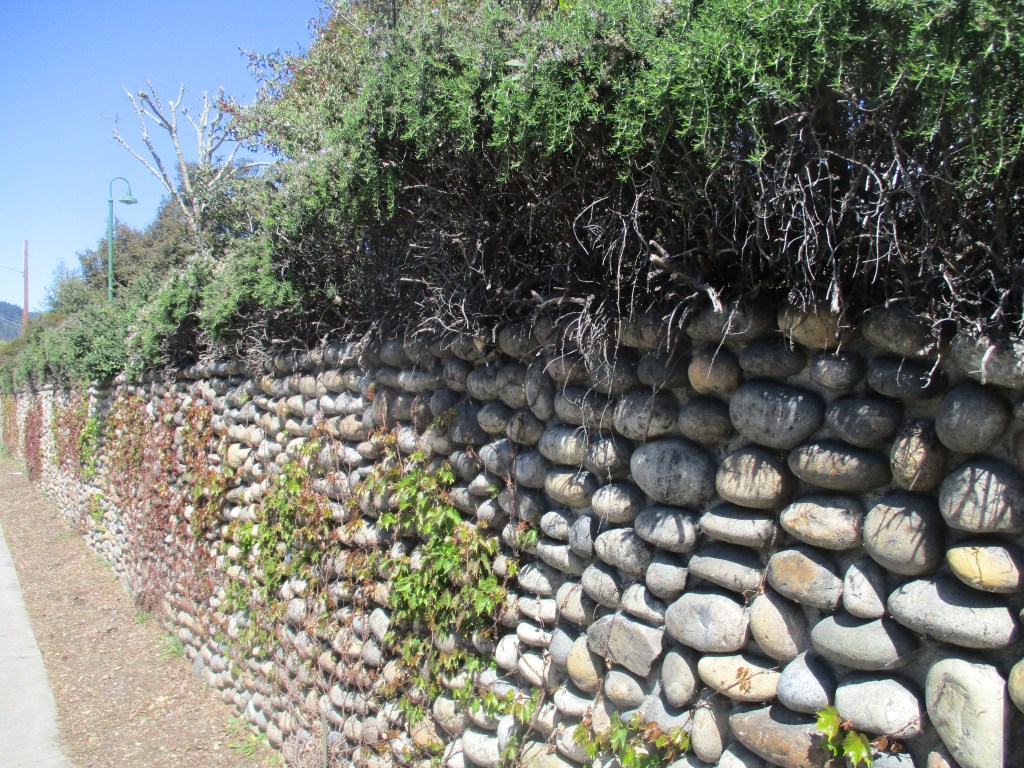
Cascading rosemary should actually cascade rather than get shorn into submission. (For this situation, it is subordinating to the climbing Boston ivy below.)
You can make fun of the decadent hair styles of the 1980s all you like; but you must admit that they were better than what came later. Back then, the assets of each particular type of hair were exploited instead of destroyed; sculpted instead of chopped into submission. Sadly, landscape maintenance evolved in a similar manner.
So many trees, shrubs and ground covers are either shorn too much to develop their naturally appealing forms, or not pruned severely enough to allow space for resulting new growth to mature and bloom like it should. Gardeners are notorious for shearing anything within reach. However, they are also notorious for allowing certain ground covers to get too deep and overgrown.
Trees that are short with multiple trunks when they first get planted are more likely than taller trees with single trunks to be shorn into nondescript shrubs. Olive, Japanese maple, tristania (laurina) and crape myrtle are commonly victims of this abuse. They are not only deprived of their form, but their grace and foliar appeal as well. Shorn crape myrtle may never be able to bloom.
Oleander, bottlebrush, arborvitae and various pittosporums that make nice informal screens in their natural forms are likewise very often shorn inappropriately and needlessly into all sorts of odd geometric shapes. Fortunately, pittosporums tend to make excellent formally shorn hedges as well as informal screens. Yet, when shorn without a plan, they more often develop into herds of noncontinuous geometric shapes. Oleander and bottlebrush, like crape myrtle, may never bloom if shorn too frequently.
Ground cover more often has the opposite problem. It does not get mown enough, or otherwise pruned down to stay shallow. This may not be a problem in most of the space covered by ground cover, but does make for hedge-like edges where the ground cover meets walkways, with all the problems of improperly shorn hedges. These edges can be softened if sloped inward and rounded off on top. However, lantana, star jasmine, acacia redolens and the ground cover forms of ceanothus do not bloom on these shorn edges unless the shearing procedure gets done at the right time to allow for enough new growth to mature in time for the blooming season.
There is certainly nothing wrong with properly planned and properly shorn formal hedges; but not everything needs to be shorn. Plants should be selected to be proportionate to their particular application without abusive shearing. Like the hair styles of the 1980s, the assets of each particular plant should be exploited instead of destroyed.
Fences are necessary. They contain children, dogs and minor livestock. They exclude deer, cattle and others who are unwanted within an enclosed space. Some obscure unwanted scenery. However, even the more ornate sorts are more functional than aesthetically appealing.
That is why hedges are popularly grown to obscure fences that obscure outside scenery. Climbing vines take up less space than hedges, but are likely to damage the fences that they are intended to obscure.
Where I lived in town, the garden in back was surrounded by fences. I loathed them. I grew a grapevine on one. Another one was outfitted with a trellis of twine for pole beans to climb. Tall zonal geraniums obscured at least the lower half of the fence behind the laundry yard. I would have preferred no fences at all.
There were no children or dogs to contain. Nor were…
Kaffir lily, Clivia miniata, and lily of the Nile seem to be similar but are very different. Both develop densely evergreen mounds of arched strap shaped leaves. Both bloom with many funnel shaped flowers in spherical umbels on upright stems. Even their thick and rubbery rhizomes and roots are similar. However, they are related neither to each other nor to lilies.
Kaffir lily bloom is rich orange, fiery orangish red or yellow. This is opposite of the pastel blue or white floral color range of lily of the Nile. While lily of the Nile requires abundant sunlight, Kaffir lily tolerates significant shade. Kaffir lily leaves and bloom are more stout and less pliable than those of lily of the Nile. Kaffir lily foliage is generally darker green.
Individual leaves of Kaffir lily can be three inches wide and about a foot and a half long. Mounding growth of old colonies can get more than two feet high. Bloom hovers barely above the foliage. A few round and bright red berries can develop after bloom. Individual seeds within each berry may be genetically variable. All parts of Kaffir lily, particularly the rhizomes, are toxic.
Home gardens are becoming shadier. Modern homes are taller to fit closer together. Modern fences are taller to compensate. Densely evergreen trees and large shrubbery compensate more. Taller homes and fences, and denser vegetation, shade more of their smaller modern parcels. Not much sunlight can reach the soil of modern home gardens.
Portions of a garden that are too shady for gardening are not necessarily useless. During warm weather, patios, sheds and workspaces are cooler with shade. Koi generally prefer shade to sun exposure most of the time. Compost piles and woodpiles need no sunlight. Such utilization of shady areas leaves more sunny areas available for actual gardening.
Deciduous trees that let warming sunlight through for winter are less practical nowadays. They do not always obscure undesirable scenery as trees in modern landscapes should. Warming winter sunlight is not so useful to energy efficient modern homes anyway. It is useful for gardening though. That is why smaller evergreen trees are now more practical.
Such trees or large shrubbery can do what they must without creating too much shade. If they get only high enough to hide nearby windows, they should not shade solar panels. Nor should they fill eavestroughs with debris. Perhaps more importantly, they allow more sunlight through than larger trees would. Lower vegetation appreciates what it can get.
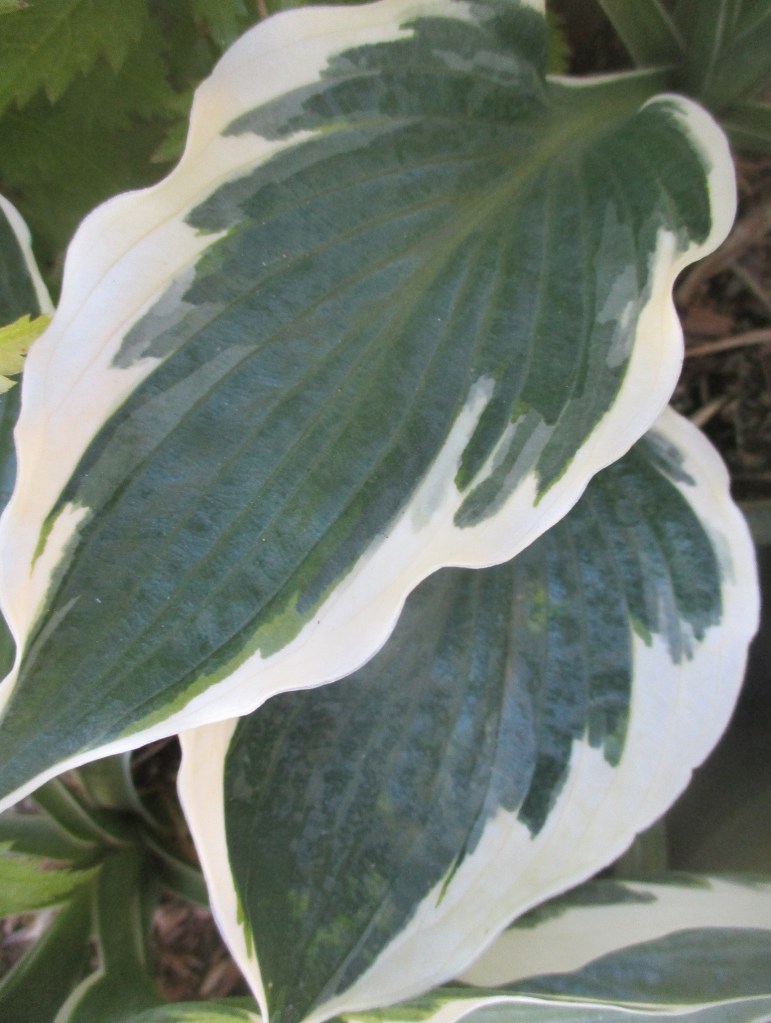
Some plants tolerate more shade than others. Some of the most tolerant are understory species. They naturally live within the partial shade of larger plants. Many have big dark green leaves to maximize sunlight absorption. Fern are familiar shade tolerant plants, but have finely textured foliage. Coleus and hosta have exquisitely colorful variegation.
Because most plants enjoy sunlight, the selection of plants for shade is limited. Rhododendron and azalea have a reputation for tolerance of shade. However, too much shade inhibits their blooms. Camellia and hydrangea tolerate a bit more shade, with less inhibition. Cast iron plant is a famously shade tolerant foliar perennial. Kaffir lily tolerates almost as much shade, and blooms splendidly.
There is significant traffic right outside. It is one of the three busiest roads around. No one here really minds, because we are mostly too busy with something else while we are here. We are accustomed to it as part of the ‘scenery’. The noise sometimes makes it necessary to shout to each other, or take a telephone call somewhere else, but is not too much of a bother otherwise.
However, the scenery that those in the traffic see from the road might be slightly less than appealing. Industrial buildings surrounded by pavement, building materials, work vehicles and all sorts of associated items are all that are in here. Next door, there is a herd of dumpsters! It is a view worth obscuring. Bay trees and box elders that used to screen the view are too tall now.
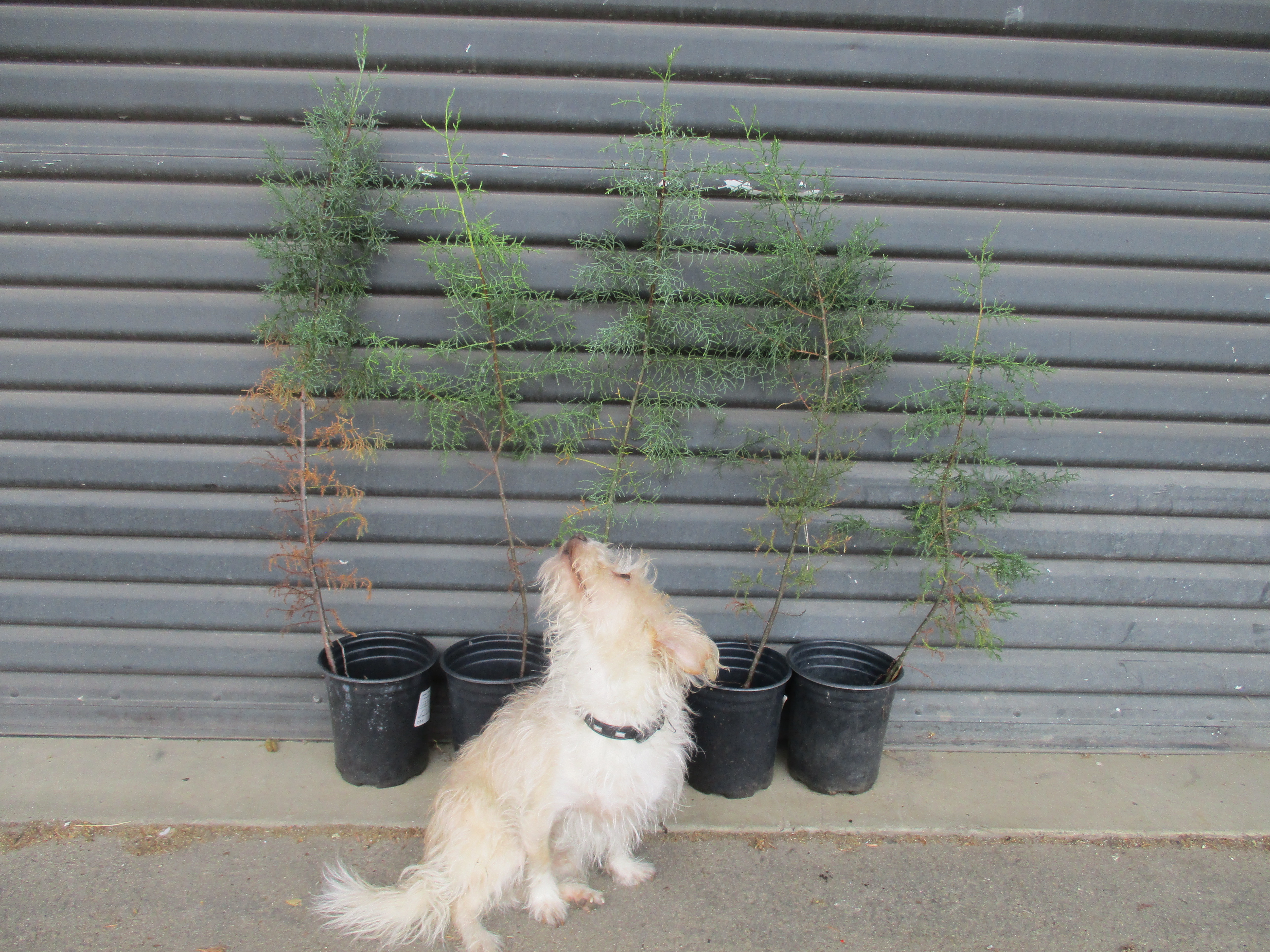
I should have planted these five Arizona cypress in…
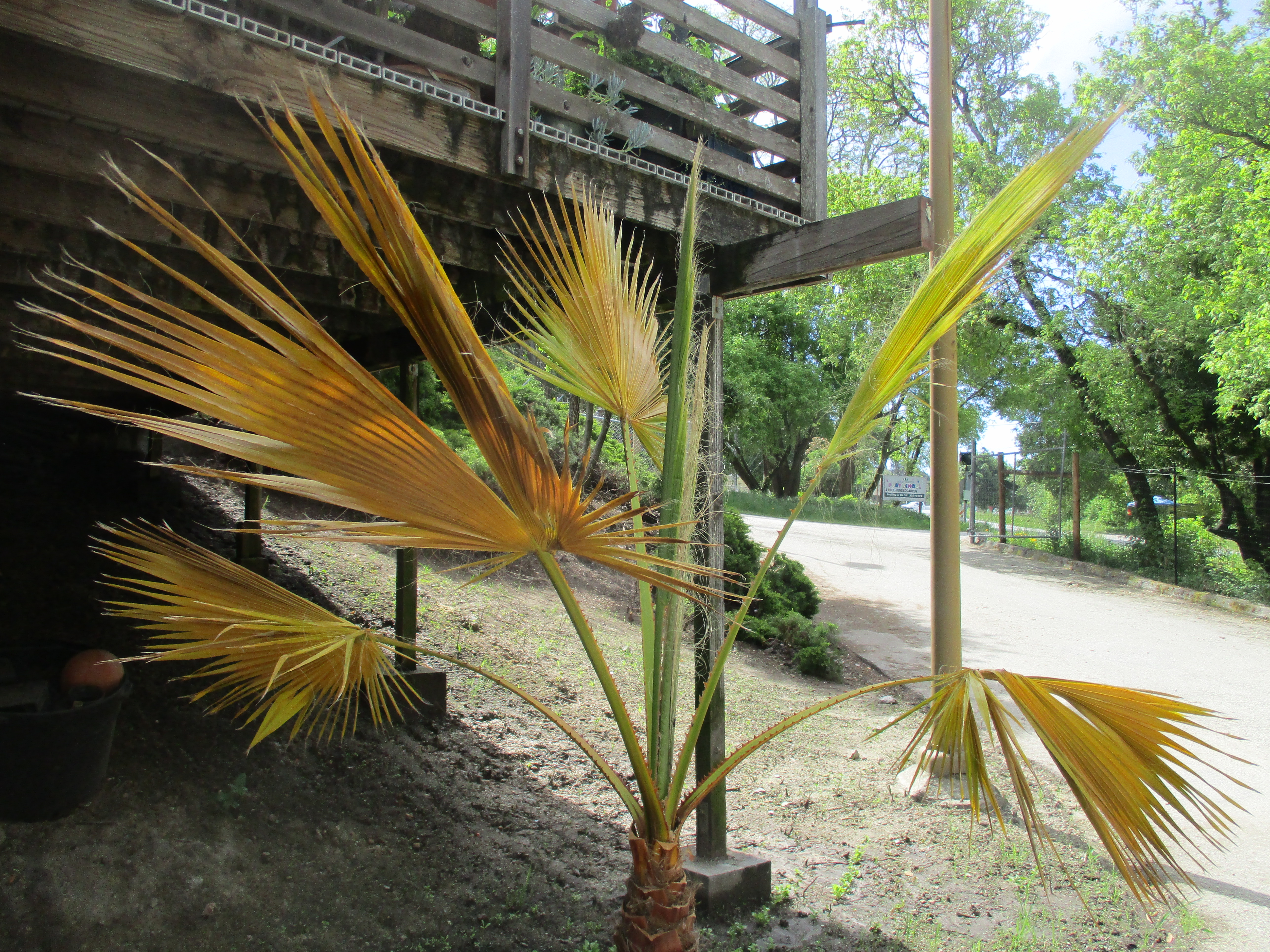
No, this is not wheat. It is the larger of the two Mexican fan palms that I dug and canned more than a week ago. ‘Wheat’ refers to the unpleasant phase that it is now going through. It is a long and awkward story about how it became known as the ‘wheat’ phase. All that anyone should know is that it refers to the color of the fading foliage. It fades from green to golden brown, just like ‘wheat’.
I say that the explanation is awkward because it involves an old skit by an offensive comedian on HBO in 1986, when the renowned landscape designer, Brent Green, was my college roommate.
Yes, we will just leave it at that.
Anyway, this is not at all unexpected. It is a normal process. I just wish it could be avoided. Every time I dig…
Vacation has been over for quite a while. I returned two weeks ago. It continues to be the topic for my Six on Saturday because I took too many pictures to share within only a few episodes. The sixth picture here is from the Tomeo Residence. All of the others are from the farm nearby, where my Pa grows bonsai stock, and where I pruned several neglected apple trees. Like last year, I left late, but managed to prune the apple trees before bloom. Because of the delay though, my trip to Southern California and Arizona is also delayed. Now, if I do not go soon, that trip will need to be delayed even more, until after summer.
1. Bloom was what I was trying to avoid. Fortunately, this is merely an abandoned plum tree that I did not prune. I managed to prune the designated apple trees prior to bloom.
2. Vegetation management does not get out much. They and the swine next door control vegetation where they live, but lack access to the orchard or other vulnerable vegetation.
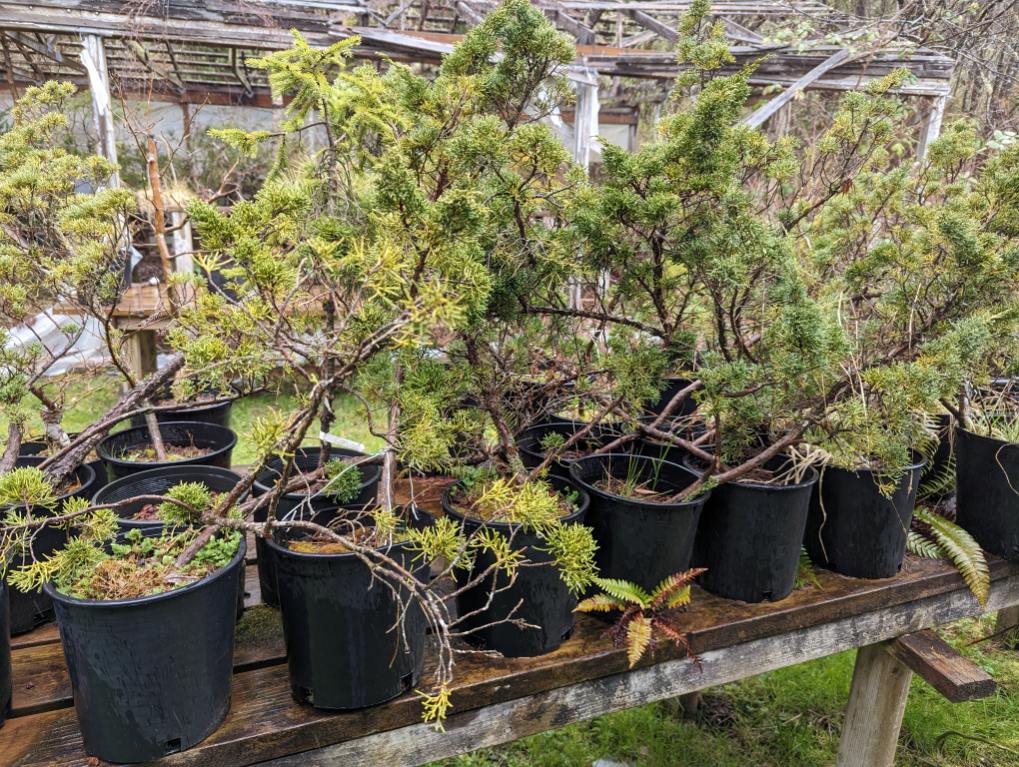
3. Bonsai stock is safe from vegetation management. Unlike the unvarying horticultural commodities that I am accustomed to, each of these bonsai stock specimens are unique.
4. Junipers might be the most common of the bonsai stock. This one might be Tolleson’s blue weeping juniper. It was certainly blue and weeping. I did not seem familiar though.
5. Larch is also popular for bonsai, at least in the Pacific Northwest. However, because I am unfamiliar with this genus, I have no idea what species this is, or if it is even a larch.
6. Rhubarb that my paternal paternal great grandfather gave to me when I was five years old inhabits a garden of the Tomeo Residence near the farm. I brought it here last April.

 Steven Michael Ralls Memorial Tree is mostly camouflaged by the surrounding forest.



 This is not exactly visually appealing.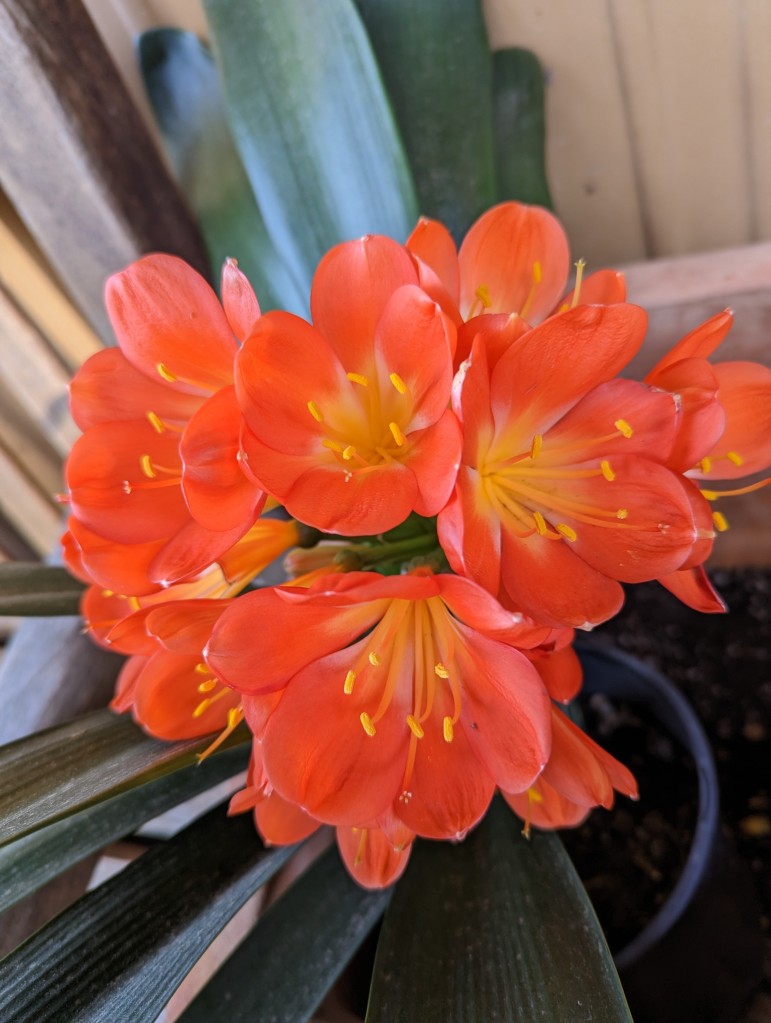
 The usual suspects.
  It is not as bad as it looks.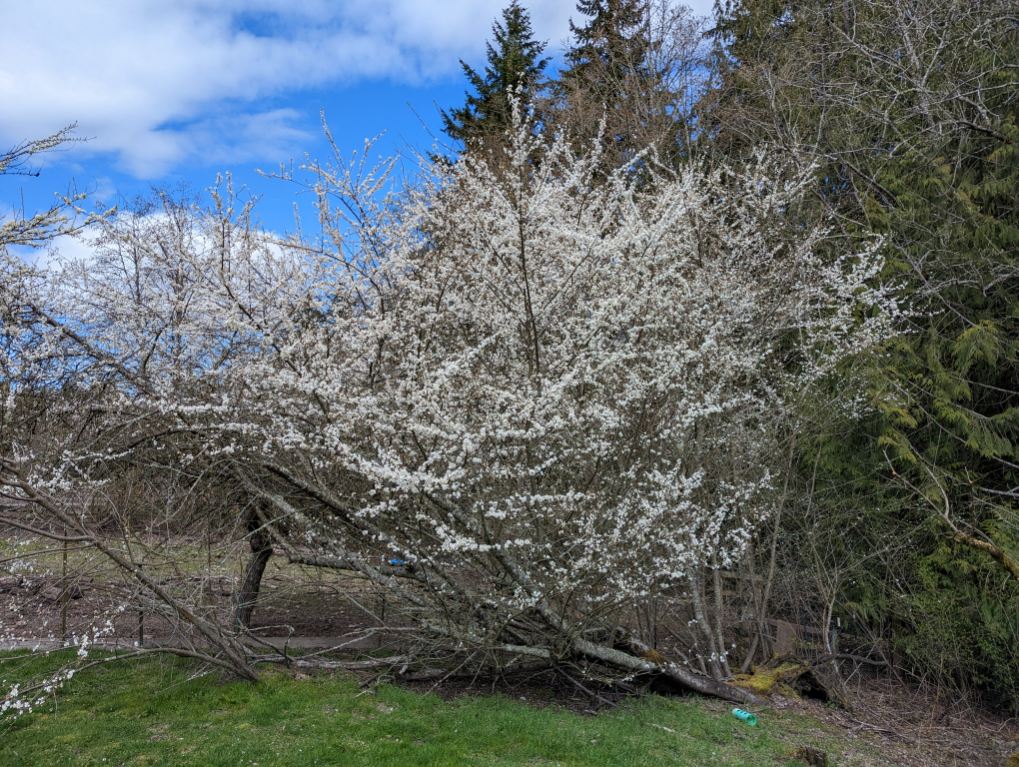



 Tony Tomeo