Horticulturists are by nature, nonconforming. I happen to find it difficult to conform to what makes us nonconforming. Trends are fleeting. Old technology that has worked for decades or centuries is still best. Although I am not totally against chemicals, I find that almost all are unnecessary for responsible home gardening. Pruning is underappreciated, and fixes many problems.
So many similar cultivars of low shrubby grevilleas come and go that it is hard to know what is what. All prefer sunny exposure and good drainage. They really do not like too much watering or fertilizer, particularly fertilizer with phosphorus. Pruning after bloom promotes more bloom, which keeps hummingbirds happy. Some people who are allergic to grevilleas can get a rash from handling the foliage.
Grevillea ‘Canberra’ was probably the most popular grevillea in the early 1990s, but can be hard to find now that other similar grevilleas are more common. It is a mid-sized shrub with dark green foliage that resembles pine needles on arching branches about six feet tall and broad. Small clusters of rosy red flowers bloom along the branches in winter and spring.
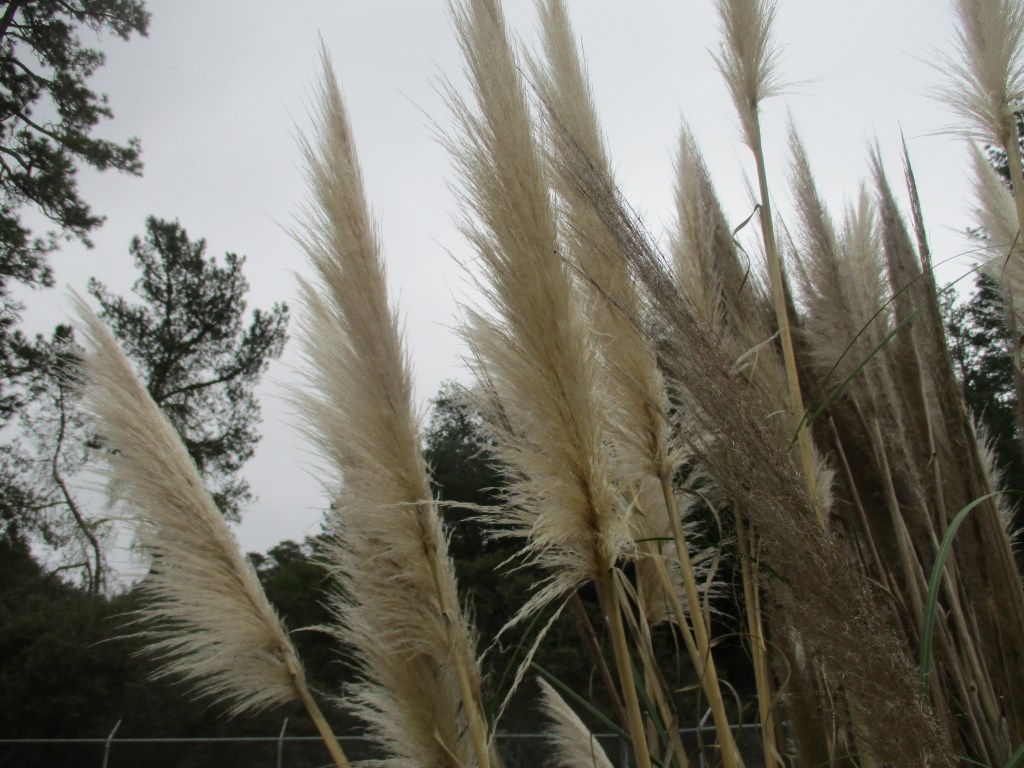
Pampas grass was planted intentionally a long time ago, but then became a weed.
Weeds can be so very sneaky; getting into the weirdest places, and taking on all sorts of forms. They are mostly annuals or perennials that infest lawns and beds, but can be shrubs, vines and even big trees that grow among desirable plants, in untended areas, in cracks in pavement and even in roof gutters and on flat roofs. Many look appealing at first, but then later get out of control and displace the plants around them, or wreck whatever fence, pavement or building they encounter. Heck, I even suspect that it was a weed that stole my neighbor’s Pontiac!
While the soil is still damp from earlier rain, the most common annual weeds that are just developing are easiest to pull. They will put up more of a fight later, after they have dispersed roots, and the soil has gotten a bit more firm. Perennial weeds that were already established before winter will be considerably more stubborn, but not as stubborn as they will be as the soil dries later. Bermuda grass and crabgrass are always nasty.
The biggest, sneakiest and most stubborn weeds are ironically descendents of substantial perennials, shrubs and trees that were once actually planted in gardens. They are sneaky because they look as pretty as their parents when they first appear, in order to dissuade us from pulling them. The problems are that they are often too abundant, and very often get into spots where they will be problematic as they grow.
For example, Acacia dealbata and black locust are rather appealing trees while they are young, especially when they bloom. This is why they were originally planted in local gardens. It is tempting to allow self sown seedlings to grow instead of pulling them when they first appear. However, because they were not actually planted strategically where they can necessarily be accommodated, they grow in random situations, too near to pavement, fences or eaves, or in areas that are already landscaped. As they mature, they can damage these features or the plants around them.
Privet, pampas grass, castor bean and a variety of palms, acacias, ivies and several other plants that do a bit too well in local gardens have certain potential to become invasive or aggressive big weeds. Tree of Heaven, giant reed, the various brooms and the most invasive of acacias have not been available in nurseries for many years because they are so problematic, but continue to be some of the most invasive and aggressive weeds in California.
This is the backside of some of the better junipers!
Junipers have a bad reputation. They earned it at a time when they were too common. Too many were installed into situations that they were not appropriate for. As they grew, they were unpleasant to handle. If not handled enough, they became overgrown and shabby. Once that happened, there were nearly impossible to prune back into confinement without being ruined.
I was never one to completely subscribe to that bad reputation. There were just too many junipers that I really liked, particularly the Hollywood juniper and the Hetz blue juniper. There were a few that I disliked, and I still loath the common tam juniper, but they were in the minority, and happen to be the same sort that are becoming more scarce.
For landscape situations that they happen to conform to, there really is no reason for junipers to…
Lily is such a generic classification. Kaffir lily, water lily, calla lily, canna lily and many other lilies are not lilies at all. These examples are not even remote relatives. Real lilies are of the genus Lilium. However, even the most familiar of these are hybrids of various species. Asiatic lilies are a group of such hybrids that classify as Lilium asiaticum.
Asiatic lilies go into the garden as dormant bulbs during late autumn or winter. They grow through spring to bloom for early summer. Bulbs require vernalization to bloom, so may not bloom annually within mild climates. Asiatic lilies that are now popular as spring cut flowers grow in greenhouses. Mature bulbs can grow large enough for propagation by division while dormant. Bulbs like rich and evenly moist soil.
Asiatic lily bloom can be white, yellow, orange, red, reddish purple or pink. Many are delightfully monochromatic. Some display spots, stripes or darker centers. Each bulb extends a single stem with a few flowers on top. Each flower extends six flaring tepals in familiar lily form. Unlike most other lilies, Asiatic lilies do not produce enough pollen to be messy. All lilies are toxic to cats.
Some gardens continue to recover from the exceptionally wintry weather of last winter. Frost damaged some plants, and killed a few. Wind damaged trees. Excessive rain caused erosion and saturation. This collectively unpleasant weather inhibited some from maintaining their gardens. Yet, some plants that require vernalization are performing splendidly.
It seems like an odd juxtaposition. Bloom of some plants is so unusually robust amongst remaining weather damage. Some bloom is noticeably late while most is precisely on schedule. It is not so odd to the plants who seem to behave so oddly though. Whether they appreciate vernalization or dislike frost, they respond to the weather.
Vernalization is merely attainment of sufficient chill to convince plants that it is winter. Many plants that are endemic to climates with cooler winters appreciate such reminders. It initiates their dormancy and resets their respective schedules. They know that subsequently warmer weather initiates their growing or seed germination season.
Plants that are endemic to climates with mild winters are less reliant on vernalization. Some of such plants are vulnerable to frost. Canna are tropical plants from mountainous regions that sometimes experience frost. They die back harmlessly if frosted, and remain dormant until safely warmer weather. They react to chill, but do not require it seasonally.
Spring bulbs, forsythia and flowering cherries have already bloomed atypically boldly. Later flowering cherries, as well as purple leaf plum, lilac and wisteria continue to do so. Peonies are likely to bloom better than typical a bit later. They are rare locally because of their reliance on typically unreliable vernalization.
Some cultivars of apple and pear are likewise unreliable within locally mild climates. Those that normally perform well here may perform better this year. After early warmth to initiate bloom, stone fruit bloom can succumb to late frost. Last winter though, frost was continuous enough to delay bloom until after the last frost. Extra vernalization may instead enhance production.
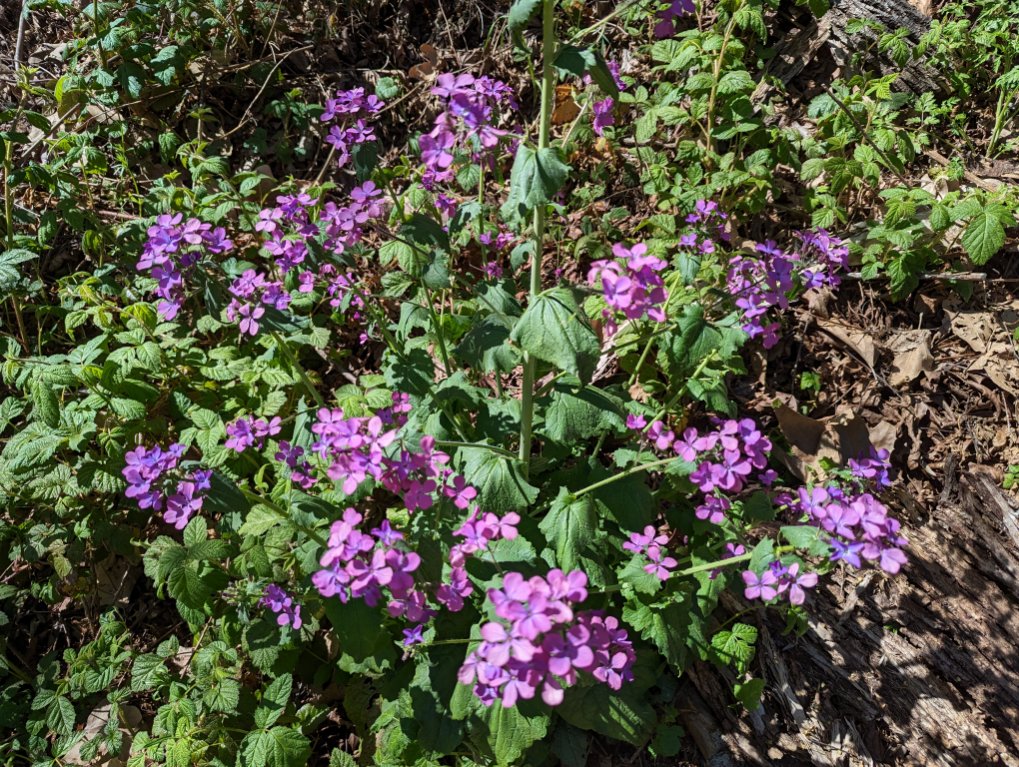
Lunaria annua is known more for coin shaped seed pods than bloom.
Money plant, Lunaria annua, which some may know as ‘honesty’, is honestly not a wildflower here. It is neither native nor naturalized. Yet, it seems to grow wild on roadsides, in drainage ditches, and around the perimeters of some of the landscapes. It certainly produces enough seed to naturalize. It just would not have done so in this climate without a bit of intervention.
Many years ago, someone who maintained the landscapes here started sowing seed for money plant. I do not know if he was the first to sow the seed, or if he collected it from plants that someone else grew. He collected seed annually to disperse randomly by simply tossing it out wherever he though it might happily grow into more money plant.
Since money plant wants a bit more water than it gets…
The only reason we developed a small vegetable garden here this year is that we have been unable to go to work for about a month. Without my second most time consuming employment, I had time to clear a small unused space (which was not nearly as simple as that sounds) and sow seed for vegetables. It was a late start a month ago, but not too late.
In fact, there was still time to do it before the last storm to go through. I know that sounds trivial, but as a Californian who is accustomed to gardening in a chaparral climate, and sometimes where there is no water available, planting prior to a storm ‘seems’ to be rather important. I know it is not. Water is available here. Otherwise, I would not grow vegetables.
Not only was there a storm, but there was a second storm later! Of…
Much has changed during the previous two weeks while Rhody, Carson and I were in the Pacific Northwest on vacation. The previously incessant rain suddenly stopped when we left. Canned and potted plants were consequently in need of irrigation after we returned. The weather is splendid now. Delayed bloom is now making up for lost time. Vegetation is growing like weeds, and much of it is, particularly beyond refined landscapes. Work is about as behind schedule as it always is. I got all but the last of these six pictures at work this week. Pictures of vacation are not transmitting from the telephone to the computer. Perhaps I will share some next Saturday. I did not take many.
1. Iris X louisiana ‘Black Gamecock’, Louisiana iris is a gift from Skooter’s Family. There is enough for this closely spaced row on fifty linear feet of the edge of the drainage pond.
2. Rumex occidentalis, dock is a prolific native that inhabits another portion of the edge of the drainage pond. It is pretty but may later be replaced by multiplying Louisiana iris.
3. Lunaria annua, money plant seems to be naturalized, but only because someone who retired from here used to collect and disperse its seed. We try to continue this tradition.
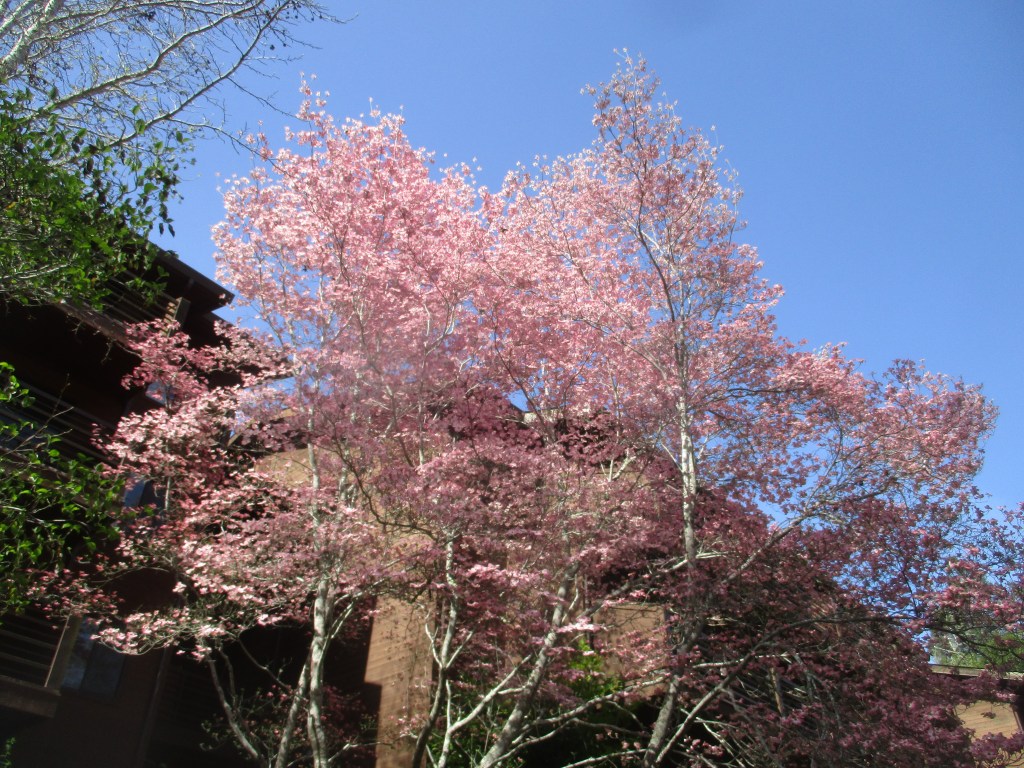
4. Cornus florida, flowering dogwood is late but spectacular. It does not perform as well within the arid chaparral climate of the Santa Clara Valley, just a few miles to the North.
5. Malus ‘Prairiefire’, flowering dogwood is about as spectacular. I believe that it blooms about now naturally though. I do not know what its species is, which is why it is omitted.
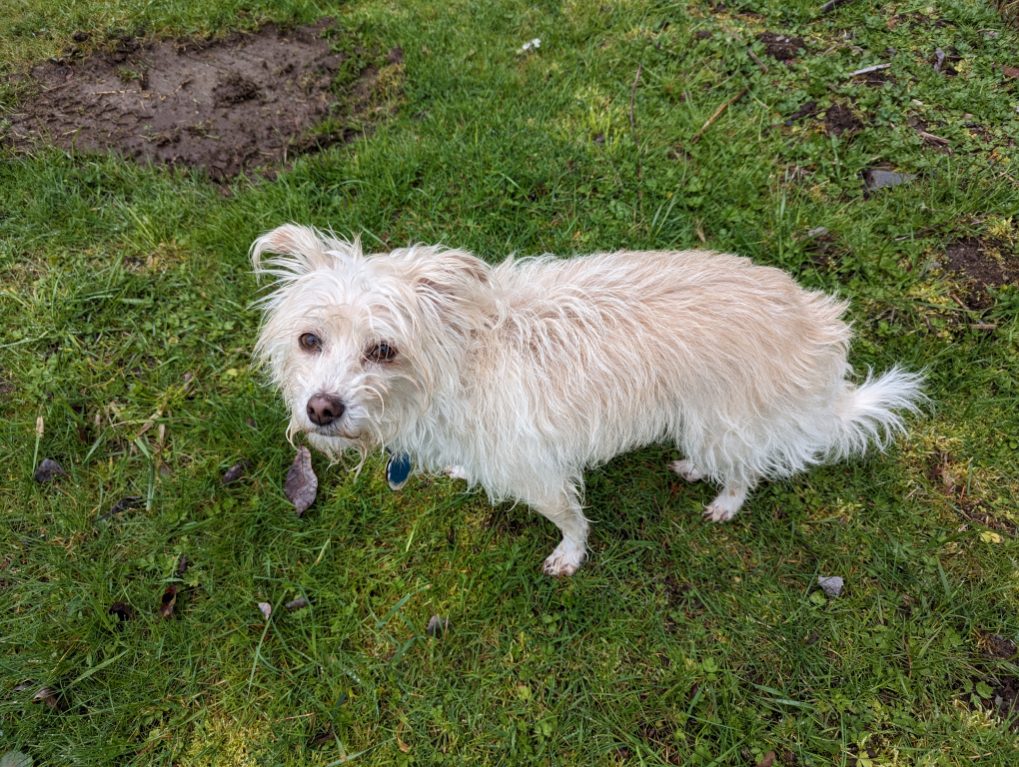
6. Rhody enjoyed the Pacific Northwest but not getting his picture taken. This was taken just before we left the farm near Poulsbo where I pruned several abandoned apple trees.
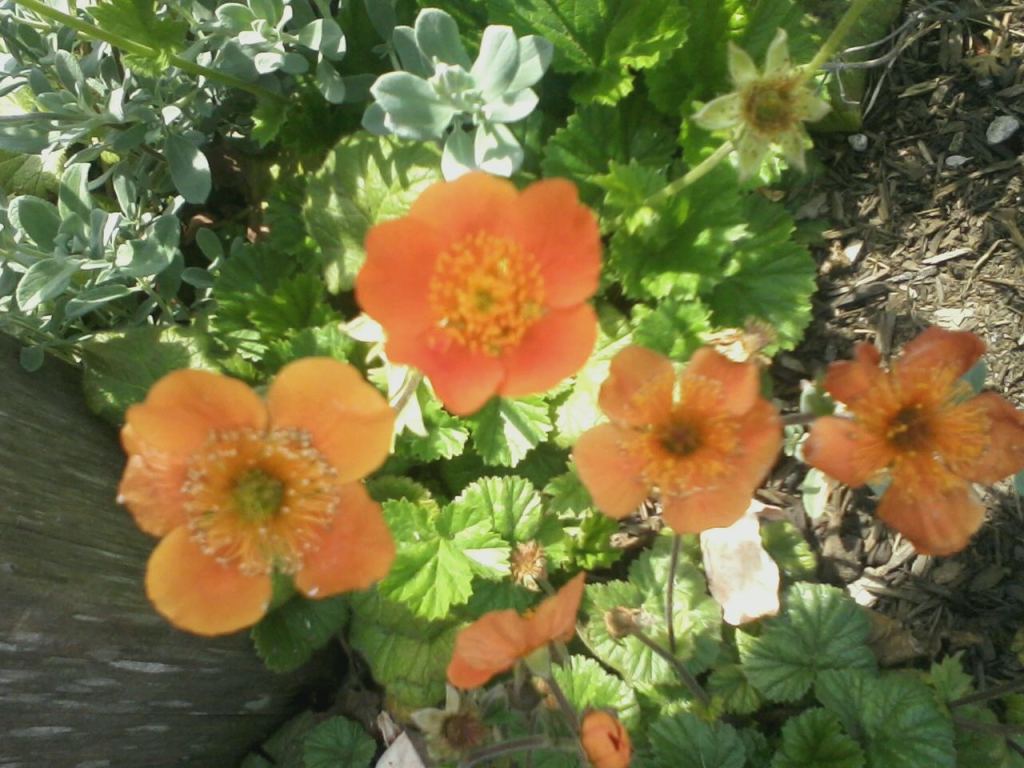
Old fashioned geum (or ‘avens’), Geum coccineum, was popular in rock gardens of the 1970’s because it clings to stone, and cascades somewhat. In modern gardens, it works just as well in large pots or planters, mixed with other perennials. The fuzzy foliage forms compact mounds about half a foot high and wide. The bright orange flowers with fuzzy yellow centers stand about twice as high, and bloom from spring through summer. Removal of fading flowers promotes continued bloom.
Landscapers and gardeners are only the two most familiar of horticultural professionals. There are also landscape designers, horticulturists, greenskeepers and various nurserymen, just to name a few. Each of the many distinct horticultural professionals works within a specific horticultural industry; like each of the many different types of physicians works within a specific medical industry, even though many might work together in the same hospital.
Arborists are the horticultural professionals, or even horticultural ‘physicians’, who work specifically with trees. In fact, they had historically been known as ‘tree surgeons’ because they perform what might be considered to be surgery on trees. After nurserymen grow trees in nurseries, and landscapers install trees in landscapes, arborists take over to care for the same trees like gardeners take care of landscapes below the trees.
Arboriculture, or the horticulture of trees practiced by arborists, is important because trees are so different from other plants in the landscape. Obviously, trees are larger than anything else. Structural problems or instability can have devastating consequences, not only to the affected trees, but also to anything around them that might be damaged by falling limbs or even entire trees. Some trees are large enough, or even have limbs that are large enough to crush an entire home.
Arborists who are certified by the International Society of Arboriculture, or ISA, have passed an examination of their arboricultural expertise, and maintain their certification by attendance to educational seminars, workshops and other relevant ISA approved events. Certified arborists are the most qualified to assess the health, stability and structural integrity of trees, and prescribe any necessary arboricultural procedures. Such matters should not be trusted to other horticultural professionals who specialize in other aspects of horticulture.
The website of the ISA at www.isaarbor.com is the best resource for finding certified arborists and the tree service businesses that they are affiliated with. Arborists can be found within particular regions by city or ZIP code, or directly by name. The website also features all sorts of information about trees that is useful to anyone who lives with them or wants to add more to the landscape.
Of course, there is more to gardening than trees. For those who missed reading about it already, it is nearly time for the most locally grown of horticultural events. Spring in Guadalupe Gardens will be April 28, from 10:00 a.m. to 3:30 p.m., in the Guadalupe River Park and Gardens between Taylor Street and Coleman Avenue in San Jose. More information can be found online at www.grpg.org or by telephoning 298 7657.


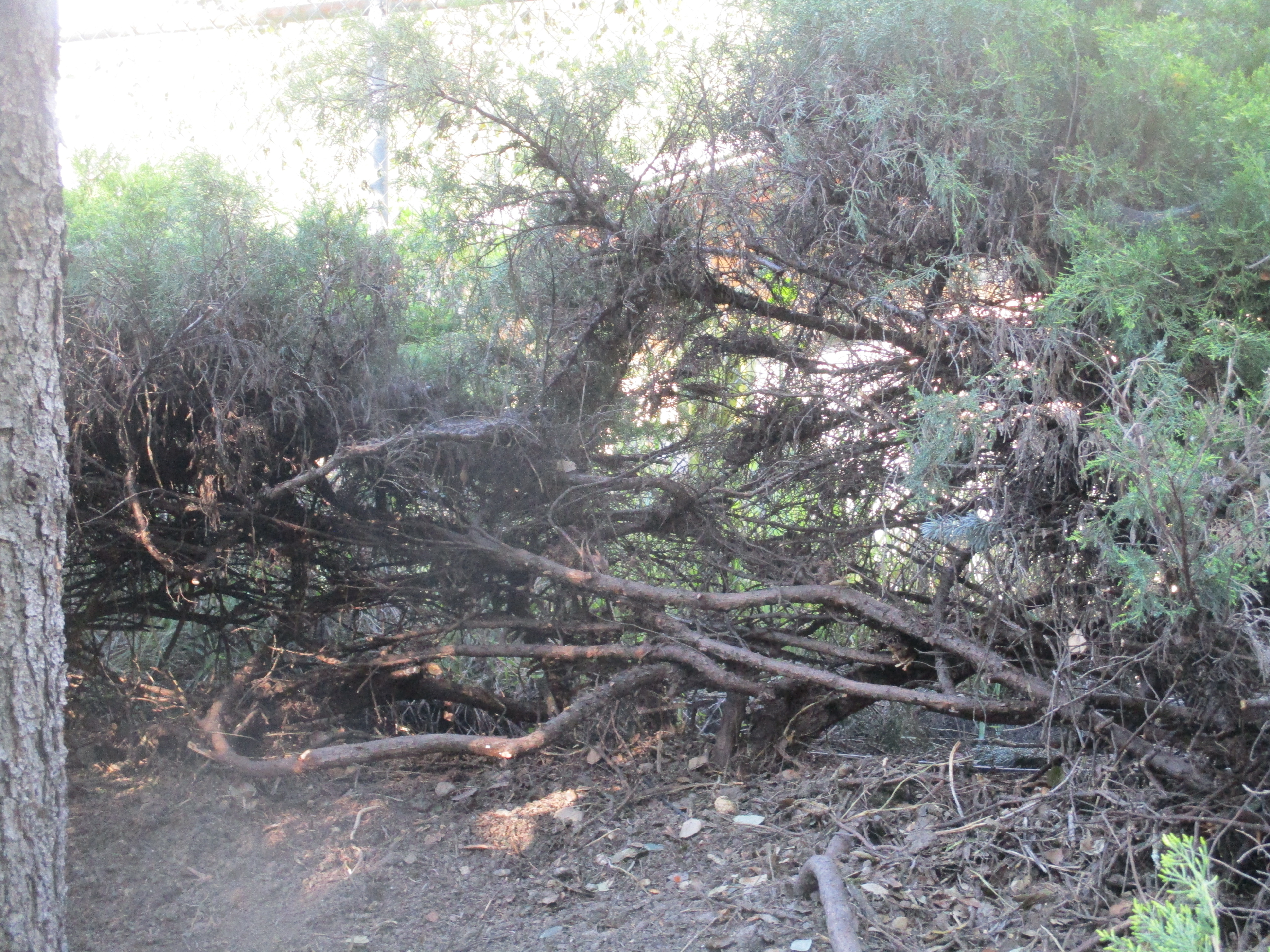 This is the backside of some of the better junipers!

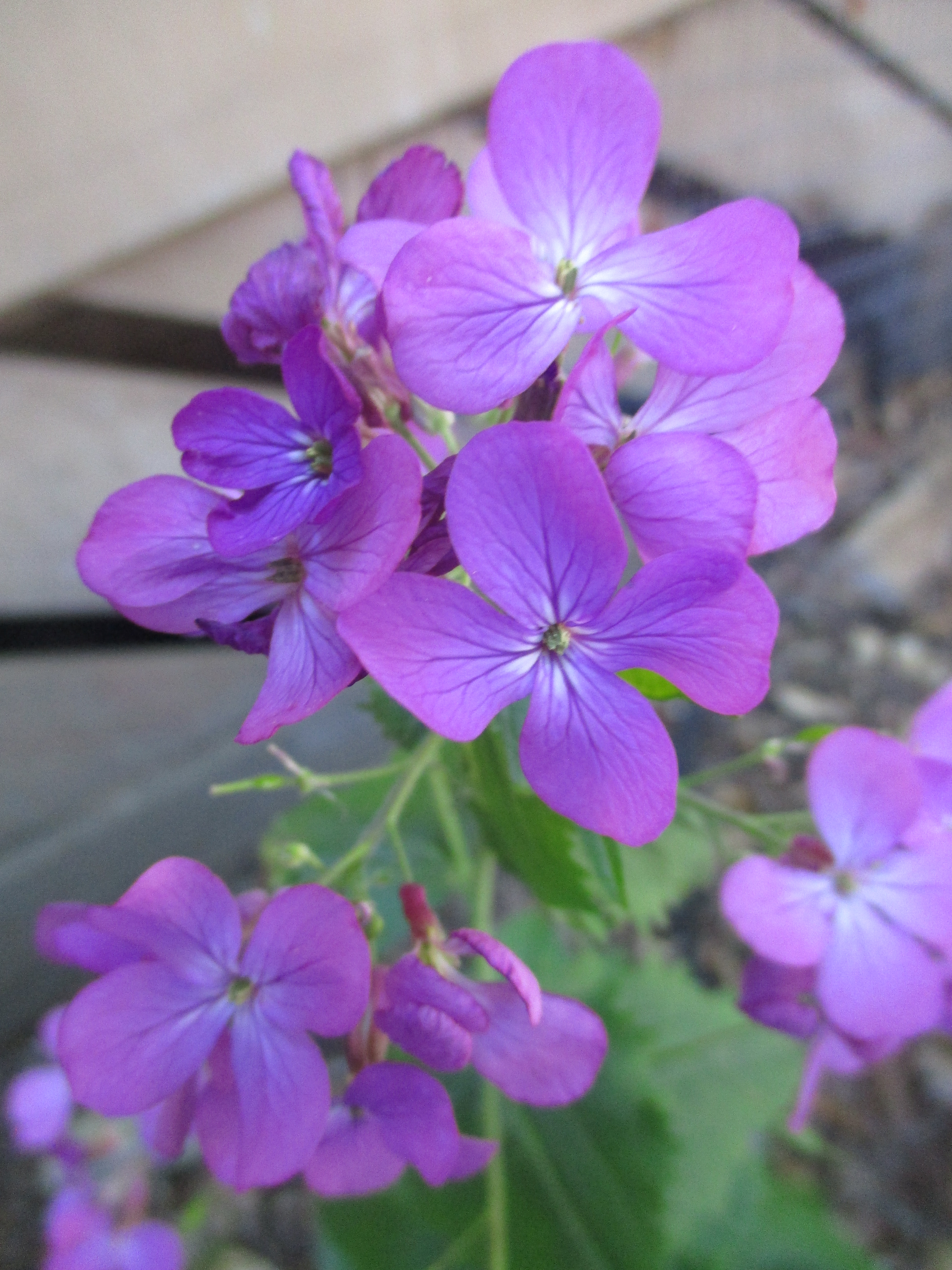 Lunaria annua is known more for coin shaped seed pods than bloom.
 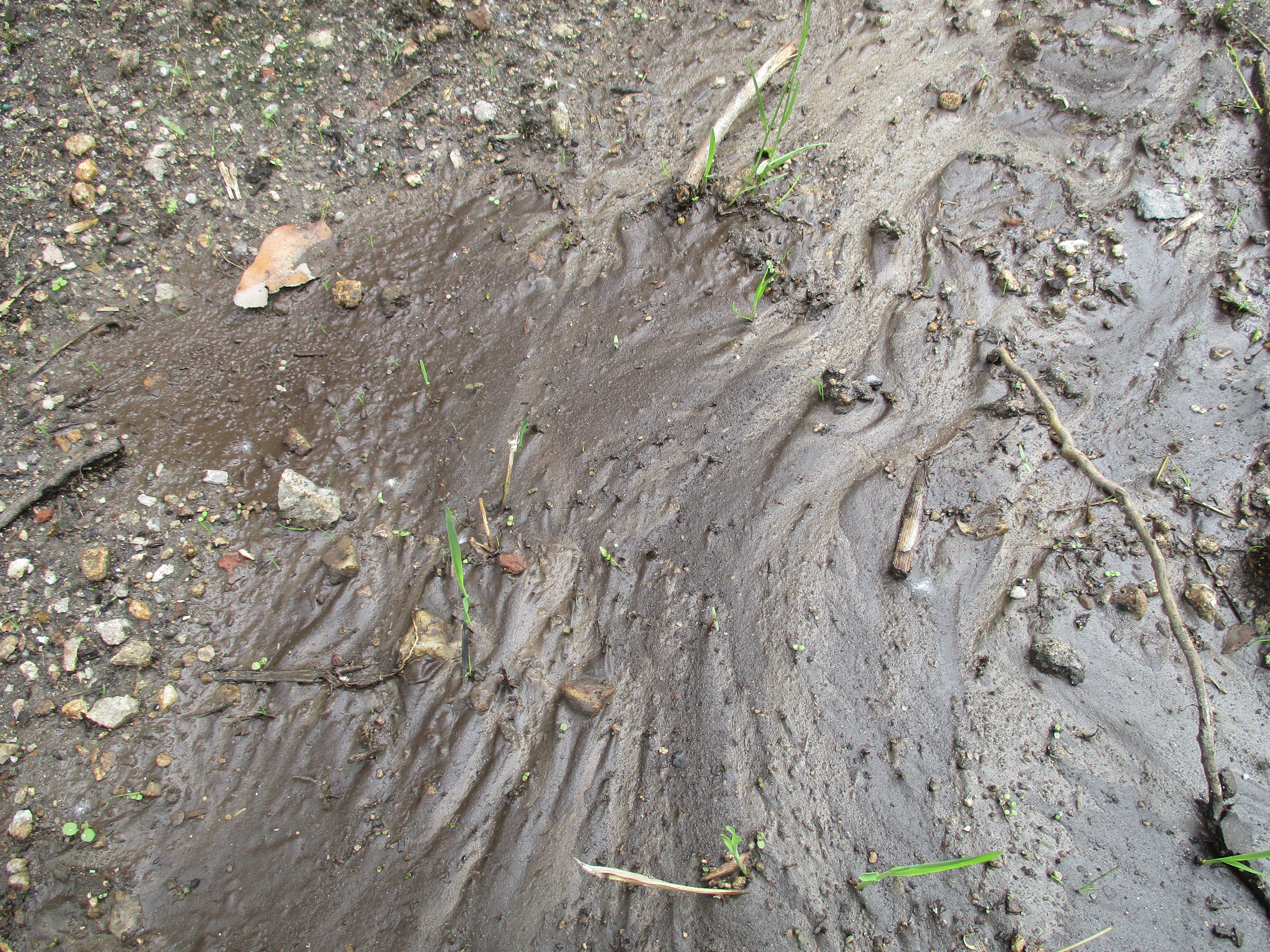 Mudslide!


 Tony Tomeo