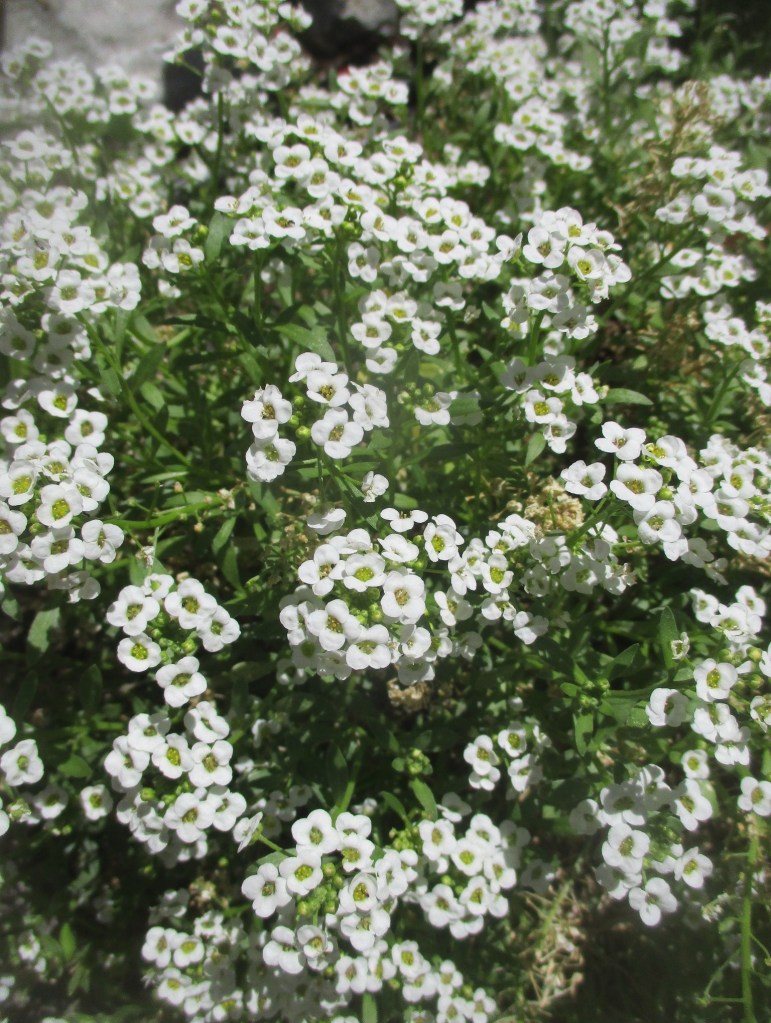
Warm Season Bedding Plants Begin

Alyssum grows very readily from seed.

Annual bedding plants are surprisingly more popular among those who enjoy gardening less. Those who procure the services of gardeners appreciate the rich colors and simple efficiency of annuals. Many who are more directly involved with their gardening consider them to be decadent. Nonetheless, warm season bedding plants will soon be in season.

Cool season bedding plants should perform well until the weather becomes too warm for them. There is therefore no rush to replace them yet. Besides, it is likely still a bit too cool for mature warm season bedding plants to be out in the garden. However, seed for warm season bedding plants takes time to grow. Some should start now to be ready for spring.

For example, petunia, impatien and zinnia are some of the most popular of warm season bedding plants. Almost all of them arrive at their respective gardens as somewhat mature plants within cell packs from nurseries. Presently, such plants may be vulnerable to frost. However, seed of these plants that begin now should start to grow after the threat of frost.

Not many of even the most avid of garden enthusiasts grow these popular warm season bedding plants from seed. Yet, a few do so. Some unusual or rare plant varieties are only available as seed. Many common wildflowers and ‘true to type’ annuals provide seed for subsequent generations. Such seed generally start in flats with shelter from frost indoors.

From flats, seedlings may graduate to cell packs or small pots prior to transitioning into a garden. Some should actually begin within cells rather than flats. Seedlings relocate into a garden when adequately mature, whether from flats, cells or pots. Seed for many warm season bedding plants perform best directly in the garden though, without transplanting.

Nasturtium seedlings do not grow well within the confinement of cells. Then, they remain somewhat pekid for a few days while they recover from transplanting into a garden. They grow so much more efficiently from seed sown directly into a garden. Marigold can grow about as well from seed directly in the garden as they can as seedlings that grew in flats.

Expiration Date

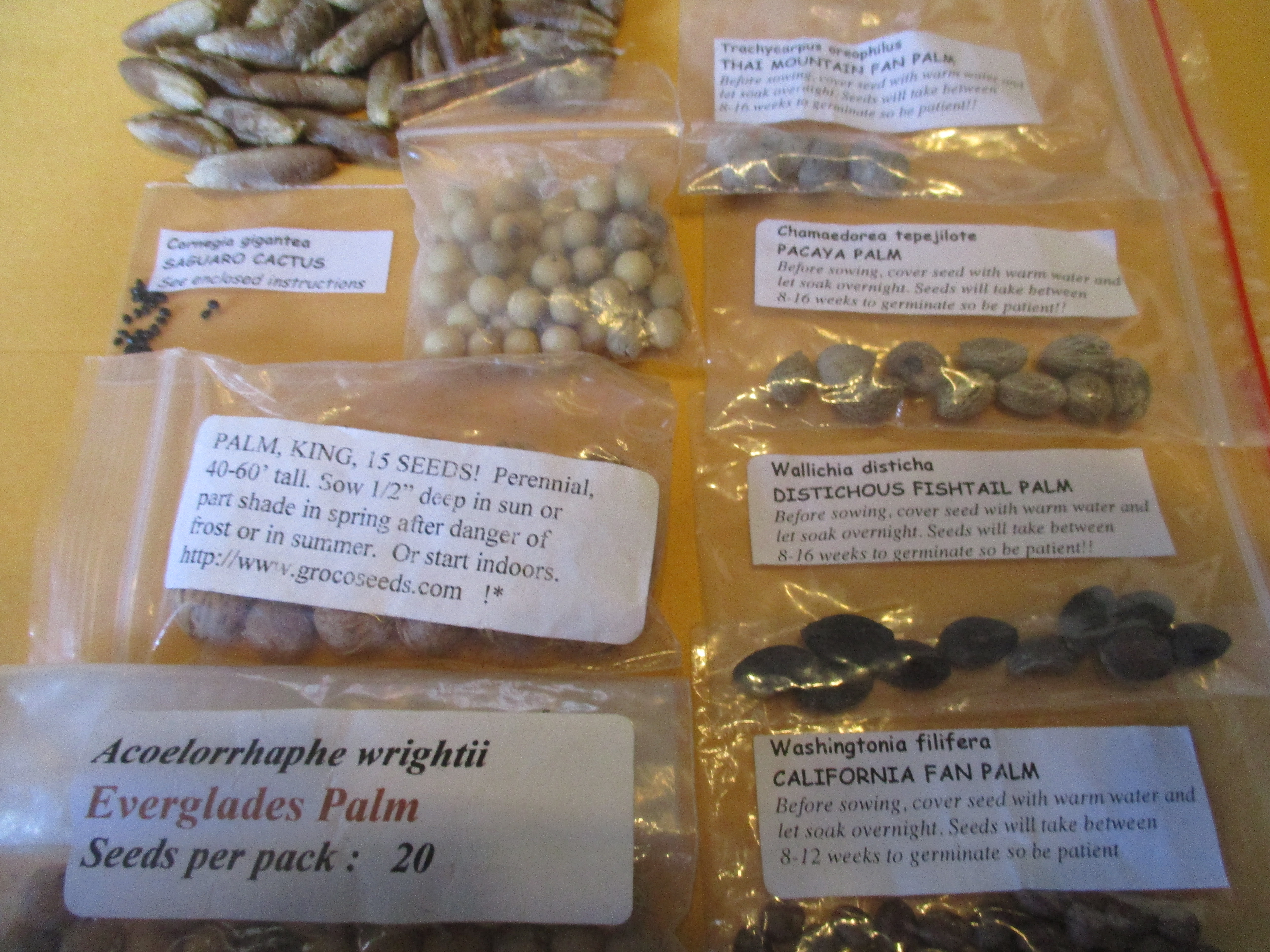
Perhaps I should have shared updates on these seed. To be brief, I should have utilized bottom heat.

tonytomeo's avatarTony Tomeo

P00223-2 All those palm seed . . . and saguaro cactus.
This is worse than the various seed that I happen to collect at work. It is worse than the seed of various species that I brought back from Oklahoma. These are seed that I purchased online and then misplaced . . . for a few years . . . or actually several years. Some were already old at the time, so are about a decade old now. There are leftovers from seed that were sown in 2010.

There was not much expense involved. Back then, they were even less expensive than they would be now. Those that I got a significant volume of were purchased mainly because they were so inexpensive. I figured I could find homes for the surplus that grew from them later. Most of the seed were purchased from eBay. Some were randomly collected for free from…

View original post 188 more words

Norwegian Wood

Well, I tried to use them as understock for Schwedler maple, but they did not take. They regenerated with better than original form, but still need a home where they will not naturalize.

tonytomeo's avatarTony Tomeo

P00222K Isn’t it good?

This is really getting to be a problem. Too many feral plants that we find at work get canned as if they will eventually be installed back into a landscape somewhere. The small nursery where they recover until their relocation is getting crowded. Although many are practical and appropriate for such recycling within the landscapes here, some are not, so may be with us for a while.

Five feral Norway maple saplings were found in one of the landscapes where mature trees were pruned for clearance from a roof. We could not just leave them there. They eventually would have been overwhelmed by the rest of the forest, or grown too close to the same roof that we pruned other trees away from. They were very easily dug, so came back to the nursery with us.

It was too late to prune them as necessary. They are…

View original post 153 more words

Six on Saturday: SNOW?!

Snow is extremely rare here. It falls every few years in my neighborhood, which is about 1,500 feet above sea level, but this is nearly nine hundred feet lower. For the Santa Clara Valley, just over the Santa Cruz Mountains, it has not snowed since 1976. A forecast that included a possibility of snow was quite a surprise. Actual snow early Thursday morning was more of a surprise. It resumed overnight and into Friday morning with thunder and lightning. Of course, almost all of it melted, so that it was no more than two inches deep. I can understand why those who contend with it regularly during winter dislike it. Yuck! Rhody stayed inside all day.

1. Clivia miniata, Kaffir lily is the most recent and shameless acquisition from Craigslist. Someone in Santa Clara wanted them thinned, so I got a trunkload, totally without guilt.

2. Clivia miniata, Kaffir lily really was justified! More than two dozen split and groomed shoots are a bit more than enough and very appropriate for this shaded and narrow bed.

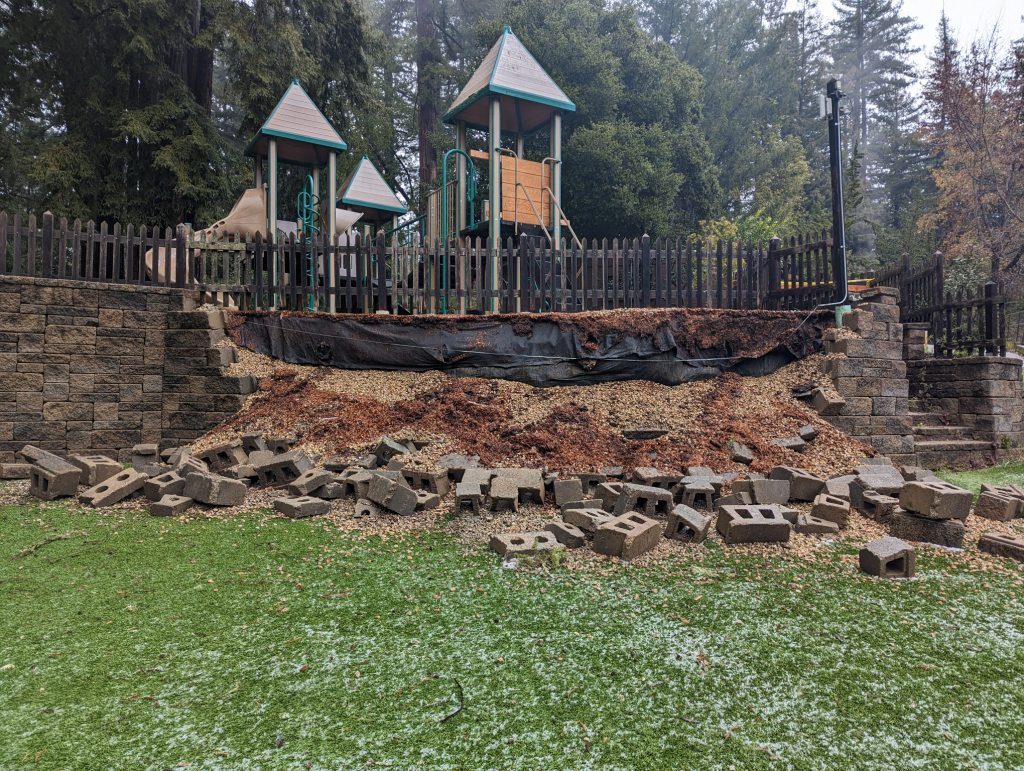
3. Jericho was not the inspiration for this landscape. It merely succumbed to all the rain. The upper few courses of stone got hastily but futilely removed as the wall began to lean.

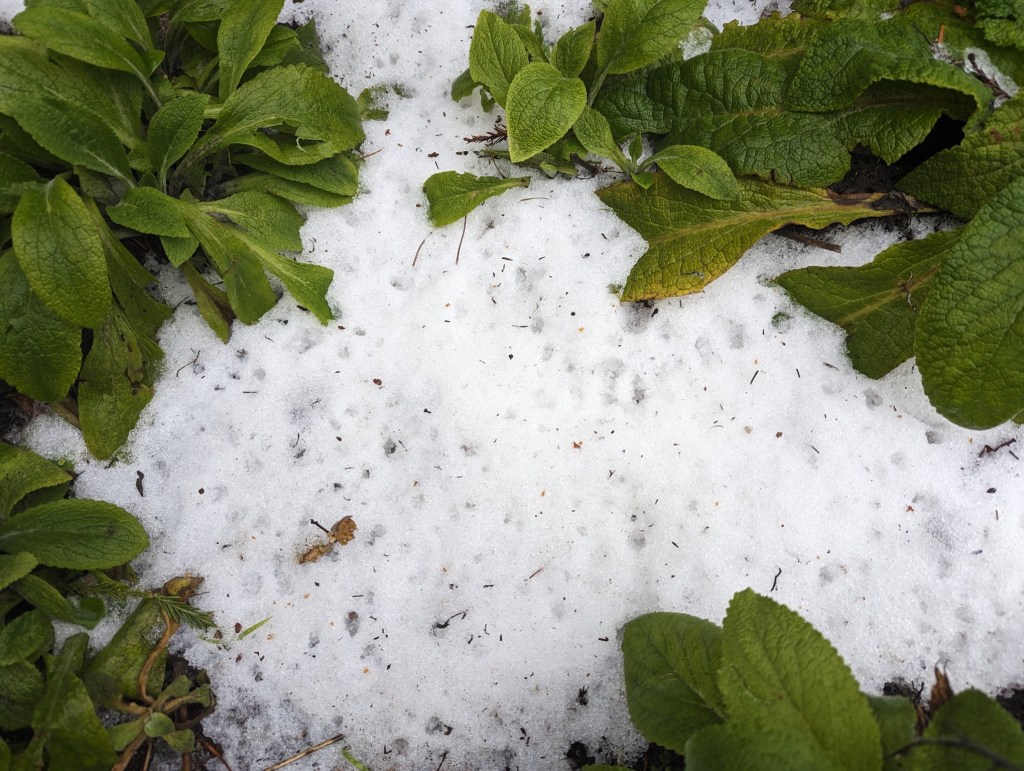
4. Digitalis purpurea, foxglove does not do much now, and is merely incidentally to this strange picture anyway. Snow from Thursday and Friday is the major development here.

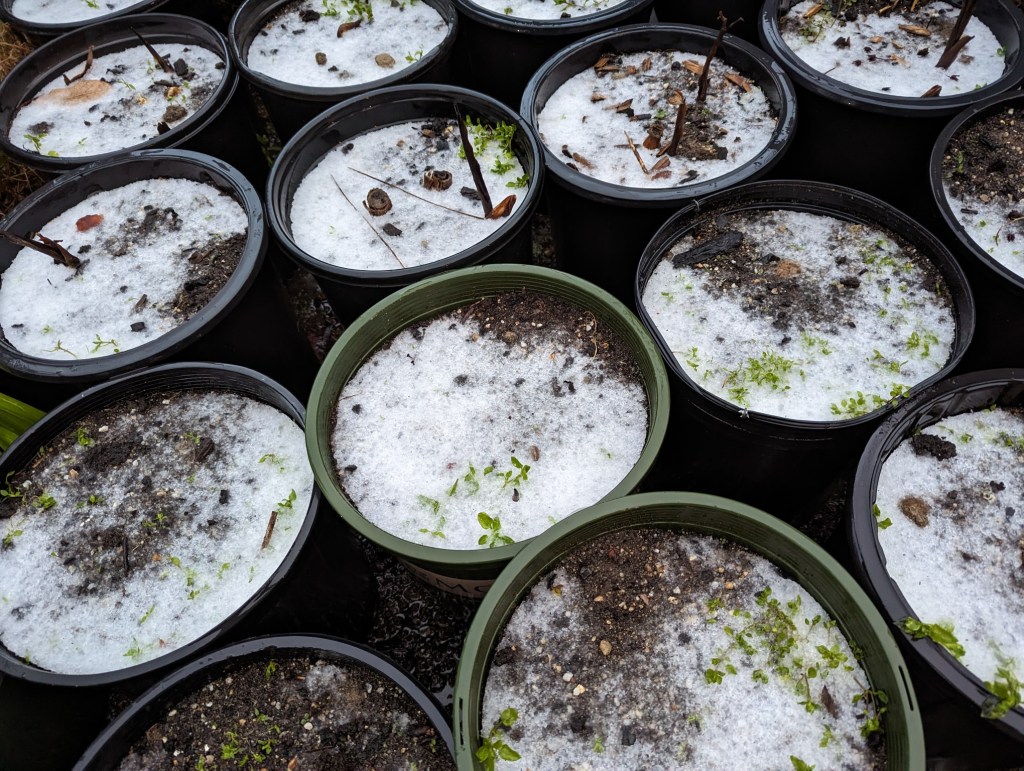
5. Canna is likewise incidental to this picture of what seems to be snow, but may merely be hail, which remained after the snow mostly melted. Canna are still dormant anyway.

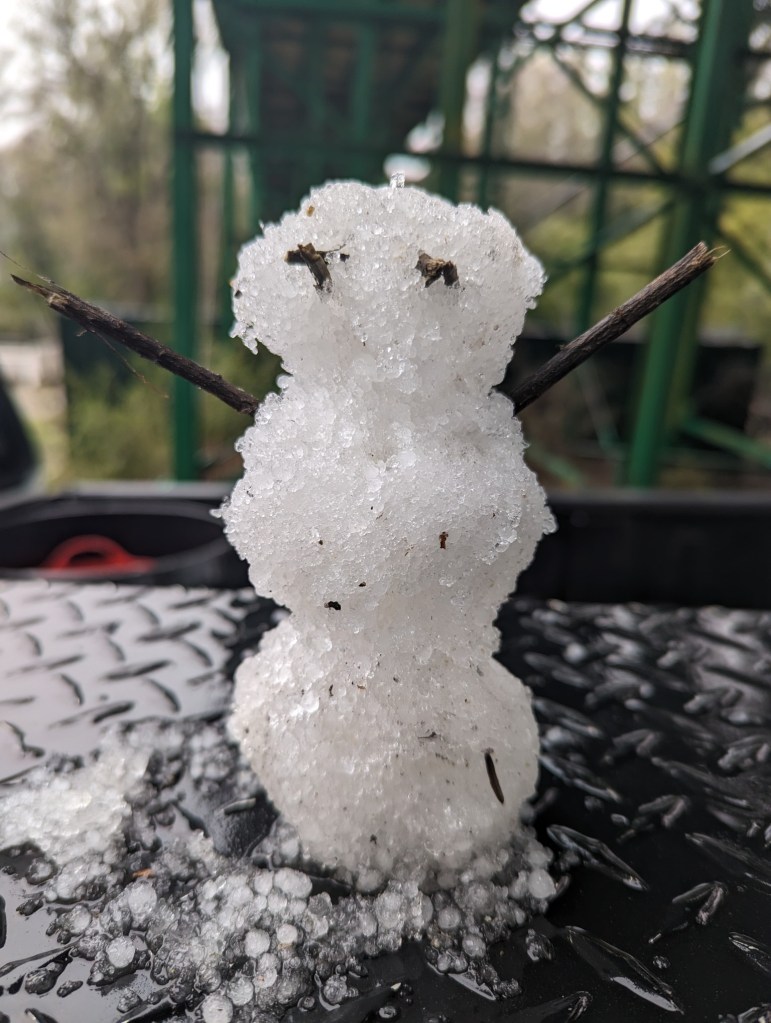
6. Snowman of three handfuls of slush and sticks is here just so that I can brag about the snow here. However, I find that snow is cold, wet and icky. I can see why it is unpopular.

This is the link for Six on Saturday, for anyone else who would like to participate: https://thepropagatorblog.wordpress.com/2017/09/18/six-on-saturday-a-participant-guide/

Japanese Black Pine

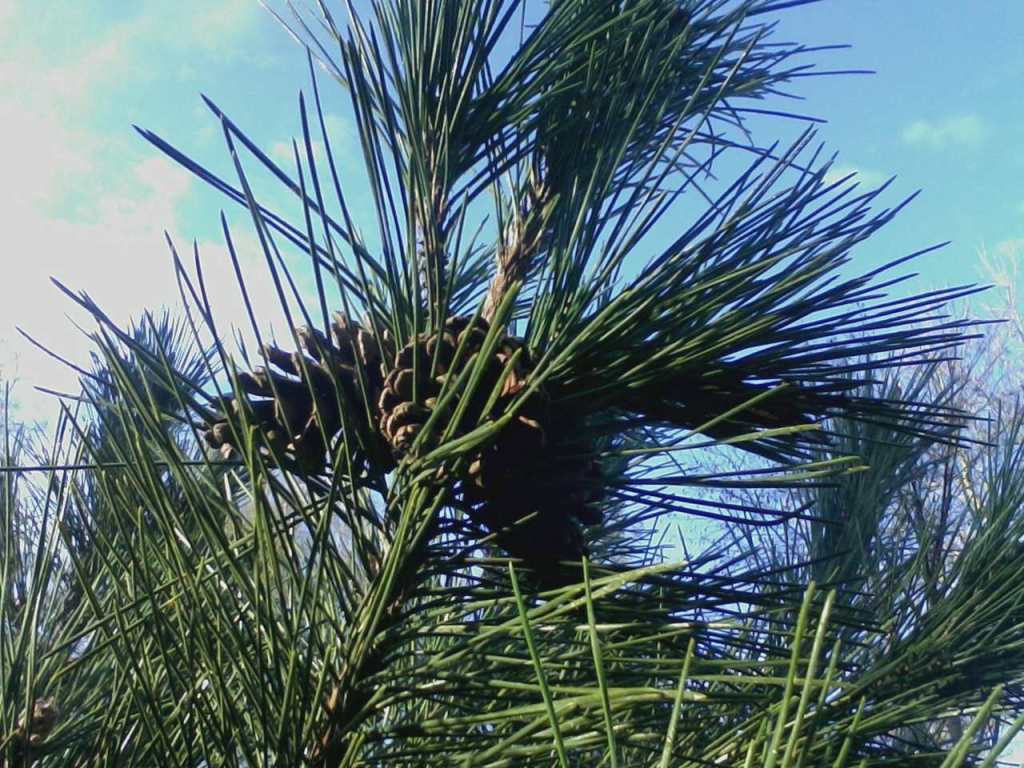
Japanese pine is more proportionate to confined urban home gardens than more common species.

Not many large specimens of Japanese black pine, Pinus thunbergiana, can be seen around the Santa Clara Valley. They can get taller than a hundred feet on straight trunks in their natural range on the coast of Japan, but locally, rarely get more than a quarter as tall on leaning and irregular trunks. They just are not quite as happy in the dry air here (minimal humidity). They are purported to be more tolerant of smog than most other pines that were so sensitive to the nasty smog of the 1970’s, but are more likely to become infested with insect pathogens as they get old.

With their angular and somewhat open growth, and classic pine foliage and cones, Japanese black pines are one of the more distinctive pines. Since they do not get too large, they can work well as sculptural specimen trees in small garden spaces and atriums. Even if they grow up above the eaves, their leaning trunks and outstretched lower limbs with rough gray bark are as distinguished as those of larger trees.

The paired somewhat stiff needles are about three or four inches long. The small but stout cones stay green through most of their first year of development, and then turn brown as they mature and open to disperse their seed in the second year. They are only about two inches long, but can become annoyingly abundant among aging trees.

Gophers!

The best rodent control devices are useless against gophers.

Punxatawney Phil retreated from his shadow on Gobbler’s Knob, predicting a late spring. That was more than two weeks ago, and we are still waiting for a late rainy season to start! Regardless, Punxatawney Phil did his job and has gone back home to hibernate, or whatever he does this time of year. If only all rodents would do the same. Gophers do not ever seem to take any time off.

There is little agreement on how to efficiently evict gophers from the garden. A rodenticide that can only be applied by qualified pesticide applicators is purported to be the most effective means of extermination for large scale landscapes, but is not available to the general public and is very expensive when applied by professional exterminators.

Thumpers, battery powered devices that emit low frequency vibrations at random intervals, are only moderately effective at repelling gophers, and look rather odd in a lawn. Those cheap plastic whirlie thingies that spin in a breeze, causing their wiry stems to vibrate, are probably just as effective if occasionally relocated to keep the gophers from getting too comfortable with them. People who do not consider them to be appealing lawn ornaments think that they are tacky though.

Flooding gopher runs with water, or leaving sharp objects or chewing gum in the runs are generally not effective. It is nearly impossible to flood a system of runs, which is typically equipped with drainage. Gophers who are unfortunate enough to cut themselves on something sharp will bleed to death because their blood does not coagulate, but they are careful to not do so. Likewise, gophers who eat chewing gum will die because they can not digest chewing gum, but they prefer to eat roots. Besides, who really wants make gophers die in such agony?

Good old fashioned McAbee gopher traps, which incidentally were invented in Los Gatos, are probably the most effective means with which to eradicate gophers. They are difficult to set for a beginner; so it is a good idea to get trained by someone with experience. It is also important to set the traps in pairs with one trap in each direction of the main run below the exit tunnel, instead of setting a single trap in the exit tunnel. It takes some extra digging but is worth it. Because each pair catches only a single gopher, the empty trap should be sprung when pulled from the ground to avoid hurting someone. Do not let dogs dig up traps!

Trapping is only a temporary solution. Eventually, more gophers are likely to move in, necessitating more trapping.

Horridculture – Reading Palms

Few arborists read palms like they should. Most simply do not care like those I worked for so many years ago. Some of their butchery is deplorable, and some even kill the palms that they are paid to maintain.

Fortunately, the first example here might be explainable.

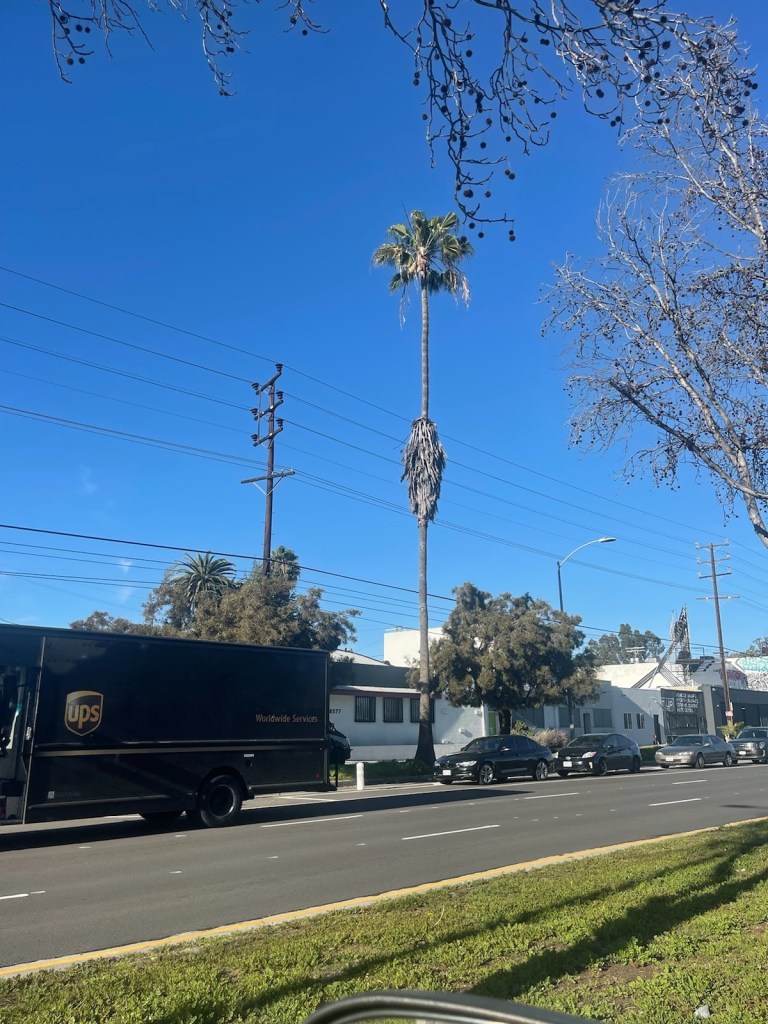
It is not uncommon for palms to wear beards of old fronds. Some beards extend all the way to the ground from the viable tops of the associated canopies.

This beard is very different. The canopy is neatly trimmed, without a bead directly below. However, a portion of beard remains on the middle of the trunk. Why would an arborist leave such an impassable obstacle between the ground and the canopy that will likely need grooming again?

I suspect that the tree had been neatly groomed until it got dangerously close to the high voltage cables. Arborists who are not certified for ‘line clearance’ are not allowed to work so close to cables, so were unable to groom the trunk any higher.

However, with boom lifts to avoid climbing, arborists who are certified for such clearance pruning removed the portion of the beard above so that dead fronds do not fall onto the high voltage cables. Such arborists who perform minimal utility clearance pruning are not allowed to do any more than necessary, so can not remove the portion of the beard that is not a threat to the cables, although it is out of reach for other arborists. Therefore, as silly as this looks, this may not be as egregious as it seems to be.

The second example can not be explained so easily. These three Mexican fan palms are very dead. They have been dead for so long that they are now decaying too severely for arborists to climb them safely for removal. Their death was certainly not natural. They were decapitated. Someone climbed to the tops of each of these three palms and cut their single terminal buds off, but left the trunks to die.

Did someone think that they would regenerate new terminal buds or branches like yuccas? If so, why were the trunks left so high? This really defies explanation.

These dead trunks can not be left here. They are so tall that if one falls, it could damage the apartment building across the street, and anything else that happens to be in between. They could kill someone! There are three of them! They are unsafe to climb, so must be removed by crane, which is very expensive.

Jade Plant

Jade plant is vulnerable to frost.

Wandering Jew, spider plant, various philodendron and jade plant were among the most popular houseplants of the 1970s. They are as easy to propagate as they are to grow, so were popular gifts for friends and neighbors. Jade plant, Crassula ovata, commonly grew too big to stay inside without pruning. It fortunately grows better than the others outdoors.

Jade plant does not grow fast, but can eventually get more than six feet tall, with densely rounded form. The succulent stems of such large specimens get quite plump, but remain rather fragile. The paired evergreen leaves are thickly succulent, and mostly a bit longer than two inches. Clusters of tiny pale pink or white flowers are not especially impressive.

At least one cultivar is variegated with irregular white stripes. Another is somewhat ruddy with relatively compact growth. Others exhibit tubular or curly leaves. Foliage can fade or develop narrow red edges in response to harsh exposure or heat. It is also susceptible to frost damage. Jade plant is mildly toxic, but also potentially appealing to dogs who chew.

Freeze Damage Necessitates Selective Pruning

Warmth stimulates recovery from freeze damage.

Pruning at the proper time has been a concern all winter. Dormant pruning was timely as soon as defoliation began. It remains timely almost until bloom. Pollarding and coppicing are generally although unnecessarily a bit later within that range. Spring pruning begins soon after bloom. Pruning of freeze damage starts after the last reasonable threat of frost.

Frost is as variable as the many climates here. Generally, it causes more damage farther inland and at higher elevations. Conversely and generally, it causes less damage closer to the coast and at lower elevations. Many southern coastal climates experience no frost. However, frigid air drains downhill. Within any plateau, the frostiest areas are the lowest.

Last frost dates should help with scheduling of pruning or grooming of freeze damage to vulnerable vegetation. The last frost date for a climate is the average date of its last frost. Frost becomes increasingly unlikely afterward. That is the best time to add warm season vegetables and annuals to the garden. It is also when to begin grooming freeze damage.

If not too unsightly, freeze damage lingers until the last frost date for two primary reasons. It shelters vulnerable tissue below, including any new growth that develops prematurely. Also, removal of such damage stimulates new growth that would be even more exposed and innately more vulnerable to frost. However, priorities change soon after the last frost.

Then, it becomes important to groom or prune away freeze damage prior to generation of fresh new growth. For milder climates, it is already timely to do so. It might be a while for less mild climates. Even for frostless climates, this might be a good time to groom growth that is only incidentally shabby. Such grooming gets more complicated with new growth.

Many zonal geraniums are already extending new growth up through shabby old growth. Removal of such old growth or freeze damage without damaging mingling new growth is no simple task. If new growth stretches for sunlight below old growth, it might flop without support from the old growth. It may be more practical to cut all growth back to regenerate. Canna also develop similar complications.

Blow Out

As torrential as the rain was curing the bomb cyclone (whatever that was), the wind was not as bad as this.

tonytomeo's avatarTony Tomeo

P00216 Wind is messy!

While strong Santa Anna Winds were blowing through Los Angeles four hundred miles to the south, and Storm Ciara was arriving in Scotland and Norway, we were getting some remarkably strong winds of our own. They were not nearly as strong as winds that were causing so much damage in Europe, and involved no flooding rain, but they were dangerously messy nonetheless.

We live and work among dense forests of coastal redwood, the tallest tree species in the World. Beyond the upper edge of the redwood forests are more forests of huge Ponderosa pine. Huge Douglas fir are mixed throughout. Their understory includes trees that would be considered to be massive anywhere else, such as coast live oak, tanoak, Shreve oak, bay laurel and madrone.

Such big trees drop big limb, and in abundance. Furthermore, limbs that fall from such great heights are significantly more dangerous than…

View original post 247 more words