
Buick Electra used to mean something. Chrysler Imperial and Lincoln Town Car did also. That was at a time when cars were still distinguishable. Instead of random numbers with a few letters, they had distinctive names. These names, although distinct, conformed to a standardized pattern. This pattern of naming was comparable to botanical nomenclature.
According to botanical nomenclature, plants are identifiable by genus and species. Their ‘gen’us is a more ‘gen’eral designation than their ‘speci’fic ‘speci’es designation. A family is a larger and more general classification than genus, and in turn, fits into another more general group. Most of us are not concerned with the many classifications beyond family.
For example, the botanical name of silver maple is Acer saccharinum. Acer is the genus. saccharinum is the species. Acer saccharinum is in the Sapindaceae family. (For botany, genus and species names are italicized, and species names are not capitalized.) Buick Electra is similarly in the General Motors family. Buick is its genus. Electra is its species.
Varieties and cultivars are even more specific designations within species. Some are the products of breeding. Some are naturally occurring. A cultivar is a ‘cultivated variety’ that does not perpetuate naturally like other varieties do. Most cultivars propagate by cloning. (Variety and cultivar names are capitalized and enclosed within single quotation marks.)
For example, Acer rubrum ‘October Glory’ is a cultivar of red maple. It exhibits a distinctly rounded canopy and foliar color in autumn that is superior to that of the simple species in the wild. It might compare to a Buick Skylark Gran Sport, which is essentially a cultivar of Skylark with a stronger engine. Botanical and automotive nomenclature are quite similar.
Such similarities of nomenclature are no advantage. While cars forfeited their distinctive titles for mundane numeric designations, plants forfeited their species names for cultivar names. Such abbreviation of nomenclature interferes with accurate identification. Those unfamiliar with it may not know if Cercis ‘Forest Pansy’ is an Eastern or Western redbud, or something else.

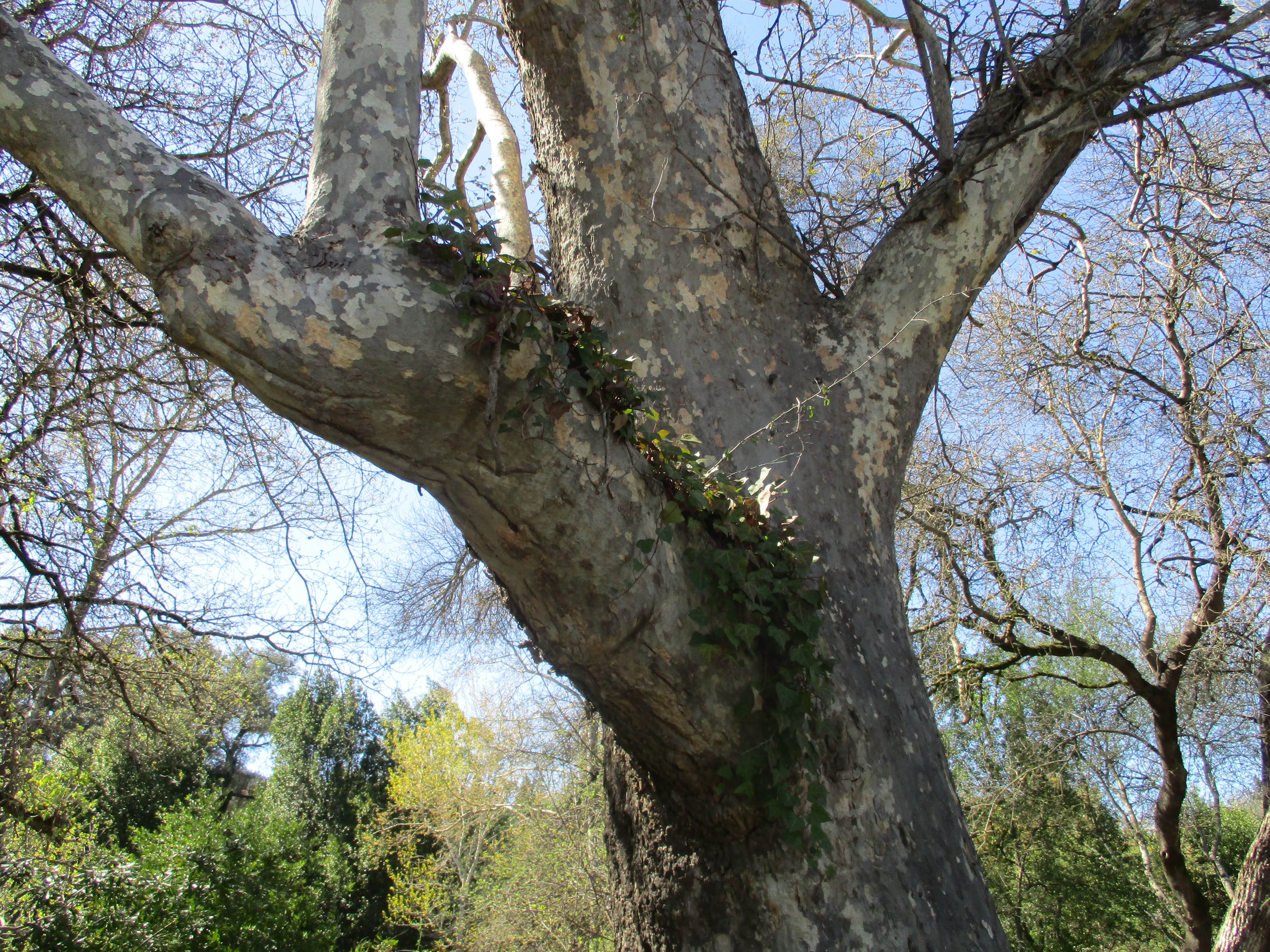 The ivy in this sycamore did not just climb up from the ground to hang over this big limb. If you look closely, you will see no vine coming up from the ground. This small patch of ivy as well as a small pyracantha, are growing in a decayed cavity on top of the big limb. The ivy may have climbed up a long time ago, and then rooted into the cavity before the original vine was somehow removed. Alternatively, the ivy might have grown from a seed that was dropped by a bird or ivy vines that are higher up in nearby box elder trees. It is impossible to say now.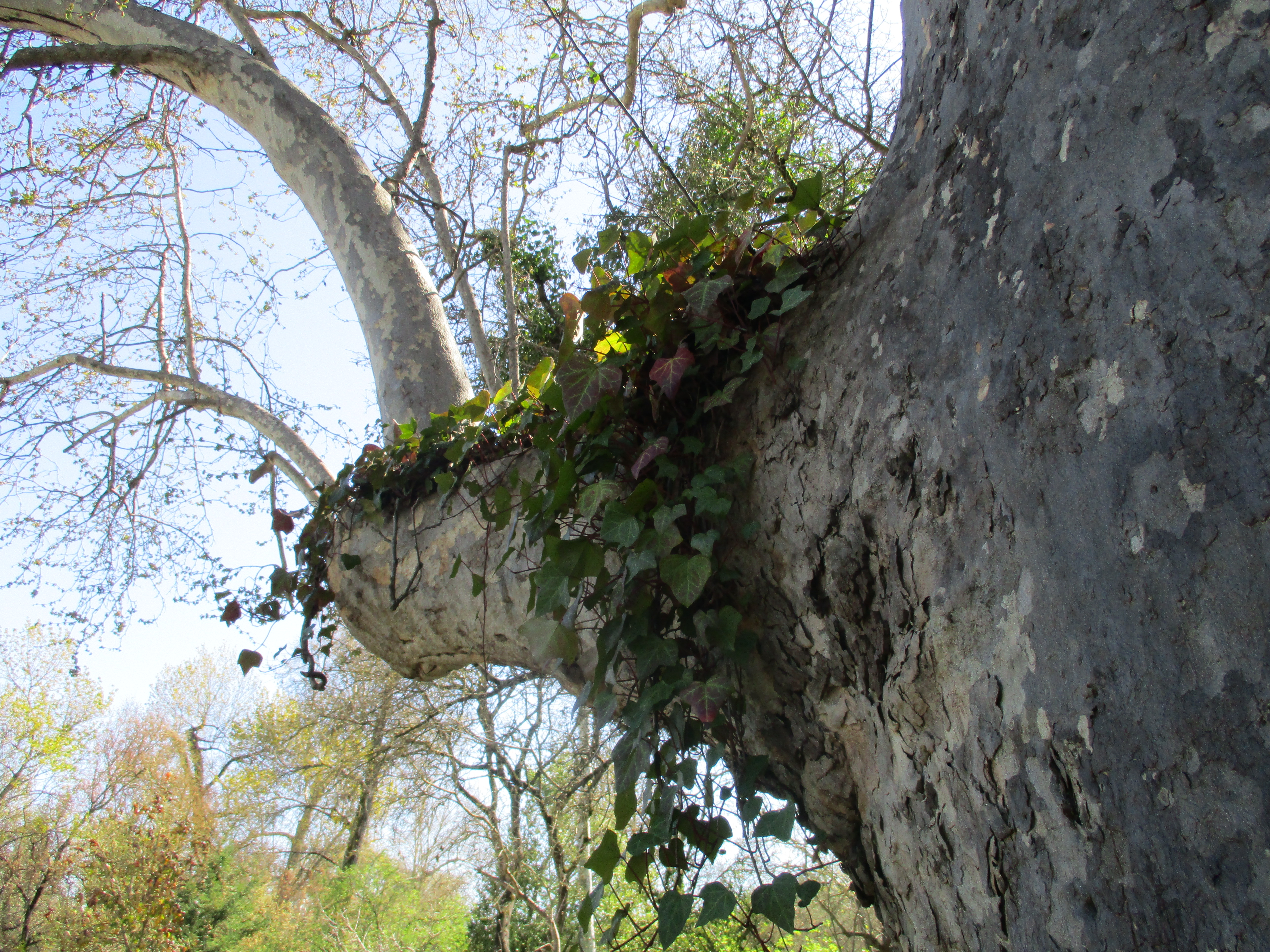
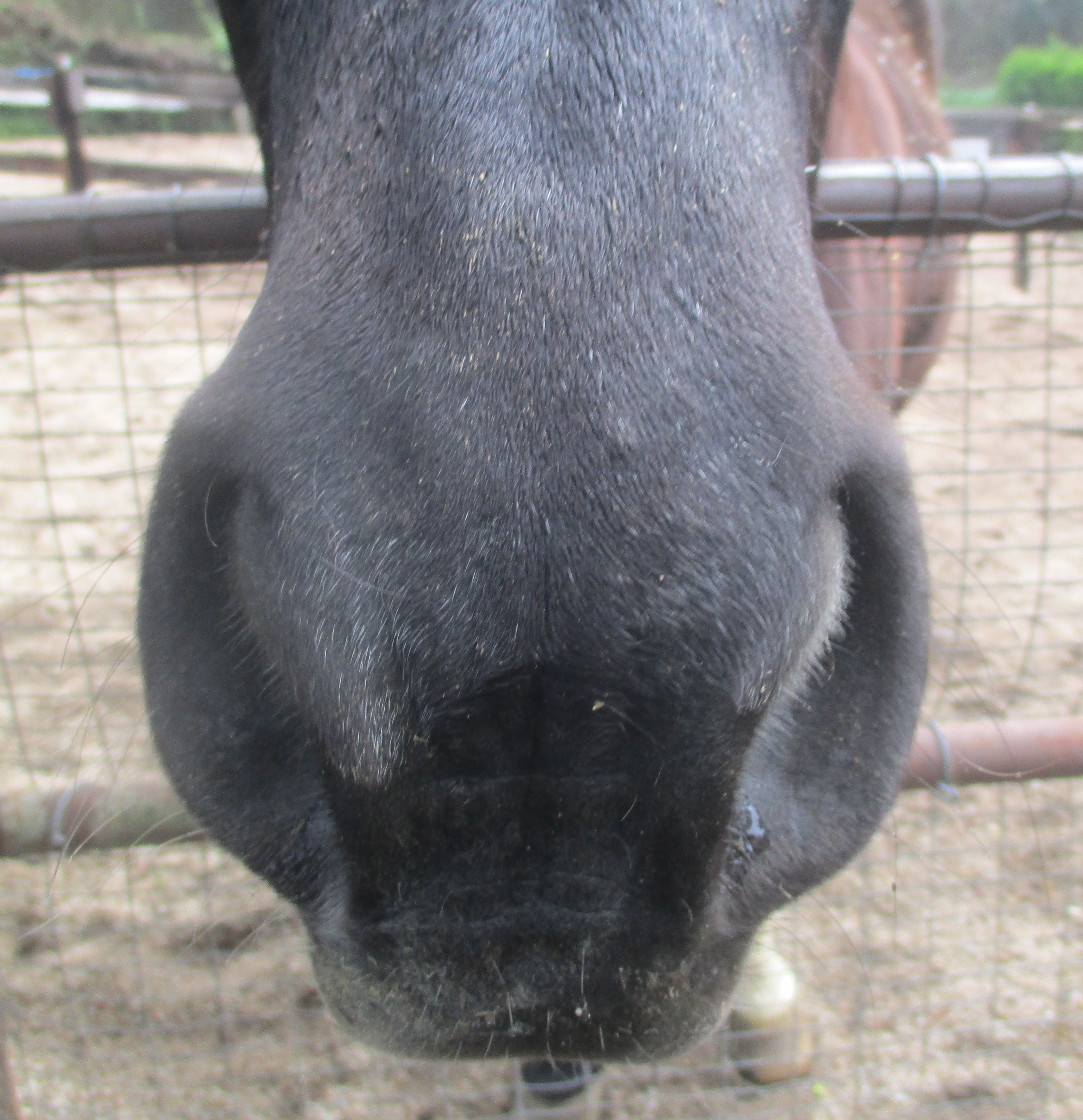 ‘Fertilizer’ is a polite term for ‘recycled vegetation’.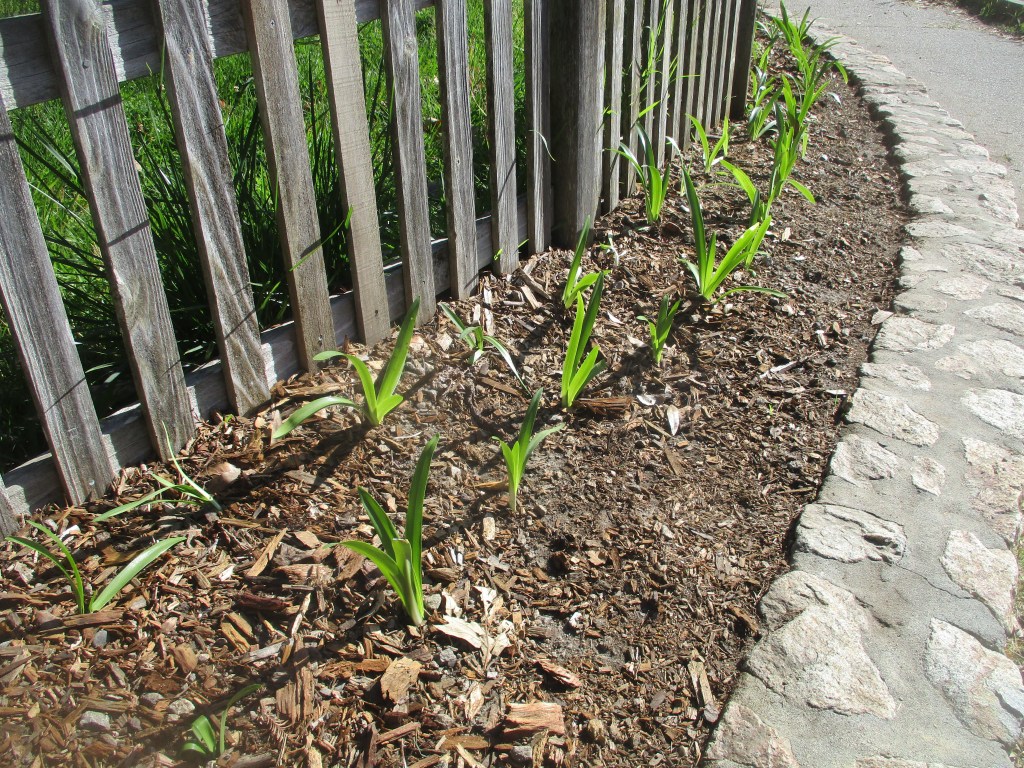


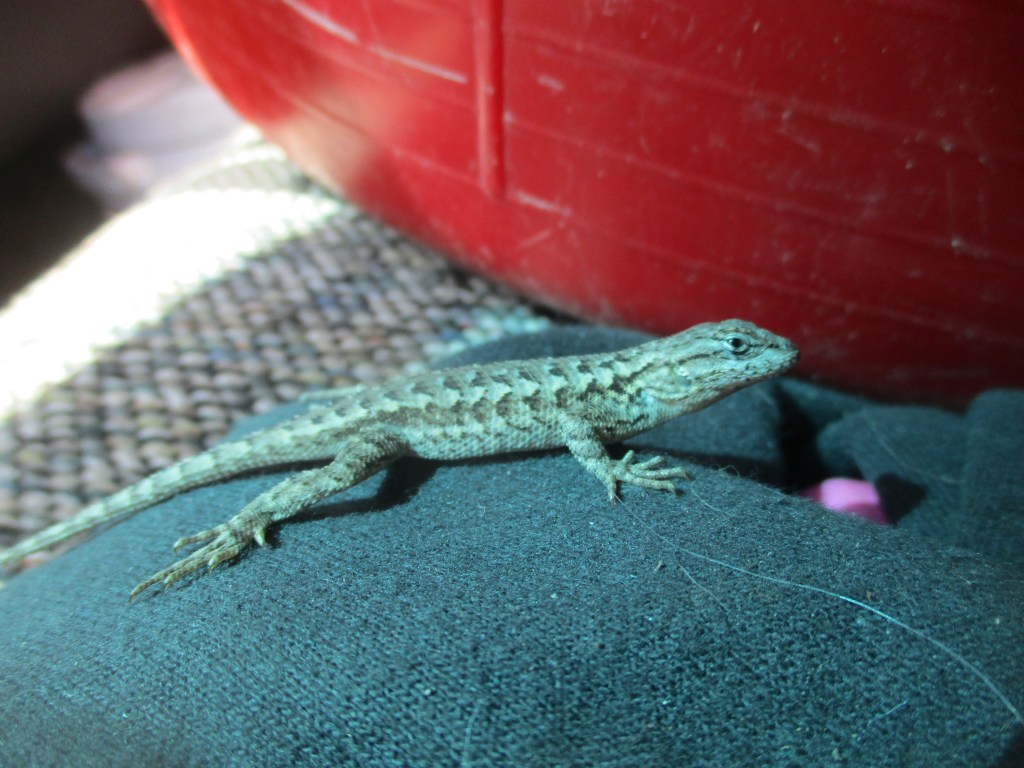


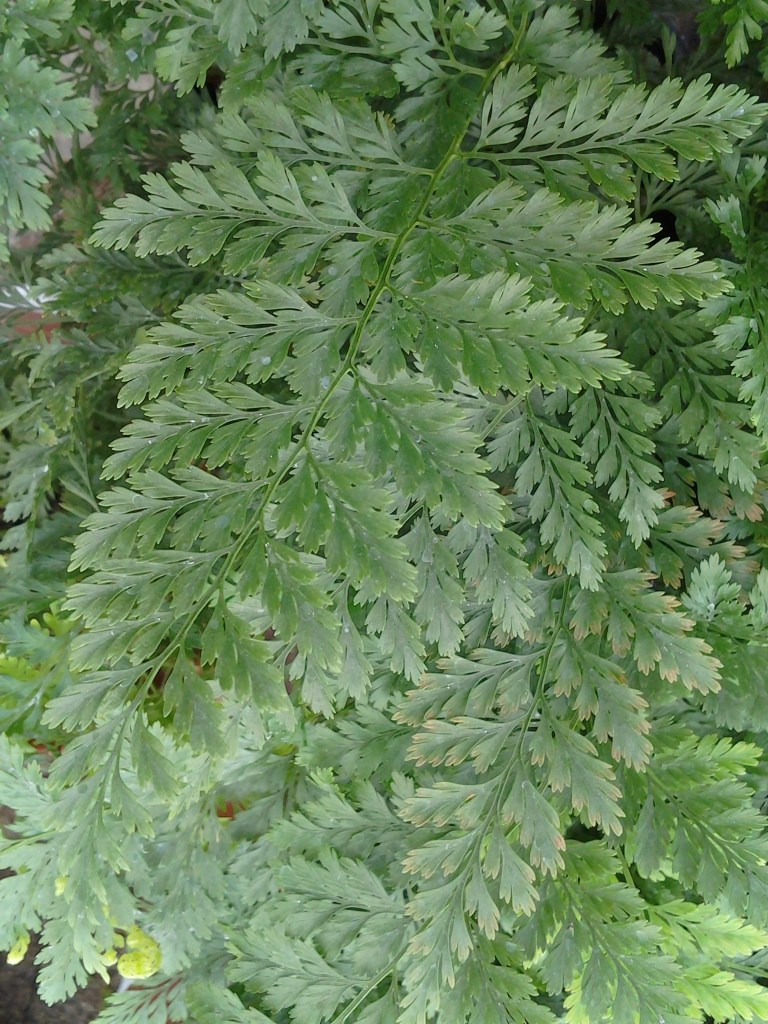

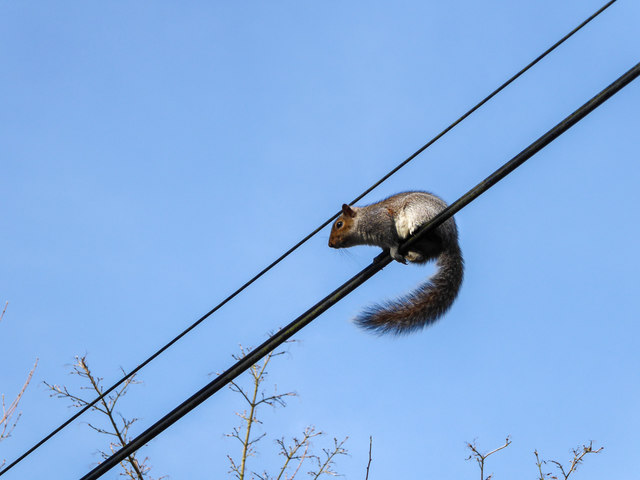 Wildlife and domestic animals seem to follow me everywhere I go. When Brent and I lived in the dorms at Cal Poly, our room was known as the Jungle Room, not only because of all the greenery, but also because every little bird that got knocked out while trying to fly through the big windows at the dining room was brought to our room to recuperate. A baby squirrel that weaseled into my jacket while I was out collecting insects for an entomology class lived with us for a while. There were two baby ducks that need a bit more explaining.
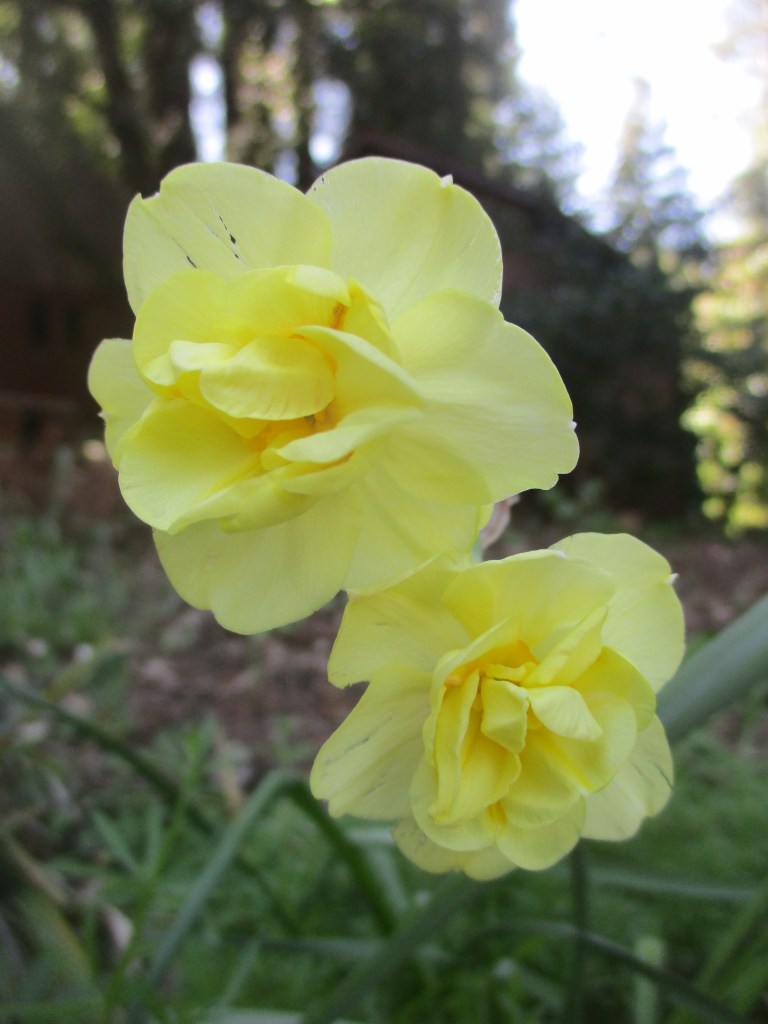
 Happy Easter!
