Horticulturists are by nature, nonconforming. I happen to find it difficult to conform to what makes us nonconforming. Trends are fleeting. Old technology that has worked for decades or centuries is still best. Although I am not totally against chemicals, I find that almost all are unnecessary for responsible home gardening. Pruning is underappreciated, and fixes many problems.
Steven Michael Ralls Memorial Tree appreciates rain.
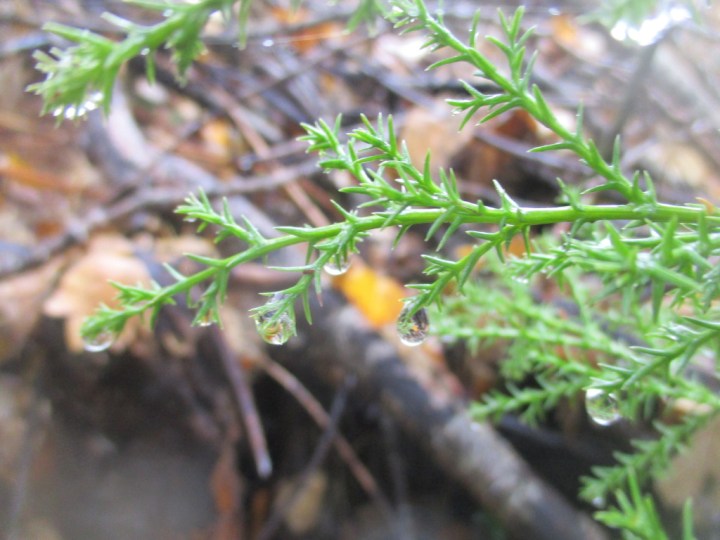
December 13 is the birthday of our dearly departed friend Steven Ralls. His ‘Steven Michael Ralls Memorial Tree‘ that was planted on May 2, for the third anniversary of his passing, is doing well, and likely appreciates what transpired overnight. Now that it got the opportunity to disperse roots through its first season in the ground, it will receive no more supplemental irrigation.
Such irrigation will no longer be necessary. The tree is a native Monterey cypress, which survives on annual rainfall, within a locally limited season. It was only occasionally irrigated through its first season, while it was busy dispersing roots. It should do well without any such intervention next year. Now that the rainy season started, the soil will not get dry until late next spring.
Yes, it is now the beginning of the rainy season here. The second…
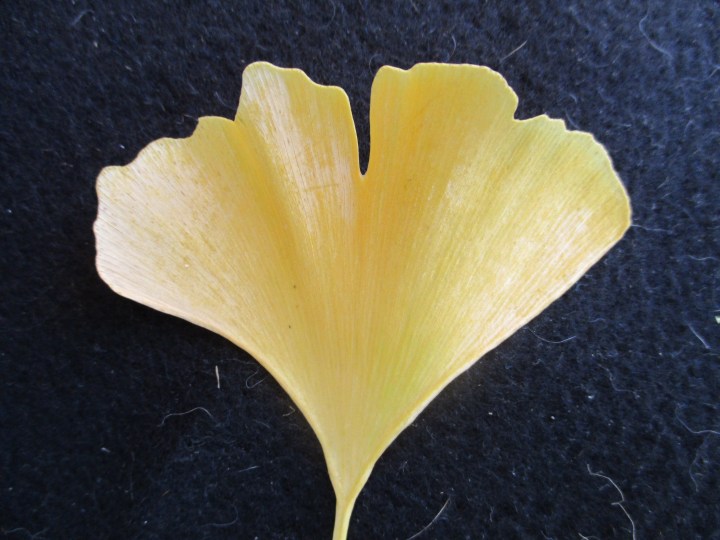
This single yellow ginkgo leaf says a lot. It was found among the abundant cottonwood leaves on the broad walkway in Felton Covered Bridge Park (https://tonytomeo.wordpress.com/2017/12/02/felton-covered-bridge/). There are no ginkgo trees in the neighborhood that I am aware of. It must have come a long way to arrive here on the morning of December 13.
It really did not need to go through all the effort to get here. I need no help to remember the date. It is the birthday of a good friend who passed away last May.
Steven Michael Ralls is one of two friends I went to Oklahoma with late in 2012 (https://tonytomeo.wordpress.com/2017/11/19/oklahoma/). In the picture attached to my article about going to Oklahoma, there is a handsome gentleman to the left. That is me. The bronze guy in the middle was just standin’ on the corner in Winslow, Arizona. Steven is…
Tomorrow, this reblogged article will be three years old. It originally posted on December 13 in 2017, after the article that will post for tomorrow. That bit of trivia is unimportant, but explains why the final comment makes no sense. Actually, very few understood the significance of the comment, even three years ago.
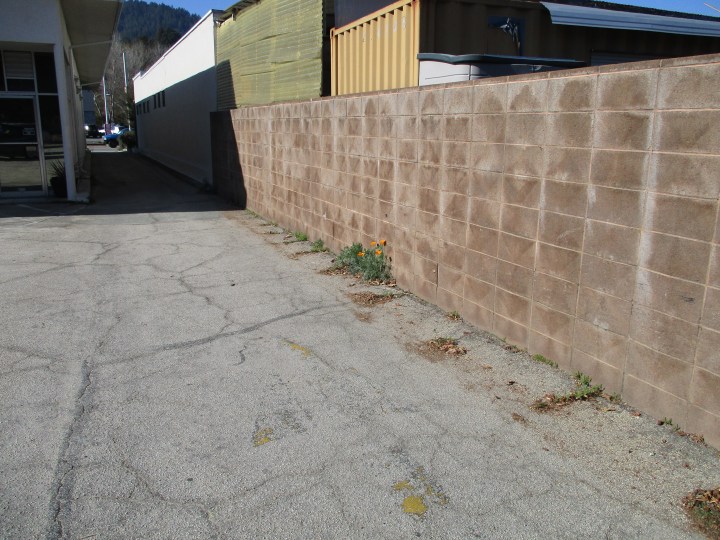
Not just any poppies; California poppies, the state flower of California.
So why the picture of an old cinder block wall on the edge of an unkempt and weathered parking lot behind the old County Bank Building? Well, right there in the middle of the picture, where the lowest course of block meets the edge of the pavement are a few weeds, and some of these weeds are poppies showing how resilient they can be.
California poppies are opportunistic. They grow fast and bloom when they can. For most, that means that they bloom as the weather starts to warm up at the end of winter. For others in irrigated gardens, they can bloom in phases through summer. Some do their thing quickly as soon as they get a bit of moisture from the first autumn rains or even dew. They know what time of year it is, and that…
After so many pictures of fallen leaves, firewood and frost, I should probably share a few floral pictures like everyone else does. All those pictures of ash from the fire did not help much. I can expound a bit excessively on autumn and winter topics because they are not as mundane as they are in other climates. For example, I would not notice frost so much if it were common here.
Some flowers continue to bloom later than they would in other climates. Some bloom too early here. Some can not decide when they should bloom. The fifth picture is not even a bloom at all.
1. Callistemon viminalis ‘Little John’ is a bottlebrush for those who dislike bottlebrush . . . or just lack the space. I hate to say it, but I sort of prefer the formerly common Callistemon citrinus.
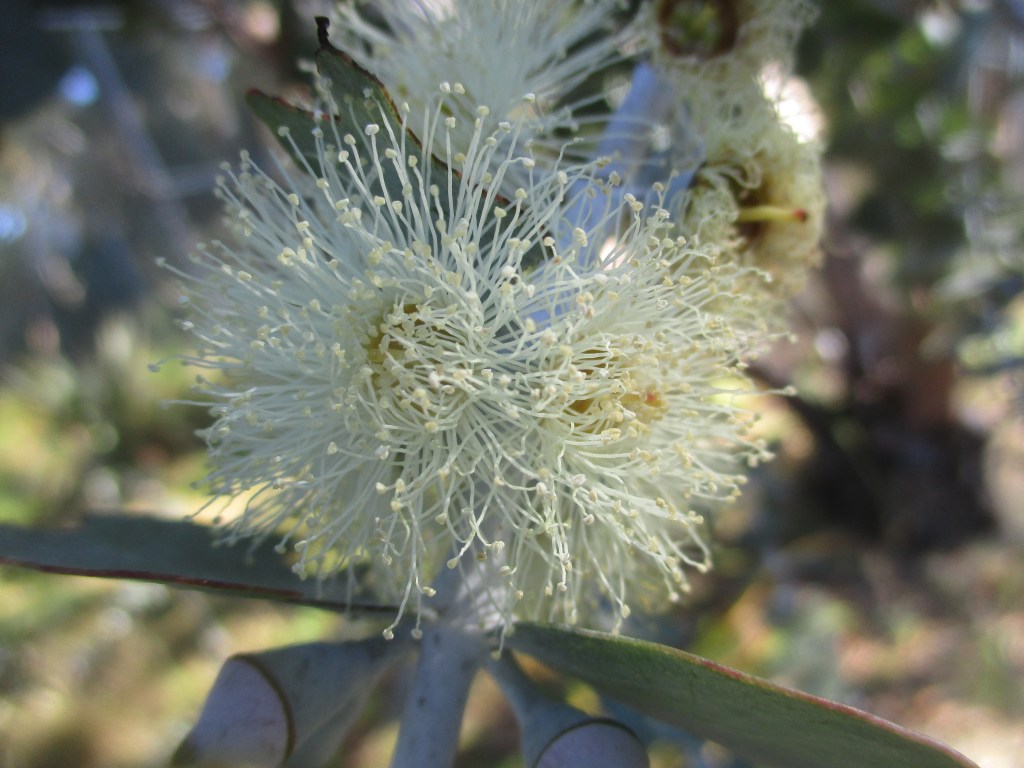
2. Eucalyptus pulverulenta foliage is prettier without bloom. Nonetheless, for those who get close enough to see them, these small white flowers are pretty too. Bees appreciate them as well.
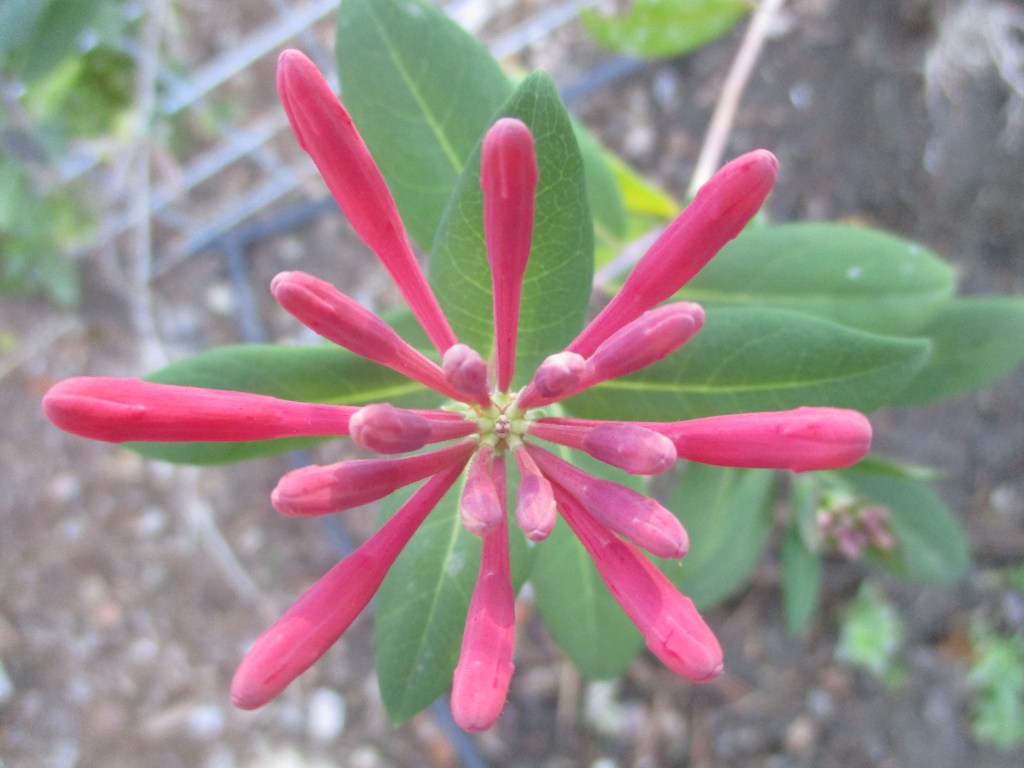
3. Lonicera periclymenum ‘Peaches and Cream’ has yet to bloom profusely here. Summer bloom is adequate at best. Bigger trusses of buds develop too late into autumn to bloom completely.
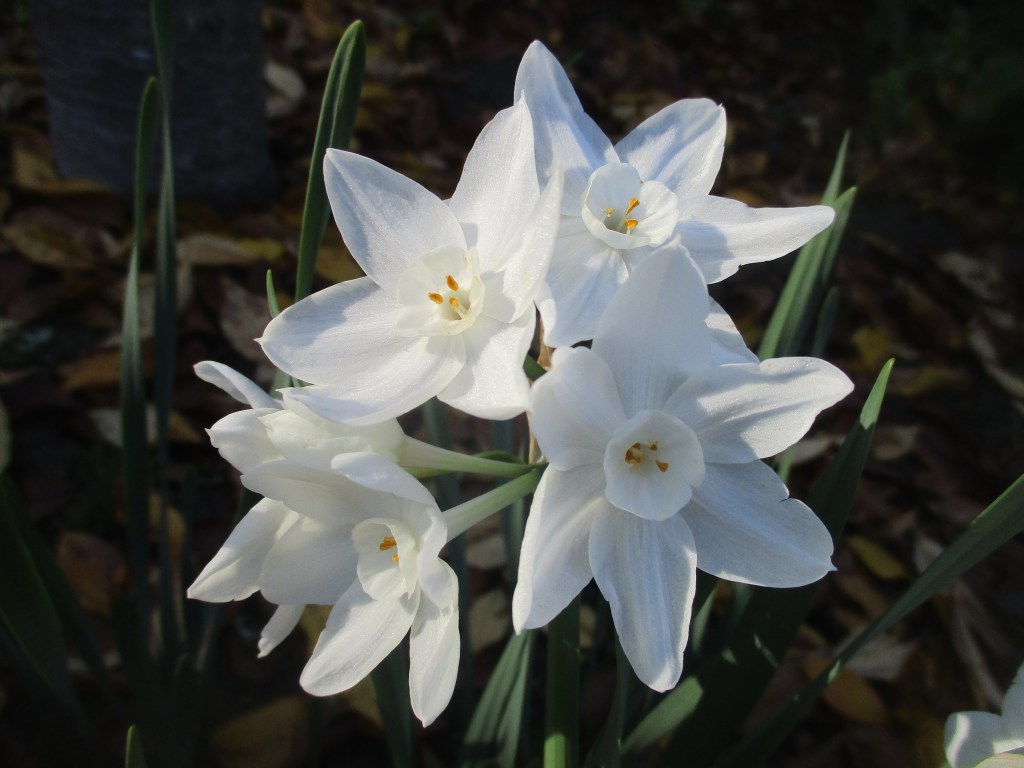
4. Narcissus does not wait for spring to bloom. I do not know what cultivar it is, or if it is a cultivar. Some might know it simply as ‘paperwhite’. Daffodils will bloom later, but are not fragrant.
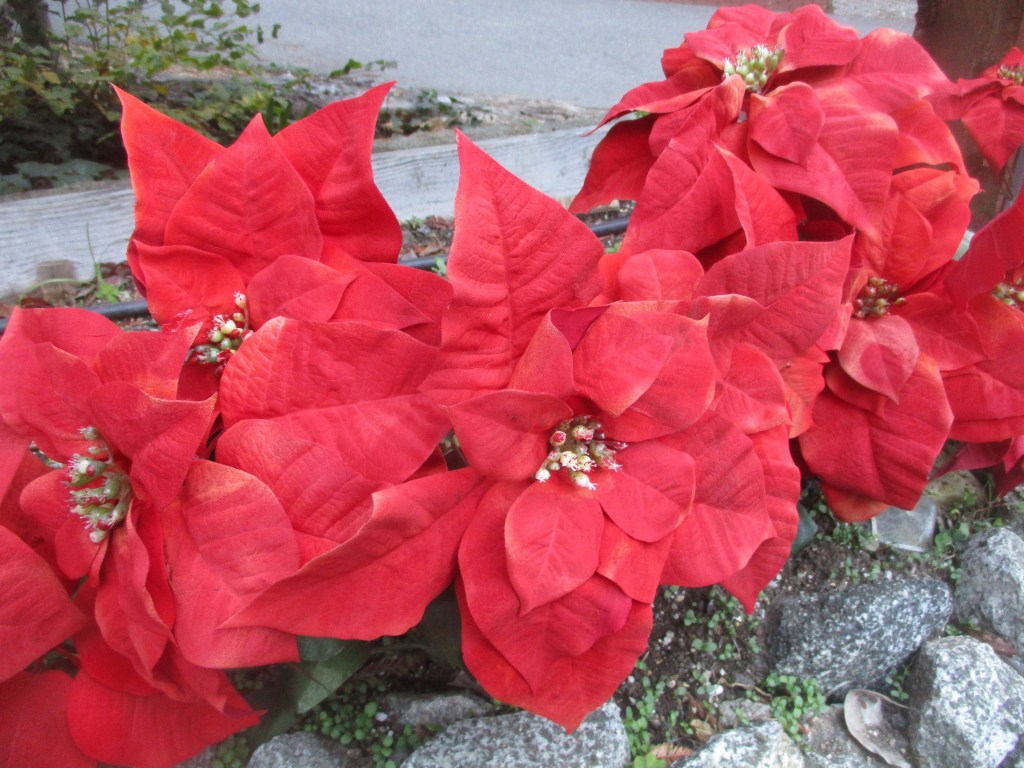
5. Pseudoflora seem to bloom annually here prior to Christmas. Afterward, they will return to the barn for storage for almost another year. Some people believe that they are real poinsettia.
6. Rhody simply will not cooperate for a picture if he knows I am taking one. I included this picture anyway because, no matter what, or how bad his picture is, everyone always loves Rhody.
This is the link for Six on Saturday, for anyone else who would like to participate:
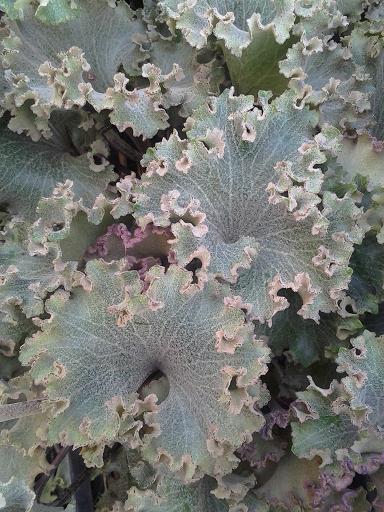
There are so many excellent ligularia to choose from. Crested ligularia is not one of them. Although it is an excellent and distinctive perennial, it is not really a ligularia. It is Farfugium japonicum ‘Cristata’ (which actually sounds more like a hybrid of a Volkswagen and a Toyota). The slightly fuzzy and coarsely ruffled rounded leaves form grayish green mounds more than a foot high and wide. Gold trusses of small daisy flowers bloom late in summer or early in autumn. Regular watering and partial shade keep foliage full. Harsh exposure can discolor foliage during the warmest summer weather. Frost is not often a problem.
It is impossible to deny that the weather has been unusually cold when tough perennials like ligularia and farfugium express symptoms of frost damage. Late autumn and winter are expected to be cold, but not as cold as it has been recently. Ligularia, farfugium and most tough perennials should recover as if nothing happened. Cannas will naturally die back or need to be cut back to the ground later, but their resilient rhizomes should be safe, and regenerate later as winter ends. Unfortunately, sensitive perennials like pelargoniums may have been killed if frost damage extended too far into lower stems and roots.
The best way to protect plants from frost is to grow only plants that are not so vulnerable to frost. The problem with this technique is that it is too limiting. Abstaining from the few most sensitive plants like bananas and angel wing begonia probably would not be a problem for most of us. However, avoidance of moderately sensitive plants would involve familiar plants like bougainvilleas, lemons and split leaf philodendron.
Many of the smaller sensitive plants like angel wing begonia, can be grown in containers that can be moved to more sheltered spots if and when necessary. They can be brought inside or moved onto covered porches. If they only need to be protected for a few days during the coldest weather, they can be moved into garages. The problem with this technique is that many plants get too big for containers.
Bougainvilleas eventually get big, and do not like to be grown in containers anyway. They should be planted in warm spots in the garden not only because their foliage can be damaged by frost in winter, but also because they like warmth during summer. A south facing wall with an eave above provides a nice warm exposure, a bit of protection from frost above, and a slight bit of ambient warmth from the building behind it. Even if the foliage gets frosted, the main stems within should be safe.
During the coldest nights, sensitive foliage can be protected by burlap, paper, plastic or any sheeting suspended above by stakes or any light framework. With this technique, only exposed foliage or foliage that touches the sheeting will be damaged. It is unfortunately not practical to tent large plants like giant bird-of-paradise.
Even though it is unsightly, unprotected foliage and stems that get damaged by frost should not necessarily be pruned away immediately. This damaged foliage insulates and protects sensitive stems below. Besides, such early pruning can stimulate new growth that will be even more sensitive to frost later.
Yes, the name meant something a long time ago. This is not much of a rant for Wednesday, when I typically feature something of the ‘Horridculture’ meme. It is more of what some might classify as ‘musing’, although I am not sure I know what that means. This, too, is three years old.
Newer developments are often named after what was destroyed to procure space for them. Writers and historians have been making that observation for decades.
There are obviously no remnants of a ranch in the McCarthy Ranch Marketplace in Milpitas. Heck, there are no little cornfields left in Milpitas, which is what ‘Milpitas’ means. Cherry Orchard Shopping Center in Sunnyvale? Give me a break! The Pruneyard Shopping Center in Campbell is no better.
I just happen to find the Pruneyard to be less objectionable than the others because it was built about the time I was born. It has been there as long as I can remember. My parents can remember when it was a drying yard for the prunes harvested in the surrounding orchards. I remember the last remnants of prune orchards, but by my time, there were not enough of them to justify the less lucrative use of real…
The most abundant bright red berries of autumn are those of firethorn, Pyracantha coccinea. They resemble English hawthorn, cotoneaster and toyon berries, but are shinier and more abundant. Their weight causes their limbs to sag. Most are either rich deep red, or brighter slightly orangy red. Orange berries are uncommon locally. Cultivars with yellow berries are less vigorous and rare.
Berry production may seem to be more variable than it actually is. Healthy plants typically produce a profusion of berries. They only seem to be more profuse if they ripen late, after migratory birds fly south. Such birds are voracious with early berries. Overwintering birds are less numerous, and consume berries slower. Regardless, few berries last long enough to deteriorate and get messy.
Firethorn is thorny enough to function as an impenetrable hedge. However, it is unpleasant to prune with all those thorns. Also, pruning without removing the stems that bloom and produce berries takes effort. Upright cultivars can get higher than downstairs eaves. Some cultivars get only a few feet tall as they sprawl over the ground. Even without berries, the evergreen foliage is appealing.
It is no coincidence that so many colorful berries ripen in autumn as migratory birds migrate south for winter. Such colorful berries are intended for both migratory and overwintering birds. Rodents and other wildlife are welcome to take what they want as well. Most colorful berries are bright red, to get the attention of birds and wildlife. They are a convenient ‘grab and go’ size, and abundant.
Plants who produce colorful berries are pleased to provide in exchange for the dispersion of their seed. It is an ingenious system. Everyone involved does what they do best. Plants produce their colorful berries to exploit wildlife. Wildlife exploits the berries. Seed within the berries survives digestion, and gets ‘deposited’ elsewhere. Most types of berry seed germinate best after digestion.
Colorful berries are popular in home gardens either to attract birds, or because they are delightfully colorful for autumn and winter. Of course, many that should remain colorful attract birds instead. Fortunately, birds are good sports, and often leave colorful berries long enough to blet (age). Then, polite birds consume the berries before they get messy, and ideally take their mess elsewhere.
Various hollies are famous for their colorful berries. However, not many hollies reliably produce many berries here. Because they are dioecious (of separate genders), commonly available female plants are fruitless without rare male pollinators. Fortunately, modern hollies are becoming available in conjunction with pollinators. Otherwise, the best colorful berries are of the Rosaceae family.
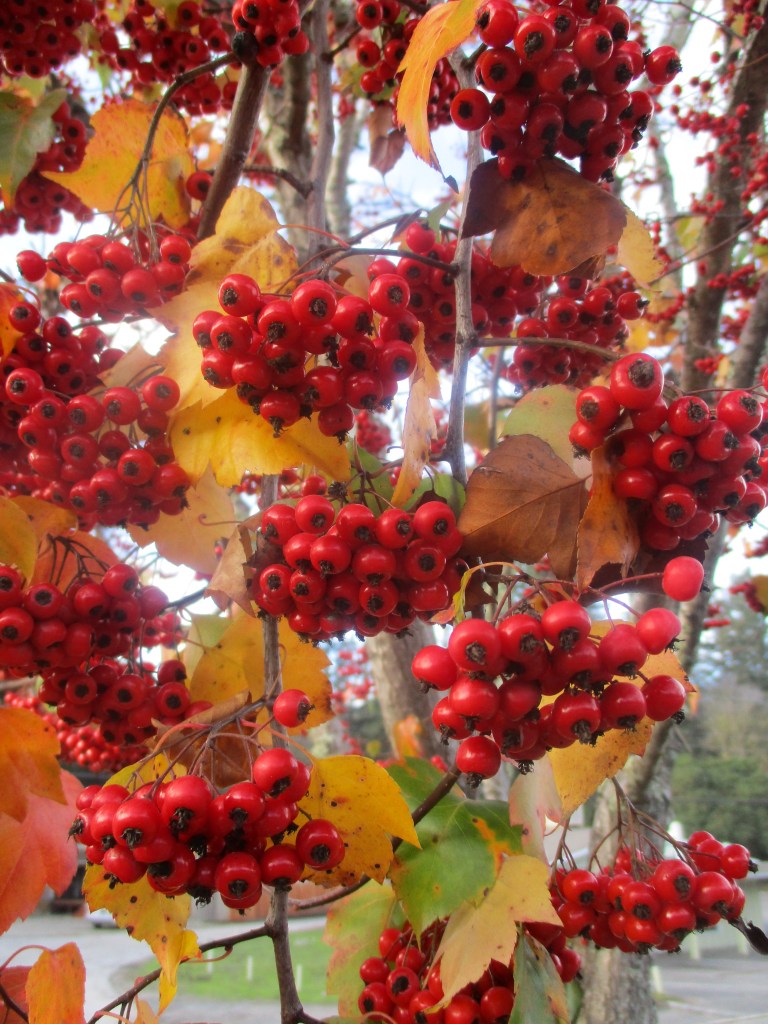
Firethorn is the most profuse and most familiar of the colorful berries through autumn and winter. A few species and cultivars of Cotoneaster can be almost as prolific, but with more subdued color and stature. Toyon is a related native species that performs well in unrefined landscapes. English hawthorn produces similar colorful berries, but develops into a small and gnarled deciduous tree.
Unfortunately, none of these colorful berries are notably edible. In fact, some are mildly toxic.
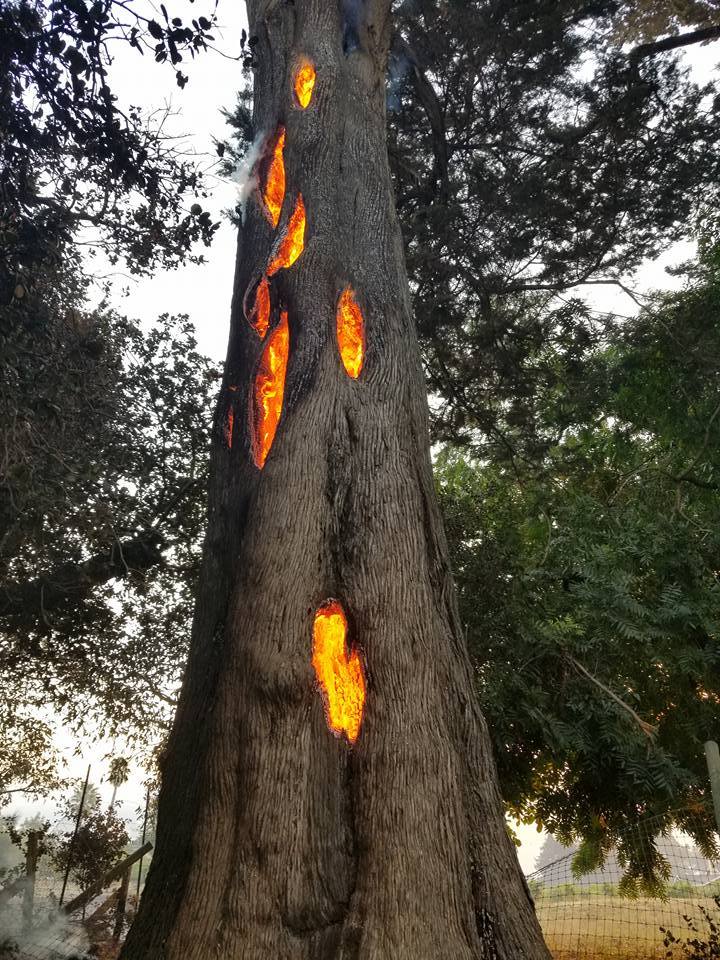
Matthew McDermott got this picture, which was actually part of a video, of a tree burning from within during the devastating fires in Sonoma County last October 9. Many of us saw it in the news. It is actually not as uncommon as it would seem to be. Interior wood is more combustible, and sometimes already well aerated from decay, so can burn if exposed to fire through wounds or cavities, while the exterior of the same tree resists combustion. This is why there are so many big and healthy coastal redwoods with burned out hollow trunks. Of course, trees more commonly burn from the outside.
Once burned, charred wood is resistant to decay. Redwoods and cedars are resistant to decay anyway, so once charred and doubly resistant, they can stand for decades.
When my younger brother and I were little tykes, one such charred cedar lived at our maternal…

 This single yellow ginkgo leaf says a lot. It was found among the abundant cottonwood leaves on the broad walkway in Felton Covered Bridge Park (
 Not just any poppies; California poppies, the state flower of California.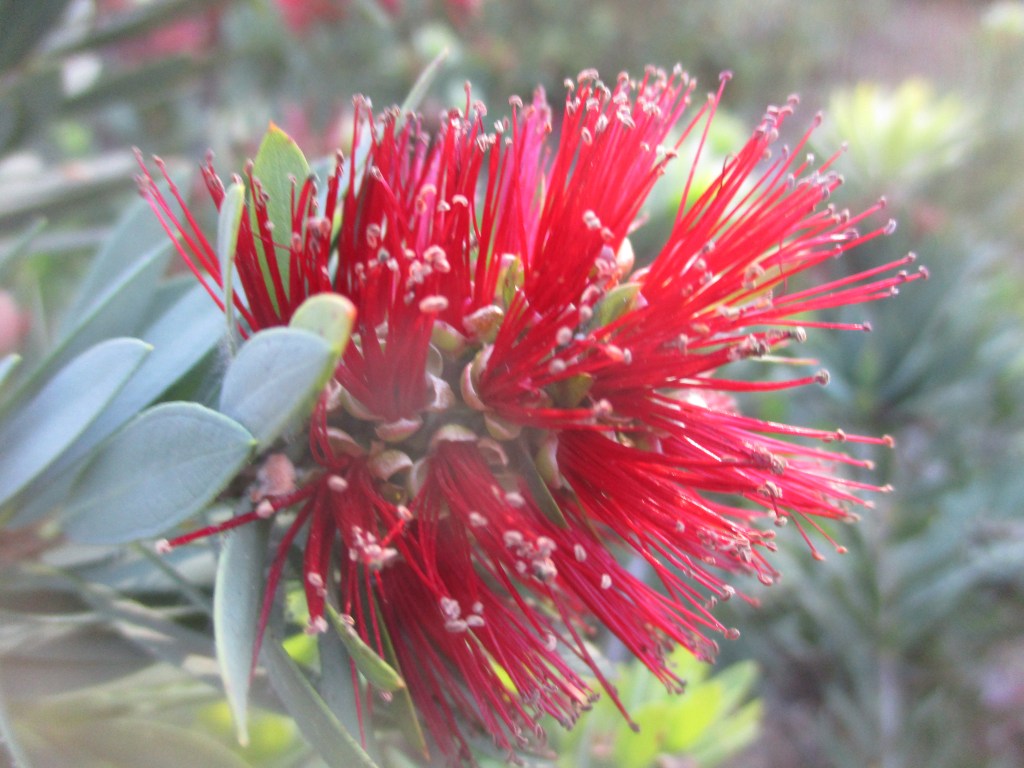


 Newer developments are often named after what was destroyed to procure space for them. Writers and historians have been making that observation for decades.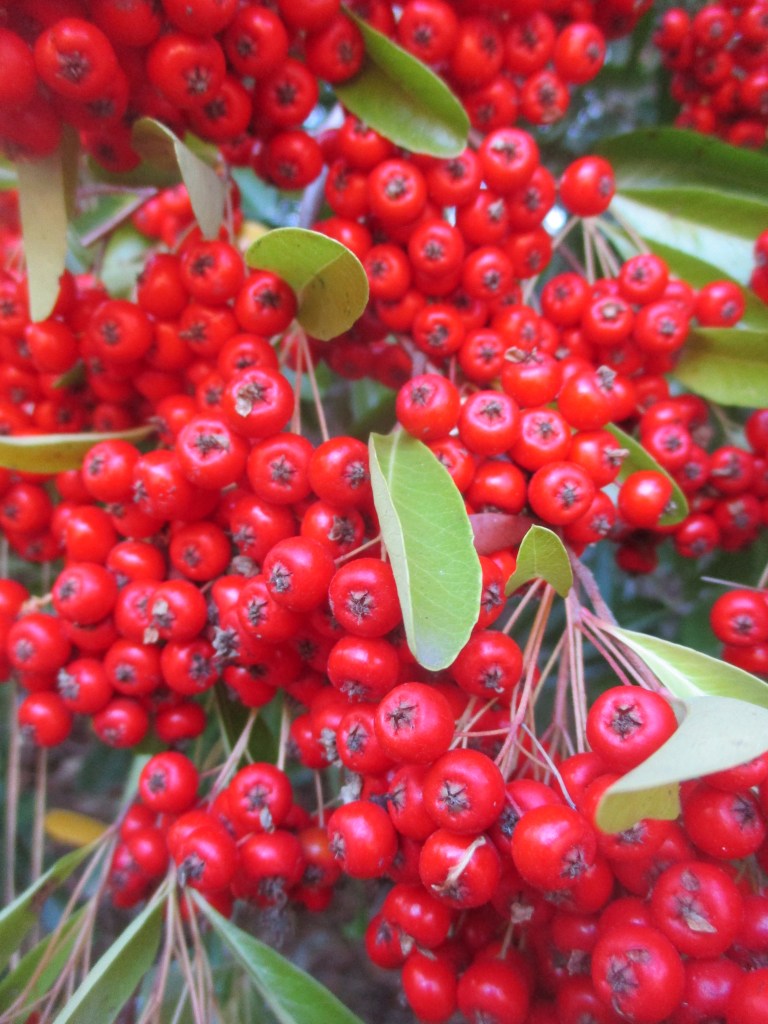
 Matthew McDermott got this picture, which was actually part of a video, of a tree burning from within during the devastating fires in Sonoma County last October 9. Many of us saw it in the news. It is actually not as uncommon as it would seem to be. Interior wood is more combustible, and sometimes already well aerated from decay, so can burn if exposed to fire through wounds or cavities, while the exterior of the same tree resists combustion. This is why there are so many big and healthy coastal redwoods with burned out hollow trunks. Of course, trees more commonly burn from the outside.
