Horridculture – Skipping Ahead

January 17 is as far as I have gotten with the backlog of articles from blogs that I follow. I am now two and a half weeks behind schedule. Articles are old news by the time I see them. I have been trying to catch up for weeks or maybe months, but have instead been getting farther behind. The video above is from the article I posted back then. There has been no rain since then.

The video also looks like what I feel I am doing to that backlog of article while I skip ahead to current articles beginning with February 5. Flushing them like this seems so negligent. I feel so obligated to read the articles of blogs that I follow. That is why I follow them. However, if I do not flush the backlog, articles that are current now will also be old news by the time I get them.

I have been reading some of these blogs so regularly that those who write them sometimes include notes to me within the contexts of their articles. Sometimes they comment on something that they think I would be particularly interested in. Sometimes they ask questions that they think I might know the answers to, or just ask for a bit of advice. Flushing all that is just wrong.

I have no choice. I have no time for it all. I write my brief gardening articles for more small newspapers than I can keep track of. I still work at a part-time and temporary job that involves maintenance of landscapes and small scale arboriculture because I can not bear to leave! I intend to eventually return to work at nursery production, but have been too overworked to do so.

Meanwhile, former clients and clients of former clients continue to contact me in need of services that I can no longer provide. I can find no one to refer them to for comparable services. All of the best arborists and horticulturists are retired, deceased or too busy (compensating for the lack of those of us who are retired or deceased) to accommodate more work. It is saddening.

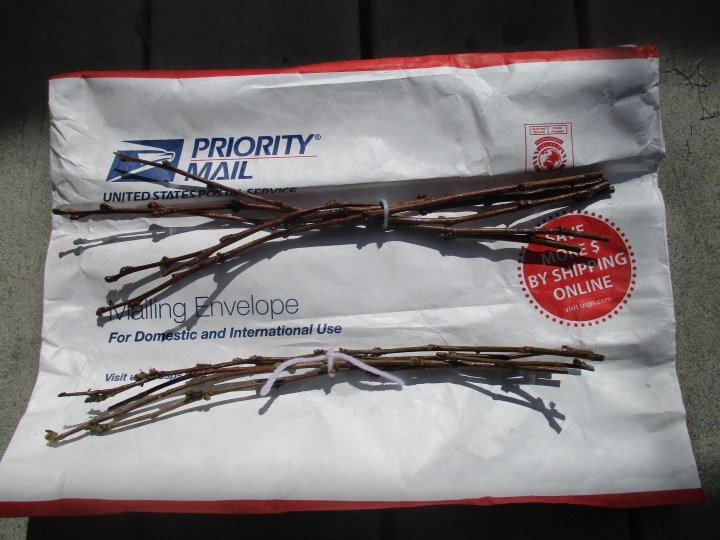
On top of all that, I am supposed to be canning cedar trees and plugging sycamore cuttings for street trees in Los Angeles a few years from now . . . and maybe working in the garden?!?!

California Sycamore

00212
California sycamore is a stately native.

California sycamore, Platanus racemosa, is a riparian species that wants to be a chaparral species. It seems to passively mingle with valley oaks and coast live oaks in chaparral regions. Yet, it stays close to rivers, creeks, arroyos, or low spots where water drains from winter rain. California sycamore does not follow waterways far up into forests though, as if it dislikes the deeper shade.

In urban situations, California sycamore is best for large scale landscapes, such as parks or medians of broad boulevards. It is complaisant enough for smaller landscapes, and tends to disperse roots too deeply to damage pavement. However, it grows so fast and so very big. Mature trees get to a hundred feet tall. Massive trunks are picturesquely irregular, with mottled tan and gray bark.

All the deciduous foliage generated by such large trees is generous with shade for summer, but stingy with color for autumn. Defoliation starts early and continues late, so is messy for a long time. Foliar tomentum (fuzz) is irritating to the skin, and much worse if inhaled. Anthracnose often deprives trees of their first phase of foliage in early spring. Although harmless, it makes another mess.

Pollarding And Coppicing Appall Arborists

00212thumb
Pollarding is disturbingly severe but effective.

Very few arborists in America condone the extreme pruning techniques known as pollarding and coppicing. Both techniques essentially ruin trees, and deprive them of their natural form. Affected trees likely require such procedures to be repeated every few years or annually. Otherwise, they are likely to succumb to resulting structural deficiency. Restoration of such trees is rarely practical.

Pollarding is severe pruning to remove all except the main trunk and a few or perhaps several main limbs. Coppicing is even more severe, and leaves only a stump. Both are done while subjects are dormant through winter. Most or all new growth that develops is spring is concentrated around pruning wounds of the previous winter. Some coppiced stumps generate growth from the roots.

If pollarded or coppiced annually, all growth that developed during the previous season gets pruned cleanly away to where it grew from since the previous procedure. Distended ‘knuckles’ develop at the ends of pollarded limbs or coppiced stumps as the pruning is repeated for a few years. ‘English’ pollarding leaves a well oriented stub of any desired length to slowly elongate each knuckle.

Pruning wounds should be as flush to each knuckle as possible, without intrusive stubble. The many small pruning wounds left on each distended knuckle will compartmentalize (heal) efficiently as new growth develops during the following season. Pruning below a knuckle might seem to be more practical, but leaves a single but big wound that could decay before it gets compartmentalized.

Delaying pruning for a few years creates bigger wounds, and allows innately structurally compromised stems to get heavy.

Pollarding and coppicing were developed a long time ago to produce kindling, fence stakes, cane for basketry, and fodder for livestock, as well as silkworms. Nowadays, it is done to contain big trees, enhance the size and color of leaves, produce juvenile foliage, produce colorful twiggy growth, or prevent unwanted bloom or fruit. Not many trees are conducive to such severe techniques.

SODS?

P00202
Flagging (sudden necrosis of distal foliage) used to indicate the beginning of a sudden end.

Phytophthora ramorum is the pathogen that initiates Sudden Oak Death Syndrome, which is known simply as SODS. Monarthrum scutellare, which are known as ambrosia beetles, and are the secondary pathogen associated with the syndrome, infest and kill tanoak and coast live oak that are infested with Phytophthora ramorum, about as quickly as symptoms are observable.

Hypoxylon thouarsianum is a tertiary but merely opportunistic pathogen associated with the syndrome. By the time it gets established within galleries excavated by the ambrosia beetles, the affected trees are almost completely necrotic. That first ‘S’ in SODS is there for a reason. It is an efficient process. Death occurs too suddenly for affected trees to drop any of their leaves!

Each of these three pathogens causes distinct symptoms. Phytophthora ramorum causes trees to bleed black tar-like fluid, and causes tanoak to exhibit foliar flagging as seen in the picture above. Monarthrum scutellare expels finely textured frass from the galleries it excavates into infected trees. Hypoxylon thouarsianum produces distinct small and black fruiting structures.

In the past several years though, Sudden Oak Death Syndrome has often been a bit less than sudden. There are a few tanoaks here that have exhibited foliar flagging for a few consecutive years, without any bleeding from the trunk or infestation by ambrosia beetle. Some coast live oaks have exhibited minor bleeding, but likewise have not become infested by ambrosia beetle.

It is as if the ambrosia beetle is no longer proliferating as it had been. It actually seems to be rather scarce. Trees that were expected to succumb suddenly to ambrosia beetle infestation are succumbing slower to infestation of only Phytophthora ramorum. The process is variable, so might have potential to kill some trees rather suddenly, but may take a few years to kill others.

Could some possibly survive?

Vegetation Exploitation

P00201K
If a tree falls in a forest, . . . it might get recycled.

Exploitation of the vegetation here involves so much more than collecting seed from old bloom, dividing overgrown perennials, or processing cuttings from pruning scraps. It goes beyond the reassignment of lauristinus, canna, African iris, deodar cedar and perhaps others that I wrote about earlier. Flowers, fruits, vegetables and herbs are mundanely obvious assets.

The landscapes and forests here do so much more than beautify and provide shade. When a tree falls in a forest (and makes a sound even if no one is there to hear it), it might get processed into firewood or lumber. Some of the foliage that falls in landscaped areas goes to the compost piles. Even debris that gets removed from here gets recycled as greenwaste somewhere else.

Of course, we can not recycle, reuse, repurpose or otherwise make use of everything that falls out of the forests and landscapes. There is simply too much of it. That is how the ecosystems of the forests recycle naturally. Exotic plants in the landscapes do not know that they are exotic, and try to behave as they would within their respective ecosystems. Nature is innately messy.

Trees that fall across hiking trails merely get cleared from the trails, and left to decompose out in the forests. Even potentially useful firs, pines and redwoods can not be extracted feasibly. Their big trunks might remain where they fell, with only a section cut out where a trail goes through. The forests do not mind. Their ecosystems know how to make use of such biomass too.

This fallen fir tree happened to land squarely on top of a few steps in a trail that is cut into a steep hillside. As you can see, it was not exactly cleared completely from the trail, but instead replaced the steps that it destroyed.

Six on Saturday: Sow The Seed Of Doubt


There is serious doubt about the practicality of collecting seed that there is no use for. We have no time to sow any of it properly. Some gets tossed unceremoniously where it would be nice if just a bit of it grows and blooms next year. Such folly is better than the guilt of simply discarding all that seed, even if we get more of something we do not want.

1. Echinacea purpurea – coneflower – Deadheading left me with all these dead heads of seed. I have no use for all this seed; but a neighbor is happy to scatter it where some might grow.P91228-1

2. Lychnis coronaria – campion – This is all the seed I got, in a small pill can. Most was left in the landscapes to disperse where already established. This bit of seed goes to new territory.P91228-2

3. Lunaria annua – honesty – This is just one of several hard hat fulls. Seed already sifted down, leaving empty frass on top. I lack an article to link to, so linked to someone else’s article.P91228-3

4. Aesculus californica – California buckeye – This is what is starting to grow from four big seeds that I could not bear to discard earlier. Now there will be four baby trees without a plan.P91228-4

5. Pelargonium X hortorum – zonal geranium – Not all of this folly is from seed. Scrap from pruning geraniums got processed into more cuttings than we will plug. These are the last few.P91228-5

6. Rhus lanceolata? – prairie sumac? – There is even more folly in canning feral seedlings of this unidentified sumac. It is about as sensible as canning the four sweetgum to the upper right.P91228-6

This is the link for Six on Saturday, for anyone else who would like to participate:

https://thepropagatorblog.wordpress.com/2017/09/18/six-on-saturday-a-participant-guide/

Weeping Bottlebrush

50128
Weeping bottlebrush blooms whenever it likes.

It is no wonder that it takes many years to get to fifteen feet tall, and may never get more than twenty feet tall. Weeping bottlebrush, Callistemon viminalis, may grow less than a foot a year, but seems to hang downward two feet. Because the stems are sculptural, and the bark has an appealingly rough texture, most weeping bottlebrush trees are grown with multiple trunks. The brick red bottlebrush flowers that bloom sporadically at any time of the year are more abundant early in summer. Established plants bloom more colorfully with a bit of water, but can probably survive quite a while without it. The evergreen leaves are narrow and mostly less than three inches long. Weeping bottlebrush needs good sun exposure.

Pollarding Is Extreme Tree Pruning

50128thumb
Pollarded knuckles look like science fiction.

Most arborists insist that pollarding is horticulturally incorrect. However, most of us who pollard trees in our home gardens are not arborists. Pollarding is technically detrimentally disfiguring to trees. However, some trees that are naturally short lived can live much longer if pollarded properly. That is the trick; doing it properly. Pollarding is certainly a distinctive pruning style that is not for everyone, but can be both practical and sustainable in certain situations.

Pollarding is an extreme pruning technique that involves the removal of all or almost all of the stems that grew since the last time the technique was done. The new growth gets cut back cleanly to distended ‘knuckles’ that develop at the ends of the original stems. Traditionally, one or two strategically aimed stubs from the removed new growth are left on each knuckle to form a new knuckle a bit beyond knuckles of the previous year. Locally though, stubs are typically omitted.

New growth must get cut back cleanly so that the wounds can get compartmentalized (healed over) as efficiently as possibly. Stubs interfere with this process. If one or two stubs are left on knuckles to form new knuckles, they should be long enough to get some distance from the original stubs, but short enough to not be too awkward. Knuckles should not get cut off! Such large wounds do not compartmentalize fast enough to avoid rotting.

Pollarding can only be done in winter, both because plants are dormant, and also because the weather is not so dangerous. New growth starts to shade exposed bark before it gets scalded by intensifying sunlight and heat in summer. Once they come out of dormancy, plants would be seriously distressed by such severe pruning. Because new growth is so vigorous after pollarding, it can become sloppy if pollarded less than annually. Some plants that grow slowly or produce stout stems may get pollarded less frequently.

London plane (sycamore) and fruitless mulberry are the most commonly pollarded trees. Silver maple, silk tree and various elms, willows and poplars adapt well to pollarding as well. Locust and purple leaf plum can be pollarded, but will be deprived of bloom. Bottlebrush can bloom later in the same year after getting pollarded, and probably will not need annual pollarding anyway. Pollarded bay trees can be kept small, and will provide better herbal foliage. Certain eucalyptus can be kept juvenile if their juvenile foliage is more appealing than their adult foliage.

Horridculture – Memorials

P00129
Where are the cedars?

Memorial trees should be remembered . . . right? I mean, they are planted to remind us of . . . something, or . . . someone. They are typically trees that will be around for a long time, because that is how important memories should be. Redwoods and oaks work nicely. Most get outfitted with plaques to remind everyone what the trees are there to remind us of.

The old original Sunnyvale City Hall was landscaped with several memorial trees. The most prominent were redwoods and cedars that were mostly planted as memorials for local veterans of various wars. They accumulated over several decades and a few wars. City Hall seemed like a good place for them, where they could live for a long time without bother.

However, City Hall was demolished in the late 1970s, and replaced with a big mall. The larger redwood and cedar memorial trees were salvaged as the mall was build around them. Most survived in a courtyard within the mall until the mall was partly demolished less than a quarter of a century later.

All the cedar memorial trees died in captivity within the courtyard. One redwood that was not a memorial was added to the group where one of the cedars had been.

Prior to the demolition of the courtyard, I needed to inspect the surviving redwood to prescribe procedures for safe removal of surface pavement, and subsequent protection of exposed roots. The surviving trees were in remarkably good health. I was not very worried about them. What bothered me though, was the complete disregard for their historical significance.

The plaques associated with these memorial trees were a mess. It was as if they all had been collected from their respective trees, mixed up, and replaced randomly. Plaques from the absent cedars were assigned to some of the surviving redwoods. The oldest and grandest memorial redwood was labeled as the redwood that was added last, after the mall was built, and therefore of no historical significance. The smallest and youngest redwood that really was added after the mall was built was labeled as one of the more historically significant memorial trees.

I believe that all the trees that were there during my inspection are still quite healthy within a small park space that was built around them. I have no idea if they are outfitted with plaques. If they are, I can not help but doubt the accuracy of those plaques.

Canna

00205
Cannas are just dormant rhizomes now.

It is difficult to document the lineages of the countless modern garden varieties that have been hybridized from ten species of Canna. Straight species that are popularly grown within their native ranges are rare here. Some species are grown for their thick edible rhizomes. Many are grown for edible foliage. Some are employed to absorb toxins from contaminated riparian environments.

Garden varieties that are popular here are grown merely for their aesthetic appeal. The lushly big leaves are typically rich green, but might be bronzed, dark purplish bronze, or striped with yellow, bronze, creamy white or peachy pink. Large varieties get taller than eight feet. Compact types stay less than three feet tall. All foliage dies to the ground after frost, and grows back fast in spring.

The flashiest parts of canna flowers are actually very specialized stamens known as staminodes, which mostly obscure the very subdued petals and sepals. Red, orange, yellow, pink, salmon or very pale yellowish white bloom may be spotted or blotched. Flowers might be thin and wispy, or rather floppy and lush. Canna are popularly known as canna lilies, but are not at all related to lilies.