Winter Dormancy Begins In Autumn

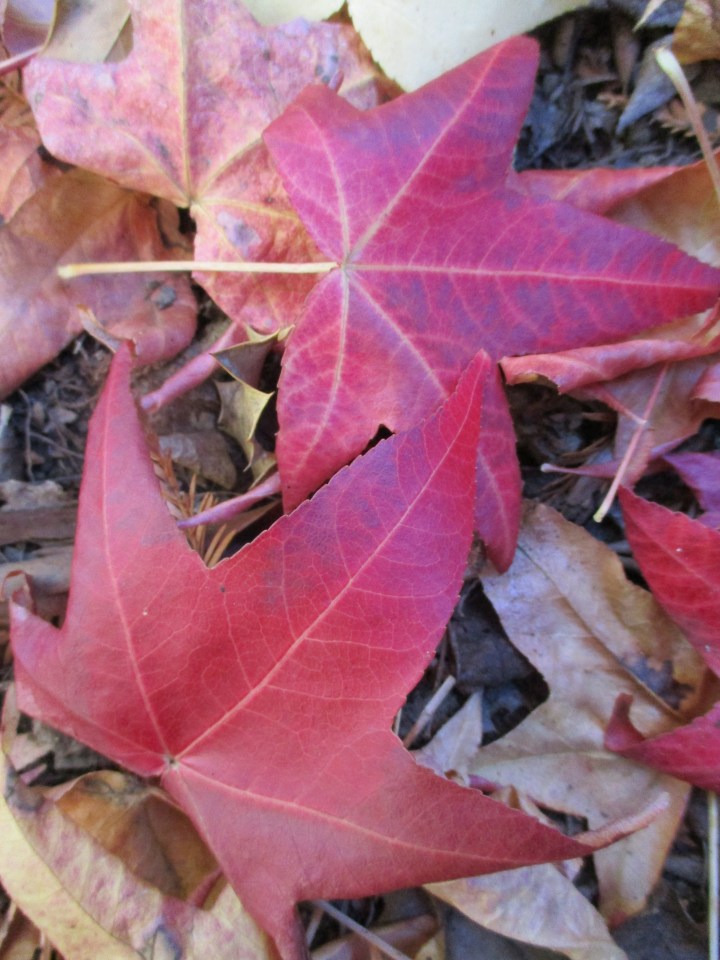
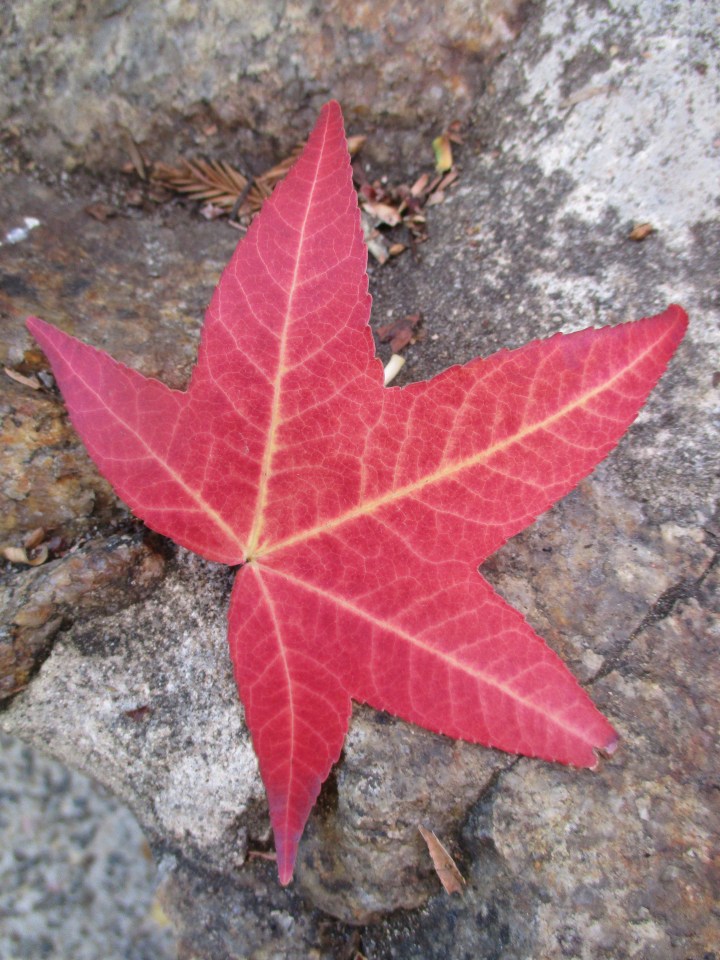
50923thumbAutumn is for planting . . . but not much else. While it is important to get certain new plants into the garden before cool and rainy weather, other gardening chores will not be necessary while plants are becoming less active before winter dormancy. Raking falling leaves is probably the biggest of the new chores that are specific to autumn.

Formal hedges that have been getting shorn regularly since spring may not need to be shorn again until next spring. They simply will not grow much between now and then. If possible, pittosporum and photinia should not be shorn once the weather gets rainy. Their freshly cut stems are more susceptible to certain diseases while wet than during dry weather.

Citrus and tropical plants should not be pruned late because pruning stimulates fresh new growth that will be susceptible to frost later in winter. Even if tender new foliage does not get frozen, it can get discolored and disfigured by cold weather. Cool weather inhibits vascular activity necessary to sustain the development of healthy new foliage anyway.

For the same few reasons, fertilizer will not be necessary later in autumn. Fertilizer can potentially stimulate new growth when it is not necessarily wanted. Also, some nutrients in fertilizer are less soluble (or chemically unavailable) while the weather is cool. Only plants that grow through winter, like cool season annuals, vegetables and grasses, will want fertilizer.

Planting is done in autumn because plants are either dormant or less active than they had been during warmer weather. They can take their time to disperse their roots into comfortably cool and damp soil. Evergreen plants do not draw as much moisture from their roots while foliage is cool and damp. Deciduous plants draw even less moisture without foliage.

Spring blooming bulbs get planted in autumn not only so that they can disperse their roots leisurely, but also because they need to get chilled to bloom well. Bulbs can be phased, so that those planted earlier will bloom before those of the same kind planted later. However, if planted too late, they may not get sufficient chill.

Horridculture – Ignoring Arboriculture

P81003There are too many different types of horticultural professionals to count. There are nurserymen who grow horticultural commodities. There are landscape architects and landscape designers who design the landscapes into which some of these horticultural commodities will go. There are landscapers who install such landscapes. Of course, there are gardeners who maintain the landscapes after they are installed. These are just a few of the more familiar horticultural professionals.
I will refrain from my typical ranting about the extreme lack of professionalism among almost all horticultural professionals who are not nurserymen or arborists (okay, and one landscape designer), but must point out something in the picture above. Do you see it?
It is not the fact that this once very well designed landscape was dismantled and mostly replaced with a cheap slapped together assemblage of cliché plants by someone who just needed work.
Nor is it the pointlessly disfigured shrubbery from the original landscape that was salvaged while the best features that could have been salvaged were removed.
Nor is it the fact that this process has been repeated a few times since the building was originally landscaped back in the 1980s, leaving a nicely maturing but weirdly non conforming crape myrtle in front of the queen palm that should be the focal point, as well as a new dogwood that will compete with both focal points.
It is the fact that despite all the effort that went into the installation of this garage sale style landscape, no one bothered to procure the services of an arborist to groom the queen palm. Do you see it now; all those dead fronds hanging from the canopy of the queen palm? It is like taking a pick up through a car wash while it is loaded with garbage.

Mulla Mulla

81010The common name sounds funny, but it is easier to pronounce then than the Latin name. Mulla mulla, Ptilotus exaltus, is an Australian species that has been locally available longer than its limited popularity suggests. It may seem to be more peculiar than it is because it is grown primarily by specialty growers, who happen to grow many cool plants that should be more popular than they are.

Like many species that are grown as annuals, the mulla mulla is really a short term perennial that can perform for a few years, but is unfortunately more often grown as a warm season annual. It will finish blooming soon, but if left in the garden through winter dormancy, young plants should resume in about April or May. It can succumb to frost if the weather gets cold enough through winter.

Although it can survive with less, mulla mulla prefers somewhat regular watering, and good sun exposure. New spring growth develops rather vigorously without getting much more than half a foot high and wide. Fuzzy cylindrical blooms that stand above the foliage are about three inches long. Floral color is pinkish mauve, with a silvery sheen. Deadheading promotes subsequent bloom.

Take It Slowly In Autumn

81010thumbNo more fertilizer! . . . almost. The main exception is turf that might need a bit of fertilizer if it must stay green through the coldest part of winter, but that is another topic for later. Otherwise, most plants start to go dormant through autumn, and should be as dormant as they get by the middle of winter. Fertilizer later than now could be as logical as espresso just before trying to get to sleep.

Keeping marginally frost sensitive plants up past their bedtime can have serious consequences. Lemon trees are not often damaged by frost in the mild winter weather here. That is because they stop growing through late summer, and the last of their new foliage matures before autumn. Fertilizer applied too late can stimulate late new growth, which is more likely to be damaged by frost.

Plants that like a last application of fertilizer as late as the end of September, such as roses, use it for their last minute preparations for dormancy. It actually takes a bit of effort to abscise (shed) foliage. Besides, healthy foliage is easier to abscise than distressed foliage is. Well fed roots, although significantly subdued by dormancy, work later into winter, and get an earlier start in spring.

Roses are, of course, not as likely to be damaged by late application of fertilizer as lemon trees are. They know better than lemon trees do about what to do when the weather gets cool. They just go dormant. Much of the extra nutrients get ignored as they leach through the soil with winter rain. Many of the nutrients become insoluble and unavailable to plants as winter weather gets cooler.

Autumn is the season for allowing most plants to slow down and get ready for winter dormancy. Trying to get them to be as green and productive as they were in spring can do more harm than good. Only plants that are active through winter, such as cool season vegetables, cool season annuals, and some types of turf, might appreciate moderate applications of fertilizer. If newly installed plants want fertilizer, they should get only enough to keep them happy until they get more next spring.

Gilley’s

P80930Immediately after the Loma Prieta Earthquake, nothing was open for business downtown on North Santa Cruz Avenue south of Bean Avenue. As buildings were inspected for safety and cleaned up, sections of cyclone fence that had kept everyone out were slowly and systematically moved out so that businesses on the east side could open for business. The same slow process was repeated on the west side, moving south from the corner at Bean Avenue, but did not get very far. The old Los Gatos Cinema, as well as the several other building between it and the seemingly destroyed old La Canada Building on the southern corner of the block, were too badly damaged for the fence to be removed.
Right there next door to the Cinema where the fence stopped moving, Gilley’s Coffee Shoppe happened to be one of the fortunate businesses that was able to open for business again, and serve breakfast and lunch to those so diligently reconstructing downtown. It had always been there, longer than anyone can remember. Older people knew it as the ‘Sweet Shoppe’, a soda fountain that was very popular with those who cruised North Santa Cruz Avenue. It was the last of the first business that that moved into the old Cannery Building when it was converted to retail stores. Gilley converted it to more of a coffee shoppe and named it after himself in the 1970s. While everything in Los Gatos changed around it, Gilley’s remained about the same. Everyone knows Gilley’s.
I had not gone there more than a few times prior to the Loma Prieta Earthquake. I was away at school for the second half of the 1980s, and just did not go downtown much while in high school or earlier. I stopped by on the way to work early one autumn morning in 1990 because it was the only restaurant that was open in the recovering downtown neighborhood It instantly became my place to go for breakfast, and sometimes for lunch. It was nothing fancy, but it was what I wanted.
For the past twenty eight years, Gilley’s was where many of my work days started. I used their tables to sketch out irrigation systems and small sections of landscapes. I met clients there rather than at my home office. Back when I was able to write about local gardening events in my gardening column, I conducted interviews there. Readers sometimes brought me pieces of plants for identification, or for diagnoses of a disease. When Gilley’s sold and was prettied up a slight bit in the early 1990s, I procured small potted bromeliads, and later, cut flowers for the tables. Before permanent succulent were installed into the big pots flanking the door, I cycled flowering annuals for a little bit of color out front. A whole lot of horticulture went on at Gilley’s.
Sadly, nothing is permanent. Los Gatos is always changing, just like it has always done. By the time you read this, after 3:00 on September 30, 2018, Gilley’s will have closed for the last time.

Evergreen Pear

61005If it were not so seriously susceptible to fireblight, the evergreen pear, Pyrus kawakamii, would be a practical evergreen shade tree for small garden spaces. Mature trees do not often get much taller or wider than twenty five feet. Aggressively pruned trees that do not bloom much are less susceptible to fireblight. Regularly groomed trees can live with fireblight for many years or decades.

The nicely furrowed bark and irregular branch structure give evergreen pear trees the distinction of larger trees. Lower limbs will probably sag low enough to need pruning for clearance. Clusters of small white flowers, like those of other pears, bloom in spring, but are partly obscured by the evergreen foliage. Distressed trees bloom more profusely and are not so densely foliated in bloom.

Fireblight Kills Pears And Apples

61005thumbBunches of blackened leaves hanging from blackened stems in otherwise healthy pear trees really are as serious as they look. They probably appeared as new growth was developing in spring, and are still as dead now as they were then. As surrounding foliage colors and falls, the blackened foliage will remain until it gets knocked out by rain and wind in winter, or until it gets pruned out.

Because these dead bits seem to have been scorched by fire, the bacterial infection that causes them is known as ‘fireblight’. Pear, flowering pear and evergreen pear are most susceptible to it. Apple, flowering crabapple, quince, flowering quince, hawthorn, loquat, cotoneaster, pyracantha and photinia are also very susceptible. Some cultivars are more resistant to fireblight than others. Few other members of the ‘rose family’ are rarely infected.

At the base of each dead bit (or toward the supporting limb from dead bits that do not stand upright) is a lesion where the bacteria that cause fireblight infected the stem. These infections not only obstruct vascular activity and kill the distal (outward) portion of the infected stems, but they also spread proximally (inward) to more important limbs, branch unions and even main trunks and roots.

Fireblight is transmitted mostly by bees, and also by other insects, birds, rain and wind, while trees are blooming in spring. It most often infects through flowers, and can also infect where infected debris, particularly falling flower parts, get caught in branch unions. If it infects root suckers, it can infect the roots right away, and kill an entire tree. Root suckers should be pruned away anyway.

There is no remedy for fireblight. Because it is very contagious, all infection should be pruned out. Because infection extends inward from obvious lesions, infected stems should be pruned back at least a foot and a half below (inward from) obvious infection. Sadly, this often disfigures infected trees, sometimes severely. Pruning scraps should be removed from around susceptible trees.

Some say that fireblight should be pruned out in summer. Others say that winter is best. Really though, the only bad time is spring, while weather is warm but still damp, and the trees that are so susceptible to fireblight are active and blooming. The reason for pruning it out in winter is that the disease is inactive while cold. However, it does not get cold enough here to slow it down much.

Not Enough Blue

P80929KThere were barely enough blue elderberries left this late in the season for the blue elderberry jelly that should have won the blue ribbon at the Harvest Festival. It’s a long story.
After the main supplier of blue elderberries was removed to widen the driveway that it was next to many years ago, I started collecting blue elderberries from other wild shrubs on roadsides about town. At the time, the berries were very abundant. No one else was collecting them, and the doves did not come down to eat them until later in the season.
A friend eventually asked me why I was collecting the berries. I informed him that they could be used just like the black elderberries that grow wild in Eastern North American and Europe. He decided to make wine and booze with them, and payed others for whatever they could harvest. The berries were much more scarce the following season, not because they had been any less prolific, but because others were collecting them as quickly as they ripened. They became comparably scarce elsewhere as well, seemingly since the blue elderberry jelly started winning second place annually at the Harvest Festival. https://tonytomeo.com/2017/10/01/blue-ribbon/
This year, the elderberries were collected faster than I could get them. Even the berries at work that were out of reach of those collecting berries closer to town were taken by the doves who arrived early, and could not get enough to eat around town. Some of my friends insisted that they could find berries for me, but by the time I asked one of the them to do so, it was just too late in the season. She found barely enough for the two half pints of jelly needed to enter into the competition at the Harvest Festival. I was pleased with that much. It would have been all that I needed for my blue ribbon. However . . .
The Jelly and Jam Competition at the Santa Cruz Mountains Harvest Festival was canceled for this year!
That too is a long story. There are not enough entries to make it worth the bother. A few years ago, there were only seven entries, and five were mine (which makes my ‘temporary’ lack of a blue ribbon even more embarrassing)! The competition will resume next year, and it will get more publicity. The Santa Cruz Mountains Harvest Festival is happening right now (until 6:30 this evening), but without the Jelly and Jam Competition.
For now, I made only one pint of elderberry syrup.

Six on Saturday: Beat Box


It sounds more compelling that way, like the old song by Art of Noise in 1984. It was . . . unique for the time. I suppose it still it. Brent introduced me to that Beat Box when we lived in the dorms at Cal Poly in 1986. Otherwise, to me, the name would have suggested a shallow wooden box for storing root vegetables in a cellar, or a crisper drawer of a refrigerator – a box for beets.

Well, I am just beeting around the bush to avoid sharing the unsightly pictures of my beat-up and neglected planter box downtown, which, incidentally, features neither beets, nor bushes.

The last update was only six weeks ago. https://tonytomeo.com/2018/08/18/six-on-saturday-out-with-the-old/ There has not been much improvement. I manage to remove the litter that accumulates. The condition of most of the plants is unfortunately natural for this time of year. It will not last long. For now, it is what I have to share.

The main problem now is that the common houseleeks, which are the most prominent perennials, naturally looks very tired. I would have no problem with it in my own garden. I know that they look great for most of the year. They look like they do now only in late summer. They recover immediately as soon as the rain starts in autumn. I do not know what is so great about rain, or what rain does that the irrigation does not do. I think that it coincides with cool humidity. Warm aridity is probably what causes the houseleeks to fold up and shed much of their foliage the way they do.

1. Common houseleek was grown from two tiny cuttings that I acquired from the garden of a friend’s deceased mother as we were emptying her home in Monterey. They arrived with a bronze common houseleek, another unidentified houseleek, an unidentified aloe, and, of all things, a bearded iris. They grew like weeds, and are now the most prominent features in the planter box. They would not have been my first choice, but once they started to grow, everyone liked them. I sometimes consider cutting them back so that they regenerate as lower foliar plants; but most people like their height and sculptural stems. I will instead groom out some of the superfluous grown to display their stems better. Once the rain starts, and they regenerate new foliage, they will look exquisite! For now, they look like . . . this.P80929

2. Bronze common houseleek was planted between the two common houseleeks, and at the same time, but never gets going well. As soon as it tries to grow, someone takes the top off of it. It would be an excellent contrast if it gets the chance. It really looks bad right now, but like the others, it will fluff out with the rain. The third smaller houseleek is right below it.P80929+

3. One never knows what might be found in a roadside planter box or landscape. Besides the concrete slurry (that was dumped by a tile-setter working in the adjacent building) and big puddles of vomit (such as those commonly found outside of downtown bars), I have found discarded bicycle parts (that were replaced by the adjacent bicycle store), baggies of dog poop, loaded diapers, small bags of trash, and a variety of dishes, glasses and flatware from neighboring restaurants. This disfigured fender is certainly not the strangest item to appear in my planter box, but is one of the largest.P80929++

4. Two nice urns outside of the adjacent bicycle shop always look so much better than my planter box. They are filled with nice potting soil, and get watered more generously. The big houseleek in the closer of the two urns was removed from my planter box when it got too crowded. I would have planted a matching pair, but the farther of the two urns had been temporarily removed to make room for a sign. Now that it has returned, it is outfitted with a big aloe from the planter box. The aloe was cut back when the tile on the corner of the planter box where the aloe is located was repaired. I was not there when it happened, but I am very pleased that someone in the bicycle store salvaged the severed bits of aloe. I would have been annoyed if they had been wasted. They are quite large now. It would be excellent if they bloom soon. Most aloes bloom in summer, but this species has tried to bloom at really odd times . . . except in summer! The floral stalks in the planter box have always gotten broken off before they bloom, so I do not even know what the flowers look like. If they never get the chance to bloom, the foliage still looks great.P80929+++

5. The adjacent tree well really did not look this bad after I pulled up some of the debris that collected in it a month or so ago. It now looks as nasty as it did during my previous update. I know the bit of housleek looks really nasty, but it stays because I expect it to recover once the rain resumes. Nasturtiums grow here too. I will sow seed for ‘Jewels Mix’ nasturtiums in the planter box only because nasturtiums do not regenerate there as reliably.P80929++++

6. This second tree well that is just west of that in the #5 picture above had a nice magnolia tree in it a month ago. Only this pile of chipped stump remains. The sidewalk, curb and road pavement will be replaced soon. Street trees will be added later. The magnolias were so pretty, but were too impractical and messy. I am impressed that they did not do more damage than they did during the half century that they were there.P80929+++++

This is the link for Six on Saturday, for anyone else who would like to participate:

https://thepropagatorblog.wordpress.com/2017/09/18/six-on-saturday-a-participant-guide/

Annual Dahlia

50930They are really just smaller versions of the larger perennial dahlias that are grown for their big bold flowers and flashy colors. Technically, annual dahlias produce smaller versions of the same perennial roots that can survive through winter to regenerate the following spring. Yet to most of us, it is easier to purchase new plants in spring than to grow new plants from stored roots.

Relative to larger dahlias, everything about annual dahlias is subdued. The flowers are neither as big, nor as variable. They can bloom any color except blue or green, but are usually simple shades of red, orange, yellow, pink or white. Their main advantage is that they do not get much more than a foot tall, so they fit into more situations and do not need to be staked.

Bloom starts rather late in spring and continues until about now. Some varieties have bronzed foliage. Fertilizer promotes bloom and healthy foliar color; but too much nitrogen can inhibit bloom. Dahlias can be happy in pots, but only with good drainage and regular watering.