The merely adequate color among the sweetgums early in the season suggested that color would be insipid this year. Then, the weather did something that set it all off. There was too much autumn foliar color this week to select just six pictures. So, I didn’t. These six are only the first of four groups of six. It would not be practical to post a group weekly for four weeks, particularly since some of the colorful foliage in these pictures was dislodged by generous rainstorms shortly after the pictures were taken. There will be very little foliage left by the time the last group of six posts. Instead, two groups of six will be posted presently, and the other two groups of six will be posted next Saturday, before they are two weeks old. I hope this does not violate any rules.
All six specie in this first group happen to be locally native. They are also all yellow, which is the standard color here. Regionally, there is not much orange or red. The thimbleberry in the first picture is rather pale yellow, but that is more color than it typically gets. Of these six, the thimbleberry is also the only species that does not grow as a tree, or a shrub like the hazelnut of the second picture. The hazelnut happens to be a Western hazelnut. The cottonwood happens to be a black cottonwood, although I would not know what distinguishes it from any other cottonwood. The sycamore is more specifically a California sycamore, which really is quite distinct.
1. thimbleberry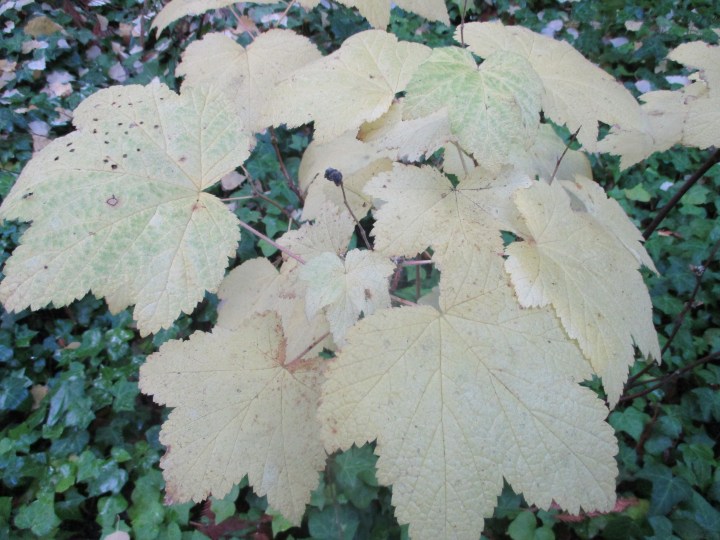
2. hazelnut
3. cottonwood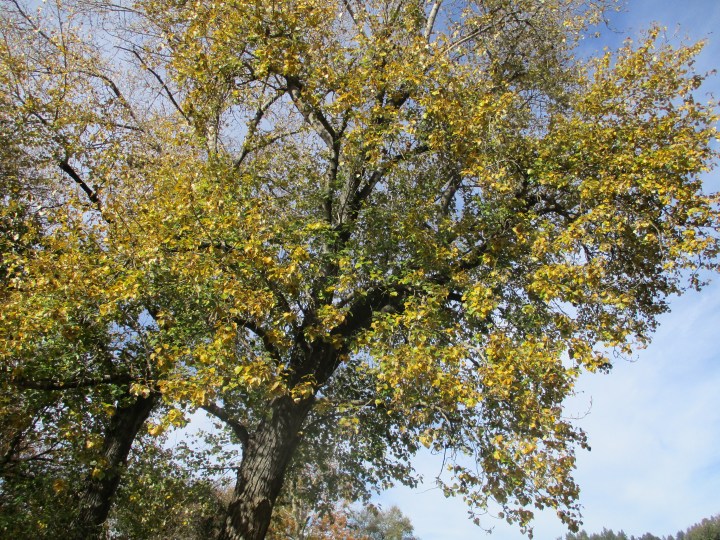
4. sycamore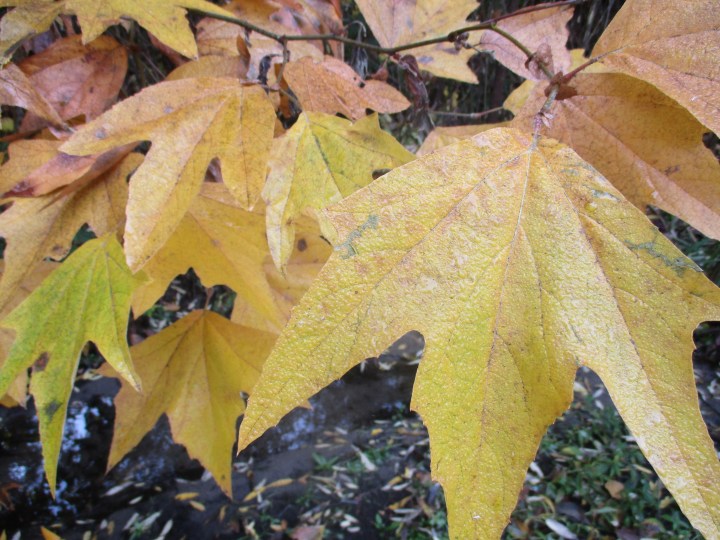
5. boxelder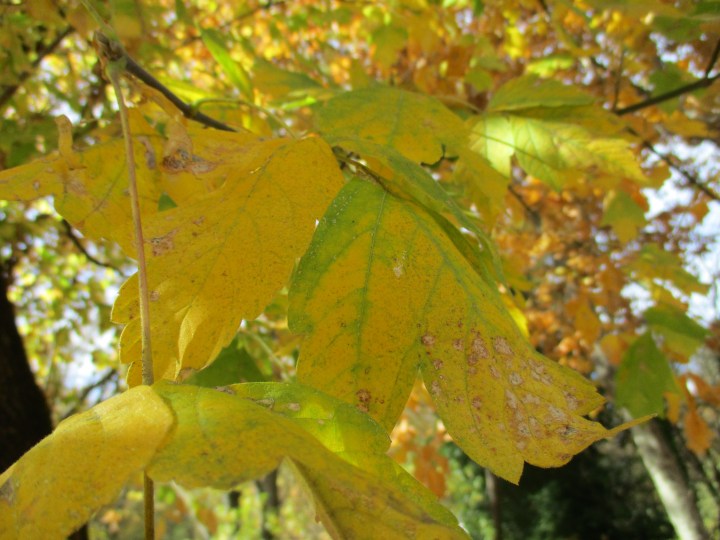
6. bigleaf maple
This is the link for Six on Saturday, for anyone else who would like to participate:
https://thepropagatorblog.wordpress.com/2017/09/18/six-on-saturday-a-participant-guide/
 Boston ivy is not really ivy at all; but is more closely related to grape. Along with creeping fig, it is one of the two best vines for freeway sound-walls. It protects the walls from graffiti and muffles sound. Unlike creeping fig, which is evergreen, Boston ivy is surprisingly colorful through autumn. Unfortunately, it clings to whatever it climbs with holdfast discs, so ruins paint, stucco, and any other surface it gets a hold of.
 This really is the best climate for gardening. Even though summers are mild, there are not many plants that want for more warmth. Even though winters are mild, it gets just cool enough for many plants that require winter chilling. Yet, there are a few plants, particularly plants from tropical climates, that can be damaged by frost. The best way to protect such plants from frost is to not grow them.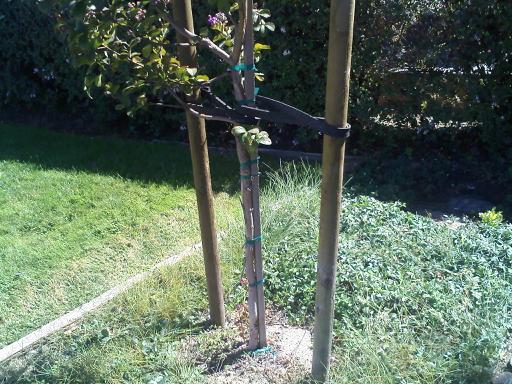

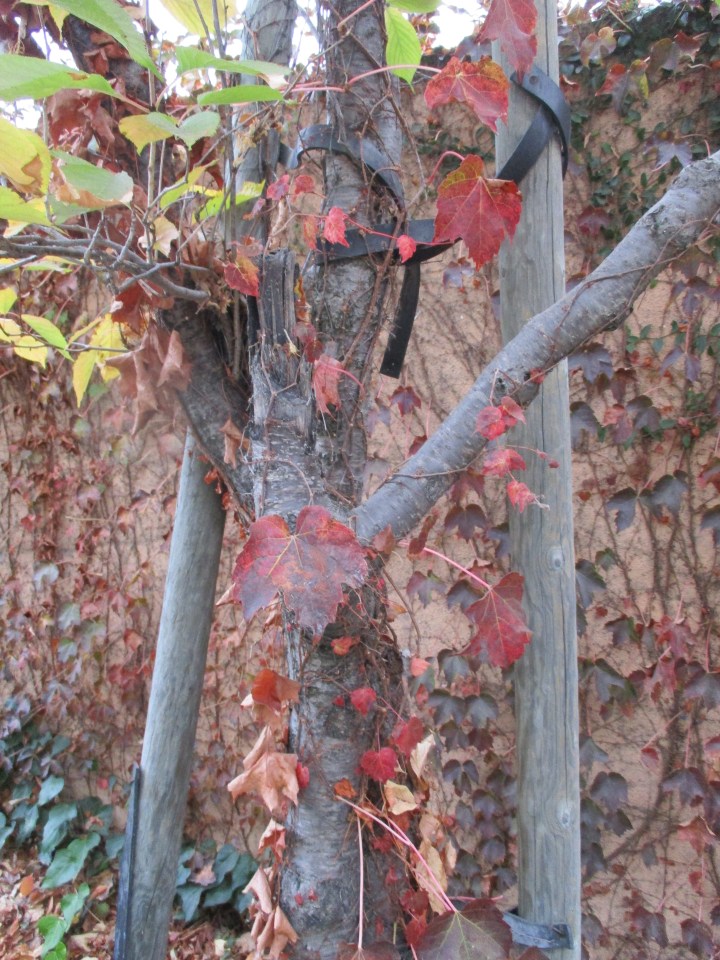
 Some of us may remember deodar cedar, Cedrus deodara, from the opening scene of the Andy Griffith Show. They were in the background as Andy Taylor and his son Opie skipped stones on Myers Lake near Mayberry in North Carolina. Those well established and naturalized trees and the pond are actually in Franklin Canyon Park in the Santa Monica Mountains above Beverly Hills.
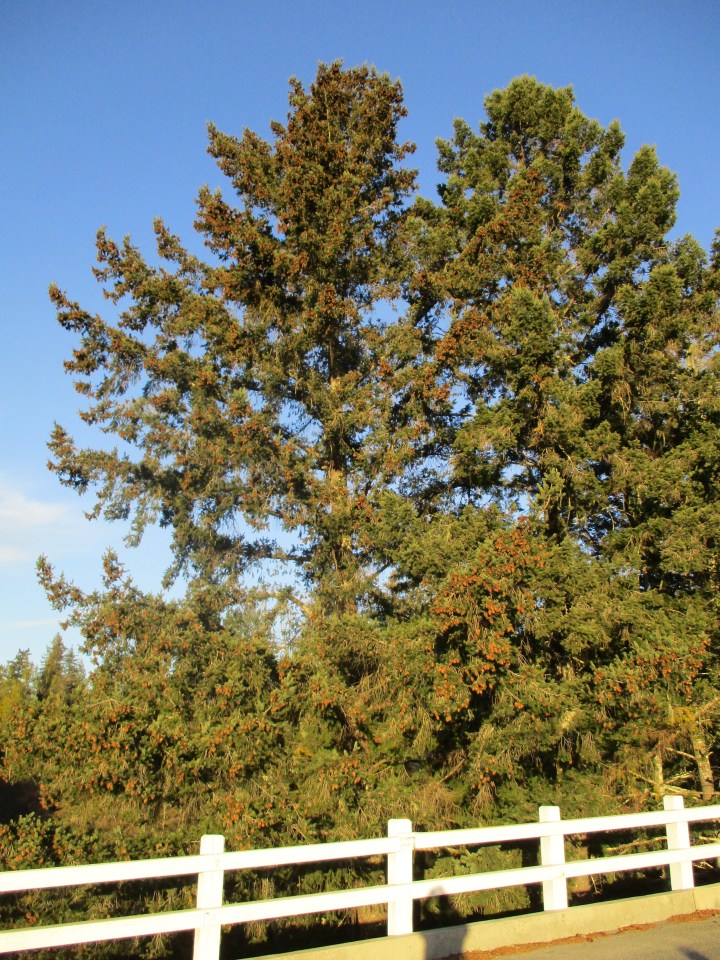 The first storm of the year has a way of reminding us if our trees need attention. Whether then need to be worked on this year or not, we tend to notice how they blow in the wind, or if they are full of dead and deteriorating debris that falls into the garden or onto the roof. As deciduous trees defoliate, they are less likely to be damaged by wind, but their structural deficiencies become visible.
 We do not get much frost here. This picture of the view through the windshield of one of the work vehicles was taken more than a week ago, while the humidity and the temperatures were still quite low. The sparse and angular pattern of the frost on the windshield is a result of the minimal humidity. There will be more frost later in winter, although there will not be nearly as much as most other climates get.
 One never knows what strange artifacts might be found out in public landscapes. It is amusing enough to find items discarded or simply misplaced long ago by former occupants of a home out in a private home garden. Public landscapes are even more interesting, since they collect debris and artifacts from many more people. Some landscapes have been doing so for a long time.

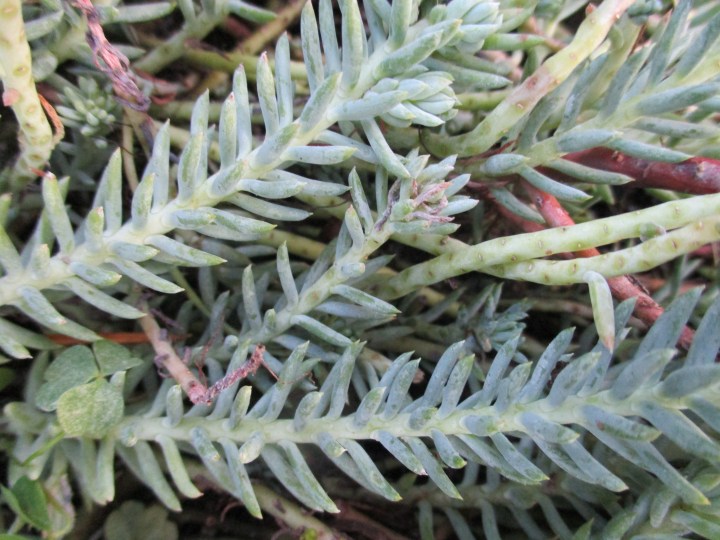


 Of all the colorful berries that ripen in autumn, firethorn, Pyracantha coccinea, is the most colorful, and also the most familiar. The berries are almost always bright red, deep red or reddish orange. Cultivars with orange berries have become rare. Those with yellow berries are even more rare, and are weaker plants anyway. The berries can linger through winter, but typically get eaten by birds half way through.
