Leaves Are Starting To Fall

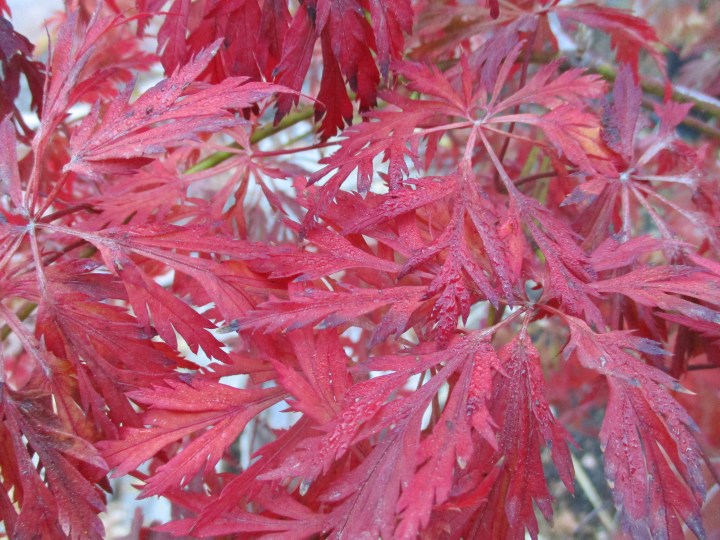
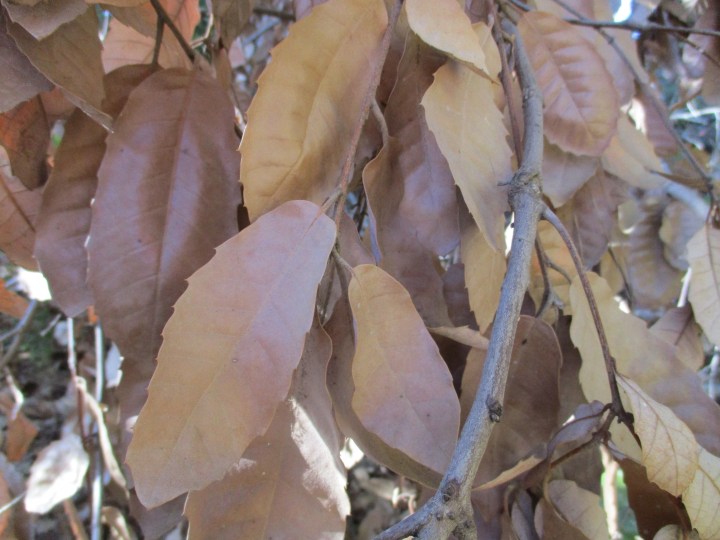
50923thumbAutumn color is different every year. Sometimes, early and sudden cool weather after a mild summer promotes good foliar color that lingers longer while relaxed trees slowly realize that they should probably start to defoliate. Sometimes, early wind and rain accelerate defoliation of otherwise good color. There are a few variables that trees must adapt their performance to.

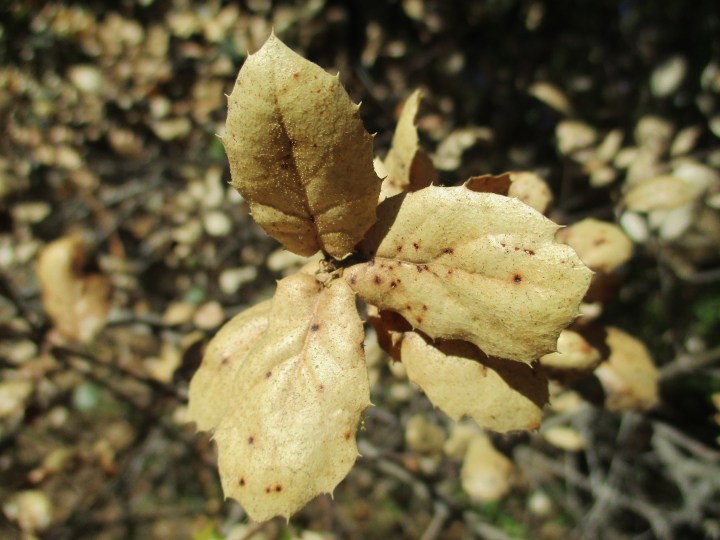
Warm and arid weather two weeks ago started the process of defoliation suddenly and a maybe slightly early this year. Even before the weather gets cool, deciduous trees are already starting to shed the oldest of their foliage that they do not need in order to hold their youngest foliage a bit later into autumn. Evergreen trees do the same to limit desiccation.

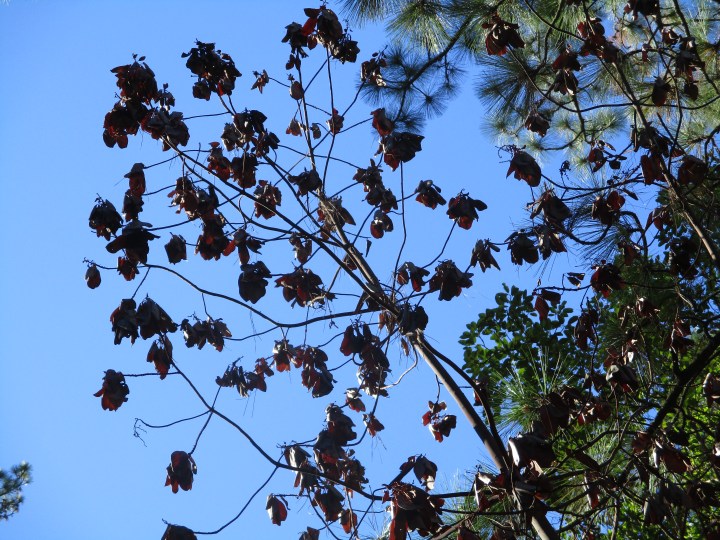
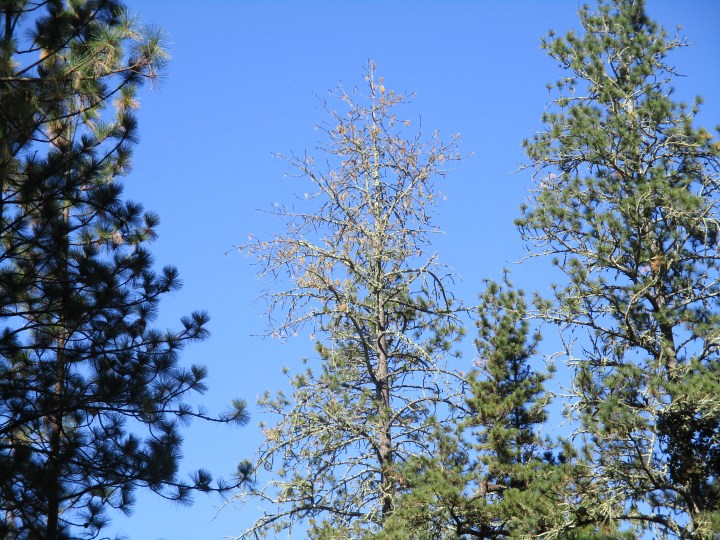
Slightly breezy weather that was so pleasant after such heat was just enough to start dislodging deteriorating foliage. Now, leaves are already starting to fall before they develop much color. Redwoods and pines are likewise dropping browned needles. Fortunately, trees that are the most colorful in autumn tend to hold their foliage better until the weather gets cooler.

It is impossible to predict how colorful trees will be this autumn; although if storms are as healthy as predicted, the mild temperatures may inhibit color, while wind and rain dislodge colorful foliage. Regardless, it is already time to start raking falling leaves and needles. They can get messy, and when the rain starts, they can stain pavement and clog gutters.

When more foliage falls later in autumn, it will need to be raked from ground cover, surviving portions of lawn, and any other plants that collect it, so that it does not shade out the sunlight.

Horridculture – Needle Mania!

P80919Throughout my career as a horticulturist, I have worked in more public landscapes than most. Some of these landscapes were in some of the most notorious neighborhoods of the San Francisco Bay Area and the Monterey Bay Area. Yes, I have found some rather strange items strewn about, including a few that necessitated telephone calls to local law enforcement. Yet, I have never once found a single used syringe.

Syringes are more commonly known as ‘needles’ by those who fear them. We are sometimes warned about them, particularly in areas where the sorts of people whom we are supposed to fear might have left them strewn about, whether or not these fearsome people actually use syringes. If found, such syringes are dangerous because they are used to inject illicit narcotics, and are consequently contaminated with the blood of those who use them. Such blood is always assumed to be infected with any variety of the communicable diseases that afflict all fearsome people, and is assumed to stay infectious for all eternity.

When I consider some of the situations that I have worked in, I believe that I am fortunate to have never found a syringe. On rare occasion, I have been presented with pouches and ‘sharps’ containment boxes containing syringes so that I can dispose of them properly. I actually expect to find a few at a site that I will be inspecting this next week or so, which will be a new experience for me. Caution is justified.

I know that syringes are out there, and that they are dangerous. So are rattlesnakes. I have seen and killed many rattlesnakes. They used to be quite common at the farm, and are still somewhat common at home. I know people who have been bitten by rattlesnakes, even though we all know to be careful out in regions where we expect them to be. Signs warning those who might not be familiar with rattlesnakes are posted in county and state parks inhabited by rattlesnakes. People are bitten by rattlesnakes much more commonly than people are accidentally pricked by used syringes. Accidental ‘needle pricks’ are actually extremely rare. For those unfortunate enough to experience such an injury, infection with any one of the communicable diseases that we all fear is very rare. Contrary to popular belief, infectious blood does not stay infections forever.

Needle Mania is really the most infectious affliction associated with used syringes. In a nearby Community, several people are so obsessed with discarded syringes that they have developed a ‘needle watch’ online, in order to monitor the number of syringes found, and the locations of where they were found. Some like to post pictures of the syringes that they find, sort of like trophies. Some people have found several syringes; which is quite commendable for those who live and work mostly inside. (I spent my entire career outside, but have never found a single syringe.) The numbers of syringes found is disturbing. So are the many pictures of syringes laying out in public spaces.

A few pictures are perplexing as well. One locally found syringe was pictured laying out neatly on a serpentinite outcropping. Another that was found in spring on the bank of the San Lorenzo River was laying on top of fallen autumn leaves of quaking aspen, Populus tremuloides. Neither serpentinite nor quaking aspen are endemic to this region.

A syringe was recently found in my neighborhood! As unfortunate and disturbing as this news was, it is not completely unexpected. Syringes can be discarded anywhere, and are probably likely to be discarded on isolated rural roads.

The neighbor who found the syringe believes that it is a problem that is serious enough to justify posting pictures of it all over the neighborhood! These pictures include a description of where the syringe was found, and instructions of what to do to curtail suspicious activity. They are everywhere! They were originally just stapled to trees, utility poles, mail boxes, fences, barns . . . and anything that a staple would stick into. Now that they have been out in the weather for a while, some are blowing about in the roadway and collecting in ditches. When they were first posted, a few were within view from every point on the road. More posters were added to replace those that blew away. These posters are now a prominent feature of our Community landscape.

I do not doubt that the discarded syringe is a problem for the Community. However, the pictures of it posted so prominently and abundantly throughout the neighborhood landscape are unsightly, trashy and unbecoming of such a safe and idyllic neighborhood.P80919K

Laurel-Leaf Snailseed

80926The first half of the name sound appealing enough. The second half, not so much. Do the seeds grow into snails? Do they just look like snails? Not many have seen them. Tiny pale white flowers that are supposed to bloom in spring, as well as small black berries that develop after bloom, are rare. Laurel-leaf snailseed, Cocculus laurifolius, is grown just for its glossy evergreen foliage.

The foliage superficially resembles that of common privets. Upon closer inspection, the leaves are somewhat elongated, and outfitted with distinct marginal veins flanking the midveins. As stems that become heavy with lush foliage lean over, vigorously vertical stems fill in the space, until they too arch over as they become fluffy with foliage. Mature trees might get twenty feet high and wide.

Because of its complaisant roots and tolerance of partial shade, laurel-leaf snailseed is popularly installed as a foundation plant (at the foundation of a home) but then obscures windows as it gets too big and awkward. Its arching branch structured does not do well with formal shearing. It works much better as an informal screen in the background, or as small tree with multiple trunks.

Cool Season Vegetables Are Coming

80926thumbIt is getting close to one of those two unpleasant times of year for the vegetable garden. It happened last spring, and it will happen again this autumn. Plants that so dutifully produced vegetables through the last season must relinquish their space for plants that will produce vegetables for the next season. In autumn, it will be cool season vegetables that replace warm season vegetables.

They are all on their own distinct schedule. Pulling up corn stalks is not so distressing because we know when they are finished. Pole beans, bell peppers and summer squash might make it easy as well, if they start to look shabby as their season ends. Tomatoes are the more unpleasant ones to pull up, since they can continue to produce right up to the end, even as the nights get cooler.

If they were planted on the edge of the vegetable garden, and allowed to grow outside of the space needed for incoming cool season vegetables, winter squash can stay until their vines succumb to frost. Fruits that get harvested just prior to frost last better in the cellar. Those exposed to a bit of frost attain better flavor. Winter squash really are summer vegetables. They just finish in autumn.

Seed for beets, carrots and various root vegetables that are grown this time of year should be sown directly into the garden. Root vegetables do not transplant well. Besides, too many relatively expensive seedlings would be needed to grow a substantial quantity of such vegetables. Seed should be sown in phases every few weeks so all the vegetables do not mature at the same time.

Peas, spinach and leafy (non-heading) lettuces should likewise be grown from seed sown directly into the garden. However, it is more practical to grow broccoli, cauliflower and cabbage from seedlings rather than seed. Because only a few plants of each are needed, they are not terribly more expensive than seed. One or two six packs might suffice. Another option that is useful for those who grow varieties that are unavailable in nurseries, is to grow seedlings from seed in small pots or flats, to plant out later.

Kenny


If you watch Southpark, you shouldn’t.
If you do anyway, you shouldn’t admit to it.
If you happen to know someone who watches Southpark, you might have heard indirectly about Kenny. He dies in every episode. Actually, he typically dies a few times in each episode, and typically does so violently. Experts claim that there are two episodes of Southpark in which Kenny does not die, but proof is all too conveniently scarce.
There is also an opossum named Kenny. Like Kenny of Southpark, Kenny the opossum dies in every episode.
Apparently, Kenny startled someone who was working too intently in the garden to notice his approach on top of a fence directly behind where this unnamed someone was working. This unnamed someone grabbed a stick and clobbered Kenny right across the backside. Although the blow was not terribly aggressive, and not intended to be harmful, Kenny surprisingly died violently in a fit of hissing, gnashing and flailing. After falling to the ground, he smelled as if he had been dead for quite a while.
The surprised unnamed assailant went to find a box to put Kenny’s remains into for a proper ‘burial’, but upon returning to the scene of the incident, could not find Kenny.
Others briefly observed Kenny frolicking about in the same garden later, but when the unnamed assailant came within view, Kenny again died in a violent fit of hissing, gnashing and flailing, accompanied by the aroma of well aged death. Again, the unnamed assailant was unable to locate Kenny’s remains after retuning with a box in which to put them.
After a few more similarly violent deaths, it became apparent that Kenny was merely playing possum, likely in response to being clobbered with a stick by the startled unnamed assailant during their primary encounter!

I apologize for the length of the video. My attempts to trim it compromised the quality of the imaging. The important part of the video is between ten and thirty seconds. This is not the real Kenny anyway, but merely a random opossum who happened to be frolicking in the garden.
I also apologize for posting this at noon rather than at midnight when I typically schedule my articles for the day. For midnight, I posted a short excerpt from an old article from the gardening column instead.

Showy Stonecrop

60914They sure took their time getting this far along. The bluish green succulent foliage of showy stonecrop, Hylotelephium spectabile, (formerly Sedum spectabile) first appeared at ground level in early spring, and has been growing into rounded mounds so slowly that it now stands less than three feet high and wide. Smaller types are half as big. Blooms are only now beginning to turn color.

Broad and flat-topped floral trusses of minute flowers are almost always some sort of pink. Sometimes, they are almost terracotta red. Sometimes, they are somewhat peachy. They might even be blushed with a bit of lavender. ‘Stardust’ blooms white. The biggest blooms can be as wide as five inches. If not pruned away as they fade, the blooms (according to some) dry nicely by winter.

New growth starts to appear from the ground almost as soon as old stems die in late winter. Established clumps can be divided in spring every few years. Even small plants can spare a few small pups that will grow into new plants. Stems might get taller in partial shade, but might also need to be staked as they bloom. Bees really flock to the flowers because not much else blooms so late.

Start Cool Season Annuals Early

30925Twice a year, it becomes necessary to discuss the unpleasantries of pulling up the flowering annuals (as well as vegetable plants) of one season, to relinquish space for those of the next season. Just a few months ago, cool season annuals got replaced with warm season annuals. Now, those same warm season annuals will get replaced with cool season annuals for the next few months.

It is unpleasant because the outgoing annuals are probably still blooming when it is time for them to go. It might be easier to wait for cool season annuals to get roasted by hot weather, or for warm season annuals to get frosted. Unfortunately, by that time, the incoming annuals would be at a disadvantage. Hot or cold weather is also uncomfortable for plants that are not yet established.

Sure, warm season annuals like warmth, but only after they have sufficiently dispersed their roots to sustain their growth during warm weather. This is most efficiently accomplished while the weather is still mild earlier within their season. Cool season annuals likewise do not mind cool weather, but do not grow as well as they do during the warmer weather earlier within their season.

This is why it is better to plant pansy, viola, sweet William, Iceland poppy, stock, calendula and the various primroses earlier rather than later if possible. There is no exact science here. A forecast for warm weather certainly justifies delay. Cyclamen and ornamental cabbage and kale are a bit more sensitive to warmth, so could wait a bit longer. They grow well through cold weather anyway.

Chrysanthemum, alyssum and nasturtium are odd ones. Chrysanthemum, although perennial, is most often planted as a short term autumn annual while it is already blooming or is just about to bloom. It rarely gets a second chance if it finishes bloom before winter. Alyssum and nasturtium can be both warm and cool season annuals. They only gets replanted this time of year because individual plants perform through one season or the other, but probably not both. Nasturtium should be grown from seed.

ICK!

P80915K.JPGJust about everything in this picture is icky! This species of pampas grass, Cortaderia jubata, is one of the most aggressive and noxious of the invasive exotic specie that have naturalized here. It seems to be incarcerated behind the weathered cyclone fence with barbed wire on top. The big water tank is is a harshly stark background. The tired old Douglas firs and ponderosa pines to the left and right seem to be unhappy here. The small coast live oak that is at least trying to make a more cheerful appearance is only oppressed by the surroundings. Only the clear blue sky above lacks the ick factor.

What is not visible in the picture is that there is no other flora in the area. Most of the area is covered with a thick layer of gravel to prevent vegetation from getting established close to the water tank. Weeds that manage to grow get cut down regularly. Only the pampas grass survives the ravages of the weed eater. It has been allowed to stay only because it has not yet been perceived to be a problem. It will probably be removed eventually as well. It would have been much easier to remove before it got so big. Now that it is blooming, it is likely to sow seed for more of the same.

Whomever gets the grim task of removing the pampas grass must contend with the nasty ‘razor grass’ foliage. The very sharp and very finely serrated edges of each leaf cause the worst sort of paper cuts! Even if handled very carefully, the long strap leaves have a way of getting everywhere. Someone tugging the base of the foliage with gloves and long sleeves can lose an ear to just one of the many long leaves that whip around so aimlessly.

However, someone who is unfamiliar with the serious nastiness of pampas grass might see this picture very differently. The firs, pines and oaks are not so bad. The water tank is a neutral background to the subject matter. The weathered cyclone fence with barbed wire on top, . . . well, let’s just say, . . . it’s ‘abstract’. Anyway, to someone who does not know better, the fluffy floral plumes of pampas grass that toss so many seed that have the potential to grow into an indefinite supply of the same nastiness are actually quite pretty.P89015K+.JPG

Six on Saturday: Mixed Bag


These are merely odds and ends that would not conform to any particular category. The first two are from my colleague’s garden that provided the pictures for last week. The third, fourth and fifth are from a nearby landscape that is comprised of native specie. The sixth is another landscape nearby, but is obviously not native.

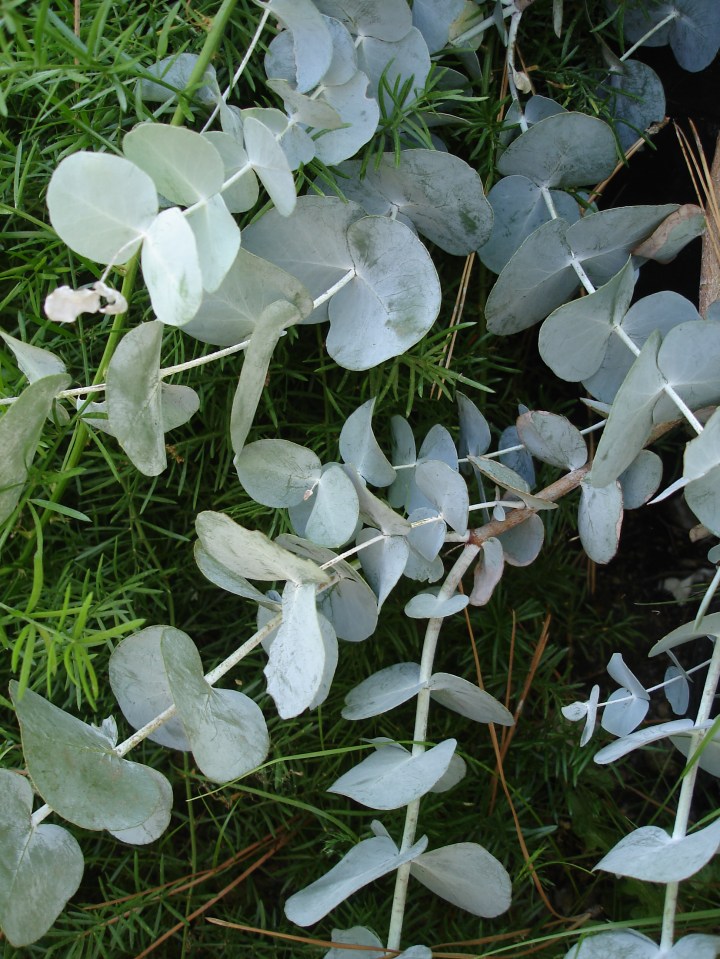
1. Eucalyptus provides distinctively aromatic silvery foliage for young students of Outdoor Science. We keep this tree low and almost pollarded so that the students can reach the juvenile foliage. We plan to prune back any adult foliage, since it is neither as pretty, nor as aromatic. No matter how much gets cut from the tree, there is always more. We thought this tree was Eucalyptus cinerea, but we really do not know what it is.P80915

2. Lantana camara gets frosted to the ground where it is at. It might do better on a slope just a few yards away, or under the canopy of big trees nearby. It just happens to be in one of those cold spots where cold air settles on frosty nights. The dead stems get cut back at the end of every winter, and new growth regenerates just fine. However, by the time it starts to bloom nicely, it is already autumn!P80915+

3. Cornus stolonifera is the only locally native dogwood. These pathetic blooms demonstrate why it is not more popular than it is. There are more individual flowers than other dogwoods get in each of their clustered blooms, but they bloom late in summer without the flashy bracts behind them. This dogwood is commonly known as red twig dogwood, but the twigs are not as colorful as those of another species of the same name.P80915++

4. Rose, although planted, happens to be native to the region as well. I do not know the species of this particular rose. It is not much to look at, but it is worth growing in a landscape of natives. It does not get pruned like roses that are grown for their bloom. In fact, we do nothing to it. It just grows wild. Flowers are sporadic, starting late in spring, and continuing until frost.P80915+++

5. Rose hips take a while to ripen. These were probably from the first flowers that bloomed months ago. Flowers that are blooming now may not produce hips at all, or if they do, the hips may never ripen. They just do not have enough time. Fortunately, there are enough to provide a bit of color while many of the plants in this spot defoliate through winter. They do not have great flavor alone, but are fine with other herbal tea.P80915++++

6. Gazania is related to the African daisy from last week. More gazanias will be shared next week. These were planted somewhat recently to replace English daisy that succumbed to a really bad infestation of rust, so have not bloomed as much as they might have liked to if they had gotten established earlier. They will continue until frost, and can bloom sporadically through winter, before resuming bloom as weather warms next spring.P80915+++++

This is the link for Six on Saturday, for anyone else who would like to participate:

https://thepropagatorblog.wordpress.com/2017/09/18/six-on-saturday-a-participant-guide/

Glossy Abelia

50916With indiscriminate pruning, glossy abelia, Abelia X grandiflora, will never develop its natural form, with elegantly long and thin stems that arch gracefully outward. Sadly, almost all get shorn into tight shrubbery or hedges that rarely bloom. If only old stems get selectively pruned out as they get replaced by fresh new stems, mature shrubs can get eight feet tall and twelve feet wide.

Against their bronzy green foliage, the tiny pale pink flowers that bloom all summer have a rustic appeal. In abundance, they can be slightly fragrant. The tiny leaves are not much more than an inch long. Vigorous young canes that shoot nearly straight out from the roots slowly bend from the weight of their bloom and foliage as they mature.

Partial shade is not a problem for glossy abelia, but will inhibit bloom somewhat. Young plants want to be watered regularly. Old plants are not nearly so demanding, and can survive with notably less water. If alternating canes is too much work to restore old and neglected plants, all stems can be cut back to the ground at the end of winter. New growth develops quickly.