 Mathematically, division is the opposite of multiplication. Horticulturally, they are the same. Digging and splitting overgrown perennials to propagate them is known as ‘division’ because it divides many rooted stems or rhizomes of one plant into many new plants. Division is a form of propagation; and propagation is commonly known as multiplication. So, we divide plants to multiply them.
Autumn is generally the best time for panting. It is after most of the warmest and driest weather, and just before the cool and rainy weather that keeps newly planted plants from getting too dry. It seems obvious that autumn would also be the best time for division. However, a few perennials that are dormant or mostly dormant by the middle of summer can be divided now for an early start.
Bearded iris may not look dormant with their leaves still green, but they are about as dormant now as they will get. If divided now and allowed to slowly disperse roots through the remainder of summer, they can prioritize the production of new foliage when they come out of dormancy in autumn, like they would do naturally. Like many perennials in mild climates, they grow through winter.
Once dug, the plump rhizomes need to be separated from the old shriveled rhizomes that they grew from. For most, the best segments of rhizome are between the leafy tips and the stalks of the flowers that bloomed earlier this year, although it may not be easy to see where floral stalks were attached. The older sections of rhizome behind the flower stems are probably shriveled already.
The freshly divided segments of rhizome should then be groomed of deteriorating old leaves. Remaining green leaves can be cut in half to remove drying tips. Rhizomes then get replanted just below the surface, with the perpendicular fans of foliage standing upright. The main difficulty with dividing iris now is that they will need to be watered until the rain starts late in autumn. Bergenia, lily-of-the-Nile and a variety of perennials with big rhizomes get divided in a similar manner.
 This rant may not go in the direction you expect it to. The pictures suggest that this would be about the bad vegetation management crews who severely disfigure trees that get too close to utility cables. It is not.
 This brief article from a few days ago discusses a few more details about easements.
  Those outside California sometimes envy our ideal climates and soils. More of a variety of plants can be grown here than in most other places in America. There are not many plants that can be grown elsewhere that will not grow here. However, phlox, Phlox paniculata, is an example of a plant that can do well here, but for some reason or another, is much more popular everywhere else.
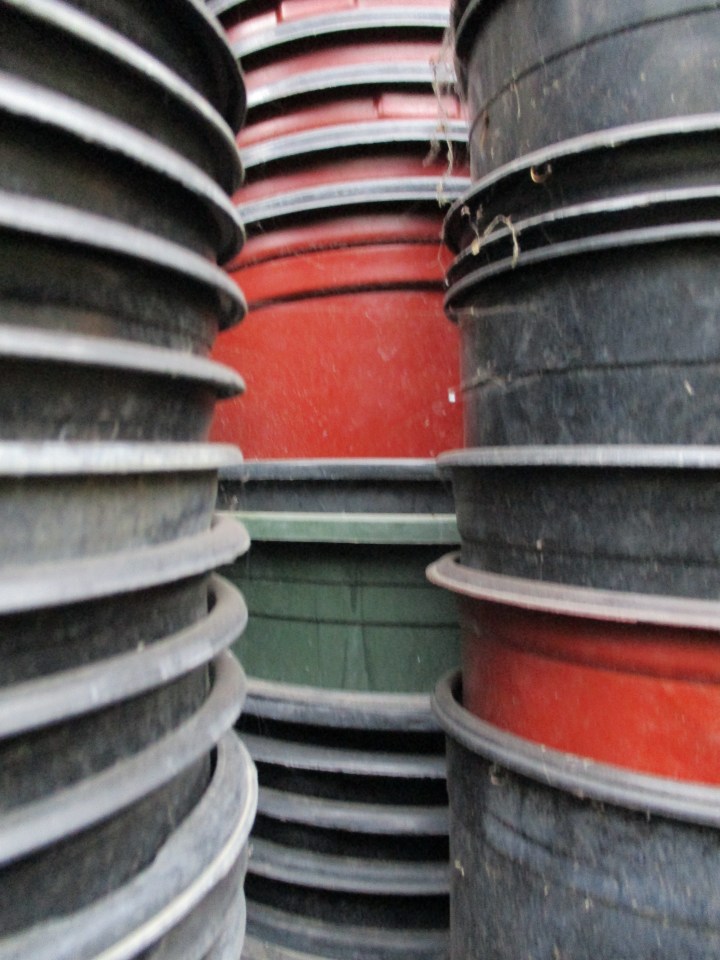 A dressed turkey that is packaged for retail sale in a supermarket is not ready to be eaten right away. If frozen, it must be thawed slowly. It must then be unwrapped; and little bag of giblets must be removed from inside, before the turkey gets stuffed and finally cooked. Although the inexperienced sometimes cook a turkey with a giblet bag still inside, doing so is not the correct procedure.
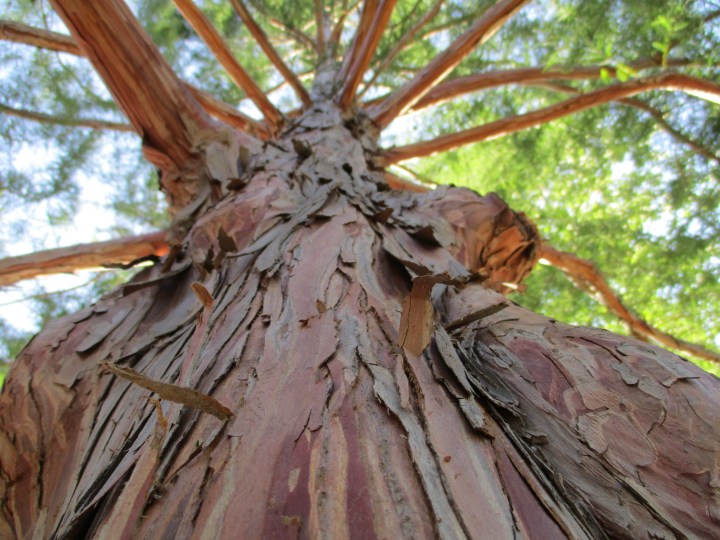 When a plant that should be compact or shrubby gets too lanky with exposed lower stems, it is described as ‘leggy’. We do not hear much about plants that develop ‘knees’. Perhaps that is because there is only one species that does so. That one species happens to be very rare here. If there are other specie that develop knees, I do not know what they are.
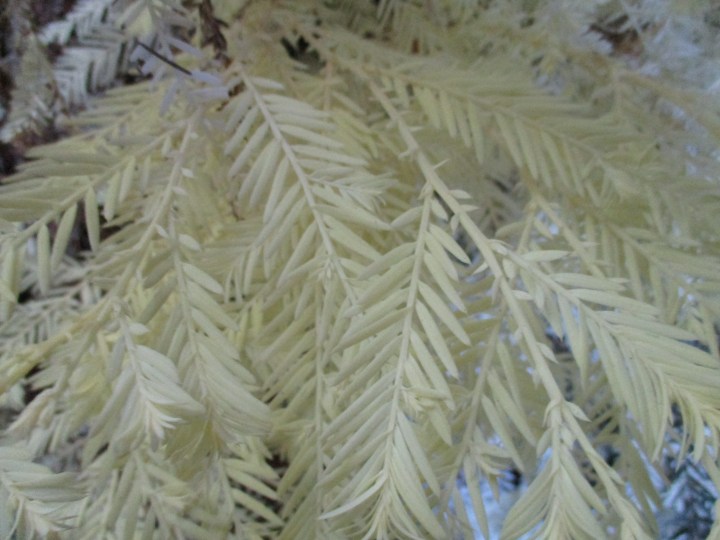 How Italian! Red, white and green! A coastal redwood with a white albino sport (mutant growth) amongst otherwise deep green foliage. Actually, it is very Californian. Coastal redwood is endemic to California with only a a few north of the border on the extreme southern coast of Oregon.

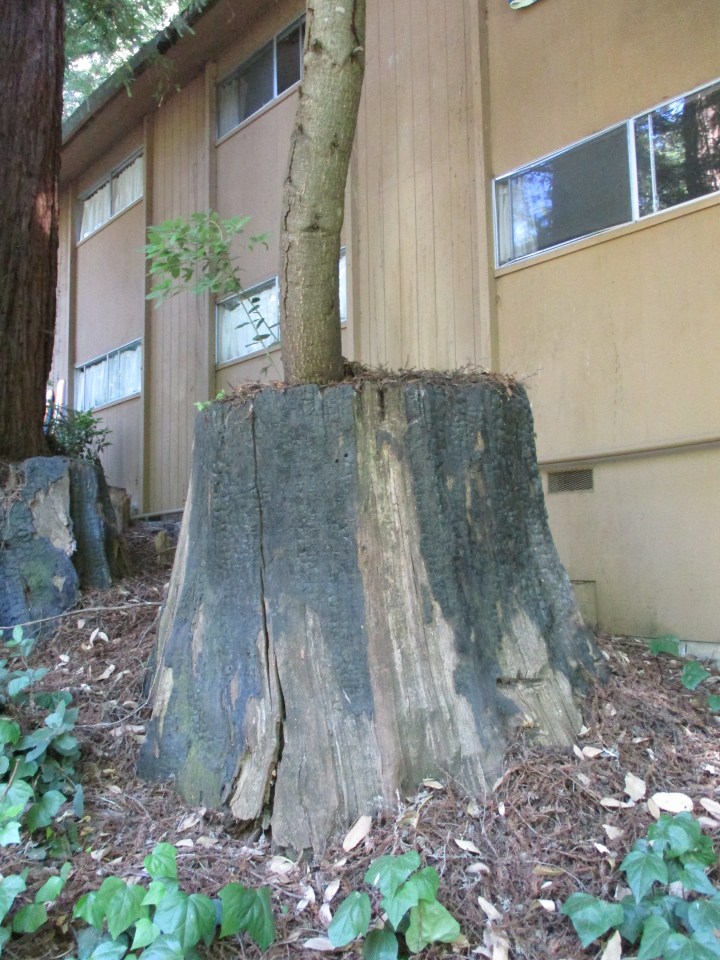


 Good old fashioned busy Lizzie is hard to find nowadays, if it can be found at all. The nasty mildew that kills it so quickly might not be prevalent everywhere, but happens to be a serious problem where most of the bedding plant farms are located. Now, the formerly uncommon New Guinea impatiens, Impatiens X hawkeri, which is somehow resistant to the mildew, is becoming popular.
 Like Michael Jackson said, “You got an easement on down the road.”. . . or something like that. In older neighborhoods, that is where the utility easements are usually located. These are zones for utility poles that suspend electrical, telephone and television cables. When electricity first became available, that was the easiest place to put the cables, and the practice continued for decades.
 Baldness was not yet cool while Brent and I were studying horticulture at Cal Poly in San Luis Obispo back in the late 1980s. Nor were hairpieces yet tacky. Consequently, some middle aged men work toupees. As these men aged and grayed, their formerly well matched topees did not.
