This is the opposite of the ‘right plant in the right place’. It is something that horticultural professionals should neither promote nor tolerate when feral plants appear in landscapes that they are getting payed to maintain. This example looks like it is more relevant to the topic of ‘Fat Hedges’ from https://tonytomeo.wordpress.com/2018/06/06/horridculture-fat-hedges/ , but there is more to this feral pyracantha than that. Yes, it is shorn too frequently to bloom or produce colorful berries. Yes, it looks like an upside-down and halfway buried Christmas tree. Yes, it contributes nothing to the landscape. What is worst of all is that it does not even belong there. It was certainly not planted there on the edge of the curb. There are others nearby, but they happened to appear in spots where they could have actually been assets to the landscape if they had not also been shorn into this weird upside-down and halfway buried Christmas tree shape.
Pulling or at least cutting weeds is generally one of the responsibilities of maintenance ‘gardeners’. It might be acceptable or even preferred to leave a few feral plants if they happen to appear where they might be useful. Those that appear where they would be a problem must be removed. It really would not have been much work to pull this particular pyracantha if it had been done when it first appeared. Even if it had not been pulled right away, and gotten cut down by a weed whacker long enough to develop strongly attached roots, it could have been dug out while young with only a bit of effort.
Okay, so that is in the past now, just like all the other days, weeks, months and years that this feral pyracantha was not removed. Okay, so if for some reason known only the maintenance ‘gardener’ who likely charges significant fees for the maintenance of this landscape, this specimen is to be salvaged, should it not have been pruned back away from the curb? Of course! Although it is right on the curb, much of the growth could have been directed back away from the curb and over the bare embankment. That area is not used for anything anyway. The emptiness of the embankment is certainly no asset to the landscape. Empty pavement is an asset here.
A chain is only as strong as the weakest link. A driveway is only as wide as the narrowest part. All this asphalt pavement and concrete curb is expensive. It was probably worth it to get a nice wide driveway. However, the usable area is not as wide now as it was originally. The feral pyracantha that looks like an upside-down and halfway buried Christmas tree extends nearly four feet into it. That means that the usable space of the expensive driveway is nearly four feet narrower in that spot than it should be. Just think of all the expense that could have been saved if the driveway had been constructed four feet narrower than it had been!
 The native American coneflower, Echinacea purpurea, of the Midwestern prairies has been popular within its native range longer than anyone can remember, and has become more popular in the West as extracts of echinacea became a fad in herbal medicine several years ago. Modern garden varieties and cultivars have been bred and hybridized for larger and more colorful flowers.
 They are NOT the same thing! Many herbs can be useful for both culinary and medicinal applications, but the distinction between the two is very important. Culinary herbs are used to flavor foods. Medicinal herbs are used like pharmaceutical drugs; but they lack the main safety feature of standardization. That means that they are potentially toxic and seriously dangerous if used improperly!
 There are two terms that I avoid using within the context of my writing:
 That is a term that we do not hear much. There are not many plants that it applies to. Cyclamen is one of the more familiar plants that is summer deciduous. It is from a climate with reasonably mild winters and unpleasantly dry and warm summers. Just like most deciduous plants are dormant through winter to avoid the unpleasantries of the weather, cyclamen defoliates as the weather gets warm in early summer to avoid the expected heat and aridity. It somehow knows how to stay dormant until the weather starts to get cooler in autumn, and is ready to regenerate new foliage and bloom as the rain starts. The active growing season is through autumn, winter and into spring. It is all a matter of taking advantage of the weather while it can, and avoiding the discomforts of severe weather when necessary.


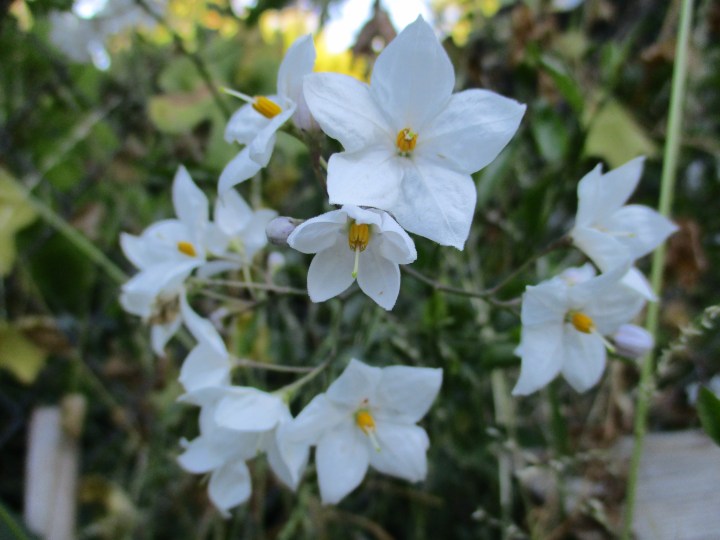
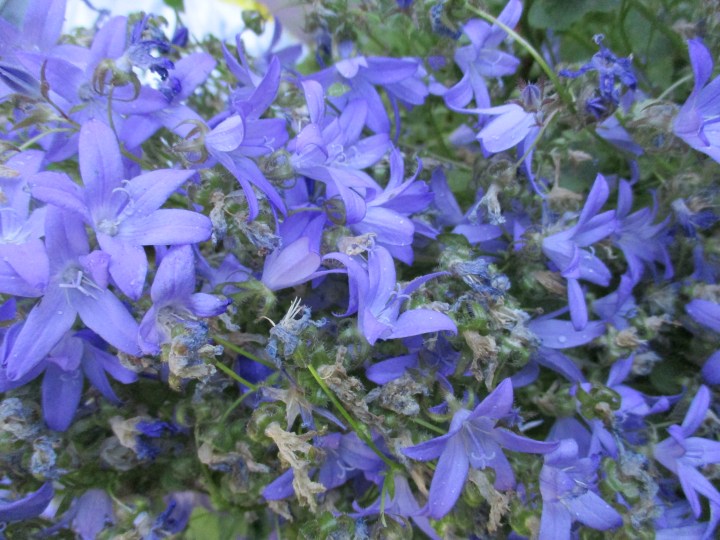


 Pink, red or white are the only choices. There happens to be a darker shade of red. Yellow throats are more conspicuous in white flowers. Otherwise, there is not much variation of color amongst the various mandevillas. The flowers are very similar in both color and form to those of related oleander, but are larger. Some are as wide as three inches. Small flowers can have pointed petals.
 The temptation is unbearable. The catalog of Adelman Peony Gardens, either in print or at
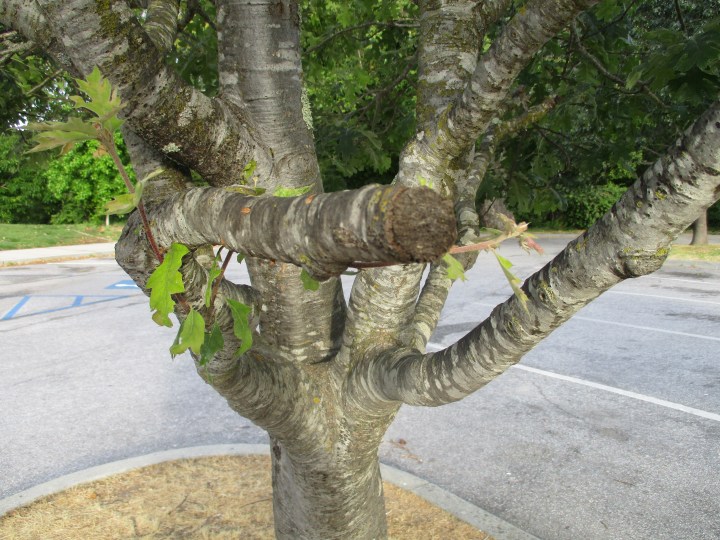
  How can a professional ‘gardener’ leave such a stub on the little California black oak in Felton Covered Bridge Park. It is not as if it is high in the canopy of a large tree, and out of reach to an arborist. This one is right at eye level, exactly where someone getting out of a car parked in the adjacent parking space would run into it. The entire tree needs some major corrective pruning, which would include the removal of significant limbs and portions of the canopy, but that is only because of years of neglect, and is another story. Right now, we are focusing on the eye-level stub.