Arboriculture: Deep Space Nine

P71231The “Poly” in Cal Poly is for “Polytechnic”, as in there are multiple schools within “California Polytechnic State University” at San Luis Obispo. There were seven school when I was there between 1985 and 1990. I was a student of the “School of Agriculture”. “Horticulture” was my “Major”, or major realm of study within this school. Within this major, I selected “Floriculture and Nursery Production” as my “Concentration” of study. That certainly is a lot of quotation marks.

While majoring in horticulture at Cal Poly, I studied with students whose concentrations of study were within “Landscaping” or “Floral Design”. Withing the School of Agriculture, we studied with students who majored in “Crop Science” or “Animal Science” and so on. Like horticulture, each of those other majors was divided into other concentrations.

Then there were all those students of the other six schools, which I will not even get into because I am wearing out the quotation mark key.

In the summer of 1988, while many of my colleagues were going to Australia, New Zealand or South Africa for their internships, I stayed right here in California, and took a job with a Lee’s Tree Surgeons in Saratoga. My colleagues thought that was a bad idea. Not only was that sort of internship for those in the landscaping concentration, but it was for the lowliest among them. They climbed trees and used chain saws and ropes and such. They were primitive. They were barbaric. They were not like us.

As it turned out, I was not like them. Fortunately, they did not mind. They took very good care of me, and trained me as best they could about arboriculture in the three months I was with them. They realized pretty quickly that I was not a good candidate for the job they gave me, but made accommodations for me. Although I was never proficient at climbing, and was not really good for much at all during that summer, I later went back to work for some of them, and eventually became a somewhat proficient groundsman; but that is another story for another time.

In my fourth year at Cal Poly, San Luis Obispo, after my internship with Lee’s Tree Surgeons, I relocated from my semi-rural home back into town, and lived in a big apartments with three roommates. We made a tradition of watching “Star Trek: the Next Generation” on television. One of the roommates, who is now a very respected professor at Cal Poly, made cornbread for the weekly event. Although I did not continue the tradition after we all graduated and went our separate ways, I did sometimes watch “Star Trek: Deep Space Nine” when it came out a few years later. I really need to stop with the quotation marks.

In Star Trek: Deep Space Nine, I liked the concept of so many different species living together in an society in which it was very necessary to make accommodations for those who are different. Everyone needed to respect everyone else. Some even learned to appreciate the differences. Even the bad guys had redeeming and very often likeable traits.

In my career, I am primarily a nurseryman. That means I grow things. Other horticultural professionals might compare my people to the Vulcans. They think that we are too uptight, efficient and plain to be much fun. Factory growers (who work for the big corporate growers) would be more like Romulans, and are therefore less dedicated to what is right and logical if it is to their disadvantage. Some of the better artistic landscape designers are likened to the Bajorans. Unscrupulous maintenance gardeners who will do what they must to make a buck are comparable to the Ferengi. Some of them work for the larger and imperialistic Cardassian landscape corporations.

Arborists are the most excellent of all; or perhaps the second most excellent after Vulcan nurseryman. They are like the Klingons; honorable, noble, independent, passionate and boisterous! I can understand why my colleagues think of them as barbaric and primitive, but I also believe that my colleagues should be more accommodating. When I consider what arborists must have though of me what I did my internship, I realize that it must not have been easy for them to accommodate me. Yet, they did, and in the most excellent way. They still respect that I have my own career in my own world, but to this day, thirty light years later, they are still pleased to invite me to their world.

Very Bad Houseplants

P71230Just because it ‘can’ be grown as a houseplant does not meant that it ‘should’ be. That is a lesson that Brent and I never learned in college. He and I were roommates in the dorms at Cal Poly in San Luis Obispo, which, as you can imagine, was a problem. Our room on the top floor of Fremont Hall was known as the Jungle Room. It was so stuffed full of weird houseplants, as well as a few plants that had no business inside. We had a blue gum eucalyptus bent up against the ceiling, an espaliered Southern magnolia, a Monterey cypress, and a herd of camellias that we rescued from a compost pile on campus.

After college, our own homes were no better. Because my dining room was rather small, Brent gave me tall weeping figs that had unobtrusively bare trunks down low, and plenty of fluffy foliage pressed up against the ceiling; a technique we did not quite perfect with our Jungle Room blue gum. I had a giant yucca in the guest suite, a redwood in my bedroom, king palms in the parlor, and a lemon gum eucalyptus over my desk in the office. The bathroom was the worst, with pothos and Algerian ivy hanging over the shower curtain, and billbergias up over the shower. A pair of small birds nested in the billbergias, and before I realized that they were there and evicted them, they started a family!

At least Brent kept most of his plants outside where they belong. The staghorn ferns grab onto the walls when they get the chance. Wisteria vines grab onto anything else. The flame vine climbed up the chimney (appropriately), and before Brent knew it, had sneakily spread to the opposite side of the parapet roof! Then there was the giant timber bamboo. Yes, that is what I said; giant timber bamboo. I know what you are thinking right now, so there is no need to say it.

There is a narrow space between north side of Brent’s home and the concrete driveway next door. It is almost three feet wide. Brent though that if he planted the bamboo there, it would not get to the other side of the driveway. He was actually correct.

Did I ever mention how vain Brent is? Well, that is another topic for another time. I will say for now that he has more clothes than his teenaged daughter Grace. A lot more. They do not all fit in his big closet. He hangs some of his longer coats that he does not need very often in Grace’s much smaller closet. One day, he was reaching around the clutter that is common in a teenaged girl’s room, and groping for one of his coats in Grace’s closet, when he grabbed a hold of something that should not have been there. He was not certain what it was at first, but when he found his coat and pulled it out, a few dried bamboo leaves came with it and fell onto the floor!

The bamboo did not even try to go under the neighbor’s driveway. Instead, it went under the foundation of the house. Where it came up, it had nowhere to go, so somehow weaseled in next to a water pipe, and followed it up behind the bathroom washbasin. Once inside, it somehow weaseled past a valve access panel behind Grace’s closet, and straight up to the ceiling. What is even funnier is that Grace knew it was there, but figured that it was just another one of Brent’s crazy landscaping ideas!

Just in case you are wondering, giant timber bamboo is a very bad houseplant!

The bamboo is gone now. It got so tall that the wind would blow it against the terracotta tiles on top of the parapet wall. Also, the foliar litter was too messy on the parapet roof and the neighbor’s driveway. It did not contribute much to the landscape anyway, and shaded only a driveway that is seldom used.

Australian Fuchsia

61228Pictures are probably prettier than the real thing. Australian fuchsia, Correa pulchella, really does bloom with pendulous soft pink flowers through winter when not much else is blooming. However, the flowers are quite small, and the color is rather hazy. The real appeal of Australian fuchsia is that it is so undemanding, and once established, only needs watering a few times through summer.

Mature plants get a bit higher than two feet, and maybe twice as wide, with a low mounding form. The small evergreen leaves have a nice density without any pruning. Obtrusive plants do not mind getting pruned back or even shorn for confinement, but are deprived or their naturally appealing form and texture if pruned too frequently. Good exposure for both sunlight and warmth is important.

Bare Root Stock Has Advantages

31225thumbAnyone who has had undergone surgery knows the advantages of unconsciousness. Any frat boy who woke up after a night of overly indulgent inebriation, with his face adorned with objectionable graffiti, knows the disadvantages. A lot can happen while one is unaware that it is happening. This is exactly why so many bare root plants become available while they are dormant through winter.
Bare root plants get dug and deprived of the soil that their roots grew in, leaving the roots bare. Some get their roots packaged into bags of damp sawdust. Others get their roots heeled into bins of damp sand in retail nurseries. Roots are only bagged or heeled in to stay fresh. They get pulled from their sand or separated from their bag of sawdust when ultimately planted into the garden.

It might seem violent, but it all happens while the plants are dormant and unaware of what is happening. They go to sleep happily rooted into the ground wherever they grew, and then wake up in a home garden somewhere else. It only takes a short while to get reoriented before they develop new foliage and new roots as if nothing ever happened. The whole process is surprisingly efficient.

Canned (potted) plants are actually less efficient in some ways. They are bulkier and therefore more difficult to bring home from the nursery. Their confined roots are more likely to be disfigured or binding. (Roots that wrap around the inside of a can will constrict on themselves as they grow.) The media (potting soil) could contain disease. Worst of all, canned stock is much more expensive.

Bare root plants are remarkably easy to plant. Their planting holes only need to be big enough to contain the roots. Soil amendment should be minimal. If too much amendment is added, or holes are too deep, new plants are likely to sink. Graft unions (the distinctive ‘kinks’ just above the roots) of grafted trees must remain above grade. Roots should be spread out laterally and downward.

Smaller bare root plants like cane berries, grapevines, gooseberry and currant are already moving into nurseries where Christmas trees are relinquishing their space. Fruit trees like apricot, cherry, plum, prune, peach, nectarine, almond, apple, pear, quince, fig, pomegranate and persimmon will arrive next, followed by blueberry and roses. Poplar, flowering cherry, flowering crabapple, forsythia, lilac, wisteria, rhubarb, strawberry and asparagus might also be available.

Douglas Fir

80103Even those of us who live nowhere near its natural range live closer to Douglas fir, Pseudotsuga menziesii, than we realize. Most of our homes are constructed from Douglas fir lumber. Although very uncommon in landscaped gardens, Douglas fir is the most popular Christmas tree here. Trees introduced for timber have naturalized in parts of Europe, Argentina, Chile and New Zealand.
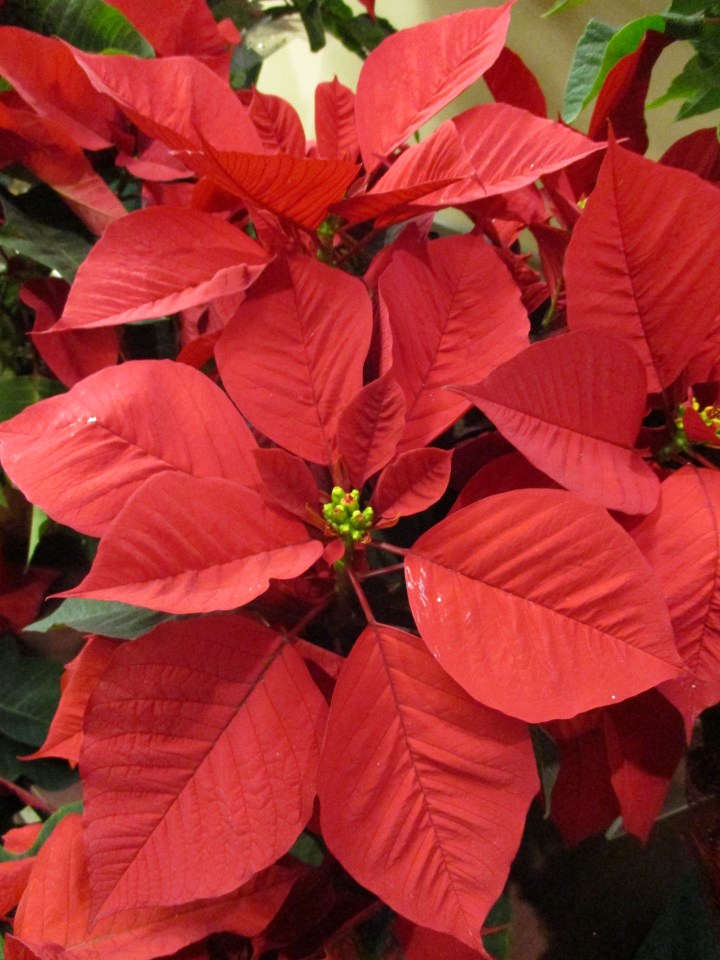
It is such a grand evergreen conifer that Oregon designated it as the state tree. The tallest trees in the wild are more than three hundred feet tall! Trees that do not compete within a forest do not get even a quarter as tall. The flattened needles are less than an inch and a half long, and arranged on opposite sides of the stems. Light brown female cones with jagged bracts hang downward.

Douglas fir is a native of the West Coast between about the middle of British Columbia to the North, and the Santa Lucia Mountains and the Northern Sierra Nevada to the South, with a few small colonies beyond. Rocky Mountain Douglas fir is another variety from farther inland. Because it is so big and structurally deficient, Douglas fir is almost never planted into landscapes intentionally.

Potted Plants For Christmas Color

80103thumbAfter all the Christmas decorations get put away for next year, and the Christmas tree eventually gets undressed from all its ornaments, and retired to the compost pile or greenwaste, all the pretty seasonal potted plants remain. Some will bloom, or at least maintain their current bloom, for months. Some might eventually get planted out in the garden. Others might stay potted in the home.

Poinsettias are the epitome of seasonal potted plants for Christmas. Their flashy red bracts last a very long time, even after the tiny yellow flowers are gone. Some are pink, white, pale yellow, peachy, marbled or spotted. They can be grown as foliar houseplants, but will not likely bloom next Christmas. If protected from frost in the garden, they get tall and lanky, and bloom in January.

Christmas cactus is an excellent potted plant either indoors or out where protected from frost. The pendulous growth cascades nicely from a hanging pot. It blooms in phases, but does not stick to a tight schedule. Amaryllis should also stay potted only because it does not do well in the garden over winter. Foliage that develops after bloom will die back next autumn before bloom next winter.

Holly and azalea can be planted directly into the garden where appropriate. Azalea will probably look shabby until it gets new growth. Cyclamen is a perennial in the garden, but dies back over summer. It just might come back with a surprise in autumn. Paperwhite narcissus is perennial too, but exhausts its resources on bloom, so takes a year or more to recover before blooming again.

Small living Christmas trees are more variable than they seem. Rosemary can either be kept potted and shorn, or planted into the garden and allowed to grow wild or into another form. Dwarf Alberta spruce can likewise stay potted or get planted into the garden, but needs no shearing. Both rosemary and dwarf Alberta spruce will want larger pots as they grow. Italian stone pine and Canary Island pine grow into large shady trees, so should only be planted into spacious landscapes that can accommodate them.

Merry Christmas!

P71225Does anyone else think that it is odd that Baby Jesus got only some frankincense, myrrh and gold for His first Christmas? I mean, it was the first Christmas ever, and that was the best that anyone could do? Well, maybe those gifts were something important back then. Maybe it was a good heap of gold. It just seems to me that three ‘wise’ men could have procured better gifts. More than two thousand years later, some of us are disappointed if we do not get a new Lexus on Jesus’ birthday, after He got only frankincense, myrrh and gold. (Get your own birthday!)
Although I do not remember my first Christmas, I know that my parents and others got excellent Christmas gifts for us kids when we were young. Our stocking that hung over the fireplace were filled with a mix of nuts, mandarin oranges, cellophane wrapped hard candies and small wooden toys. This is a tradition that dates back to a time when citrus fruits and certain nuts were something fancy that needed to be imported to Northern Europe from Mediterranean regions.

Of course, citrus grows quite well in our region, and almonds and walnuts still grew in the last remnants of local orchards. Our great grandparents had two mature English walnut trees in their gardens. Only pecans and hazelnuts were exotic. I happened to like pecans because they are from Oklahoma. (I did not know where or what Oklahoma was back then, but I knew it was an excellent place.) Hazelnuts were from Vermont, which is twice as far away as Oklahoma is, if you can believe that!

The gifts under the Christmas trees were even more excellent! One year, I got packets of seed for a warm season vegetable garden the following spring. There were seed for pole beans, corn, pumpkins, cucumbers and zucchini. (The cabbage incident that I will write about later happened in the cool season garden the following autumn.) Under the Christmas tree at my grandparents house, I got all the gardening tools that I would need in my garden, including a small shovel, garden rake, leaf rake and hoe. But wait, there’s more! Under the Christmas tree at my great grandparent’s house, I got flower seed for bachelor button, alyssum and a few others, as well as bare root rhubarb plants (from my great grandfather’s rhubarb that he had been growing longer than anyone can remember). I had already learned about seed from my first nasturtiums (https://tonytomeo.wordpress.com/2017/10/07/dago-pansies/), so I could not have been more pleased with my cache of gifts.

For later Christmases, and also birthdays, I got all sort of other things that were much more excellent than frankincense, myrrh and gold, including an incense cedar (how appropriate) that my grandparents brought back from the summer house near Pioneer, and a young ‘Meyer’ lemon tree. My Radio Flyer wagon was the biggest and most excellent in the neighborhood, and was more than sufficient to haul all my gear around the garden with. My big watering can was a bit too big, and was too heavy for me to move when it was full of water.

I would not say that these gifts were extravagant. They were just . . . okay, so they were extravagant. It was a long time ago. Unfortunately, my parents figured out that their gifts were somewhat excessive just prior to buying me the Buick I wanted. The wagon is still around. My mother uses it to bring in firewood. She also uses the little shovel to clean ash from the stove.

(The gardening article that is regularly scheduled for Mondays is scheduled for tomorrow. The featured species that is regularly scheduled for Tuesdays is scheduled for Wednesday.)P71225+

Scofield Tree Update

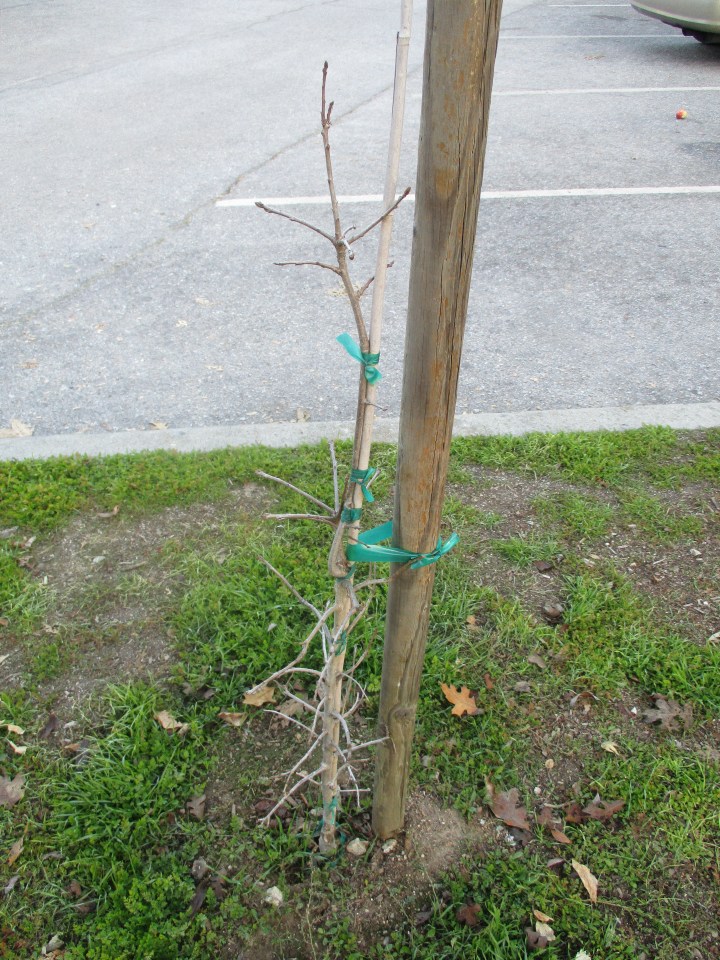
P71212+KThe sad little Scofield Tree in Felton Covered Bridge Park did not do much this year. (https://wordpress.com/read/blogs/135014809/posts/322 and https://tonytomeo.wordpress.com/2017/12/02/felton-covered-bridge/) In fact, it grew only about five inches taller, so is now only about four feet tall. The damage from the weed whacker really set it back. Growth was healthy on the side shoots, but that growth will need to be tucked back to promote apical dominance. The good news is that the vigor and health of the foliage of the sideshoots indicated that root dispersion was likely adequate to sustain healthier and normal vigorous growth next year.
Although the sideshoots will get tucked back to limit their competition with vertical growth of the main trunk, the stubble will remain to promote caliper growth of the trunk.

The trunk will be bound like a tree in a nursery; and the bound trunk will be staked for stability. Binding outside of a production nursery may not seem to be horticulturally correct, but is necessary for a straight trunk. The staking is done more to protect the tree in such a high traffic area than to support the tree. It would be better for the tree to do without binding and staking so that it can learn to support its own weight. Once the straight section of trunk is taller than about six feet, the bindings will be loosened, and eventually eliminated as the trunk lignifies into form.

A bit of fertilizer will be added to the soil around the tree before the last rains of winter. This might seem like cheating, bur for right now, the tree is too small to be safe in such a high traffic area. It will also be irrigated occasionally after the rain stops. It does not get much water, but will get enough to keep it vascularly active through the growing season. Too much water promotes shallower roots, which might damage the nearby concrete curbs and asphalt pavement. Valley oaks naturally disperse their roots very deeply, so the curbs and pavement should be quite safe for a century or so.

Dead Box Elder Update

P71223P71223+What is killing the box elders? (https://tonytomeo.wordpress.com/2017/10/04/what-is-killing-the-box-elders/) I still do not know. I know that does not sound like much of an update. All I can share is some pictures of secondary symptoms observed now that the affected trees are deteriorating.

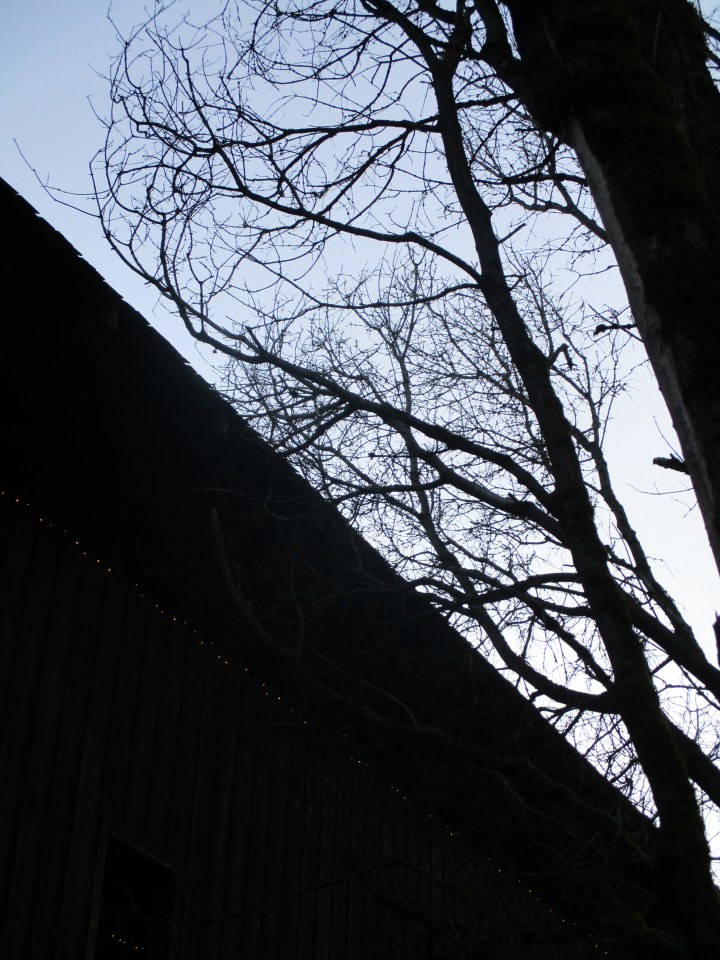
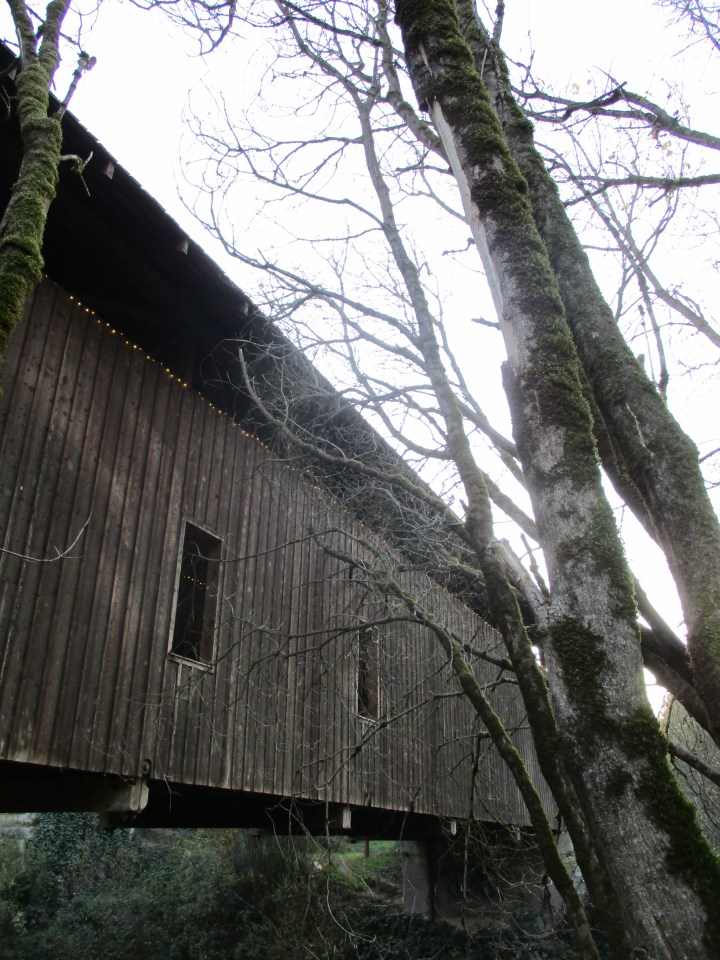
The two pictures above, although not relevant to any symptoms, are important to our Community because the historic Felton Covered Bridge just got a new roof! (https://tonytomeo.wordpress.com/2017/12/02/felton-covered-bridge/) Dead box elders that are already starting to destabilize and collapse are now leaning onto the edge of the new shingles! They really need to be removed before winter storms move them around, and they dislodge any shingles.

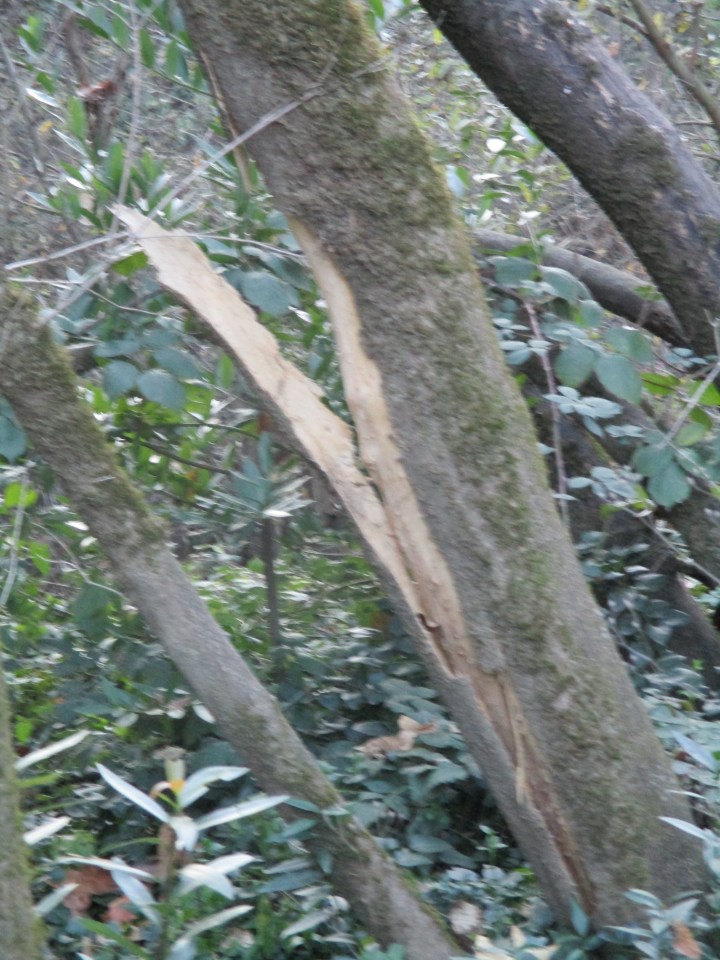
The first of the two pictures below show basidiocarps associated with fungal decay of the trunks and roots. This decay destabilized and compromised the structural integrity of the necrotic trees with remarkably efficiency. The trees died only last spring, and are already collapsing! The second of the two pictures below simply shows decaying bark peeling from a necrotic trunk.P71223++P71223+++

This all happened so suddenly. Like SODS (Sudden Oak Death Syndrome) it is likely to be misdiagnosed a few times before the primary pathogen is actually identified. Also like SODS, it may be ignored as an isolated situation affecting a few trees that are not very popular anyway. When SODS first started killing a few of the unpopular tanoaks, it did not seem like much of a problem. It did not get much attention until it started taking out majestic coast live oaks that had been healthy for centuries.

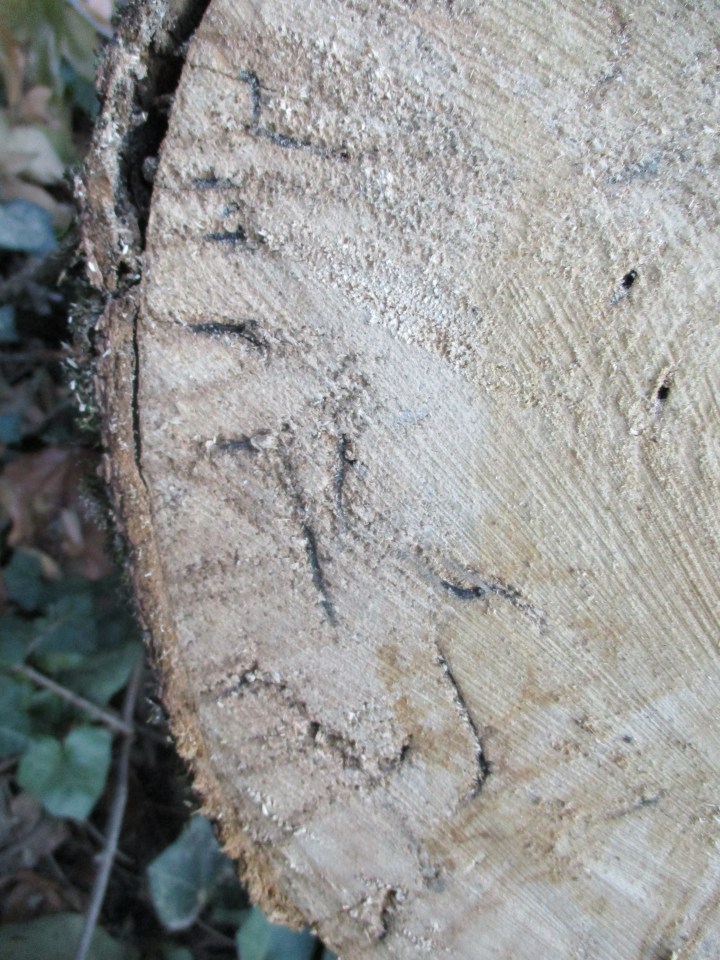
The two pictures below show a cross section of a necrotic trunk that needed to be cleared from a bridle trail. Galleries have been excavated by the larvae of unidentified boring insects. The second picture is merely a closeup of the first.P71223++++P71223+++++

New Zealand Tea Tree

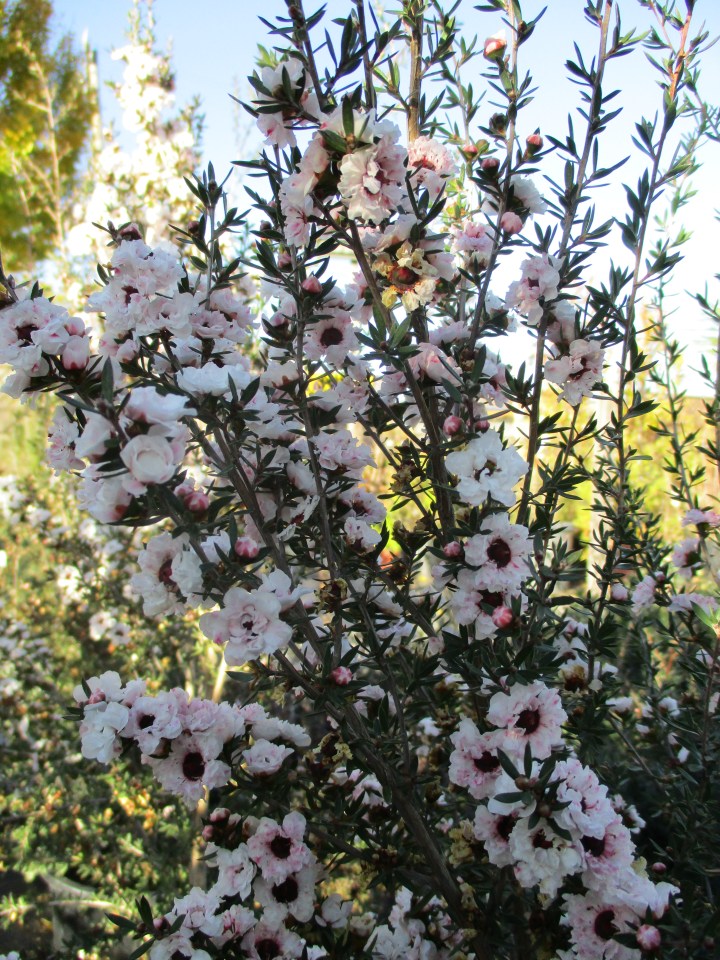
61221With such an odd variety of flowers blooming out of season, it should be no surprise that New Zealand tea tree, Leptospermum scoparium, decided to join the party. It starts blooming in phases in spring, and continues into autumn, so is not too terribly out of season. Besides, some varieties are known for spontaneous bloom phases at any time of year. Bloom can be pink, white or red.

The finely textured and aromatic evergreen foliage is slightly prickly to touch. Individual leaves are tiny and rather narrow, with pointed tips. Flowers are also tiny, but compensate with profusion. A few varieties have darker, almost bronzed foliage. A few varieties have fluffier double flowers (although the flowers are no wider than single flowers). The weight of bloom can cause limbs to sag.

Most garden varieties can reach the eaves. Larger varieties can eventually get to upstairs eaves. With minimal pruning, New Zealand tea tree is a colorful big shrub, with blooming stems from top to bottom. Alternatively, it can be an excellent small tree, with lower stems pruned away to expose the finely furrowed bark of the main trunks. It wants full sun, but not much else once established.