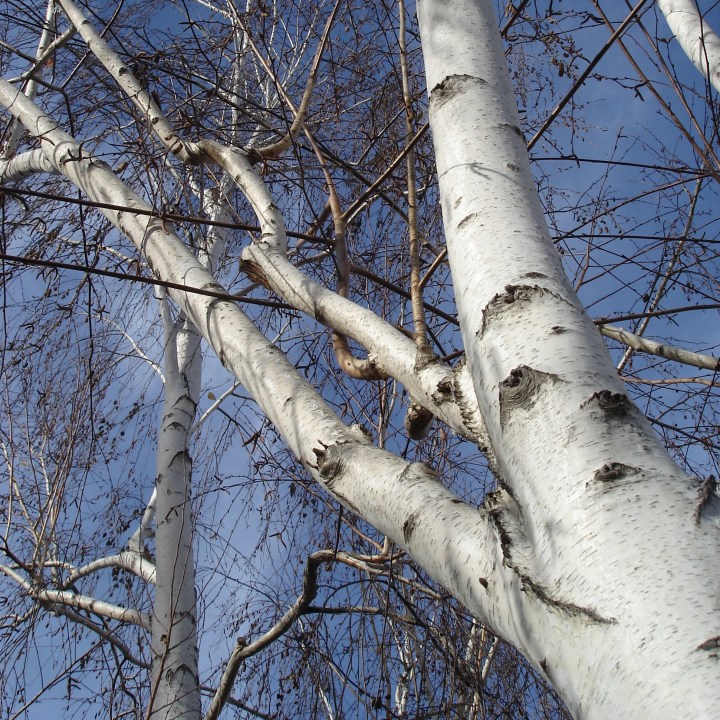
 Most of us Californians are probably wondering what that means. Sugaring season is more familiar to horticultural enthusiasts in New England, Canada, and more recently, in Alaska. It is the time of year that sugary sap get harvested from maples, and in Alaska, from birches. Maple sap gets refined into maple syrup and sugar. Birch sap makes birch syrup and sugar, a recent fad up north.
Why is this important here? Well, maples and birches know what time of year it is. Their sugaring season is relatively brief here; and they do not produce as much sap as they do in cold climates. Nonetheless, their sap will eventually start to flow later in winter, just when we expect it least. By the time we will be pruning dormant fruit trees and roses, it will be too late for maples and birches.
Therefore, maples and birches should either be pruned as soon as practical after defoliation, or after refoliation later next spring or early summer. They tend to defoliate before their sap gets too pressurized. However, if opting or the autumn pruning schedule, it is advisable to prune off one small stem first and then wait a few minutes to see if it bleeds. If it does, pruning should be delayed.
Bleeding may not be as harmful as it would seem to be for mature trees, especially since birches and many of the maples do not need much pruning of viable stems. If they get infested with sooty mold, a few small bleeding wounds on a big birch tree are more unsightly than unhealthy. However, several bleeding wounds can be somewhat distressful, especially for young Japanese maples.
If opting for the spring pruning schedule, maples and birches should be allowed to refoliate first. Their first leaves should be fully developed. This might be difficult for those of us who believe in pruning during dormancy, but it is better than causing sap to bleed when the trees need it most. Pruning can be done during summer too, but summer pruning should not be aggressive enough to suddenly expose formerly shaded bark to direct sunlight. Otherwise, bark can scald. So once again, timing is everything.
 Because I sometimes go to Brent’s jobs sites while in the Los Angeles area, people sometimes ask me if I see many famous actors. Well, I try to stay out of everyone’s way, so rarely see anyone at the sites. If I see anyone famous about town, I would not know it. I do not watch enough television or movies to recognize many of them.
 Is this a bad idea for a green roof?
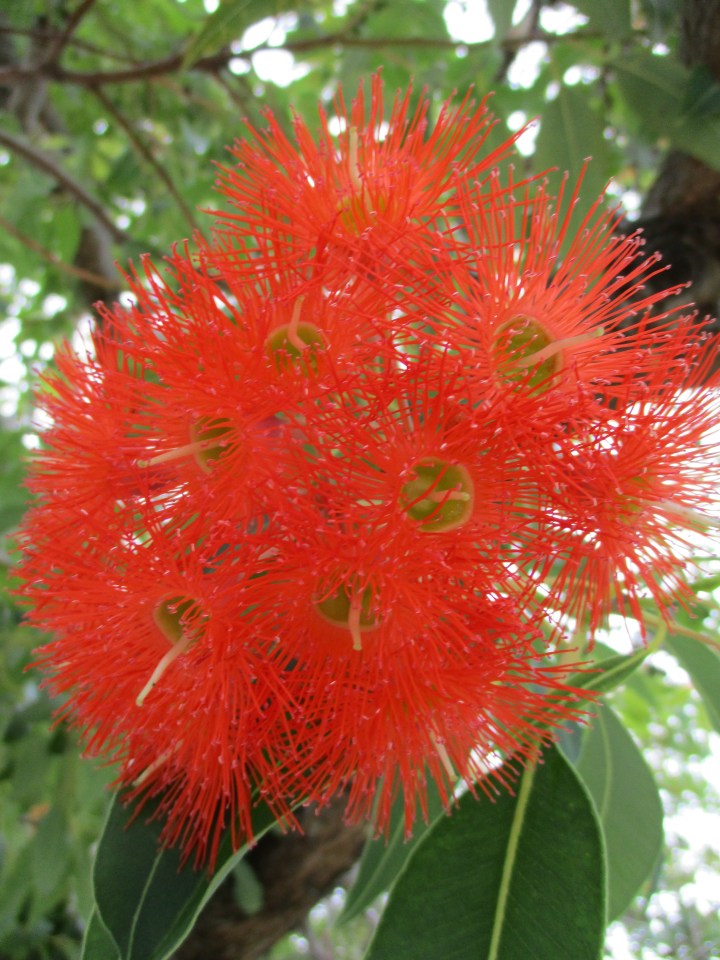 We all know about the bad reputation of eucalypti, especially the notorious blue gum. They are too big, too aggressive, too messy, too structurally deficient, and in groups, they are too combustible. However, there are several eucalypti that are not only appropriate for local home gardens, but because of their resiliency, drought tolerance and adaptability to the local environment, should be more popular than they are.
 Much of the color in the garden through autumn and winter is provided by foliage. Some foliage turns color as the weather gets cooler. Some had been blue, gray, gold, red, bronze or variegated all year, and just happens to get noticed more now that there is not much other color provided by flowers. There are a few flowers that bloom now or even later in winter, but not nearly as many as there were in spring and summer.
 Known more as a medicinal herb, and by its Latin name, coneflower or Echinacea, is a delightful prairie wildflower that works just as well in refined home gardens. It blooms in summer and again in autumn, although autumn bloom can be inhibited if plants are not groomed of deteriorating stems from the previous bloom. Like related gaillardia and rudbeckia, coneflower is a nice cut flower.
 Traditional horticultural technology that was so common in the orchards, that were likewise more common, was more practical than so much of what we do in our modern home gardens now. Orchardists got good insects to take out the bad insects. They got mulberry trees to distract hungry birds from maturing apricots and prunes. They even got weedy annuals to control other weeds.
 Standin’ on the corner in Winslow, Arizona, specifically on the corner of West Second Street and North Kinsley Avenue, there was this bronze statue of someone famous. I am still not certain who he was. A statue of Glenn Frey was added nearby later, and might have replaced this one, but I could not find much news about it. The new statue does not look anything like this statue, which was the only one there when we stopped to get our picture taken there five years ago on our way to Oklahoma.
 The main complaint about this Remembrance Garden is that there is no garden. Two steel girders from the destroyed World Trade Center stand vertically on pedestals within a concrete slab shaped like the site of the World Trade Center. The pedestals are set within squares of stones that correspond to the outlines and locations of the of the World Trade Center Twin Towers #1 and #2 within the World Trade Center Site. The outlines and locations of the other buildings of the World Trade Center are designated by darker concrete within the slab. There is no real synthetic landscape.

