 For my exquisite 1979 Electra, planned obsolescence did not work out so well. It was probably a grand Buick for that time, and one of the last with tail fins! It was elegant. It was big. It was steel. It was made to last ten years or 100,000 miles . . . and that was it. Seriously, as much as I enjoyed that car, it did not want go to much farther than it was designed to go. It limped along for almost 20,000 miles more, but was not happy about it, and was really tired and worn out by the time it went to Buick Heaven.
Planned obsolescence used to mean something completely different in landscaping. Yes, we all know what it means now; that many of the so called ‘sustainable’ modern cultivars last only a few years so that they need to be replaced sooner than older cultivars. What it used to mean is that fast growing plants were used to get a landscape established quickly, while more desirable but slower plants took their time growing. As the more desirable plants matured, the fast growing plants could be removed.
For example, a large condominium complex was landscaped primarily with Norway maples and flowering pears. These trees would eventually grow to be proportionate to the buildings and the spaces that they shade. To provide shade sooner, and to help the landscape look established by the second summer, common cottonwoods were incorporated into larger areas. Their placement was not as important as it was to the maples and pears, but was strategic enough to avoid the other trees and buildings as long as possible. The intention was to allow the cottonwoods to be the prominent trees in the landscape only temporarily, but to remove them as the maples and pears matured. It was a practical technique used by landscape designers for as long as anyone can remember.
Sadly, few modern ‘gardeners’ understand this concept. The cottonwoods did not get removed when they should have been. They overwhelmed and crowded the other trees, and caused them to be disfigured as they grew. The cottonwood roots broke pavement and ruined lawns. Then, after all the damage and destruction, . . . the cottonwoods died, like cottonwoods do. Now the landscape is shaded by healthy but distorted maples and pears. The plan did not work very well.
Now, such planned obsolescence is simply impractical for trees. Even if those maintaining landscapes were reliable enough to follow through with such plans, modern tree preservation ordinances would prevent them from getting permits to remove temporary trees. Planned obsolescence can work with smaller shrubbery and perennials in home gardens, but those of us who use the technique must follow through with our plans so that things do not get too crowded.
 Heating homes has certainly changed. It has gotten much more efficient and less polluting. Homes are much better insulated than they were only a few decades ago. Heating systems use much less fuel, and produce much cleaner exhaust. That is partly how more than a million people who live in San Jose now make less smog than when there were half as many.
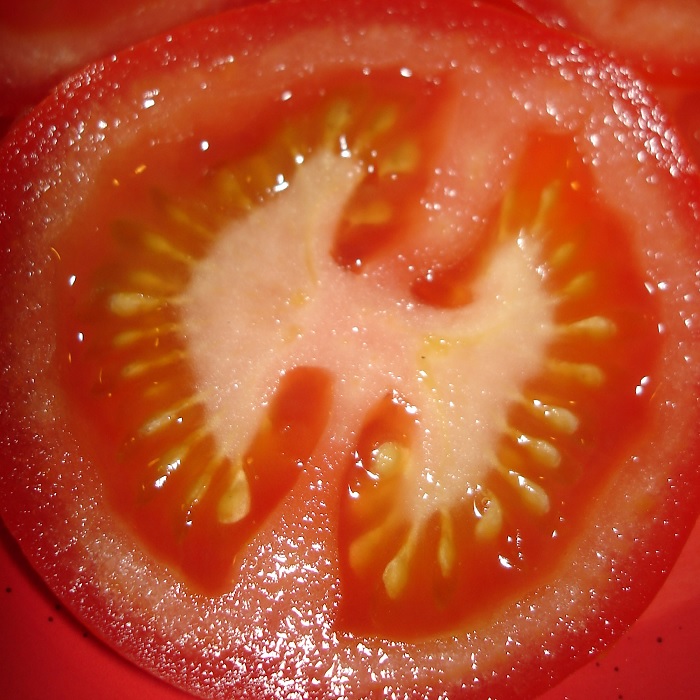 Certain fruits and vegetables were so much more palatable before studying botany. Knowing what they really are sort of puts a damper on things.
 Before you send me a comment about it, I am already aware that this is a very bad picture. It was taken with my primitive telephone because it was convenient at the time. This tired looking butterfly might not have waited for me to get the camera. It passed away, seemingly peacefully, right there on the hood of the old Chevrolet. It did not seem to be injured in any way. It probably simply expired like butterflies do after breeding. It is a natural process that the butterfly did not seem to be too distressed about. It gets no obituary because I am not qualified to write one. We are not sufficiently acquainted. I do not even know the specie of this butterfly.
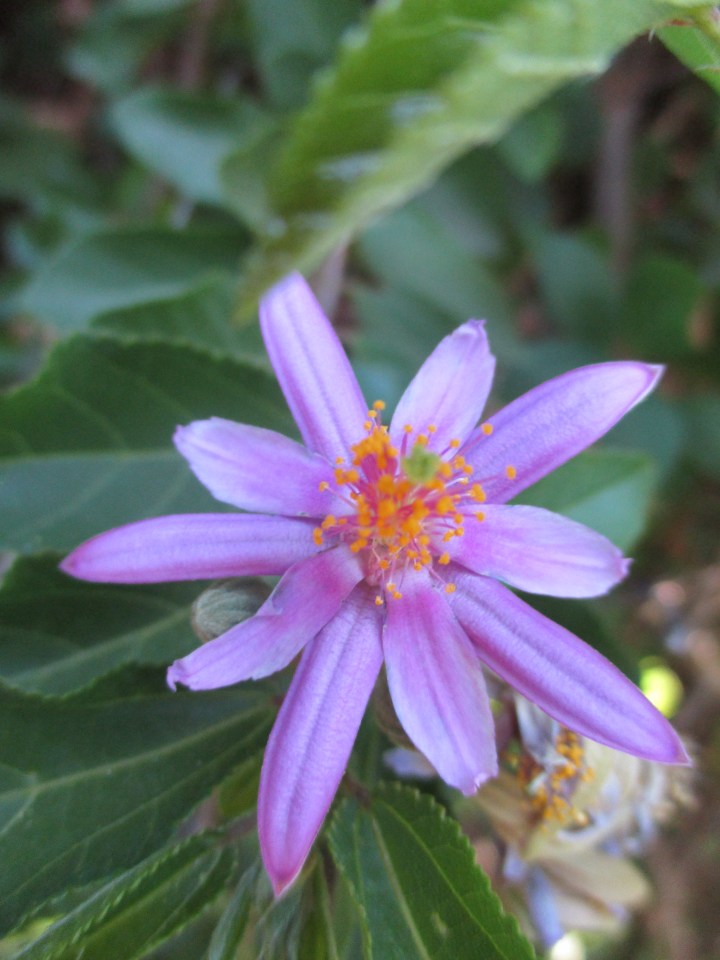 It is really an evergreen shrub with limber stems; but lavender starflower, Grewia caffra, can work almost like a rambling vine. It does not actually climb or grip anything. Like the canes of a climbing rose, it can be tied onto a trellis or fence as an espalier. As a free standing shrub, the arching stems should be pruned selectively. Shearing deprives them of their natural form, and inhibits bloom.
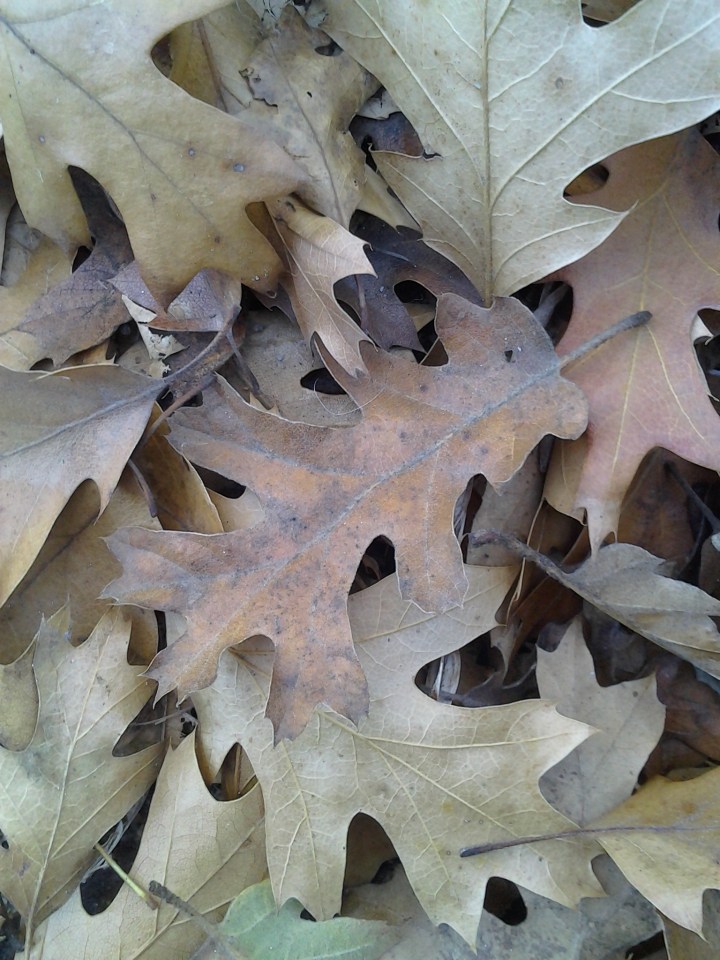 There is no time that is best to clean the gutters on the eaves. They should probably be cleaned early before the debris within them gets dampened by the first rains. However, they will only need to be cleaned out again after more foliage falls. If cleaned only after all the foliage falls, they will be grungier, and there will be potential for some of the debris to flow into and clog the downspouts.
 Yuccas are almost as useful as aloes are for gardening in chaparral or desert climates. I say ‘almost’ because most are not quite as friendly. The leaves are outfitted with nastily sharp tips. It is how they protect themselves from grazing animals in the wild, but it is not such an advantage in home gardens. Some actually have the potential to be dangerous where someone could bump into them. The leaves of Joshua tree can puncture leather. Some types of yucca get so big that they make it difficult to avoid their nasty leaves, even if planted in the background.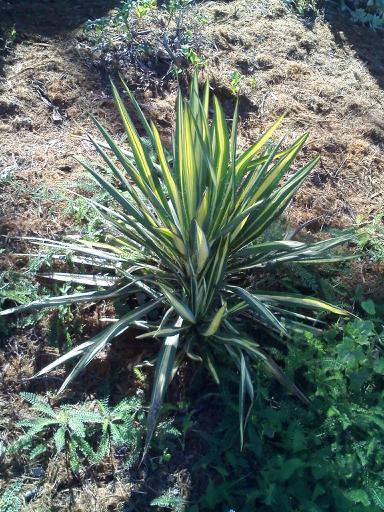
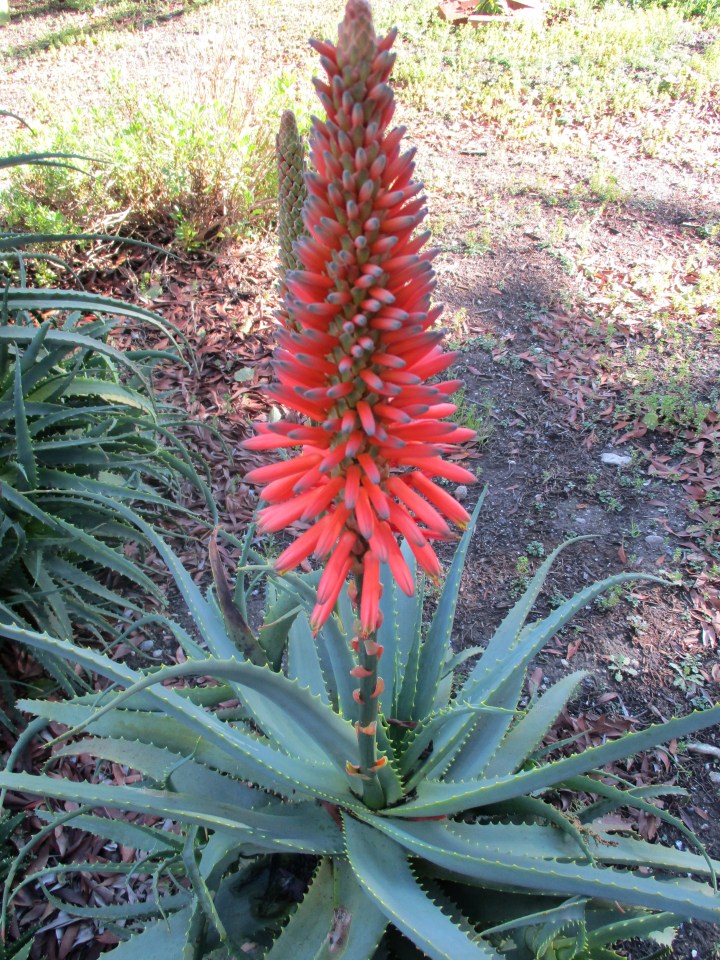 We really should be growing more of what grows well here. This is as relevant in other regions as it is in the Santa Clara Valley. Some regions have a lot more to choose from. There are always limitations too. Tropical plants do not survive the winters of New England. Apples and pears want more winter chill than they can get in San Diego.
 Something really crazy happened last night. From out of nowhere, a profusion of drops of water started to fall from the sky! It continued to fall for a while, and got everything wet. Soil that had been dry and dusty became rather muddy. As crazy as it sounds, it is not impossible, and actually happened repeatedly last autumn, winter, and into spring. In fact, it was so abundant that the San Lorenzo River filled with all this strange sky water, and flooded worse than it had since the flood of 1982! People in other less arid climates are more familiar with this sort of thing. It is actually no mystery. It is known simply as ‘rain’.
 Long before my white supremacy garden (
