Still Going Bananas!

Most of the banana pups and plugs are manageable, . . . for now.

Three more cultivars of banana arrived this week. There are now as many as twenty here. Three are unidentified. Of these three, two could be redundant to others. Of these two, one is merely dormant corms that could rot before generating new foliage. Another is already generating pups. Another is represented by a pair of pups. Eight grew from pups. Twelve grew from tissue culture plugs. Five have already grown too big to remain in the nursery where this picture was taken. At least three can grow more than twenty feet tall. At least two can grow more than forty feet tall. One is Musa ingens, which is the largest species of banana in the World, which can grow more than sixty feet tall! This sounds like fun, but so far, we only intend to add one of these twenty to only one of the landscapes! Three other small cultivars might remain potted in other landscapes, but are merely a minority of the total. Banana ‘trees’ are not exactly easy to accommodate. They want generous irrigation. Their ‘trunks’ grow very fast, but do not last long. Because they can not be climbed, every ‘trunk’ requires a radius that is comparable to its potential height to free fall when it gets cut down. None of the refined landscapes can forfeit areas that are large enough for ‘trunks’ of the larger cultivars to fall. Riparian areas that can accommodate them, and even without irrigation, are forested with redwoods, which banana ‘trees’ are not aesthetically compatible with. I would say that we will figure this out as they grow, but banana ‘trees’ grow very fast. They can remain canned for the rest of this season, but would be very displeased with such confinement next year. It is about to get even more interesting.

Six on Saturday: Amiss

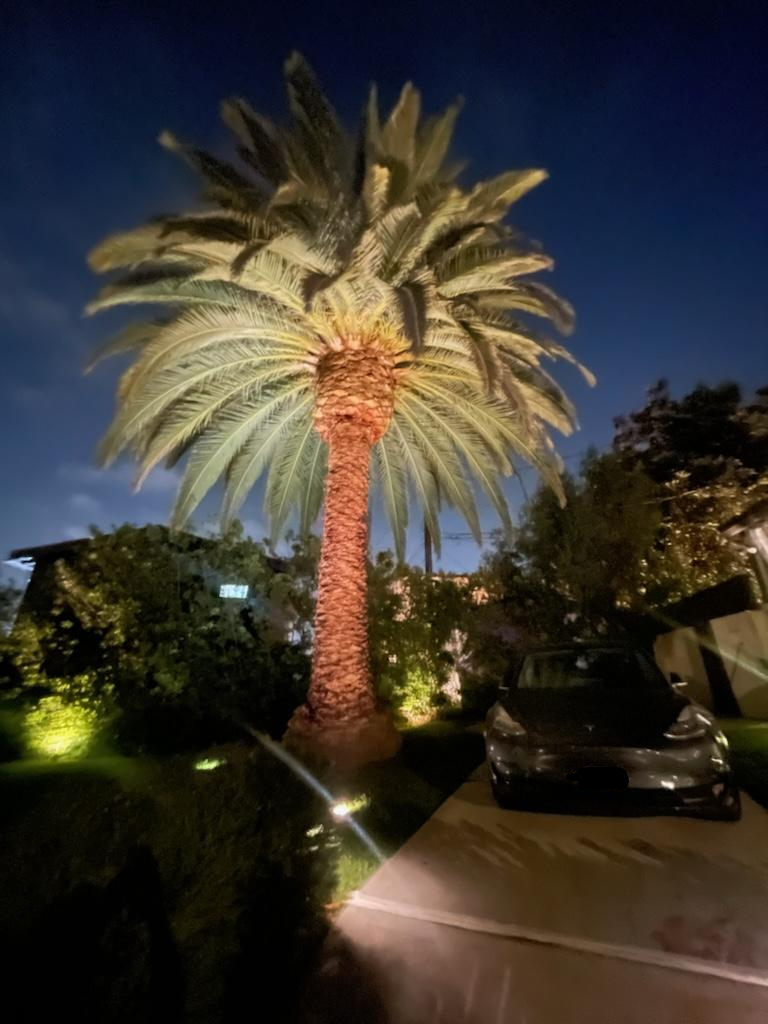
Heather worked ‘VERY’ late. Labels got switched on two cultivars of passion flower vine. We got another banana tree with no plan. A walnut replaced a palm. Palms did nothing. Oh my!

1. Musa acuminata ‘Popoulu’ banana ‘tree’ arrived in the mail as this tissue culture plug with a crease across it. It will recover, but its blemish is annoying. What is more amiss is that this is the twentieth cultivar of banana here, but we have plans for none of them yet.

2. Juglans nigra, black walnut was a typical understock for the English walnut orchards of the Santa Clara Valley. It is somewhat naturalized nearby, but not here. Where are all these seedlings coming from? Why did this grow in a can for Costa Rican bamboo palm?

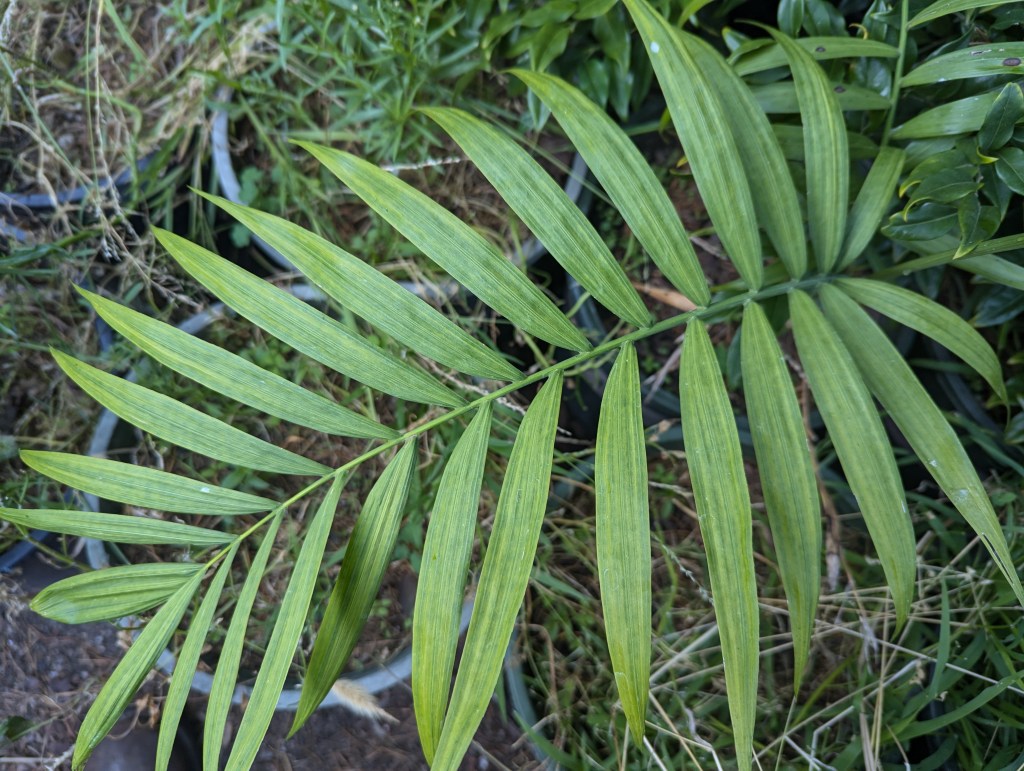
3. Chamaedorea costaricana, Costa Rican bamboo palm is what should be in the can of the black walnut seedling. I brought enough rhizomes from Brent’s garden for about ten #5 cans and about as many #1 cans, but after a year, this is the only specimen that grew.

4. Hakonechloa macra ‘Aureola’ Hakone grass had never performed particularly well. A few other small perennials were added nearby to compensate. Now, the Hakone grass is growing lushly enough to overwhelm some of the perennials that were added to assist it.

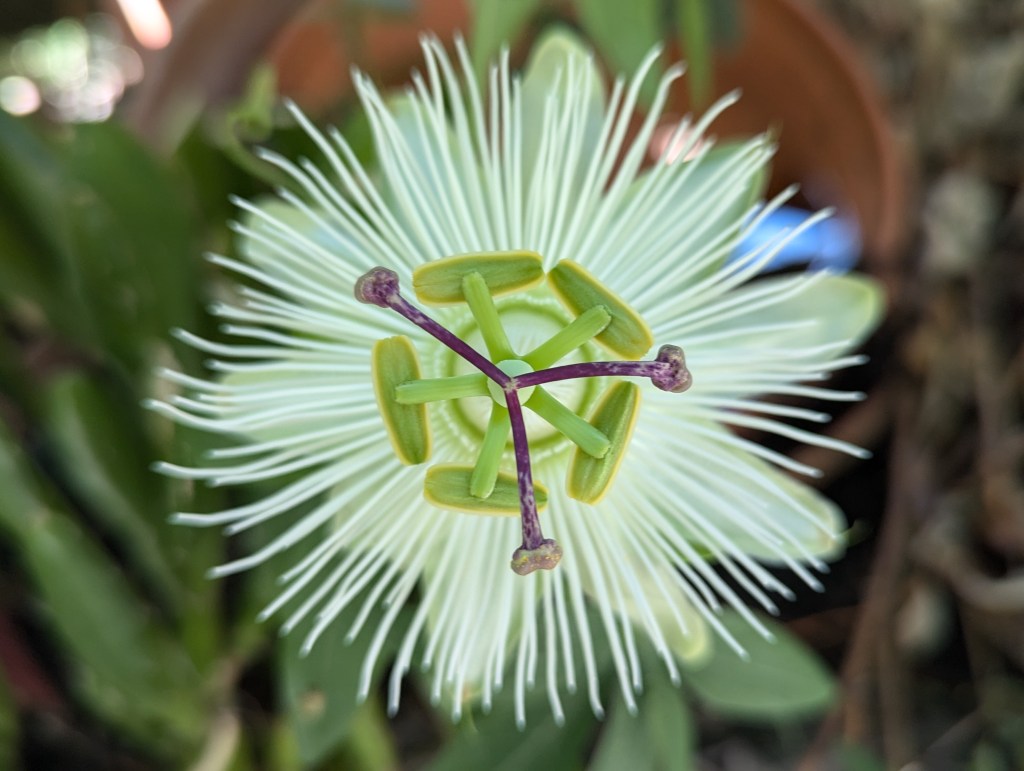
5. Passiflora caerulea ‘Constance Eliot’ passion flower vine went into a landscape after it impressed with purple bloom. Of course, it was expected to bloom white like the original that provided the cuttings. This specimen was expected to bloom purple like its original.

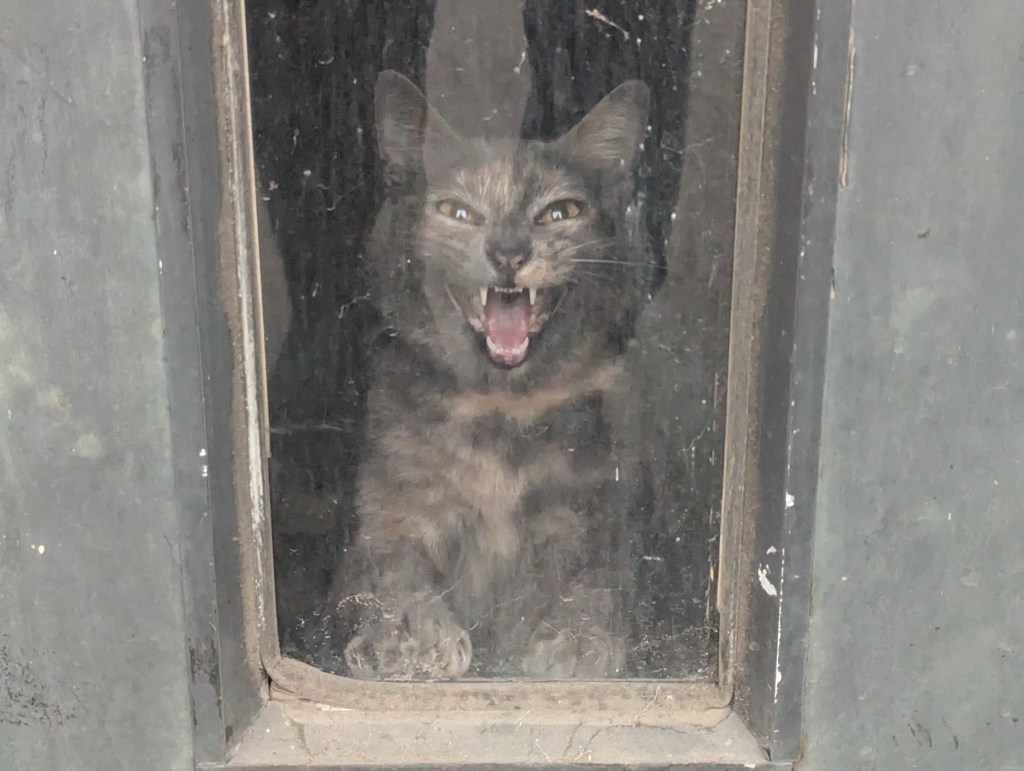
6. Heather is a very proficient mouser. Rodents had been a major annoyance prior to her arrival. They are now no bother at all. However, a rat was observed within this particular shop. Heather apparently went in to investigate, and consequently spent the night there.

This is the link for Six on Saturday, for anyone else who would like to participate: https://thepropagatorblog.wordpress.com/2017/09/18/six-on-saturday-a-participant-guide/

Garden Verbena

Garden verbena sort of resembles lantana, with more variety of color.

When I first saw ‘Peaches ‘N Cream’ garden verbena, Verbena X hybrida, that was trendy in the early 1990’s, I thought that the variable shades of pale pink and nearly white of its flowers were too dull. Then I saw the flashy bright red, purple, blue and fluorescent pink of other modern varieties at the time, and gained a new appreciation for the more subdued color range, including white and more ‘normal’ pink. The flower color range may not be very extensive, but it is diverse.

Even though it is commonly grown as an annual, garden verbena is actually a short term perennial. It is a traditional component of mixed flower urns and planter boxes, but does not necessarily need to be replaced along with other annuals. Like English ivy and ferns that are so often planted with annuals, garden verbena can be salvaged, at least for a few seasons, as annuals come and go. It looks good in hanging pots or large urns where its slightly cascading form can be appreciated. In good soil, garden verbena can become a colorful small scale ground cover.

Mature plants do not get much more than six inches deep or two feet wide. Their coarsely dentate leaves are about two inches long. Their flat, two inch wide trusses of small flowers bloom mostly in summer. Hard pruning at the end of winter helps restore plants in spring, and keeps plants healthy longer. Mildew can become a problem in humid areas, particularly if air circulation is inhibited by crowded foliage.

Propper Gardening

Brent’s landscape style is VERY different from mine.

If you have ever seen ‘The Osbornes’ on television, you know how extravagant the work of landscape designer Brent Green of GreenArt of West Hollywood can be. He actually landscaped and has maintained the home of the Osbornes since before the Osbornes lived there, and has managed to fit a more extensive range of plants into the gardens than I have grown in my career as a horticulturist, arborist and nurseryman. His own home garden is just as bad . . . I mean ‘extravagant’, with more diversity of plants than could be found in any nursery.

Would you believe that Brent Green and I were actually college roommates in the dorms? Sometimes I do not believe it either. Nearly a quarter of a century ago, he came two hundred miles north, and I came two hundred miles south to ‘meet in the middle’ and study horticulture at Cal Poly in San Luis Obispo. He was very trendy for the time, wearing brightly colored mid ‘80’s clothes and a flat topped afro like Grace Jones. (Yes, he once had hair.) I was old fashioned for ten years earlier, just like I am now, with Levi’s, Durango’s and flannel.

As a landscape designer, Brent Green enjoys the diversity of plants, and getting them to fit into practical, functional and yet very enjoyable landscapes, gardens and outdoor rooms. Most of his favorite work is lush and tranquil, with all the fancy and artful curves, ‘meandering’ walkways, water features, extensive diversity of plants, and herds of color! Conversely, I am still a nurseryman at heart, so engage my garden as a commodity with conformity, simplicity and very basic functionality. I grow vegetables, many fruit trees, and many ‘copies’ of the same reliable plants that I propagate myself, mostly arranged in what Brent Green refers to as straight line ‘row crops’.

Yet, our gardening philosophy is the same. We both ENJOY our gardens, and agree that everyone should likewise do gardening on their own terms. Those who do not enjoy gardening should not need to. There are plenty of other things besides gardening to enjoy.

To facilitate the execution of proper horticultural techniques, we should grow only what we are able and want to take care of. What looks good in a magazine may require more attention that we can commit to or would enjoy. I still believe that the legendary horticulturist Robert Leakley was the first to say what many have copied in various forms since, “If you enjoy it, you are doing it right.”

Santa Cruz

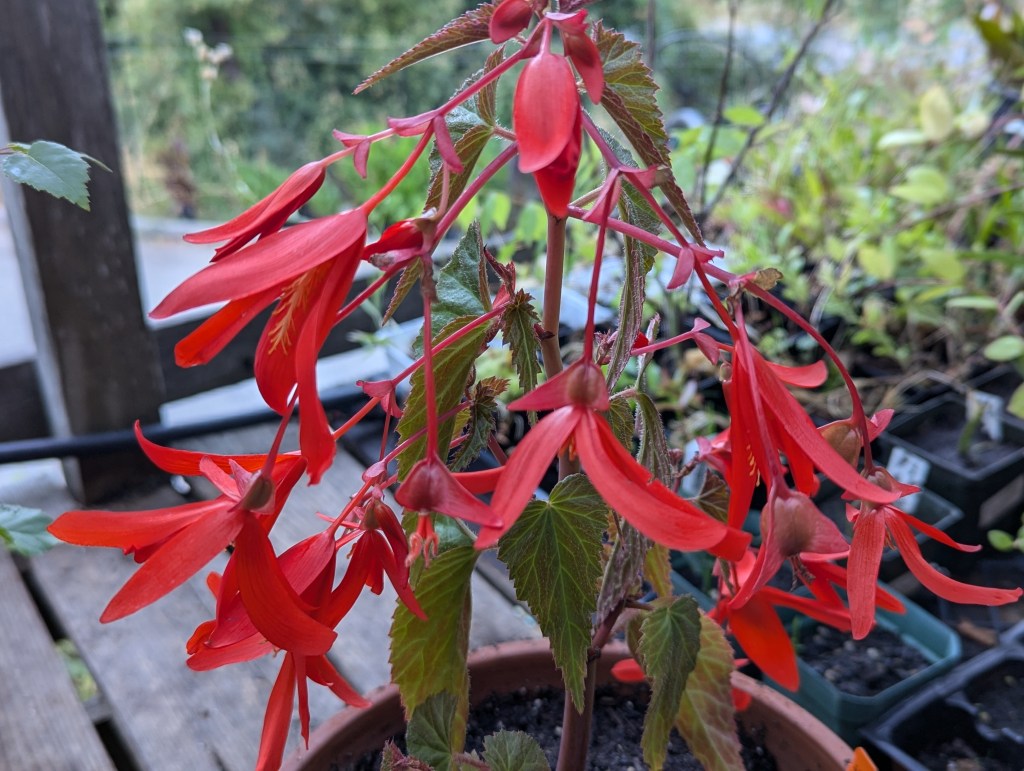
Begonia boliviensis ‘Santa Cruz’

Begonia boliviensis ‘Santa Cruz’ is one of those modern cultivars that I am typically not so keen on. It grows vigorously with abundant red bloom. ‘San Francisco’ is similar but with abundant pink bloom. ‘Santa Barbara’ is similarly similar but with abundant white bloom. All perform splendidly, like so many formerly modern cultivars that were trendy before them. I am not so keen on them merely because they are both modern and trendy. Their names do not help either. My colleague purchased ‘Santa Cruz’ from a nursery in Santa Cruz. It now lives here in Mount Hermon, which is a few miles away from Santa Cruz, but still in Santa Cruz County. I suspect that it is more popular locally because of its name. For the same reason, I suspect that ‘Santa Barbara’ is more popular in Santa Barbara, and ‘San Francisco’ is more popular in San Francisco. I also suspect that I would be less resistant to these modern cultivars if they had more appealing names, such as ‘Los Gatos’, ‘San Jose’ or ‘Palo Alto’. Perhaps the names are for the counties rather than the cities within the counties. All three of my recommendations are within Santa Clara County.

Border Carnation

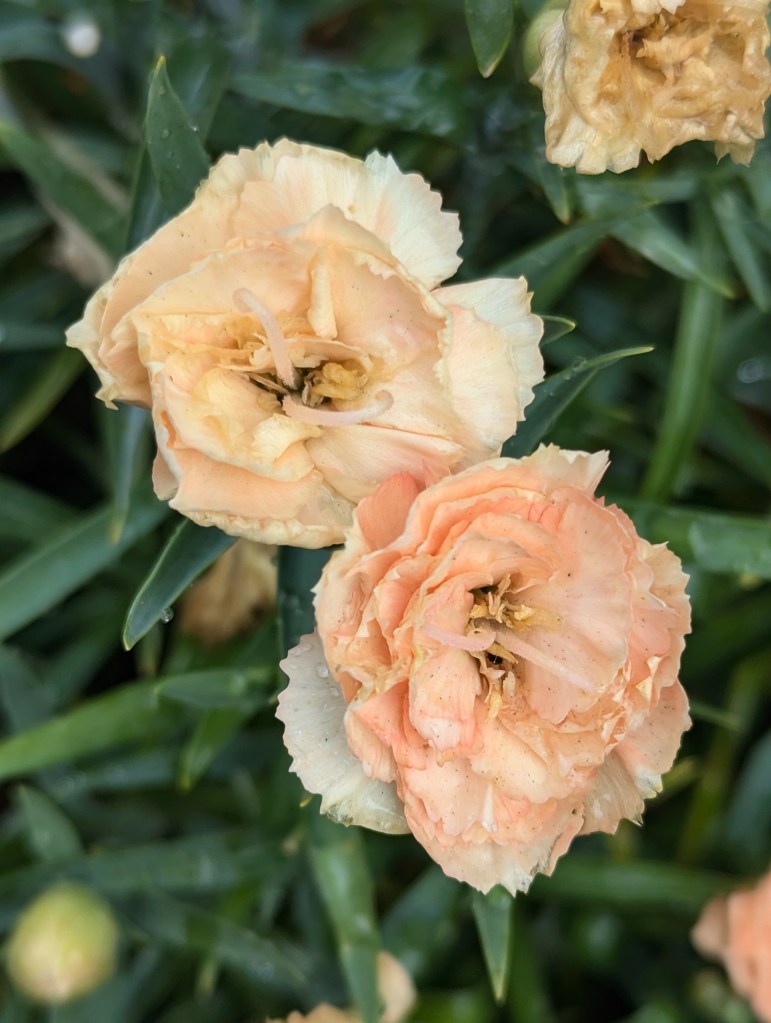
Border carnations stay short and compact.

Florist carnation, Dianthus caryophyllus, is not originally as colorful as it seems. It can be red, pink, pastel yellow, pastel orange or nearly purple. Most for the floriculture industries begin as white though. White carnations are conducive to dying with any color that might be in demand. They are therefore more versatile than those with a different natural color.

Furthermore, their natural floral color range is not as natural as it seems. It is the result of extensive breeding of several species. Consequently, several popular types of carnation lack species designation. This includes a few compact cultivars that are more popular as annuals than cut flowers. Within locally mild climates, they can be short term perennials.

Border carnations grow only a few inches tall and less than a foot wide. Eventually, very old specimens may grow more than a foot tall. Such big specimens are very rare though. Border carnation foliage is glaucous bluish gray. The short and very narrow leaves are in opposing pairs. Flowers are less than two inches wide, with delightfully spicy fragrance of clove.

Florist Quality And Landscape Quality

Chrysanthemums are available out of season.

Roses from a home garden are not quite the same as roses from a florist or market. They mostly bloom on stems that are relatively thinner and shorter. Floral and foliar blemishes are more likely. As they unfurl, they can get a bit wider and disperse more fragrance. One of the more obvious differences is their seasonality. They are unavailable through winter.

Florist roses are likewise different from garden roses. They are not as limited by season, so are available at any time of year. Their elegantly straighter stems are relatively longer and a bit heftier. Blemishes are rare. Buds are generally plumper and likely to last longer, but may not unfurl completely. They are typically relatively narrow and a bit less fragrant.

Environmental factors cause most of the differences. Home garden roses develop with a relatively natural exposure to weather. Florist roses develop within synthetic greenhouse environments without natural weather. However, genetics cause some of the differences. Florist roses are not the same cultivars that are available from nurseries for landscaping.

The same applies to several florist quality potted plants. They also grow within unnatural environments. They also are cultivars that perform well for their specific purpose. Some cultivars are impractical for landscapes. Some take quite a while to adapt to landscapes. Many that are seasonally popular for particular Holidays may not last for long afterward.

Most azaleas and hydrangeas are landscape cultivars. Some are florist cultivars though. Landscape cultivars that grew outside in nurseries adapt efficiently to landscapes. Florist cultivars that grew in greenhouses take more time or may not adapt. Those that do might bloom with lavishly large florist type flowers. Such bloom may not be resilient to weather.

Several cultivars of florist carnations and chrysanthemums are also landscape cultivars. Florist lilies are the same that are seasonally available as dormant bulbs from nurseries. Adaptation to a garden can be stressful, especially for those that bloomed out of season. However, once they adapt, they might perform for several years as short term perennials.

4:00

Mirabilis jalapa is known more commonly as four o’clock. It is spelled with letters rather than as 4:00 with numbers. This refers to the time in the afternoon when its bloom should be at its best. These pictures were taken prior to nine in the morning though. Apparently, it does not adhere to a strict schedule. I took these pictures because I was so impressed with the performance of these particular specimens. Those with yellow bloom above are so large that I came from across the road to confirm their identity. I do not expect this species to grow so large. They are about as big as small oleander! Those with white and pink bloom below are actually the same plant. The species commonly blooms with flowers of different colors, but such colors are typically not so divergent as clear bright pink and clear white. They are more typically blotched with colors of each other, such as white flowers with a few pink blotches in conjunction with pink flowers with a few white blotches. This species is somewhat naturalized here, but politely so. Although it generates copious seed, it is not migrating very far from where it is established.

Khartoum

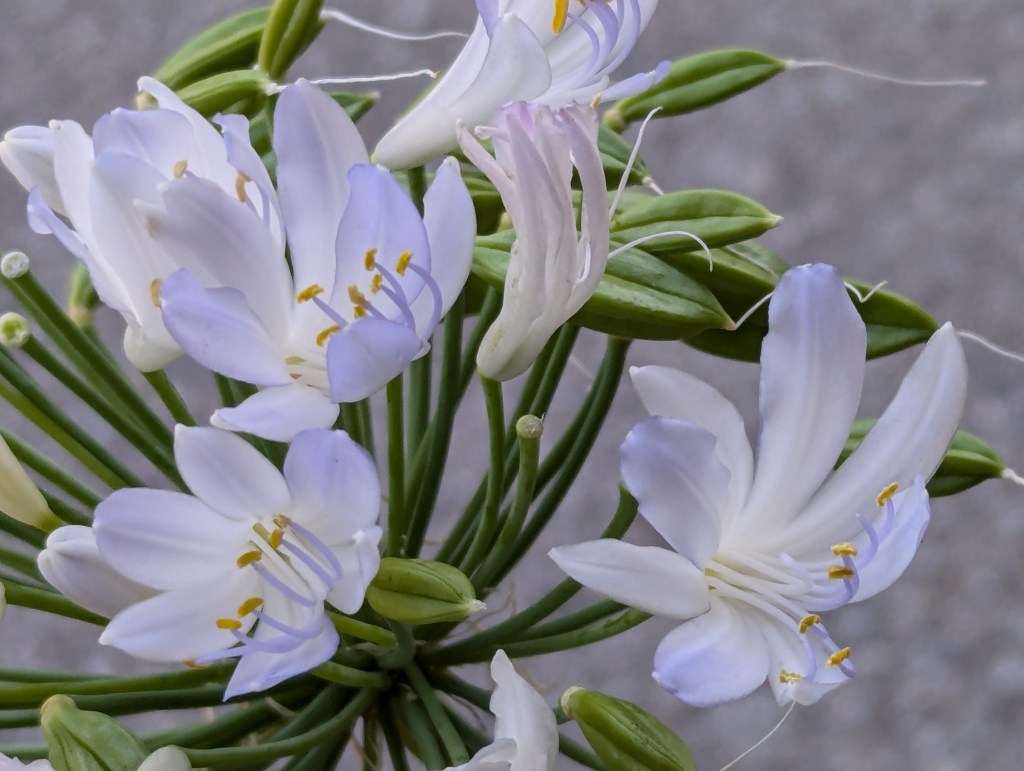
‘Khartoum’ (Agapanthus orientalis ‘Khartoum’) is a blend of Blue Nile and White Nile.

Khartoum is located where the Blue Nile River merges with the White Nile River to become the Nile River. Lily of the Nile, contrary to its name, is neither a lily nor native to any of the three Nile Rivers. It is in the Amaryllidaceae Family, and is native to Southern Africa. Coincidentally though, it naturally blooms either blue or white. It really seems like it should be native to at least two of the Nile Rivers, with those that bloom white inhabiting the floodplains of the White Nile River, and those that bloom blue inhabiting the floodplains of the Blue Nile River. Perhaps both should inhabit the floodplains of the primary Nile River. Like a few other species that bloom exclusively true blue or white, lily of the Nile sometimes exhibits sports, which are mutant growth, that bloom with the other of the two options. In other words, those that bloom blue sometimes produce a shoot that blooms white, and conversely, those that bloom white sometimes produce a shoot that blooms blue. As if genetically unstable, such sports may revert to their original floral color by the following season, and before they divide into several shoots that bloom prominently with aberrative floral color within their otherwise florally monochromatic colonies. When I noticed a single white bloom within an exclusively blue blooming colony, I did not want to wait for the following season to see what its intentions were. Then, as bloom faded and I separated it from the colony, I found that it was blushed with blue, as if already trying to revert. Because it is impossible to confirm its intentions, I canned it and set it aside to see what it does in the future. If blue, it can return to the landscapes with the random mix of blue lily of the Nile that has been accumulating as long as they have inhabited landscapes here. If white, it will be given to neighbors, because I want to maintain the genetic purity of the single white cultivar that is here. If it remains white with pale blue blush, it might get a separate but prominent position within a landscape.

Six on Saturday: Firsts

The first and last may potentially suggest that this is an episode of the Red Green Show.

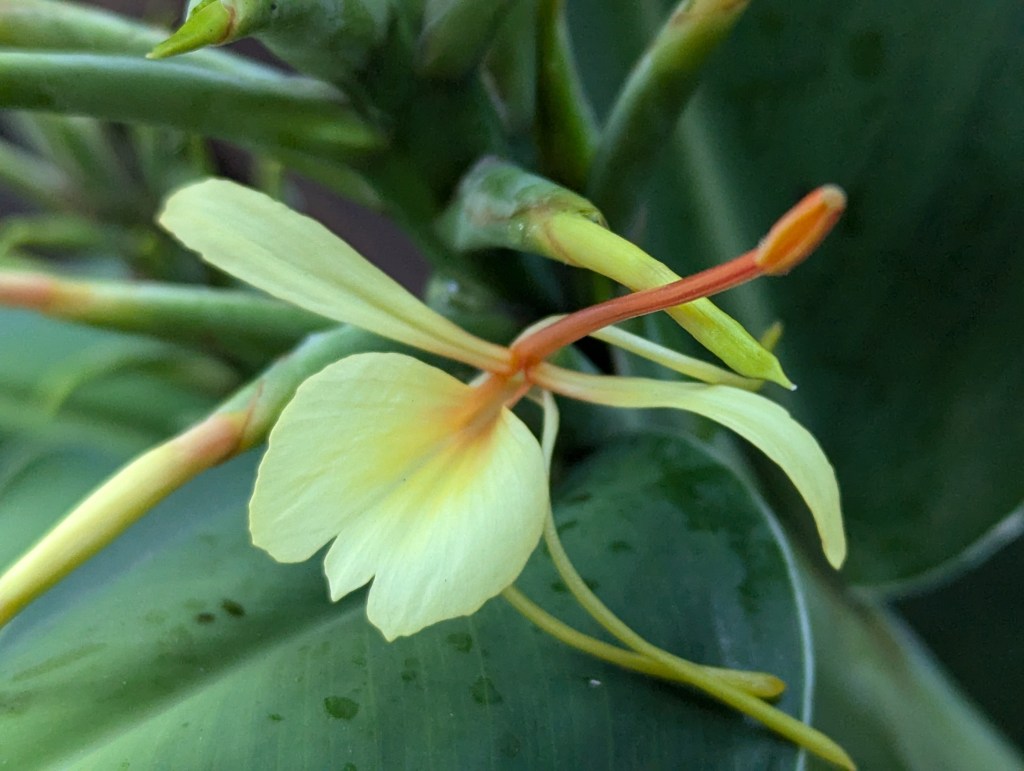
1. Hedychium greenii, red butterfly ginger, which I accidentally took from Brent Green’s garden with a bunch of crowded out Heliconia psittacorum, is now about to bloom here. I was totally unaware that it was here until Brent mentioned that it was no longer there.

2. Hedychium gardnerianum, kahili ginger bloomed during the pandemic, while no one was here to see it. Then, gophers ate it. I canned the remnants, which are blooming now. This is the first of several florets to bloom on the first tall floral spike. It smells like 1986.

3. Agapanthus orientalis, lily of the Nile suddenly bloomed with this single white umbel within an exclusively blue colony. I removed the offending shoot as bloom began to fade, but found that it is not completely white. I canned it to observe how it blooms next year.

4. Begonia boliviensis ‘Santa Cruz’ begonia was not my idea. Another horticulturist here just procured it from a nursery in Santa Cruz, a few miles away. It is quite happy here in Santa Cruz County. It deserves a more appealing name, such as ‘Los Gatos’ or ‘San Jose’.

5. Canna ‘Cannova Mango’ canna was not my idea either. Brent sent it to me. I am not at all keen on modern cultivars, particularly this color. I nonetheless divided it too much to bloom well. This is its first opportunity to demonstrate how profuse its bloom should be.

6. Canna that was a gift from friends of a friend last winter is now blooming here. I have no idea what cultivar it is, and I do not care. Gifts are always better than nursery surplus from Brent’s projects. It is elegantly tall with simple red bloom and simple green foliage.

This is the link for Six on Saturday, for anyone else who would like to participate: https://thepropagatorblog.wordpress.com/2017/09/18/six-on-saturday-a-participant-guide/