Change of Scenery

I am certainly no landscape designer, but I think that I sort of dig this.

Window boxes annoy me. They were originally developed to contain aromatic herbs that dissuaded mosquitoes from entering small windows, likely before the invention of window screens. They remained popular while window screens were expensive, and to grow culinary herbs where garden space was limited in old European cities. None of that is useful to me. Mosquitoes are not much of a problem here, and if they were, window screens are not expensive. There is plenty of space for herbs in the garden. Furthermore, window boxes eventually rot as a result of the irrigated medium within, and share their rot with the wooden walls that support them.

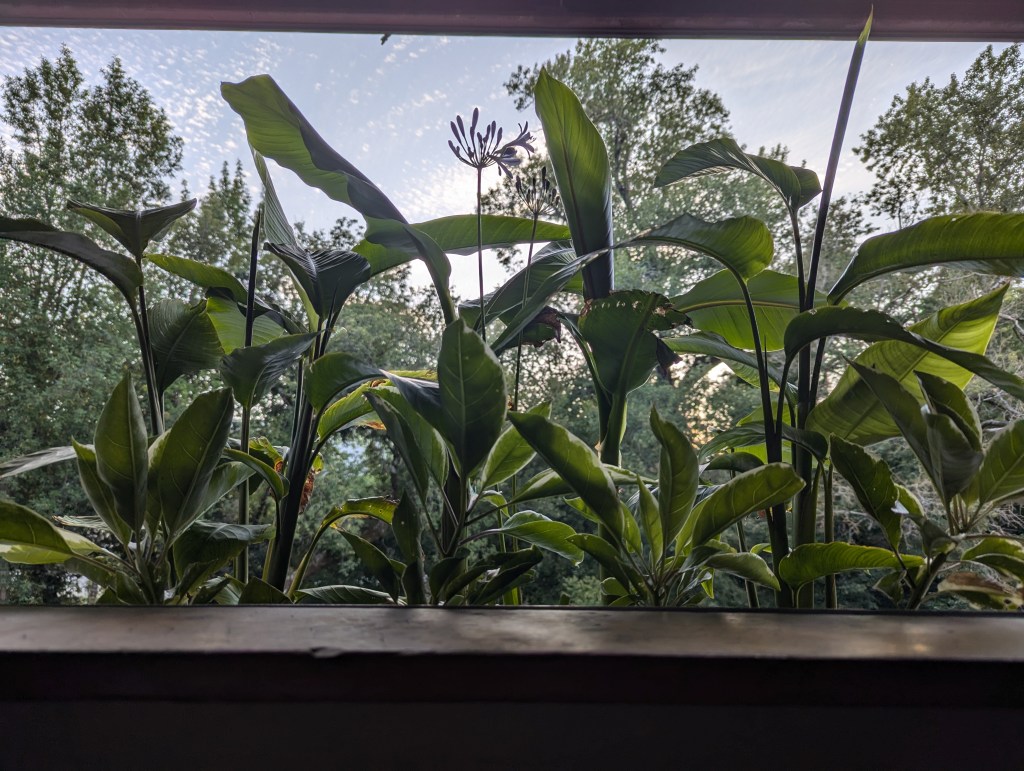
The small shelf that I suspended below this window was intended for eleven small tissue culture plugs of various cultivars of banana. I wanted to shelter them from minor frost last winter. I intended to remove the shelf after winter. Obviously, I did not.

Without a plan, I moved eleven small specimens of various species from the nursery onto the shelf just to see how their composition could develop. I typically do not like to obscure scenery or obstruct sunlight from windows, but thought I could make an exception for this window. The scenery is not particularly appealing, with a busy roadway nearby. Through summer, a bit of shade from the warm late afternoon sun might be nice.

I did not want the grassy texture or bronzed foliar color of the sugarcane right outside the window. Nor did I want the disorganized texture of any of the gingers. I am rather pleased with how these few other species work though. They are nearly half as high as the window, but as I mentioned, for this window, I do not mind. They look rather jungley.

The eleven small specimens here are in eight #1 cans and three 4″ pots. The three 4″ pots are nestled into the gaps in between two rows of four #1 cans. A pair of young plugs of Cucurma longa, turmeric, in two of the three 4″ pots are not visible to the left and right. Only two blooms of a small specimen of Agapanthus africanus ‘Peter Pan’ lily of the Nile in the middle 4″ pot are visible. Four rooted cuttings of Solandra maxima ‘Variegata’ cup of gold vine are in the closer row of #1 cans. A pair of large specimens of an unidentified cultivar of Heliconia psittacorum, parakeet flower, are to the left and right in the rear row. A pair of pups of Musa acuminata ‘Golden Rhino Horn’ banana are in the middle of the rear row. This is so very inconsistent with my style, but I am getting to like it.
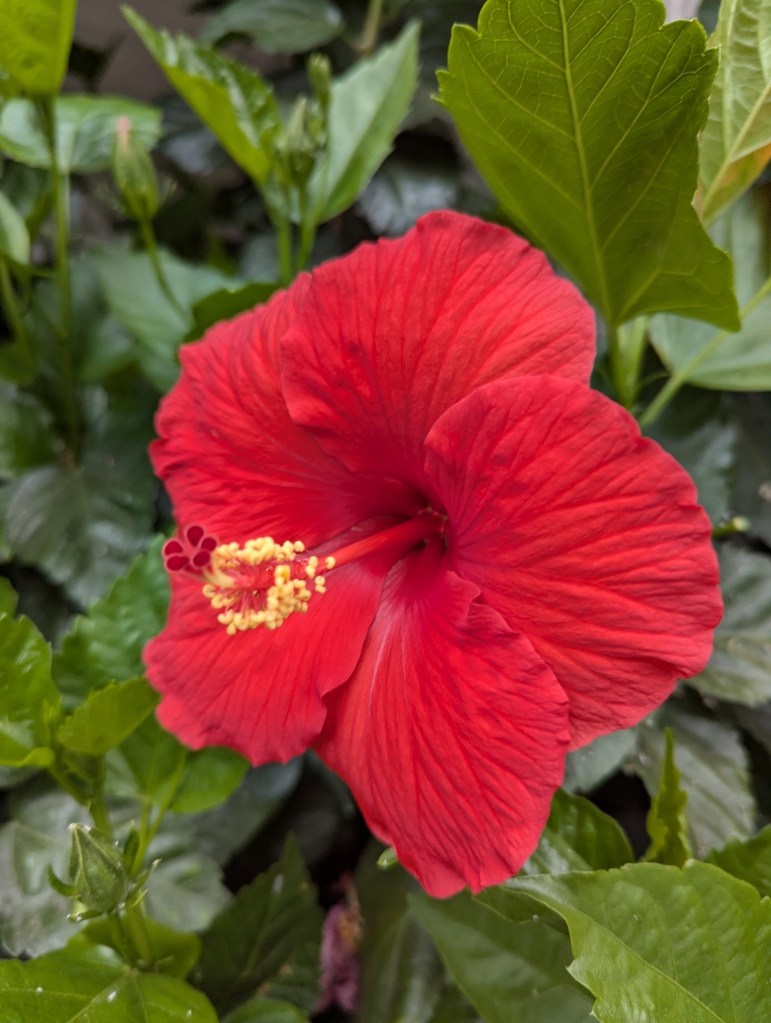
Tropical Hibiscus

Hibiscus floral structure is notably unusual.

Hummingbirds and butterflies are quite fond of tropical hibiscus, Hibiscus rosa-sinensis. They are attracted to the bright yellow, orange, red, pink or white color of its bloom. They stay for the syrupy nectar that they find deep within the flowers. Tropical hibiscus attracts pollinators rather efficiently, but almost never generates seed. Most cultivars are hybrids.

Tropical hibiscus flowers are not overly profuse, but are about three or four inches broad. Fancy hybrids that bloom with broader flowers are not as vigorous as more typical sorts. Most cultivars bloom with somewhat ruffled single flowers. Some bloom with more ruffled double flowers. Both types of flowers have five garishly flaring petals. None are fragrant.

Tropical hibiscus grows as evergreen shrubbery about six to a bit more than ten feet tall. Pruning to remove congestion of inner growth promotes healthier outer growth. Besides, whitefly and scale insects often proliferate on crowded foliage. Leaves are mostly two to five inches long and two to three inches wide. Bloom continues from summer to autumn, mostly with warmth.

Pollinators Are As Busy As Bees

Flower breeding is not for pollinators.

Flowers bloom for pollination. It is that simple. Most rely on wind to disperse their pollen. They are more abundant than colorful or fragrant. More prominently colorful and fragrant flowers rely on pollinators. Their color and fragrance attract preferred pollinators, such as insects, birds or bats. Such flowers sustain their pollinators with nectar or surplus pollen.

More than pollinators appreciate their diligence. Almost everyone who enjoys gardening enjoys floral color and fragrance. Cultivation of naturally appealing bloom began several thousand years ago. Selection and breeding most likely began relatively soon afterward. Ultimately, during relatively modern history, hybridization began getting too complicated.

Pollinators were not a priority during such processes. Because most ornamental flowers produce no usable fruit, pollinators are unimportant. Because of extensive hybridization, many ornamental flowers are sterile anyway. Floral color, fragrance and various tangible attributes are more important. Modern bloom appeals more to people than to pollinators.

A few modern flowers now confound their original pollinators. Some types of insects can die of exhaustion while trying to ascertain them. These insects may recognize floral color or fragrance but not strange floral structure. A few modern flowers are too frilly for access. Some attract pollinators without providing enough nectar or extra pollen to sustain them.

Several exotic flowers with less or no breeding distract pollinators with their abundance. Lemon bottlebrush blooms very abundantly and is still common within some landscapes. Blue gum eucalyptus is naturalized in parts of California. Both attract monarch butterflies that native species rely on. Native ceanothus must instead rely more on other pollinators.

Furthermore, a few pollinators actually disrupt native ecosystems. Honey bees, although very important to local agriculture, are not native. They arrived in San Jose in 1853, from where they dispersed throughout the West. It is now impossible to assess their influence. Even seemingly beneficial influence is unnatural and therefore ecologically detrimental.

Blue or Pink

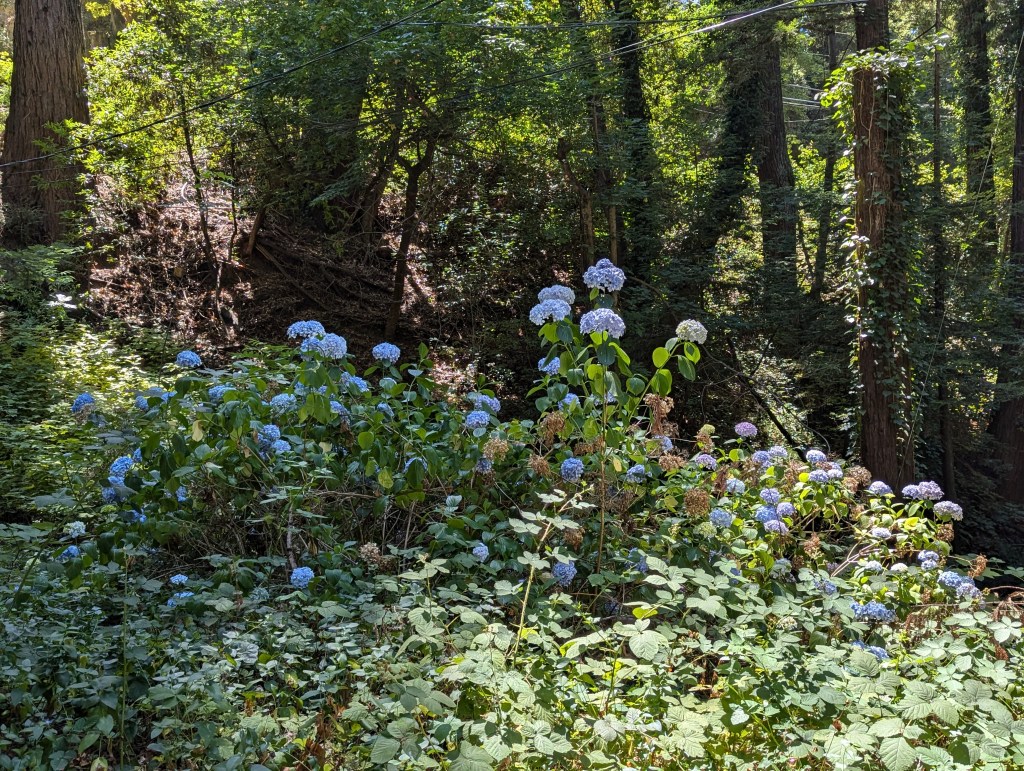
As a native of the Santa Clara Valley, I am still impressed by blue feral hydrangeas.

Hydrangeas were so much more predictable only a few decades ago. They were either colored or white. White was obviously white. In the Santa Clara Valley, colored was pink. We knew them as colored only because they technically had potential to be blue, whether or not we actually saw it. Application of aluminum sulfate was necessary for blue floral color. Such color was only temporary, and could fade in the process of bloom if the dosage of aluminum sulfate was inadequate. Consequently, blue hydrangeas were rare. However, within the redwood forests of the Santa Cruz Mountains to the south and west of the Santa Clara Valley, most colored hydrangeas were blue. Application of lime was necessary to make them pink. Just like blue floral color within the Santa Clara Valley, pink floral color within the redwood forests was only temporary, and could fade in the process of bloom if the dosage of lime was inadequate. Nowadays modern hydrangeas are not so sensitive to soil pH. Blue hydrangeas bloom a bit more purplish in the Santa Clara Valley, but are still mostly blue. Pink hydrangeas likewise bloom a bit more purplish in the Santa Cruz Mountains, but are still mostly pink.

Hazards

Horticultural industries are innately hazardous. Most horticultural professionals work outside in all sorts of weather, regardless of what that weather might be; stormy, cold hot and so on. Some of us who grow horticultural commodities might occasionally work with hazardous chemicals, and many of us work exhaustingly long hours, and sometimes in the dark of night. Those who work with landscapes might also work with the same chemicals, as well as potentially hazardous motorized tools. Arborists work with the most hazardous machinery, as well as dangerously heavy debris falling from great heights, and those who climb do their work dangerously high above the ground. Then there is this, which sounds much worse than its bad punctuation. “!PLEASE DO NOT! SIT (I WAS HIT BY A STRAY METEOR)” It sounds like all sorts of bad! I do not know what is worse, sitting or a stray meteor. It is not actually a horticultural concern, but the implication is that whatever happened, it happened on this now broken bench that was formerly located within one of the landscapes that we work in. I suspect that the bench merely broke because it was deteriorated by the weather, which is a concern of meteorology.

Six on Saturday: P III

P was about a white blooming perennial pea, Lathyrus latifolius, that I recently found to replace what I inadvertently lost earlier. P II was irrelevant to both that and this, but did happen to get a title that incorrectly designates it as a sequel to P, and prevents me from using that title for this Six on Saturday post with three variants of perennial pea and the more typical sort. Perhaps I should not have expended such effort for such a weed. What is worse is that I canned and am now growing copies of the three variants as well as the favored white blooming variant.

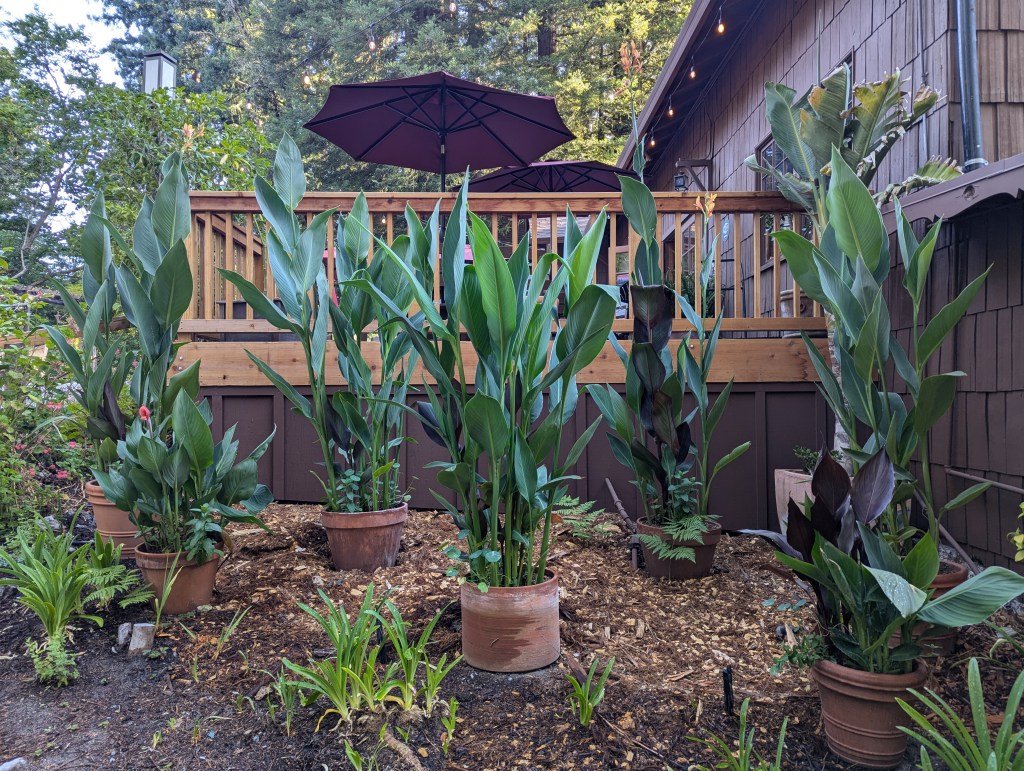
1. Canna are irrelevant to the primary topic, but are too cool to not mention. These were placed here temporarily in random pots until a new landscape gets installed next winter.

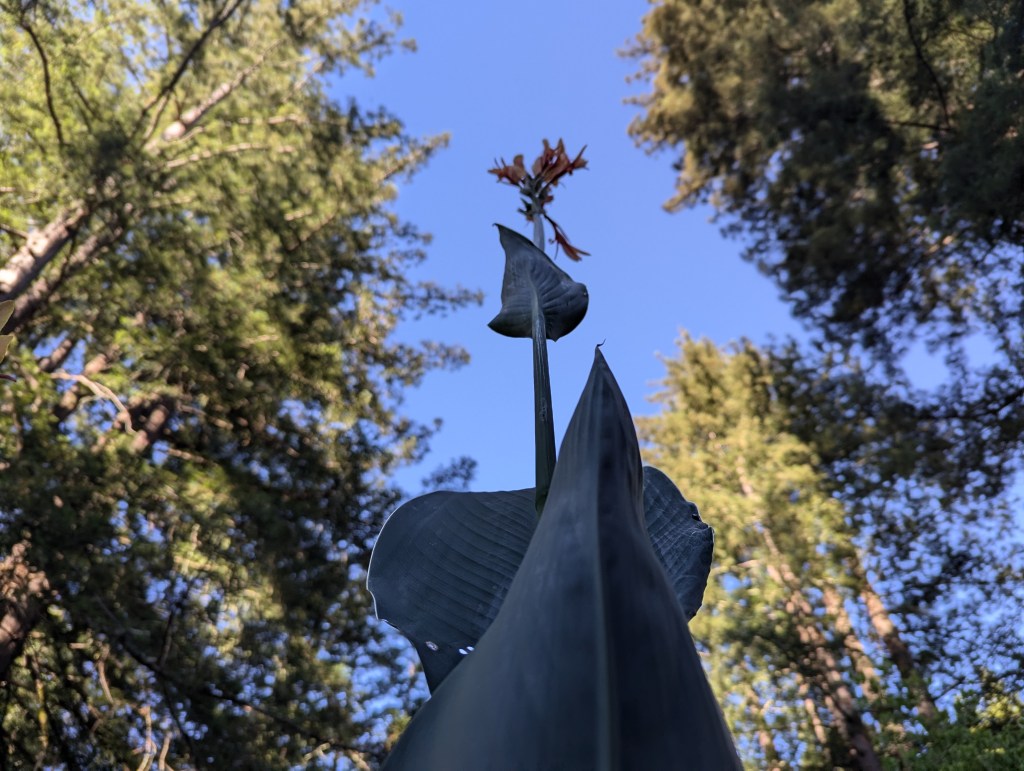
2. Canna musifolia dominates, which is why there is not much bloom. This one stands a bit more than eight feet high in its pot. It might be ‘Omega’ like the compact Oldsmobile.

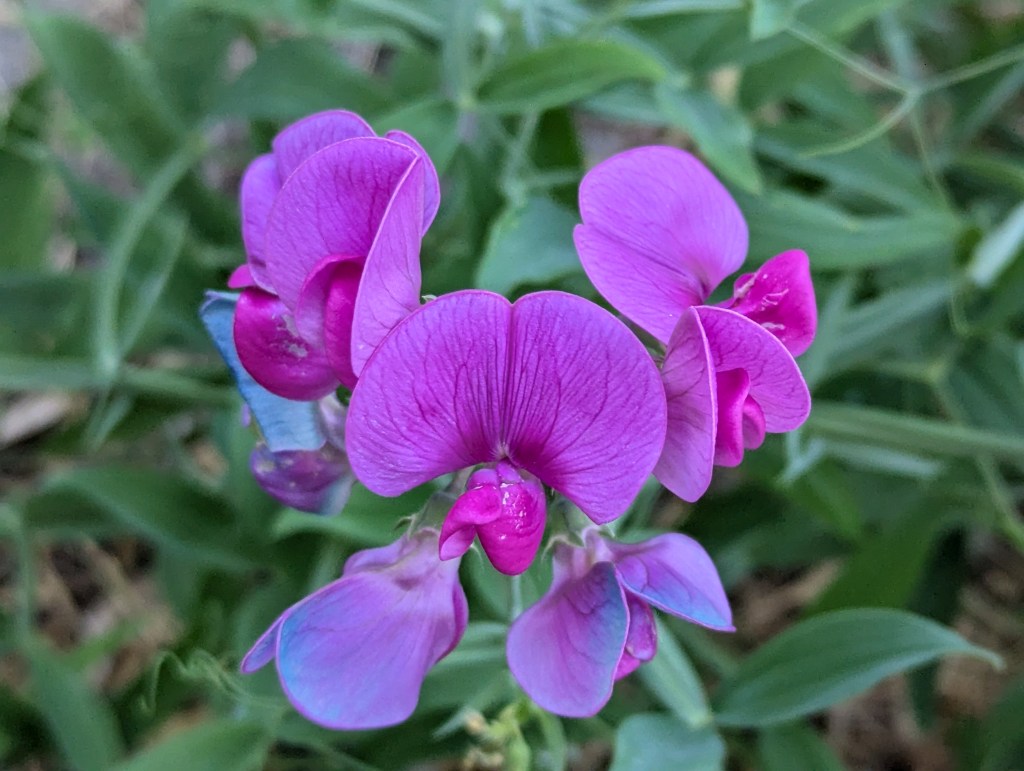
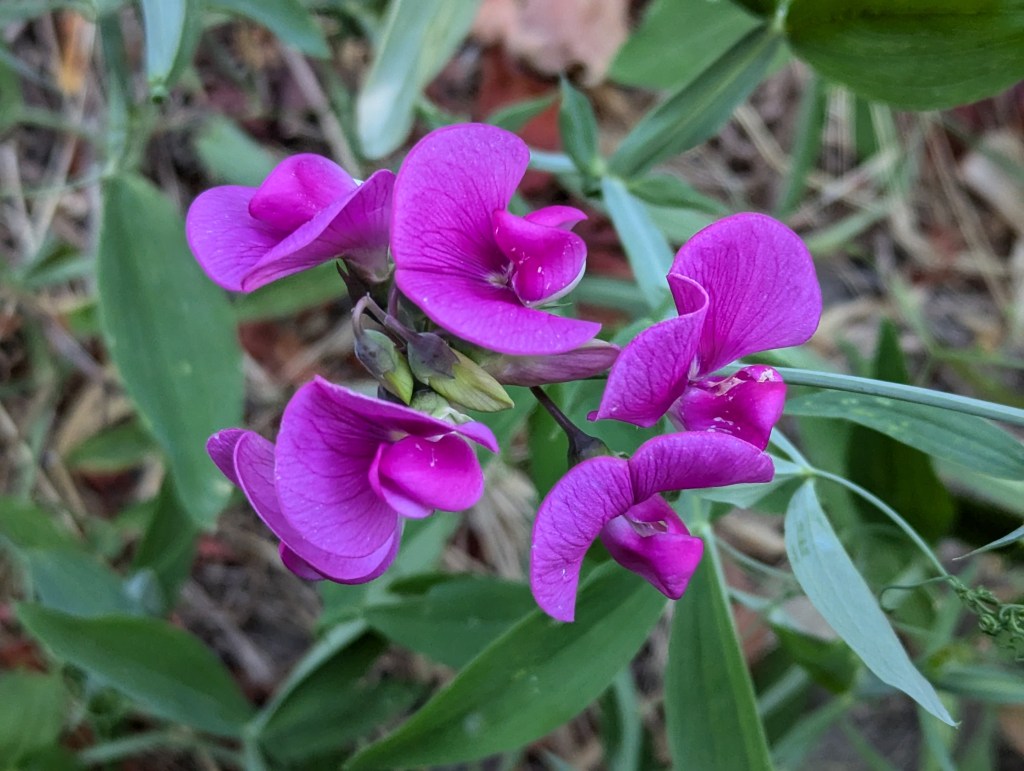
3. Lathyrus latifolius, perennial pea is the primary topic because I found three variants. This one blooms with swirled pink flowers. It is about as rare as those that bloom white.

4. This looks white in this picture but is actually blushed very slightly with pink. I should have gotten a better picture. I dug and canned a copy because I had never seen it before.

5. This is the typical floral color of the species. To me, it looks purplish pink. I am not so proficient with color. Others say it is pinkish purple. It justifies my preference for white.

6. Like the picture of the very slightly blushed white flowers, this is not a good picture of flowers that seem to be slightly richer purple than the typical purplish pink. I got a copy.

This is the link for Six on Saturday, for anyone else who would like to participate: https://thepropagatorblog.wordpress.com/2017/09/18/six-on-saturday-a-participant-guide/

Hollyhock

Hollyhock was more popular within Victorian gardens.

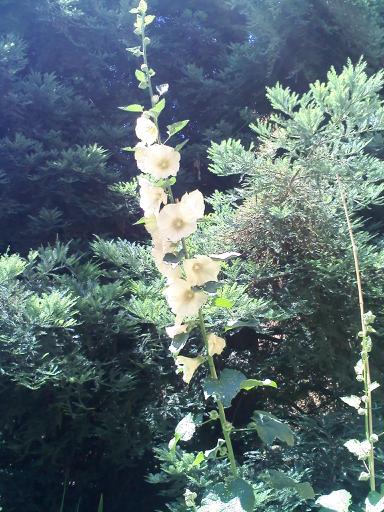
Old fashioned hollyhock, Alcea rosea, can be a bit too imposing for small gardens, since their spire like flower stalks can get taller than eight feet. Modern varieties are more proportionate, standing about five or six feet tall. Some are only about two and a half feet tall. Many modern varieties also have fluffier semi-double or double flowers. Those with smaller flowers have denser flower set than old varieties (Flowers are closer together on the stem.).

The three to five inch wide flowers bloom through summer in shades of pink, red, purple, pale yellow, pale orange and white. Removal of spent flower stalks may promote shorter autumn blooms, but also prevents self sowing. Seed can be sown at the end of summer for blooms next year. The coarsely textured and variably lobed basal foliage does not get much wider than two feet. Snails and rust can be problematic.

Village Harvest redirects surplus from home gardens to those who can use it.

Surplus need not go to waste.

(This article is several years old, so some of the information within is likely outdated.)

Those who witnessed the event know that it actually happened. During citrus season a few years ago, a crew of volunteers descended upon, or should I say, ascended ladders into the legendary and monstrously large King Grapefruit Tree in a gallant but hopeless attempt to harvest the fruit. Our caravan of an assortment of smaller pickups and my full sized Ford that we drove out to confront this aberration of nature where it resided was completely full by the time we had harvested only about a third of the fruit. We left happy with our plunder, but unexpectedly defeated by the abundance left behind. I have seen many fruit trees throughout my career, but have never seen so much fruit in a single tree! 

It may have watched us leave exasperated with our mud-flaps dragging, but the King Grapefruit Tree was not solely victorious. We Village Harvest volunteers and the many beneficiaries of Village Harvest enjoyed its fruit for weeks! Village Harvest arranges for community fruit harvesting events to collect fruit that might otherwise go to waste so that it can instead be distributed to people in the community who can use it. The fruit of the King Grapefruit Tree was donated, and more was harvested later, so that it would not become an unwanted mess for the residents of the nearby home.

This is just one of many examples of how Village Harvest community fruit harvesting events benefit everyone involved. Those who donate their surplus fruit get it harvested and taken away before it becomes messy. Village Harvest volunteers get to take a bag or so of the fruit that gets harvested during the event. The clientele of the local food agencies that distribute the produce get fresh home grown fruit from the Santa Clara Valley; which is, as we all know, the best in the world.

Although citrus season is still several months away, five community fruit harvesting events are scheduled to collect summer fruit through July. On July 18 and again on August 1, two Mountain View community harvesting events will be from 9:00 a.m. to 12:30 p.m.. Two Central San Jose community harvesting events will be from 8:30 a.m. to 12:30 p.m. on both July 20 and July 27. The Sunnyvale community harvesting event will be from 8:00 a.m. to noon on July 26. Locations to meet for each event can be determined when making reservations.

Information about volunteering for any of these and other events, or how to arrange for donation of fruit, can be found at the website, www.villageharvest.org, or by telephoning 888 – 378 4841. Because admission is limited, it is advisable to make reservations for any event early, either online or by telephone. (It may be too late for the July 18 event.) Parking is also limited, so participants should carpool if possible. Pickups and station wagons to help transport fruit are very helpful. So is a grocery bag to share in the harvest afterward. Covered shoes (not sandals) are important. Layered clothing is more comfortable for cool mornings that get warmer closer to noon.  

Sports

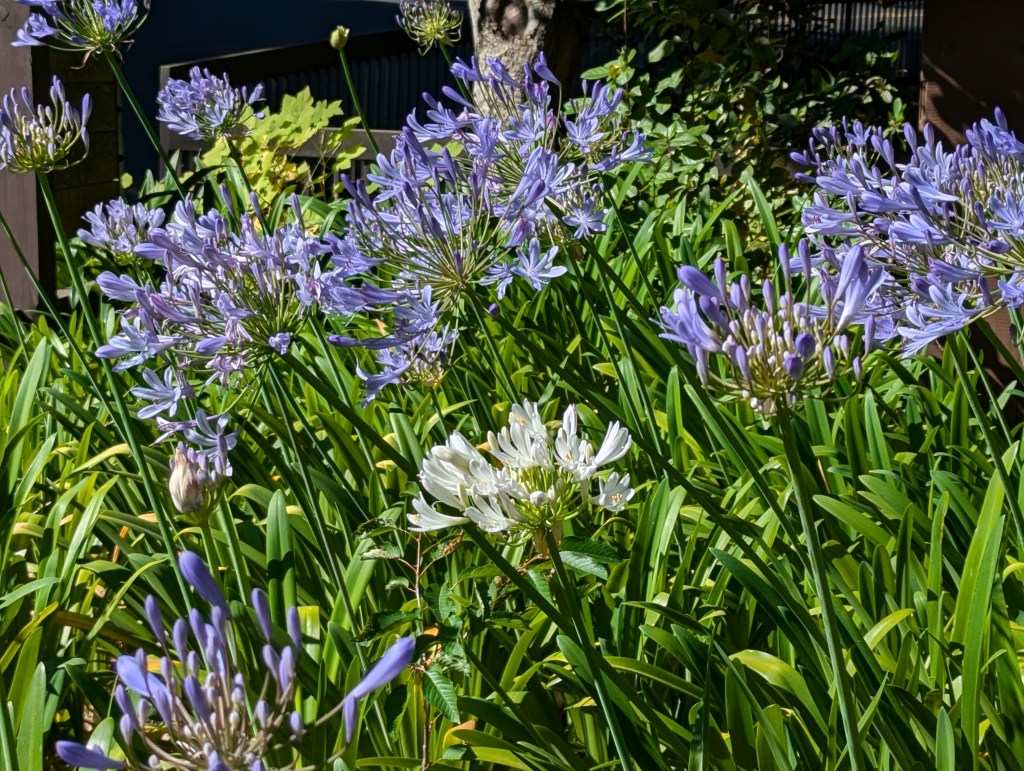
This white lily of the Nile appeared this summer within this exclusively blue colony.

Horticulturally, a sport is a genetically variant growth. Although it is more common among extensively bred or genetically aberrative cultivars than simple species, the most basic of lily of the Nile can, on rare occasion, change floral color from blue to white or from white to blue, as I mentioned on the sixth of July. Unvariegated or ‘green’ sports are a more common annoyance among some cultivars with variegated foliage, such as popular cultivars of Euonymus japonica, since they grow faster with more chlorophyll, and can overwhelm the original and more desirable variegated growth. The yellow hybrid gladiola that I posted a picture of for Six on Saturday on the twenty-ninth of June could be a sport of an adjacent orange and yellow hybrid gladiola. I did not give it much consideration because I assumed it to be the first bloom that I noticed from one of a few bulbs that somehow survived for a few years longer than expected. Until last summer, the only hybrid gladiolas to survive from a mixed batch planted years earlier had been either purple or the aforementioned orange and yellow. However, now that the yellow bloom is gone, an equally unfamiliar orangish red bloom emerged from the same small colony of bulbs that had bloomed only orange and yellow. As their common name suggests, hybrid gladiolas are hybrids, so are innately genetically unpredictable, and therefore have potential to generate sports as they multiply. Although I do not know for certain that this new orangish red hybrid gladiola did not survive without blooming for the past few years, I sort of suspect that it and the new yellow hybrid gladiola are more recently developed sports of the original orange and yellow hybrid gladiola. I hope that both are as reliably perennial as the original.

This orangish red hybrid gladiola seems to be a sport of the orange and yellow hybrid gladiola.

Smokebush

Smokebush bloom is not particularly flowery.

Mundane floral color and a lack of floral fragrance are no problems. Smokebush, Cotinus coggygria, compensates. Its uninteresting bloom reveals strikingly fluffy floral trusses for summer. These trusses eventually deteriorate to reveal exquisitely vibrant foliar color for autumn. This foliar color eventually deteriorates to reveal sculptural trunk form for winter.

Foliar color through spring and summer is likely the most striking attribute of smokebush. Most are boldly rich purplish bronze. Some are strikingly vivid yellowish chartreuse. The two extremes contrast splendidly. Old fashioned olive drab is now rare. Foliar color does not fade much. However, it suddenly transitions to fiery orange and red color for autumn.

Old fashioned olive drab smokebush can grow a bit more than fifteen feet high and wide. Because it does not grow fast, only old specimens are so large. Most bronze cultivars do not get much higher than first floor eaves here. Chartreuse cultivars are likely to stay a bit shorter. Healthy young specimens might get wobbly if their canopies outgrow their roots. Aggressive pruning improves form and stability, and can also enhance foliar color.