Horticulturists are by nature, nonconforming. I happen to find it difficult to conform to what makes us nonconforming. Trends are fleeting. Old technology that has worked for decades or centuries is still best. Although I am not totally against chemicals, I find that almost all are unnecessary for responsible home gardening. Pruning is underappreciated, and fixes many problems.
Flowering cherry trees are prettier but fruitless versions of their fruiting counterparts. So are flowering peach trees. It seems only fair that some vegetables could also be prettier than culinarily useful. Gourds are ornamental squash fruit that can qualify as vegetables. Ornamental kale, Brassica oleracea, is an actual vegetable that is primarily ornamental.
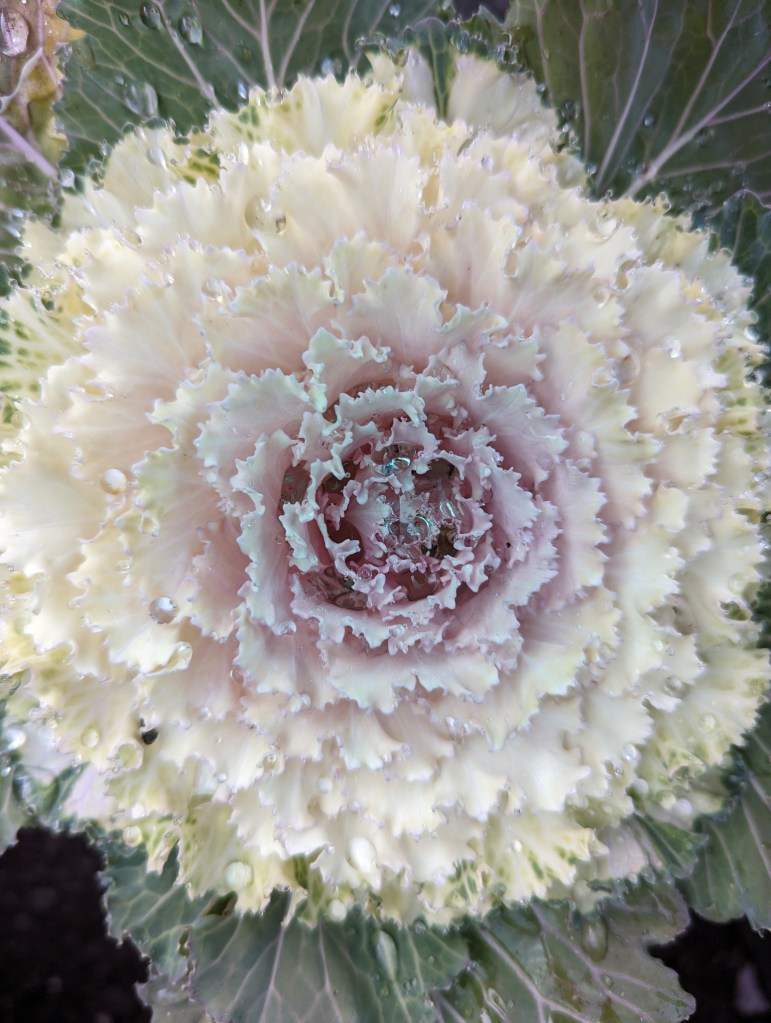
Ornamental kale is also known as flowering kale, or ornamental or flowering cabbage. It is more foliar than floral though. Its dense foliar rosettes unfurl like big ruffly roses. Some are very ruffly. Some are intricately lobed. Foliar color can be white, pink, red or purplish. Ornamental kale is as edible as culinary kale, but a bit more bitter. It is a splendid garni.
Like cool season annual flowers, ornamental kale performs between autumn and spring. It grows quite slowly though. Seed that starts in August grows into seedlings for October. Seedlings that start in October only begin to get colorful during November, a month later. Their seemingly floral but foliar display ironically ends as they actually bloom for spring.
Except for flowers that bloom randomly throughout the year, most autumn bloom is done. Much of the formerly spectacular autumn foliar color succumbed to wintry rain and wind. Many colorful winter berries have already gone with migratory birds who consume them. Overwintering birds appreciate what lingers. Fortunately, some winter bloom continues.
Cool season annuals likely provide most winter flowers prior to spring. Ornamental kale generates a foliar display like a pastel version of summer coleus. Snowdrop bulbs bloom only white, but look sharp if other bloom is scarce. A few species contribute winter bloom merely because they lack regard for seasons. African daisy blooms whenever it wants to.
However, winter bloom is not comparable to spring bloom. That is an unfortunate reality. Most species that bloom randomly throughout the year bloom best for spring or summer. Most species that bloom specifically during winter are relatively subdued about doing so. Although pollinators are less active, competition for their pollination services is minimal.
Witch hazel is becoming more popular locally for its fragrant winter bloom on bare stems. Modern cultivars bloom with earthy tones of yellow, orange, red, and burgundy red. They prefer cool wintry weather though. Bloom may be inhibited somewhat within mild coastal climates. Winter jasmine bloom, although limited to only brilliant yellow, is more reliable.
Some species of Mahonia likewise bloom reliably but exclusively bright yellow. They are evergreen instead of deciduous. So is andromeda. Its pendulous ivory white or pale pink blooms are more striking in form than color. Daphne, which likely finished bloom already, is more striking in fragrance than color. Its light pink bloom is mostly obscured by foliage.
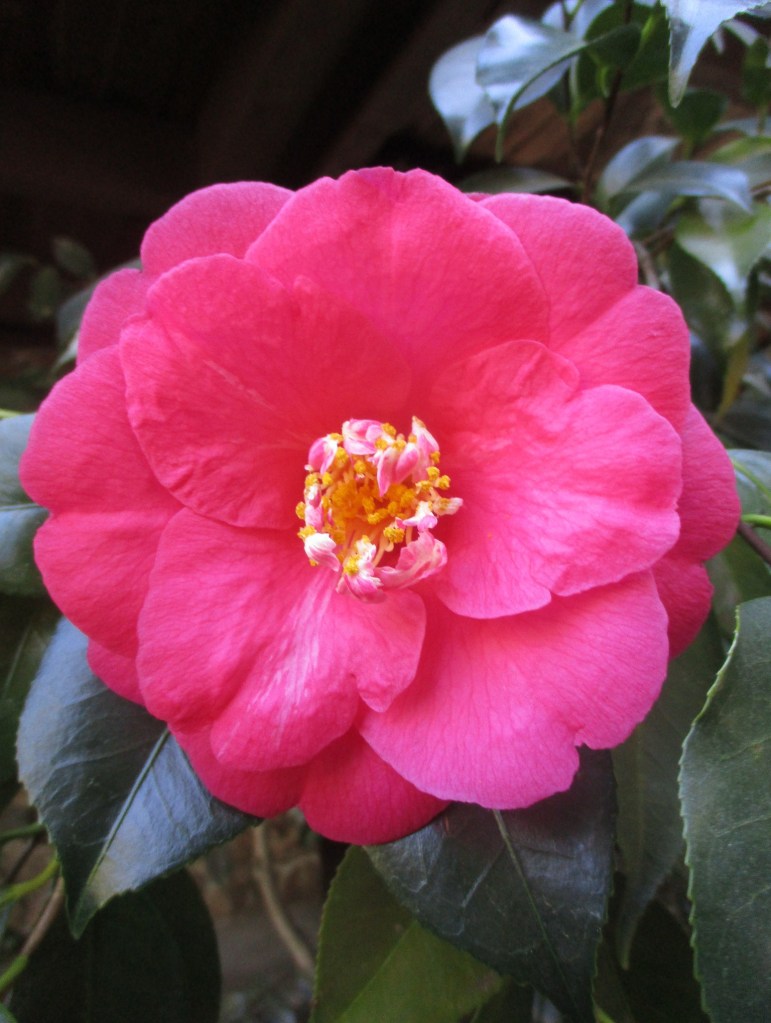
Camellias are among the most reliably colorful of winter bloom. Their floral color ranges through all hues between white and red. Floral form and abundance are notably diverse. Some bloom rather sparsely. Various cultivars bloom at various times throughout winter. Sasanqua camellias generally bloom earlier, with relatively smaller but profuse flowers. Camellias unfortunately lack fragrance.
This was much more awesome than gold, frankincense or myrrh!
Happy Birthday Jesus!
What is a suitable birthday gift for Someone Who has no use for anything worldly, but lived like He did? Gold, frankincense and myrrh seemed like good ideas in the beginning, although they were presented a year prior to His first birthday. Contrary to modern commercialism, a Lexus or Mercedes Benz might not be so appropriate for Someone Who preferred to come into town on a colt, and not the Dodge sort. Perhaps that is why it is customary to present gifts to others instead. Such gifts are Christmas gifts because so few have the same birthday.
Although overly elaborate or abundant gifts are a tradition that I find to be objectionable, I enjoyed many relatively minor gifts when I was a kid. Within my first few years, although I do not remember exactly when, I received my first tree, which was a seedling of Calocedrus decurrens, California incense cedar, from Amador County. A year or two afterward, I received a ‘Meyer’ lemon tree. During the same time, I received seed for many types of vegetables and a few flowers, as well as a set of child-sized gardening tools of premium quality. They lasted long enough for my mother to use the shovel to clean ash from the woodstove long after I graduated to a real shovel.
The most awesomely awesome Christmas gift that I received back then was my deluxe Radio Flyer wagon! It was my first luxury sedan that worked like a pickup! It was as durable as the other gardening tools. After I went to college, my mother used it to bring in firewood. It is out back right now, more than half a century after I received it new. It may continue to work in my garden as long as I do.
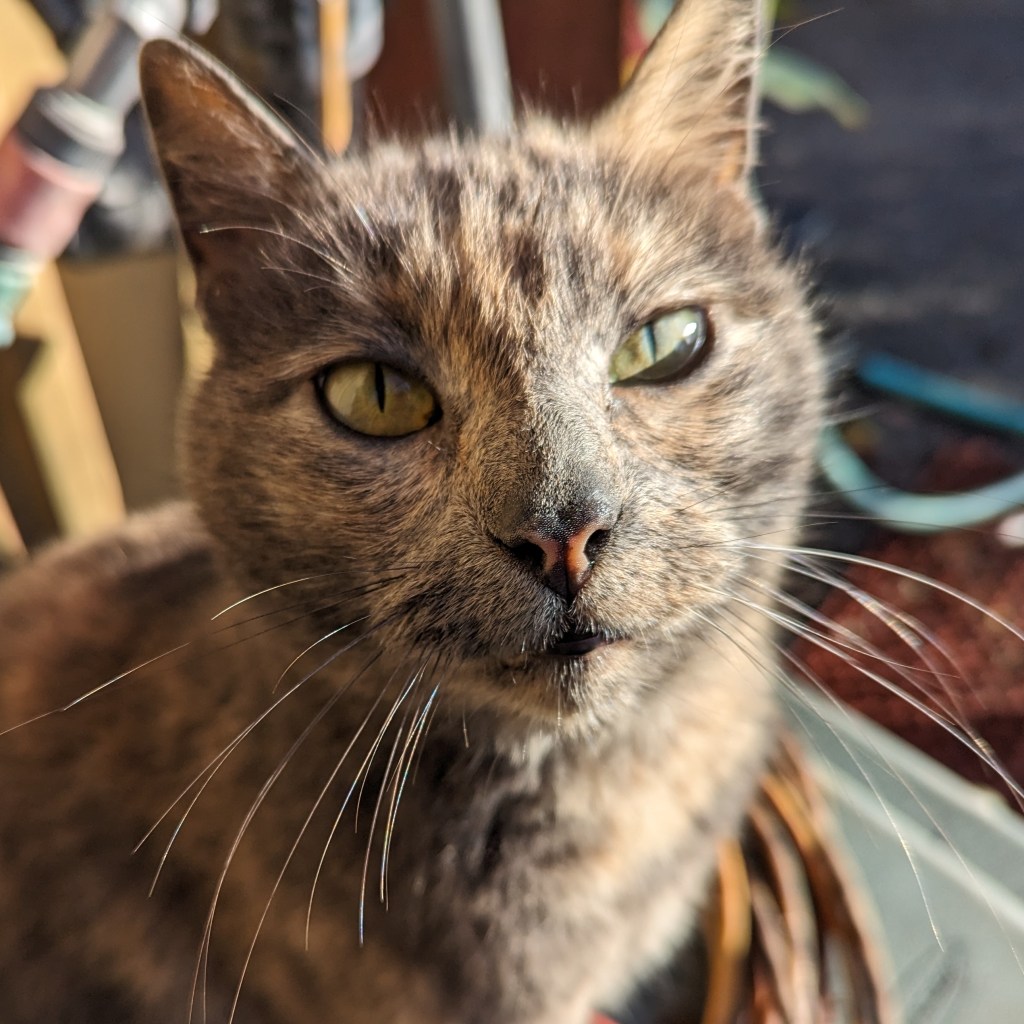
Heather is the new rodent mitigation specialist. She has been here for quite a while. We have been unable to determine where she originated from. Unless or until we do, she can stay here to dissuade rodent incursion. She has been remarkably effective with her expertise. None of the formerly bothersome rodents have been observed since her arrival. The seedlings and small perennials that the rodents had been eating previously have incurred no subsequent damage.
This will take some getting accustomed to. I am not particularly familiar with kitties. I give her a can of food in the evening, with dry food available at other times. She has a sheltered bunk out in the nursery, but might want to come into the foyer when the weather gets frosty or rainy. If so, I may put a warming pad for kitties under her bunk, since it will be close to an electrical outlet. She does not seem to be too demanding yet, but I have no idea how kitties operate. She could get demanding later, and because she is a kitty, I can not argue with her.
She does not have much to say though. She meows when hungry. When petted, she makes that weirdly distinctive purring sound that kitties make, but mysteriously, without actually speaking. She was quite fond of Rhody before people could get close to her, and seemed to enjoy how he chewed her head, but now that people regularly pet her, she avoids Rhody, and actually hisses at him if he wants to chew her head. She could not tell us what her name is, so, after some minor deliberation, we named her Heather.
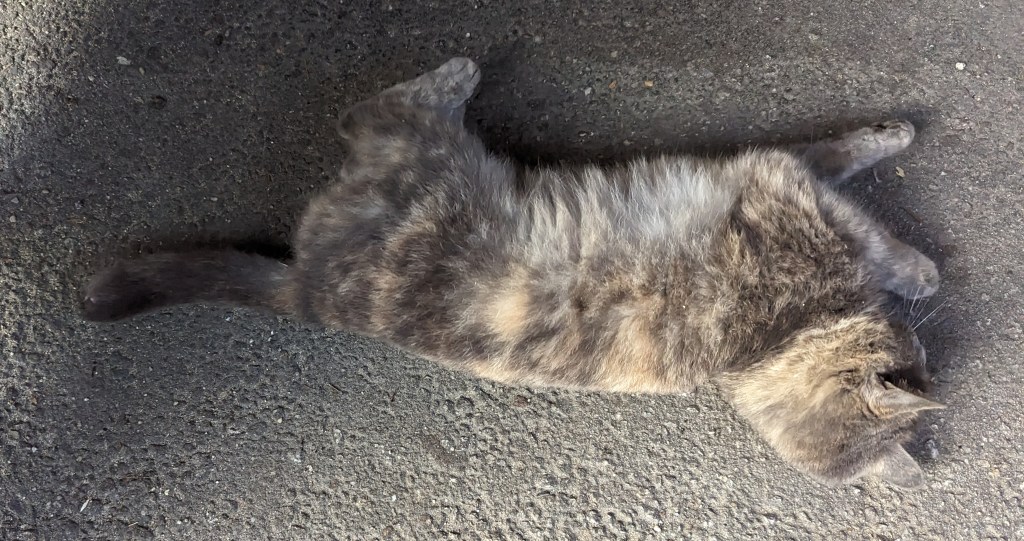
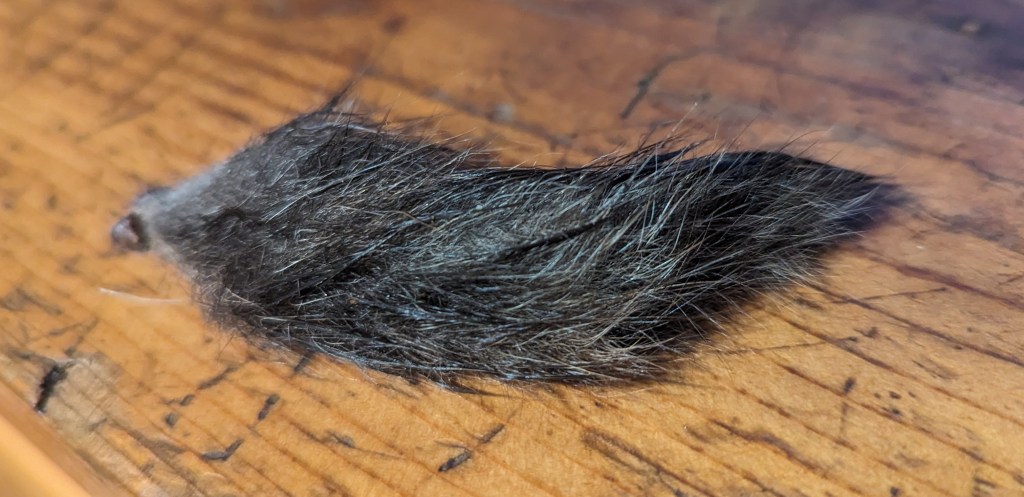
Notice her tail.
We do not know exactly how long Heather has been here, but after her arrival and prior to her socialization, we noticed that the tip of her tail was kinked. As she became socialized and pettable, we noticed that the tip of her tail beyond the kink seemed to be necrotic, and felt like an old fashioned rabbit’s foot keychain. A few days later, the kinked tip was no longer a concern.
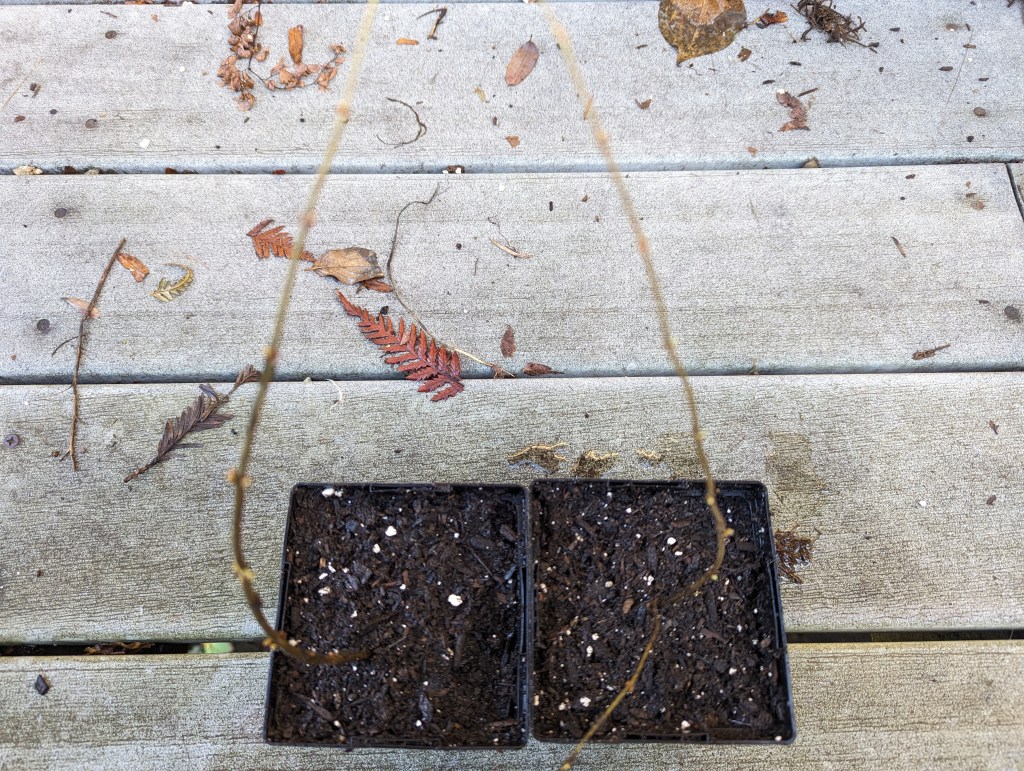
This is why I did not brag about my recently acquired snowberry within the context of my ‘Six on Saturday’ post this morning. They are not much to look at. Even if this illustration were more in focus, these bare twigs are indistinguishable from similar dormant twigs.
Nonetheless, I am pleased with their acquisition. I can not explain why, but I am pleased. The species, Symphoricarpos albus, is native, but not popular. I am beginning to realize why. Not only is it not much to look at in this particular condition, but it will unlikely ever become much to look at. It always looks scraggly, even while generating new foliage for spring. Its foliar color is unimpressively bland light green. Its twigs are very twiggy. Its dinky pale pink flowers are grungy and almost always infested with something or other. Its white berries, which is its primary attribute, are very scarce.
After so gleefully pulling this particular seedling from a landscape that it needed to be removed from, splitting it into two, and canning them as seen here, I realized that a rather large colony of snowberry inhabits another of the landscapes here. I could take as many rooted bits from it as I want without noticeably depleting it. For now, I am very satisfied with these. I have no plans for them, but will figure that out as they grow.
I suspect that snowberry can be more appealing in cultivation than in the wild. I intend to promote growth that is more vigorous than typical, which should enhance berry production. After this first winter, in which I dug and canned it, I will likely cut all of its growth to the ground annually during winter dormancy. I will not notice improvement this first year, but might after two years.
Snowberry is native here. I have been wanting to grow it because I like its white berries. I just found a seedling where it could not stay, so brought it back here. I am very pleased with it, but did not want to share pictures of it as scrawny canned bare twigs. I got these pictures instead.
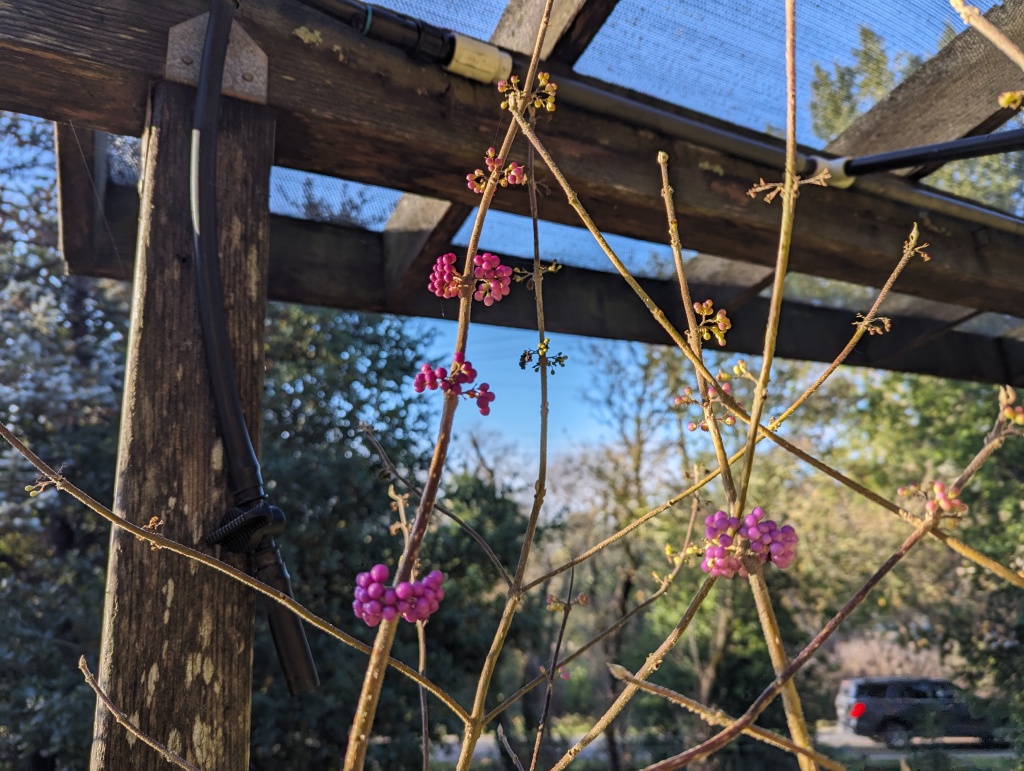
1. Callicarpa americana, American beautyberry is what compelled me to get pictures of berries for this week. I shared a closeup picture of the first of these berries as they began to ripen more than a month ago, which was about two months later than elsewhere. I do not mind. These are my first, and there are more of them now. Perhaps their berries will ripen on time when they are established within the landscapes. The seedlings, as well as white butterfly ginger and, recently, American holly, were gifts from Our Forest Garden.
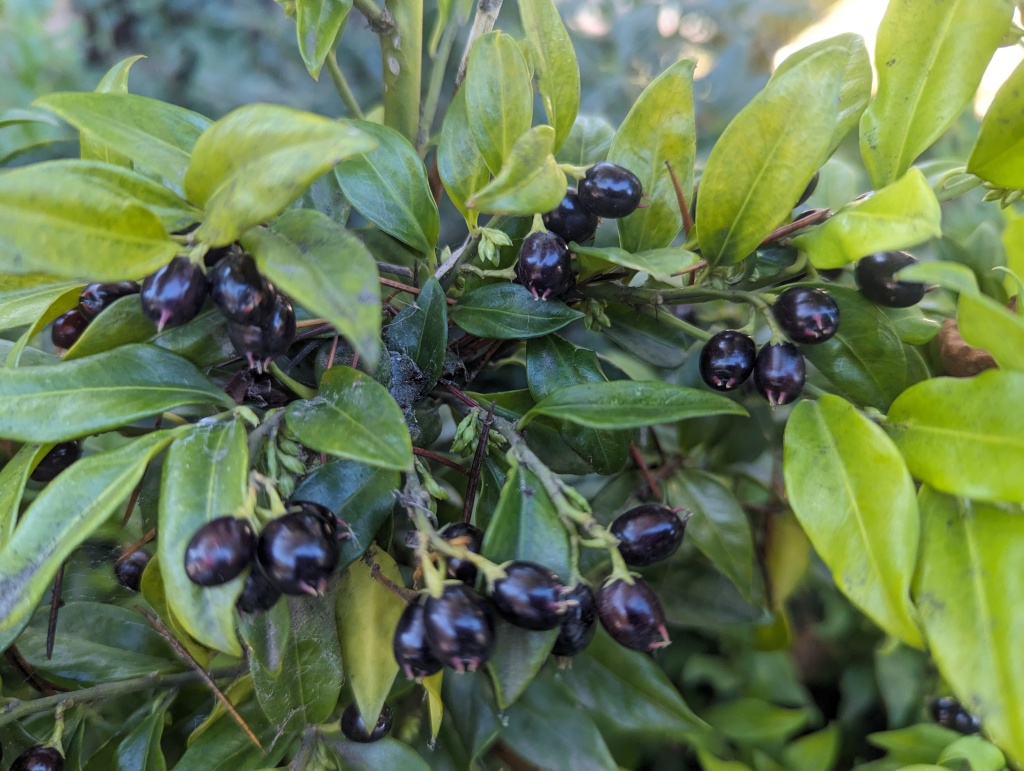
2. Sarcococca ruscifolia, sweet box typically produces very few red berries that typically fall off before turning black. They are both atypically abundant and atypically black now.
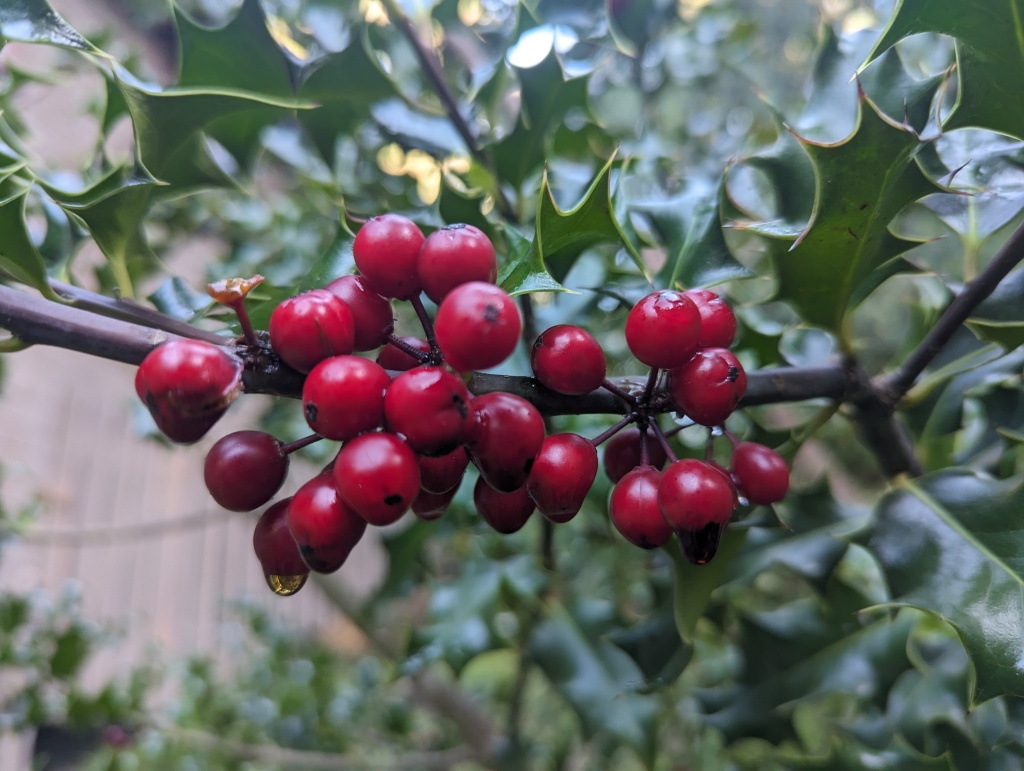
3. Ilex aquifolium, English holly self sows, but most feral specimens seem to be male, or produce only a few berries, in a few sparse clusters. Very few produce clusters like these.
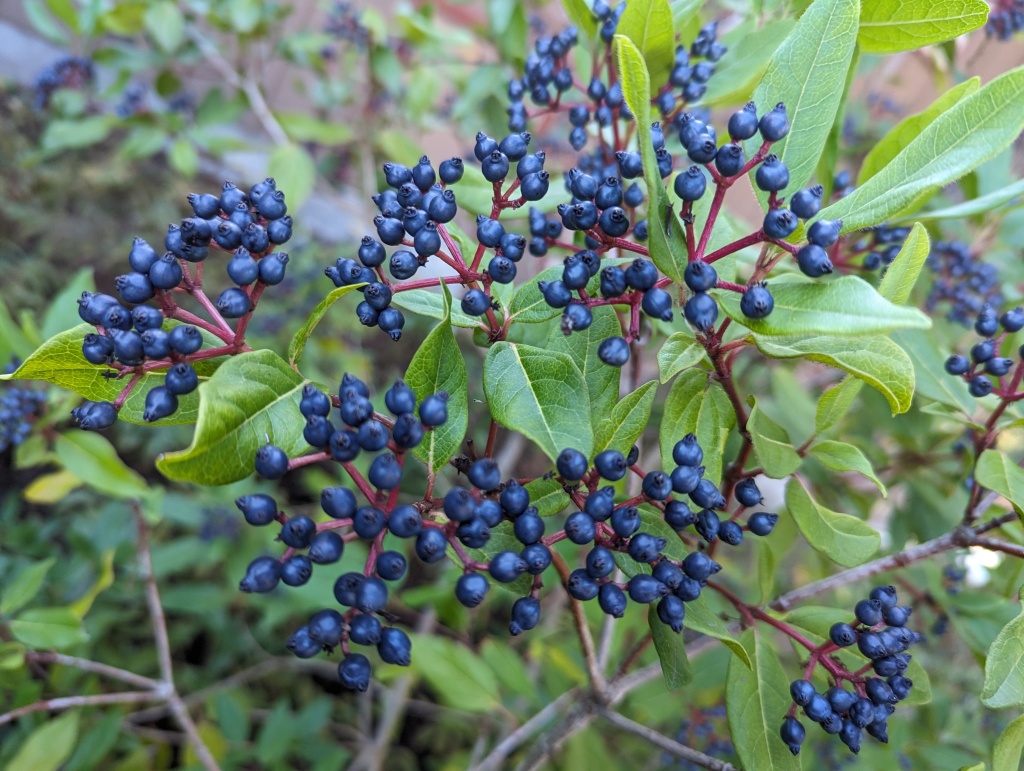
4. Viburnum tinus, laurustinus also self sows. I am not as impressed with it as I am with English holly, but have been learning to appreciate it more, as those in other regions do.
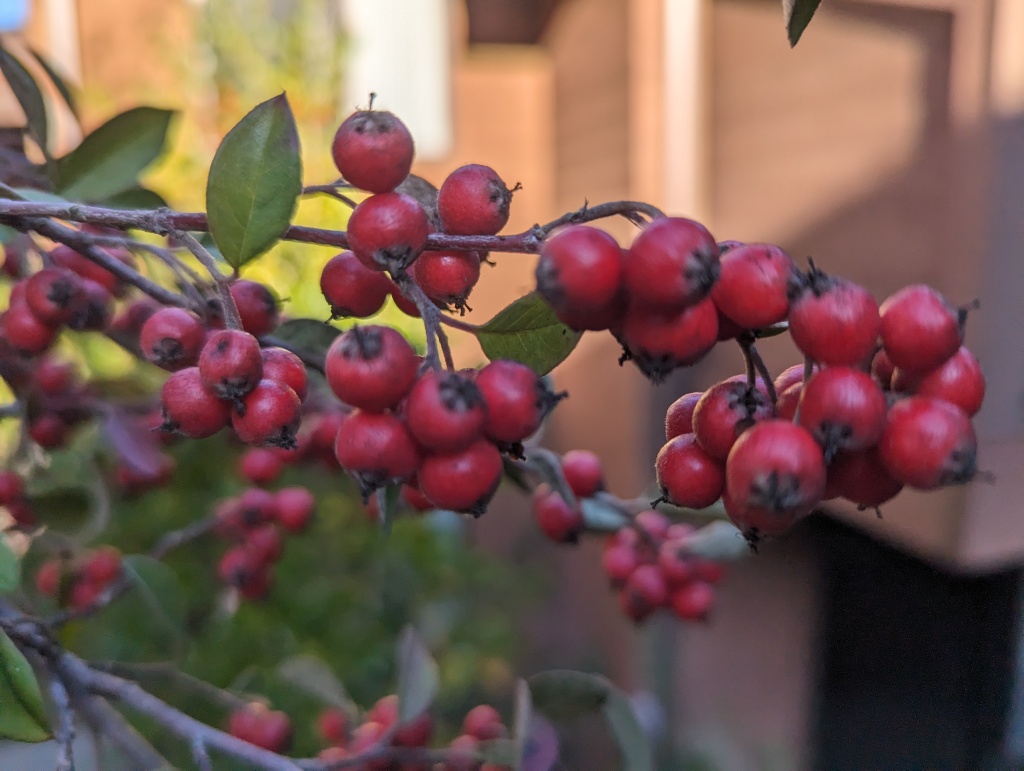
5. Cotoneaster pannosus, silverleaf cotoneaster is naturalized a bit more vigorously. It is not as pretty as I like to think it is. I should retain a few specimens but eradicate the rest.
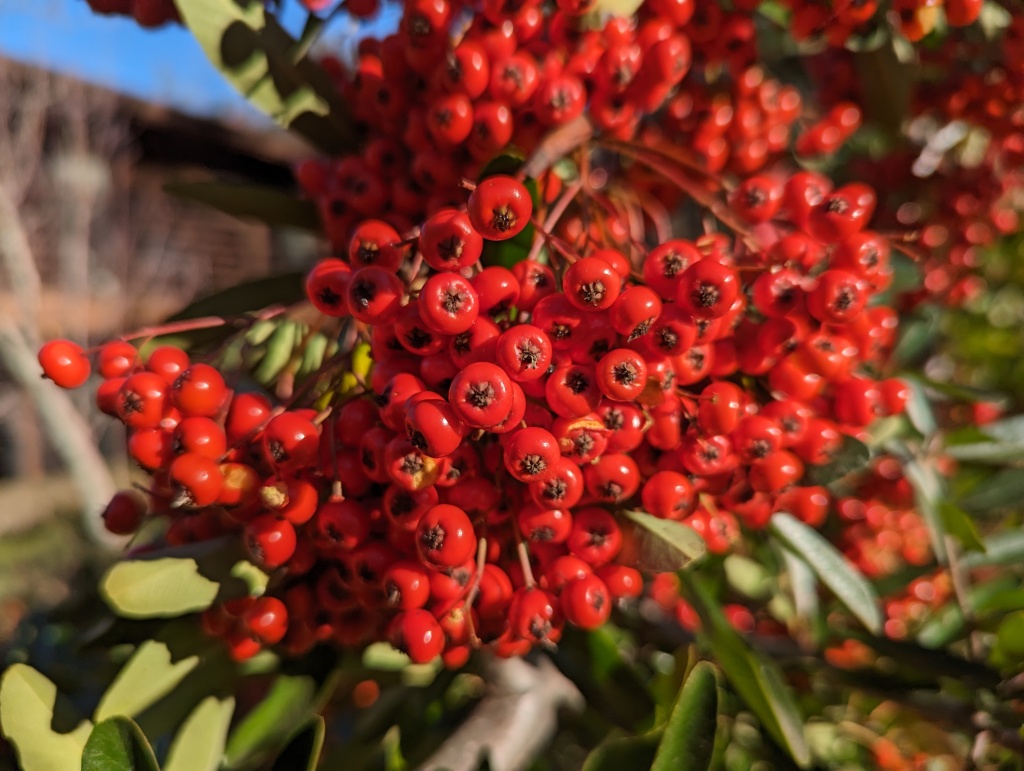
6. Pyracantha coccinea, firethorn is more colorful with similar but with more abundant and glossier berries. Unfortunately, it is also much thornier, so it is no fun to work with.
Karen Carpenter famously said, “Rainy days and Mondays always get me down.”
Several old and deteriorating box elders on the roadside outside the gate at work have survived many rainy days and many Mondays during the past many years that they have grown there. Earlier this week though, a rainy Monday brought one down.
It was no surprise. All of the several box elders there are in very bad condition. Most are completely dead and collapsing. However, I can do nothing about them because they extend over the roadway. They must be removed by a County Crew who can remove them safely. Unfortunately, they are unable to do so in a timely manner while so much similar work is needed throughout the County.
The problem with the demise of this particular tree is that it fell onto the hood of a Ford F150 that was travelling toward town. The Ford swerved and collided with a Subaru station wagon of some sort that swerved off the other side of the road, where it seemed to stop just inches from a utility pole. The tree or portion of the tree that fell was not very big, but indirectly caused extensive damage to both vehicles, and necessitated lane closures while the vehicles were removed.
In the picture, which was taken as I opened the gate for the crew, the Subaru is still visible on the opposite side of the road, at the center of the picture. The Ford has already been removed to the side of another road that extends to the right in the distance, beyond the bridge, where the traffic signals are. The taillights belong to one of the responding Sheriff’s cars. Most of the debris from the fallen box elder has already been pushed into the ditch to the right.
‘Foggy Oak Morning’ by Karen Asherah, is another example of the local scenery that I miss while not taking a bus or walking. I drove past this scene for years on my way to work outside of San Martin without ever bothering to take a look at it. This happy tree is a native valley oak, Quercus lobata, like those that had been common throughout the Santa Clara Valley until only about two centuries ago. It is not exactly the sort of shade tree that everyone wants in a compact suburban garden, but is grand enough for large spaces like parks.
Mature specimens may not seem to get as tall as oaks in the Appalachian Mountains, but are actually the largest oaks in North America, and live more than five centuries. The tallest trees are mostly less than seventy feet tall, but can get taller. Trunks of the oldest trees are commonly six feet wide or wider. The distinctively and uniformly furrowed bark is as classically ‘oakish’ as the rounded prominent lobes of the deciduous leaves, and the sculpturally irregular branch structure. Odd stem galls, commonly known as ‘oak apples’, are home to the larvae of tiny wasps that rely on valley oaks for everything they need. Incidentally, Paso Robles, or ‘El Paso de los Robles’ is named for the valley oaks in the area, which Spanish immigrants thought resembled the ‘robles’, the European oaks that inhabit Spain.
More information about ‘Foggy Oak Morning’ can be found at the website of Karen Asherah at karenasherah.com.
Although relatively compact, even spruce trees eventually grow up.
One of the problems with driving my favorite vehicles that were old long before I learned to drive them is that I spend considerable time waiting for a bus or walking. The cool thing about that is that I get to seem so much scenery that I would otherwise drive past. While waiting nearly an hour for a bus at the Cavallero Bus Terminal in Scott’s Valley, I went across the street to see the landscape of the somewhat new Post Office, which has actually been there for many years now.
The landscape is a bit sparse in front (I think because of architectural modifications after the landscape was designed), so was outfitted with recycled live Christmas trees. Although none of these particular trees seem happy in the local climate or sandy soil, I had wanted to get better acquainted with them for some time. They are an odd assortment of spruce and fir that are rare here.
The more typical concern with the more common live Christmas trees is not that they are not well suited to local climates and soils, but that they actually do too well and grow much larger than expected. Except for the small rosemary, holly and English ivy ‘trees’, most coniferous evergreen live Christmas trees are young pines that get remarkably large; and some waste no time doing it! The most common live Christmas trees are Italian stone pines, which happen to be the two very large and broad trees in Blaney Plaza in downtown Saratoga!
Canary Island pines, which had been more common than they are now, do not get quite as broad, but do get very tall and messy. Years ago, Aleppo, Eldarica and Monterey pines all took their turns being popular live Christmas trees. Each of them grows large enough to require significant garden space.
This is of course not a problem for the few live Christmas trees that happen to get planted where they have plenty of space. However, those that get planted where they do not have room to grow can cause serious problems. Because they seem so cute and innocent while they are young, and are so often expected to stay cute and innocent, many often get planted dangerously close to houses, where they can displace porches, walkways and even foundations! Large pines, particularly Italian stone pines, are also too messy and potentially combustible (if not pruned and groomed regularly) to be too close to houses.
Sadly, large pines do not like to stay in containers too long. They can be pruned for a few years, but eventually get congested roots. (Bonsai techniques of root pruning can maintain even the largest types of pines in containers indefinitely, but not many of us know these techniques.) Small pines, like Austrian black, Japanese black and Scott’s pine (which has no relation to Scott’s Valley), as well as other small coniferous evergreens, like certain junipers, can stay in containers much longer, but these are the sort that are small enough to get planted in the garden, so do not necessarily need to stay in containers anyway.
If space is not sufficient, pines and other live Christmas trees that eventually get too large really should be given to friends and neighbors who have space to accommodate them. Fortunately, most do not require much attention once they get established after two years or so.
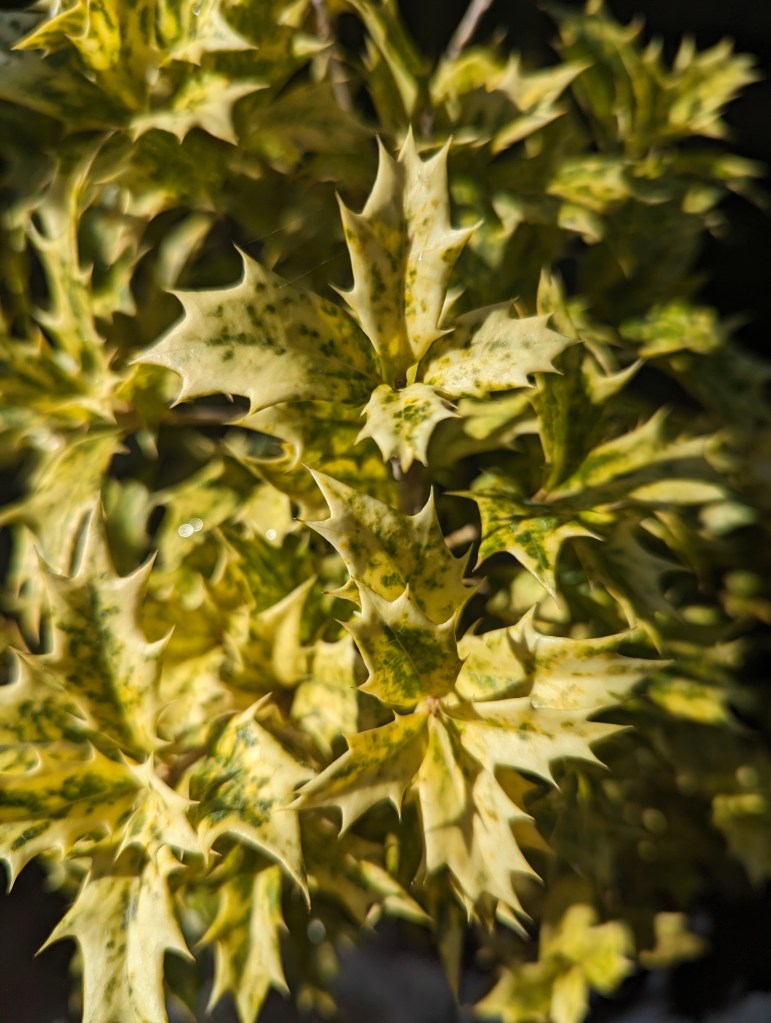
English holly provides traditional cut foliage, preferably with a few berries, for Christmas. It is annoyingly prickly, though. This is why holly olive, Osmanthus heterophyllus, is now a more docile option. Its foliar texture is very similar, but with slightly dulled foliar spines. It is gentle enough for corsages and boutonnieres. However, it generates no red berries.
Holly olive is popular as small and perhaps decorated potted plants for Christmas decor. Afterwards, it adapts to home gardens more efficiently than typical Holiday potted plants. Such potted plants should not retain any mylar wrapping for too long. It inhibits drainage. Also, any small decorations or fake berries should not remain as stems eventually grow.
Most popular cultivars of holly olive are variegated. ‘Goshiki’, with more yellow or creamy white blotches than green, is the most popular here. Unvariegated holly olive is a classic dark drab green. All cultivars work splendidly as formal hedges. Alternatively, they might slowly grow taller than fifteen feet. The evergreen foliage becomes less spiny higher up. Tiny flowers are sweetly fragrant.



 Tony Tomeo