Pruning Cane Berries

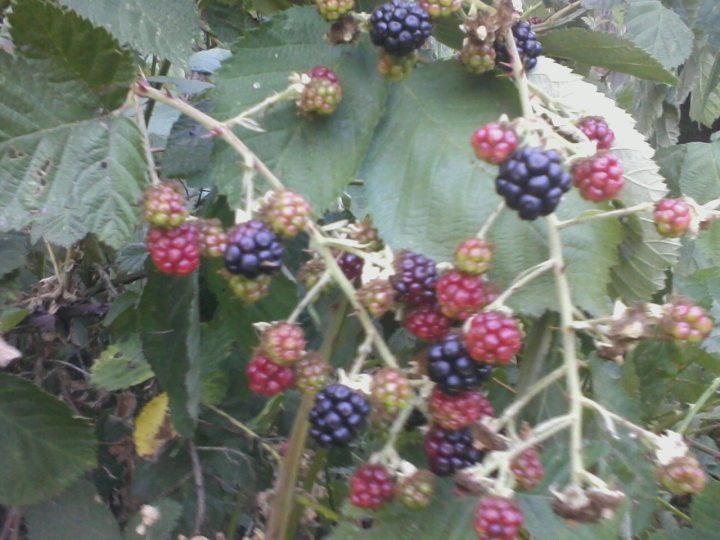
Their habit of overwhelming untended gardens gives blackberry canes a bad reputation. Their thicket like growth in their native habitats does not help. They are certainly not ‘low maintenance’ and need intensive specialized pruning later in the year. Yet, they become available with other bare-root plants this time of year for a reason. They make great blackberries!

New bare-root blackberry plants do not look like much when they are first planted, and do not produce berries in their first year. They will instead be busy dispersing roots and producing biennial canes that will produce berries the following year. Root barriers can prevent their aggressive roots from getting into neighbors’ gardens, particularly since south or west facing fences are just as practical for supporting trailing canes as trellises are.

‘Trailing’ types like ‘Marion’, ‘Boysen’ and ‘Olallie’ blackberries, which are also known as ‘boysenberry’, ‘marionberry’ and ‘olallieberry, are the most popular locally. ‘Erect’ types, like ‘Arapaho’, ‘Choctaw’ and ‘Navaho’ are more tolerant to frost, so are more popular where winters are colder. ‘Semierect’ types are hybrids of trailing and erect blackberries. 

In their second year, trailing and semierect canes that grew during the first year should be trained onto trellises, fences or wires. As their fruit gets depleted later in summer, these canes can be cut to the ground. Some of the new canes that developed through the season need to be trained onto the same supports to replace the older canes as they get removed.

There should be more than enough new canes. About ten to fifteen of the best canes of trailing types should be selected and pruned to about six or seven feet long. Semierect types need about half as many canes, and can be pruned about a foot shorter. Extra canes should be cut to the ground. A few of the smaller extra canes can be left through summer to be separated with roots as new plants during the following winter.

Side branches that grow from the pruned canes through late summer and early autumn should get pruned to about a foot long at the end of the following winter. New growth from these stubs will produce fruit during the following summer. The process of replacing the old canes with new canes can be repeated as the fruit gets depleted.         The process is similar for erect blackberries, but no support is needed. During the second year, canes should be cut to about two and a half feet tall in the middle of summer. Secondary branches from these canes should be cut to about a foot long in winter. As fruit gets depleted and replacement canes develop during the following summer, these mature canes can get cut to the ground. New canes then get pruned just like the older canes were.

Wildflowers On The Wild Side

Some wildflowers bloom in shady forests.

Warm season annuals are more varied than cool season annuals for one simple reason. Spring and early summer are the best time for bloom. Afterward, there is plenty of time for seed to develop, prior to cool winter weather. Obviously, most flowers want to exploit this schedule. This includes wildflowers, particularly in regional chaparral or desert climates.

Wildflowers are in more of a rush to bloom for early spring here because summer is arid. They could be more susceptible to premature desiccation later. They last longer and can bloom later in home gardens with irrigation. Actually though, not all wildflowers bloom for early spring. Some bloom for autumn or winter. A few bloom for summer, generally briefly.

There is no explicit definition for wildflowers. Western redbud and the various ceanothus are technically native wildflowers. Yet, they grow as large shrubbery or even small trees. Most popular wildflowers are annuals. A few are biennials or perennials. Some perennial sorts must mature for more than a year before they bloom well. Some are very persistent.

Technically, wildflowers should be locally native, and observable directly within the wild. Realistically, this expectation is unrealistic. Many of the most colorful, like perennial pea, are naturalized exotic species. Most wildflower seed mixes include random species from elsewhere. Some are regionally specific, but to other regions and very different climates.

California poppy and various lupine are the most popular and familiar native wildflowers. Douglas iris, yarrow and clarkia are about as practical for cultivated home gardens. Bush poppy and monkey flower more appropriate to rustic landscapes beyond home gardens. Many wildflowers need aggressive maintenance, such as cutting back after their season.

Seed of most annual and perennial wildflowers prefers to be in a garden by late autumn. It can then settle in through cool and rainy winter weather to grow and bloom about now. With watering after the winter rainy season, several might start now to bloom for summer. Some of the more sustainable species can disperse seed for another wildflower season.

Cane Berries

Thorny stems complicate pruning.

The fruits of summer are still a few month away. The work necessary to produce them needs to get done now though. Just like bare root trees, bare root raspberry canes get planted while dormant in winter, and later require intensive specialized pruning to keep them in control and to promote abundant production. Canes that are already established need to get pruned now and every winter.

New plants should be planted about two or three feet apart, and then cut back so that only a single bud is visible above ground. Root barriers should keep them from venturing under fences and into neighbor’s gardens, particularly since south or west facing fences are ideal spots to grow raspberries. Alternatively, raspberries can be planted in sunken #15 cans (15 gallon nursery pots), with or without the bottoms cut off. Cans should be buried up to their rims because any exposed black vinyl collects warmth from the sun, which is uncomfortable for the roots within. Mulch should insulate the soil until new foliage provides shade.

The few new canes that should develop during the next few months should be able to support their own weight, but may be easier to work with if tied to a fence or trellis. The popular everbearing types, like ‘September’, ‘Heritage’, ‘Summit’, ‘Golden Summit’ and ‘Fallgold’ may produce fruit on top of their new canes by autumn. The tops of these canes should get cut down as low as fruit developed during the following winter. The remaining lower portions of canes that did not produce fruit in the first year should produce fruit by the second summer, and should be pruned to the ground as the fruit finishes.  

As the spent canes get removed, about five to ten of the best new canes should be selected and tied in place if desired. All other canes should be cut to the ground. Like the canes of the previous year, the selected canes should develop fruit on top in autumn and get pruned as they finish in winter, and then develop more fruit down low before getting pruned out during the following summer. This process should be repeated annually.

‘Willamette’, ‘Tulameen’ and ‘Canby’ are traditional summer bearing raspberries. They do not produce in their first year, and will need to be pruned to about five feet tall during the following winter. As these canes develop fruit, many new canes emerge below. Every winter afterward, about five to ten of the new canes should be selected and pruned to about five feet as spent canes and unneeded canes get cut to the ground.

Warm Season Vegetables Start Early

Tomatoes are the favorite summer vegetable.

Warm season annuals that are becoming more available in nurseries are a clue. As they become seasonal, so do warm season vegetables, or summer vegetables. After all, they also perform as annuals within their respective seasons. It may still be too cool for many to inhabit the garden directly. However, several that grow from seed can start about now.

Many more varieties of warm season vegetables are available from seed than as plants. Vegetable plants are available in cell packs or four inch pots. They occupy more nursery space than racks of many more varieties of seed. Many more varieties are available from online catalogs. Several true to type varieties can provide seed for subsequent seasons.

Furthermore, many warm season vegetables grow better from seed than from transplant. Corn, beans, squash and root vegetables grow very efficiently from seed. However, they do not recover so easily from transplanting. Root vegetables are particularly susceptible to deformity from such handling. Seed for many root vegetables is ready for sowing now.

Seed is also an advantage for warm season vegetables that grow from many plants. For example, one packet of beet seed can provide more than enough beets. One cell pack of beets costs about as much, but provides only six possibly wimpy beets. A solitary tomato plant might provide plenty of tomatoes, though. Besides, tomato plants transplant easily.

Seed for corn, beans and squash should wait for warmer weather for their direct sowing. So should seed for many warm season vegetables that do not really need direct sowing. However, those that do not require direct sowing can start now inside or in greenhouses. They are easy to transplant from flats, cell packs or small pots later with warmer weather.

The season for warm season vegetables is only now beginning. Ideally, such vegetables arrive as cool season vegetables relinquish their space. Successive phases can replace the last of cool season vegetables. Eventually, cool season vegetables will reclaim their garden space. Currently new warm season vegetables should be finished with it by then.

Installing Bare Root Cane Berries

Blackberry canes are not at all “low maintenance”!

The fruits of summer are still a few month away. The work necessary to produce them needs to get done now though. Just like bare root trees, bare root raspberry canes get planted while dormant in winter, and later require intensive specialized pruning to keep them in control and to promote abundant production. Canes that are already established need to get pruned now and every winter.

New plants should be planted about two or three feet apart, and then cut back so that only a single bud is visible above ground. Root barriers should keep them from venturing under fences and into neighbor’s gardens, particularly since south or west facing fences are ideal spots to grow raspberries. Alternatively, raspberries can be planted in sunken #15 cans (15 gallon nursery pots), with or without the bottoms cut off. Cans should be buried up to their rims because any exposed black vinyl collects warmth from the sun, which is uncomfortable for the roots within. Mulch should insulate the soil until new foliage provides shade.

The few new canes that should develop during the next few months should be able to support their own weight, but may be easier to work with if tied to a fence or trellis. The popular everbearing types, like ‘September’, ‘Heritage’, ‘Summit’, ‘Golden Summit’ and ‘Fallgold’ may produce fruit on top of their new canes by autumn. The tops of these canes should get cut down as low as fruit developed during the following winter. The remaining lower portions of canes that did not produce fruit in the first year should produce fruit by the second summer, and should be pruned to the ground as the fruit finishes.  

As the spent canes get removed, about five to ten of the best new canes should be selected and tied in place if desired. All other canes should be cut to the ground. Like the canes of the previous year, the selected canes should develop fruit on top in autumn and get pruned as they finish in winter, and then develop more fruit down low before getting pruned out during the following summer. This process should be repeated annually.

‘Willamette’, ‘Tulameen’ and ‘Canby’ are traditional summer bearing raspberries. They do not produce in their first year, and will need to be pruned to about five feet tall during the following winter. As these canes develop fruit, many new canes emerge below. Every winter afterward, about five to ten of the new canes should be selected and pruned to about five feet as spent canes and unneeded canes get cut to the ground.

Warm Season Annuals Start Early

Nasturtium grows best directly from seed.

Cool season annuals that started late last summer should be finishing soon. A few might have potential to continue as perennials. However, about as many are done or decaying. Now, warm season annuals, or summer annuals, should eventually start to replace them. If it seems early, it typically does for such bedding plants before their respective seasons.

Some annuals can not decide if they are cool season annuals or warm season annuals. Stock is actually a cool season annual but becomes more popular now for spring bloom. Wax begonias might have survived through winter to resume growth for another season. Primrose is a cool season annual that rarely gets too warm locally to continue blooming.

These indecisive annuals can actually be an asset to home gardens. Stock, for example, can replace old pansies while it is still too early for petunias. It compensates for cool and warm season annuals with more definite seasons. Petunias will be ready before stock is done. Some garden enthusiasts replace seasonal annuals for each of their four seasons.

Warm season annuals, like all annuals, are contrary to sustainability. Although many can perform as perennials, few actually do. Those that truly are annuals complete their entire life cycles within one year. Their main purpose is to provide floral or perhaps foliar color. Texture and form are also assets. Annuals are popular because they serve this purpose.

The most popular of warm season annuals grow from cell packs. Those that start earliest are already available, including wax begonia and lobelia. Petunia, impatien and annuals that crave more warmth will become available later. Four inch potted annuals are bigger than those in cell packs, but more expensive. They are even more expensive in quantity.

Many more varieties of warm season annuals are available as seed. Countless more are available online than from nurseries. However, seed requires more effort. Most must start early. Although most grow well in flats or cells, some prefer direct sowing. Sunflower and nasturtium are very vulnerable to the distress of transplanting. Seed is the logical option. Many seed are less expensive than six cell pack seedlings.

Renee’s Garden Seed

‘Alaska’ is a popular variegated variety of nasturtium that is available from Renee’s Garden Seed.

There is no shame in growing nasturtiums. We all know how easy they are to grow, and that they can even naturalize. Some of us even consider them to be weeds. Some of us even know them as ‘dago pansies’! Yet, they are colorful, have an abundance of appealing foliage and never seem to have a bad day. Anyone who doubts this should look at Renee’s Garden Seed Catalogue online at www.reneesgarden.com.

Renee’s Garden Seed Catalogue is like a wine list of the finest nasturtiums, even though it also includes many of the more traditional types. ‘Buttercream’ is a new nasturtium this year that blooms with semi-double cream colored flowers! Pale yellow ‘Moonlight’ and bright scarlet ‘Spitfire’ are two climbing nasturtiums that get several feet tall.

Even those of us who primarily want to get vegetable and herb seeds will want to try some of the many unusual flowers, as well as some of the more traditional flowers that are available from Renee’s Garden Seed Catalogue. Besides nasturtiums, there are also many different kinds of sweet peas, sunflowers and morning glories. ‘April in Paris’ is an intensely fragrant sweet pea with large pale yellow flowers that become blushed as they mature. ‘Royal Flush’ is a new sunflower with bi-colored flowers in combinations of gold, dark red and brown. ‘Mailbox Mix’ morning glories have both clear blue and white flowers.  

Mixed seeds may not seem like a good idea for those of us who like organized gardens; but Renee’s Garden color coded vegetable seed mixes have a distinct advantage. The seeds of different varieties within a mix are dyed different colors so they can be separated if desired. It is like getting a few packets of different seed within each mix. Individual packets of seed typically contain more seeds than necessary anyway. (Not all mixes are color coded.)

(Outdated information has been omitted from this recycled article.)

Summery Bulbs After Spring Bulbs

Many summery bulbs bloom only once.

Spring bulbs prefer an earlier start, and several appreciate a bit of winter chill. Summery bulbs, or summer bulbs or late bulbs, prefer a later start to avoid such chill. Most tolerate minor frost, but none benefit from it. If too early, some can start to decay while waiting for warmer weather. Some can grow prematurely, and perhaps incur damage from late frost.

Summery bulbs are in season now because they take a bit of time to grow. The potential for frost should be minimal as their foliage emerges above their soil. Once established in their first seasons, many could stay in their gardens indefinitely. They should be resilient to minor frost by their second seasons. Most that incur damage should recover efficiently.

However, many summery bulbs are not reliably perennial. Cannas and gingers can grow aggressively enough to become invasive. Gladiolus, though, may bloom half as much for subsequent seasons until none remain. Some who like to grow dahlias prefer to dig and store the tubers through winter. This is more likely to protect them from rot than from frost.

Incidentally, few summery bulbs are actually bulbs. Most are perennial rhizomes, corms, tubers or tuberous roots. Some, especially those that grow from tubers or tuberous roots, bloom longer. Those that grow from bulbs, corms and rhizomes mostly bloom only once. Succession planting prolongs their first bloom seasons, but they synchronize afterwards.

After their summer bloom seasons, most summery bulbs defoliate for a winter dormancy. This is actually why they are in season now. After all, winter dormancy is the best time for transplanting, division and thinning. Cannas and gingers could try to retain some foliage through winter. Cutting it all back might be easier than grooming it from new foliage later.

Dahlias might be the most popular of summery bulbs. Cannas and gingers are likely the second most common. Alliums and old fashioned tuberous begonias are becoming more popular. Tuberous begonias are not so easy to grow, though. Crocosmias are too easy to grow, and are invasive. Alocasias and colocasias provide colorful and boldly big leaves.

Rock Gardens

Succulents that would not survive in alpine gardens where rock gardens were originally popularized are quite popular for rock gardens here.

Rock gardens, as they are known now, evolved from more traditional alpine gardens that were designed to display specimens of small plants found in the mountains of Europe. These plants were mostly compact and slow growing to be adapted to the harsh climates and rocky soils of higher elevations, but do not compete well with more aggressive plants. They consequently need their own space, and are quite happy surrounded by rock or gravel to insulate the surface of the soil and control weeds. Slight slopes, as well as the abundance of rock, enhance drainage to replicate mountainous conditions.

Compact plants from all over the world now find homes in rock gardens. The compact nature of rock garden makes them practical for small spaces, particularly where slopes make other gardening difficult. Sculptural, colorful or lichen covered rocks, as well as garden sculpture, can be as ornamental as the plants that surround them. Larger stones can substitute for low retaining walls.

Plants for rock gardens do not need to be from mountainous areas, but should be compact. They must also be appropriate to the particular microclimate. For example, small succulents and cacti want to be as exposed in a rock garden as they would be in a real landscape. Lily-of-the-valley shrub conversely prefers sheltered cooler spots.

Trees for rock gardens are generally very small. Pendulous (weeping) and dwarf Japanese maples are more desirable than those that eventually grow into mid sized trees. Dwarf forms of spruce, eastern hemlock, cedar, fir and false cypress all work well. There are also several dwarf pines to choose from, including dwarf cultivars of Scots, Japanese red, tanyosho, mugho, white and pinon pines.

Dwarf forms of cotoneaster, hebe, holly, rockrose, germander and Japanese barberry have become as popular in rock gardens as the more traditional small heathers and heaths. There are several compact junipers as well. Some rock gardens plants grow into small shrubbery. Others sprawl about as mats or dense ground cover.  

Thrift (sea pink), campanula, snow-in-summer, fleabane, coral bells, plantain lily, evergreen candytuft, carpet bugle (Ajuga spp.), and small herbs like thyme and oregano are some of the more popular perennials for rock gardens. Mat forming penstemon, columbine, cranesbill, saxifrage, rockcress and dwarf types of dianthus and primrose are more difficult to obtain, but worth trying. There are of course many small succulents like aeonium, echeveria, stonecrop (sedum) and ice-plant.

Crocus, grape hyacinth, snowdrop and wild freesia are the only common bulbs that are well suited to rock gardens. Uncommon dwarf cyclamen (not Cyclamen persicum), small types of narcissus and diminutive iris that can sometimes be found by mail order catalogues, online, or occasionally in nurseries that stock unusual plants are actually more proportionate to rock gardens than they are in more typical types of gardens.

Arboriculture Is Very Specialized Horticulture

Arborists specialize in the big trees.

Horticulture is as diversified as horticultural professionals. Nurserymen grow horticultural commodities. Landscape designers plan installation of the commodities into landscapes. Landscapers construct the landscapes. Gardeners maintain them afterward. Florists use floral commodities. Arborists specialize in arboriculture, which is the horticulture of trees.

Arboriculture is necessary because trees are so substantial. Although most arborists can work with smaller trees, larger trees are their priority. Other horticultural professionals are neither qualified nor able to work with such trees. Similarly, arborists are too specialized to engage with landscape design or floristry. Arboriculture is truly an intensive discipline.

Many garden enthusiasts maintain their own trees while such trees are somewhat small. Some trees, such as dwarf citrus and Japanese maples, stay small. However, most trees eventually grow beyond reach from the ground. Even within gardens that lack gardeners, arborists might become necessary. This is certainly not something to be negligent about.

When pansies get tired in spring, gardeners can replace them with petunias for summer. Trees are completely different. They are the most substantial and persistent vegetation in their respective landscapes. Some can survive for a few centuries. The consequences of their neglect can be disastrous. Arboriculture is crucial to the safety of their environment.

The importance of arboriculture typically becomes more apparent during wintry weather. Rain destabilizes roots. Wind weakens the integrity of limbs and trunks. Generally, trees become messier and more hazardous than at other times of year. However, arboriculture is a concern throughout the year. Spontaneous limb failure is more likely during summer.

Besides, several procedures for certain trees are more appropriate during other seasons. Furthermore, mitigation of potential problems is easier before they become emergencies. Information about arboriculture is available from the International Society of Arboriculture or ISA. Their website, which also provides a list of certified arborists, is at isa-arbor.com.