Cool Season Vegetables For Autumn

Tomatoes need warmth to be productive.

Warm season vegetables will be productive until autumn. Several will produce until frost. Those that grew slowly during mild weather through last spring are performing well now. Summer does not end until later in September. Summery weather may not end until a bit later. Several climates never get frost. Yet, cool season vegetables are now seasonable.

This does not require productive warm season vegetables to relinquish their space. Most should stay until they finish. It only means that it is likely too late to grow any more warm season vegetables. Also, it is time to start growing any cool season vegetables that grow from seed. Transitioning between seasons begins prior to the actual change of seasons.

It is most efficient to sow seed for most vegetables directly into the garden. However, It is more practical to plug seedlings of some big vegetables somewhat later. Because only a few cabbages are adequate, there is no need to sow many of their seed. Instead, two six packs of seedlings may be sufficient. They are not very much more expensive than seed.

This applies to broccoli, cauliflower and many other large cool season vegetables. Their plugs or seedlings are available from nurseries while seasonable. Alternatively, they are easy to grow in cell packs or flats, from seed, in a home garden. This technique is useful for quantities that are expensive in cell packs. Also, more varieties are available as seed.

Of course, it is not much more effort to sow their seed directly into a garden. The problem with doing so is that warm season vegetables are not yet done. Sowing seed below and between them is an option, but interferes with later cultivation. Any relinquished space is necessary for smaller cool season vegetables. These really should grow only from seed.

Baby lettuces and small greens must be too numerous for plugging. Therefore, they must grow from seed. Peas are both too numerous and too sensitive to transplant for plugging. Transplanting damages cool season vegetables that are roots. Therefore, it is necessary to sow seed for beet, carrot, radish, turnip, and parsnip directly. Some can wait a bit later. Most cool season vegetables comply with phasing.

Deadheading Can Enhance Bloom

Without deadheading roses divert resources from continued bloom to fruiting and seeding.

It takes quite a bit of effort for flowers to bloom. It takes even more effort and resources for pollinated flowers to produce seed and the fruiting structures that contain the seed. If the seed of certain aggressive plants get dispersed, we need to put even more effort into pulling up the seedlings. It just never seems to end!

Removal of deteriorating flowers, commonly known (even by those of us who missed that generation) as ‘deadheading’, can eliminate so much of this extra work. Not many plants benefit from deadheading; but most that do are really grateful for it. Others that do not care one way or the other simply look better without their deteriorating flowers.

It is of course impossible to deadhead large flowering trees or vast areas of ground cover. Regularly shorn hedges should never need deadheading because they never get the opportunity to bloom or develop fruit. Plants that are appreciated for the ornamental quality of their fruit should of course not be deadheaded.

Most roses get deadheaded as they bloom because the development of their fruiting structures, known as ‘hips’, takes enough resources to compromise subsequent bloom. Removal of these hips therefore promotes bloom. Only the few types of roses that are grown for their showy hips should not get deadheaded. Phlox, daisies, zinias, dianthus and all sorts of plants with long continual bloom seasons likewise benefit from deadheading.

Some types of iris that produce seed perform better with deadheading, not because they will bloom again during the same season, but because they can divert resources to vegetative growth (like rhizomes and foliage) that will sustain bloom during the following year. Most bearded iris (that do not produce seed) and lily-of-the-Nile do not seem to care if they get deadheaded, but are generally more appealing without their finished flower trusses.

Four o’ clocks can not be deadheaded without also removing developing flowers, so can only be allowed to bloom and throw their invasive seed all over the garden. It is easier to pull their seedlings later. We have a bit more control over crocosmia. Even though they do not need to be deadheaded, they are less invasive and more appealing without their scraggly brown stalks and seed capsules.

Humid Weather is Atypical Here

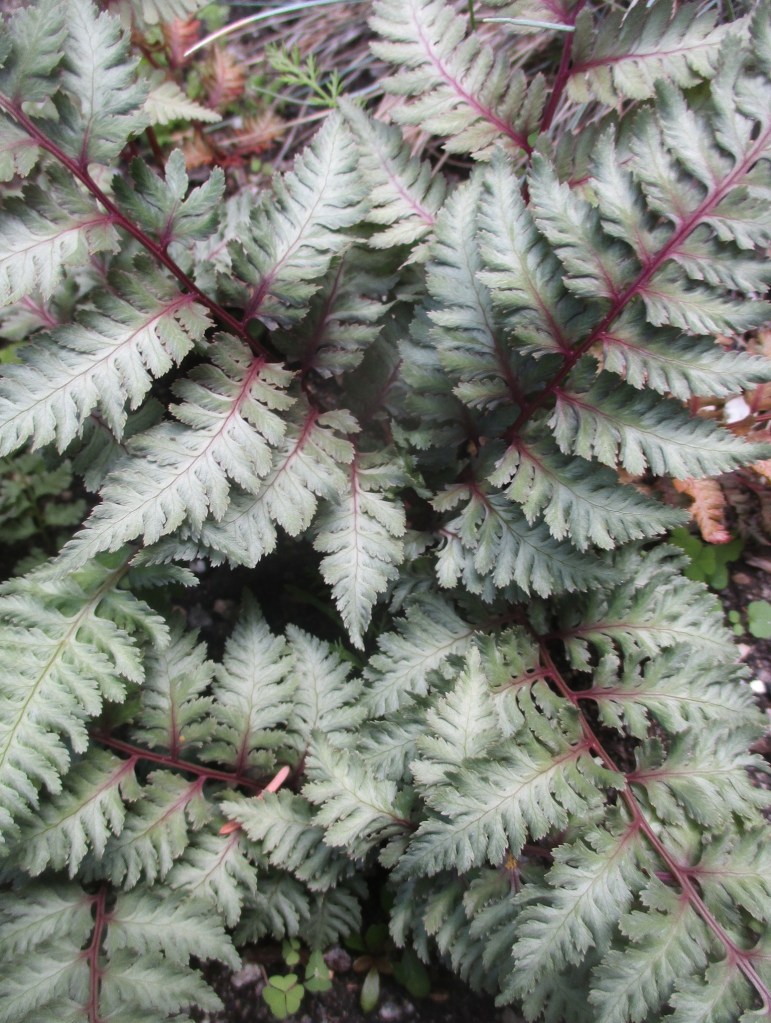
Ferns generally appreciate humidity with warmth.

Aridity is the opposite of humidity. It is why summer warmth is not as unpleasant here as in humid climates. It does not get so much consideration though. Most of the populace of California inhabits arid chaparral or desert climates. Aridity is so typical that any absence gets more attention. Humid warmth is both uncomfortable and relatively uncommon here.

Hurricane Hilary recently demonstrated how unusual humid weather can be here. It was merely a tropical storm as it left Mexico, but was significant nonetheless. Humidity briefly remained elevated after torrential rain in Southern California. It may have lingered longer in regions that lacked rain in Northern California. It caused warmth to seem a bit warmer.

This humidity would have been more horticulturally influential if it had lasted a bit longer. Obviously, irrigation is temporarily unnecessary for saturated landscapes. Some flooded. Some simply absorbed rain. Less obviously, landscapes that received no rain need a bit less water with humidity. Humid weather reduces evaporation from active foliar surfaces.

Humidity also reduces the volatilization of floral fragrance. Fragrant flowers are therefore more fragrant during humid weather. Delicate floral structures also last a bit longer. Many flowers are more turgid and colorful with humidity. All sorts of foliage, particularly tropical foliage and fern foliage, is more lush. After all, most vegetation is from less arid climates.

Humidity influences allergens also, both positively and negatively. Some allergens, such as fungal spores, are more abundant with humid weather. Some allergens, such as dust and pollen, are more abundant with less humidity. That is why humidifiers are helpful for dust or pollen allergies. It is also why dehumidifiers are helpful for fungal spore allergies.

Spontaneous limb failure can be another consequence of humid warmth. It is hazardous because it occurs very unexpectedly without wind. Warmth accelerates vascular activity, which increases foliar weight. Humidity with slow air circulation inhibits evaporation from foliage. If unable to shed enough weight, foliage becomes too heavy for limbs to support.

Sustainability Is More Than A Fad

Vegetation that survives within untended gardens is truly sustainable.

Sustainability is a good idea gone bad. It is so often used as a marketing gimmick by those who actually have the least to gain from it. Really, landscapers and gardeners would not have much business if landscapes really were sustainable and able to function without their help. The best landscapes probably compromise between being as sustainable as possible with a few more conventional but less sustainable features to make them functional.

For example, lawn happens to be among the least sustainable of landscape features. It needs ridiculous volumes of water and continual maintenance, typically with gasoline powered mowers. Many lawns are gluttons of fertilizer. Yet, almost all landscapes have lawn of some sort. Lawns are certainly justifiable for children and dogs.

The trick is to use lawn like rugs for the landscape instead of like wall to wall carpeting. If possible, it should not be an all purpose ground cover for whatever area is not landscaped with something else. It should cover only areas that will get used as lawn.

Bedding annuals are likewise far from sustainable. They need too much water and work, and get replaced seasonally. Even those that sometimes naturalize where a bit of water is available, like sweet alyssum, godetia and nasturtium, really do not perform quite like more pampered bedding plants do.

The best way to see sustainability in action is not in the pretty pictures in the brochures of landscape companies with something to sell, but in the worst of landscapes. Plants that survive in abandoned landscapes where lawns and bedding plants have died off are obviously more sustainable.

Bottlebrush, oleander and various junipers and yuccas may be stigmatized as ‘gas station’ plants, but earned that stigma by being so resilient and sustainable. The many types of cotoneaster, manzanita, wild lilac and rockrose are also worth investigating, (although wild lilac and rockrose do not live as long as the other shrubbery does.) Redwood, California laurel, strawberry tree, incense cedar and many types of eucalyptus, oak , cypress and acacia are among the more sustainable of trees.

Irrigation Technology Can Get Complicated

Modern irrigation does not age well.

Old fashioned irrigation systems were quite thorough, and technically sustainable. They broadcast generous volumes of water over any vegetation that required it. Their systems were too simple to need much adjustment. Their metallic composition was very resilient. That is why so many old systems were in service for so long. Some continue to function.

However, such old fashioned irrigation systems were not perfect. Their consumption was not as sustainable as their plumbing. They wasted water on vegetation that needed less, and pavement. Some of the broadcast water evaporated before reaching any vegetation. Without automation, old irrigation systems operated when convenient for their operators.

Modern irrigation systems are typically more efficient. Automation allows them to operate prior to sunrise to limit evaporation. Most modern systems apply water directly to the soil. This leaves no irrigation water to evaporate from foliar or other surfaces. Also, it prevents evaporation from airborne broadcast irrigation water. Evaporation innately wastes water.

Of course, modern irrigation systems are no more perfect than old systems. Groundcover and lawns still rely on broadcast irrigation. Such systems still waste water on pavement. Automation can actually waste water if not adjusted manually for rain and other weather. Only the most modern automation adapts to weather. No system responds to vegetation.

Consequently, irrigation can become either deficient or excessive as vegetation matures. Many native species need regular irrigation only as they disperse roots after installation. They are likely to rot with the same irrigation as they mature. Many tropical species need more water as they grow. Some vegetation, as it grows, can obstruct broadcast irrigation.

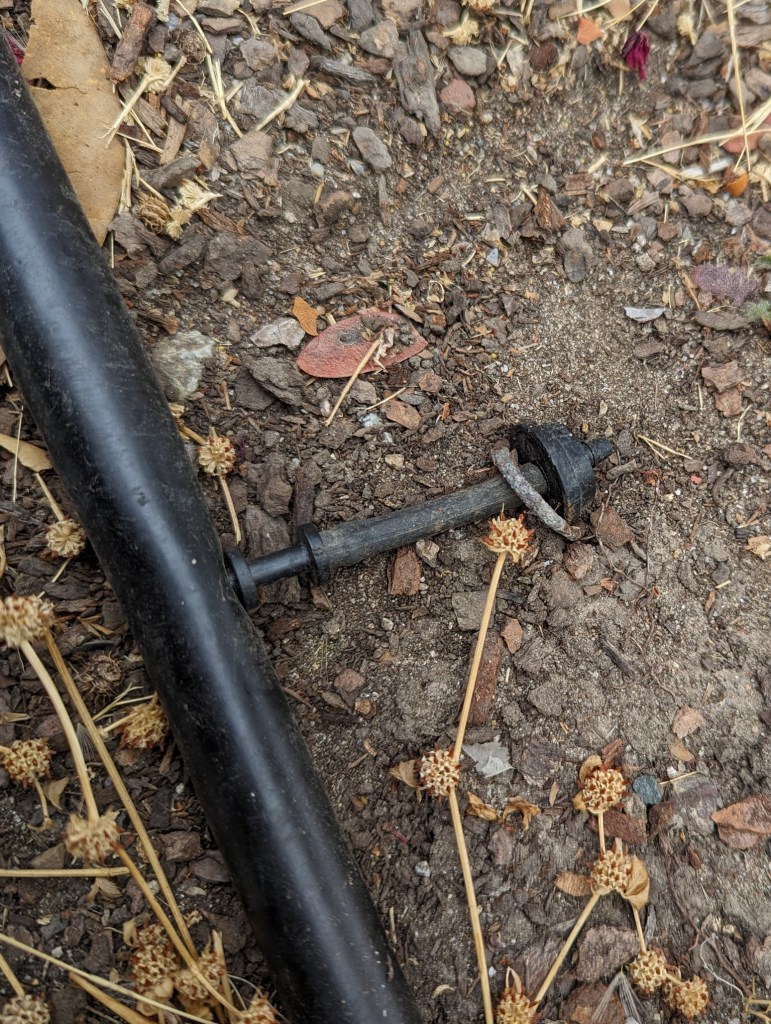
The complexity of modern irrigation systems complicates their maintenance. Automation is merely one component of the infrastructure. Emitters of drip irrigation sometimes need relocation or replacement. They are sometimes difficult to find below healthy vegetation. Because components are plastic, they are not as durable as old fashioned components.

Hydrangeas Perform Better With Proper Pruning

Pruning of one season affects bloom of another.

After decades of breeding, most modern cultivars of hydrangea are much more compact and a bit stockier than old fashioned hydrangeas that had long, limber stems that could bend downward from the weight of their own blooms. They stand up to proudly display their modern, vibrant color, even when their billowy blooms get heavy with rain. Yet, even with all their genetic improvements, they should still be pruned properly and annually to promote continued bloom. Without pruning, even modern cultivars can get floppy and lanky.

Because most hydrangeas bloom on stems that developed during the previous year, they should not be pruned too much while dormant through winter. Instead, solitary (generally unbranched) stems that grew from the base last year and bloomed this year should be pruned back to a pair of buds about a foot high as their blooms deteriorate. Even though some blooms continue to develop late into autumn, most are finishing about now. Therefore, pruning stems back while also removing spent blooms gets the pruning done early enough for the side buds to start to grow into secondary stems.

These secondary stems should not get pruned again, even when they go dormant through winter. They do not grow much before winter, but should be mature enough to bloom during the following spring. Thinning these branched stems through winter by cutting some of the smaller stems to the ground should produce fewer but significantly larger blooms, as well as prolong the blooming season. (However, many modern cultivars naturally bloom sporadically after their primary bloom phase until autumn anyway.)

New canes that develop from the ground to replace older branched stems may not bloom their first year, but can be left unpruned through winter to bloom early the next spring, which starts the process over again. Old stems should be cut to the ground after their third year (second bloom season). Leaving a few spent blooms on the plants long enough to dry (as dried flowers) should not interfere too much with proper pruning.

Fads Influence Contemporary Garden Design

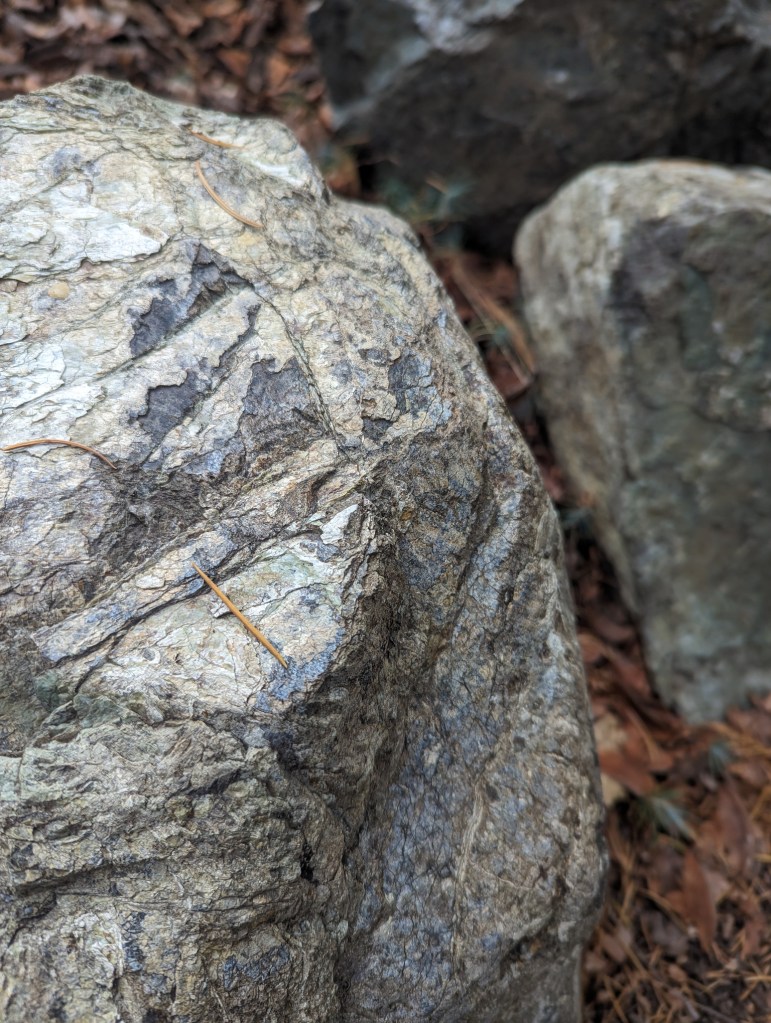
Even boulders can become a fad.

Landscape design and gardening trends change like every other sort of fashion. Several fads of the past were quite practical and justifiable. Many were not. Whether justifiable or not, many merely became old fashioned. Some evolved into a more contemporary style. Others were not so adaptable. Planning for a landscape is easier than planning for fads.

For example, plants seem to be disproportionately small within a new landscape. That is because someone planned for them to have sufficient room to grow. Shade trees should eventually mature to be proportionate to their respective spaces. In fact, all plants should mature accordingly. However, overly trendy queen palms can become passe at any time.

Many home gardens contend with fads from the past that are awkward to accommodate. Strict symmetry that was very common long ago has become more than old fashioned. It is now considered to be unappealing. Relaxed asymmetry is now common and popular. Of course, this is an advantage as aged trees of symmetrical rows begin to die randomly.

Queen palms that became popular in the 1990s are getting more expensive to maintain. Only professional arborists can groom them as they get too tall to reach from the ground. Queen palms at rear fences of backyards were a fad. Sadly, most utility cable easements are above such rear fences. Palms that encroach too closely necessitate costly removal.

Living Christmas trees was another fad that caused serious problems later. Most of such trees were either Italian stone pine or Canary Island pine. Many found permanent homes within confined home gardens after Christmas. They seemed to be so docile while small and potted. The problem was that both species grow too big for compact home gardens.

Sustainability is presently a fad that actually has potential to be beneficial in the future. It only needs proper execution. The results of fads may linger long after the fads are gone. Many trees that are fads now could survive for centuries. No fad demonstrates that more accurately than sustainability. That which is truly sustainable can evolve with future fads.

Blackberries And Raspberries Are Expensive For A Reason.

Cane berries need aggressive pruning, but are no fun to prune.

All the raspberries and blackberries that are now ripening do not come without a price. The canes that produce them may grow like weeds, and in many gardens really are weeds, but they need quite a bit of work. Like the deciduous fruit trees that need such meticulous pruning while dormant in winter, berry canes need winter pruning while dormant, as well as summer pruning as the berries finish.

Blackberry canes that have produced fruit should be cut at the ground as the fruit gets depleted. Then, for ‘trailing’ varieties, about a dozen of the new canes that grew since spring should be selected, pruned to about six feet long, and trained onto the same supports that the removed canes used. ‘Semi-erect’ varieties need only about half as many canes, and get cut about a foot shorter. (‘Erect’ varieties that get cut even shorter are not common locally.) All other canes should be cut to the ground. Through the rest of summer, the pruned canes develop side branches which should eventually get pruned to about a foot long in winter to bloom and produce fruit next year; but that part must wait.

Summer bearing raspberries, like ‘Willamette’, ‘Tulameen’ and ‘Canby’, do not need to develop side branches to produce fruit next year, so do not necessarily need to be groomed of spent canes and pruned just yet, and can actually wait until winter. Everbearing raspberries like ‘September’, ‘Heritage’ and ‘Fallgold’, are not nearly so simple, although canes that were selected while young last winter and allowed to grow through summer likewise need no pruning just yet. The top portions of these canes will produce fruit later in autumn, and later in winter, get pruned down as low as fruit developed. However, the lower portions of older canes that fruited the previous year and got their tops pruned down last winter are now finishing their second and last phase of fruit production, so should get pruned out as they finish.

Sustainable Horticulture Should Be Sustainable

Lily of the Nile is sustainable!

There is no doubt about it. Weeds are sustainable. Otherwise, they would not be weeds. By definition, they grow where they are undesirable. Less sustainable vegetation should be less invasive. Also, it should be less resistant to eradication than most familiar weeds are. Unfortunately, also by definition, weeds are undesirable. They can not become fads.

Sustainable horticulture is a fad though. Unlike most fads, it is actually quite sensible. In theory, it is horticulture that requires as minimal intervention as possible. It excludes that which requires intensive or impractical cultivation. For example, native species that grow wild are sustainable. Tropical species that may survive only within greenhouses are not.

A problem with the sustainability fad is its marketability. ‘Sustainable’ and ‘Sustainability’ have become cliche buzzwords. They too often describe merchandise that is contrary to the fad. Realistically, genuine sustainability is unsustainable within profitable marketing. Truly sustainable merchandise would eliminate most of the need to ever purchase more.

Modern cultivars can qualify as ‘new and improved’ as they first become available. They are certainly new. However, their improvements may be questionable. Hybridization and extensive breeding can cause genetic deficiency. Even natural variegation compromises vigor. Seed is not true to type. Most aesthetic improvements are contrary to sustainability.

Native species are technically sustainable. Once established, they might survive without irrigation or other attention. Unfortunately though, some are not very adaptable to refined home gardens. Some are vulnerable to rot if nearby vegetation needs frequent irrigation. Some perform vigorously only for a few years. Several species are innately combustible.

Ironically, several of the most passe and old fashioned species are the most sustainable. That is why some of them became passe. Lily of the Nile can survive indefinitely. If it gets overgrown, it is easy to divide and relocate. It may be available for free from neighbors or friends. African iris, New Zealand flax, bergenia, most aloe and many yucca are similarly sustainable.

Tree Stumps May Put Up A Fight

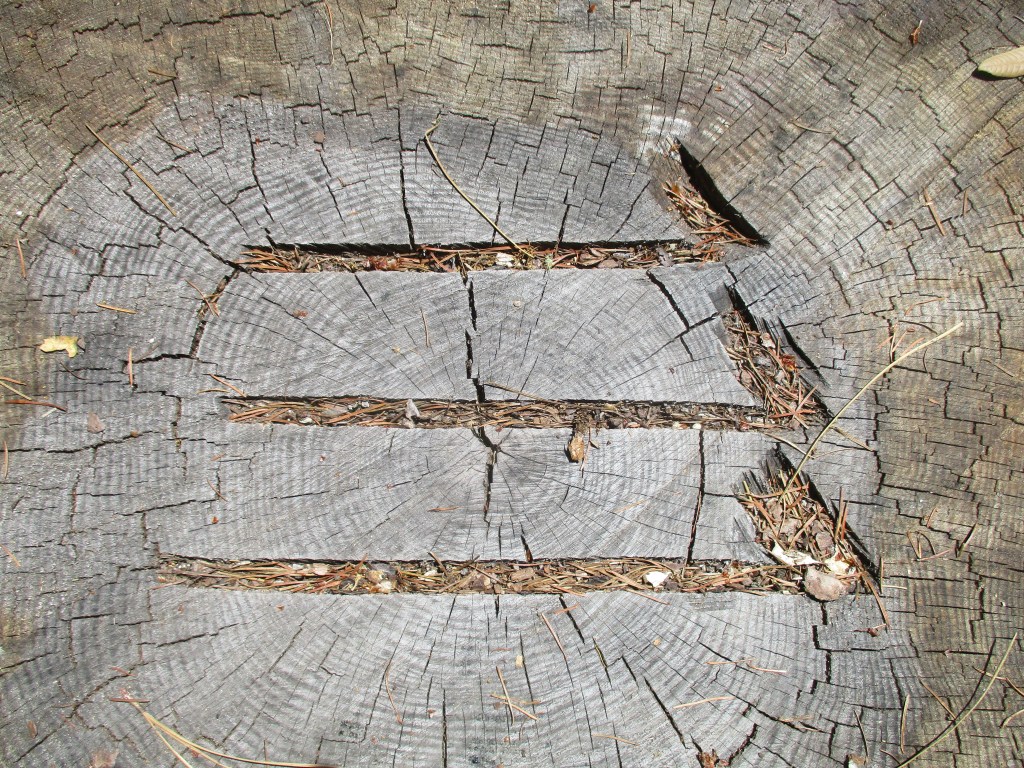
Some stumps die immediately. Some do not.

Trees of all sorts are among the most important features of most gardens, and are also the most substantial. Yet, in the end, whether they get too big, too crowded, too hazardous or simply succumb to old age, they eventually need to be removed.

Getting rid of the brush (foliage and smaller limbs) of smaller trees is generally not much of a problem, especially where greenwaste can be left at the curb for recycling. Larger limbs and trunks can be cut and split into firewood. The brush and wood of trees that are so large that they need to be removed by professionals typically gets taken away be the same professionals. The most difficult parts to remove though, are the stumps.

Professional tree services typically offer the option of stump grinding. This works well for the most obtrusive stumps that are accessible. Other stumps get left either because they are inaccessible, or because of the expense of grinding.

Stumps that are within ground cover or shrubbery often get obscured by the surrounding vegetation, and are never seen again. Others are not so easy to hide. Many refuse to die for several years, and may even try to grow back as new trees.

Coastal redwoods (but not giant redwoods), poplars, willows, privets, sycamores and camphors are notoriously difficult to kill. Their stumps can continue to sprout for years. Shoots that emerge away from the stump can certainly be left to grow into new trees if they happen to be where they will not soon become problematic. (Shoots that emerge directly from cut stumps will likely lack structural integrity.)

To kill stubborn stumps, shoots must be removed as they appear. Eventually, the stumps and roots below the ground exhaust all resources and die. Of course this sounds simple, but may take years to kill redwood stumps. Leaving shoots to grow prolongs the process by allowing replenishment of resources. A stump from a camphor tree that I cut down in about 1988 but did not regularly remove the shoots from lingered for about twenty years before finally succumbing in about 2008!

Once stumps die, they rot faster if buried or at least covered with other plant material. Less stubborn stumps that are not likely to sprout again, like those of pines, cypresses, cedars, birches and (solitary trunked) palms, can be buried or concealed immediately. Stumps that are not cut low to the ground are not so easy to conceal, but should still rot faster if covered with ivy. I prefer to plant either freshly divided lily-of-the-Nile shoots or geranium cuttings around the bases of stumps, because they obscure the stumps and also promote rot as they get watered and disperse roots into the decaying wood. They can be removed, if desired, as the stumps deteriorate.