Palm Trees Are Specialized Trees

Many palms have palmate leaf form.

A tree is a woody perennial plant with a single tall trunk and branches. Banana trees and tree ferns lack both branches and wood. Arboriform yuccas develop branches but are not woody. Palm trees are no better. Some develop a few trunks but without branches. Doum palms that develop branches are extremely rare in California. No palm is actually woody.

Palms are trees only because of their size and form. In other words, most are big and tall. The most compact of palms are no smaller than Japanese maples, which are also trees. Realistically though, palms are merely large to very large perennials. They are monocots like grass, bamboo or cordyline. Some horticulturists classify them as herbaceous trees.

Only California fan palm is native to California, and only to remote desert oases. All other palms are exotic. Spanish Missionaries imported date palms to produce dates within arid regions. Only a few other palms were similarly utilitarian. The majority are desirable only for their distinctive form, texture and evergreen foliage. They are genuinely ornamentals.

All palms are evergreen. Fan palms produce rounded palmate leaves on sturdy petioles. Feather palms produce elongated pinnately compound leaves on sturdy rachises. Many fan palms also produce wicked teeth on their petioles. Many feather palms also produce dangerously sharp spines on the bases of their rachises. Even lush palms can be mean.

Not many palms get big enough to provide much shade. Many types are shady in groups though. Without branches, palms are not conducive to containment or redirection. Some eventually grow tall enough to shade neighboring gardens instead. Unfortunately, palms that encroach too closely to high voltage cables require removal. They do not go around.

Palm trunks do not widen as their canopies grow higher above. Palms with plump trunks grow at ground level for several years before they can launch. Their single terminal buds must first grow as wide as their mature trunks will ever get. Their foliar canopies likewise grow no broader than they were when they launched. They only grow higher. Most large palms develop distended basal adventitious roots that can get quite wide, though.

Root Of The Problem

Trees need their roots.

Does anyone really know what roots do? We know that they are important parts of almost all plants, that draw nutrients from soil and water, and that they provide structural support so that plants can stand upright. Yet, we really do not know all of what they they could be doing right now, underground, where no one can see them.

Big roots of big trees unfortunately sometimes cause big problems by displacing pavement and other features. They commonly displace pavement because they naturally disperse laterally just below the surface of the soil, and do the same directly below pavement as if it were the thin layer of soil that they require above. Roots of many trees are actually attracted to pavement because it is better insulated than some types of soil, and may even retain moisture better. As roots grow and expand, they displace the pavement above.

They do not displace retaining walls or foundations as commonly because they are not so tempted to go under them. When they do displace such features, it is usually because they disperse against them and displace them laterally.

Although often blamed for such problems, roots only rarely interfere with subterranean utilities like water pipes and sewer pipes. Most pipes are deep enough to avoid the majority of roots. However, very old sewer pipes of unsealed terracotta segments or unsealed iron can leak slightly but enough to attract and become invaded by roots. Also, some types of trees are notorious for invading septic systems.

Various types of root barriers limit lateral dispersion of roots and promote deeper dispersion to protect pavement and features at the surface of the soil. They are somewhat effective for certain types of trees that innately exhibit aggressive roots. Alternatively, trees that innately exhibit complaisant or deeply dispersed roots may be selected for situations in which aggressive roots would be a problem.

Roots that are already causing problems most often need to be severed. Unfortunately, severing substantial roots is very distressful to the affected trees, and can even be destabilizing. Trees with fibrous roots, like redwoods and crape myrtles, recover from minor root damage somewhat efficiently. Many other trees, like oaks and most maples, are very sensitive to such damage. If it becomes necessary to sever major roots or large portions of a root system, an arborist might determine that it would actually be more practical to remove the affected tree than to allow it to be destabilized or to deteriorate slowly before ultimately succumbing to damage.

Soil Is More Than Dirty

Soil amendments improve percolation of moisture.

All weeds are plants. Not all plants are weeds. Weeds are a specifiable subset of plants. Specifically, weeds are plants that grow wildly where they are undesirable. Similarly, dirt is likely soil, although it could be anything that is dirty. Soil is not merely dirt, though. Dirt is soil or a similar matter, where it is undesirable. Plants and weeds know the difference.

Most simply, soil is the loose material on the surfaces of most land. Obviously, looseness is relative. Some is quite dense and hard. It is not solid rock though. All of it consists of a combination of various inorganic aggregates. Most also includes various organic matter. Inorganic aggregates range in size from microscopic clay particles to substantial stones.

Soil provides stability and nutrients for vegetation that inhabits it. Roots disperse through it for structural support of their associated stems and foliage. Roots also absorb nutrients and water, as well as conduct respiration. Soils are naturally quite diverse. Vegetation is naturally more diverse to exploit various soils. Very few soils can not sustain vegetation.

Lawns are the carpets of a garden. Hedges are the walls. Tree canopies are the ceilings. Soils are the foundations. They support all vegetation that is not self-reliant in containers or epiphytically. Some soils are sandy, so drain very efficiently. Some are denser clay, so may drain slowly. Like climate and exposure, soils can limit what grows within a garden.

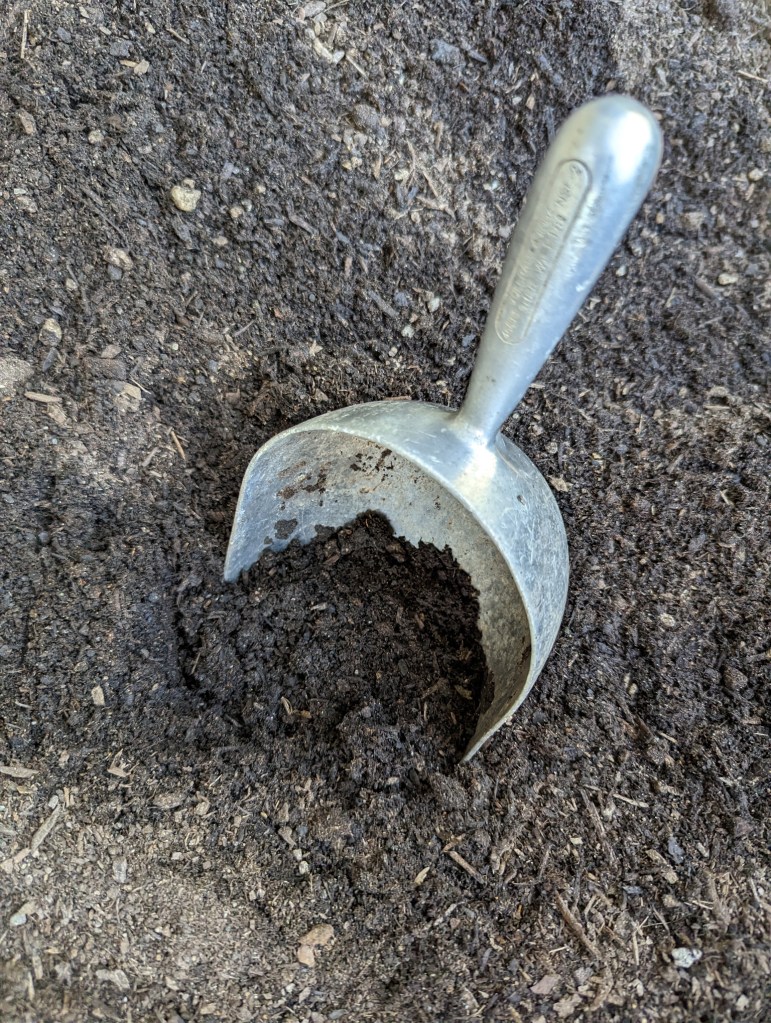
Most common and popular vegetation is satisfied with most common types of soil. Some, particularly vegetables and annuals, are more demanding. Even within good quality soil, they appreciate amendments such as compost. Amendments improve aeration, drainage and moisture retention. Organic amendments also provide nutrients as they decompose.

The most demanding vegetation also appreciates fertilizers. Most fertilizers are chemical or synthetic fertilizers of very precise formulation. Organic fertilizers are only slightly less precise. All allow application of specific amounts of specific nutrients for specific results. For example, nitrogen enhances foliar growth. Also, phosphorus enhances floral growth, and fruit growth.

Warmth Accelerates Garden Activity.

Spring was mild and started late. Summer if now getting started.

Just like the moon is always either waxing or waning, but is really only full or new for the brief moments in between, the seasons are always flowing from one to the next. Even though it is not yet half way through summer, plants in the garden are already planning for autumn. Summer has been mild, but still warm enough for most plants to do what they need to do by this time of year.

If weeds were not pulled when they should have been in early spring, they really should be pulled now. They have already started to sow their seed for the next generation that will grow at the end of next winter. The ground has dried and hardened since early spring, so pulling weeds will take a bit more effort. That is the punishment for procrastinating.

Weeds that are still somewhat fresh and green may not have dispersed all of their seed yet. If pulled soon enough, their next generation may not be so prolific. Those that have dried have likely dispersed their seed already. Their progeny will be back by next spring.

Pulling out the roots of annual grasses is not as important as getting the roots of perennials like thistles. Heck, they are annuals, so will die at the end of the season anyway. Getting their seed in the priority now. Some people are satisfied with simply pulling the seeded tops off of annual weeds, and leaving the lower portions to die out naturally.

Most fruit trees finish their production sometime during summer. Small fruit like cherries finished some time ago. Larger peaches, although related to cherries, may still be ripening into August. They should be picked as they ripen, not only to get the most use out of them, but also to avoid sharing with unwelcome rodents, birds and other annoying wildlife. The ground under fruit trees should be cleaned of any fallen fruit that might otherwise rot and perpetuate disease. Apples and pears ripen later and into autumn.

Warm season vegetables should be picked as they mature to promote continued production. Leaving extra zucchini on the plants inhibits production of new zucchini, while the old zucchini grow into tough and insipid baseball bats. Leaving extra tomatoes both inhibits new tomatoes and also makes a mess of rotting fruit.

Cuttings Become Copies Of Originals

Elderberries grow efficiently from hardwood cuttings.

Seed is the most familiar source of much of the vegetation that inhabits home gardens. It is the origin of almost all vegetables and most annual flowers. Some seed grows directly into its gardens. Some grows in nurseries to become saleable young plants. Seed is not the only method of propagation though. Cuttings, division and layering are as productive.

Cuttings, as well as divisions and layers, are genetically identical to their single parents. Unlike seed, which are products of two parents, they lack potential for genetic variation. Division is the separation of stems with roots from perennials or clumping woody plants. Layering is the rooting of stems by partially burying them while attached to their parents.

Cuttings grow simply as pieces of stem within moist rooting medium such as potting soil. They initially lack roots and perhaps foliage. They develop new roots and foliage as they grow. Their medium must remain moist throughout the process. For many plants, rooting hormone accelerates root initiation. Some species can grow roots as they soak in water.

Hardwood cuttings are mostly from deciduous species as they defoliate for winter. Those from last winter are developing now. Evergreen hardwood cuttings retain some foliage through their winter dormancy. Softwood cuttings can be either deciduous or evergreen. They involve fresh new growth, so can begin as soon as such growth is mature enough.

The lower cuts of cuttings should be just below a node. Upper cuts should be just above a node. Terminal cuttings are tips of stems without upper cuts. Each cutting must include at least two good nodes. Some species may need cuttings to be several inches long in pots. Most grow better from small cuttings that fit into flats. Some can go directly into a garden. Cuttings should lack leaves below the level of their rooting medium.

Softwood cuttings generally require humidity to help compensate for their lack of roots. Most also appreciate partial shade. Evergreen hardwood cuttings appreciate the same as weather gets warmer and drier. Warmth from a heating mat below pots or flats might accelerate rooting. Many species are difficult or impossible to grow from cuttings though.

Cats Gone Wild!

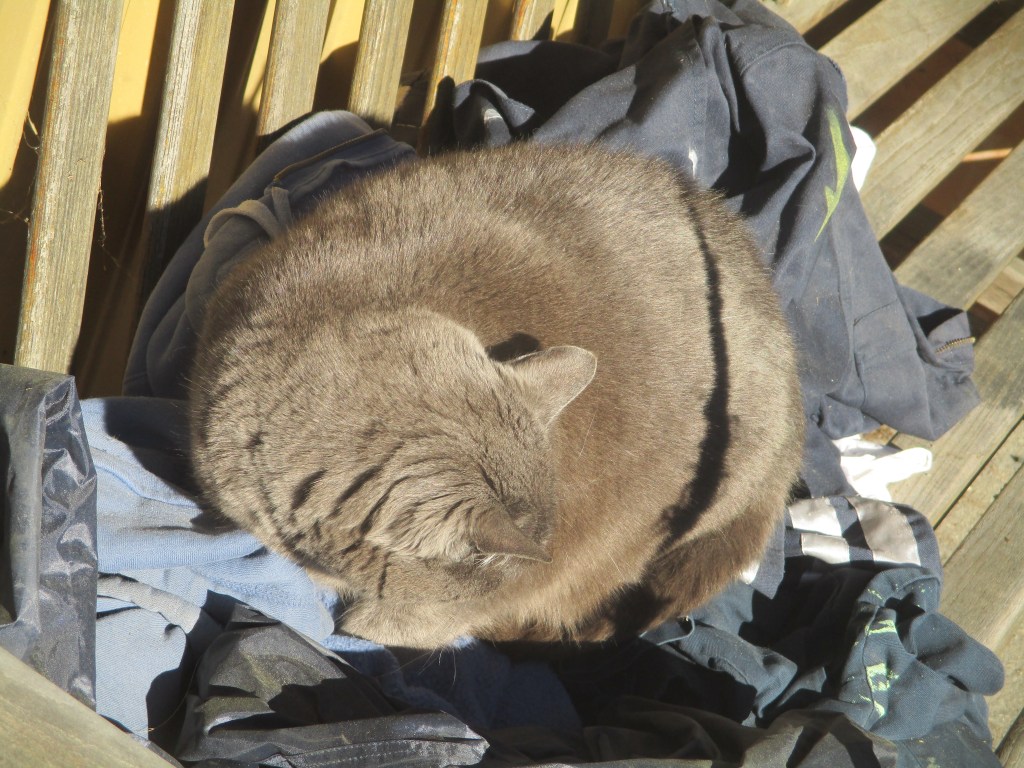
The best cats are domestic.

Rats, mice, squirrels, racoons, opossums, skunks, deer, pigeons and more; it just never ends! There are so many other life forms who often enjoy our gardens more than we do. While visiting my colleague in Los Angeles, his garden became overrun by a swarm of bees! Fortunately, they did no damage and left the same day.

The worst problem in his garden is cats. His neighbor hoards ‘unaltered’ feral cats that have proliferated into a substantial herd. Instead of exterminating rodents from the neighborhood, the overfed cats ignore the droves of rats that are drawn to the cat food left out on the porches. The rats attract opossums. Fleas are everywhere!

All this wildlife brings all sorts of other problems. The well kept domestic cats that live inside the home of my colleague are frequently afflicted with illness transmitted by the sickly feral cats. Flat roofs and basement crawl spaces of several adjacent homes have become litterboxes. The overpowering aroma is horrendous.

Fortunately, such proliferation of cats is rare. Most of us do not mind when a neighborhood cat, or even a few cats, visit the garden. However, when cats become a problem, they are nearly as difficult to remedy as vermin.

Although most municipalities have limited the number of domestic cats that can reside at individual residences, feral cats come and go freely, so are considered to be wild animals who are exempt from such limits. Besides, no one wants to enforce such ordinances with their neighbors, even if the problematic cats happen to be domestic house cats. All we can do is try to limit the problems in our own gardens and homes.

Flat roofs sometimes get used as litterboxes because they commonly have gravel on them and tend to accumulate a bit of other debris. If this is a problem, and if possible, access to flat roofs should be obstructed. Tree limbs and vines should be pruned back.

Basements and crawl spaces are easier to obstruct access to by simply repairing vent screens and exterior basement access. Cats like to use crawlspaces as litterboxes because the soil is always dry and dusty. Around the garden, dry spots are less attractive to cats if sometimes watered, even if there are no plants present. Adding spreading plants is even  better. In a small dusty area behind the garage, I spread out a bit of firewood over the soil. By the time the firewood gets used, it will be raining and too muddy for cats.

Trees Naturally Dominate Their Gardens

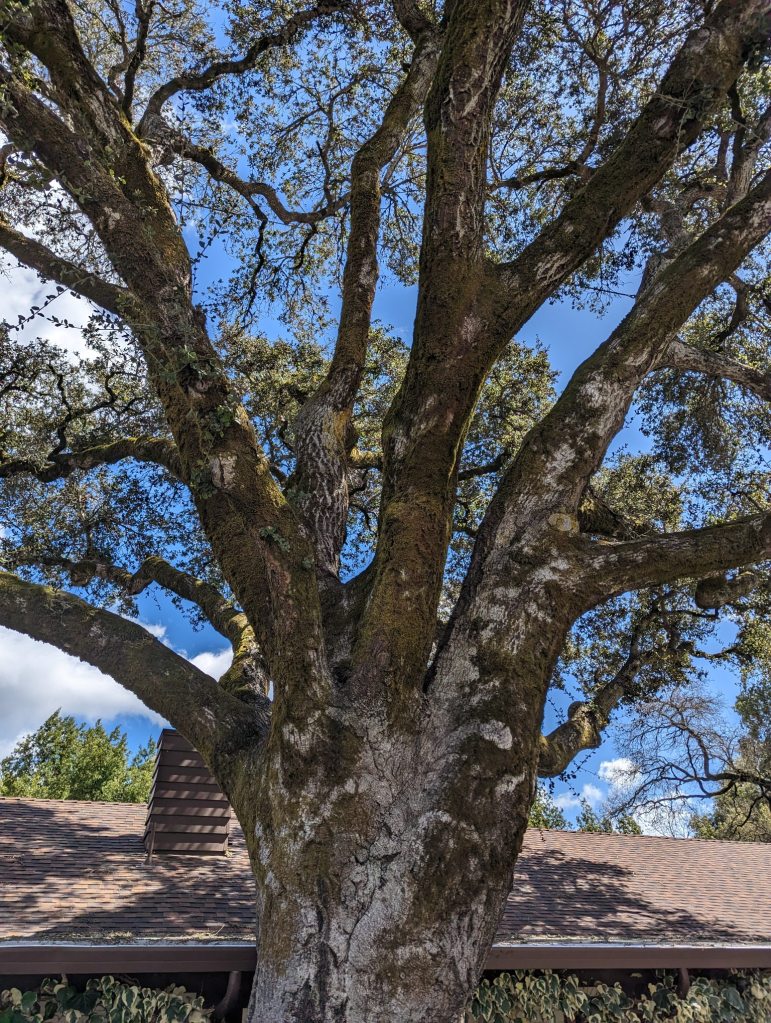
Oaks slowly become grand and sculptural.

Trees are generally the most significant living components within a home garden. Even treeless gardens benefit from nearby trees. Some old redwoods contain more wood than the homes that they shade. Some old oaks inhabited their gardens centuries before their gardens did. With few exceptions, nothing in a garden is as big or permanent as a tree.

Japanese maples, citrus trees and other small trees can be among the exceptions. They might be smaller than some of the shrubbery they share their gardens with. Papayas and other herbaceous trees can also be exceptions. Some live for only a few brief years. The definition of what a tree is can be vague. Variable interpretations complicate this matter.

A tree is a woody perennial plant with a single tall trunk and branches. However, banana trees develop several unbranched herbaceous trunks. Palms and tree ferns are neither woody nor branched. Arboriform yuccas are no woodier than palms. Many trees develop many trunks. Banyans use roots as trunks. This definition does not even describe ‘tall’.

Ultimately, the characteristics of a tree are more important than its definition. Shade trees near homes should be deciduous to let warm sunshine through in winter. Evergreens are better for obscuring unwanted scenery throughout the year. Evergreens are messier than most deciduous vegetation though. Their shedding is not so limited to distinct seasons.

Fruit trees are some of the most misunderstood inhabitants of home gardens. Not many grow big enough to function as shade trees. Fruit is difficult to harvest from those that do. Almost all require intensive and specialized pruning and maintenance. Few get it. Most eventually succumb to neglect. Citrus and avocados are some of the least demanding.

Palms, whether or not they qualify as a type of tree, are also misunderstood. They lack branches, so are not conducive to pruning away from utility cables. Their single terminal buds grow only upward. Removal is the only option for palms that encroach too closely to high voltage cables. Even the best palms need grooming from professional arborists. Most quickly grow beyond reach from the ground or even a ladder, and are dangerous to climb.

Nomenclature Is Designed For Simplicity.

Automotive and botanical nomenclature are remarkably similar.

As confusing as they seem to be, Latin names of plants are actually intended to simplify things. They work because they are universal, everywhere and in all languages. Common names may seem simpler, but are too variable in different regions and in different languages.

For example, the white pine that is native to Northern California is not the same as the white pine of Maine. However, only the white pine of California is Pinus monticola. Furthermore, it is known as Pinus monticola everywhere and in every language, even though it has different common names in French, Afrikaans and Vietnamese.

The first name of a Latin name, which should be capitalized, is the more general ‘genus’ name. (‘Genera’ is plural, and not coincidentally similar to the word ‘general’.) Pinus is the same genus name for all pines. Acer  is the same genus name for all maples. Quercus is the same genus name for all oaks; and so on.

The second name of a Latin name is the more specific ‘species’ name. (‘Specie’ is plural, and not coincidentally similar to the word ‘specific’.) Monticola specifies the genus of Pinus as Pinus monticola, the white pine of Northern California. Radiata specifies another genus of Pinus as Pinus radiata, the Monterey pine; and so on. The species name is not capitalized. Technically, Latin names, both genera and specie, should be italicized in print or underlined in cursive.

Latin names work like the names of cars. Buick, Chrysler and Mercury are all like genera. Electra, Imperial and Grand Marquis are all like specie, or the specific Buicks, Chryslers and Mercurys. ‘Limited’, ‘Custom’ and ‘Brougham’ are like variety names, like ‘Variegata’, ‘Compacta’, and ‘Schwedleri’. For plants, variety names are capitalized and enclosed in semi-quotes.

As universal as Latin names should be, a few sometimes get changed. This can be confusing, and causes some plants to become known more commonly by either the new or old name as well as the other of the two names as a ‘synonym’. For example, Dietes bicolor and Morea bicolor are the same plant; but not many know for certain which name is more correct. It is like when Datsun became Nissan, but was also known as Datsun for many years afterward.

Succulent Plants Exhibit Unique Foliage

Succulents provide unique texture and form.

All cacti are succulents. However, not all succulents are cacti. Actually, cacti are a very unique family. Their distinctive spines and thorns are very specialized leaves and stems. Such specialized leaves can not photosynthesize without green chlorophyll. Therefore, cacti rely on their succulent green trunks for photosynthesis. Their trunks work as foliage.

But of course, not all succulents are cacti. Other succulents have succulent leaves. Most also have succulent stems. Some, such as most agaves and some aloes, are spiny, but not like cacti are. They have real leaves that happen to be spiny. Yucca are supposedly succulent, likely because of their relation to agave. However, they lack succulent parts.

Furthermore, not all succulents are drought tolerant. Many are so only because they are naturally native to desert or chaparral climates. Many others are naturally native to less arid climates. Some that are native to tropical rainforests, like epiphyllum, crave regular watering. Many succulents thrive in harsh exposure. Some prefer a bit of cooling shade.

Succulents are generally very adaptable to container gardening. Ironically though, a few of the most familiar sorts are not as complaisant to containment. Several cacti and other desert species need more water while confined. They must compensate for their inability to disperse roots. However, frequent watering or even excessive rain might promote rot.

Agaves, including those of desert climates, happen to perform splendidly within big pots. In fact, some perform too splendidly. If they grow too big and heavy to move, they are as permanent as if in the ground. Their dangerously spiny foliage compounds the problem. Overgrown cacti are both very difficult to move, and likely to break apart in the process.

Fortunately, there are plenty of smaller, tamer and thornless succulents to choose from. They contribute a remarkable range of foliar form, texture and color to the garden. Some contribute colorful bloom. A few, such as aloes and agaves, produce sculptural bloom. Most succulents are naturally resistant to pathogens, and easy to propagate vegetatively. Rooted scraps are less expensive than nursery stock is.

Irrigation Must Not Be Excessive

Too much water can be a problem.

Remember when the Brady Bunch went to the Grand Canyon? Mrs. Brady read aloud from a brochure about how the Grand Canyon was formed by erosion of the Colorado River. Peter then commented, “Wow! No wonder you tell us not to leave the water running.” Too much watering in the garden certainly will not cause a canyon to form, but can cause all sorts of other big problems.

Roots rot if the the soil is constantly too wet. If the soil stays saturated, roots suffocate from the lack of aeration. Trees that survive saturation of deeper soil strata will disperse their roots shallowly near the less saturated surface, and will consequently be unstable. Besides, excessive watering is wasteful.

There are too many variables, such as exposure, drainage, humidity and temperature, to prescribe irrigation schedules that work for every site. Just remember that most plants like the soil to drain enough for the surface of the soil to at least look somewhat dry before getting watered again. Moss on the surface is an indication that things are too wet. Plants that like more water, like azaleas, rhododendrons, fuchsias, ferns and impatiens, do not mind if the soil stays somewhat damp, but only if the soil is porous and drains enough to also be aerated.

The most drought tolerant plants, which are generally also the most sensitive to excessive irrigation, ironically like to be watered somewhat regularly for the first few months after getting planted. This is because they are so reliant on well dispersed root systems. They need less, if any, watering once their roots get dispersed.

Watering should be done in the morning so that plants can soak in the water during the day, and the area can dry somewhat before the following evening. It is also better to water less frequently and a bit more generously than to water too frequently. This allows time for drainage and promotes deeper rooting. Fungal organisms associated with rot and foliar diseases proliferate overnight if the ground is damp at the surface and the air is humid.

Except for the few plants that like humidity, and those that need to be rinsed of aphid and honeydew, there is no need to wast water on foliage where it is simply lost to evaporation. Water should be applied to the soil where it is needed.