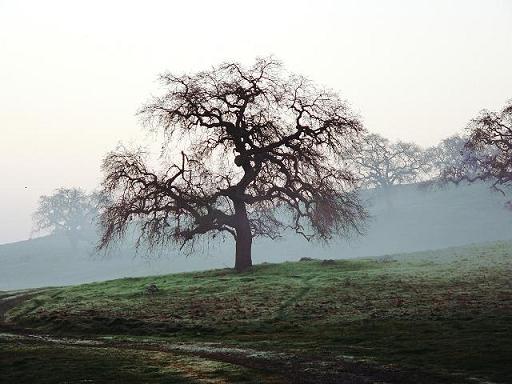
Utility Clearance Can Disfigure Trees

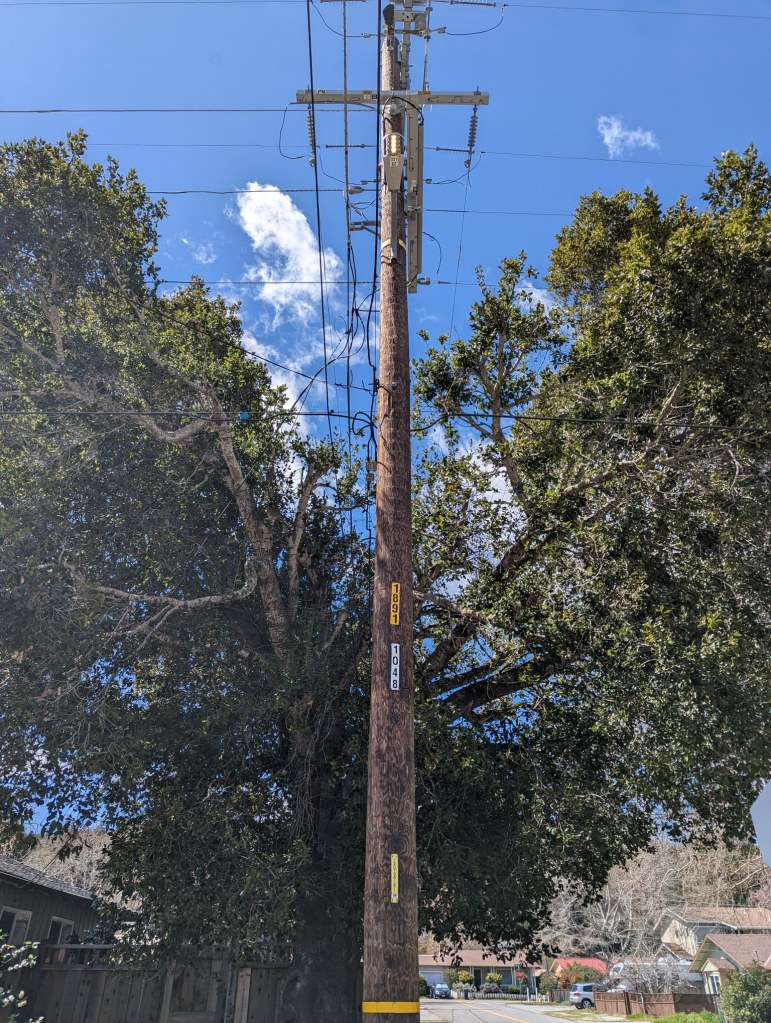
Utility cables need clearance from trees.

Last winter was a doozy! It involved historic frost, snow, rain, wind, floods and mudslides. A few roads remain closed in some regions. Major electrical outages were too numerous for prompt repair. Weather alone did not cause such outages though. It merely dislodged vegetation that did so. This demonstrates the necessity for utility clearance maintenance.

Utility pruning is a specialized but very often unpleasant sort of arboriculture. It maintains necessary clearance between vegetation and utility cables. Its unpleasantry derives from its harsh efficiency. Clearance is the priority. Proper arboricultural technique is not. There is no compromise. Trees that encroach too closely to cables are likely to regret doing so.

Proper arboricultural procedures are too expensive to justify for utility clearance pruning. Otherwise, electricity and other utilities that utilize cable would be much more expensive. Besides, for many trees within utility easements, proper arboriculture is impossible. They can not accommodate necessary pruning without disfigurement. Several can not survive such disfigurement.

Palms, for example, can not survive without their single terminal buds. They lack limbs to divert growth to. Removal of a terminal bud that encroaches too closely to utility cables is lethal. Palms generally grow only upward. Those that grow tall rapidly can not live below utility cables for long. Very few palms remain low enough to maintain minimal clearance.

Excurrent trees are generally more vulnerable to disfigurement than decurrent trees. The single central trunks of excurrent redwoods and spruces do not adapt to redirection. The several main limbs of decurrent oaks and elms are more cooperative. Compact trees that are unlikely to reach cables are least problematic. Of course, many trees are unplanned.

Arborists can repair some minor clearance pruning damage or disfigurement. They might prevent some damage by timely pruning for containment. Unfortunately, some damage is neither repairable nor preventable. Also, such procedures are too dangerous for anyone who lacks qualification for them. Typical garden enthusiasts must avoid electrical cables!

Warm Up To Warm Season Annuals

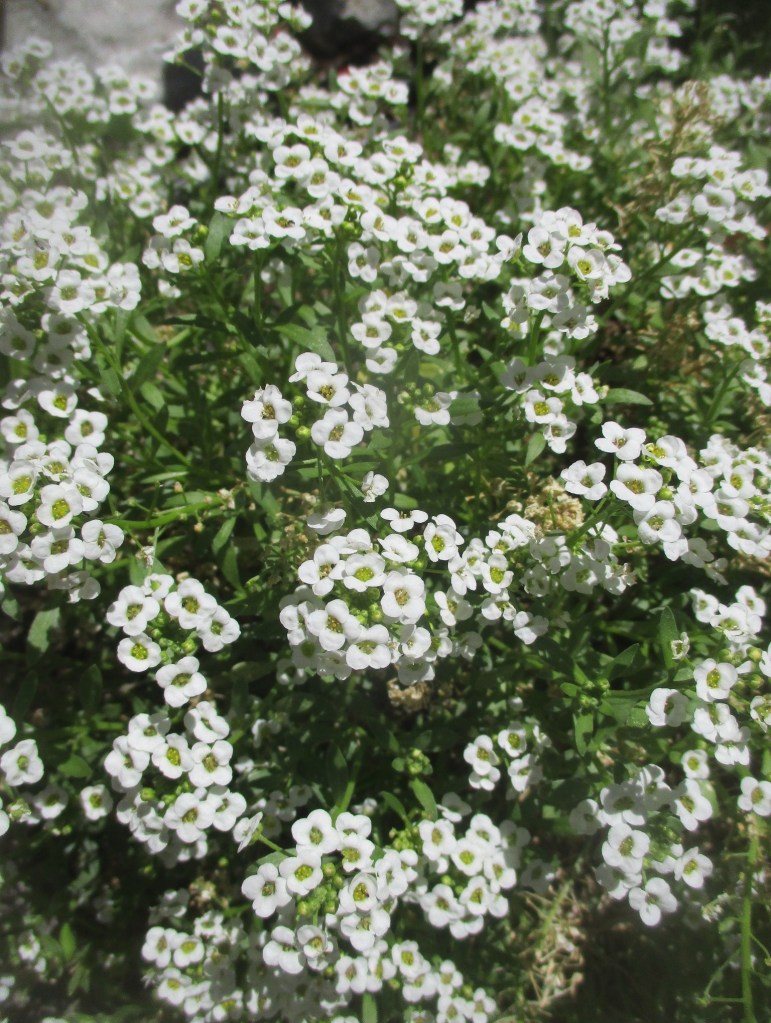
Sweet alyssum can seem to be perennial, but bloom best during warm weather.

The common and almost stigmatized nasturtium has always been my favorite of the flowering annuals. It is technically a warm season annual that gets its seed sown at the end of winter so that it can grow and bloom with bright yellow, orange and sometimes even red flowers all spring and summer and into autumn. However, because winters are so mild here, the foliage is appealing even while bloom is inhibited by cool winter weather. By the time older plants die out, seedlings are already maturing to replace them; so they function like perennials. Nasturtiums are so easy to grow that many garden enthusiasts consider them to be weeds, or too cheap and common to bother with. Yet, their carefree nature is precisely why so many of us enjoy them so much.

Sweet alyssum shares the same reputation that causes it to be shunned by some but appreciated by others. It can be white, pink or purple when initially planted, but eventually reverts to white as it naturalizes. (Pink and purple types produce white blooming seedlings.) Like nasturtium, it blooms less over winter, but never really goes away, since seedlings are always there to replace older plants. It is easy to grow from seed sown late in winter, or can be planted from cell packs after winter for more immediate results.

All sorts of warm season annuals that are now available in nurseries are ready to replace the cool season annuals that bloomed through winter. Busy Lizzy (impatiens) and petunias are the most popular as well as the most colorful. French marigold has the best yellows and oranges, as well as bronze. Lobelia is a classic companion for sweet alyssum or marigold, providing all kinds of blues, as well as purple, purplish rose and white (although white is rather redundant to alyssum). Cosmos blooms in many shades of pink, from very pale to almost red, as well as white. Most varieties stay quite low while others get a few feet tall.

The less popular warm season annuals are sought by those who like their unique colors or other appealing characteristics. Floss flower blooms pale blue or lavender with funny fuzzy flowers. Cockscomb are mostly the colors of marigold as well as red, but with unusual plume-like blooms. Verbena and moss rose may not fill in soon enough to work as bedding plants, but have rich colors that look great with other assorted annuals or perennials. Although statice, pincushion flower (scabiosa) and zinnia can function as bedding plants, they are more often grown singly, in small groups or as borders around more homogenous bedding plants.

Winter Weather Lingers Into Spring

Late wintry weather delays early bloom.

Winter was epic! Snow was more abundant than since 1976. Rain was more continuous than since 1982. Frost was colder than since 1990. All of this happened within this same winter! Californians generally appreciate rain and snow, and tolerate typically minor chill. Chaparral and desert climates here rarely get much. However, this weather is excessive!

Furthermore, such excessively cold or wet weather was unconducive to gardening. Most of us wanted to stay inside. Home gardens consequently endured neglect in conjunction with extreme weather. Regardless of the current weather conditions, winter is technically done. Now that it is spring, gardens should begin their systematic processes of recovery.

This may entail more effort for those who enjoy gardening than for the associated plants. Most plants are resilient to harsher winter weather than they endured here recently. That is how they survive other less temperate climates. Some may respond favorably to more thorough than typical grooming. Some might prefer later grooming while they regenerate.

Chill can actually enhance performance of some plants that prefer cooler winter weather. For example, some cultivars of apple are barely satisfied with the more typical local chill. They may perform better this year, after a cooler chill. Flowering cherry, purple leaf plum, lilac, wisteria, and many others may do the same. Stone fruits might be more productive.

Several plants do succumb to frost though. Some that typically die back but then recover may not recover this year. For some, the unusually cold frost was lethal. Others rotted as a result of lingering cool dampness. Kaffir lily that is blooming well now may succumb to rot later. Canna that grew early only to succumb to later frost should recover well though.

Some plants that endured frost and saturation last winter might delay their spring bloom. Roses could bloom better but also later, both as a result of cooler than typical chill. Some early spring bulbs that bloomed when they should suffered for it. Rain and wind knocked them into the mud. Later bulbs might avoid a similar fate by delaying their bloom slightly. Fewer conform to a comparably strict schedule.

Variegated Foliage Adds Color And Brightens Shade

Variegation can be neatly symmetrical, or strikingly irregular like this.

With spider plant, croton, pothos, dracaena and the various ficus, variegated foliage seems to be very popular among house plants. Remember the wildly colorful variegations of coleus when it was a popular houseplant in the 1970’s? Variegation is most commonly white or some sort of yellow; yet can be just about any color.

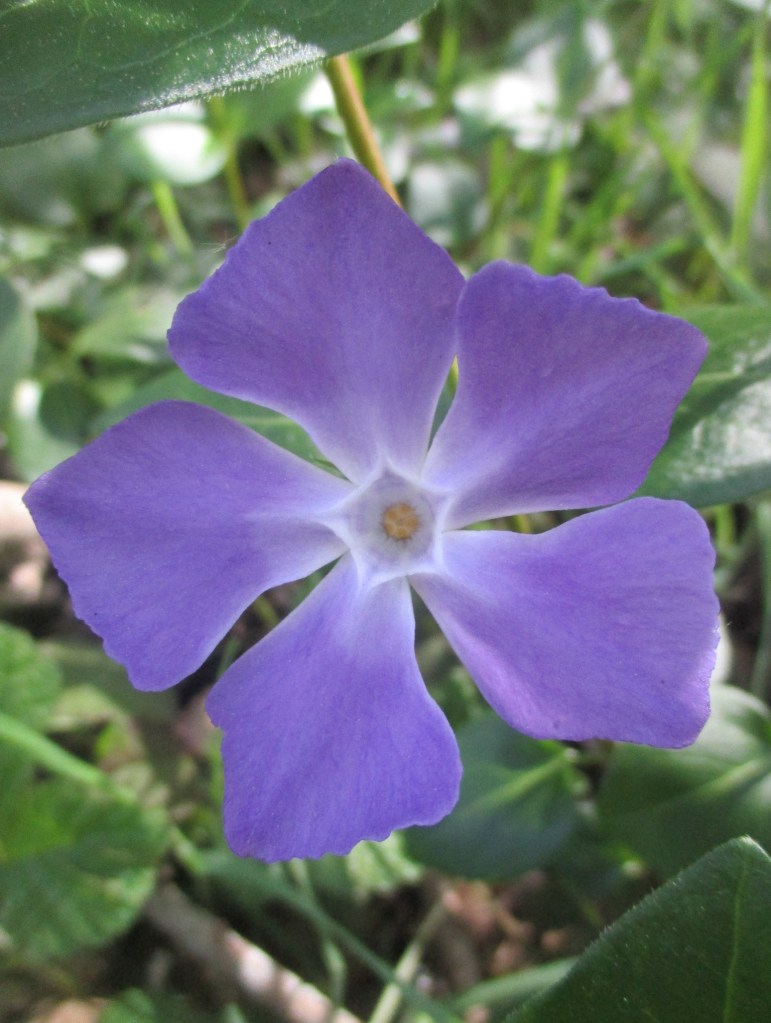
In the landscape, variegated shade tolerant plants brighten shady spots even without bloom. Variegated acanthus, Japanese aralia, andromeda, hydrangea, aucuba and angels’ trumpet show up nicely, especially when they can contrast with the darker green of other plants; although andromeda and hydrangea do not bloom as well in darker shade. Variegated periwinkle and English ivy are nice ground covers, (but potentially invasive).

Variegated trees, like tulip tree and certain maples, stay smaller than their unvariegated relatives, so can be proportionate to large atriums that could use their brighter foliage. Some of the variegated pittosporums likewise function like the unvariegated forms used for informal hedges, but work better in tighter spots.

Even if there is no need to brighten areas that are already sunny, variegated holly, lily-of-the-Nile, bougainvillea, pampas grass and silverberry add nice contrast where there is an abundance of rich green foliage. (However, some people who grow variegated pampas grass are not too impressed by it.) New Zealand flax presently happens to be one of the most popular variegated perennials, with many different personalities of color to choose from. Variegated varieties of several specie of agave and yucca are striking big perennials for the sunniest and even inhospitably hot spots, as long as they are kept at a safe distance. (Many have dangerous spines and teeth!)

Some variegated plants, particularly New Zealand flax, andromeda, Pittosporum tobira and the various maples, try to produce unvariegated mutant growth that grows faster and bigger, and overwhelms the desirable variegated parts. It is therefore important to watch for and prune out unvariegated growth as it appears. For New Zealand flax, this involves diligent digging and splitting to removed unvariegated shoots from the variegated parent plants.

Forcing Early Bloom Even Earlier

Home interior warmth accelerates early bloom.

Some of the earliest of spring flowers are done blooming. More are just beginning. Then, a few early spring flowers barely qualify as early. Their fresh color is especially pleasing after such an atypically wintry winter. Many are delightful cut flowers. A few that bloom on bare deciduous stems are conducive to forcing. Even the earliest bloom could be earlier.

Bare stems are simpler and less wasteful to force to bloom than bulbs and potted plants. Most bulbs and some potted plants do not survive long after forcing. Dormant deciduous plants easily replace a few forceable stems. Forcing such stems is as simple as bringing cut flowers into a home. The difference is that it is premature, immediately prior to bloom.

Flower buds on dormant deciduous stems begin to swell during warming spring weather. Such stems are ready for forcing when these floral buds are about to pop open. Ideally, a bit of floral color should be visible through some of the bud scales. A few flowers may be blooming. Collective bloom accelerates within the warmth of a home interior after cutting.

Flowering but fruitless counterparts of popular fruit trees are some of the best for forcing. These include but are not limited to flowering cherry, plum, apricot and other stone fruits. Flowering pomme fruit trees, such as quince, crabapple and pear are almost as popular. Related fruiting stone and pome fruit trees are as conducive to forcing, but not as garish.

Of course, there is nothing wrong with simpler bloom. Some fancy flowering cherry trees bloom with single white flowers like fruiting cherries. However, cutting stems from fruiting trees decreases fruit production. With a bit of planning, dormant pruning can allow a few undesirable stems to remain. These stems are then available for cutting and forcing later.

Witch hazel cultivars are exemplary for forcing, but are done blooming. Flowering quince and forsythia are now finishing within most climates. Redbud, lilac, wisteria and perhaps weigela are still conducive to forcing. Dogwood and deciduous magnolia can perform as well if humidity is not too minimal. So should some acacias, although their fragrance and pollen may be distasteful.

Culinary Herbs With Landscape Appeal

Rosemary is more common in common landscapes than within dedicated herb gardens.

Because of the unusually mild weather this past winter, many plants are waking up from winter dormancy early. The shrubby herbs like sage, rosemary, lavender and tarragon are already outfitted with fresh new foliage that will soon obscure the foliage that lingered through winter. Those that have not yet bloomed may do so sooner than expected.

New herb plants can be added to the garden any time now. Even if rain resumes (or actually ‘starts’), there should not be enough to cause new plants to rot, particularly since the warming weather will keep plants growing faster than the root rot that can kill them through cool and damp winter weather. Sage, tarragon, marjoram, mint and thyme are easier to grow from small plants. Dill, cilantro and basil are easier to grow from seed sown directly into the garden. Oregano, fennel and chives can be grown by either means.

Many of the woody herbs, like rosemary and the many varieties of lavender, are commonly used in landscaping, so can be found in even the most basic nurseries that do not feature a selection of other herbs. Because almost all herbs have sensitive root systems, they should be planted while small. The smaller 1 gallon plants are easier to grow (as well as less expensive) than the larger 5 gallon plants are. However, sweet bay is an exception that does not mind being planted as a 5 gallon or even larger tree where it needs to look mature now, even if only a few leaves get used in the kitchen. Low growing rosemary is a common ground cover. Upright varieties can be shorn into small hedges. Thyme makes a nice small scale ground cover between stepping stones, where it shares its fragrance when stepped on.

Chives, oregano, parsley, mint and thyme are not often marketed as common landscape stock, but are visually appealing enough to appear in the landscape. Herbs that are not so visually appealing can be planted in a separate herb garden, among vegetables in a vegetable garden, or simply out of the way. Basil, cilantro, tarragon, dill, sage and marjoram can be too unkempt at times. Basil and cilantro look good most of the time, but then get harvested in large enough quantities to leave bald spots. Fennel can be a striking foliage plant for a while as long as no one minds that it will eventually get harvested.

Weeding Before Weeds Start Seeding

Some cultivated species can become weeds.

Weeds are weeds simply because they grow so aggressively where they do not belong. They begin before the weather gets warm enough for desirable plants to grow. Some are already blooming and dispersing seed. This is why weeding is presently very important. Weeds innately compete with desirable vegetation for space, water and other resources.

Weeding should ideally eliminate target weeds before they disperse seed. Some weeds are sneaky. They bloom and disperse seed while young and seemingly innocent. Some conceal their bloom and seed with their lush foliage. They seem to know to do so during rainy weather that discourages weeding. They effectively provide their own replacement.

Some weeds regenerate vegetatively. They grow from stolons, rhizomes, bulbs, corms or other dromant storage structures. Many of these structures were dormant through winter. Some were dormant even longer. They are aware that winter is becoming spring, so now begin to grow. As they do, they generate more of the same structures, perhaps with seed.

Weeding is easiest as soon as weeds are big enough to grip. Their young roots separate easily from their soil before more thorough dispersion. Also, their soil remains thoroughly damp and soft from winter rain. However, it may be easier to eliminate a profusion of tiny seedlings by tilling. Weeding bulkier weeds, such as pampas grass, can involve digging.

Only a few weeds are woody vines, shrubs or trees. More weeds are perennial. The vast majority of weeds are annual. Regardless, the most substantial weeds are woody. Some can regenerate persistently from their stumps. Therefore, weeding of such weeds should involve removal of their entire stumps. It is important to dig rather than cut oak seedlings.

Few native species proliferate undesirably. Therefore, most weeds are exotic. Most were originally desirable, but naturalized. English daisy, periwinkle, pampas grass and broom were formerly popular flowers. Blue gum eucalyptus formerly provided wood pulp. Other weeds formerly grew as vegetables, fruits or grain. Many weeds were once forage crops.

Made In The Shade

Hosta happen to tolerate a bit of partial shade.

Modern gardens are shadier now than they ever have been. Ranch houses that were popular through the middle of the last century had those classic big eaves that shaded wide margins close to the homes. Prior to that, tall Victorian houses made big shadows. Modern houses though are even bigger. To make matters worse, lots and garden spaces are smaller and surrounded by ominously tall fences; so there is less space that is not shaded by something sometime during the day.

This is why small trees, sometimes known as ‘micro-trees’, are so popular. They are all that fit into some small gardens without creating too much shade for other plants. Large shrubbery, like some of the larger types of pittosporum, and some of the smaller types of podocarpus, often function quite nicely as small scale trees. Where not too shaded, pineapple guava and New Zealand tea tree are just as effective. They only need to be allowed to develop upper canopies with adequate clearance, while their lower limbs get pruned away, instead of getting pruned to stay down low as shrubbery typically does.

Camellia, hydrangea, aucuba, Japanese aralia, Oregon grape and Heavenly bamboo (Nandina spp.) are appealing shrubby plants for shady locations. Camellias and hydrangeas of course provide impressive blooms during their respective bloom seasons. Camellias also have the advantage of excellently glossy dark green foliage all year;  but hydrangeas are bare and need pruning in winter. Oregon grape and Heavenly bamboo, which are actually related, are more subdued but look more woodsy in bloom, and sometimes provide interesting berries afterward. Aucuba and Japanese aralia do not need showy flowers because their foliage is so bold. Japanese aralia has bigger and bolder leaves, but common types of aucuba are spotted with gold.

Balsam (Impatiens spp.), which is already one of the most popular warm season annuals that is beginning to get phased in as the weather gets warmer, is not quite as colorful in the shade as it is with better exposure, but can be impressive nonetheless. Cyclamen takes shade as well, but will actually be getting phased out through late spring and summer. Cyclamen is actually a perennial that can stay in the garden (if it is not in the way of anything else) to regenerate next autumn. As weather gets warmer in spring, caladiums and coleus can provide remarkably colorful foliage for shady spots through summer and early autumn.

Various types of ferns, although devoid of flower color, provide distinctive and often bold form and foliar texture. Australian tree ferns can actually get quite large and eventually function as small trees. Baby tears is a finely textured perennial ground cover that spreads as far as it has moisture. It can actually get to be invasive.

Crop Rotation Promotes Garden Efficiency

Squash eventually depletes particular soil nutrients.

Maya Angelou likely enjoyed gardening. She said, “In diversity there is beauty and there is strength”. That is how the healthiest of ecosystems, including home gardens, function. Vegetable gardens are generally diverse. However, each group of a particular vegetable is rather homogenous. Crop rotation can compensate with diversity through the seasons.

Crop rotation is growing different vegetables in particular places from season to season. It is the same as growing particular vegetables in different places from season to season. Distinctly consumptive vegetable plants should relocate each season. Less consumptive sorts may perform adequately in the same place for years. Diversity makes it interesting.

Each type of vegetable plant consumes particular nutrients from the soil. Eventually, they can deplete their soil of these particular nutrients. Crop rotation allows them to utilize the nutrients they need from undepleted soil instead. Meanwhile, other vegetable plants can grow in the vacated soil. These different types of plants utilize different types of nutrients.

For example, tomato plants notoriously deplete the soil of particular nutrients. Corn does the same. However, each depletes different nutrients. Therefore, corn can be satisfied in soil vacated by tomato plants. Likewise, tomato plants can be satisfied in soil vacated by corn. Furthermore, each promotes the restoration of the soil nutrients needed by the next.

Crop rotation also disrupts proliferation of several pathogens that infest vegetable plants. Dormant spores of bean rust disease overwinter in the soil beneath infested bean plants. They efficiently infest any receptive bean plants to occupy the soil during the next spring. However, they can not infest plants that are not related to beans, such as pepper or okra.

Summer vegetables should be situated accordingly as they return to vegetable gardens. Tomato, pepper and eggplants are related, so should not grow where any grew last year. The same applies to bean and pea. Squash and cucumber are related also, but are less consumptive. They may perform adequately within the same soil for more than one year. Several summer and winter vegetables are related.

Rain Can Ruin Bloom And Developing Fruit

Bloom is not really early. Frost and unusually torrential rain just happen to be late.

Again this year, the excellent weather that makes gardening so much fun even through winter has the potential to become a problem. Winters are innately mild here, and like this year, are sometimes mild and warm enough to prompt many plants to bloom much too early. Many of the fruit trees and their ‘flowering’ (non-fruiting) counterparts are already finishing bloom as if it is the middle of spring, even though the equinox is about two weeks away. This should not be a problem for the flowering cherries, plums, pears and apples (flowering crabapples), but is risky for the many trees that should produce fruit.

The problem is that, despite the weather, it really is winter and early spring, so could potentially rain while fruit trees are blooming. The rain can batter the blooms, or cause them to rot before they set fruit, compromising or even eliminating the fruit production for the following summer. Trees that are not blooming, or just barely showing ‘color’ of the first few blossoms, should be safe. Also, the trees that bloomed earliest and have already set fruit should likewise be safe, as long as the weather does not stay rainy too long, which it almost never does here. Trees that are in full bloom when it rains are the most sensitive to damage.

It is impractical to cover mature trees with plastic sheeting to protect them from rain. Even if it is possible to get the sheeting over the trees, it knocks much of the bloom or developing fruit off anyway. Also, if the sheeting is not removed when the rain stops, it can trap humidity, which can rot the blooms that were so carefully protected from the rain. (Although, high trees hold the plastic high enough from the ground to allow for good air circulation.)

Small trees are easier to cover, but do not produce enough fruit to worry about. In other words, it would be easier to buy fruit at a market, or to get it from friends and neighbors with different varieties (that bloom at different times) than to put too much effort into protecting trees from the rain. In most situations, it is best to just accept that fruit trees will sometimes have ‘off’ years when they either do not produce, or produce only minimal quantities of fruit. The good news is that trees that lose some but not all of their fruit often produce best.

Plum bloom is not resilient to late frost or rain.