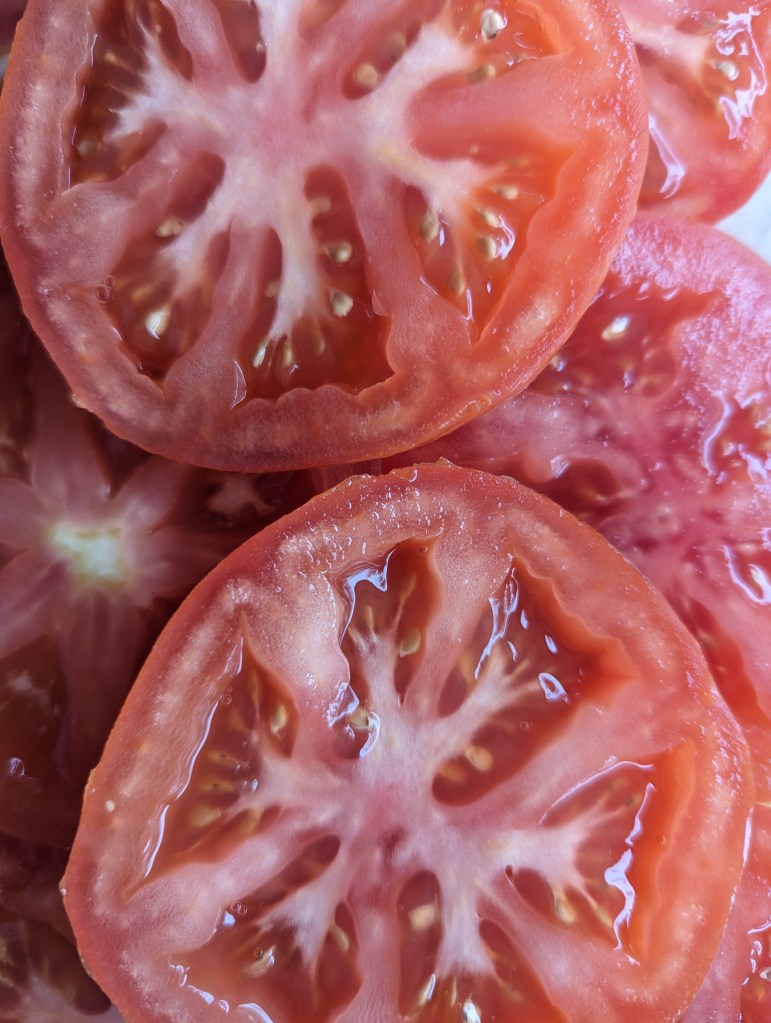
Warm Season Vegetable Plants Begin

Tomato seed should already be sown.

Warm season vegetables, or summer vegetables, can occupy a garden systematically. A few lingering cool season vegetables may continue production for a while. Warm season vegetable plants can replace them as they finish. Several warm season vegetable plants should start as early as possible. Others grow in a few later phases through their season.

For example, indeterminate tomato plants are productive throughout their entire season. They can start as soon as convenient. However, determinate tomato plants produce only for two weeks or so. After their initial phase of a single plant or a few, subsequent phases can start about every two weeks. Each phase continues production after its predecessor.

Bush bean and several varieties of eggplant and pepper also produce for brief seasons. Okra and cucumber might produce for most of summer. Secondary phases may increase their production as well though. Of all warm season vegetable plants, corn benefits most from phasing. Each phase tends to mature so uniformly that it finishes within a few days.

Pole bean, squash, some cucumber and Indeterminate tomatoes need no phasing. Such warm season vegetable plants perform from spring planting until frost. Winter squash are warm season vegetable plants, but their fruit finishes for autumn. Indeterminate tomatoes are less profuse than determinate types. Cumulatively though, they are more productive.

It will soon be time to sow seed for corn, beans, root vegetables and most greens directly into garden soil. Seedlings for these warm season vegetable plants are not conducive to transplant. Besides, too many are needed. Cucumber and squash grow either from seed or small nursery seedlings. Only a few plants are needed, and they transplant efficiently.

For the same reasons, tomato, pepper and eggplant can grow from seedlings rather than seed. Moreover, since they are so vulnerable as they germinate and begin to grow, seed is less practical than seedlings. Varieties that are unavailable at nurseries can grow from seed in flats inside or in a greenhouse. Ideally, they should have started early enough for transplant into a garden during appropriate weather.

Canning

Surplus fruits and vegetables can be canned for later.

It seems to me that the reason that so many of the kids I grew up with do not like apricots is that they were so common when we were younger. Because there were still several abandoned orchards, and most of us had at least one apricot tree in our backyards, we ate apricots in every form imaginable; fresh, dried, in pies, in cobblers, as jams, as apricot nectar (juice) and of course, canned. By the time we grew up and moved on, we were done with apricots.

Apricots happen to be one of the many ‘high-acid’ fruits that are remarkably easy to preserve by canning, which is how and why they are available as jams and canned apricots at any time of the year. In fact, almost all of the fruits that were so commonly grown in the vast orchards of the Santa Clara Valley, like prunes, plums, cherries, nectarines, peaches, apples and pears, are also high-acid fruits that are relatively easy to can in various forms. ‘Low-acid’ vegetables, like broccoli, corn, pumpkin (squash), spinach and beets, as well as meat and poultry, were not so commonly canned only because they take considerably more work to can with the use of a pressure cooker (in order to achieve higher temperatures).

Because home canning can potentially be dangerous if done improperly, it is best to learn something about it first. This is why the Guadalupe River Park Conservancy has arranged for UC Master Preserver Susan Algert to conduct the workshop ‘Safe Methods for Food Preservation and Canning’. Participants will learn the importance of canning to kill toxic pathogens, and why high-acid produce gets canned in a hot water bath while low-acid foods need to be canned in a pressure cooker. Canning is an alternative to freezing for preserving overly abundant produce from the garden.

(Outdated information regarding classes has been omitted from this recycled article.)

Warm Season Bedding Plants Begin

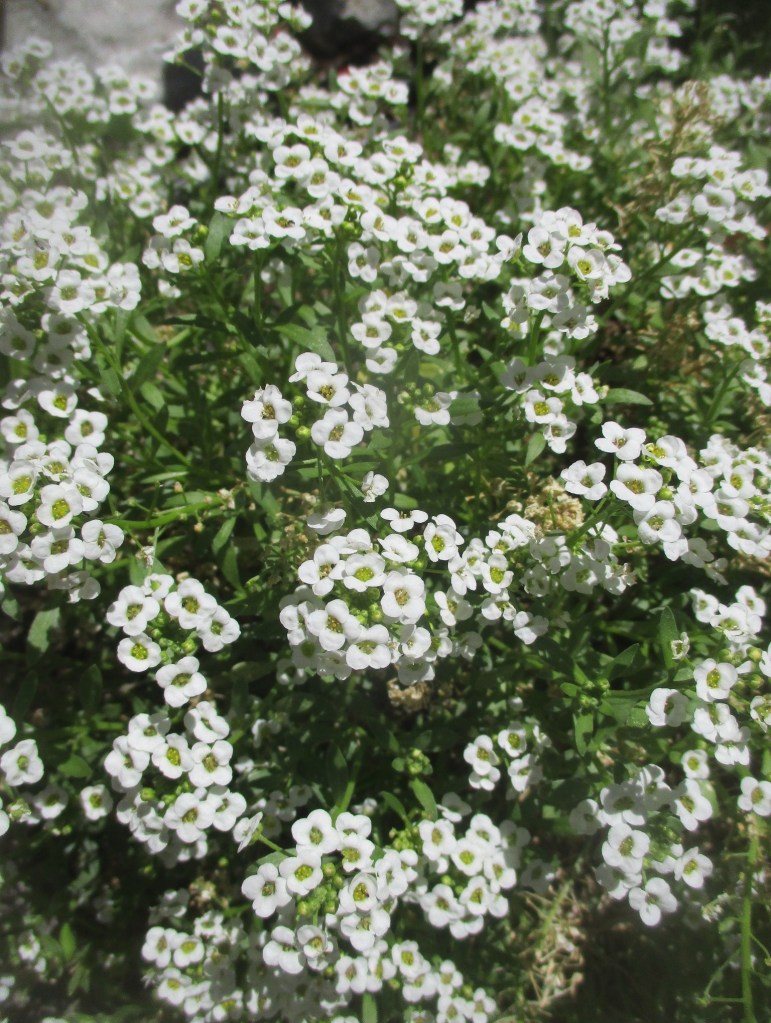
Alyssum grows very readily from seed.

Annual bedding plants are surprisingly more popular among those who enjoy gardening less. Those who procure the services of gardeners appreciate the rich colors and simple efficiency of annuals. Many who are more directly involved with their gardening consider them to be decadent. Nonetheless, warm season bedding plants will soon be in season.

Cool season bedding plants should perform well until the weather becomes too warm for them. There is therefore no rush to replace them yet. Besides, it is likely still a bit too cool for mature warm season bedding plants to be out in the garden. However, seed for warm season bedding plants takes time to grow. Some should start now to be ready for spring.

For example, petunia, impatien and zinnia are some of the most popular of warm season bedding plants. Almost all of them arrive at their respective gardens as somewhat mature plants within cell packs from nurseries. Presently, such plants may be vulnerable to frost. However, seed of these plants that begin now should start to grow after the threat of frost.

Not many of even the most avid of garden enthusiasts grow these popular warm season bedding plants from seed. Yet, a few do so. Some unusual or rare plant varieties are only available as seed. Many common wildflowers and ‘true to type’ annuals provide seed for subsequent generations. Such seed generally start in flats with shelter from frost indoors.

From flats, seedlings may graduate to cell packs or small pots prior to transitioning into a garden. Some should actually begin within cells rather than flats. Seedlings relocate into a garden when adequately mature, whether from flats, cells or pots. Seed for many warm season bedding plants perform best directly in the garden though, without transplanting.

Nasturtium seedlings do not grow well within the confinement of cells. Then, they remain somewhat pekid for a few days while they recover from transplanting into a garden. They grow so much more efficiently from seed sown directly into a garden. Marigold can grow about as well from seed directly in the garden as they can as seedlings that grew in flats.

Gophers!

The best rodent control devices are useless against gophers.

Punxatawney Phil retreated from his shadow on Gobbler’s Knob, predicting a late spring. That was more than two weeks ago, and we are still waiting for a late rainy season to start! Regardless, Punxatawney Phil did his job and has gone back home to hibernate, or whatever he does this time of year. If only all rodents would do the same. Gophers do not ever seem to take any time off.

There is little agreement on how to efficiently evict gophers from the garden. A rodenticide that can only be applied by qualified pesticide applicators is purported to be the most effective means of extermination for large scale landscapes, but is not available to the general public and is very expensive when applied by professional exterminators.

Thumpers, battery powered devices that emit low frequency vibrations at random intervals, are only moderately effective at repelling gophers, and look rather odd in a lawn. Those cheap plastic whirlie thingies that spin in a breeze, causing their wiry stems to vibrate, are probably just as effective if occasionally relocated to keep the gophers from getting too comfortable with them. People who do not consider them to be appealing lawn ornaments think that they are tacky though.

Flooding gopher runs with water, or leaving sharp objects or chewing gum in the runs are generally not effective. It is nearly impossible to flood a system of runs, which is typically equipped with drainage. Gophers who are unfortunate enough to cut themselves on something sharp will bleed to death because their blood does not coagulate, but they are careful to not do so. Likewise, gophers who eat chewing gum will die because they can not digest chewing gum, but they prefer to eat roots. Besides, who really wants make gophers die in such agony?

Good old fashioned McAbee gopher traps, which incidentally were invented in Los Gatos, are probably the most effective means with which to eradicate gophers. They are difficult to set for a beginner; so it is a good idea to get trained by someone with experience. It is also important to set the traps in pairs with one trap in each direction of the main run below the exit tunnel, instead of setting a single trap in the exit tunnel. It takes some extra digging but is worth it. Because each pair catches only a single gopher, the empty trap should be sprung when pulled from the ground to avoid hurting someone. Do not let dogs dig up traps!

Trapping is only a temporary solution. Eventually, more gophers are likely to move in, necessitating more trapping.

Freeze Damage Necessitates Selective Pruning

Warmth stimulates recovery from freeze damage.

Pruning at the proper time has been a concern all winter. Dormant pruning was timely as soon as defoliation began. It remains timely almost until bloom. Pollarding and coppicing are generally although unnecessarily a bit later within that range. Spring pruning begins soon after bloom. Pruning of freeze damage starts after the last reasonable threat of frost.

Frost is as variable as the many climates here. Generally, it causes more damage farther inland and at higher elevations. Conversely and generally, it causes less damage closer to the coast and at lower elevations. Many southern coastal climates experience no frost. However, frigid air drains downhill. Within any plateau, the frostiest areas are the lowest.

Last frost dates should help with scheduling of pruning or grooming of freeze damage to vulnerable vegetation. The last frost date for a climate is the average date of its last frost. Frost becomes increasingly unlikely afterward. That is the best time to add warm season vegetables and annuals to the garden. It is also when to begin grooming freeze damage.

If not too unsightly, freeze damage lingers until the last frost date for two primary reasons. It shelters vulnerable tissue below, including any new growth that develops prematurely. Also, removal of such damage stimulates new growth that would be even more exposed and innately more vulnerable to frost. However, priorities change soon after the last frost.

Then, it becomes important to groom or prune away freeze damage prior to generation of fresh new growth. For milder climates, it is already timely to do so. It might be a while for less mild climates. Even for frostless climates, this might be a good time to groom growth that is only incidentally shabby. Such grooming gets more complicated with new growth.

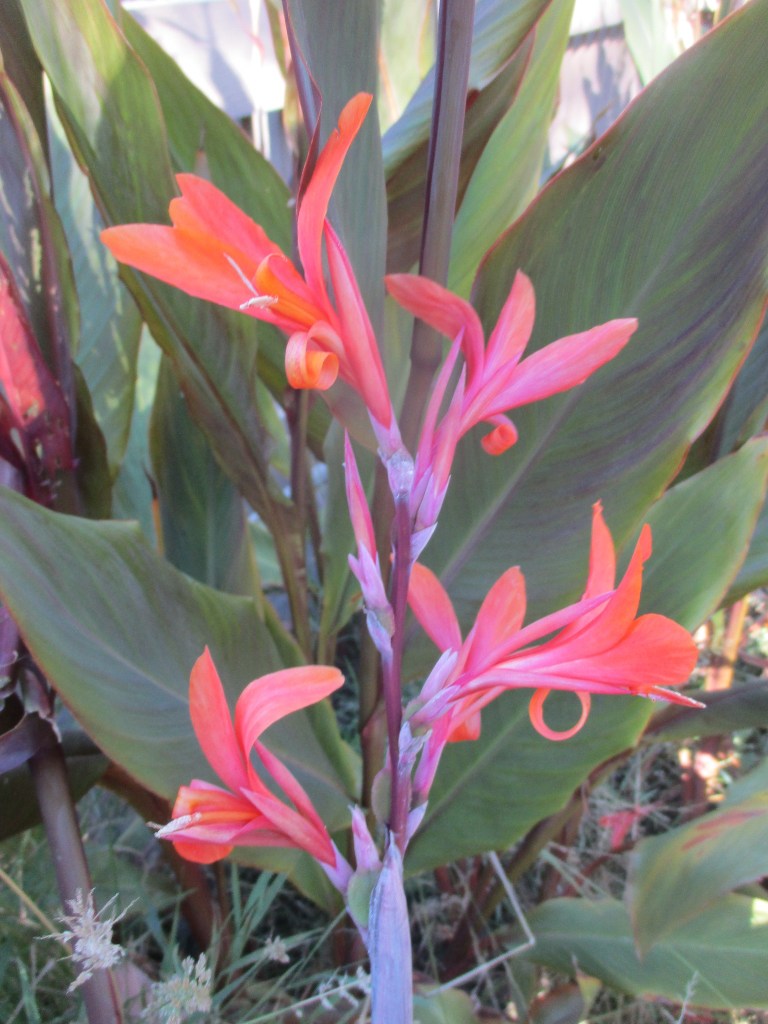
Many zonal geraniums are already extending new growth up through shabby old growth. Removal of such old growth or freeze damage without damaging mingling new growth is no simple task. If new growth stretches for sunlight below old growth, it might flop without support from the old growth. It may be more practical to cut all growth back to regenerate. Canna also develop similar complications.

Warm Season Vegetables Will Soon Replace Cool Season Vegetables.

Radishes grow nicely while the weather is still cool, but will eventually bolt and bloom as weather eventually warms through spring.

Suburban landscapes must seem like an incredible waste of space to those of us who enjoy growing vegetables. The climate and soil of the Santa Clara Valley are just as excellent for vegetables now as they as they were for the vast fruit and nut orchards that were here earlier. Not only are summers just warm enough for warm season vegetables without being too unpleasantly hot, but winters are so mild that cool season vegetables can be productive from autumn until spring.

While cool season vegetables are still productive, a few types that grow quickly can still be sown. Radishes, carrots and even small beets still have time to grow before the weather gets too warm. Peas sown now will get an early start for spring. If leafy lettuces are being exhausted, more can be sown to replace them. Only large vegetable plants, like broccoli, cauliflower and cabbage, need to wait until autumn so that they have a whole cool season to grow through.

It is still a bit early to sow seeds for warm season vegetables directly into the garden. However, seed for some vegetables can be sown in greenhouses or cold frames, to produce seedlings for the garden later. Although beans, corn, most squash and other fast growing vegetables should be sown directly into the garden during warm spring weather, tomatoes, peppers and eggplants prefer to get an early start as seedlings.

(Outdated information regarding gardening classes has been omitted from this recycled article.)

Summer Bulbs Require No Chill

Many bulbs are not actually bulbs.

Narcissus, including daffodil, started to bloom during all that earlier torrential rain. Those that bloomed after the rain stood up a bit better than those that started earlier. Crocus are stouter so are more resilient. Hyacinth are both relatively stouter and slightly later. While such spring bulbs contend with late wintry weather, it is about time to add summer bulbs.

Unlike spring bulbs that like to be in the garden early enough to benefit from winter chill, summer bulbs do not benefit from chill. Some actually dislike it. Also unlike spring bulbs, very few summer bulbs, or late bulbs, are actually bulbs. Almost all are rhizomes, tubers, tuberous roots, corms or other types of dormant but reliably perennial storage structures.

Summer bulbs do not grow through early winter to bloom later in winter or early in spring like spring bulbs do. They instead grow through late winter and early spring to bloom for late spring or summer. A few bloom for autumn. Several are more reliably perennial than the majority of spring bulbs. However, some bloom splendidly only for their first seasons.

Gladiolus is one of the most popular summer bulbs, but like many spring bulbs, it blooms only once annually, and is not reliably perennial. Planting in phases every two weeks or so through their planting season prolongs bloom. However, most corms do not survive to bloom for a second season. Those that do will synchronize for their subsequent blooms.

Dahlia blooms for a longer season from the middle of summer until the middle of autumn. Also, it is more reliably perennial. Tubers remain dormant through winter after stems and foliage die back. They generate new stems and foliage through warming spring weather. Overgrown or crowded tubers propagate efficiently and easily by division while dormant.

Summer bulbs are not quite as diverse as spring bulbs, but some types are too vigorous for much diversity. A few rhizomes of canna can become overwhelming within a year. Old fashioned white calla forms broad colonies that might exclude other perennials. Smaller and more colorful modern cultivars are fortunately docile. Crocosmia might get invasive, and is difficult to mitigate.

Houseplants Naturally Live Outside Somewhere.

Kalanchoe is a popular houseplant here, but grows wild in Madagascar.

The plants grown as houseplants may have serious disadvantages that prevent them from being happy in the garden, but have other advantages that help them survive indoors. They tolerate the lack of direct sunlight, the lack of humidity, the minimal fluctuations of temperature and the confinement to pots that they must endure for a domestic lifestyle. Their main difficulty in the garden is most are from tropical climates, so can not tolerate cold winter weather.

However, even happy houseplants like to get out once in a while. Even though most can not survive the coldest winter weather, the mildest winter weather is actually the best for them to get supervised outings. During clear and warm summer weather, sunlight can easily roast foliage.

Houseplants with glossy tropical foliage occasionally like to be rinsed of dust and whatever residue that they accumulate in the home. (African violets and plants with fuzzy leaves do not want water of their foliage!) Foliage can be rinsed in a shower or with a hose, but are more gently rinsed by very light drizzly rain.

Timing is important. Unusually cold or heavy rain should be avoided. Plants should be brought in before the sun comes out. It is probably best to not leave plants out overnight when it gets colder and they are not likely to be monitored. While the plants are outside, mineral deposits can be scrubbed from the bases of the pots.

The rain needs to fall this time of year anyway, so it may as well go to good use in as many practical ways as possible. It may be a while before it flows into the aquifer and gets pumped out to come back later for use around the home and garden.

So much of the water that gets used around the home has the potential to be used again. With modifications to plumbing and the sorts of soaps and detergents used around the home, used water, politely known as ‘greywater’, can be redirected, collected and distributed to the garden. Water may not be so important in the garden this time of year, but a Greywater Workshop happens to be coming up next week; and advance registration is required.

The Guadalupe River Park Conservancy’s Adult Greywater Workshop (for ages eighteen and up), ‘Greywater Basics: Reusing Household Water in your Landscape’, will be from 9:00 a.m. to noon on February 18th. The Workshop will be at the Guadalupe River Park and Gardens Visitor and Education Center at 438 Coleman Avenue in San Jose. Admission is $15, or $10 for members. More information is available, and reservations can be made, at www.grpg.org  or by telephoning 298 7657.

Spring Pruning Breaks The Rules

Spring pruning allows bloom to finish.

Dormant pruning is the best pruning. It happens while the subject plants that benefit from it are dormant and unaware of such procedures. Such procedures would be significantly more distressing to plants while they are vascularly active. In comparison, spring pruning may seem to be cruel and tortuous. Nonetheless, it is justified for particular applications.

For most plants that benefit from dormant pruning, the worst time to prune is immediately after the best time. Such plants are most vascularly active while blooming and refoliating during early spring. They become more resilient to pruning as they finish bloom and their foliage matures. This generally applies to plants that benefit from spring pruning as well.

The primary difference between plants that prefer dormant pruning and plants that prefer spring pruning is their primary purpose. Several plants that benefit from dormant pruning produce fruit. Plants that benefit from spring pruning merely produce profusion of bloom. Dormant pruning concentrates resources. Spring pruning allows maximum spring bloom.

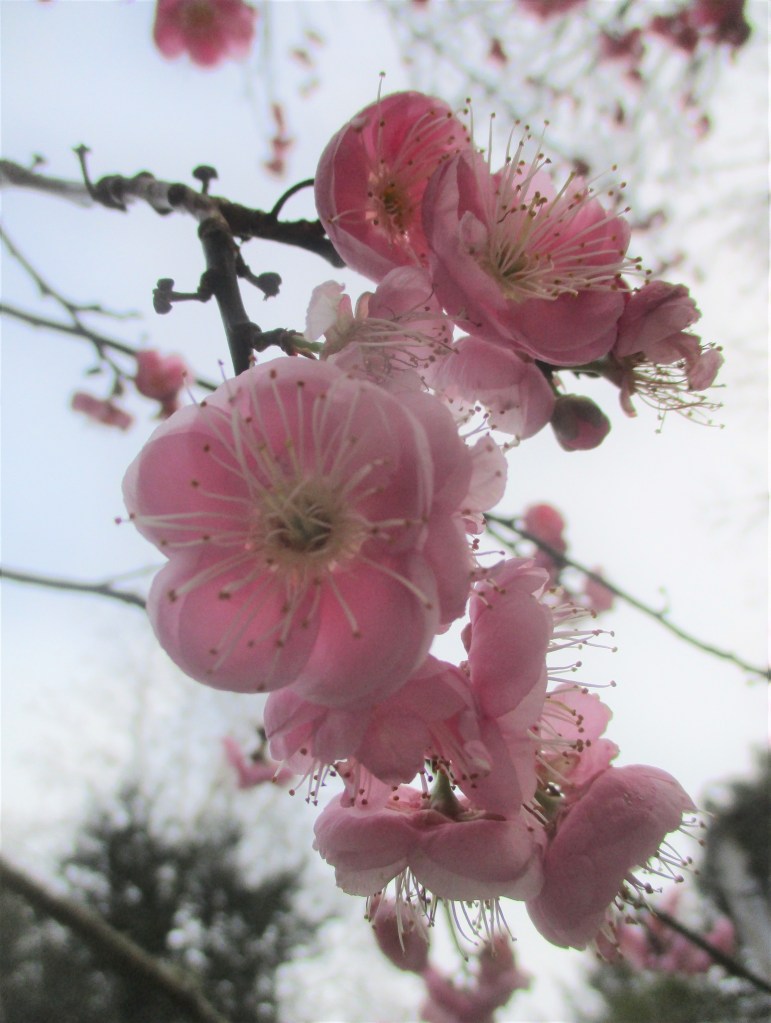
For example, flowering plum is like a sterile but prettier version of fruiting plum. It merely blooms impressively without subsequently fruiting. There is no need for dormant pruning to concentrate resources into fruit, or to compensate for fruit weight. When and if pruning becomes necessary, it can happen after any unwanted growth has contributed to bloom.

Flowering cherry, flowering crabapple and flowering quince may actually prefer dormant pruning like their fruitful relatives do. However, like flowering plum, they also bloom more abundantly prior to spring pruning. Unrelated dogwood, redbud, forsythia and even New Zealand tea tree likewise benefit from spring pruning, which is the same as late pruning.

In moderation, blooming stems of plants that get either dormant or spring pruning can be delightful as cut flowers. A few unpruned stems can remain after dormant pruning for that purpose. They only need proper pruning when harvested or after bloom. Likewise, plants that get later spring pruning after bloom can likely spare a few stems while still blooming. Alternatively, such stems should be conducive to forcing.

RAIN!

Rain is naturally and innately . . . wet.

(February 12, 2012)

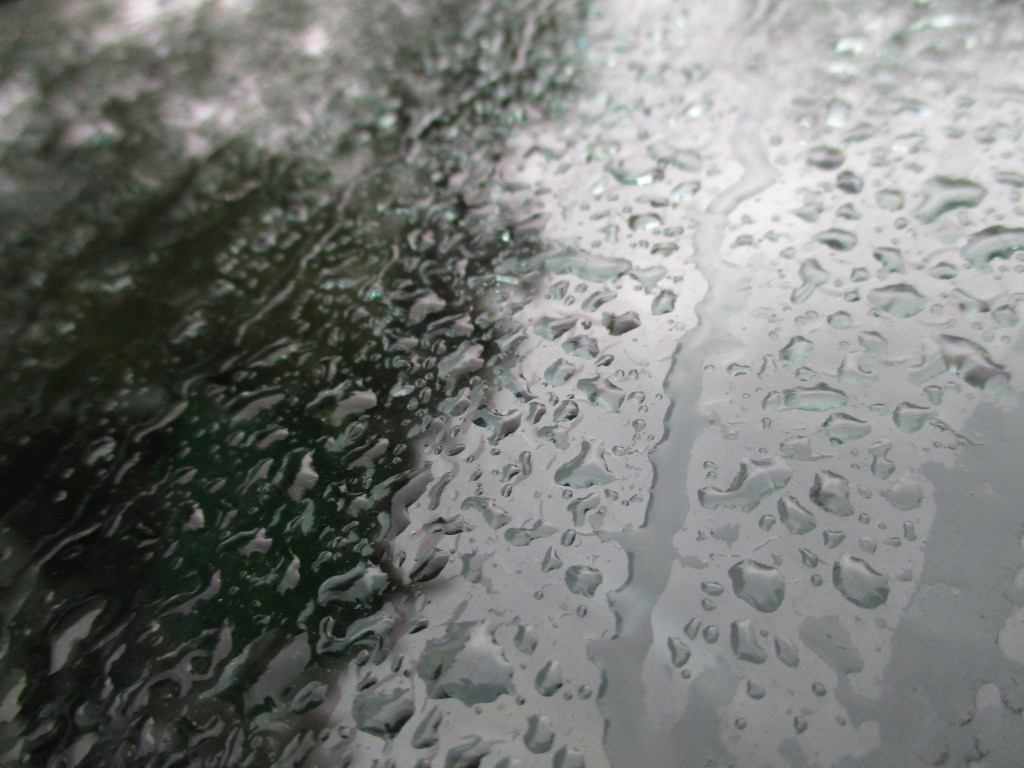
More than a week ago, many of us were astonished to witness countless drops of water miraculously falling out of the sky! What could this be? Where did this water come from? It is actually not such a mystery. These unfamiliar falling drops of water are merely a type of weather known as “rain”. “Rain” is actually nothing new, and happens every winter. Typically, there should have been an abundance of “rain” by this late in winter.

The problem with “rain” is that it is wet. Whatever it encounters also becomes wet, and often messy. Wet dirt becomes mud. Wet roads are hazardous to traffic. It is uncomfortable to go outside to do any gardening when everything is wet and muddy.

However, “rain” is very important to everyone’s survival. It is what moves water from the oceans back onto land, so that it can be collected and used for the many things that water is needed for. “Rain” also brings needed water to gardens, landscapes, and even the forests outside of urban areas. In one way or another, every living thing needs “rain”.

But wait! There’s more! “Rain” so efficiently waters gardens and landscapes that no other watering is needed! Most watering systems should therefore be turned off as long as there is enough “rain” to keep everything wet. Even when the “rain” stops, cooler temperatures and higher humidity keep things from drying as efficiently as they would during warm summer weather. Consequently, most watering systems can remain off until after winter, when the “rain” stops until next winter, and the weather gets warmer.

Actually, the only plants that may want water are those that are sheltered from the “rain”, and perhaps a few large potted evergreen plants that continue to lose enough moisture by evaporation from their foliage to get a bit dry between periods of “rain”. Even these sheltered and potted evergreen plants use less moisture this time of year because they are less active, and evaporation from their foliage is limited by the weather.

Remember; for plenty of moisture that is one hundred percent natural and absolutely free, try “RAIN”!