Dried Floral Material Worth Recycling

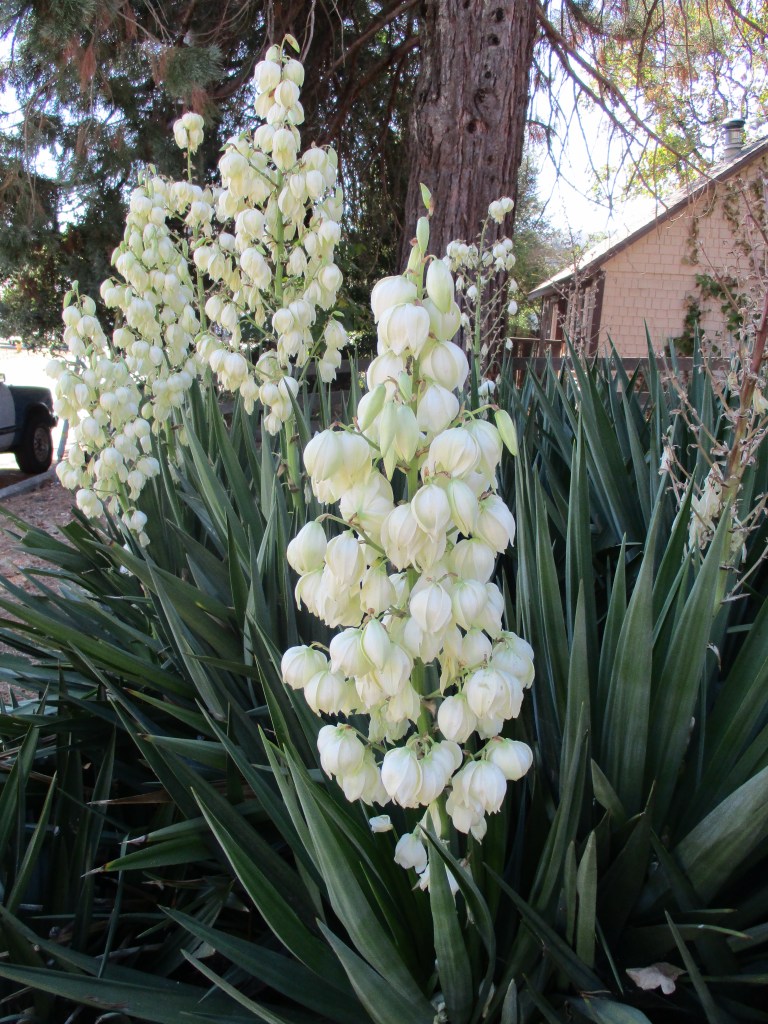
Yucca bloom produces interesting floral stalks.

Gardens might be colorful throughout the year here. There is not much time between the latest of the autumn flowers and the earliest of the spring flowers. Winter flowers are glad to compensate for the lapse. Of course, there are plenty of flowers in spring and summer. Nonetheless, dried flowers are more popular now that there are fewer flowers for cutting.

The quantity of flowers blooming within a particular season might not be proportionate to the quantity of flowers available for cutting. Flowers that bloom through winter, even if as abundant as spring or summer flowers, do not develop as fast. Harvesting too many bird of Paradise flowers depletes the limited supply before something else can replace them.

Deciduous foliage that provides spectacular color through autumn is no substitute for cut flowers. Nor is the majority of colorful bark that becomes more prominent through winter. Some colorful berries can function like cut flowers, but only if there are plenty to spare in the garden. Conventional dried flowers that grew last summer may be useful about now.

For the venturesome and resourceful, unconventional dried flowers and other dried plant parts can also be fun. Such items, unlike statice, straw flower, lavender and other familiar dried flowers, might be byproducts of gardening. They might be derived from detritus that should otherwise go to compost or greenwaste. Some might even be products of weeds!

Pampas grass, both garden varieties and the invasively naturalized type, produces bold blooms that dry quite well. Because the leaves can cause such nasty paper cuts, flowers might be easier to harvest from a distance, with a pole pruner. Hair spray can contain the fuzz, so that it does not disperse indoors. Cat tails, if still intact, are compatible with them. 

Floral stems of lily of the Nile, New Zealand flax, and some species of Yucca are striking even after bloom. After deadheading, they can become flowerless dried flowers. Fruiting structures are no problem to remove. If within reach, some palms may provide distinctive bloom trusses. Floral design can be as imaginative as gardening and landscape design. 

Dried Flowers Last All Year

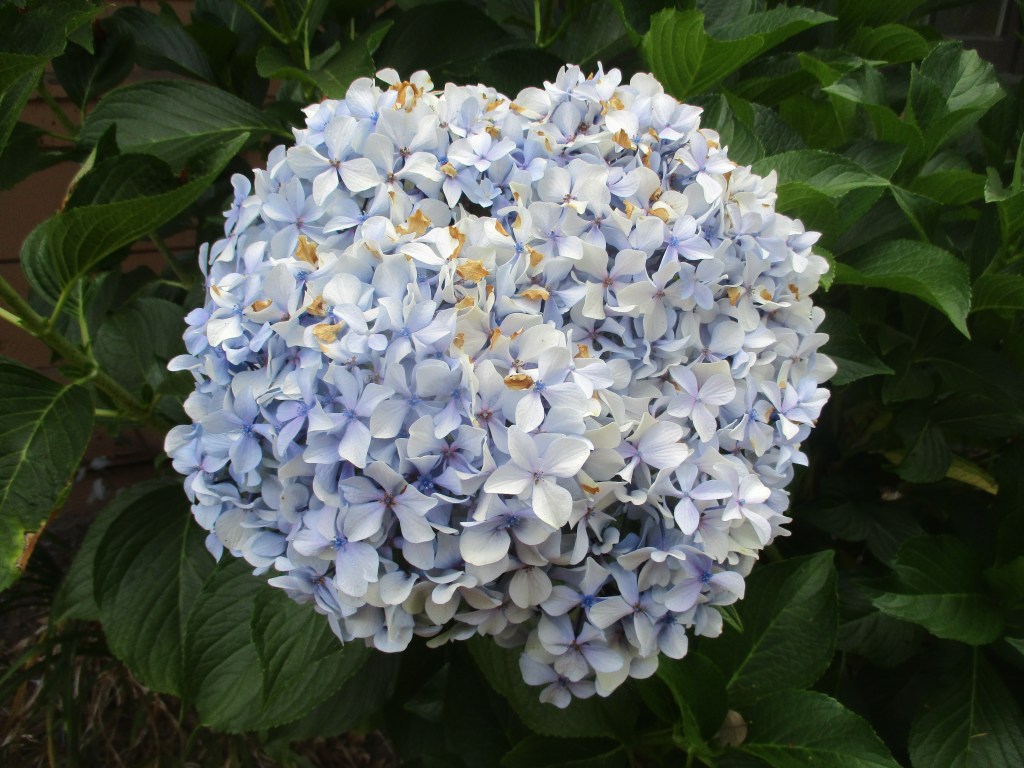
With proper processing, hydrangea bloom can be dried.

Statice, strawflower and globe thistle continue to bloom later than most other summer annuals, and hold their flowers longer. Even after bloom, the flowers are so stiff and ‘crispy’ that they remain intact and colorful until they succumb to exposure to weather. If cut and brought in from the weather soon enough, they will last as dried flowers at least until fresh flowers start to bloom in the garden next spring.

Strawflower and larger globe thistle tend to wilt and droop from the weight of the bulky flowers, so should be tied in small bunches and hung upside down to dry. Perennial statice (which has larger blooms than annual statice) tends to flop to the ground, but the stems often bend only at the base so that the rest of the stem length stays somewhat straight. Smaller globe thistle and annual statice often dry standing up while still out in the garden.

Yarrow and English lavender can be dried as well, but lose most of their color. Lavender dries naturally in the garden. Yarrow can likewise be allowed to dry in the garden, but probably keeps a bit more color if cut while still fresh and hung upside down. Because yarrow blooms are so wide, they should be hung individually or in small bundles. Queen Anne’s lace has even wider blooms that curl inward as they dry, so they really should be hung individually.

Old hydrangea flowers that are only beginning to fade can dry surprisingly well if cut and hung individually before they deteriorate too much or start to rot. Some varieties retain color better than others. Some fade almost completely to an appealing brown paper bag.

There are not many roses this time of year, but when they do bloom, even they can be cut and dried while beginning to unfurl. Only a few small and tightly budded roses can be dried when completely open. Because they droop right below the blooms, roses should be hung upside down to dry. Dark colored roses get very dark as they dry. White roses turn tan. Pink and yellow are probably the better colors.

Cat-tails and pampas grass flowers are big, bold and dated cut flowers. Yet, for situations where big flowers fit, they are just as practical now as they were in the 1970s. Because pampas grass flowers shed, and cat-tails can explode (to disperse their seed), they should be sprayed with hair spray or another fixative to keep them contained. Pampas grass foliage has dangerously serrate edges that can give nasty paper cuts, so should be handled carefully, and displayed out of the way.

Evergreen Tendencies Are No Mistake

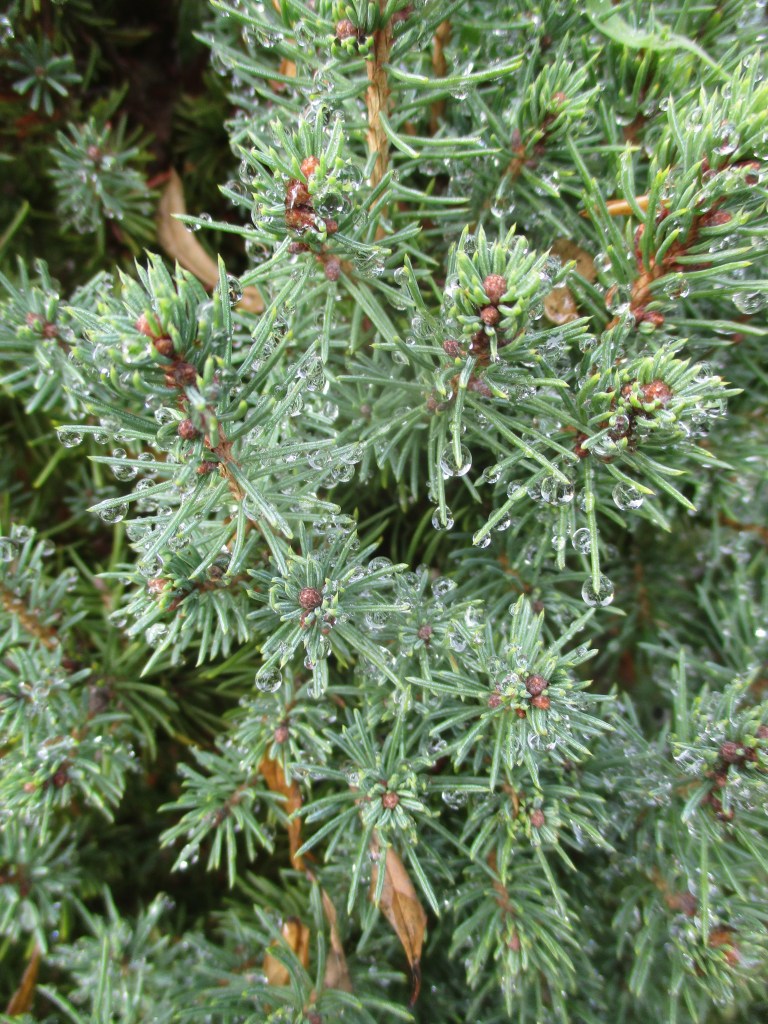
Evergreen foliage is resilient through winter.

Evergreen plants retain foliage throughout the year. Deciduous plants defoliate for part of the year. That is the simplest explanation. The various reasons for shedding or retaining foliage are not so simple. Annual plants die after their single growing seasons. They can not live long enough to be either evergreen or deciduous. Some plants just may be both.

Foliar color, to some extent, conforms to preferable environments. Monterey cypress and Monterey pine have richly deep green foliage. It maximizes absorption of sunlight within the foggy coastal regions that the trees inhabit. Blue spruce has glaucous bluish foliage. It reflects a bit of sunlight to protect from sun scald within severe high mountain climates.

Similarly, deciduous plants generally defoliate for environmental situations. Most go bare for winter, in order to be less susceptible to damage from wind and snow. Bare stems do not collect as much heavy snow as foliated growth. They are also less resistant to wintry winds. If foliated, they are more likely to succumb to wind or overburdening snow weight. 

Evergreen plants may retain their foliage because they are from climates in which winter weather is not so harsh. Wind may be no more extreme than it is in other seasons. Snow may never occur. Plants from tropical regions may be unfamiliar with colder weather and shorter daylength associated with winter. Their evergreen foliage might function all year.

Some tropical plants that are evergreen within their native environments may defoliate or die back as a result of even mild frost. Some recover as if deciduous. (Those that can not survive local climate conditions are not very popular here.) For example, canna die back to the ground after frost, but regenerate later. In tropical climates, they can be evergreen.

Evergreen species from mountainous regions or extreme northern latitudes are generally uncommon here. They prefer harsher weather. Although evergreen, they are remarkably resilient to wind and snow in the wild. They are likely evergreen to always stay receptive to limited sunlight whenever it is available, though wintry weather is possible at any time. 

Many Perennials Want Seasonal Grooming

Where frost is not a major concern, old canna foliage can be cut back as new growth develops.

Here on the west coast, autumn and winter weather is so mild that the native coral bells are already starting to develop new foliage on top of the old foliage from this last year. Technically, they are evergreen, so the old foliage does not need to be shed; but if it is not too much to ask, some types look better with a bit of grooming.

Other perennial plants that are from climates with stronger seasons and colder winters are not quite so evergreen. Many shed all of their foliage and are completely bare for at least part of the winter. Only a few, like cyclamen, are at their best through autumn and winter.

Dried watsonia foliage should be removed now if it has not been removed already. It is not so easy to pluck off like gladiola foliage is, so it should be cut off with shears. Because new foliage for next year develops before the old foliage of this past year is completely brown, it is often necessary to cut the old a few inches above the ground in order to avoid damaging the new.

The so called ‘evergreen’ daylilies can be even messier. New foliage is rather delicate, so it is easily tattered by the removal of old foliage. The ‘deciduous’ types may seem to be less appealing because they are bare for part of autumn and winter, but are so much easier to groom by simply removing all of the deteriorating old foliage as soon as it separates easily from the roots.

Deteriorating flowers can be removed from cannas; but their lush foliage can stay until it starts to deteriorate later in winter. Even if it survives winter, it should eventually be cut to the ground as it gets replaced by new growth in spring.

The many different iris have many different personalities. Most should be groomed sometime between summer and late autumn, although Dutch iris were groomed much earlier. Bearded iris that do not get divided can be groomed simply by plucking off big old leaves to expose smaller new shoots below.

Some dahlias bloom until they get frosted. Most though, are already finished. They do not need to be cut back all at once, but can be cut back in phases as leaves and stems dry and turn brown.

ISA Certified Arborists Know Trees

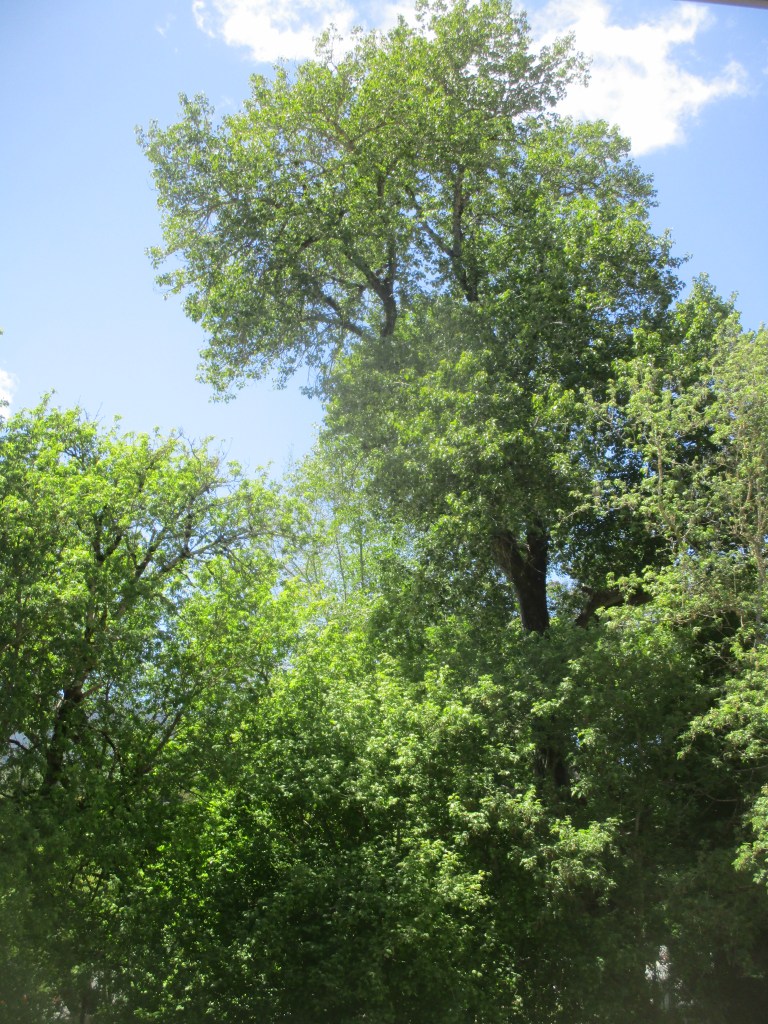
Arborists work with the big trees.

Arborists are horticulturists. They just happen to be more specialized than most. Many or most other horticulturists work with flora that they engage from the ground. Arborists work exclusively with trees. Some must leave the ground to do so. The most experienced and educated arborists are those certified by the International Society of Arboriculture or ISA. 

ISA certification requires an arborist to pass an examination of arboricultural proficiency. Continued participation with ISA endorsed classes, workshops or seminars is necessary to maintain certification afterward. Arboricultural industries are demanding, with stringent professional standards. Certification with such industries is correspondingly demanding.

General information about the International Society of Arboriculture is available online at isa-arbor.com. This site, although designed for arboricultural professionals, is informative also for those who must procure the services of an arborist. The directory of ISA certified arborists can identify local arborists, as well as the tree services with which they affiliate.

Although arboriculture is pertinent throughout the year, it seems to become more so with the first storms of autumn. Some trees prefer dormant pruning during winter. Others might perform best after summer pruning. Various trees have various preferences. Regardless, the need for arboriculture becomes apparent as weather breaks limbs and uproots trees.

Trees are innately the most substantial and relatively permanent plants in home gardens and landscapes. Unlike annuals and some perennials, trees are not disposable, or easy to remove if they become too problematic. Many eventually get too big for those who are not experienced arborists to engage. That is why too many trees need professional help. 

Many municipalities require permits for the removal of significant trees. Inspection by ISA certified arborists, and associated reports, are generally prerequisites for the issuance of these removal permits. Some municipalities are more protective of trees than others. ISA certified arborists try to be familiar with the ordinances of the various municipalities in which they work.

Collect Fallen Leaves Before Winter

Fallen leaves can clog drainage.

The problem with all the colorful foliage that adorns so many of the deciduous trees in autumn is that it does not stay in the trees too long. Combined with all the other less colorful deciduous foliage, as well as whatever evergreen foliage happens to fall this time of year, it will become quite a mess by winter. Rainy and windy winter weather will only make it messier by bringing down even more foliage!

Contrary to popular belief, many evergreen trees are just as messy as deciduous trees are. Instead of dropping all their foliage in autumn or winter, most evergreens drop smaller volumes of foliage throughout the year. The mess is less obvious since it sneaks up slowly, but can accumulate over a few months. Only a few evergreen trees drop much of their foliage in more obvious seasonal phases.

Debris from evergreen trees is actually more likely to be a problem for plants below. Pines, cypresses, firs, spruces, cedars, eucalypti and many other evergreen trees produce natural herbicides that inhibit the emergence of seedlings of plants that would compete with them in the wild. In landscape situations, this unfortunately interferes with lawns, ground covers and annuals. Besides walnuts and deciduous oaks, not many deciduous trees use this tactic.

Regardless, any foliar debris can be a problem if allowed to accumulate too long. Large leaves, like those of sycamore, can accumulate and shade lawn, ground cover and some dense shrubbery, and can eventually cause mildew and rot. Finely textured foliage, like that of jacaranda or silk tree, can sift through most ground covers to the soil below, but can still make a mess on lawn.

Before rainy weather, debris should be cleaned from gutters and downspouts. Because some foliage continues to fall through winter, gutters will likely need to be cleaned again later. Flat roofs and awkward spots that collect debris, such as behind chimneys, should also be cleaned.

Gutters at the street are more visible and accessible, so do not often accumulate enough debris to be a problem, but may need to be cleaned if they become clogged with debris washed in by the earliest rains. Fallen leaves should be raked from pavement so that it does not get dangerously slippery, or stain concrete too much.

Gutters Collect Falling Autumn Leaves

Fall color will soon fill gutters.

Autumn is also fall for a reason. It is the season during which most deciduous foliage will fall. Some deciduous trees that lack good fall color may look neater without their shabby old foliage. Sadly though, the splendidly colorful deciduous trees must shed also. All that collective debris that succumbs to weather and gravity gets messy, and can clog gutters.

Evergreen plants shed too. They are just sneakier about it. Some shed old foliage during spring or summer while simultaneously replacing it to stay evergreen. Some shed slowly but steadily for several months, rather than concentrating the mess within a brief season. Many shed during autumn though, as wind and rain dislodge their lingering older foliage. 

Whether deciduous or evergreen, various plants shed at various rates. Monterey cypress shed so steadily through the year that they are never caught in the act. Fruitless mulberry can defoliate in just a few days if frosted suddenly enough. Sudden defoliation seems to be messier, but can be an advantage. For example, gutters may need cleaning just once. 

Weather is also variable. Rain began a bit early this year. The associated dampness can accelerate defoliation for some species. Other species respond more to temperature. An early chill may accelerate their shedding. It is therefore impossible to predict when it will be necessary to rake fallen leaves or clean gutters. There are simply too many variables. 

Unfortunately, the weather that causes leaves to fall is the very same weather that makes raking and cleaning gutters so unpleasant. No one wants to work in the garden while it is cold. Nor does anyone want to get onto a dangerously wet roof to clean gutters. There is no need to rake or clean gutters before rain and cool weather cause debris to fall though. 

It should be obvious when it is necessary to rake leaves from lawn, pavement and street gutters. Bigger leaves tend to be more problematic by clogging drainage. Smaller leaves may just as easily stain pavement or decking though. Roof gutters are not so visible, but probably need cleaning while raking is necessary nearby, and hopefully before clogging. 

Gardens Show Their True Colors

California gets autumn foliar color too.

Contrary to popular belief, good autumn foliar color, or ‘fall color’, is possible on the West Coast. Mild weather only limits the options for trees, shrubs, vines and perennials that color well. Besides, autumn foliar color simply is not a popular priority in western gardening.

Boston ivy must be the best climbing vine for color in autumn. Unfortunately, it is too aggressive for refined urban gardens, and clings with ‘holdfast discs’ that damage the surfaces that it climbs. It is better for freeway soundwalls and interchanges. Grapevine is a more docile option, and also produces grapes, but most cultivars (cultivated varieties) are not too remarkably colorful. Wisteria can turn an appealing shade of soft yellow where well exposed, but its best asset is still the colorful and fragrant bloom in spring.

Eastern redbud, crape myrtle, smoke tree and currant are some of the better shrubbery for autumn foliar color. Of these, Eastern redbud develops the most subdued shade of yellow; and crape myrtle develops the most brilliant shades of yellow, orange and red. Both are incidentally considered to be small trees. Smoke trees that have purplish foliage in summer are typically less colorful in autumn than those with green summer foliage. Some of the Japanese maple trees that display good color in autumn are smaller than some of the larger shrubbery.

The North American and European maples that are so colorful where autumn weather is cooler are not so impressive here. Even if the color is good, the foliage does not linger very long, but instead falls as soon as the weather gets breezy or rainy. Silver maple and box elder (which is actually a maple) which are so pretty and green through summer can actually look rather dingy as they yellow for autumn. Fruitless mulberry, tulip tree, black walnut and the various poplars and locusts can color well if the weather is just so, but display only bright yellow without orange or red. Maidenhair tree impresses with the same limited color range only because it is so reliable, and the yellow color is so very brilliant.

Really, the best trees for autumn foliar color are still sweetgum, Chinese pistache and flowering pear. They do not need much cool weather to display impressively brilliant blends of yellow, orange and red. Where the messy fruiting structures (maces) and aggressive roots are not likely to be a problem, sweetgum is a tall and elegant shade tree. Sweetgum trees innately hold their colorful foliage well, and some sheltered trees sometimes hold their foliage through most of winter. Chinese pistache is neither as messy nor as aggressive as sweetgum is, as it forms a broad and low canopy that is likely to need pruning for adequate clearance. It is becoming more popular as a street tree in many municipalities. Flowering pear is perhaps the most cooperative of the three if pruned to improve structural integrity while young, but stays smaller than the others. It is actually quite proportionate to smaller gardens of modern homes.

Red Berries For Migrating Birds

Firethorn berries are the most colorful.

Red berries that ripen through autumn and into winter are becoming prominent. They are too brightly colorful and profuse to hide. Those that do not attract too much attention from wildlife may linger after floral color is finished. Some may last longer than the earliest fall color. Otherwise, if wildlife consumes all of the red berries, that is what they are there for.

Plants are naturally exploitative. Since they are inanimate, they exploit that which is not. Those that do not rely on wind for dispersion of their pollen and seed expect insects and animals to do it instead. Their flowers appeal to preferred pollinators, using color, texture, form, fragrance and flavor. Their fruit, which contains their seed, uses similar techniques. 

Red berries mature at this time of year for two primary reasons. Plants that produce them prefer their seed to disperse during autumn or early winter. Also, they know that they can rely on birds or other wildlife to eat the red berries, and subsequently ‘disperse’ the seed within. Overwintering wildlife and migratory birds are particularly hungry as berries ripen. 

Red berries are popular in home gardens for two primary reasons. Some people like the birds and squirrels who come to eat the fruit. Most people simply appreciate the red color while floral color is potentially scarce. Unfortunately, it is impossible to predict how birds will behave. They may prematurely consume berries that should provide color for winter.

Although various hollies provide delightfully glossy and densely evergreen foliage, their red berries are scarce or absent without male pollinators. (Hollies are dioecious, so their genders are distinct.) Male cultivars, which had been rare for several decades, have only recently become more available. Yet, even with pollinators, holly berries are not the best. 

Firethorn (Pyracantha), toyon and a few cultivars of cotoneaster are more prolific with red berries. Toyon, or California holly, is native, and is the namesake for Hollywood. It is best in wild landscapes where it needs no pruning. Firethorn produces the most berries but is also very thorny. Some cultivars of cotoneaster are both thornless and pleasantly prolific. 

Vegetables Can Grow All Year

Cucumbers fill in between warm and season vegetables and cool season vegetables, so will finish prior to frost.

Tropical plants are clueless. They do not understand that autumn is just prior to winter, when the weather may get uncomfortably cool. Philodendron selloum continues to develop fresh new leaves that mature slowly in cool autumn weather, and may consequently lack resiliency to frost in winter. Vegetable plants and flowering annuals are not so ignorant, which is why so many that were productive through summer are nearly finished, and some are ready to relinquish their space to cool season counterparts.

Like the many warm season vegetables, most of the cool season vegetables should be grown from seed sown directly into the garden. Only those that produce efficiently from fewer but substantial plants, like broccoli, cauliflower, cabbage, Brussels sprout and some of the heading lettuces, can be grown practically from seedlings purchased in cell packs. Because individual plants produce only once, more can be added to the garden in phases every two to four weeks through the season to prolong production.

Chard, kale and collard greens can likewise be grown from cell pack seedlings if only a few plants to harvest as intact heads or large leaf greens are desired. However, a package of seed costs about as much as a single cell pack of only six seedlings, but contains enough seed for many more mature heads, as well as for abundant production of ‘baby’ greens plucked from many juvenile plants through the entire season. Those to be harvested as heads should be planted in phases with enough space to mature. Those that will get plucked through the season can be sown or planted once early in the season, and perhaps followed by a second phase if productions starts to diminish.

Root vegetables, such as beet, carrot, turnip and radish, really do not recover well from transplanting from cell packs. Individual cells are sometimes crowded with too many seedlings that must push away from each other as they mature. Otherwise, if not crowded, each cell contains only a few seedlings that are not nearly as practical as simply sown seed would be.

Although each individual root vegetable plant produces only once, they all mature at different rates, so most types can be sown in only one or two phases instead of several phases every two to four weeks. If the biggest get pulled first, the smaller ones continue to mature. They are less perishable than other vegetables, so any abundance is not likely to be wasted.

There are three practical ways to grow onions. They are most popularly grown from seed or from ‘baby’ onions known as onion sets. The third and sneakier way to grow them is from separated cell pack seedlings. Cell packs typically contain too many onion seedlings that would develop into crowded clumps anyway. There are often as many seedlings as could be grown from a package of seed!

Peas get sown as seed early in autumn to grow and produce before winter gets too cold. Another phase can be sown as winter ends for spring production.