Produce Fresh From The Garden

Cucumbers grow in spring or autumn.

Plants notice it before people do. They respond accordingly. Vegetative growth slows or stops completely. Most remaining bloom does likewise. Fruit and seed finish developing. Less fresh produce is available from the garden. Boston ivy and Japanese maples might already be changing color. They all know that the days are shorter and nights are cooler.

Warm season produce gets less abundant as summer ends because most is fruit, which contain seed. Most plants naturally finish with seed production prior to autumn. Most cool season produce is truly vegetative and lacking seed. It naturally grows during autumn or winter, with the (‘fruitless’) intention of blooming and fruiting during the following season.

It seems as if warm season vegetables were replacing cool season vegetables from last winter only a few months ago. Perhaps they were. That process began about half a year ago, but never completely stops. Various phases of various vegetables start and finish at various times. Now, some warm season vegetables might continue to produce until frost. 

Corn is of those warm season vegetables that remain productive. Seed for the last phase would not have been too late if it got into the garden two weeks ago, but will take time to produce. Broccoli seed sown at the about same time could be the first of the cool season vegetables in the garden. However, it is likely more practical to plant seedlings a bit later. 

Seed for cabbage and cauliflower can go into the garden now. Alternatively, it should do as well in flats or cell packs, for later planting. This procedure delays their occupation of garden space, which might still be occupied by late warm season produce. Besides, it is easier to defend tiny seedlings in flats or cell packs from slugs, snails, birds and insects.

For big and leafy cool season produce, it may be more practical to purchase seedlings in cell packs rather seed. Since only a few seedlings of each type are needed, they are not too much more expensive than seed. However, confinement to cell packs disfigures root vegetables, such as beets and carrots. Their seed can get into the garden in two weeks to a month.

Late Summer Bloom Until Frost

Some flowers bloom at odd times.

Seasonal changes keep gardening interesting. Like colors of a rainbow, seasons are not as distinct as their dates on a calendar imply. Each evolves into the next. Spring evolves into summer. Late summer is presently evolving into autumn. It happens like red evolves into orange on a rainbow. It is amazing that plants can monitor the changes so precisely.

Even if plants could monitor calendars, they would not. They are too busy monitoring the daily duration of sunlight. That is how they identify primary seasonal changes. Of course, they monitor the weather also. That is how they know more precisely when to react to the seasonal change. Plants are aware that it is now late summer, and they know what to do.

Most but not all plants bloom during spring or summer, so finish by late summer. By now, they prefer to prioritize seed production. Some continue to produce fruit to entice animals who eat it and disperse its seed within. However, some plants prefer to bloom late. Some bloom during autumn or winter. Some are so late that they are early during the next year.

Therefore, there is more to provide floral color through late summer and into autumn than cool season annuals and late blooming perennials. Butterfly bush, plumbago, bee balm, lion’s tail, Saint John’s wort and various salvia are now blooming for late summer. Some might continue into autumn. Oleander and euryops might bloom sporadically until winter.

Strangely, some flowers that bloom for late summer or autumn are from tropical climates. Because equatorial or tropical climates are not as cool during winter, or may lack winter, shortening days are not such a deterrent to bloom. However, many tropical plants bloom sporadically, rather than profusely within a particular season, and may be unpredictable.

Princess flower, mandevilla, hibiscus and angel’s trumpet may bloom at any time prior to winter chill, but may not. Those that do so may not repeat the process annually. Fuchsias are a bit more reliable for late bloom with flowers that are generally more interesting than colorful. Blue hibiscus looks more tropical than it is, with potential for late summer bloom.

Color Wanes As Summer Ends

Summer blooms will be finishing soon.

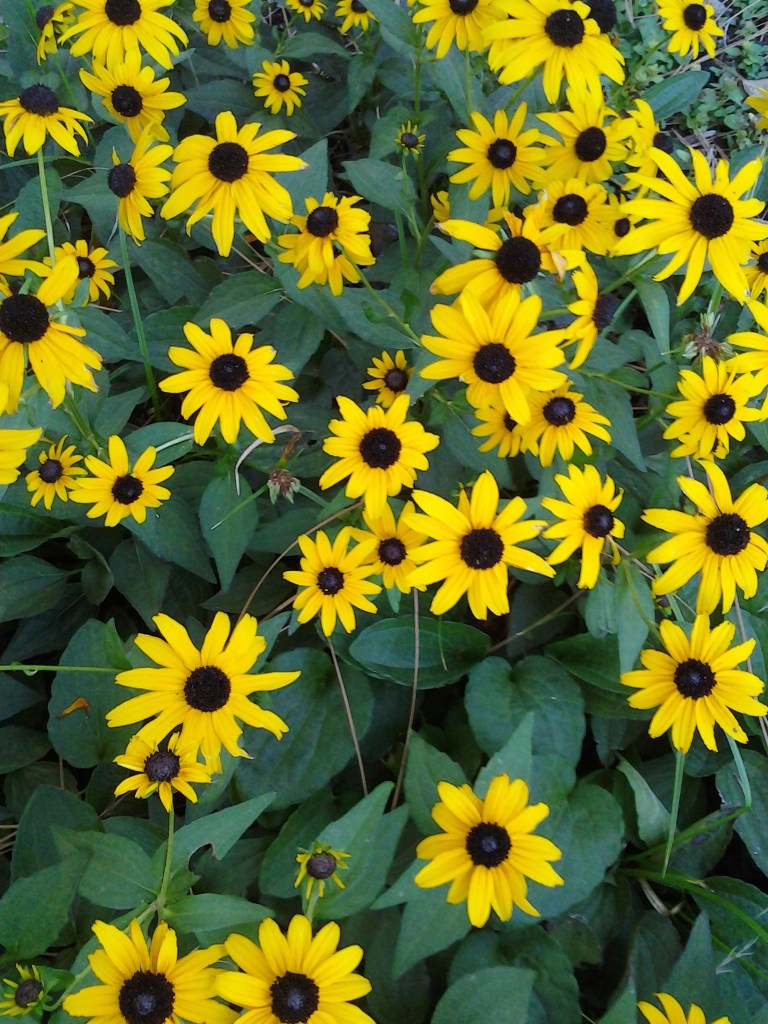
Black-eyed Susan, sunflowers and a few of the late warm season annuals and perennials are still blooming, and a few will continue into autumn. By that time, cool season annuals can move in; and some of the deciduous trees, shrubs and vines that turn color for autumn will be doing so. Realistically though, this can be the leanest time of year for color in the garden. Even some of the foliage that is colorful through spring and summer has faded.

There are certainly plenty of flowers in season now. However, not many are colorful. Honeysuckle vine is pleasantly fragrant as it bloom in random phases until the weather gets cooler, but the flowers are only pale yellowish white. Some melaleuca trees bloom profusely enough to make a mess, but are just as pale, and do not even provide fragrance; although some have pretty light pink flowers. Abelia flowers are pink and abundant, but are really not all that flashy against their bronzy foliage.

Some of the more colorful flowers are not quite as reliable. Princess flower, hibiscus, blue hibiscus and mandevilla certainly can bloom in late summer or autumn, but sometimes bloom earlier than expected, so have nothing left for later. The bright red flowers of blood red trumpet vine are quite impressive, but only if they are not obscured by the accompanying foliage. Some roses bloom in phases as late as the weather will allow, but actually, most are done by now.

Fuchsia and angel’s trumpet likewise bloom in a few phases once they get started, but unlike the many cultivars of roses, they are much more reliable for a late bloom phase. Escallonia blooms late with small but colorful flowers, but only if they have not been shorn in the past few months. Shearing deprives them of the blooming stem tips that they had worked most of the year for.

Butterfly bush, tree mallow, cape plumbago, bee balm and several varieties of sage and salvia are among the most reliable plants for late summer or autumn bloom. Even without multiple bloom phases, they just naturally bloom at the end of their growing season, before winter dormancy.

Seasonal Changes Keep Gardening Interesting

Oleander continues to bloom into autumn.

Gardening is work. The extent of such work is proportionate to the techniques and scale of the gardening. Substantial gardens likely need substantial work. Fruit trees, roses and vegetables need more specialized work than lawns and wildflowers. Seasonal changes demand a strict schedule. It never ends. It is ironic that so many enjoy gardening to relax. 

In some climates, gardening is less work through the harshest of winter weather. No one wants to be outside in harsh weather anyway. That is no excuse here, where the garden remains active throughout the year. Perhaps that is a disadvantage of such mild climate. Furthermore, seasonal changes, regardless of how mild or slow, are reliably continuous.

Another month of summer remains. That may seem like enough time to stay on schedule for summer gardening, and maybe take some time to relax. However, it is already time to begin preparation for autumn gardening. Gardening should progress as efficiently as the seasons do. Seasonal planning facilitates this process. It will be autumn in only a month. 

Warm season annuals and bedding plants are still in season. Most will remain in season until cool weather in autumn or perhaps the first frost. Nonetheless, cool season annuals for autumn begin to grow from seed about now. If started early enough, they will be ready for planting into the garden at the proper time to replace their warm season counterparts.

The same applies to vegetables. Many warm season vegetables can produce until frost. A last phase of corn should still have time to mature. In the meantime, some cool season vegetables can begin to grow from seed. Broccoli, cabbage and larger types can start in cell packs or flats. For direct sowing, root vegetables may need to wait for garden space.

Some of the many plants that bloom through most of summer bloom less later in summer, even though the weather remains conducive to bloom. Some prefer to divert resources to seed production as the days get shorter. Old fashioned oleander with fragrant bloom can get shabby with seeds. Modern sterile types lack fragrance, but bloom until cool weather. It is a good time to collect seed from formerly seasonal flowers.

Online Plant Purchases Have Certain Risks

Many seeds can be found online.

So many plants that were difficult to obtain years ago are now much more available online. The internet does more than give everyone access to nurseries and seed suppliers that sell online. It also makes it possible to communicate with others who might want to share plants and seeds from their own gardens. The advantages are obvious, but there are innate problems with so many plants being too available.

Before humans started to relocate plants all over the world, plants were much more confined to certain regions. Once relocated to new regions, some plants naturalized and became problematic for the plants that were already there. Exotic (non-native) plants often had the advantage because pests that troubled them back home had not come with them.

For example, pampas grass had been confined to the Pampas region of South America. It was imported to California and Oregon because its fluffy flowers and graceful texture are so appealing. The problem now is that it naturalized, and continues to proliferate and crowd out native plants in coastal ecosystems, without natural pathogens to slow it down. The availability of so many more plants from so many more regions seriously increases the potential for the importation of invasive exotic plants, as well as plant diseases and even insects!

Another potential problem is that common names of plants can be very different in different regions. Now, this can be an advantage when seeds from a common yucca in Lubbock, Texas might actually be from the very uncommon plains yucca (Yucca campestris, which I recently purchases on Ebay!). The problem is that the yucca known as ‘Adam’s needle’ in Georgia may be a completely different species from what is known as such in Pennsylvania, Oklahoma or anywhere else. A plant described as a ‘mimosa’ could be a silk tree, a jacaranda tree, or any of several different acacia trees!

Mail Order Fakes And Realities

Succulent cuttings are readily available online.

Sea-Monkeys are one of the most famous of mail order scams. Their original $0.49 price was not cheap for children who made the first purchases in 1957. They were nothing like their playful portrayals in comic book advertisements. They were minuscule brine shrimp who were incapable of building castles, playing tennis, or even just smiling for a camera.

Nonetheless, Sea-Monkeys were lucrative for their enterprising inventor. For many such capitalists, profit is the priority. It is no different for the many mail order scams that involve seed and plants. They range from the rare monkey face orchid to multicolored tomatoes. Consumers get either nothing or random seed or plants that are nothing like they expect.

Most mail order scams that involve seed or plants are on e-commerce sites. They mostly include popular buzz words such as ‘rare’, ‘organic’ and ‘bonsai’, even in regard to plants that are not conducive to bonsai culture. Associated illustrations are obviously faked, but somehow convince enough consumers to sustain their deceptive mail order exploitation.

Fortunately, the vast majority of online seed and plant suppliers are very trustworthy and reputable. They provide precisely what they claim to provide. Their commodities become available prior to the season that is best for delivery. Then, delivery happens early during the regionally best season for planting. Products are not marketable out of their seasons.

Many seed catalogs and plant catalogs enact more than seasonal or climactic limitations to their sales. For various reasons, particular species are not admissible within particular states or counties. Some may be potential vectors of disease. Some may be too likely to naturalize and interfere with natural ecosystems. Species limitations are fortunately rare.

Much of the seeds and plants that are available from e-commerce sites such as eBay are from the home gardens of those selling them. The sellers are generally quite trustworthy and reputable, but can make mistakes. It is easy to misidentify some species, especially by common names. Also, such sellers are very often unaware of marketability limitations.

Late Summer Merges Closer To Autumn

Late summer flowers are still blooming.

It always seems that by the time the garden gets as productive as it can, it is already time to get ready for the next season. Pretty soon, cool season annuals will be arriving in nurseries to replace warm season annuals that had been so colorful all summer. If seeds are to be collected from summer flowers for next year, this would be a good time to do it.

Seed for certain cool season vegetables like broccoli, cauliflower, cabbage and kale, can be sown in flats or cell packs now to have seedlings ready to put out into the garden as warm season vegetables finish in autumn. If there is space available in the garden, turnips, turnip greens and beets can be sown directly. Carrots should probably wait a few weeks or so to get sown directly.

Although corn of a single variety sown in a single phase tends to ripen at the same time, different varieties planted in different phases can extend the season significantly. Those that continue to produce until autumn are greedy for nutrients and water. Squash and tomatoes likewise appreciate a bit of fertilizer and regular watering, even as the weather starts to fluctuate this late in summer. However, fertilizer does not need to be applied in the last month of expected production.

Zucchini should be harvested when they get about six inches long, not only because they are best when immature, but also because the plants are more productive if regularly deprived of their fruit. If plants have the choice, they prefer to concentrate resources into fewer large fruit instead of more small fruit. The problem is that the larger fruit is tough and lacks flavor.

Hubbard, butternut, acorn and other winter squash get the opposite treatment. Each vine should produce only a few fruits. Those that produce smaller fruits can sustain more than those that produce larger fruits. Yet, excessive fruit exhausts resources, which compromises fruit quality. The fruit that will continue to grow and ripen through autumn should already be somewhat developed. The smallest of excessive fruit, or underdeveloped fruit should be removed.

Houseplant Culture That Contradicts Gardening

Some ferns are popular as houseplants.

Houseplant culture is a unique type of horticulture. It involves almost no gardening. Most houseplants live exclusively indoors. Many inhabit homes and offices that lack gardens. Only a few fortunate sorts get to occasionally enjoy mild weather in home gardens. Such indulgences are generally brief and sheltered. Most houseplants are innately vulnerable. 

Of course, no houseplant is native to domestic situations. Every houseplant lives outside somewhere. Most are from lush tropical rain forests, where they must compete with other foliage for sunlight. Many are understory plants that naturally live within the partial shade of bigger tropical vegetation. That is why they adapt so efficiently to partial shade inside.

That is also why most houseplants actually want to live inside here. They do not like the chill of winter, even if mild. Many or most succumb to minor frost if too exposed. They are simply unaccustomed to it. Since they adapt to shelter and partial shade inside, they are also sensitive to direct sunlight exposure. Foliage that becomes too exposed can scorch. 

Tolerance of weather is as regional for houseplants as it is for garden plants. That is one commonality of gardening and houseplant culture. The various species of Ficus that are common trees in landscapes of Los Angeles are strictly houseplants in San Jose. They tolerate the minor winter chill of Los Angeles, but not the slightly cooler frost of San Jose. 

Some ferns are popular houseplants because, like tropical plants, they generally tolerate partial shade. However, many are less tolerant of the minimal humidity of home interiors. Regular watering can compensate. Irregular watering might be distressful for some ferns. Fortunately, most ferns can recover from brief desiccation, even if their foliage dies back.

Succulents are completely different. The are intolerant of partial shade, and crave sunny and warm situations. They are nonetheless popular for houseplant culture because they generally tolerate minimal humidity. Cacti prefer aridity, and are very susceptible to rot in damp conditions. Succulents wilt to warn before they succumb to deficiency of moisture.

Something Blue

Is periwinkle blue, or slightly purplish?

Blue must be unpopular with the more common of pollinators. After all, colorful flowers are designed to attract some sort of vector to exchange pollen. It seems that most pollinators like yellow. Red and pink (which is actually a tint of red) seem to be more appealing to hummingbirds. Butterflies seem to really like pink and orange. Many flowers that seem to be white actually use infrared to attract bees, or ultraviolet to attract nocturnal moths. Other white flowers rely on wind, which is not discriminating about color.

Of the primary (red, yellow and blue) and secondary (orange, green and purple) colors, the only color that is more uncommon than true blue is green. That is probably only because green flowers do not contrast much against green foliage, so would be harder to find. Many blue flowers, like thyme, lavender, blue potato bush and jacaranda, are closer to purple. Some blue and purple color is probably only incidental, and in conjunction with invisible (to humans) ultraviolet coloration or patterns.

Except for purplish blue jacaranda, there are no substantial trees to bloom blue. Empress tree is flashy, but is even more purplish. However, most ceanothus, including a few that can grow as small trees, are famous for their clear blue bloom. Plumbago, blue hibiscus, echium and rosemary are blue blooming shrubbery. Creeping rosemary is a nice groundcover. Hydrangea has the potential to bloom blue, but often turns purplish or pink because of soil alkalinity. Lilac and wisteria vine can be lavender, pink or white, as well as ice blue.

There are several perennial and annual salvias and lupines that bloom blue. Russian sage, catmint, carpet bugle, campanula, perennial statice and lily-of-the-Nile are some of the other familiar perennials for blue flowers. Delphinium should probably be more familiar. Grape hyacinth and various iris bloom briefly but spectacularly with some of the richest shades of blue. Even though there are not many blue flowers to choose from, there is quite a bit of variety.

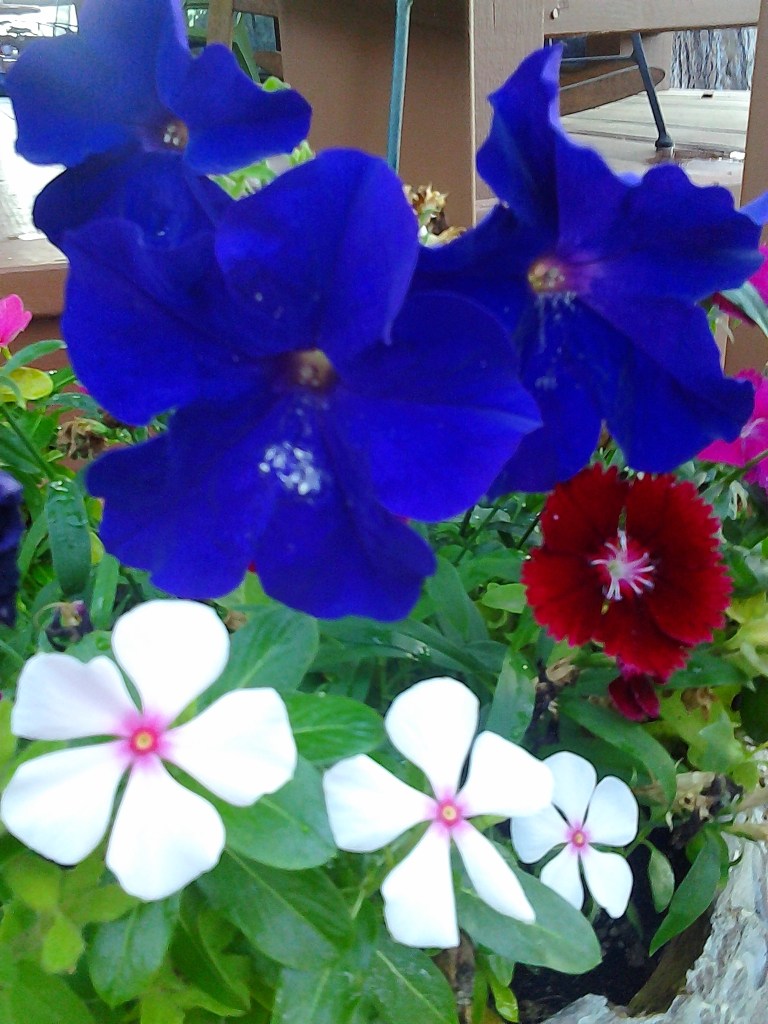
Annual statice, aster, zinnia, bachelor button, nierembergia, nigella, pincushion flower, forget-me-not and cineraria are uncommon annuals that are enjoyed by those who crave blue. Petunia happens to be one of the most popular of warm season annuals that also happens to produce some excellent blues. Later, brightly colored pansy and primrose can be just as flashy as popular cool season annuals.

Mulch Is Lowly But Practical

Mulch is less interesting than useful.

Gardening is unnatural. Most popular plant species are not naturally native. Cultivars are products of unnatural selection and breeding. Most plants like unnatural watering. Some enjoy unnatural fertilizers. Removal of their detritus is unnatural. So is the replacement of their detritus with mulch. Actually, most of what happens in the garden is quite unnatural. 

Ironically, gardening is how many of us incorporate more nature into our lifestyles. Much of our effort compensates for what plants naturally crave but unnaturally lack. Watering is necessary for plants that get rain through summer within their natural ecosystems. Mulch might be nice for plants that naturally benefit from the decomposition of their own debris.

In nature, most plants benefit from their own debris. They enjoy the nutritiously decaying organic matter and enhanced moisture retention. Their shallow roots enjoy the insulating effect on the surface of the soil. Debris of some plants excludes other competitive plants. Mulch is not a perfect substitute for such detritus, but partly compensates for its removal.

Although it would likely be an asset to the plants that produce it, the detritus produced by most plants can not stay in the garden. Much of it is too abundant. Some is too shabby or too coarsely textured. Some might become combustible as it accumulates. Diseases can overwinter in some types of debris. Mulch is more sanitary, neater and less combustible.

Most mulches are organic matter of one sort or another. Compost does not last long as a mulch, but is appreciated by most plants. Uncomposted chips from a tree service occupy nitrogen as they decompose, but are more effective for inhibiting weed growth. Products that are available as mulch at garden centers are more refined, but also more expensive. 

Some dense ground cover plants perform something like mulches. Many consume more moisture than they retain though. Also, they can retain bits of potentially infectious debris that falls from diseased plants above. Nonetheless, they insulate the surface of their soil, and inhibit or exclude weeds. Gravel over ground cloth is inert, but requires no watering.