Summer Bulbs After Spring Bulbs

Summer bulbs start late in winter.

It was easy to bury spring bulbs so discourteously in shallow graves last autumn. None of them got proper funerals. Perhaps cool season annuals obscured their interment sites. No one needed to know they were there. It seemed like a perfect crime, until now. They are back like the undead. After all, they were not dead when interred. They were merely dormant, and likely plump and healthy.

Crocus, snowdrop, narcissus and some of the other related daffodil might already be blooming. Otherwise, their foliage is emerging above the soil. They do not necessarily wait for the soil to get warmer later in winter. Hyacinth and tulip will bloom a bit later. Delayed planting delays bloom, but only for the first season. Established spring bulbs from previous seasons will bloom as they like.

Spring bulbs, including corms, rhizomes, tubers and tuberous roots, prefer early interment for a reason. They appreciate a good chill through winter. Although most get refrigerated artificially prior to sale, they certainly do not mind a bit more chill. Besides, they also appreciate early root dispersion, even while still dormant. They prefer to bloom early, but unfortunately, also finish bloom early.

Summer bulbs are very different. They go into the garden later because they do not require chill. Furthermore, many types are sensitive to minor frost if they begin to grow too early in winter. Since they start growth later than spring bulbs, summer bulbs generally bloom later. However, some bloom for extensive seasons. A few summer bulbs bloom from early summer until frost in late autumn.

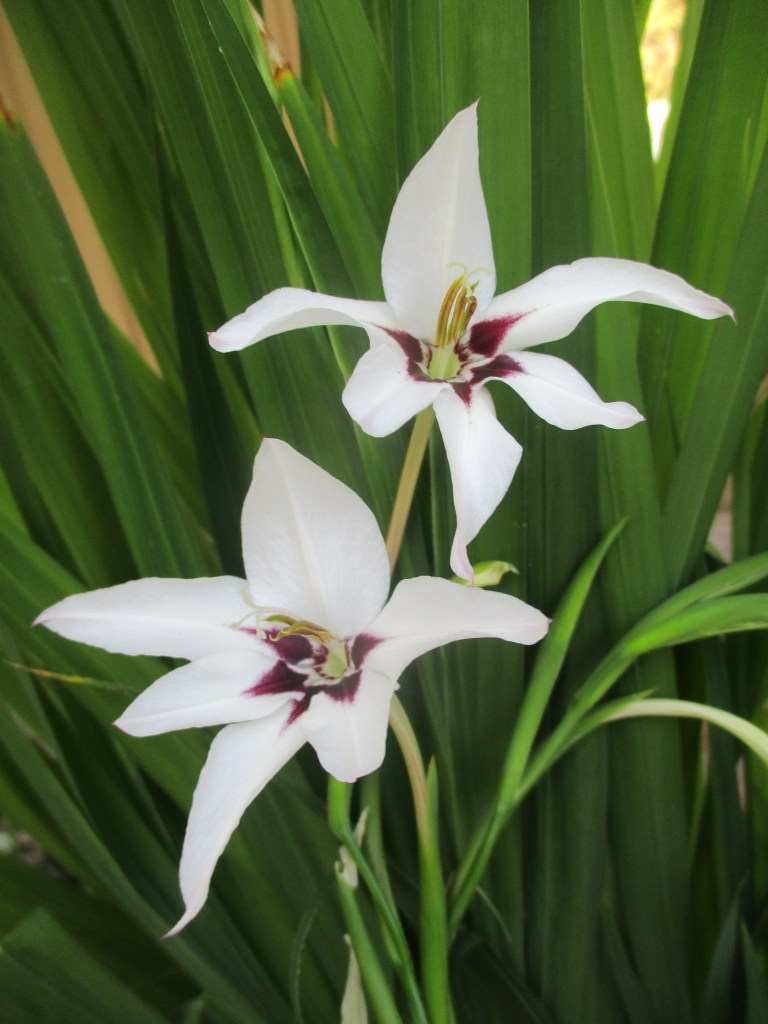
Dahlia, canna and old fashioned white calla are the more reliable of summer bulbs to plant now. Old fashioned white calla may be rare in nurseries. Smaller, more colorful, but less vigorous callas are more popular. Such summer bulbs are more sustainable than spring bulbs, and can perform for many years. Gladiolus and various lily are spectacular summer bulbs, but bloom once annually.

Incidentally, unlike the spring bulbs, most summer bulbs are actually corms, rhizomes, tubers or tuberous roots.

Knowing When To Prune What

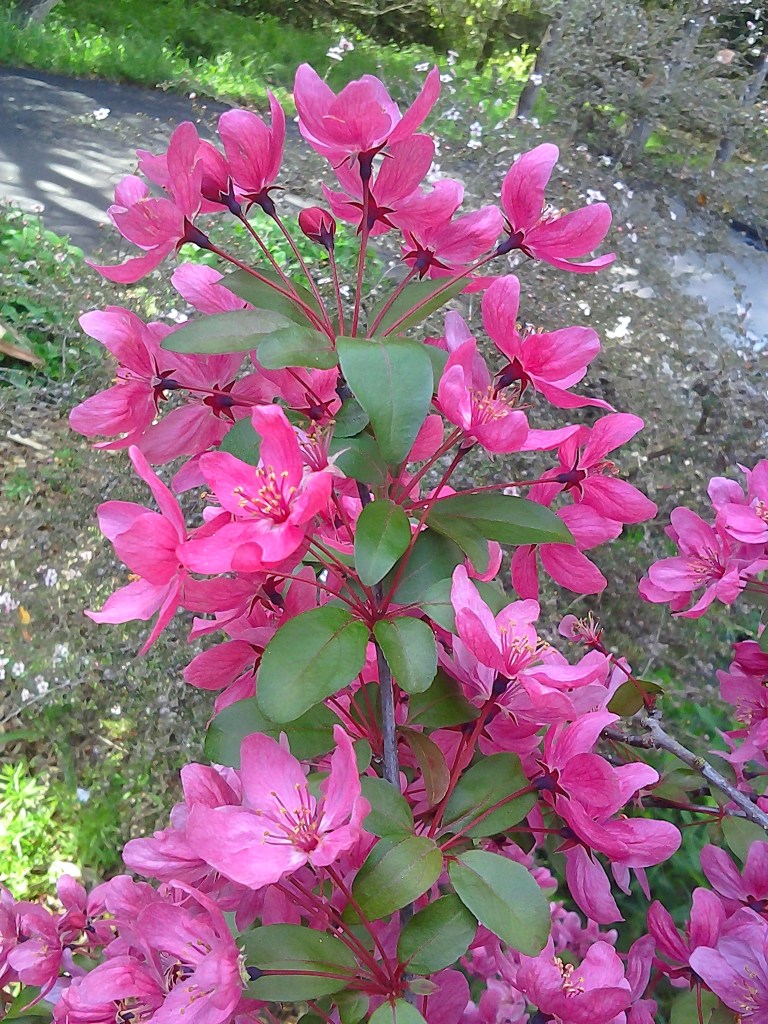
Flowering plum trees can be pruned later, after bloom.

Maybe the weather took the surprise out of camellias this year. It has been so warm and pleasant that such big and colorful flowers are almost expected. Even if crocuses and narcissus did not bloom much too early, they are likely finishing a bit early because of the warmth and minimal humidity. Daffodils are not far behind. Hopefully, lilies and tulips will not be too confused. Pansies, primroses, stock, Icelandpoppies, ornamental cabbages and kales actually seem to enjoy the odd weather.

It was such a rush to prune everything that needs to be pruned in winter! Roses are already being outfitted with new foliage. Plum trees are already blooming, and will be followed by apricots, cherries, peaches and the rest. It was actually easy to get carried away, and prune things that should not yet be pruned.

Many of the flowering trees that are related to fruiting trees seem like they should be pruned. However, the rules are different, since they do not need to support the weight of fruit. Pruning only compromises bloom. Flowering cherries, flowering (purple leaf) plums and shrubby flowering quinces should instead be pruned after bloom finishes, and only if necessary. As flowering crabapples finish bloom, minor pruning probably will be necessary.

Lilacs, forsythias and spireas should be pruned by ‘alternating canes’, which means that older canes get cut to the ground as they get replaced by new canes. If done just after bloom, new canes develop through the following summer, and will be ready to bloom the following spring.

Quite a few trees, shrubs and vines likewise want specialized treatment. Fat flower buds of deciduous magnolias make it obvious that pruning should be delayed. Azaleas should probably make their intentions to bloom more obvious. Hydrangeas can be groomed of deteriorated flowers and dead stems, but plump canes from last year will bloom this year. Maples, birches and elms will continue to bleed if pruned now, so should wait for summer.

Pruning Roses During Winter Dormancy

Pruning now promotes better bloom later.

Contrary to what the pleasant weather suggests, it is still winter. Most plants are resisting the temptation to break dormancy prematurely. They must know that the days are still short, regardless of the weather. Most plants are surprisingly proficient with scheduling. Nonetheless, dormant pruning should happen sooner than later. This includes pruning roses. They have been ready for a while.

Technically, roses are ready for pruning as soon as they begin to defoliate. Also technically, rose pruning can be as late as the buds of the bare stems remain dormant. Later pruning is preferable in some regions where pruning wounds are susceptible to pathogens. Such delay is riskier here where mild weather can disrupt dormancy prematurely. Wounds are less vulnerable to pathogens.

Pruning roses is about as important as pruning deciduous fruit trees. Without adequate pruning, rose plants become too overgrown to perform properly. Crowded stems are unable to elongate as they should. Diseases and insects proliferate in congested foliage, and damage bloom. Specialized pruning concentrates resources into fewer but significantly more vigorous stems and flowers.

Although the technique may seem to be drastic, pruning roses is not very complicated. Hybrid tea, grandiflora and floribunda roses should retain only three to six of their most vigorous canes. The canes should be only about two feet tall, and cut just above a healthy bud. If possible, they should be canes that grew during the previous year, from bottom to top. Older canes should be removed.

Pruning roses of other classifications may be slightly different. Some types may retain more canes. Climbing types likely retain old canes for several years before replacement. Carpet roses and other ungrafted roses can be cut nearly to the ground, leaving no canes at all. Tree roses are like bush types, but on top of short trunks. New canes grow from their graft unions on top of the trunks.

Of course, potentially vigorous sucker growth that develops from below the graft union of any grafted rose must go.

Maintenance Gardeners Often Need Help

Gardeners can rake leaves and mow lawns, but may not be qualified for some of the more specialized horticultural techniques.

Even some of the most avid of garden enthusiasts get some of the work in the garden done by maintenance gardeners. In many regards, even the common ‘mow-blow-&-go’ gardeners can be very helpful. As long as they are not expected to work with trees or shear anything (or everything), they can be remarkably efficient at the tedious and most demanding of tasks that are not much fun. For example, and as the job description implies, they can mow boring lawns and blow inert pavement. We can tend to our own meticulous chores, such as pruning roses and burying bulbs.

However, as professionals, gardeners must be as efficient with their time as possible, so rarely have the luxury of devoting the sort of attention to our gardens as those of us who enjoy gardening as a leisure activity. Consequently, they tend to be more generous with automated irrigation than they need to be. The immediate symptoms of insufficiency are more apparent than the symptoms of excess; so too much seems to be better than not enough. To make matters worse, the driest area of a lawn or bed is the limiting factor for automated irrigation, since everything else that gets watered along with the particular dry spot gets the same frequency and duration (volume) of irrigation.

At a time when many of us are already trying to use significantly less water, it is frustrating to notice any waste. In most gardens, lawn uses more water than everything else combined, but is also the part of the garden that many of us relinquish to maintenance gardeners who are not always there to notice waste. Regardless of any drought or water conservation, excessive irrigation is expensive and unhealthy to trees and many other plants.

Unfortunately, irrigation schedules can not be prescribed, but must be determined by direct experience with the lawn or landscape being irrigated. Even without rain, lawns and landscaped areas require less water through the (normally) cooler and shorter days of winter. The trick to rationing is to give the garden only as much as it needs to survive without allowing it to get too dry, which will undoubtedly cause some friction with any gardeners who may work with it.

Citrus Fruits Ripen Through Winter

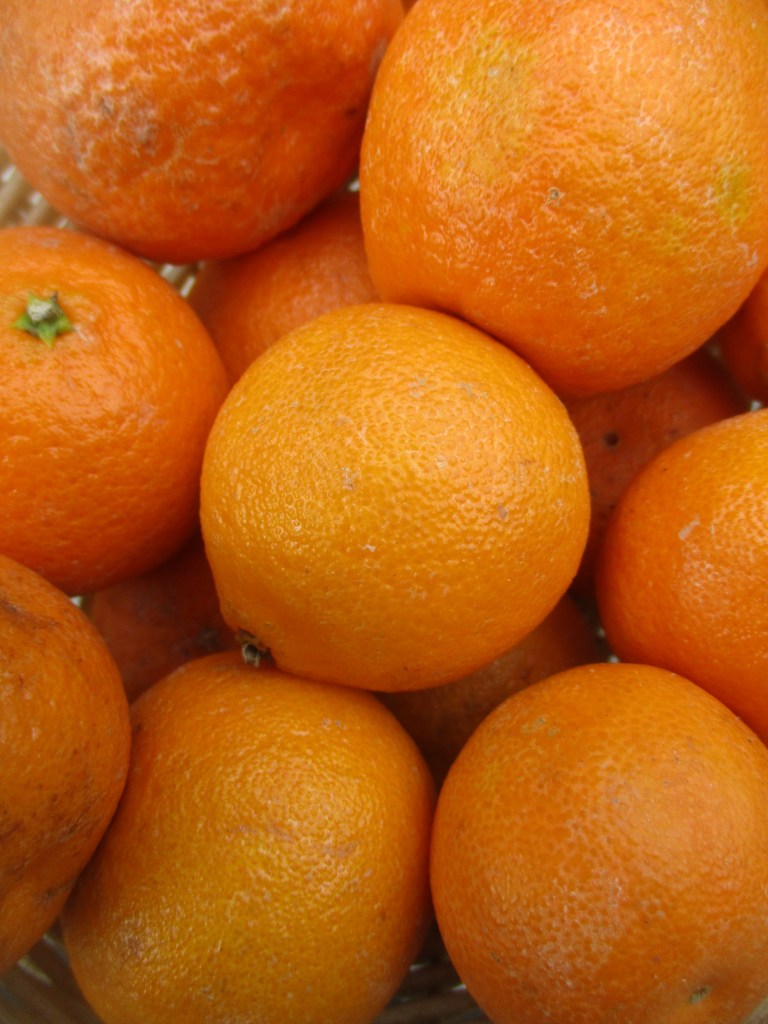
Mandarin oranges are at their best.

Winter seems like an odd time for fruit to ripen. Winter weather is cool enough to inhibit vascular activity in plants. That is why most plants are dormant to some extent through winter. Most familiar fruit trees are deciduous, so defoliate in winter chill. Stone fruits ripened through early summer. Pome fruits ripened through late summer and autumn. Nonetheless, citrus fruits are now in season.

The various citrus fruits and their cultivars ripen at various times through their season. Like stone fruits and pome fruits, they are on distinct schedules. Furthermore, climate affects ripening. Citrus fruits that ripen earlier than other cultivars in a particular climate may ripen after the same other cultivars in another climate. A few cultivars produce sporadically, or notably later than citrus season.

Such cultivars are justifiably popular. For example, ‘Eureka’ lemon is a mutant of ‘Lisbon’ lemon. ‘Lisbon’ lemon works well for orchards because all the fruit ripens within a limited season. ‘Eureka’ is more practical for home gardens because it instead produces sporadically throughout the year. A few fresh lemons are always available. The winter crop is abundant, but not too overwhelming.

Mandarin oranges are the first citrus fruits to harvest, even if they are not the first to completely ripen. Because their rinds fit so loosely, they are the most perishable of citrus fruits. They will oxidize and dehydrate before they rot. Tangerines are the same, since they are merely American descendants of Mandarin oranges. ‘Rangpur’ lime is not a lime at all, but a sour Mandarin orange hybrid.

Oranges, lemons and grapefruits, although ripening now, can remain on their trees for quite a while. The tartness of grapefruits mellows with age, and might be preferable after a few months. The same applies to the acidity of lemons. However, too many lingering citrus fruits can inhibit bloom. Some limes are supposedly best before totally ripe. All citrus fruits stop ripening when harvested. Juice of the various citrus fruits can be frozen for storage if necessary.

Good Weather Can Be Bad

This should be the rainy season.

As if the lack of rain is not serious enough, the lack of cool winter weather will also cause problems for gardening. Warmth is certainly not as bad as drought, and makes gardening and other outdoor activities more pleasurable, but it interferes with the schedules and cycles that we and the flora in our gardens rely on. Something as natural as the weather should not be so unnatural.

The earlier unseasonably cold weather convinced plants that it really was winter. The problem is that the weather then turned unseasonably warm, and has stayed this warm long enough for plants to believe that it is spring! Some established (not freshly planted) narcissus and daffodils that should bloom as winter ends are already blooming, and some that are naturalized where they get no supplemental watering are already fading from the lack of moisture.

Buds of dormant roses are not staying so dormant, and may soon pop and start to grow. Buds of dormant fruit trees could do the same. When the rain finally starts, it will likely damage and spread disease among freshly exposed rose foliage and newly developing buds. Fungal and bacterial diseases that get an early start will likely proliferate more than they normally do through the following spring. Rain can likewise damage and dislodge fruit blossoms.

The many plants in the garden fortunately have a remarkable capacity for adaptation to weird weather. Bulbs, roses, fruit trees and other plants should eventually recover and get on with life as if nothing happened. The weather is actually more of a problem to those of us who want an early and healthy abundance of roses and an abundance of fruit in summer.

It is still a bit too early to know how the weather will affect what happens in the garden this spring, but fruit production of many types of fruit, as well as bloom of some types of flowers is expected to be inhibited.

Pot Plants Generally Burn Out

Small conifers grow into big trees.

Pot plants are very different from common potted plants. Potted plants sustain healthy growth within pots or similar containers. They can range from small houseplants to small trees in big tubs out in the elements. Those that do not live for long in a particular pot before outgrowing it can continue to live in increasingly larger pots. They are considered to be sustainable, rather than temporary.

Pot plants, conversely, are generally expendable. They come into the home or office at their prime, but stay only as long as they continue to perform. For some, this may not be more than a month or so. They typically live their entire brief lifetimes within their original pots. Many endured forcing techniques that are difficult to recover from. Some are little more than uncut cut flowers with roots.

Most pot plants are seasonal. Most are seasonal at Christmas time. These include poinsettias, amaryllis, Christmas cactus, azaleas, hollies, cyclamen, rosemary (in conical ‘Christmas tree’ form) and live Christmas trees. Chrysanthemums were seasonal for autumn. Miniature roses will be in season for Saint Valentine’s Day. Easter lilies and hydrangeas will be seasonal in time for Easter.

Recovery from forcing techniques that are necessary to grow unnaturally showy pot plants is not impossible. It just might be difficult. That is why most poinsettias, Easter lilies and miniature roses rarely survive in the garden. Some pot plants, particularly azaleas and hydrangeas, are cultivars that excel as pot plants, but not in a garden. Christmas cactus and hollies are more likely to thrive.

Some types of live Christmas trees are likely to survive as well. That may not be an advantage. Dwarf Alberta spruce can remain potted as a live Christmas tree for several years, and then do well in the garden. Other spruces may remain potted for a few years, but then demand more space in the garden. Most other live Christmas trees either do not recover in the garden, or grow too large, such as Italian stone pine or Canary Island pine.

This Parade Needs Some Rain

Now, this is something you don’t see every day in a chaparral climate.

The lack or rain has really gotten serious! This winter so far has been the driest ever recorded. The past two winters had already been unusually dry. Even when the rain starts, it will be considerably behind schedule. Some seriously torrential rain will be needed to catch up.

As much as we like to think of gardening as something that brings us closer to nature, it demands unnatural volumes of water. Only established native plants or plants that are native to similar climates can survive with the limited moisture that they get from rain. This is why gardens get watered as much as they do.

Lawns of course require the most water because their shallow root systems require such frequent watering, and also because their vast foliar surface area loses so much moisture to evapotranspiration (evaporation from foliar surfaces). Lawns are the first and most prominent of landscape features to succumb to water restriction. Flowering annuals are the next to succumb, because they too want regular watering, especially while they are not getting any from rain.

Fortunately, lawns, annuals and other plants that want an abundance of moisture need less now because they are dormant or considerably less active through winter. Besides, evapotranspiration is inhibited by cooler temperatures, shorter day length, and most of the time, by higher humidity. It is nothing like the warm and arid (minimal humidity) weather during longer days of summer.

Many large and established shrubs and trees can survive quite easily with very minimal watering or even none at all. Established oleander, bottlebrush and juniper may not be as vibrant without watering, but should survive. If they notice a lack of water at all, it would not be until they start to grow again in spring. Mature trees take even longer to notice a problem.

Deciduous plants that are now bare really do not consume much moisture at all and really only need enough moisture in the ground to keep their roots from desiccating. This will only be a problem if the soil is very sandy and drains too efficiently to retain adequate moisture, or if freshly installed plants have not had enough time to adequately disperse their roots into the surrounding soil.

Automated irrigation systems should still be operated only minimally or not at all through winter. However, because of the unusually dry weather, they may need to be used a bit more than usual for this time of year to keep some things from getting too dry.

Bare Root Stock Makes Sense

Snowball bush is available bare root.

Winter has potential to be a slow season for gardening. Simple gardens may not require much dormant pruning. Established gardens may not require much planting. Where winters are cold and perhaps snowy, no one wants to go outside anyway. Those who go out may not be able to accomplish much. Nonetheless, winter is the season for planting bare root stock, which is now available.

Bare root stock starts to move into nurseries before the last Christmas trees move out. Growers start to dig and package it as it goes dormant for winter. They separate it completely from the soil it grew in, leaving the roots bare. Some bare root stock is available with bags of damp sawdust protecting its roots. Most goes into bins of damp sand to protect the roots while at retail nurseries.

Unlike canned (potted) nursery stock, bare root stock must get into the garden as soon as possible. It will not survive long if it gets warm enough to start growing prior to planting. Nor will it survive if roots desiccate. Unbagged bare root stock can soak in water for a limited time. For planting, roots should flare outwardly. Soil amendment should be limited. Graft unions must be above grade.

Bare root stock is lightweight, compact, and easy to handle in bulk. Therefore, it is less expensive than canned stock. It is also easier to get home and plant. Because so many individual plants fit into limited space, many more cultivars are available from nurseries. Even more are available by mail order. Bare root stock disperses roots and gets growing more efficiently than canned stock.

Deciduous fruit trees might be the most popular bare root stock. This includes apple, pear, persimmon, fig, mulberry, walnut, pomegranate and the stone fruits. (Apricot, cherry, peach, plum, prune and nectarine are stone fruits.) Grape, currant, gooseberry, blueberry, blackberry and raspberry bare root stock are also available. So are perennial rhubarb, asparagus, artichoke and strawberry.

Ornamental bare root stock includes rose, snowball bush, forsythia, wisteria, flowering crabapple, poplar and many more.

Know How To Procure Firewood

Firewood from tree services might be an unknown mix.

Fireplaces and wood stoves simply are not as common as they were only a few decades ago. Because of modern building codes, most that get damaged by earthquakes get removed or replaced by pellet stoves. The orchards that once provided so much inexpensive firewood while they were being cleared for urban development are now gone. The wood yards in the relatively arboraceous outskirts of town are farther away. Many municipalities have established ordinances to limit smoke, although this is not a problem if well seasoned wood gets burned properly, and only means that fireplaces can not be used on ‘spare the air’ days.

Firewood can be purchased from tree services that need to dispose of wood anyway. Because it is only a byproduct of tree work, it will likely need to be stored and seasoned the year before it is needed, just like orchard wood. (Firewood from wood yards gets seasoned before it gets sold.) Some types of wood that are often mixed in leave a bit more residue in chimneys, necessitating more frequent chimney sweeping. Realistically though, chimneys should be cleaned regularly anyway.

Because firewood is perishable, it should be obtained annually, in quantities that will be used in a single winter. It can rot if stored outside too long. If stored in a shed or garage too long, it can get infested with rodents. Besides, too much firewood occupies quite a bit of space.

Synthetic logs (made from compressed wood byproducts and fuel) are an effective, clean and efficient alternative to real wood that do not need to be seasoned. Each log burns about as long as several real logs, and produces about as much heat, so only a few go a long way. They are always available from supermarkets, and can be brought home with the groceries. Pellet stoves that consume fuel pellets that look like stove food are even more efficient. However, there is no substitute for a fire with real wood in a real fireplace or wood stove.