New Canes Replace Old Canes

50916thumb
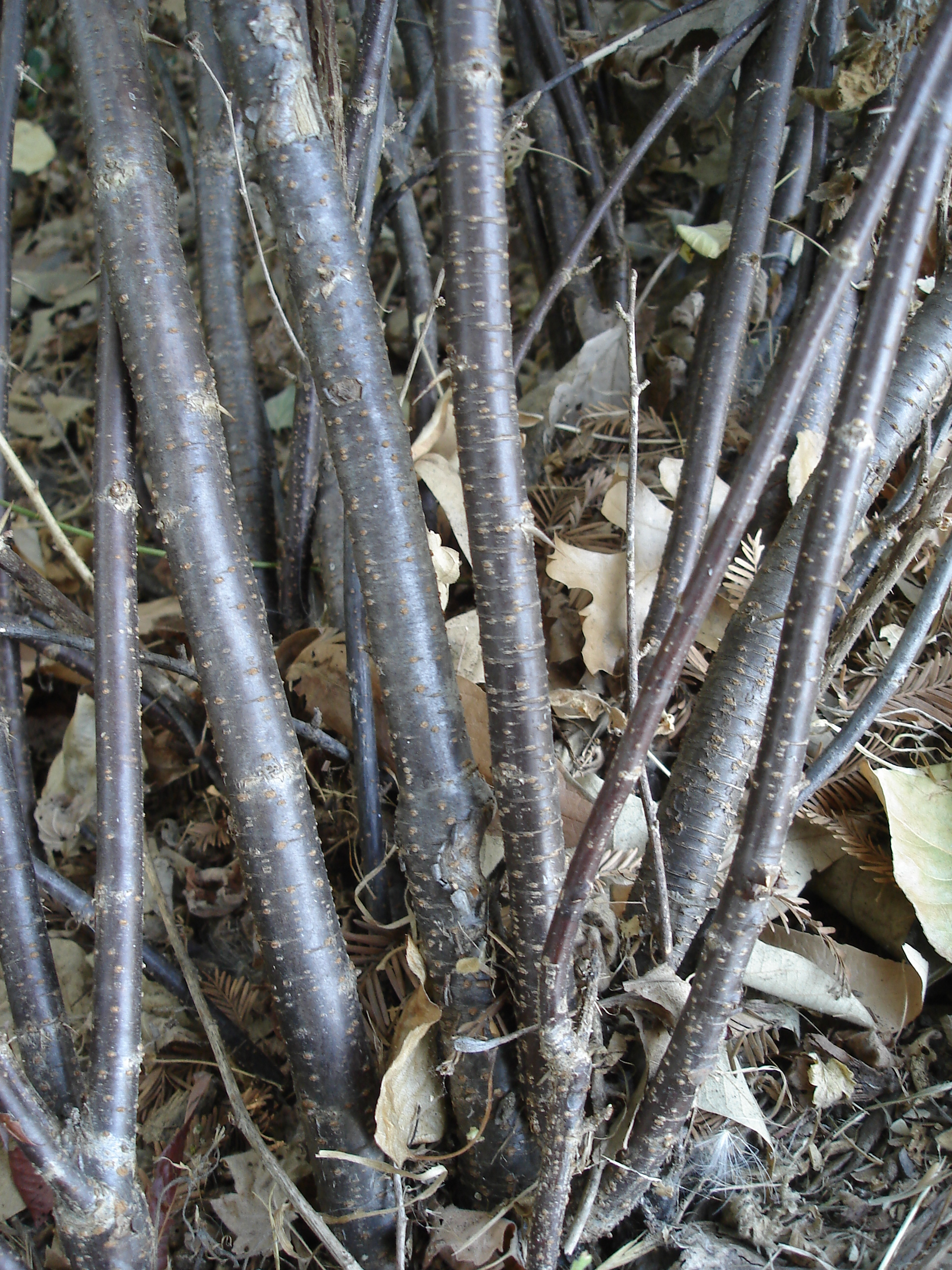
Well groomed canes are not overgrown.

Heavenly bamboo, or simply ‘nandina’, is one of those many plants that almost never performs like it should. The intricately lacy foliage is so appealing while plants are young, and changes color with the seasons. The red berries can be comparable to those of holly. Unfortunately, healthy plants grow, and then ultimately get shorn into globs of disfigured leaves and stems.

The same abuse afflicts Oregon grape (mahonia), mock orange (philadelphus), forsythia, lilac, abelia and all sorts of shrubby plants that really should be pruned with more discretion. Their deteriorating older stems should be pruned to the ground as new stems grow up from the roots to replace them. It is actually not as complicated as it seems.

This pruning process, known as ‘alternating canes’, prunes the plants from below. It is a standard pruning technique for maximizing production of blackberries, raspberries and elderberries. It is similar to grooming old stalks from bamboo and giant reed, even if it does not prevent them from spreading laterally.

The deteriorating older stems, or ‘canes’, are easy to distinguish from newer growth. Old canes of Heavenly bamboo and Oregon grape become heavy on top, and flop away from the rest of the foliage. Old canes of mock orange and lilac get gnarled and less prolific with bloom. Aging abelia and forsythia canes become thickets of crowded twigs.

The newer stems are likely a bit lower, but are not so overgrown. Since the foliage is not so crowded, it is displayed on the stems better. Their blooms or berries are more abundant. By the time new growth becomes old growth, there will be more newer growth right below it. In fact, the regular removal of aging canes stimulates growth of new canes.

This is the time to prune Heavenly bamboo and Oregon grape, just because the oldest foliage is as bad as it will get after the warmth of summer. Mock orange, forsythia and lilac should get pruned while dormant through winter, but are commonly pruned just after they finish bloom early in spring. Abelia should probably wait until spring because new growth can look sad through winter.

Pomes Produce Better Than Palms

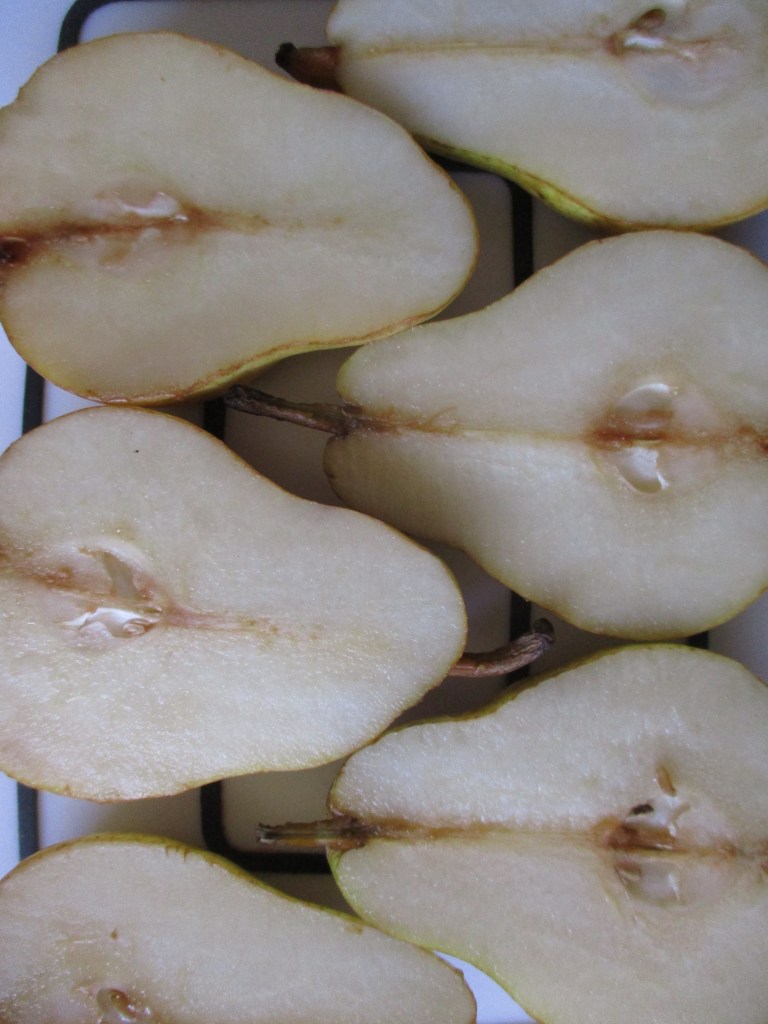
Pear season continues late into October.

Dates, coconuts, acai berries and palm oil grow on palm trees. All are rare in local home gardens. The palms that are popular in much of California are almost exclusively ornamental. Very few of them produce useful fruits. Despite the similar pronunciation, such palms are not at all related to pomes. Some of the more familiar fruits happen to be pomes, which are also known as pommes.

Apples and pears are the most popular examples of pomes. Quinces, which were very popular decades ago, are now rare. Quinces are so closely related to pears that they work well as dwarfing understock for home garden pear trees. (Orchard pear trees use other understocks that are not dwarfing.) Actually, most quince trees grew secondarily from roots of dead or removed pear trees.

Saskatoons (serviceberries), chokeberries (aronias) and medlars are locally rare pome fruits that are slowly gaining popularity. Productively fruiting cultivars of loquat are now more available than those that were primarily ornamental. Some flowering quinces may produce a few small fruits. Mayhaws and mountain ashes (rowans) are berry-like pomes that are more familiar in other regions.

The earliest cultivars of apple might be in season by late July, before stone fruit season finishes. (Some peaches, the largest of the stone fruits, ripen in September!) The latest will be ready in late November, at least a month into citrus season. Pear season extends from August into October. So, this is the middle of apple and pear season. Most but not all other pomes are already finished.

Like stone fruit trees, the trees and shrubs that produce pomes need very specialized pruning while dormant through winter. Without annual pruning to enhance structural integrity and concentrate resources, apple and pear trees are unable to support all of their fruit. Shrubby quince trees become thickets without pruning for grooming and confinement, although they may not need it annually.

It Will Soon Be Autumn

50909thumb
Cool season vegetables replace summer vegetables.

From the time they get planted in early spring, tomato plants are expected to perform a bit better than they did earlier in the season. They start out with only a few early tomatoes, but quickly become prolific. Production continues to increase as the plants grow all through summer . . . until now. Newer leaves on top are not staying so far ahead of fading leaves below.

While the weather is still warm, it is difficult to say how tomato plants know that autumn will soon replace summer. They do not seem to be intelligent enough to realize that every day is imperceptibly shorter than the one before. Nor do they seem to be sensitive enough to notice if the nights get slightly cooler. They just know, and they tell all their friends.

If zucchini plants have not started to fade and sag, they will soon. As weather cools, they no longer grow faster than the mildew that they tolerated all summer. Any fruits that are present now should have time to finish developing, but there probably will not be many more after that. (Zucchini fruits are eaten before mature anyway.) Other warm season vegetables are in a similar state.

Acorn, Hubbard, butternut and other winter squash grow through summer just like summer squash do, but are not harvested until the vines wither in autumn and winter. Unlike summer squash that continue to produce many tender juvenile fruit to replace what gets harvested through summer, winter squash plants put all their effort into one or two large ripe fruit.

Warm season vegetable plants still need to be watered as the foliage slowly deteriorates. They only begin to need less water as they lose foliage and the weather gets cooler. They may like to be fertilized one last time, but will not not need it again. Any last phases of corn will stay thirsty later than other vegetable plants because they deteriorate slower, and are rather thirsty anyway.

Seed for broccoli, cauliflower, cabbage, kale and certain other cool season vegetables can be sown in flats or cell packs now so that their seedlings are ready to go when the warm season vegetables relinquish their space in the garden. If space allows, seed for beet, turnip and turnip greens can be sown directly into the garden. Carrot seed should still wait for cooler weather.

Schedule Bloom For Every Season

00916thumb
There is bloom for every season.

Early spring bloom is best. That is simply how the schedule of the majority of flowers works. The priority of flowers is pollination. Pollination is necessary for the production of seed. The production of seed and any associated fruit takes time. Seed, whether contained within fruit or not, then disperses before winter. After soaking and chilling through winter, seed germinates for the next spring.

For a variety of reasons, some flowers prefer to bloom earlier, later, or randomly through the year. Some are from climates in which they want to avoid harsh weather of a particular season. Some rely on pollinators who are active for a limited time. Regardless of the reasons for their bloom schedule, early, late and randomly blooming flowers add color to the garden before and after spring.

Many flowers that bloom randomly through the year tend to bloom better and later with a bit of persuasion. Cutting roses regularly seems innocent enough, but actually deprives rose plants of their efforts to produce seed. So does deadheading to remove their developing fruit structures that contain seed. Plants respond by trying to bloom again or more prolifically than they would otherwise.

Lily of the Nile reliably provided much of the color through the middle of summer. Many gardens have some. Some gardens have many. Their color range is limited, but effective. Now that they are done, canna, dahlia and delphinium should continue to bloom until frost. Mexican blue sage that took a break after spring bloom should bloom even better as summer ends, and into early autumn.

The bloom schedule of many flowers of the Compositae (or Asteraceae) family also coincide with late summer. Some have been blooming since spring. Some just started recently. These include but are not limited to cone flower, blanket flower, zinnia, cosmos, coreopsis, sunflower and Japanese anemone. African daisy and euryops daisy often bloom well after the earliest rains of autumn.

Eucalypti that bloom colorfully, such as red flowering gum, Eucalyptus ficifolia, bloom after the warmth of summer, but before cooling autumn weather.

Mature Trees Need Professional Help

50902thumb
Arboriculture is specialized horticulture of trees.

Arborists are horticulturists who are specialized with the horticulture of trees, which is known as arboriculture. In urban gardening, they are not as familiar as gardeners who mow lawns and tend to the annuals, perennials and shrubbery that are close to the ground; but they should be. The trees that arborists maintain are the most significant features in most landscapes.

Bad annuals or poorly tended lawns can get unsightly, but are not too hazardous. However, a tree can be extremely hazardous if it becomes unstable or develops structural deficiency. Falling trees or limbs are very dangerous, and can cause all sorts of damage to anything within reach. Arboriculture is therefore the most important horticulture in home gardens with trees.

Sadly, many trees are severely damaged by improper pruning, which is often performed by those hired to prune them. Some get pruned too severely, or get pruned in the wrong season. Others do not get pruned aggressively enough. Either way, many get structurally compromised so that they drop limbs as they mature. Some trees get damaged too severely to salvage.

This is precisely why arboriculture should be done by qualified arborists. Unfortunately, finding such an arborist may not be as easy as it would seem to be. The industry is notoriously overrun with ‘hackers’, who are unfamiliar (and often unconcerned) with what trees need, and how trees respond to improper pruning.

The International Society of Arboriculture, or ISA, certifies arborists who pass an exam of arboricultural expertise. ISA certified arborists maintain their certification with regular involvement with the ISA, which involves arboricutural seminars and classes, as well as networking with other professional arborists. Certified arborists can be found at the website of the ISA at isa-arbor.com.

Weather Is All About Climate

00909thumb
Summer weather continue into autumn here.

Weather has no thermostat. There is no automation. It is naturally variable. Weather is constantly changing like, well . . . the weather. We take what we get when we get it. It is impossible to predict how this summer will end. Others in the Northern Hemisphere are already getting ready for autumn. It is likely to arrive bit later here than elsewhere. That is the nature of the Mediterranean climate.

Summers here are naturally long, dry, and somewhat warm. Rain is rare between spring and autumn. Almost all of the rain happens during the naturally mild winters. Springs and autumns both are naturally quite brief. Such weather may seem to be boring, but is excellent for gardening. It is why the summer growing season is so long. Unfortunately, it is also why the fire season lasts too long.

Indian summer is something of a misnomer here. This is not India. Nor is it Indiana. Besides, Indian summer in other regions of North America describes an unusual weather pattern, not the usual. It is unseasonably warm and dry weather after a first frost of autumn. Alternatively, it is unseasonably early warm and dry weather in spring. Locally, it is merely typical summery weather of autumn.

This weather pattern and climate were assets for agricultural commodities that grew here a long time ago. They are still assets for those who now live here, especially those who enjoy gardening. However, such weather necessitates certain accommodations. Irrigation for actively growing plants is important later into autumn than it is in other climates. Autumn planting happens later as well.

Nights continue to get longer and cooler though. It is not so obvious because gardening happens during the day. Warm season vegetables notice the difference, and slowly decelerate production. Some deciduous plants may slowly begin to discolor. Roses continue to bloom as they slowly begin to shed lower foliage. Eventually, they will get their last applications of fertilizer until next spring.

Warm season annuals may start to to look tired as fresher cool season annuals move in.

Jellin’ Like A Melon

50826thumb
This is one way to make the fruits of summer last.

Jelly and jam made from garden grown fruit affords more prestigious bragging rights than merely growing the fruit. Using unusual or disregarded fruit makes it even more interesting. It is not too much work, but involves a different kind of creativity. So many of us who are proficient in the garden are not so proficient in the kitchen.

Apricot, peach, plum, grape, blackberry and raspberry are the most familiar choices for jelly and jam. Nectarine can substitute for peach. Prune works like plum. Strawberry is rare only because not many gardens produce enough for a batch of jam. Sweet cherry is not as tasty as tart types, but is sometimes made into jam because it is relatively common.

Apple and pear are not often made into jelly because they have such mild flavor. However, they are sometimes mixed with other fruit to blend flavors, and because they can provide pectin. Quince has a richer flavor, and makes a traditional jam known as membrillo. Crabapple likewise makes a classic jelly. Apple can be made into apple butter.

Pectin is what puts the jell in jelly. Many fruits are naturally equipped with it. Apricot, peach and cane berries do not have enough. Plum, prune and grape initially have enough, but it breaks down as the fruit ripens, which is why jelly recipes without added pectin often designate that fruit must be firm or just ripening. Otherwise, pectin must be added to get jelly or jam to jell.

With added pectin, pomegranate, fig and rhubarb (which is actually a vegetable) can be made into jelly and jam. Orange and lemon marmalades do not need to be cooked as much with extra pectin. Sweet oranges (which is what almost all oranges are) lose flavor with cooking. (Sour oranges for marmalade are very rare here.)

Pectin also makes it possible to make jelly and jam from some rather unconventional fruit that may not be useful for much else. Elderberry, hawthorn, thimbleberry, rose hips (some varieties), Hottentot fig (the larger fruited type of freeway iceplant) and even coffeeberry and manzanita are all worth trying. Indian hawthorn and Catalina cherry have enough pectin to jell on their own.

Winter Vegetables Start In Summer

00902thumb
There are vegetables for every season.

It seems to be much too early for cool season vegetables while the weather is still so warm. Summer vegetables, which are also known as warm season vegetables, are still at their best. Most will continue perhaps until frost. Yet, months ago, they also started prior to their growing season. At that time, cool season vegetables, which are also known as winter vegetables, were still producing.

Although it really is too early for winter vegetables to grow in the garden, it is time to plan for them. Those of us who prefer to grow varieties of winter vegetables that are not likely to be available in nurseries should get their seed now. In only a few weeks, it will be time to sow the first phase of seed for carrots and beets directly into the garden. By October, it will be time to sow seed for peas.

Broccoli grows slowly from seed. Whether it goes directly into the garden, or into flats for later transplant, broccoli seed should get sown by about now. If the preferred gardening style allows for it, seed for winter vegetables can be sown below old summer vegetable plants. The seed for winter vegetables can germinate and start to grow as summer vegetables finish and vacate the garden.

Cauliflower and cabbage seed want to germinate and start growing shortly after broccoli, within the next few weeks. However, seedlings of the more popular varieties of cauliflower and cabbage, as well as broccoli, will be available in nurseries for later planting. Lettuce, spinach and kale do well from late seedlings, or seed sown after cauliflower and cabbage, along with carrots and beets.

Root vegetables, like carrot, beet, radish, turnip, rutabaga and parsnip, grow from seed, sown directly.

Eventually, some of the warm season or summer vegetables will need to relinquish their space to winter vegetables. Most will finish by that time anyway. Those that stay long enough will succumb to frost. Summer vegetables can stay latest where subsequent phases of winter vegetables will later (not yet) replace an early phase. Subsequent phases begin production as early phases finish.

Summer Flowers Make The Cut

50819thumb
Try something new for cut flowers.

It would seem obvious that there would be more flowers to cut to bring into the home during summer than there would be in winter. A quick tour through the garden might prove otherwise. Much of the color in the garden this late in summer is provided by flowers that fade quickly, or small flowers of shrubby plants that lack good stems for cutting.

Lilies, gladiolus and most of the lily of the Nile that bloomed earlier in summer are finished. Bearded iris (reblooming types) that will soon be blooming again, as well as cannas, wilt too much to last long as cut flowers. Dahlias happen to be at their prime, and are excellent cut flowers if their water gets changed regularly. Otherwise, they rot and smell badly.

Realistically, anything that blooms is fair game. Of course, this does not mean that everything tried will work. It does means that some flowers that are not often thought of as good cut flowers might be worth considering as such. Not all of us are equipped with roses, zinnias, dahlias, sunflowers, delphiniums, blanket flowers or the many other favorite summer bloomers.

All sorts of sages, which are also known by their Latin name of ‘salvia’, are delightful cut flowers. However, some types are not very showy. Others wilt right after getting cut. Mexican blue sage may or may not wilt, but is colorful enough to be appealing even if it can not stand up like it should. Sometimes it is best to try something new to see if it works.

Sea foam statice and annual statice are nice cut flowers both fresh and dried. Fresh flowers are probably more colorful, but of course, do not last as long as dried flowers. Annual statice is lightweight enough to stand upright as it dries in a vase. Sea foam statice has bulkier flowers that should probably be hung up-side-down to dry straight.

Oleander certainly is reliably colorful, but is not worth cutting. It wilts almost immediately, and drips toxic sap. However, the stigmatized and common lemon bottlebrush is a surprisingly tasteful cut flower with rustically aromatic foliage. Speaking of foliage, some types of eucalyptus, particularly the red flowering gum (Eucalyptus ficifolia), have handsome flowers as well.

Fragrant Flowers Have Ulterior Motives

00311
Demure daphne bloom is richly fragrant.

Many who enjoy gardening appreciate fragrant flowers. Many grow particular flowers specifically for their fragrance. Yet, not many consider why so many flowers are fragrant. Plants can not enjoy their own alluring floral fragrances any more than they can enjoy their own delightful floral colors and forms. They do not expect people to enjoy their bloom either. Human appreciation is incidental.

Floral fragrance is merely intended to attract pollinators. Flowers are inanimate, so rely on either wind or animate pollinators to exchange their pollen among other flowers. Animate pollinators are mostly insects, but may be birds, bats or other animals. Flowers do what they must to attract their preferred pollinators. Many use color and floral form. Many use fragrance. Some use both tactics.

Flowers that use both color and fragrance to attract pollinators are mostly endemic to densely forested ecosystems. There is more competition for pollinators within such ecosystems than there is within ecosystems of sparser vegetation. Otherwise, fragrant flowers are generally not as colorful as those that are not as fragrant. Likewise, the most colorful flowers are generally not so fragrant.

Angel’s trumpet is striking in bloom because the flowers are so large. Wisteria and lilac that bloomed last spring were spectacular because they were so profuse. The pastel hues of their blooms are no problem that their fragrance does not compensate for. Pink jasmine and mock orange are about as fragrant, even if their color range is more limited. Star jasmine is not always so profuse.

Pittosporum tobira and Pittosporum undulatum are even less visually impressive in bloom, but can be surprisingly fragrant. The tiny but richly fragrant flowers of sweet osmanthus, sweet box and night blooming jasmine are so obscure that other bloom is often credited with their fragrance. As the name implies, night blooming jasmine is powerfully fragrant after sunset during warm weather.

Freesia, hyacinth, narcissus, lily and some bearded iris are both colorful and very fragrant.