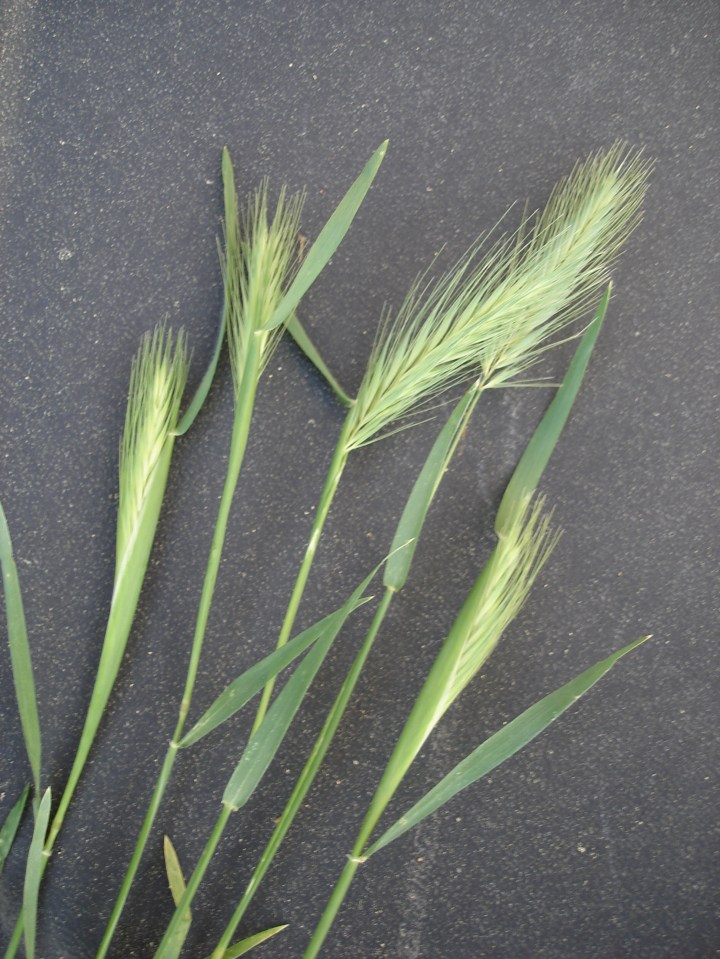
Weeds always have unfair advantages. They grow fast enough to bloom and disperse seed before the rain of early spring runs out, so they do not need any supplemental water. They seem to be able to grow anywhere. Their abundant seed seem to be able to get anywhere. Many produce seed with creative tactics for hitching rides on animals or being blown around by the wind.
This can be a serious problem for the unfortunate animals that interact with these exploitative weed seeds. Burclover and foxtail that are designed to stick to the short hair of grazing animals just long enough to get moved to greener pastures can get seriously tangled in the softer and longer fur of cats and dogs. Foxtail and other thin seeds can get lodged into noses, ears and eyes.
This is why it is so important to control these sorts of weeds, even if the landscape is not a priority. Gardens without resident cats can be visited by neighbor cats who can be hurt by dangerous weed seeds, or disperse the seed into other gardens. Mistletoe seed is not really so dangerous, but has a sneaky way of sticking to birds and squirrels for dispersion.
Thistles are more of an annoyance than actually dangerous. Their seed does not stick into fur. It just gets blown about in the wind. The problem is that the spiny foliage of some types is too painful to handle. If neglected long enough to go to seed, thistles can be seriously prolific. Because it is dispersed by wind, the seed can get anywhere without any help.
Weeds can be recycled in greenwaste, only because greenwaste gets sterilized in the recycling process. Some annual weeds can be composted if they get collected before they produce seed. If there is any seed, some of it may survive the composting process, and germinate wherever the compost gets used. It would be better to dispose of such risky biomass.
Likewise, crabgrass, dandelion, oxalis and other perennial weeds should not be composted because some of the stolons (modified stems) or roots survive the process. Just like seed, some of these surviving vegetative parts can grow into new weeds wherever the compost that contains them gets dispersed. Such resiliency is one of the qualities that makes them ‘weeds’!


 Tony Tomeo