Sun Exposure Relative To Orientation

Sun exposure changes with the seasons.

Understory plants, which tolerate various degrees of shade, are more popular than ever. Basically, smaller modern gardens amongst larger modern homes are shadier than ever. Densely evergreen trees that provide privacy for such gardens also provide more shade. Sunlight can be scarce. It may be helpful to know where to locate optimal sun exposure.

The sun moves from east to west as each day gets warmer. It does so more or less to the south of vertical. It is a bit farther to the south for winter than for summer. Such orientation and motion determine sun exposure within home gardens. Each side of a house, garage or fence faces one of such exposure or another. Eaves might provide shade from above.

Eastern exposure is good for plants that crave some direct sun exposure but not warmth. Azalea, rhododendron, andromeda and hydrangea prefer such exposures. They receive enough sunlight to bloom, but not so much that their foliage scorches. They enjoy partial shade before sunshine gets uncomfortably warm. Eastern exposures are sunny but cool.

Northern exposure is good for plants that do not require much sun exposure. Hydrangea may be somewhat lanky within such situations. Clivia, elephant ears, philodendrons and ferns may be better options. Upper floors and eaves significantly enlarge the shadows of northern exposure. Shadows are also larger in winter while the sun is lower to the south.

Western exposure is good for plants that crave both direct sun exposure and warmth. It is the opposite of eastern exposures, but is certainly no less sunny. It is merely warmer. Lily of the Nile, lavender, oleander and bougainvillea enjoy such sunny warmth. Some types of ferns and elephant ears may scorch with such exposure. Eaves delay direct exposure.

Southern exposure is good for plants that crave full sun exposure, but tolerate heat. Most plants that enjoy western exposure can also enjoy southern exposure. Many vegetables, with regular watering, are more productive with such exposure. Eaves provide shade for the warmest summer weather. They provide less shade while the sun is lower for winter.

Herbal Tea Options

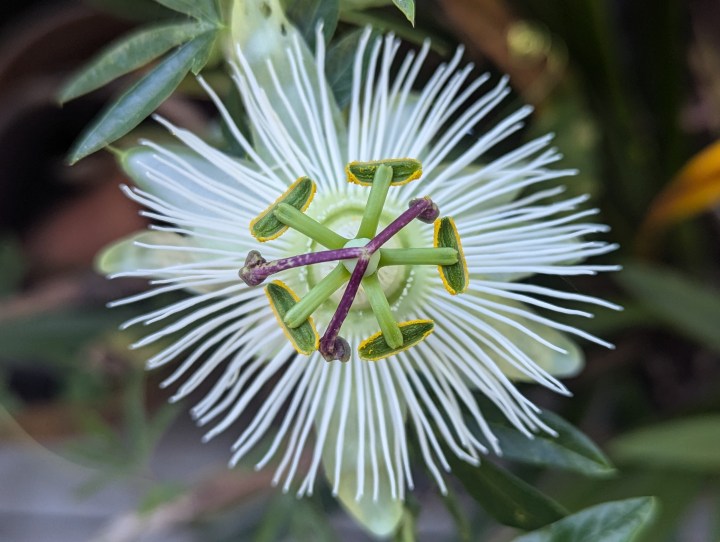
Even passion flower can make a nice, albeit colorless, tea.

When she was younger, my niece, who happens to be the most elegantly refined girl in Gilroy, enjoyed doing tea.  She certainly had the technique, as well as two patient grandmothers, to indulge in this particular tradition properly. The only problem was caffeine.

She was such a young lady; and her Nana and Grandma refrained from the consumption of caffeine. Black tea, made from the fermented bud leaves of tea camellias, was not a good option. Even green tea, made from the same leaves but without fermentation, contains some degree of caffeine. Herbal teas were more practical, as well as appealing to the discriminating taste of a young lady of such impeccable refinement.

There are all sorts of herbal teas made from flowers, leaves and fruit that can be grown in home gardens. Mint, chamomile and lemon grass are perhaps the most well known. Peppermint, spearmint and the many other varieties of mint all have unique flavors. Lavender, particularly French lavender, and some of the many sages can be used to add a bit of their distinctive flavors, too.

Thinly sliced and dried ginger and licorice root make spicy teas that are also good remedies to a mildly upset stomach. However, flowering ginger is not as robust as herbal ginger is. Finely chopped dried berries, cherries, apricots and quince, as well as the rinds of lemons and oranges, add their fruity flavors. The extensive tea list at the White Raven in Felton features teas flavored with dried hibiscus flowers, pelargoniums and rose hips.

Experimenting with herbal tea is like cooking. Within reason, anything goes. Tea can even be made from the dried young shoots of Douglas fir! The only plants that can not be used as tea are those that are potentially toxic.

Tea can of course be enjoyed hot, cold, or even at ambient temperature. Herbal tea is almost always made from dried plant parts, but can be made from fresh parts as well. The various mints have different flavors if brewed from fresh bits taken directly from the garden instead of dried leaves. I actually like to add a few fresh leaves from rose scented geranium (pelargonium) to common sun tea made by leaving black tea to brew out in a jar in the sun.

While they are in season, I also like to add a thin slice of fresh quince, which is so strongly flavored that it is just as effective fresh as it is dried for sun tea or hot tea. Apples and crabapples are also nice, but with much milder, and perhaps even boring, flavor. I prefer to eat the apples and then drop the cores into tea. A Slice or two of richly flavored fig can be good in sweetened hot tea.

Spontaneous Limb Failure Among Trees

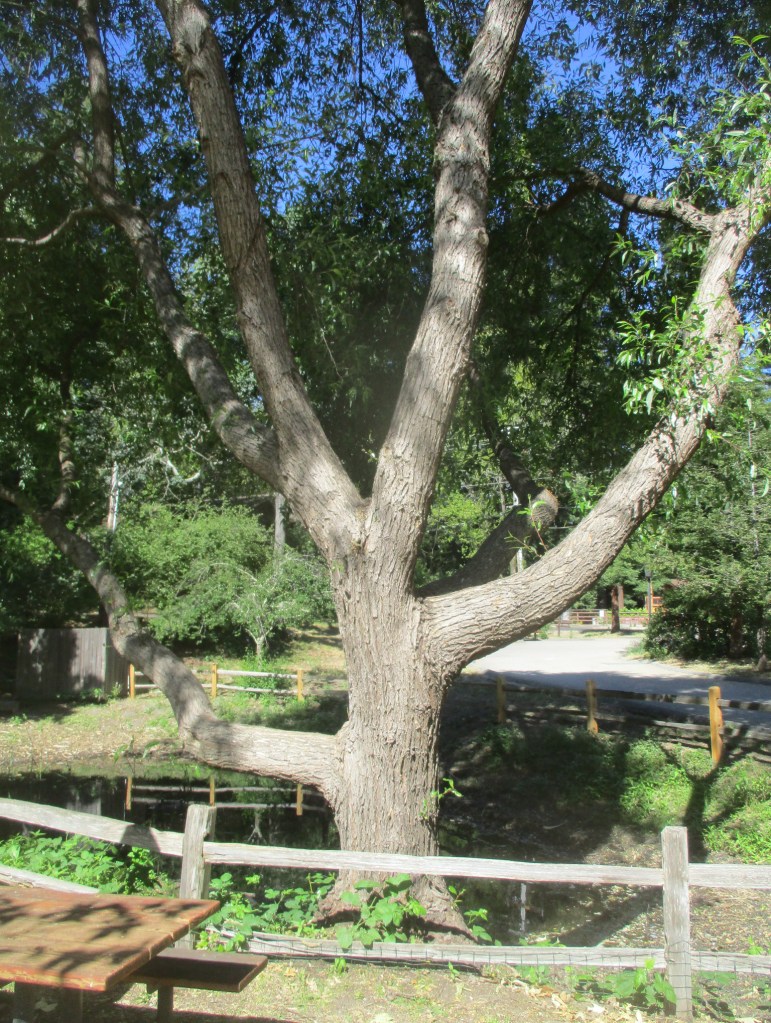
Willows commonly exhibit spontaneous limb failure.

Soil saturation is detrimental to trees for a few reasons. Excessive irrigation is almost as problematic, even without saturation. Chronic excessive moisture compromises stability by inhibiting deep root dispersion. Instead, it promotes shallower root buttressing. It may compromise structural integrity, too. It is generally the cause of spontaneous limb failure.

Spontaneous limb failure is exactly what it implies. Its spontaneity is what makes it more hazardous than limb failure caused by wind. It happens while the weather is calm, warm and perhaps humid, when least expected. Limbs might sag and produce cracking noises immediately prior to falling. However, they quite often fall suddenly and without warning.

Spontaneous limb failure is associated more with gravity than wind. It occurs as vigorous stems literally grow faster than they can support. Warm weather accelerates foliar growth that increases weight. A lack of wind and perhaps enhanced humidity inhibit evaporation from foliar surfaces. Inhibition of evapotranspiration limits weight loss during weight gain.

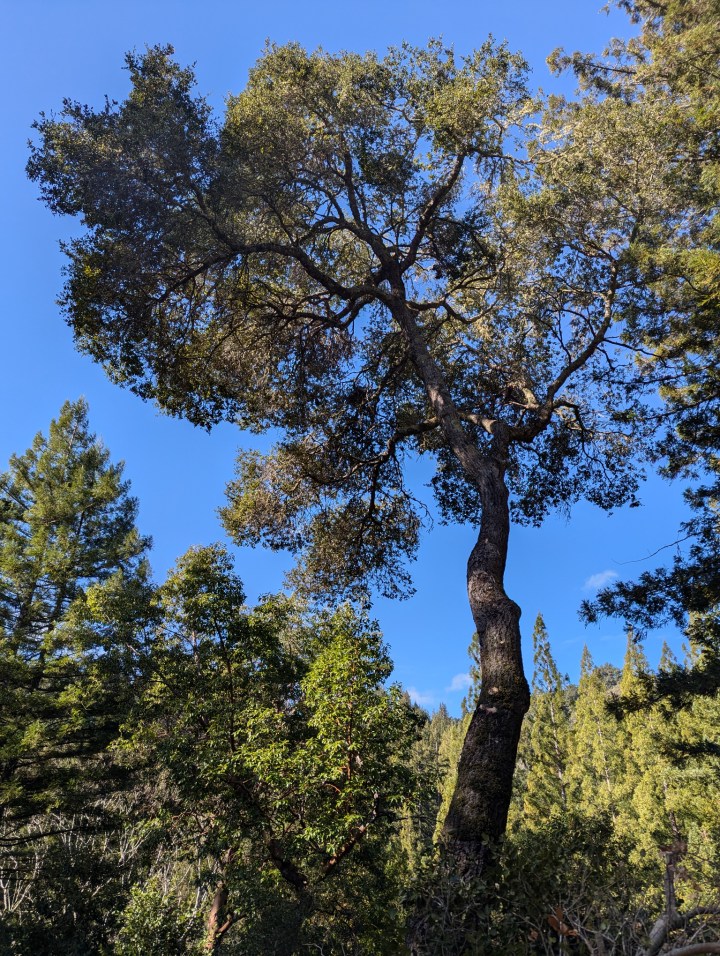
Deciduous trees are generally more susceptible to spontaneous limb failure. Sweetgum, willows, poplars and elms are particularly vulnerable. A few evergreen trees are likewise susceptible, though. They include coast live oak, Monterey cypress and a few eucalypti. Fruit trees exhibit spontaneous limb failure if they can not support the weight of their fruit.

The potential for spontaneous limb failure is rarely obvious. Limbs of some types of trees may visually appear to be too heavy or floppy. Limbs of Monterey pine, for example, may lean to one side if they sag prior to failure. However, valley oak, carob and sycamore are notorious for concealing their weaknesses. Even arborists can not predict all limb failure.

Wild trees within new landscapes are particularly vulnerable to spontaneous limb failure. They are not accustomed to irrigation through otherwise arid summers. Some can adapt as landscapes with irrigation develop around them. Others overindulge and become too heavy for their own trunks or limbs to support. New trees adapt to irrigation as they grow.

Color Selection

There are not many colors that bearded iris can not provide.

If I could select my favorite color for the flowers in the garden, they would all bloom white. There is no more perfect color. White may be bright or pale, but lacks the many shades that other colors have. There is no need to select between deep blue or sky blue, bright yellow or pastel yellow, purple or lavender. White is simply white.

The main problem with white, or any other color, is that no color is the right color for every situation. Also, some flowers are simply not at their best in white. Camellias, oleanders and fruit trees look great in white. However, nearly white marigolds, sunflowers and nasturtiums are interesting oddities that are excellent in the right spot, but are not nearly as flashy as the more traditional bright yellow and orange shades are.

My two favorite geraniums are actually reddish orange and fuchsia pink, and really look horrid in bloom together. They are my favorites nonetheless, because I have been growing them since my sophomore year at Prospect High School! I have taken cuttings with me whenever I relocated since then. I enjoy the garden too much to grow things that I do not enjoy.

Flower colors probably should be compatible with the colors and architecture of associated residences and other buildings, as well as the neighborhood. Yet, we all have different tastes. It is more important to grow flowers with the colors that we enjoy, even if they are not exactly perfect for their particular situations. Fortunately, compatible colors are more likely to also be enjoyable.

White happens to be useful in shaded areas, or with an abundance of deep green, such as wax privet hedges. White brightens an area, even in conjunction with other colors. It also softens richer colors like purple or red.

Darker shades of purple, red and blue should be out in the open, since they can make shaded areas seem even darker. Lighter shades, including lavender and pink, can work almost anywhere. True blue happens to be uncommon among flowers, even though the very common lily of the Nile is typically blue.

Yellow and orange seem at home in sunny spots, and also brighten shaded spots if not overdone. Yellow contrasts with purple. Orange contrasts with blue. Orange marigolds and cobalt blue lobelia might look odd in abundance, but can be striking as a border to a perennial or annual bed. Many of us like a random mix of any color; but too much mix over a large area can look like a garage sale of colors. Black, gray and brown flowers are rare and mostly grown by those of us who really appreciate them; since they look quite odd in the wrong situations. Black hollyhock, pansy and bearded iris are perhaps the best blacks, while other black flowers are not so convincing. Gray iris are still quite rare. Brown sunflowers are becoming more popular.

Integrated Pest Management Really Works

Pesticides are effective but innately toxic.

Wildlife is not the only menace to home garden fruits, nuts and flowers. All sorts of insect pathogens want their share also. Old fashioned nonselective insecticides can be helpful, but can leave toxic residue. They also eliminate beneficial insects that might help control pathogens. Integrated pest management, or simply IPM, is likely a more practical option.

Integrated pest management involves biological, cultural and physical pathogen control. Biological control can involve introduction of beneficial insects that consume pathogens. Ladybugs or lacewings are available from certain nurseries, for control of certain insects. However, doing nothing but allowing beneficial insects to proliferate naturally may work.

Some types of integrated pest management are standard procedure for home gardening. Cultural control may be as simple as growing varieties that are resistant to certain pests. This also involves not growing varieties that are susceptible to locally problematic pests. Sanitation is merely removal of detritus that some pathogens proliferate or overwinter in.

Physical or mechanical integrated pest management can be as simple as picking snails. Copper tape as a barrier to exclude snails and slugs is more involved but more effective. Sticky barriers, like ‘Tanglefoot’, prevent ants from cultivating aphid. (Ants cultivate aphid for sustenance.) Then, wasps, which are a biological control, control the aphid naturally.

Integrated pest management also includes various insect traps. Wasp traps use bait, like pheromones or sweet aroma, to attract stinging insects. Although they are not a problem for vegetation, stinging insects complicate gardening. Thrip traps attract thrip with yellow color, and trap them in glue. Apple maggot traps resemble developing apples, with glue.

Chemical pesticides are not beyond the realm of integrated pest management. However, such pesticides should be as nontoxic as possible. Furthermore, they should target only very specific pathogens. Although modern pesticides are safer than old fashioned types, they are still poison. They have significant potential to interfere with natural ecosystems.

Warming Summer Weather

Dog Days!

My great grandfather could remember more summers in Sunnyvale than anyone else. He knew how unique every summer was and continues to be. Some summers are uncomfortably hot from beginning to end. Last summer though, was the coolest in recorded history!

Warm summers are of course best for the fruits and vegetables that like warmth. Peaches, grapes, tomatoes and rhubarb in my great grandfather’s garden always got the best flavor during warm weather. Warm but not too hot weather early in summer made the best ‘Bing’ cherries on my grandmother’s tree in Santa Clara.

Although cool summers are more comfortable for dogs, cats and people, they are not quite as conducive to growing fruits and vegetables. It is still too early to know what this summer will be like, but even though it is now getting warm, the warmth is developing late. The past spring was remarkably mild, with rain lingering later than it typically does.

Consequently, some fruits and vegetables, as well as some flowers and trees, are developing slowly. Peaches may be a bit smaller than they typically are, with slightly milder flavor. Rhubarb should have good flavor because of recent warm weather, but may develop a bit late because it got a late start.

Tomatoes are perhaps expressing the most dissatisfaction with the mild weather. Even tomato plants that were put out in the garden early in spring have grown slowly, and are not nearly as productive as they typically are by the beginning of summer. Some are not yet producing!

Fortunately and unfortunately, the weather has gotten significantly warmer. This may be uncomfortable for us; but is a party for the formerly bored tomato plants. Warmth of course promotes bloom and fruit production, and enhances flavor. If they get what they need, tomato plants that seemed sickly in the past may suddenly grow like weeds.

They should waste no time making up for lost time. Even if mild weather continues into summer like it did last summer, it will still get warmer than it has been. Maturing tomato plants will want more water and fertilizer (if used) as they get larger, and the weather gets warmer.

Protecting Fruit From Hungry Wildlife

Cherries are too tempting for birds.

Dormant pruning of deciduous fruit trees last winter should finally be proving its benefits. Such pruning enhances tree vigor and resilience to disease. As importantly, it enhances fruit and nut quality. Birds, squirrels and perhaps other wildlife are unfortunately noticing. Protecting fruit as it ripens may seem to be impossible. Sharing might not be acceptable.

The problem with sharing is that most wildlife is greedy. Wildlife that is not greedy can be too generous by inviting their friends over to indulge. They may not consume everything, but might damage all that they can not consume. Protecting fruit does not deprive wildlife of sustenance that they require for survival. It merely diverts their exploitation elsewhere.

The problem with protecting fruit is that it can seem futile. Even if wildlife could read, they would not comply with signs telling them to keep out. Cats and dogs can not chase them all away, and can not be there to try all the time. Techniques that are somewhat effective for some wildlife are not effective for all wildlife. However, some techniques are effective.

Protecting fruit requires some degree of familiarity with whomever wants to exploit it. Not many deterrents are effective for all of them. Netting is only effective for marauding birds, but not rodents, who can chew through it. Because it is so difficult to install, and worse to remove, other options are better anyway. Flash tape repels some birds rather effectively.

Protecting fruit from squirrels is more challenging. Tree trunk baffles can only be effective if there is no other access to the subject trees. They are useless if squirrels can jump into low limbs from the ground or adjacent trees. Growing rosemary, lavender or mint around fruit trees is supposedly a mild deterrent. However, it obstructs maintenance of the trees.

Plastic snakes or owls might be effective for protecting fruit from both squirrels and birds. Plush toys might be as effective since squirrels and birds do not recognize them as safe. However, such effigies eventually become uselessly familiar without frequent relocation. Squirrels and birds may not seem to be very intelligent, but they are not too stupid either.

Grasses

There is more to grasses than turf.

The most familiar lawn grasses can not do what the many other grasses and grass like plants do in a garden. Lawns are mown into submission so that they can function like carpet in outdoor rooms. They certainly have their appeal and practicality, although they require very regular maintenance and generous watering.

Other ornamental grasses are grown like more common perennials, to provide appealing foliage, flowers, forms, textures and ‘motion’ as they move in even slight breezes. Most require significantly less water and maintenance than lawns do. Sedges, rushes and papyrus, although not grasses, function like grasses around ponds and in areas that are too damp for grasses to be happy.

Giant reed, pampas grass and bamboo are all notorious as invasive weeds. Giant reed and pampas grass appear and grow voraciously in some of the worst places that their seeds can get into. (Giant reed should not be planted anywhere near waterways or riparian environments.) Bamboo is not nearly as prolific, but spreads aggressively by stolons (subterranean stems) that grow very fast and potentially reach several feet.

However, where they can be contained, these three are the boldest of their kind. Giant reed grows like large types of bamboo, but fluffier, with broader undivided leaves. Pampas grass develops into big mounds of graceful foliage with billowy white or pinkish flower plumes. (Pampas grass leaves can cause nasty paper cuts, though.) The many different types of bamboo provide a variety of graceful foliage; and many provide striking form with their rigid canes. Some bamboo are low and compact. Most are tall and elegant.

Dwarf blue fescue is among the smaller ornamental grasses, forming round tufts of soft but seemingly bristly blue foliage that resembles dense bundles of pine needles. Fountain grass is considerably larger, with green or purplish foliage, and flower plumes that look like kitten tails. Hair grass is so softly textured that it barely supports its own weight, and often lays gently on the ground or leans onto other plants.

Except for giant reed, pampas grass and the various bamboos, most ornamental grasses do not need much attention. Some look better if they get cut back before they start to grow at the end of winter. Others should get their fading flowers removed. A few are deciduous, so die back over the winter. Grasses are otherwise easier to care for than any lawn and many other perennials.

Fragrant Bloom Appeals To Pollinators

Fragrant bloom needs no bright color.

Aroma and fragrance in a garden have two very different natural purposes. Aroma, which is foliar, repels insects or animals who may otherwise eat such foliage. Fragrance, which is floral, attracts insects and animals to pollinate such flowers. Aromatic foliage ironically appeals to people, particularly as herbs. The appeal of fragrant bloom is not so contrary.

With few exceptions, fragrant bloom is an asset to a garden. Although its primary function is to attract pollinators, people enjoy it also. The few exceptions are flowers that produce fragrances that are unappealing to people. For example, several species of Arum attract flies for pollination. Therefore, they exude foul fragrances that appeal specifically to flies.

Fortunately, most pollinators prefer fragrances that people also enjoy. Many of the richest and strongest fragrances appeal to a broad range of pollinators. Some more refined and distinctive fragrances attract specific pollinators. Fragrant bloom is most fragrant when its preferable pollinators are most active. A few bloom at night for their nocturnal pollinators.

Fragrant bloom is generally not as colorful as bloom that is less fragrant. It does not need to be. Color is merely another visual means with which to attract pollinators. Flowers that are both fragrant and colorful are mostly from competitive ecosystems. Angel’s trumpet is both spectacular in bloom and splendidly fragrant. Yet, its floral color is limited to pastels.

Some of the most fragrant bloom is that of bulbs that bloomed early last spring. Hyacinth, narcissus, freesia, lily and some bearded iris are both fragrant and colorful. Wisteria and pink jasmine are vines that were also fragrant and colorful last spring. Star jasmine is not quite as colorful, but is as fragrant, and still continues to bloom. So does angel’s trumpet.

Warming summer weather will now promote more fragrant bloom, even if it is not colorful. Pittosporum undulatum exudes an almost citrusy fragrance. Pittosporum tobira is slightly buttery. Sweet osmanthus and sweet box are proportionately more fragrant while young. Night blooming jasmine might be the sweetest of all, but more so during warm evenings.

Compositae (Asteraceae)

Feverfew is a member of the Compositae Family.

Kansas may not have the most unusual state flower, but it has the most, in the form of a sunflower. Only black eyed Susan of Maryland, sagebrush of Nevada, and Goldenrod of Kentucky and Nebraska have similar composite flowers, which are actually composed of many minute flowers known as ‘florets’. Yet, none are as large, and therefore not as abundant as the sunflower of Kansas.

Bluebonnet, yucca, lilac and red clover, the state flowers of Texas, New Mexico, New Hampshire and Vermont respectively all bloom with flower trusses that support many individual flowers. Composite flowers of the family Compositae are somewhat more efficient, with their individual florets so tightly arranged that they seem to be individual flowers. Sagebrush and goldenrod actually take this technique a step further, by producing trusses that support many composite flowers; an abundance of abundance!

Composite flowers are so efficient that they actually assign specific tasks to their various members. The outer florets around the margins of larger composite flowers are the ‘ray’ florets that function as petals. They are big, flashy and colorful, to attract bees and other pollinators, but are typically sterile, so can not produce seeds.

The smaller central ‘disc’ florets actually do the work of getting pollinated and producing seed. Because of the efficiency of the ray florets, they do not need to attract attention. They are low and dense, ideal landing pads for bees delivering and collecting pollen. They literally get pollinated as they get trampled.

The showiest composite flowers have disproportionately large ray florets, like chrysanthemums, dahlias, daisies, cosmos, black eyed Susans and  echinacea. Some of the bulkiest and boldest chrysanthemums actually lack disc florets, and produce only colorful but sterile ray florets. The smaller and more colorful sunflowers have more prominent ray florets than the humungous and mostly yellow sunflowers that have more prominent and abundant disc florets.

Other composite flowers impress their pollinators in a more subdued style, by instead producing more appealing disc florets. Lavender cotton and some marigolds actually lack ray florets. Most composite flowers that use this technique are yellow or orange, and quite compact.

There are not many composite flowers that lack aromatic foliage. Daisies and chrysanthemums are actually objectionable to some. It is a wonder than there are insects that eat them! Feverfew and chamomile are instead appreciated for their aroma and flavor.