Why Autumn Is Also Fall

50923thumbNow that leaves are falling, they need to be raked. Large leaves, like those of sycamore and fruitless mulberry, can shade out lawn, shallow ground cover or dense shrubbery. If shade is not a problem right away, mildew can be after only a bit of rain. If abundant enough, finely textured silk tree or jacaranda foliage that typically sifts harmlessly through shrubbery and most ground cover, can accumulate and damage lawn, dichondra and the densest of ground cover. Walnut foliage has an herbicidal effect on sensitive annuals and some perennials.

Foliage is only beginning to fall. Cooling weather causes deciduous trees to shed more. Rain and wind bring the foliage down even faster. Even evergreen trees that naturally shed throughout the year will likely shed more through the upcoming wintry weather. Some trees start to defoliate early in autumn. Some hold their foliage until frost. Some trees that seem to be evergreen hold their foliage through winter, and then only drop their older foliage as it gets replaced by new foliage as winter ends.

Pavement and decks should be raked of leaves, not only to avoid staining, but also because rotting leaves can become dangerously slippery. Curbside gutters are too visible to get neglected for too long. However, heavy rain can quickly deliver to the cleanest of gutters a mess of fallen leaves as well as any other debris and litter that happens to be up the road. Strong wind can be filtered through hedges, leaving drifts of blowing leaves.

Leaves should also be cleared from roof gutters and downspouts, and may need to be cleared away again later in the season. More debris may need to be removed from awkward spots where it might accumulate, such as behind chimneys. Flat roofs may need to be raked.

There are a few exceptions to the need to rake fallen leaves. Where they get absorbed into coarse ground cover like Algerian ivy, falling leaves are generally not a problem. Pine needles and cypress foliage can be left if it happens to be useful for the natural suppression of weeds. Mature coast live oaks and valley oaks that are accustomed to a layer of their own fallen leaves over the surface of the soil actually want it to stay. For them, the foliar debris is a mulch that adds organic matter, insulates the soil, and retains moisture.
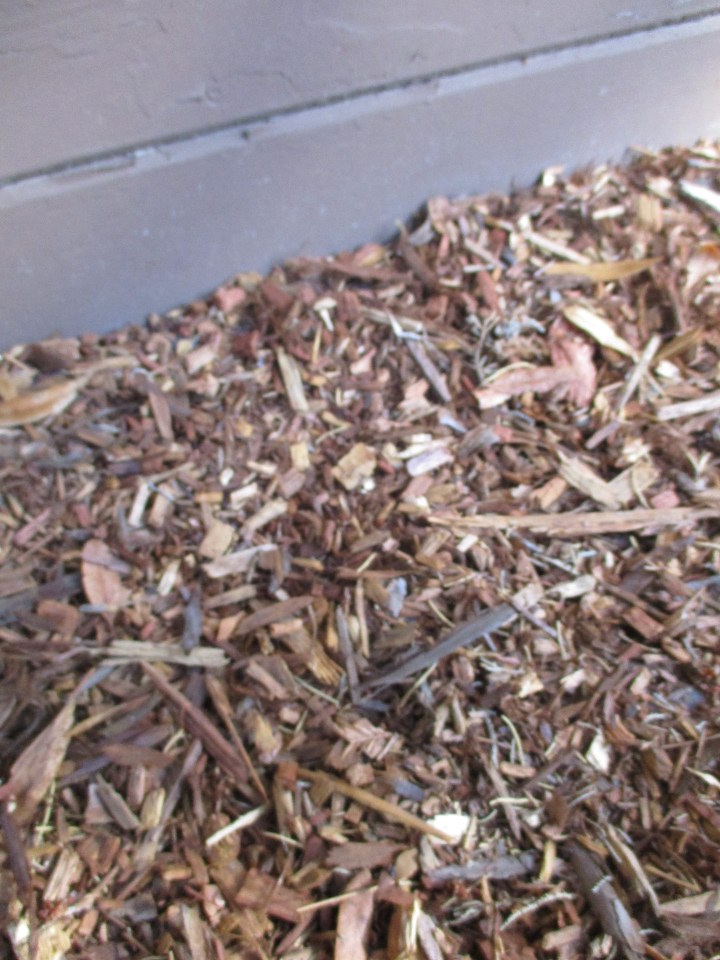
Mulch Is Imitation Of Nature

91113thumbEvery living thing in our gardens came from the wild somewhere. A few plants might be natives trying to adapt to synthetic landscapes. Some might be from similar climates. Some are likely from very different climates. Even houseplants came from the wild somewhere in the World. Regardless of their respective origins, in home gardens, all plants want to behave as they would in the wild.
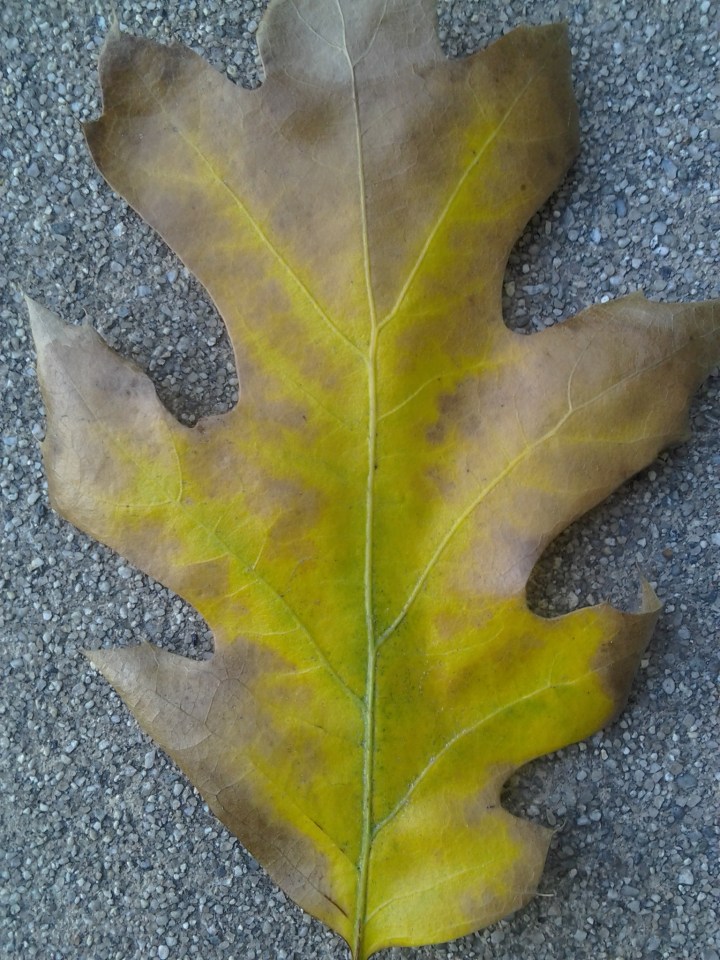
Many plants want to defoliate at this time of year. Even some evergreens want to shed some of their old foliage before winter. Some perennials die back to the ground. Most summer annuals are already dead. There is an abundance of deteriorating organic material getting discarded by the plants that produce it. In the wild, all this detritus would naturally fall to the ground and decompose.

That might be a problem in parts of our refined landscapes. Fallen leaves must be raked from lawns, decks, pavement and various other flat spaces outside. If left too long, they shade out lawns, ground cover and bedding plans. Fallen leaves can stain decking and pavement too. The worst diseases of roses and fruit trees overwinter in fallen infected debris that does not get raked away.

Unfortunately, raking the mess of autumn away deprives the plants that live in the garden of the abundant decomposing organic matter that they expect to be delivered this time of year. The soil is left exposed and uninsulated, allowing temperature and moisture content to fluctuate more than they would naturally. Nutrients are not replenished as readily as they would be from decomposition.

Mulch, which can be applied at any time of the year, is quite seasonably appropriate in autumn. This is when plants expect decomposing organic matter to arrive from above. Mulch compensates for the loss of what we consider to be a mess, but what plants consider to be an important component to their natural ecology. It gives them what they want, but is neat enough for refined gardens.

The best mulch for the job just might be fallen leaves that were raked last year and composted, perhaps with other debris from the kitchen and garden.

Color Is Lacking This Autumn

41029thumbSweetgum, flowering pear and Chinese pistache are the most reliable trees for flashy autumn foliar color, especially in such mild climates. They may not seem like it this year though. After a late start, only sweetgum is coloring well. Flowering pear trees that are beginning to show color farther inland seem to lack their typical bright yellow and orange, and are showing more dark rusty red.

Like so many flowers that bloom in spring, foliar color in autumn is as variable as the weather. Temperature and humidity can either inhibit or enhance color. It is impossible to say what caused the disappointing color so far, or if foliage that colors later will be just as bland. A sudden chill could change things for Chinese pistache that are still behind schedule.

Maidenhair tree (gingko) is the best for bright yellow, but lacks any other color. Fruitless mulberry, tulip tree and various poplars can be nearly as bright yellow in a good season, and may still color well. Of the various willows, only a few color well, and they tend to be more sensitive to weather. Early rain can rot their leaves before they get much color at all.

Although elms are not known for coloring, some of the modern varieties turn remarkably bright orange. However, the few oaks that color well in colder climates turn only dingy brown locally. The few North American maples that can provide color do not hold their colored foliage very long. All sorts of trees have all sorts of personalities.

Eastern redbud, smoke tree and crape myrtle are shrubs or small trees that color as well as larger trees in autumn. Crape myrtle can be as bright yellow, orange and red as sweetgum. Some Japanese maples color better than others, and some can be quite impressive, but only if their foliage does not get roasted by warm and arid weather through summer.

Where it can be accommodated, Boston ivy is an aggressively clinging vine that provides all the remarkably colorful foliage on freeway sound-walls. It is out on the freeways for a reason though. It can ruin any other surface that it clings to.

Arborists Maintain The Big Trees

91106thumbThe trees know what time of year it is. Even evergreen trees have shed some of their older foliage through late summer. Deciduous trees generally start later, but will be more blatant about their process as they defoliate completely through autumn to winter. Some get strikingly colorful first, as if to brag about it. Foliage is not so important during shorter days and dimmed sunlight anyway.

By the time storms start to arrive later in autumn, trees intend to be ready. There will be less foliage to be blown by wind, or to absorb the weight of the rain. Remaining deciduous foliage is likely to be dislodged by wind and rain before supporting limbs succumb. Trees will be mostly dormant, so will not mind so much if a few minor limbs do happen to get broken. They know their routine.

For many types of trees, this is a the best season for major pruning. While dormant, they are much less likely to be offended by it. In fact, they sort of expect to wake up in spring with a few limbs missing. They do not distinguish what was pruned away from what might have been broken by the weather. Besides, it is better to prune questionable limbs civilly, before they get broken brutally.

Trees that are beyond reach will need the attention of professional arborists.

Arboriculture is merely the horticulture of trees. An arborist is therefore a horticulturist who specializes in trees. They assess the health, stability and structural integrity of trees, and prescribe any necessary arboricultural procedures. They or their associated crews are qualified to perform the work that the trees need. The most proficient of arborists are those who are certified with the ISA.

The ISA is the International Society of Arboriculture. ISA Certified Arborists have passed an examination of their arboricultural expertise, and maintain their credentials by continued involvement with ISA educational seminars, classes and workshops. Information about the International Society of Arboriculture and local certified arborists can be found at their website, www.isa-arbor.com.

Snails, Weeds And Falling Leaves

P90713KThe coloring of foliage is a bit slow this autumn. The cooling nights after such warm weather is bringing some of the deciduous foliage down while it is barely yellowing. Honeylocust and black oak have already gotten notably sparse without much notable color. Hopefully, the more colorful sweetgum, flowering pear, pistache and gingko trees will retain their foliage later into cooler weather, so that they can put on a worthy show before filling compost piles.

It is probably slightly too early to clean gutters and downspouts. Unless the rainy season somehow starts first, this should probably wait until most of the foliage that is expected to fall has already fallen. Lawns, certain ground covers, decks and pavement should be raked as needed though. Decks and pavement can get stained from the tannins that leach from decomposing foliage. Lawn and ground cover do not like the shade under the debris.

However, slugs and snails really dig the mess. Fallen foliage keeps the ground cool, damp and shaded. Raking leaves does not eliminate slugs and snails, but inhibits their proliferation. There are always plenty of other hiding places. As the weather eventually gets cooler and damp, snails that stay out in the early morning should be collected and disposed of. Of course this technique is not convenient for everyone, since most snails hide before the sun comes up. Small slugs hide earlier in the morning and are even more unpleasant to handle.

Once found, neither slugs nor snails are too elusive . . . or fast. Yet, plucking and collecting them is not a fun job. Once collected, no one knows what to do with them. They can be put into plastic bags and disposed of; and will eventually succumb. Some people prefer to simply toss them onto a dry and sunny driveway or roof where they succumb more quickly and get taken by birds. Snails may need to be squashed to limit mobility.

Even though it is too late to prevent most types of weeds from dispersing their seed, a few types continue to disperse seed as they deteriorate through autumn and winter. Weeds in areas that get watered last longer and disperse their seed later than those without watering. Perennial weeds that are still green in dry areas areas will be easier to pull after the first rain.

Squash For Autumn And Winter

91030thumbWinter squash are not exactly the sort of cool season vegetables that their designation implies. They grow through the summer just like summer squash do. Both winter and summer squash are warm season vegetables that get planted early in spring. The difference is that summer squash get harvested regularly through summer, and winter squash get harvested only once after summer.
Zucchini, crookneck, pattypan and other summer squash are very productive as long as the weather is warm, and their fruit gets harvested. Fruit that stays too long and continues to mature gets big and tough, and consumes resources that would otherwise be diverted to newly developing fruit. Therefore, regular harvesting of the more desirable juvenile fruit actually promotes production.

Pumpkin, acorn, butternut and other winter squash grow all summer, but each plant should be allowed to produce only a few fruits each. Some pumpkin vines produce only one fruit each. Once the desired number of fruits are developing, fruits that start to develop later should be culled to concentrate resources into the primary fruits. These fruits mature all summer to get harvested after frost.

So, by the time that summer squash stops producing, winter squash is about ready for harvest. Where autumn weather is cooler, the tender foliage shrivels after frost, exposing the richly colored but formerly obscured ripe fruit. Winter squash is supposedly best if slightly frosted prior to harvest, which might take a bit longer here. After harvest, they should be left to cure for two weeks or so.

Winter squash vines are more rampant and somewhat shabbier than those of summer squash. Those that produce smaller fruit might be able to climb trellises or onto firewood piles that are not in use through summer anyway. Female flowers tend to shrivel sooner than male flowers, but all flowers that are big and turgid enough to bother with are edible. Bloom continues through summer.

If properly stored, even without canning or freezing, intact winter squash can last for months, until summer squash start producing the following season.

These Bulbs Are Not Incandescent

41015thumbIt may seem to be too early to be concerned with narcissus, daffodil and grape hyacinth, but this is when their bulbs go into the garden. Once established, these familiar examples, as well as early bearded iris, can be the most reliable for colorful bloom at about the same time early each spring. Crocus and freesia bloom just as early, but may not naturalize as reliably. Lily, tulip, hyacinth, anemone and ranunculus really prefer cooler winters to bloom reliably after their first spring, even though they are worth growing for just one season.
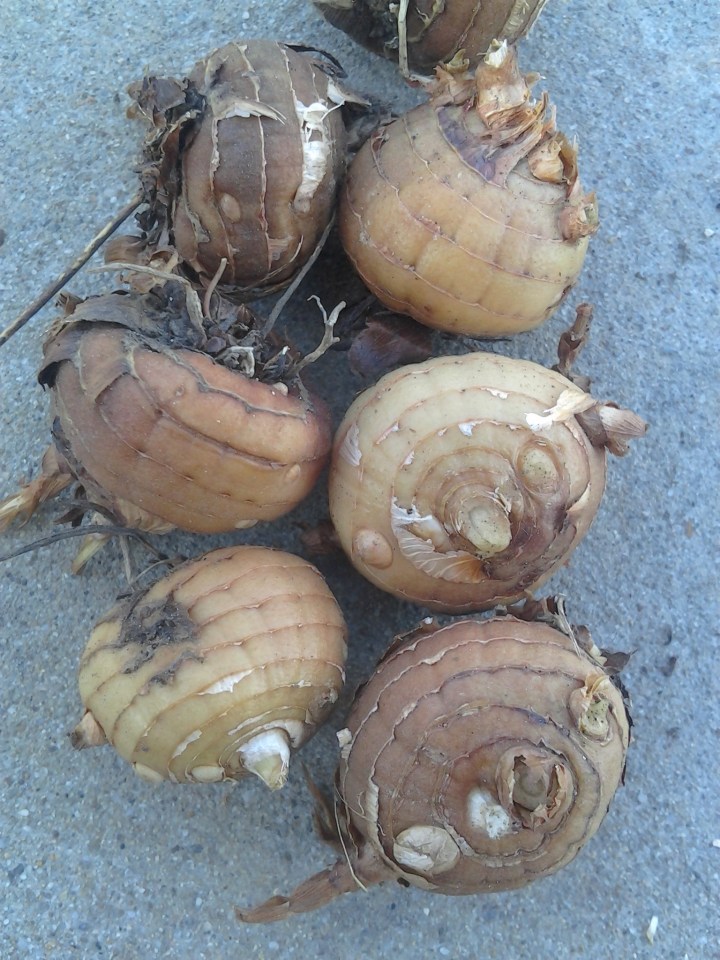
Bulbs, including corms, rhizomes, tubers and tuberous roots, can be found in nurseries when it is time for them to be planted. Gladiolus are not yet available only because they are summer blooming bulbs that should be planted a bit later than spring bulbs. None of the bulbs are much to look at while dormant, and are even less impressive once they get buried out of sight, but they have already stored up everything they need for the blooms that we expect from them next year. Once hidden below the surface of the soil, seemingly dormant bulbs secretly disperse their roots into the surrounding cool and moist soil to be ready to bloom as soon as weather allows.

In their first year, some bulbs can be planted in groups at different times to coincide with the expected durations of their particular bloom cycles. For example, if the flowers of a particular type of bulb can be expected to last two weeks, a second phase of the same bulbs can be planted two weeks after the first phase. As the first phase finishes bloom next spring, the second phase should begin bloom. However, phasing is only effective for the first season, since all bulbs of any particular variety will be synchronized by their second season.

Anemone, ranunculus and bearded iris each bloom synchronously, regardless of when they get planted, so are immune to phasing. Fortunately, the many varieties of bearded iris have different bloom seasons. Some bloom as early as narcissus. Mid-season varieties bloom shortly afterward, and are followed by late varieties. Some modern varieties bloom early, and then again after the late varieties!

Spring Bulbs Get Planted Now

91023thumbTo those who do not enjoy gardening, the process of planting dormant bulbs must seem to be blatantly unproductive. Those of us who know what we are doing are so dutiful to select the bulbs we want, only to bury them in shallow graves in the garden, with nothing to show for all the effort. Knowing that the bulbs are buried at specific depths and orientations makes them no more exciting.

Only cool season annuals that might get overplanted after the bulbs get tucked in will provide any degree of color between now and when the freshly planted bulbs bloom early next spring. Light mulch might be added in conjunction with the overplanted annuals. Thicker mulch can be added without overplanted annuals. Otherwise, there is no immediate gratification with bulbs planted now.

We plant them because we know what they will do next spring. After their boring dormancy, spring bulbs will provide the most spectacular blooms in the garden as winter becomes spring. As they finish, summer bulbs that we might plant a bit later will continue through summer, with the latest continuing into about this time next year. There are no annual bedding plants that do what bulbs do.

Dormant bulbs become available in nurseries when it is time to plant them. Right now, it is time for the early spring bulbs like daffodil, narcissus, tulip, hyacinth, grape hyacinth, freesia, anemone, ranunculus, montbretia, crocosmia, crocus, most lily and some types of iris. We should get them into the garden soon so that they can slowly disperse their roots through the cool and rainy winter.

Summer bulbs such as gladiola, dahlia, allium, calla and canna, will become available later because they should probably be planted later. Although some might not mind getting planted early, a few, such as dahlia and canna, would likely be damaged by frost if they started to grow too early. Many of the summer bulbs bloom through a long season, rather than just once for a brief season.

Bulbs and bulb-like plants that bloom only once can be planted in phases every week or two through their season in order to prolong bloom.

October Brings Cool Season Annuals

41008thumbAs the name implies, ‘annuals’ need to be replaced ‘annually’. What is worse is that they do not even function for an entire year, but only for a specific season. Cool season annuals mostly work from autumn to spring. Warm season annuals mostly work from spring to autumn. Calendula is a popular cool season annual that may not last even that long, since it can mildew half way through winter.
Now that it is time for cool season annuals, it can be unpleasant to remove warm season annuals that are still performing well. In mixed plantings, new annuals can be phased in through autumn as older annuals deteriorate. Busy Lizzie (impatiens), wax begonia and other warm season annuals that are actually perennials can get cut back and overplanted with cool season annuals. The cool season annuals that temporarily overwhelm them can provide shelter from frost. As the cool season annuals finish next spring, the warm season ‘annuals’ can regenerate

However, not all cool season annuals need to finish next spring. Sweet William, cyclamen, chrysanthemum and the various primroses are popular cool season annals that are actually perennials. When the time comes, they can be overplanted with warm season annuals, so that they can regenerate the following autumn. In cool spots, sweet William and some primroses can actually perform all year. (Some people are allergic to primroses like poison oak.)

Alyssum and nasturtium really are annuals, but can function both as warm season and cool season annuals. They sow their own seeds so that new plants can reliably replace old plants without being noticed. The old plants only need to be pulled as they deteriorate. Alyssum is white, or pastel hues of pink or purple. Nasturtium is just the opposite, with bright hues of yellow, orange and red, with only a few pastel options.

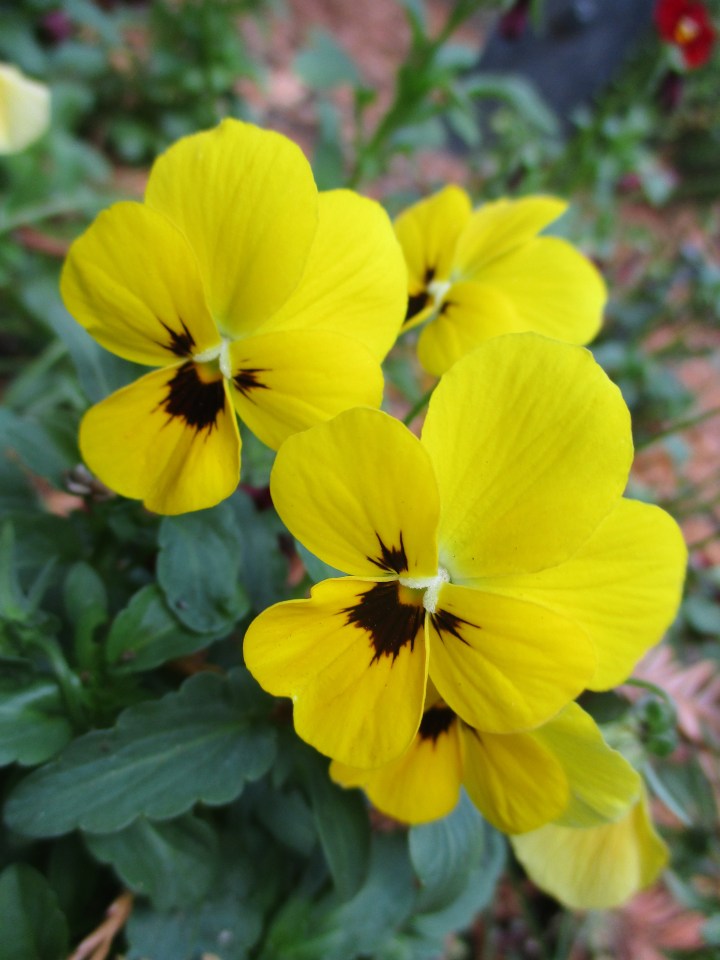
Pansies and smaller violas are the two most popular of cool season annuals, since they function like petunias for cool weather. They lack few colors. Most have two or three colors. Ornamental cabbage and kale produce big and bold rosettes of pink, white or pink and white foliage. Kale has weirdly distinctive foliar texture. White, lavender, pink, purple and rose stock is the most fragrant of cool season annuals, and taller varieties are great for cutting. Iceland poppy has delicately nodding flowers on wiry stems. They can be pastel hues of white, pink, yellow, orange or soft red.

Annual flowers For Cooler Weather

91016thumbAll that unpleasant annual business of removing warm season vegetable plants to relinquish space for cool season vegetables applies to annual bedding plants too. Those of us who do not grow vegetables were spared the agony of pulling up tomato plants that might have still been producing a few tomatoes, just to make room for broccoli. Now, it is time to replace petunias with pansies.

There is a reason why annuals get removed this time of year. It is the same reason why those that get planted now to replace them will be removed later. Annuals are annual. They are expected to perform for only part of one year. True annuals naturally complete their entire life cycles in about a year. Those that have potential to be perennial are too unappealing to salvage through dormancy.

Removal of aging warm season annual bedding plants should be less distressing if they are already deteriorating. By now, most of them are. They tend to wear out faster than some of the warm season vegetable plants. Impatiens can be potted for next year, or, for mixed beds, cut down and overplanted. Most cool season annual bedding plants are already blooming when newly planted.

Because the weather gradually gets cooler through autumn, cool season annual bedding plants appreciate an early start. It is easier to disperse roots before the soil gets cool. Only those that are sensitive to warmth, such as cyclamen, get planted later. Ornamental cabbage and kale might bolt and bloom early at the end of their season if they get too warm at the beginning of their season.

Marigold and chrysanthemum are short term autumn annuals that work very nicely until it is time to plant cyclamen or ornamental cabbage and kale.

Pansy, viola (including Johnny-jump-up), stock, sweet William, Iceland poppy and various primroses are now in season. Some could have been started from seed earlier. Otherwise, it is most practical to plant these cool season annual bedding plants from cell packs. Cyclamen and ornamental cabbage and kale that get planted later are best as more expensive four inch potted plants.