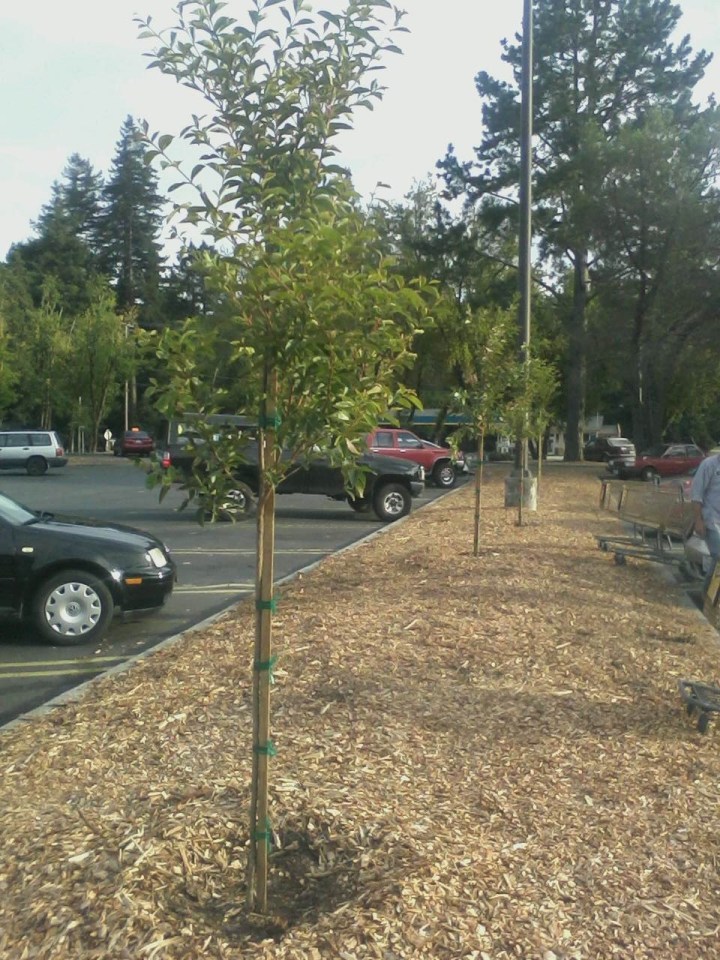
 Most plants would prefer the real thing; how they do it in the wild. They drop their leaves, flowers and twigs. Deciduous plants do it mostly in autumn. Evergreens might spread it out through the year. The debris accumulates on the ground below, and decomposes at about the same rate as it accumulates. There is no one there to clean it up. Yet, the natural ecosystems know what to do.
The plants that produce the debris use the nutrients produced by its decomposition. So, with the help of the many microorganisms in the soil, they recycle their own trash. To exploit this resource most efficiently, feeder roots tend to congregate near the surface of the soil where the nutrients are. Because the debris also insulates and shades the soil surface, roots are comfortable there.
Densely forested ecosystems produce the most debris. Many smaller plants in such ecosystems may disperse their roots exclusively into decomposing debris without reaching into soil below. In desert ecosystems, where such debris is minimal, roots are mostly dispersed much deeper to avoid the hot and dry soil surface. They wait for recycled nutrients to leach to them through the soil.
Redwoods, cypresses, many pines and most eucalyptus produce unusually thick layers of debris that decompose slowly. This technique inhibits or prevents the germination of seeds of potentially competitive plants. So, in other words, these trees and other plants had this, as well as moisture retention, soil insulation and nutrient recycling, all figured out long before we knew about mulching.
After we put so much work into raking and disposing of foliar debris that would otherwise accumulate in our gardens, it is ironic that we sometimes need to apply seasoned mulch to compensate for the lack of organic material on the surface of the soil. (Unseasoned mulch draws nitrogen from the soil to sustain its own decomposition.) It does more than merely improve the appearance of otherwise exposed soil. Mulch helps unnatural landscape environments function a bit more naturally.
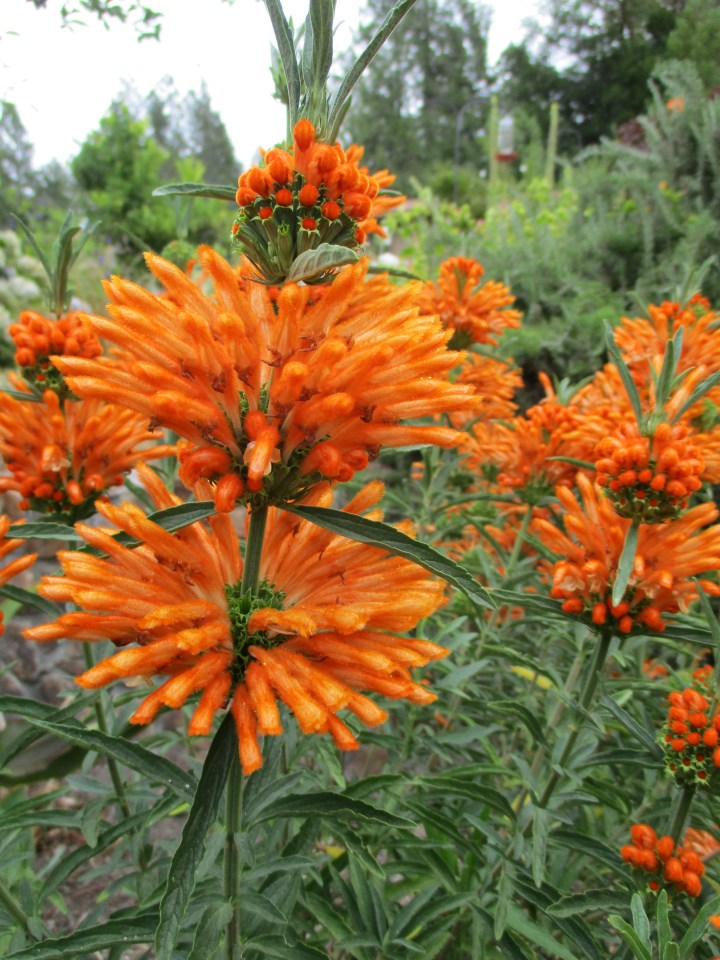 Are warm season annuals really the most colorful flowers for summer? Perhaps. They have their limits though. They are also very demanding. They need to be watered very regularly, and should probably be fertilized too. Many need to be deadheaded frequently. After all that, they are only temporary, and will get replaced with cool season annuals in autumn. Perennials are more practical.
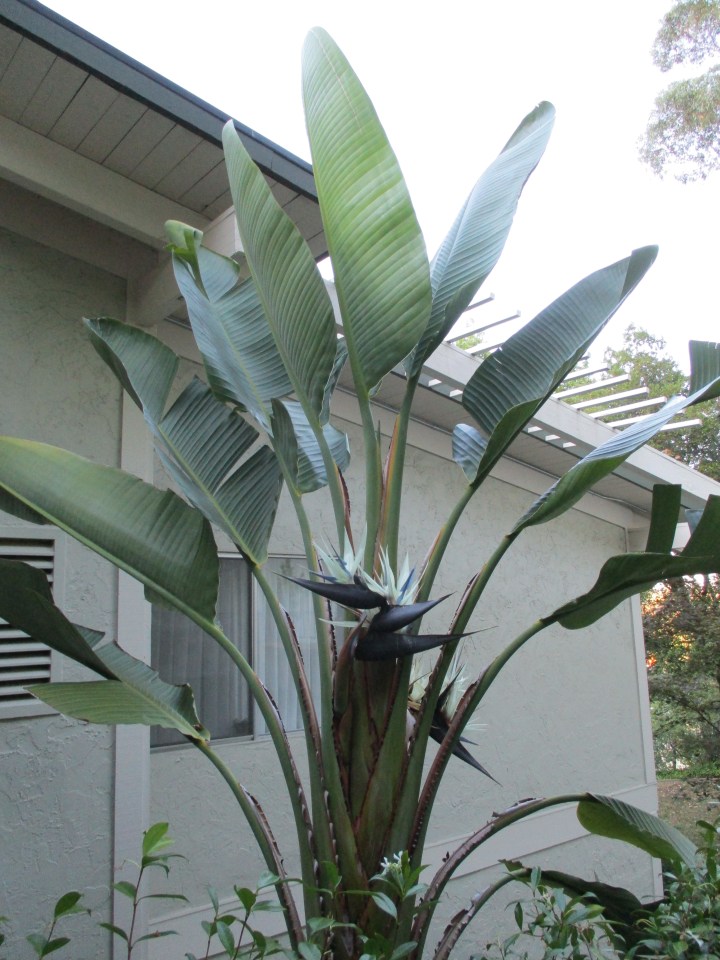 Just like anything else that gets planted in the garden, new perennials seem to be so cute and innocent. They get even better as they mature. Some grow and spread to impressive proportions. Then . . . some perennials get to be too large. Some get overgrown enough to obscure their own appealing characteristics or other plants. Others get crowded enough to inhibit their own bloom.
 The terminology has certainly changed over the years. Not many of us remember what tree surgeons were, or that there were actually a few different kinds of tree surgeons, who performed very distinct tasks. Tree surgeons are now known as ‘arborists’. Much of what they used to do is done by other types of horticultural professionals. The work that arborists still perform is ‘arboriculture’.
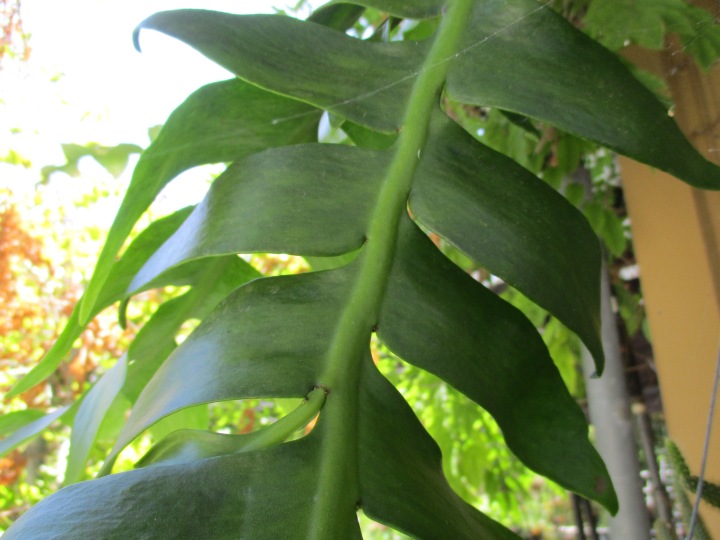 Plants can inhabit nearly every climate on Earth. They live in hot and dry deserts, cold arctic regions, rainforests and just about everywhere in between. Plants seem to have it all figured out. Some even know how to live in our homes as houseplants, although they probably did not plan it that way. Most houseplants are tropical plants that are naturally endemic to tropical ecosystems.
 Flowers do not last forever. Whether they last for only a day, or weeks, they all eventually finish what they were designed to do, and then whither and deteriorate. They only need to stay fresh and appealing to pollinators long enough to get pollinated. After all, that is their only job. The next priority is the development of seed and any associated fruit structures that contain the maturing seed.
 Anyone who has ever owned a cat knows that no one owns a cat. They do whatever they want to do, whenever and however they want to do it. They take orders from no one. If they decide to use a dry spot in the garden as their litterbox, or a tree trunk as their scratching post, it is impossible to dissuade them. They are so smug and arrogant. It is no wonder that so many dogs dislike them.
 Weeds are weeds because they grow where they are not wanted. They might be desirable plants in the wild within their native ranges, or beyond their native ranges where they are useful, but for one reason or another, are undesirable in other situations. In fact, many of the most invasive exotic (non-native) weeds were imported because they were useful for something, and then escaped.
 Lawn is the carpeting for our outdoor spaces. Like pavement or decking, it makes the space in or gardens useful for more than growing other plants. Since it is designed to share its space with us, we give it more ground space than any other type of plant. For what it contributes, most of us do not mind giving lawn all the water and attention that it requires. It really seems indispensable.
 It is hard to say why boulders and sculptural stone are sometimes incorporated into American landscapes. A long time ago, boulders were only left in landscapes if they were to big and heavy to move out of the way or break apart. Early American landscapes were designed to express dominance over nature by replacing as much of it as possible with unnaturally organized landscapes.
 Tony Tomeo