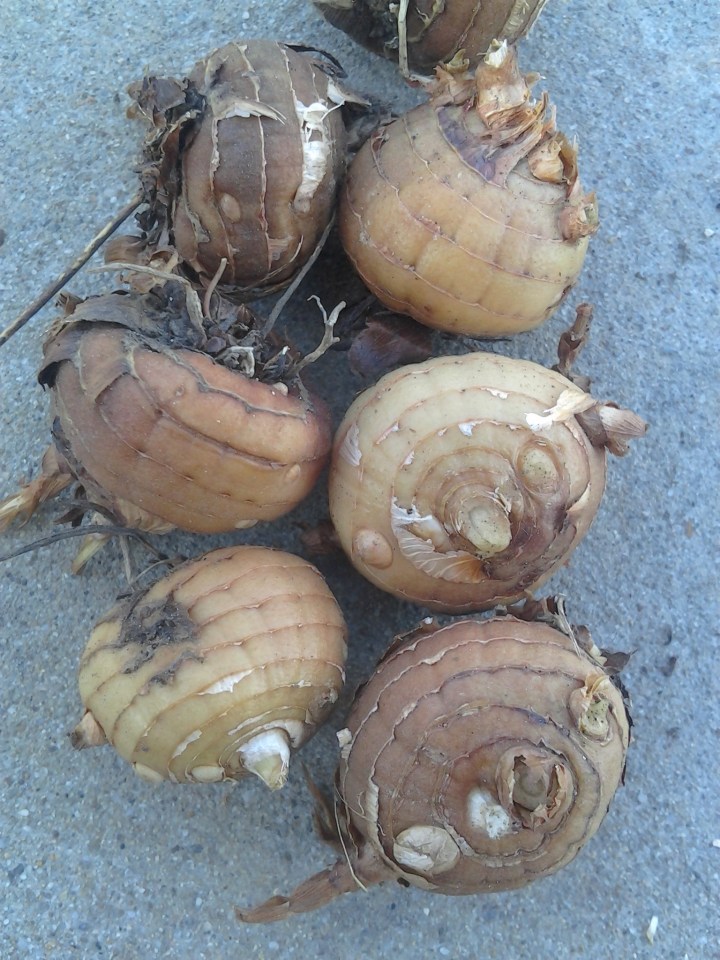
 To those who do not enjoy gardening, the process of planting dormant bulbs must seem to be blatantly unproductive. Those of us who know what we are doing are so dutiful to select the bulbs we want, only to bury them in shallow graves in the garden, with nothing to show for all the effort. Knowing that the bulbs are buried at specific depths and orientations makes them no more exciting.
Only cool season annuals that might get overplanted after the bulbs get tucked in will provide any degree of color between now and when the freshly planted bulbs bloom early next spring. Light mulch might be added in conjunction with the overplanted annuals. Thicker mulch can be added without overplanted annuals. Otherwise, there is no immediate gratification with bulbs planted now.
We plant them because we know what they will do next spring. After their boring dormancy, spring bulbs will provide the most spectacular blooms in the garden as winter becomes spring. As they finish, summer bulbs that we might plant a bit later will continue through summer, with the latest continuing into about this time next year. There are no annual bedding plants that do what bulbs do.
Dormant bulbs become available in nurseries when it is time to plant them. Right now, it is time for the early spring bulbs like daffodil, narcissus, tulip, hyacinth, grape hyacinth, freesia, anemone, ranunculus, montbretia, crocosmia, crocus, most lily and some types of iris. We should get them into the garden soon so that they can slowly disperse their roots through the cool and rainy winter.
Summer bulbs such as gladiola, dahlia, allium, calla and canna, will become available later because they should probably be planted later. Although some might not mind getting planted early, a few, such as dahlia and canna, would likely be damaged by frost if they started to grow too early. Many of the summer bulbs bloom through a long season, rather than just once for a brief season.
Bulbs and bulb-like plants that bloom only once can be planted in phases every week or two through their season in order to prolong bloom.
 As the name implies, ‘annuals’ need to be replaced ‘annually’. What is worse is that they do not even function for an entire year, but only for a specific season. Cool season annuals mostly work from autumn to spring. Warm season annuals mostly work from spring to autumn. Calendula is a popular cool season annual that may not last even that long, since it can mildew half way through winter.
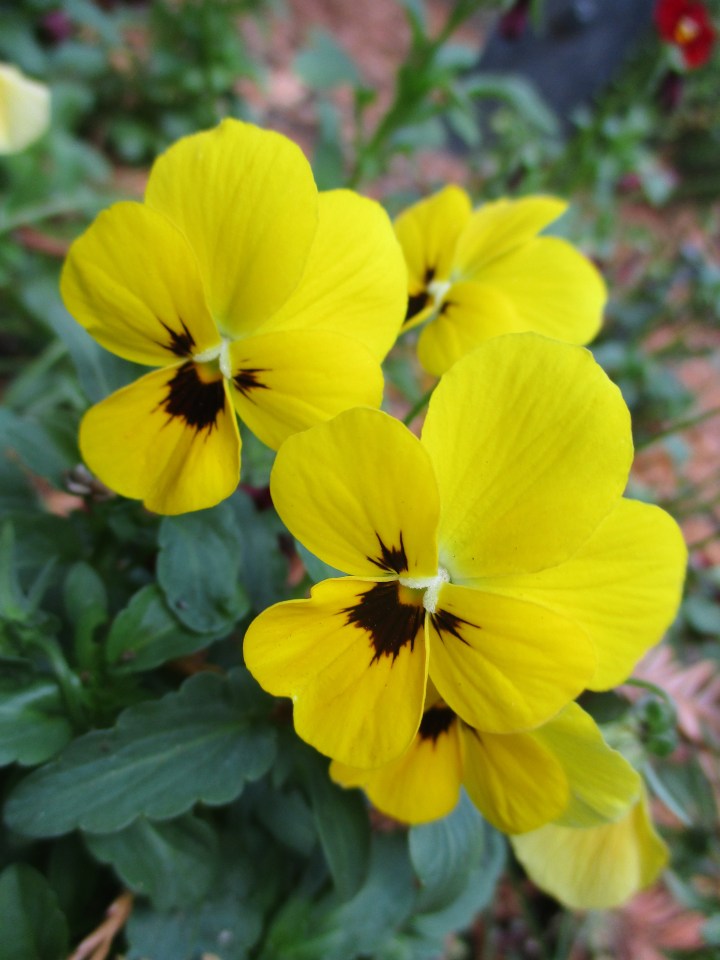 All that unpleasant annual business of removing warm season vegetable plants to relinquish space for cool season vegetables applies to annual bedding plants too. Those of us who do not grow vegetables were spared the agony of pulling up tomato plants that might have still been producing a few tomatoes, just to make room for broccoli. Now, it is time to replace petunias with pansies.
 Zucchini is probably the most reliable of warm season vegetable through summer, even when tomatoes are having a bad year. A single zucchini plant produces enough for a household. Two plants produce enough to share with neighbors. Pattypan, crookneck and other varieties of summer squash may not be quite as reliably productive individually, but can be assembled as a delightfully variable team that produces early in summer, and is just now finishing.
 For many of us, this might seem to be irrelevant. We do not apply fertilizer to our landscapes and gardens. Some of us who use fertilizer do so mostly for seasonal vegetable plants and flowering annuals. Such plants will either not be around long enough to get fertilized again this year, or are cool season plants that are on a completely different fertilizer schedule through autumn and winter.
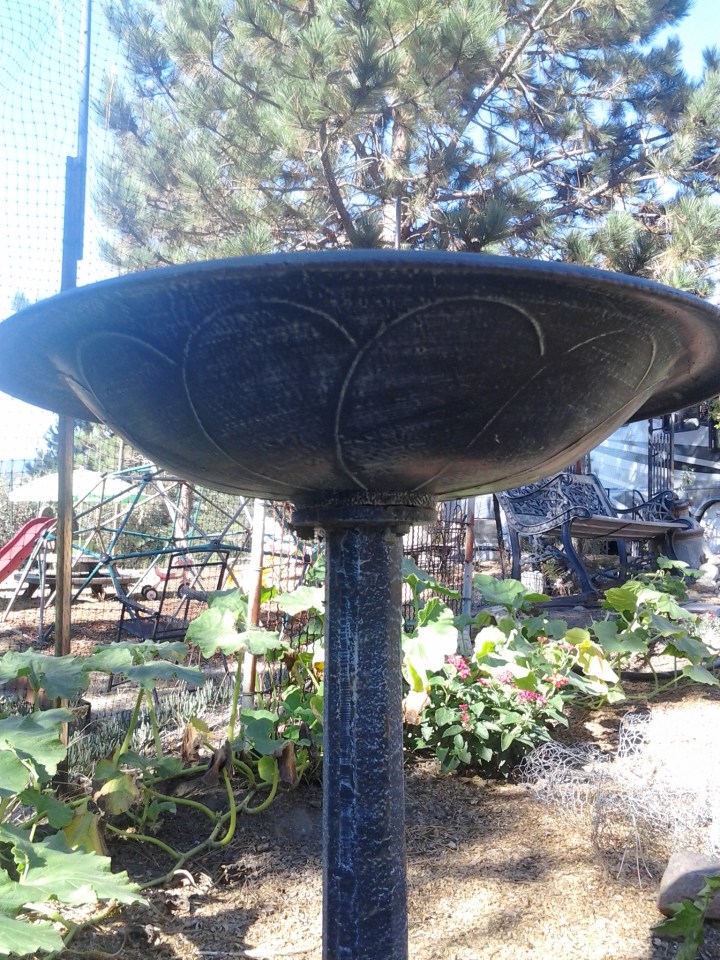 Some of the most convenient bird feeders in the garden are some of the many plants we grow. Since so many plants exploit the birds as much as they get exploited by the birds, they naturally produce something that the birds want, when they want it. Right now, meaty seeds cater to migratory birds that need to plump up to travel, hoping that some of the seeds get dropped elsewhere or buried for later (hence ‘sown’ if forgotten, as they often are).
 The difficult part will be removing the aging warm season vegetable plants while they are still trying to produce. That is one of the disadvantages of gardening in such an excellently mild climate. It would be easier if frost or cooling weather caused them to start deteriorating by now. Perhaps some are already getting tired. Regardless, their space is needed for new cool season vegetables.
 Ready or not, it will be autumn in just a few days. Formal hedges can be shorn one last time if they need it. They will not grow much until spring. Actually, photinia and the various pittosporums should not be shorn much later than now if they exhibit any dieback. Some of the diseases that cause dieback are more likely to infest freshly cut stems during rainy weather. Citrus and plants that can be sensitive to frost should not be pruned later, since pruning can stimulate new growth that will be more sensitive.
 The climate here is pretty cool, at least in winter. Right now, it is pleasantly warm. It does not often get uncomfortably cold or hot, and when it does, it does not stay like that for too long. In between the warmest days of summer, the nights typically cool off nicely. In between the coolest nights of winter, the days typically warm up nicely. Humidity is normally minimal. Rain is adequate in season.
 What happened with the tomatoes?! In past years, they were inhibited by mild summer weather. This year, they had plenty of warmth, but did not seem to perform much better. Perhaps they wanted more humidity. Now that those that started slowly are starting to produce better, they do not have much time left before warm summer weather gets cooler towards autumn.
