Forage To Find Unexpected Fruit

Felton League, the Facebook group of the homeless and their friends in Felton, California, briefly mentions the source of some interesting, but typically overlooked fruits that can be found in the wild or unrefined landscapes. Blackberries, American plums and elderberries collected from rural roadsides have produced award winning jellies for the Santa Cruz Mountains Harvest Festival.
Unlike the fruit that so many of us put so much effort into growing in our home gardens, these fruits and others are productive without any help. They are commonly overlooked only because they are so easy to ignore. In some ways, they are inferior to ‘garden variety’ fruit; but they also have certain advantages. Free fruit that takes no more effort than harvesting is obviously a good thing.
The most common wild blackberries are actually Himalayan blackberries that have naturalized. Unfortunately, they do not compare well to garden variety blackberries. They are not as abundant, and are difficult to pick from the wickedly thorny and rampant canes. Blue elderberries really are native, and are just as good or maybe better than black elderberries from eastern North America.
Figs, olives, grapes, rhubarb, prickly pears, apples and various citrus can sometimes be found in abandoned or neglected landscapes. Walnut, almond and wild plum trees sometimes grow from self-sown seed. Purple leaf plum is not always as fruitless as it is purported to be. Then there are all the other ornamental plants that happen to produce fruit that is useful to those willing to try it.
For example, Australian brush cherry, English hawthorn, Indian hawthorn (‘Majestic Beauty’), strawberry tree and even common freeway iceplant all produce fruit that can be cooked into luscious jelly. Of course, no fruit, particularly unfamiliar fruit, should be eaten or experimented with until it is confirmed to be safe for consumption. Many fruits really are toxic! Also, fruit should not be harvested from where it might be illegal to do so, such as private property or parks.

NOTE: This is an old article. Felton League is no longer a group on Facebook, but is now a blog here on WordPress.B90803K

Vegetables Change With The Seasons

90814thumbRight smack in the middle of the warm part of summer, it is already time to be getting ready for autumn gardening. This involves more than just ordering our autumn planted spring bulbs while the selection is still optimal. Most of us purchase bulbs from what is available in nurseries when they are in season anyway. Seed that gets sown in the next few weeks is a more immediate concern.

The majority of cool season vegetables will get planted later, when the seasons actually start to change to become . . . well, cool. Seed for beets and carrots gets sown directly in about a month, followed by pea seed even a bit later. At about that same time, many of us will plant small seedlings of other cool season vegetables, like broccoli, cauliflower, cabbage, lettuce, spinach and kale.

For many of us though, it is not that simple. If we want varieties of these cool season vegetables that are not likely to be available as seedlings in nurseries later, we must grow our own from seed. Whether they get sown directly into the garden, or into flats to be grown as seedlings to be planted later, broccoli seed should be sown about now. By the time it gets to growing, it will be autumn.

Seed purchased online or from mail order catalog should be ordered by now. It is not too late for broccoli if the seed arrives and gets sown soon. Cauliflower and cabbage seed gets sown within a month or so, as late August becomes early September. Lettuce and spinach seed should wait half way through September, like beet and carrot seed. Kale seed can wait until after September.

Seed for secondary phases of most of these cool season vegetables can be sown early next year.

In the meantime, warm season vegetables must continue to be harvested very regularly. If they stay in the garden long enough to get tough and bland, they also interfere with continued production. Foliar herbs can be harvested for drying just about any time they are fresh and not blooming. Regular harvesting inhibits bloom, and therefore promotes more of the desirable foliar herbal growth.

Vines Do Not Replace Hedges

90619thumbUrban homes are innately close to other urban homes. Newer homes are even closer to each other than older homes are, and are more imposing. Establishing or maintaining privacy can be a challenge, especially for high windows in narrow spaces. Even though home builders prefer to place windows strategically, some windows invariably face into neighboring windows or gardens.

Trellised vines are a popular but rarely effective remedy to this dilemma. The narrow spaces between houses and below the eaves can be dark enough to inhibit growth. Consequently, vines are typically sparse or bunched on top of their trellises. Their most vigorous growth is often awkwardly long shoots trying to find a way out of the shade. Vines are not exactly easy to work with anyway.

There are of course exceptions. With regular maintenance, some finely textured vines that are reasonably tolerant of shade can be effective for downstairs windows. (Upstairs windows are out of reach.) If shorn very regularly, English ivy on lattice works almost like a hedge. (Ivy does not fill in on more open trellises.) Trellised star jasmine is even better, but needs more depth (front to back).

Yet, with few exceptions, big evergreen shrubs or small evergreen trees that tolerate shade are more practical. They support their own weight, so only need to be pruned for confinement and clearance from the houses that they provide privacy for. Some shrubs and trees should be pruned to stay at the desired height, so that superfluous upper growth does not shade out lower growth.

The various podocarpus are some of the better small trees for narrow spaces between houses because they are are somewhat tolerant to shade, and are so easily pruned into shape. Some of the taller and more upright pittosporums work nicely in sunnier spots. Arborvitae tolerates more shade, and naturally stays narrower. Since some of these better options might grow slowly, they can be planted with faster growing shrubbery that can be pruned back, and eventually removed as the preferred plants mature.90619

Docile Annual And Perennial Vines

90710Most of the familiar vines really are exploitative bullies. They shade the same trees and shrubs that they climb for support. Some will even strangle and kill those who make it possible to get where they want to be. If they do not find trees or shrubs to victimize, they are likely to climb walls and ruin the paint, stucco or siding. Their aggressive nature can be a problem in landscape situations.

Fortunately, there are several vines that are not so aggressive or destructive, such as mandevilla, lilac vine, star jasmine and Carolina jessamine. Other vines that are even more complaisant are light duty perennials and annuals that might grow like weeds while the weather is warm, but then do not have enough time to grow too big or do much damage before they die back through winter.

If flashy color is not important, vining vegetable plants such as pole beans, cucumbers and peas, can cover fences very nicely. On flat fence surfaces, such vines will climb string strung in a vertical zigzag pattern between a horizontal row of protruding nails at the top, and another similar row at the bottom. Unsightly cyclone fences are even better, but will need be harvested from both sides.

Although it is too late to sow beans and cucumbers, a new phase of peas can be sown in mid summer for production in autumn. Fragrant and subtly colorful sweet peas, which are grown for their flowers rather than as vegetable plants, take considerably more effort here. They get started in autumn for the following spring. Trailing nasturtium can get sown at any time, for summer or winter.

As the name implies, perennial pea is a perennial that can get almost rampant, but dies back by autumn.

Passion fruit vine can either be a perennial that dies back to the ground in winter, only to regenerate the following spring, or a somewhat woody vine with wiry stems that survive for several years. Those that retain their vines through winter can get cumbersomely big, or can alternatively be cut back severely late in winter, to behave almost like more docile types that die back for the winter.

To Mulch Is Not Enough

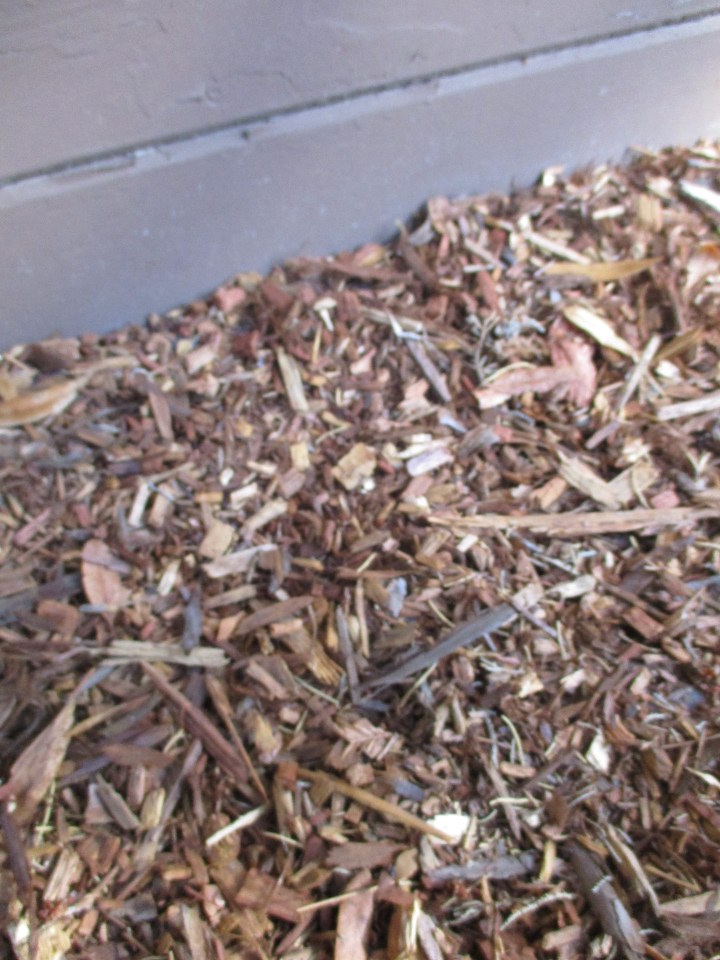
60727thumbMost plants would prefer the real thing; how they do it in the wild. They drop their leaves, flowers and twigs. Deciduous plants do it mostly in autumn. Evergreens might spread it out through the year. The debris accumulates on the ground below, and decomposes at about the same rate as it accumulates. There is no one there to clean it up. Yet, the natural ecosystems know what to do.

The plants that produce the debris use the nutrients produced by its decomposition. So, with the help of the many microorganisms in the soil, they recycle their own trash. To exploit this resource most efficiently, feeder roots tend to congregate near the surface of the soil where the nutrients are. Because the debris also insulates and shades the soil surface, roots are comfortable there.

Densely forested ecosystems produce the most debris. Many smaller plants in such ecosystems may disperse their roots exclusively into decomposing debris without reaching into soil below. In desert ecosystems, where such debris is minimal, roots are mostly dispersed much deeper to avoid the hot and dry soil surface. They wait for recycled nutrients to leach to them through the soil.

Redwoods, cypresses, many pines and most eucalyptus produce unusually thick layers of debris that decompose slowly. This technique inhibits or prevents the germination of seeds of potentially competitive plants. So, in other words, these trees and other plants had this, as well as moisture retention, soil insulation and nutrient recycling, all figured out long before we knew about mulching.

After we put so much work into raking and disposing of foliar debris that would otherwise accumulate in our gardens, it is ironic that we sometimes need to apply seasoned mulch to compensate for the lack of organic material on the surface of the soil. (Unseasoned mulch draws nitrogen from the soil to sustain its own decomposition.) It does more than merely improve the appearance of otherwise exposed soil. Mulch helps unnatural landscape environments function a bit more naturally.

Summer Perennials Are Now Blooming

90731thumbAre warm season annuals really the most colorful flowers for summer? Perhaps. They have their limits though. They are also very demanding. They need to be watered very regularly, and should probably be fertilized too. Many need to be deadheaded frequently. After all that, they are only temporary, and will get replaced with cool season annuals in autumn. Perennials are more practical.

Lily-of-the-Nile is likely the most common and most familiar of blooming summer perennials. It is a shame that it blooms only once. Bloom is usually in time for the Fourth of July, and lasts a good long time, but is already fading. Deadheading as the blue or white color is eventually exhausted will not promote subsequent bloom, but will keep the evergreen foliage looking tidy until next year.

Daylily might be the second most popular of summer perennials. Some of the older types bloom only once like lily-of-the-Nile, but various cultivars bloom at various times to prolong the season if a few are grown together in the same garden. The most popular modern cultivars probably bloomed earlier, and will bloom again, perhaps with little time in between. The color range is extensive.

Penstemon are not committed to their natural schedule of blooming in late spring and again in autumn. A good pruning at the end of winter eliminates tired old foliage, and enhances and delays bloom until summer, without compromising the later autumn bloom. Like daylily, a few different varieties of penstemon in the same garden prolong bloom, which can be white, pink, red or purple.

Salvias are a big group of summer perennials that really should be more popular than they are. Some are native. Others are from other chaparral climates. Naturally, they are right at home here. Many bloom about now, and some will bloom again in autumn if deadheaded or pruned back. What they lack in flashy color, they compensate for in resiliency and reliability. They really are tough.

This is by no means a complete list of summer perennials. It does not even include the perennial daisies such as coneflower, black-eyed Susan and gaillardia.

Recycle And Repurpose Overgrown Perennials

60720thumbJust like anything else that gets planted in the garden, new perennials seem to be so cute and innocent. They get even better as they mature. Some grow and spread to impressive proportions. Then . . . some perennials get to be too large. Some get overgrown enough to obscure their own appealing characteristics or other plants. Others get crowded enough to inhibit their own bloom.

Lily of the Nile, which is one of the most common and resilient of perennials, grows and blooms indefinitely. It does not spread too quickly, but eventually creeps a few feet every decade or so. However, if it is too healthy, individual shoots can get too crowded to bloom as prolifically as they want to. Also, shoots that get too close to walkways or other plants eventually become obtrusive.

Anyone who has tried to shear encroaching foliage of lily of the Nile knows that doing so ruins the natural lushness of the foliage. Once scalped, it will stay that way until obscured by new foliage that will be just as obtrusive as the removed foliage. The only remedy is to remove the shoots that produce the foliage, leaving the shoots behind them with adequate clearance for their foliage.

Lily of the Nile shoots are not easy to remove. Their rubbery roots have quite a grip! Yet, once removed, the stout stems can be planted as new plants wherever more new plants are desired. They only need to be watered regularly for the first few months until winter, so that they can disperse roots. If dug and replanted in autumn, they generate roots over winter, and are ready to go by spring.

Overly congested colonies of lily of the Nile, as well as African iris and New Zealand flax, can be dug, split into individual shoots, groomed of deteriorating foliage, and then replanted. Because New Zealand flax has such big leaves, it should be processed in autumn or winter; and its leaves should be cut short so that they do not get tattered and floppy while new foliage and shoots grow.

Bird of Paradise can be divided similarly, but carefully because the shoots are surprisingly fragile. However, giant bird of Paradise is a completely different animal. The tallest trunks eventually begin to deteriorate, so get cut down like trees. Basal shoots are left intact to replace them, so only get divided if obtrusive or overly abundant. Most perennials prefer to be divided after bloom.

Canna and calla prefer to be dug and relocated as their foliage dies back after bloom, just before new shoots develop. However, new shoots often develop before older foliage must be cut back.

Arborists Are Modern Tree Surgeons

90724thumbThe terminology has certainly changed over the years. Not many of us remember what tree surgeons were, or that there were actually a few different kinds of tree surgeons, who performed very distinct tasks. Tree surgeons are now known as ‘arborists’. Much of what they used to do is done by other types of horticultural professionals. The work that arborists still perform is ‘arboriculture’.

Back when orchards were still common in the Santa Clara Valley, Orange County, and many of the areas of California that are now urban, those who pruned deciduous fruit trees while dormant in winter were known as tree surgeons. Of course, they did other work that the trees needed through the rest of the year, and harvested fruit as well. They might be known as orchardists nowadays.

Tree surgeons also assembled new orchards, as well as individual trees in home gardens. It used to be standard procedure to install the understock of fruit trees in the first winter, and let it grow through the following year. A tree surgeon would return while it was dormant the following winter, to graft desired scions onto it. This is now done by nurserymen in nurseries that sell finished trees.

The tree surgeons who we now know as arborists are, of course, still important. The tree surgery that we now know as arboriculture is the sort or work that other horticultural professionals are not qualified or able to perform. It involves the biggest of trees that are out of reach from the ground, or even from ladders. There are still a few different kinds of arborists, but most must climb trees.

Arboriculture is the horticulture of trees. Arborists are therefore horticulturists of trees. Those who are certified with the International Society of Arboriculture, or ISA, have passed an examination of their arboricultural expertise, and maintain their credential by continued involvement with the educational seminars, classes and workshops of the ISA. Arborist can assess the health, stability and structural integrity of trees, and prescribe and supervise necessary corrective arboricultural procedures.

Tropical Plants Far From Home

P80811+++++Plants can inhabit nearly every climate on Earth. They live in hot and dry deserts, cold arctic regions, rainforests and just about everywhere in between. Plants seem to have it all figured out. Some even know how to live in our homes as houseplants, although they probably did not plan it that way. Most houseplants are tropical plants that are naturally endemic to tropical ecosystems.

It is actually their tropical heritage that makes them more comfortable in our homes. Tropical climates tend to be conducive to proliferation of all kinds of plants. Those that want to live there must be competitive. Trees compete by growing faster and taller than other trees. Vines compete by climbing the trees. Understory plants that live under taller plants compete by needing less sunlight.

It is these understory plants that do not mind the shade of our homes. Even those that like bright ambient light might never expect to get direct sun exposure. The various ficus trees that might naturally grow tall enough to reach the top of a forest canopy in the wild are still understory plants while young. Because they know how to use resources efficiently, tropical plants do well in pots.

However, these advantages are not so useful out in the garden. Tolerance to partial shade also means that some tropical understory plants need to be sheltered. If too exposed, foliage can get roasted by sunlight or arid wind. (Most tropical climates are more humid than local climates are.) Complaisant roots do not disperse well enough to sustain lush foliage without regular watering.

Ironically, roots of the various ficus trees are very aggressive because they to not disperse deeply, but instead spread out at the surface of the soil where they grow into exposed root buttresses.

The most familiar weakness of tropical plants is their susceptibility to frost. Even though it does not get very cold here, it gets cool enough in winter to offend plants that would never experience cool weather in the wild. Actual frost can severely damage foliage, and can even kill some tropical plants.

Save Some Seed For Later

90717thumbFlowers do not last forever. Whether they last for only a day, or weeks, they all eventually finish what they were designed to do, and then whither and deteriorate. They only need to stay fresh and appealing to pollinators long enough to get pollinated. After all, that is their only job. The next priority is the development of seed and any associated fruit structures that contain the maturing seed.

After bloom, most flowers are just ignored as they deteriorate and fall. Those in big shrubbery, vines and trees are out of reach anyway. Others are either too numerous or too insignificant to worry about. Of course, fruit and fruiting vegetable plants get to produce the fruits that they are grown to produce. Then there are few flowers that need to be ‘deadheaded’ after they are done blooming.

Deadheading is simply the removal of deteriorating flowers. The remains of sterile flowers might be deadheaded because they are unappealing. Deteriorating flowers that would like to produce undesirable seed or fruit after pollination might get deadheaded for the same reason, and to conserve resources that would otherwise be consumed by the developing seed and associated fruit.

However, there are a few flowers that might be left intentionally to provide seed for later. Different flowers finish at different times, and their seed gets sown in particular seasons, but most of those allowed to produce seed should probably be deadheaded through most of their season, with the last few blooms left to go to seed. The same applies to fruiting vegetable plants like pole beans.

Many flowering plants are genetically stable enough to produce progeny that will bloom mostly like the parents. Most are likely to be more variable, or revert to a more genetically stable form, even if it takes a few generations. Sunflower, cosmos, marigold, calendula, morning glory, columbine, snapdragon, campion and hollyhock are all worth trying.

California poppy, alyssum, nasturtium, money plant (honesty) and a few annuals that do not get deadheaded are often happy to sow their own seed.