Gutters And Chimneys Need Attention

71101thumbThere is no time that is best to clean the gutters on the eaves. They should probably be cleaned early before the debris within them gets dampened by the first rains. However, they will only need to be cleaned out again after more foliage falls. If cleaned only after all the foliage falls, they will be grungier, and there will be potential for some of the debris to flow into and clog the downspouts.
Most of the fresh leafy debris that fell recently is relatively easy to clean out. Debris that has been accumulating through the year will be more decomposed and settled in. Evergreen trees are somehow messier than deciduous trees. They drop smaller volumes of debris in autumn, but they drop the rest throughout the year. Deciduous trees drop all their foliage within a limited season.

That certainly does not mean that deciduous trees can not make a mess. All that foliage has to go somewhere. If the weather gets cool slowly, foliage falls slowly, and for a longer time. Some deciduous trees innately defoliate slowly, and may even wait all winter to finish. Fruitless mulberry, tulip tree and poplars typically defoliate efficiently, making a big mess that gets cleaned up once.

Flat roofs that lack gutters collect debris too. So do the spaces behind chimneys and in roof valleys (where the slope changes direction). Even if this debris does not interfere with the function of gutters and downspouts, it promotes rot in roofing material. Trees and vines that touch a roof are likely to be abrasive to roofing material if they move in the breeze, or hold debris against the roof.

Trees and vines must be kept clear of chimneys, not only because they can interfere with ventilation, but also because they can be cooked by exhaust from the fireplace below, and ignite! Fan palm beards (dead foliage that accumulates on trunks), pine, cypress, spruce and cedar are particularly combustible. Clinging vines can separate brick from mortar, which is another fire hazard.

Working on the roof and gutters is of course potentially dangerous. It might be best to get a professional for these sorts of jobs, especially if trees need to be pruned. While that is being done, there is plenty of raking and other gardening for us to do (without a ladder). Raking leaves is an important job too, since fallen leaves can shade out lawn, ground-cover and flowering annuals.

Annuals Come And Annuals Go

71025thumbJust like warm season vegetable plants in the vegetable garden, flowering warm season annuals get replaced this time of year. Although the weather is still warm, cool season annuals should be planted now so they can disperse roots before the weather gets too much cooler. Except for a few short term annuals and perennials, most should perform until the weather gets warm next spring.

Pansy, viola, Iceland poppy, sweet William, calendula, stock and the various primroses should get down to the business of blooming rather efficiently, and hopefully compensate for the removal of deteriorating warm season annuals. Ornamental cabbage and kale, as well as cyclamen, can be a bit later because they are a bit more sensitive to warmth, but not slowed much by cool weather.

Nasturtium and alyssum can work as either or both warm and cool season annuals. Both are annuals, so individual plants do not last more than a few months. In hot spots, they may perform well in winter, but then get roasted in summer. In cold spots, they may do exactly the opposite. In the right situations, they self sow and bloom all year. Tired old plants should be groomed out if unsightly.

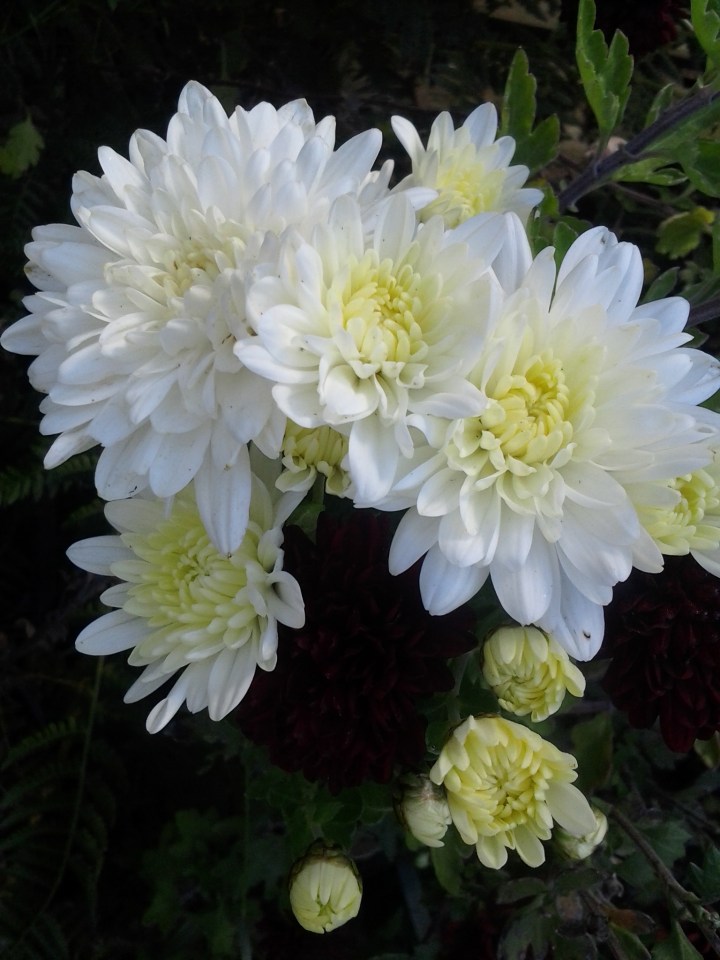
Chrysanthemums are the most prominent of seasonal color for autumn, and come in all sorts of colors that are ideal for an autumn palette. They are actually perennials that are grown as annuals. Unfortunately, they are usually grown as very short term annuals, that are allowed to bloom only once, and then replaced with something more wintry, like cyclamen or ornamental cabbage or kale.

Like cool season vegetable plants, most flowering cool season annuals should be planted as small plants in cell packs. Chrysanthemum, as well as cyclamen and ornamental cabbage and kale that get planted afterward, are the exceptions that should be planted as four inch potted plants, but they are expensive anyway. Primroses can be planted from either cell packs or four inch pots. (Primroses can cause a serious skin allergy, just from contact.) Nasturtium and alyssum should be grown from seed sown early.

Vegetables Grow All Year Here

71018thumbThe difficult part is pulling up the warm season vegetable plants while they still seem to be productive. It gets much easier after that. Putting new cool season vegetable plants back into the garden is much more gratifying. Vegetable gardening never stops here. One season starts before the previous season ends. If cool season vegetable plants get a late start, they take longer to produce.
If there is enough space in the garden, the cool season vegetable plants can go somewhere else, while the warm season vegetable plants finish with what they might still be working on. Tomatoes might last until frost. Even when it get too cold for the foliage, green fruit can still ripen on the vine, and a bit more on the kitchen windowsill. Green tomatoes remaining after that can be pickled.

If the soil does not need too much amendment, and the spacing works out well, new cool season vegetable plants can be planted in with the warm season vegetable plants so that they can start to grow and disperse roots while the warm season vegetables finish. By the time the warm season plants succumb to cooling weather, the new cool season plants will already be maturing nicely.

This technique does not work so well with last season’s tomatoes only because they are so greedy with nutrients. Fertilizer might compensate for plants that seem slow where tomatoes had been previously. A bit of amendment can be added to the soil when new cool season plants get planted, and more can be added between them when old warm season vegetable plants get removed.

Broccoli, cabbage and cauliflower should all be planted as seedlings, so can work nicely with interplanting with aging warm season vegetable plants. Since only a few of each type are needed for a well outfitted garden, one or two cell packs of six or eight plants each should be sufficient. Each cell pack does not cost too much more than a packet of seed. Seedlings get established quickly.

Beets, carrots, lettuce, spinach and peas should be grown from seed sown directly into the garden, so do not work so well with interplanting. Too many individual plants of each type are needed. It just would not be practical to grow them from cell pack seedlings. Besides, they grow so efficiently from seed. Kale can be grown either from seed of seedlings. It might be too late for cucumbers.

Why Autumn Is Also Fall

71011thumb.jpgThe calender says that it is now autumn. The weather does not necessarily agree. Some of the trees are dropping their leaves. However, the leaves are not falling because the weather is getting significantly cooler. The leaves got cooked during that weird heat wave a few weeks ago. If the weather can be this confusing here in our very mild climate, it must be really crazy everywhere else.
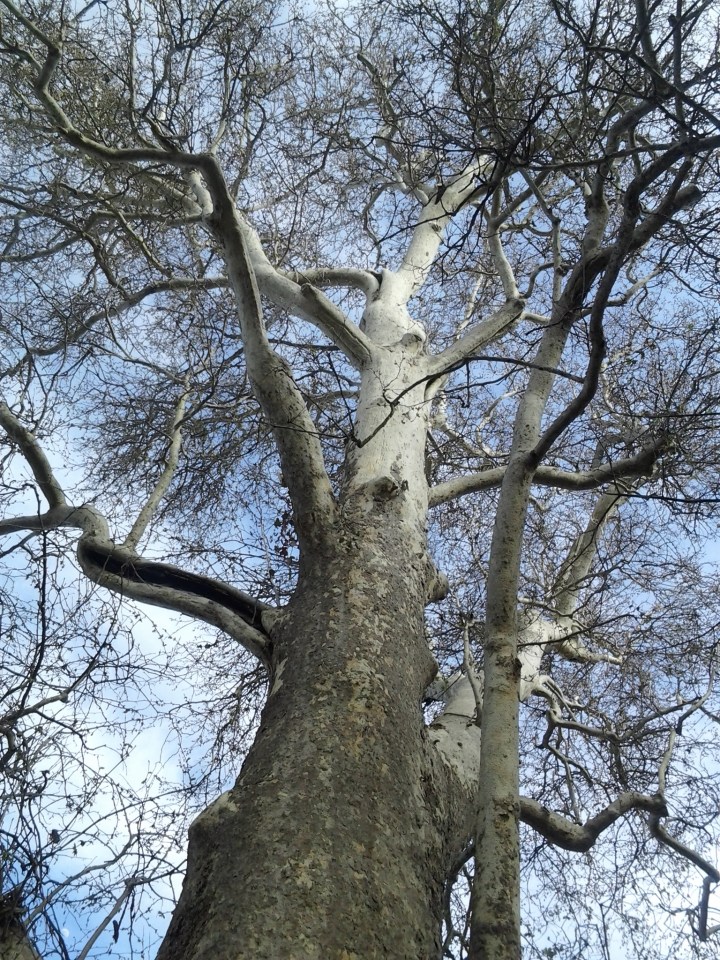
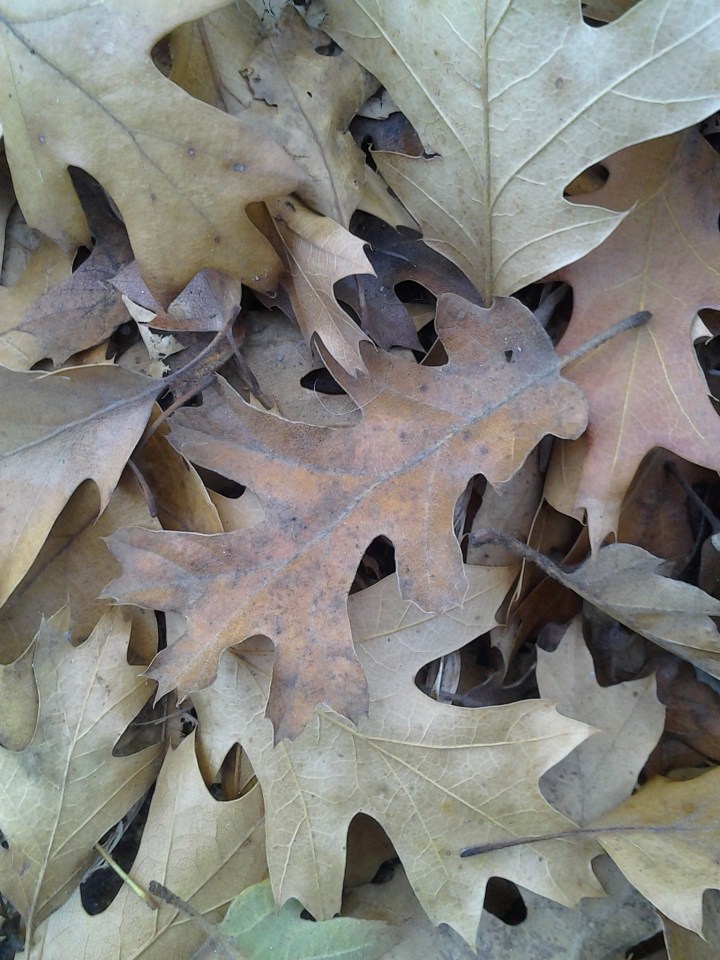
It is hard to make sense of what trees are dropping leaves in response to the earlier heat. Coast live oak, which normally tolerates heat quite well, was really annoyed by the heat in some areas. Cottonwood and other poplars are expressing their discomfort too, but that is to be expected from them. Sycamores, which are normally sensitive to weather anomalies, are not overly concerned.

All this means to us, the janitors of our trees, is that some of us might be raking leaves earlier than expected. These leaves will not be the nice colorful sort that we like to see in autumn. Those will come later. It is still too early to know how the weather will affect autumn color. All we know so far is that some trees will have less foliage for coloring. Sweetgums are hinting at a colorful autumn.

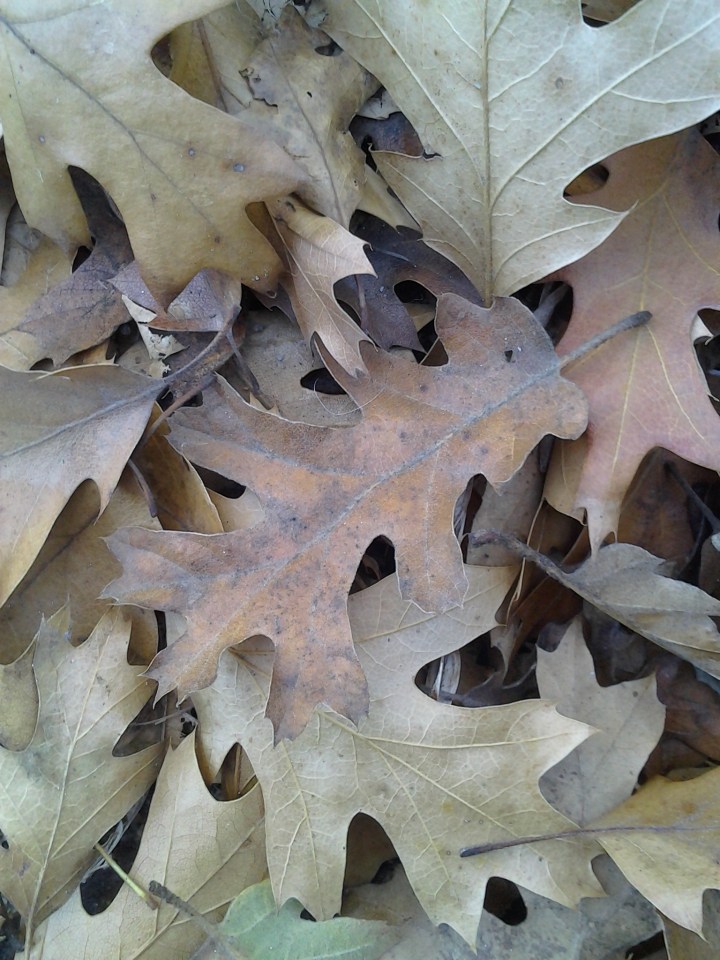
Leaves should be raked as they fall. However, because no one wants to clean the eave gutters any more than necessary, they can be cleaned only a few times, or maybe only once if trees shed efficiently. They are easiest to clean before the rain starts and the wet leaves start to decay. Unfortunately, most deciduous trees continue to drop their leaves well into the rainiest part of winter.

Lawns and shallow or dense groundcovers really do not like to be shaded by fallen leaves for too long. To perform through winter like we expect them to do here in our mild climate, they want as much sunlight as they can get while the days are shorter and the sun is lower on the horizon. Besides, fungal pathogens like mildew and rot, are more likely to proliferate under damp fallen foliage.

Finely textured leaves under low shrubbery and coarsely textured groundcover that ‘eats’ fallen leaves is a nice mulch, so does not need to be raked. If it can not be seen, and is not too abundant, it is probably not a problem. The exceptions are fallen leaves of roses, grapes, cane berries, deciduous fruit trees, and any plants that are susceptible to diseases that overwinter in fallen leaves.

Pumpkins Wait For No One

71004thumbThings might have gone better for Cinderella if she had taken a Buick to the ball instead of that detrimentally punctual pumpkin coach. It was on such a tight schedule! It might have seemed like a good idea on the way too the ball. It certainly was a unique ride. The problem was that it made no accommodation for Cinderella’s tardiness at midnight. It adhered firmly to its own strict schedule.

Pumpkins and other vegetables are just as punctual in our own gardens. Pumpkin leaves eventually succumb to mildew late in summer. This year, they might be a bit more worn out than they typically are by this time, because of the surprisingly warm weather a while back. They are just finishing up anyway. They only need to sustain fat pumpkin fruit as it ripens for the next month or so.

Some of the oldest leaves might get cut away if they get so dry and crispy that they are obviously no longer viable. The best and most functional leaves will be farthest from the roots. Unfortunately, that is also where the ripening pumpkins are. They need the leaves to sustain them, but they also need sunlight to color well. Leaves that shade fruit should be bent away, or cut away if necessary.

For even ripening, pumpkins should be grown on their sides, and turned or rolled a quarter turn every few days or so. There is no precise formula, but they should not be turned in the same direction too much. Otherwise, they get twisted off their stems. They can be grown standing on their flower ends if they sometimes get turned on their sides to expose their flower end undersides.

Regular turning also promotes symmetry, and should prevent the fruit from sitting in the same position long enough to rot. Just to be safe, in well watered gardens, or where the soil is constantly moist, it might be a good idea to put small boards under pumpkins. Unfortunately, there is no remedy for damage caused by the heat. Damaged pumpkins will just make uglier jack-o’-lanterns.

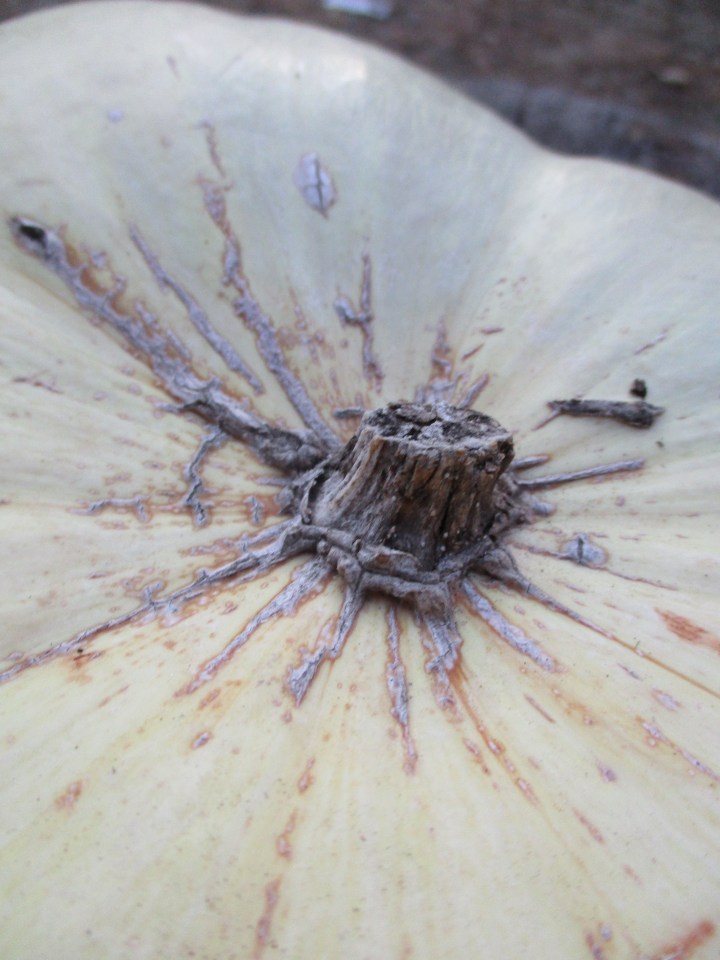
Big bright orange pumpkins with thin shells work best for jack-o’-lanterns. Smaller brownish orange pumpkins with thick shells are grown for baking and pies. Their external appearance is not as important, although well ripened pumpkins have better flavor. White, pink, green, yellow, red and even blue gray pumpkins are just weird. They look great for Halloween, but do not taste like much.

Houseplants Bring The Outdoors In

70927thumbPhilodendrons, dracaenas, ferns, palms or any sort of tropical foliage inside our homes only create an illusion of closeness to nature. Naturally, these plants live in very different climates, mostly thousands of miles away. Not only do they have no business in our homes; they have no business on the North American Continent. Some can live in the garden, but only with unnatural watering.

They are only known as houseplants because they ‘can’ live in the house. Almost all are from tropical regions; and most are understory plants that naturally live in the shade of larger trees. They work nicely as houseplants because they tolerate the shade of home interiors. Because they are from tropical regions, they have no concept of winter, so do not need chilling for winter dormancy.

The disadvantages to their tropical heritage is that they are confined to domestic lifestyles here. Many would not survive frosty winter weather. Some might survive, but would not be happy about it. Others would not like the aridity (lack of humidity) during the summer. Houseplants that get moved out to the garden for part of the year must be grown in pots so that they can be moved back in.

While inside, there are no natural predators to control the insects that feed on houseplants. Scale and mealybug can proliferate enough to not only damage houseplants, but to also make a mess of their sticky honeydew below the houseplants they infest. Spider mites can proliferate where dust accumulates on foliage. That is why houseplants sometimes like to be rinsed by a gentle rain.

Since they are confined to pots, houseplants must be watered more carefully than plants that get to disperse their roots out in the garden. Some large Boston ferns and spider plants may need quite a bit of water to be applied very regularly. Some dracaenas, palms and ficus trees may want to get slightly dry between watering. As soil deteriorates, old plants might need to be repotted.

Houseplants are grown for their lush evergreen foliage, and such lush foliage can be sensitive to fertilizer toxicity. Even if fertilizer is applied lightly, toxins can eventually accumulate if fertilizer is applied very regularly. This problem is usually corrected with repotting. However, plants that never need to be repotted might like to be taken outside to get water rinsed through their potting soil.

Heat Lingers With Indian Summer

70920thumbIt is still too early to say if, or for how long, warm Indian Summer weather will linger into what should be autumn. This last spell of unseasonable heat (in California) was merely a heat wave. Of course, at the time, there was nothing ‘mere’ about it. It was downright hot! It was weirdly humid too. As uncomfortable as it was for us, the humidity made the unseasonable heat more tolerable for some plants.

Heat has a nasty habit of drying things out. Humidity does the opposite, although not quite as efficiently. Many plants might have been seriously desiccated if the weather had gotten so warm without the humidity. A cooling breeze might have made things more comfortable for us, but likewise would have been more uncomfortable for plants by enhancing the desiccating effect of heat.

So, again, we disagree with our plants. One thing we all agree on is that this last heat wave was unseasonable, and came at a time when summer should be on the downhill side toward autumn. Some evergreen plants are producing foliage designed for cooler weather. Worst of all, many of the gardening procedures that get done this time of year are in anticipation of cooling weather.

Not too long ago, pruning and shearing of hedges and other evergreens was an important topic. The objective was to get it done one last time before autumn. If done too late, new growth develops slowly through the cool winter weather, and is more susceptible to discoloration and frost damage. Now, the problem is that some of the fresh new foliage was scorched by the heat!

Also, fertilizer should have been applied one last time before autumn. Later application stimulates new growth so late in the season that it is sensitive to frost through winter. Just like pruning, the fertilizer stimulated new growth that might have been damaged by the heat. So, proper pruning and application of fertilizer to limit frost damage may have left plants more susceptible to scorch.

Just like with frost damage, scorched foliage should not necessarily be pruned away immediately. If not too unsightly, it might be best to leave it alone. Some evergreen plants will not replace it until next year anyway. Deciduous plants will shed it when convenient. Large leaves like those of philodendron and banana, may deteriorate so badly that pruning them away is the best option.

Street Wise About Street Trees

70913thumb

There is no such thing as a perfect tree. All trees have foliage that one way or another, eventually falls to the ground. All trees have roots that might try to displace something that gets in their way. Many trees are messy in bloom. Some make messy fruit. Except for palms, all trees have branches that can be broken by wind. Just about any tree can be blown over if the wind is strong enough.

This is why the selection of trees that are appropriate to each particular application is so important. Finding trees that provide enough shade, obscure an unwanted view, or perform any specific function is one thing. Finding trees that behave while performing their assigned tasks is something else. There are always compromises. A certain degree of bad behavior will likely be tolerated.

Street trees for a parkstrip between the curb and sidewalk can be the most challenging trees to select. There are so many variables to consider. Many neighborhoods have saved us the trouble of selection by prescribing a specific tree, or maybe limiting the choices to only a few species, whether or not they are actually appropriate. Otherwise, we are on our own, to select whatever we like.

Microtrees might seem like good choices. They do not get big enough to damage a sidewalk, or make much mess. These are trees like crape myrtle, purple leaf plum and photinia (in tree form). These trees can be proportionate to narrow streets, but really do not shade much more than a single parking space. Because they are so low, they need serious pruning for adequate clearance.

Mid-sized and bigger trees like Chinese pistache, honeylocust maidenhair tree and some of the modern hybrid elms certainly cause more problems, but might be worth the bother. They shade curbside parking and part of the front yard nicely. Like small trees, they need to be pruned for clearance, especially over the roadway, but they eventually grow up high enough to be out of the way.

It seems that trees that exhibit some of the better characteristics for street trees are deficient in other ways. Australian willow has very complaisant roots, and is very resilient, but also branches low, and is not much to look at. Fern pine and several oaks are excellent street trees for decades, but eventually get big. Root barriers will delay, but not prevent roots from damaging sidewalks.

Timing Is Everything For Pruning

70906thumbThere are certain disadvantages to gardening in such a perfect climate. We can not grow things that require significant chilling in winter. Nor can we grow things that require prolonged heat in summer. Seasons change so gently that it is easy to get behind schedule. It is already late summer, whether it seems like it or not. What we do not do in the garden is as important as what we do.
Plants know what time it is. Almost all are slowing down significantly. Many natives do almost all of their growth in spring, and then spend the later half of summer just getting ready for autumn. By now, the buds of deciduous trees like sycamore, oak and willow are already getting plump, even though they will not do anything until the end of winter. Non native plants will not be too far behind.
Evergreen plants that get pruned or shorn a few times through summer might need to be pruned or shorn one last time. If not done now, it probably should not be done any later. They need a bit of time to recover and regenerate a little bit of new growth prior to autumn. Otherwise, the exposed inner growth will stay exposed, and get worn by the weather as summer progresses into autumn.
Some plants need a bit more time to for new growth to mature than others do. Privet hedges for example, are quite tough, and do not seem to mind getting shorn at any time. New growth of holly, pittosporum and photinia gets stunted and discolored if still trying to grow as the weather gets too cool for it to continue. With enough time, new growth starts, and then ‘hardens off’ before autumn.
Like pruning, fertilizer promotes new growth, so should likewise not be applied too late. One last application of fertilizer can improve the color of citrus foliage before winter. Greener lemon and lime foliage tends to be more resilient to frost. Iron is particularly helpful for foliage, and is less likely than complete fertilizers are to stimulate new growth that will be sensitive to frost later in winter.

Flowers Might Be Getting Scarce

70830thumbIt makes sense for flowers to bloom in spring. Winter is too cool, windy and damp for both flowers and the insects that pollinate many of them. By summer, successfully pollinated flowers have faded, are busy making seed to disperse in autumn. Some plants produce fruit to get birds and other animals to disperse their seed. There are certain advantages to blooming early in the spring.
Native plants that are endemic to chaparral climates are quicker with bloom, so that they finish before the air gets too arid. Desert plants might bloom for less than a week. Some tropical plants might bloom whenever they want to because they do not understand the concept of seasons, but they are not the prominent plants in our gardens. Therefore, flowers get scarce this time of year.
Besides the few perennials and annuals that bloom as long as the weather stays warm, there are not many plants that bloom reliably so late in summer. Belladonna lily, which is also known as naked lady, might be one of the flashiest, as its bright pink flowers bloom on top of bare stalks before the low basal foliage develops. It was actually dormant through the warmest part of summer.
Billowy and bold pampas grass flowers bloom this time of year, but are uncommon. The boldest type of pampas grass is too big and difficult to manage for home gardens. The smaller type has dingy tan flowers, and is so invasive and weedy that it is unavailable in nurseries. Those of us who have it in our gardens did not plant it. Other grasses with nice late flowers are not very colorful.
Russian sage has become one of the more popular late blooming perennials. More traditional Japanese anemone, goldenrod, lion’s tail and showy stonecrop all seem to have lost popularity over the years. Mexican blue sage should bloom best late in summer, but often finishes sooner than expected. Yarrow often blooms later than expected, until summer ends. Marigold, blanket flower and some sunflowers bloom until frost. Chrysanthemums, whether grown as annuals or perennials, are just beginning late in summer.