Unseasonable Weather Can Confuse Plants

70920thumbEven without any of the five senses that we are outfitted with, plants are remarkably perceptive of the weather and the changing seasons. They know precisely what time of year it is because they know how long the sun is up. Their calendar is just as accurate as ours is. They also know that the weather has been getting progressively cooler through autumn, and that it rained a bit earlier.

New Zealand tea tree, torch lily, euryops daisy and many other plants from other temperate climates do not seem to care that they should not be blooming at this time of the year, if the weather is telling them otherwise. If the weather is warm enough during the day, even if it gets cool at night, these plants will bloom right up until things get really cold, even if some of their bloom gets frosted.

Saucer magnolia, lilac, apple and the many other plants from climates with cooler winters should know better than to bloom this time of year. Many bloom only once annually, so whatever blooms now will not bloom when it should next spring. Besides, the flowers that try to bloom now will bloom slowly, and probably be ruined by cool or rainy weather before they can develop completely.

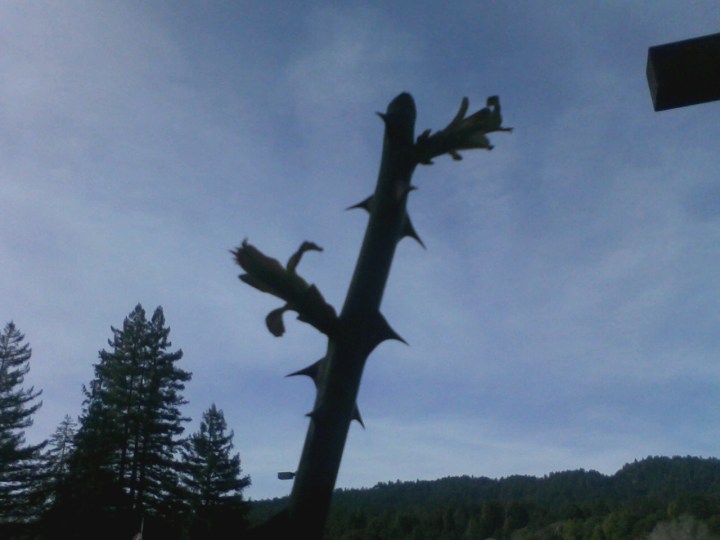
Roses had a particularly weird year. They bloomed well and on schedule last spring, but then idled through much of summer, only to express a new interest in blooming now that they should be going dormant for winter! No one wants to prune them while they have more buds than they did in August. Fortunately for them, they bloom more than once annually, so should recover by spring.

The colorful foliage of sweetgum and Chinese pistache, as well as the observable weather, indicate that everything is more or less in order for this time of year. Autumn might have started out mild, but it had been even warmer in past years. It is impossible to say why some magnolia, lilac and apple are trying to bloom already. They each have such distinct personalities, and respond to so many different variables besides the obvious; daylength, temperature and humidity.

Jack Frost Was Sneaky Again

71227thumbTiming is very important in gardening. Even when the weather in autumn still seems like summer, spring blooming bulbs must be planted on time. Bare root fruit trees will become available while they are dormant, and will need to be planted before they wake up. Roses need to be pruned before buds for new canes swell later in winter, even if their old canes are still awake and blooming.

Some procedures are influenced more by environmental factors than timing. Planting bare root fruit trees and pruning roses must be done sooner if the weather gets warm sooner than expected. Irrigation must be increased in summer, but only as warm and dry weather necessitates such increase. It gets decreased in winter, but only as weather gets cooler and rainier. Then there is frost.

Frost arrives differently every year, and is of course worse some years than others. It is only a minimal threat in some regions, but limits what can be grown in others. It happened to be sneaky this year, by hiding in between remarkably pleasant days. While the daytime weather is so mild and even unseasonally warm, a weather forecast may provide the only early warning of overnight frost.

By now, sensitive plants were either protected successfully, or possibly damaged by earlier frosts. Potted plants got moved to shelter under porch roofs, or maybe dense evergreen trees near the home. Those in the ground might have been tented with plastic or sheeting suspended above the foliage by sticks and maybe string. Old fashioned Christmas lights might have softened the chill.

Many perennials and annuals are just left out to succumb to the cold. Any remaining warm season vegetable plants are not worth protecting. They will not produce anything this late anyway. Canna and ginger can likewise be left out in the cold for their foliage to freeze and collapse to the ground. If protected, they can stay green through winter, but will replace their foliage in spring anyway.

Foliage of hosta and dahlia can be removed because the dormant parts of the plants are safe below the surface of the soil. Canna and ginger rhizomes on the surface of the soil might appreciate a bit of mulch if their foliage gets removed. Frost damaged stems of woody plants should not be pruned out too early. Premature pruning stimulates new growth that will be sensitive to later frosts.

Rodents Eat Just About Anything

61214thumbNot much bothers old fashioned junipers. They tolerate heat and frost, and anything else the weather throws at them. They do not appeal to many troublesome insects. Once established, they do not mind if they do not get much water. So, aside from over-watering and bad pruning, they are pretty indestructible. Yet, once in a while, otherwise healthy junipers die suddenly and mysteriously.

Sometimes, entire plants die. Sometimes, only big pieces of them die. The foliage is intact, but dried to a nice light brown. The roots are firm. In fact, the damage that caused such efficient death might not become apparent until the dead stems get dismantled and removed. It might even get overlooked because it is not the sort of damage that we expect to find in our tame home gardens.

Rats! They sneak in under the dense foliage to chew the bark from the main stems. The thicket of rigid stems protects them from cats and dogs. They can kill both shrubby and ground cover junipers, as well as ivy, ceanothus, cotoneaster, firethorn, . . . and nearly any sort of shrubby plant that they feel safe from predators in. They also eat vegetables and fruits, particularly citrus fruits.

The damage should be rather distinct. Bark is missing. Bare wood is exposed. Squirrels sometimes cause the same sort of damage, but usually on smaller stems in trees. Gophers do their dirty work underground by eating roots. If they kill junipers or other shrubbery, the dead plants can be pulled up from the soil relatively easily, and fresh gopher ‘volcanoes’ should be evident in the area.

Protecting stems and roots from rodents is more difficult than protecting developing fruit. The rodents know that they are concealed by the dense growth that they chew the bark or roots from, so fake owls are not much of a threat. Poisons are very unpleasant for the targeted rodents (duh!), and very dangerous to cats and dogs that might catch the poisoned rodents. Traps are effective and safe (except for the rodents . . . duh!) but take serious dedication to empty and reset!

Christmas Trees And Cut Foliage

31211thumbThere should be no guilt associated with a cut Christmas tree. They were stigmatized many years ago, when some people believed that they were harvested from forests, and more of them likely were back then. However, most of us now know that, except for a few that actually are harvested from the wild, Christmas trees are grown on farms like most other cut foliage or horticultural crops.
That is how Christmas trees get their nice Christmas tree form. Only spruce and a few types of firs grow so densely and symmetrically in the wild; and spruce are not commonly cut as Christmas trees. Almost all types of Christmas trees need to be pruned or shorn for density, symmetry and maybe even form. Most of the foliage for wreaths and garlands is likewise grown on foliage farms.

Contrary to popular belief, living Christmas trees are no more environmentally responsible than cut trees are. They are farm grown and artificially irrigated exotic (non-native) trees in vinyl cans filled with synthetic media (potting soil) and synthetic fertilizers. Just like cut trees, they need to be shorn unnaturally. Then, after all that effort, most die and get discarded after Christmas anyway.

Those that survive are usually more trouble than they are worth. Because they are exotic, they should not be planted out in the wild. Because their roots are confined, they would not survive without irrigation through the first year anyway. A few types that grow slowly and maintain density might stay potted and be brought in at Christmas for a few years, but that requires diligent maintenance.

The worst problem with living Christmas trees is that they often get planted into home gardens that can not accommodate them. Few people know what kind of tree their living Christmas tree is, or realize how big it can get. Some trees are Italian stone pines or Canary Island pines, which simply get too large. Even junipers, arborvitaes and smaller pines need adequate accommodations. Arborists can attest to damage caused by living Christmas trees in bad situations.

The Secret Affairs Of Flowers

61207thumbThere are some things about plants that we might be better off not knowing about. For instance, their idea of sex is even weirder than that of humans! Generally, flowers of ‘monoecious’ plants have male parts and female parts that do what they must to produce seed, which is often contained in some sort of fruit structure. Some plants can pollinate themselves. Ick! Others require separate but compatible pollinators.
Some plants bloom with both but separate male and female flowers. Female pine cones that produce seed are very different from the male pine flowers that produce pollen. Female flowers of spruce and several other conifers bloom higher in the canopy than male flowers. This promotes better cross pollination, since pollen must be blown upwardly but relatively randomly to the cones instead of simply falling from above.

Dioecious plants might seem less . . . weird. They actually have separate genders. Some are female. Some are male. Female plants require pollination from male plants in order to produce seed and fruit, though some can provide a few of their own male flowers if they sense a lack of males in the neighborhood. Ick again! There are certain advantages to every method of pollination, whether it makes sense to us or not.

One advantage of dioecious plants that does make sense to us is that messy fruit can be prevented by growing one gender or the other. Modern cultivars of Chinese pistache and maidenhair tree (gingko) are male, so can not produce the messy fruit that older trees are notorious for. Female date palms recycled from old date orchards are unable to produce dates without the male pollinators that do not get recycled.

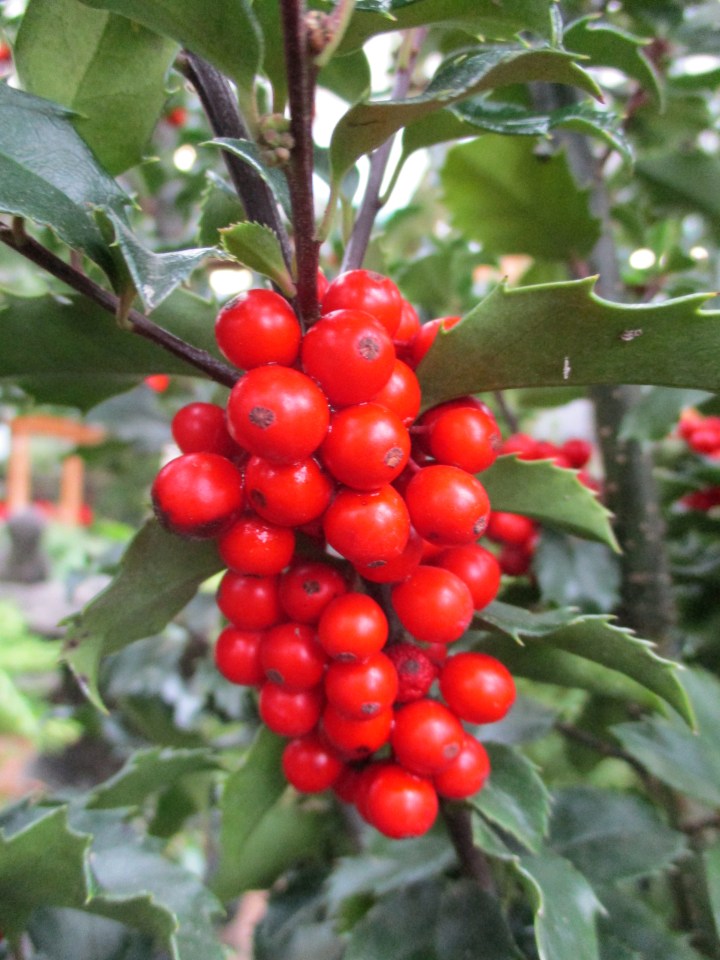
However, this is a disadvantage if holly can not make berries because it lacks pollinators. Decades ago, scions (stems) of male holly were grafted onto female plants. Alternatively, male plants were sold along with female plants.

Winter Is The Season For Pruning

71213thumbNow that winter is only two weeks away, and many deciduous plants are defoliating and dormant, it may seem as if there will be less work to do in the garden. After all, not much is growing. The funny thing is that this is the best time to sneak up on some of them, and prune them while they are sleeping. Depending on what is in the garden, winter can be just as busy as any other season.

There are a few things that should most certainly not be pruned in winter. Maples and birches should either be pruned before or after winter. They bleed profusely if pruned in winter. Plants that bloom in winter or early spring should be pruned after they have finished blooming. Pruning forsythias, flowering cherries and flowering crabapples earlier will remove much of the blooming stems.

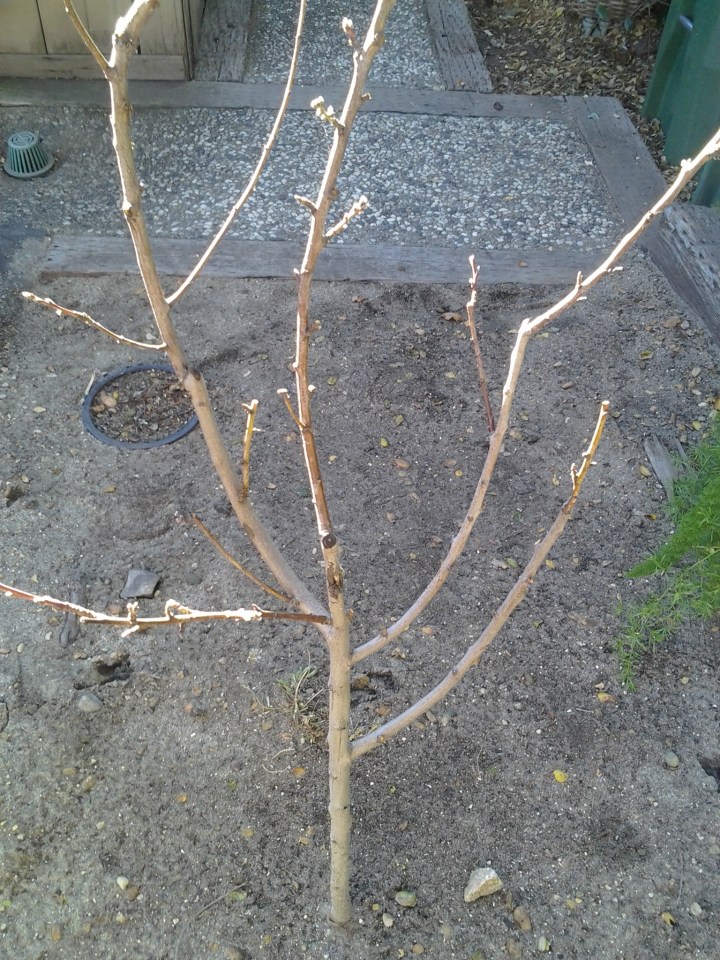
Deciduous fruit trees are of course an exception to that rule. They require annual winter pruning so that they to do not produce too much fruit. Excessive fruit is of inferior quality, and can break limbs. It is acceptable when pruning fruit trees to leave a few unpruned stems to cut and bring in later, as long as they are not forgotten. They can be less refined alternatives to flowering cherries.

Once we determine what should not be pruned in winter, it is easier to see that most deciduous plants should be pruned while bare in winter. Elm, oak, poplar, willow, mulberry, pistache, gingko, crepe myrtle and most popular deciduous trees are sound asleep and unaware of what might happen to them for the next few months. They would be pleased to wake already pruned next spring.

Some evergreen plants should probably be pruned as well. Tristania, redwood, podocarpus, Carolina cherry, bottlebrush and the various eucalypti would prefer to be pruned while the weather is cool. Conifers bleed less this time of year; and pine and cypress are less susceptible to pathogens that are attracted to wounds during warm weather. Avocados and citrus, particularly lemons, should not be pruned in winter, because pruning stimulates new growth which is more sensitive to frost.

Plants Are Particular About Exposure

1212121032One of the most important differences between plants and animals is that animals are ‘animated’, and plants are not. Aquatic plants might float about, and might even drift into more favorable situations. Vines and plants with creeping rhizomes can likewise relocate. Otherwise, most plants are confined to the same locations where they grew naturally, or where they were planted. They need to get it right from the beginning.

Most landscape plants that are commonly available in local nurseries are fortunately suited to local climates. A few tropical plants that prefer milder climates, as well as a few plants that prefer cooler winters, can be found; but most plants that prefer other climates are simply unavailable here. Yet, even within their preferred climates, the many diverse plants in our gardens are affected by many other environmental factors.

Exposure is nearly as important as climate is. Some plants need to be completely exposed, while some prefer shelter from heat, cold, wind or sunlight. It all depends on how they live in their natural environments. Some naturally live out in the open. Others live in dense forests, where they need to compete with other plants for sunlight. Even if we do not know where our plants come from, we should know what they require.

Japanese maples are understory trees that naturally grow in the partial shade of larger trees in mixed forests. Some types can do well in full sun exposure, but are likely get roasted by reflected glare, or dry wind. Lace-leaf Japanese maples are more sensitive to exposure, so prefer partial shade in the afternoon, and shelter from wind. However, too much shade compromises foliar color of the red and bronze leafed types.

Most cacti and some types of yucca are just the opposite. They naturally live out in deserts, without any significant competition. In home gardens, they will lean away from shade. Knowing what plants want helps to find the best exposures for them.

Prune Maples and Birches Before Sugaring Season

71206thumbMost of us Californians are probably wondering what that means. Sugaring season is more familiar to horticultural enthusiasts in New England, Canada, and more recently, in Alaska. It is the time of year that sugary sap get harvested from maples, and in Alaska, from birches. Maple sap gets refined into maple syrup and sugar. Birch sap makes birch syrup and sugar, a recent fad up north.

Why is this important here? Well, maples and birches know what time of year it is. Their sugaring season is relatively brief here; and they do not produce as much sap as they do in cold climates. Nonetheless, their sap will eventually start to flow later in winter, just when we expect it least. By the time we will be pruning dormant fruit trees and roses, it will be too late for maples and birches.

Therefore, maples and birches should either be pruned as soon as practical after defoliation, or after refoliation later next spring or early summer. They tend to defoliate before their sap gets too pressurized. However, if opting or the autumn pruning schedule, it is advisable to prune off one small stem first and then wait a few minutes to see if it bleeds. If it does, pruning should be delayed.

Bleeding may not be as harmful as it would seem to be for mature trees, especially since birches and many of the maples do not need much pruning of viable stems. If they get infested with sooty mold, a few small bleeding wounds on a big birch tree are more unsightly than unhealthy. However, several bleeding wounds can be somewhat distressful, especially for young Japanese maples.

If opting for the spring pruning schedule, maples and birches should be allowed to refoliate first. Their first leaves should be fully developed. This might be difficult for those of us who believe in pruning during dormancy, but it is better than causing sap to bleed when the trees need it most. Pruning can be done during summer too, but summer pruning should not be aggressive enough to suddenly expose formerly shaded bark to direct sunlight. Otherwise, bark can scald. So once again, timing is everything.

Improvise While Flowers Are Scarce

61123thumbMuch of the color in the garden through autumn and winter is provided by foliage. Some foliage turns color as the weather gets cooler. Some had been blue, gray, gold, red, bronze or variegated all year, and just happens to get noticed more now that there is not much other color provided by flowers. There are a few flowers that bloom now or even later in winter, but not nearly as many as there were in spring and summer.

Coral bark Japanese maple and red twig dogwood display colorful defoliated stems as the weather gets cooler. The colorful berries of firethorn (pyracantha), cotoneaster and toyon will ripen about the same time, providing bright red color until the birds get them. Otherwise, there might not seem to be much more to cut and bring into the home to substitute for cut flowers, and add to all the colorful foliage, twigs and berries.

Well, this is where things get less horticultural, and more creative. All those old flowers and flower stalks that should get pruned off, and maybe a few old leaves, might be good for more than compost. Blooms of hydrangea, Queen Anne’s lace and lavender can be cut just as they begin to deteriorate, and hung upside-down to dry. They lose much of their color, and shrivel somewhat, but are nice options to fresh flowers.

Old flower stalks of New Zealand flax and lily-of-the-Nile have striking form once plucked of tattered flower parts and seed capsules. New Zealand flax stalks are tall and straight. Lily-of-the-Nile stalks are like star-bursts on sticks. If the natural color lacks appeal, they can be spray painted! Seed capsules of red flowering gum (eucalyptus) dry in loose clusters with stems that are long enough to arrange like cut flowers.

Pine-cones, magnolia grenades (seedpods) and sweetgum maces (seedpods) that fall from their stems can be drilled, and attached to sticks. There are no substitutes for real flowers, but there are no limits to creative and even weird alternatives.

Planting Cool Season Cover Crops

71129thumbTraditional horticultural technology that was so common in the orchards, that were likewise more common, was more practical than so much of what we do in our modern home gardens now. Orchardists got good insects to take out the bad insects. They got mulberry trees to distract hungry birds from maturing apricots and prunes. They even got weedy annuals to control other weeds.

Once it got established, mustard grew wild under many orchards. It self sowed so efficiently that it did not need to be sown. It grew fast, and shaded out other nastier weeds. Anyone who wanted to pick greens could take all they wanted without setting it back. It was sometimes tilled in early, or cut early and left on the surface as mulch, but was probably most often left to die back naturally.

Besides controlling weeds, the mustard improved the soil and kept it friable, both by dispersing roots through it, and also by decomposing into it. Other types of cover crops help limit erosion through winter, or improve soil fertility. All are very easy to plant and grow, and almost all get all the water they need from rain through winter. They only need to be cut and tilled when they are done.

Of course, they are all ‘done’ at different times. Orchard mustard that never gets cut or tilled is never really done. It just perpetuates itself. Cover crops in home gardens are done when we say they are done, before the space is needed for something else. Some should be cut before self sowing and becoming more a weed than a cover crop, whether or not the space is needed right away.

Cover crops get planted by simply broadcasting seed onto freshly tilled soil that will not be used for anything until next year. After seed is broadcast, the soil can be raked lightly to cover the seed. If it is not watered right away, the rain will take care of it. Fava beans, oats, barley, millet, clover and annual rye grass are some of the more familiar cover crops. Sesame and sorghum are rare.

Freeway iceplant and old varieties of common geranium (Pelargonium X hortorum) can function as prettier perennial cover crops. The iceplant can be cut from established colonies and plugged as short cuttings about four inches long. When geraniums get cut back, the pieces can likewise be processed into cuttings. Unlike annuals, these would get removed when their space is needed.