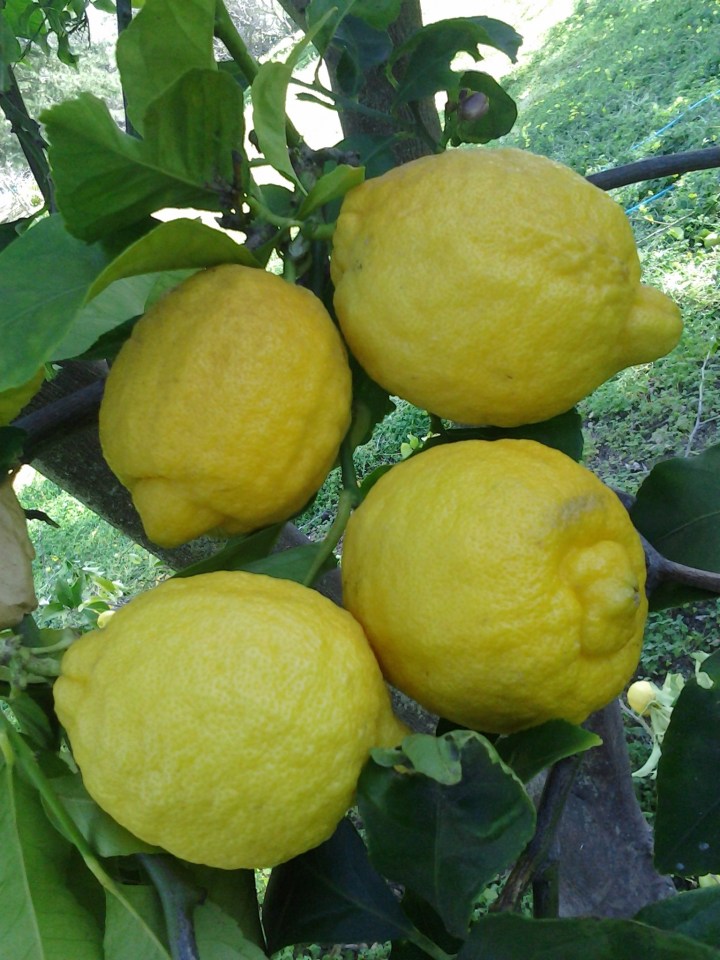
 When life gives you lemons, it is likely this time of year. Although, the most popular garden varieties of lemon, like ‘Meyer’ and ‘Eureka’, continue to produce at least a few more fruits sporadically through the year. ‘Lisbon’ lemon that is still used in orchard production, and is the ancestor of the household ‘Eureka’ lemon, produces almost all of its fruit in winter, and blooms shortly afterward.
Ripe citrus in the middle of winter impresses those in climates where winter is too cold for much to happen in the garden. They could not grow a citrus tree if they wanted to. Even here, frost can damage some of the more sensitive citrus varieties, like ‘Mexican’ lime. Unlike the fruits of summer, citrus fruits ripen slowly and are not so perishable, so do not need to be harvested right away.
This means that if it is raining, cold or just to wintery to go outside, citrus fruits can be left on the tree until the weather improves. Most of us prefer to pick them in small batches anyway. Ideally, fruit should get picked as it is consumed. Lemons and limes typically get picked individually as needed, until there are so many that some need to be bagged and shared with friends and neighbors.
Mandarin oranges are the most perishable of the citrus. Because their skins are so loosely attached to the pulp, the pulp can oxidize, lose flavor and eventually get dry and pithy. Incidentally, a ‘tangerine’ is merely a Mandarin orange that was developed in North or South America. A surprisingly sour (unknown) Mandarin orange might really be a ‘Rangpur lime’, which is not a lime at all.
Unlike most fruit that continues to ripen after harvest, or pears that actually delay ripening until after harvest, citrus fruits stop developing flavor once picked. It is best to taste them for confirmation of ripe flavor prior to harvest. Some Mandarin oranges may have slightly greenish blotches on them even when completely ripe. The best ‘Valencia’ oranges can look rather yellowish. Grapefruits might mellow if left in their trees past ripeness, but can also inhibit bloom.
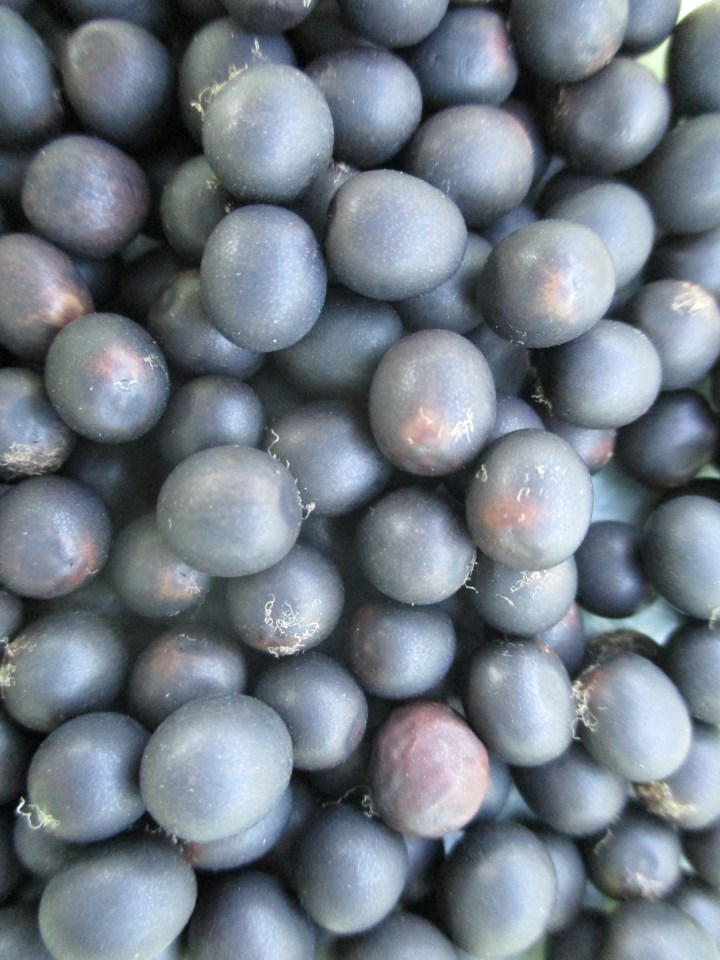
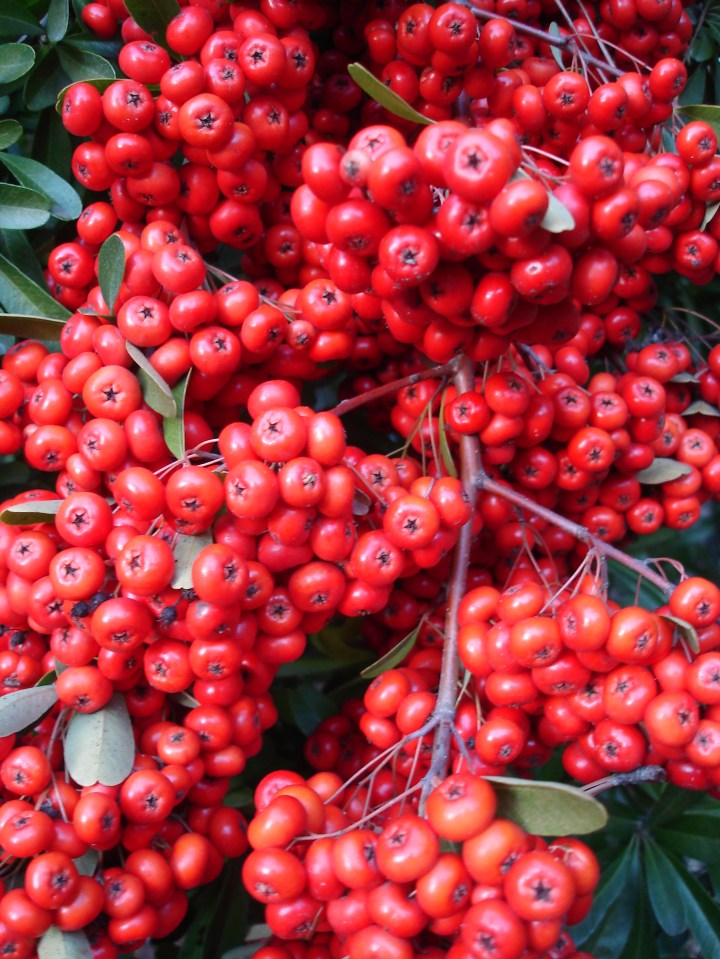 It is probably no coincidence that certain berries and small fruits are so colorful through winter while colorful flowers are relatively scarce. Like flowers, they want to get others to do something for them. Flowers use color, aroma, flavor and sometimes even texture to attract and reward pollinators. Colorful berries and fruits do the same to attract birds and animals who disperse their seeds.
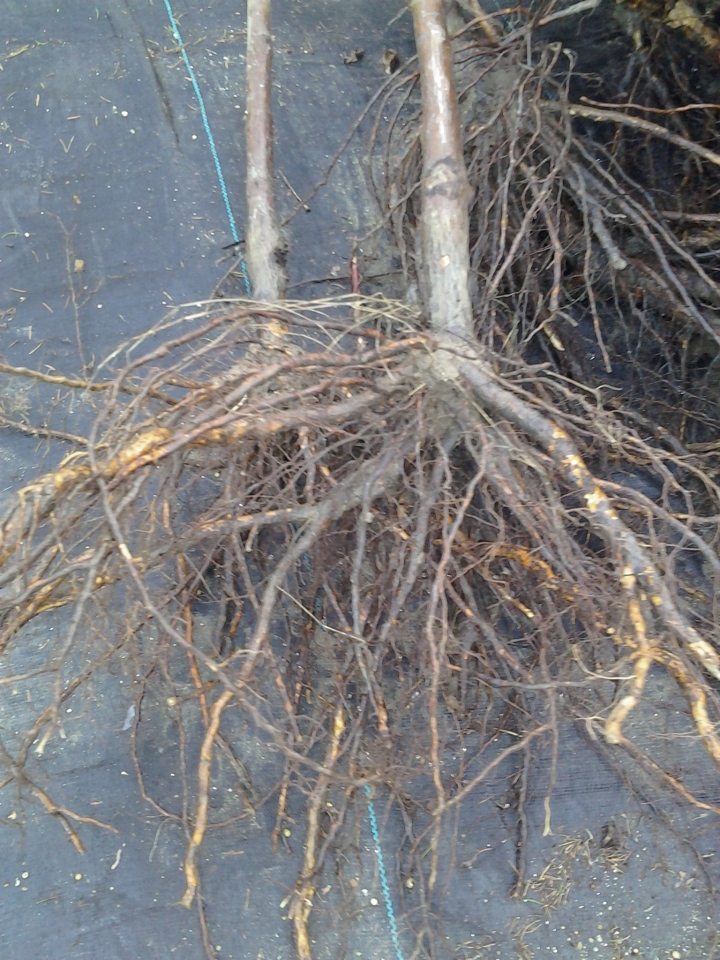 Bare root plants are less expensive, easier to handle, and easier to prune into a desired form than canned (potted) plants are. Also, they get established into the garden easier. Yes, even with less roots, they disperse their new roots directly into the surrounding soil more efficiently than secondary roots escaping from crowded roots that had been confined to cans of media (potting soil).
 Stormy winter weather always reminds some of us that our trees need some attention. Wind can break limbs. If the weather gets really nasty, trees can be destabilized by strong wind, particularly if the soil is moistened by rain. However, the truth is that arboriculture, which is the horticulture of trees, is important throughout the year. We just become more aware of it when weather threatens.
 This is no timid vine! Flame vine, Pyrostegia venusta, is related to the lavender trumpet vine and blood red trumpet vine, and is just as vigorous. Although it can not be recommended for tight spaces or small refined gardens, it excels at obscuring concrete walls. It only needs wires or stakes to be convinced to climb. If it gets too big, it can be cut back after bloom to regenerate quickly.
 Christmas tree lots at nurseries come and go at a good time. Cut and live Christmas trees become marketable just as retail sales of other items is declining. Although autumn is the best season to plant many things, not many of us want to be out in the garden as the weather gets cooler. As Christmas trees get sold and relinquish their space, bare root nursery stock becomes available.
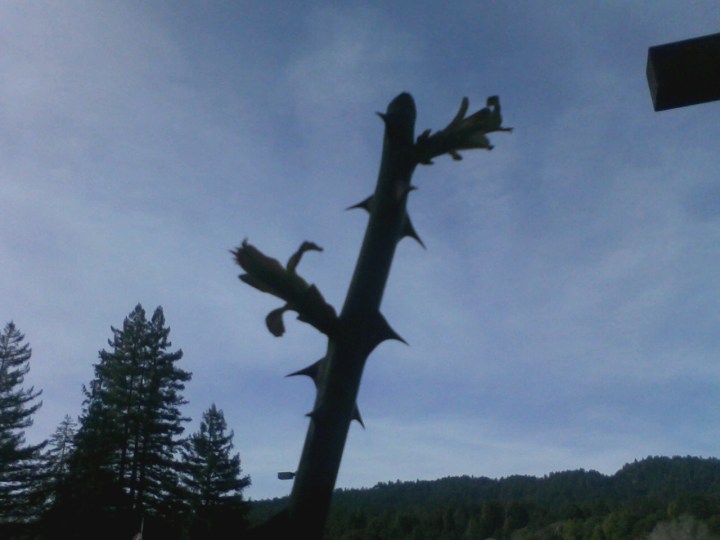 Without specialized pruning while they are bare and dormant in winter, many deciduous fruit trees would be overburdened by their own fruit next summer. The production of excess fruit can waste resources. The weight can disfigure and break limbs. The trees certainly do not want to get so overworked; but they have been unnaturally bred to produce bigger, better and more abundant fruit.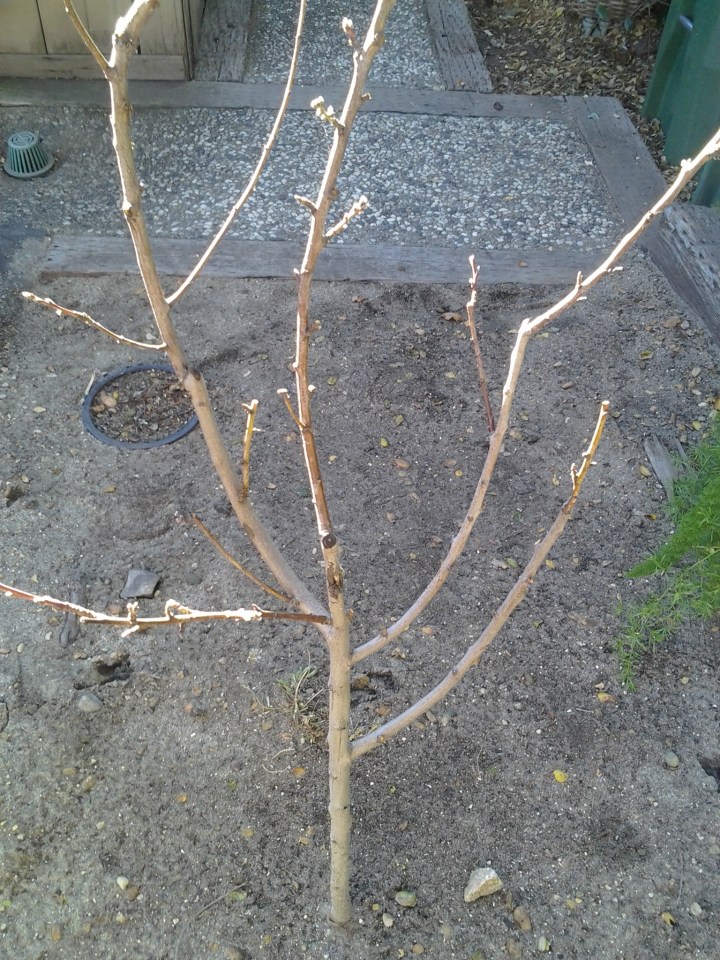
 Where winters are cooler, the deteriorating stems of flowers that bloomed last year either got pruned away already or got knocked down by the weather, and are now rotting on the ground. Around here, where the weather is milder, and some flowers only recently finished blooming, used up flower stalks still stand in stasis. Most but not necessarily all should get pruned out and raked away.
 Anyone who has had undergone surgery knows the advantages of unconsciousness. Any frat boy who woke up after a night of overly indulgent inebriation, with his face adorned with objectionable graffiti, knows the disadvantages. A lot can happen while one is unaware that it is happening. This is exactly why so many bare root plants become available while they are dormant through winter.
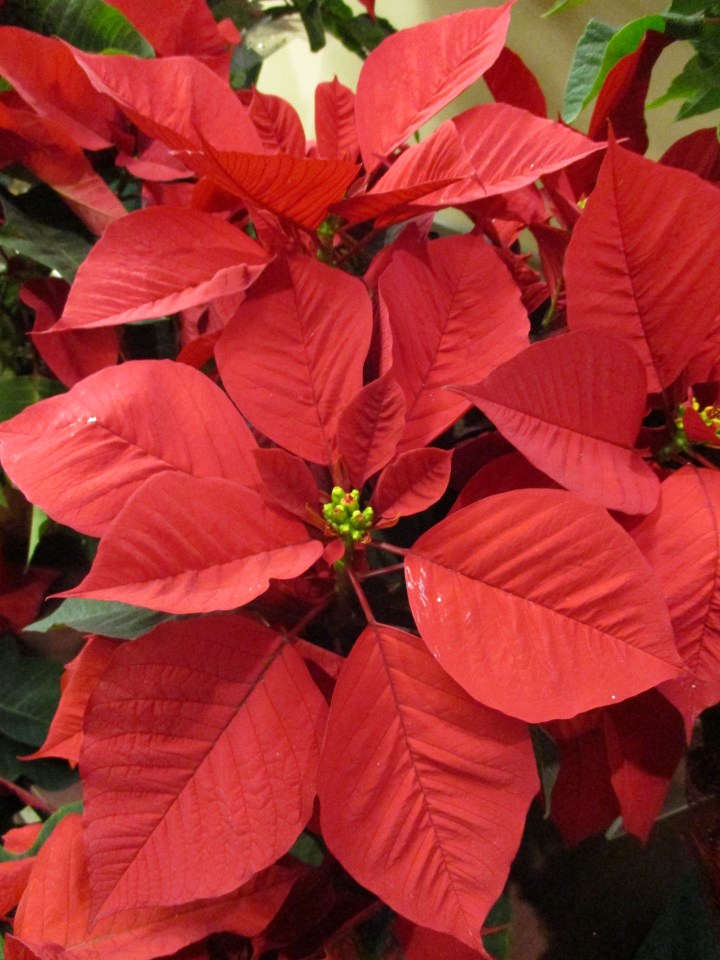 After all the Christmas decorations get put away for next year, and the Christmas tree eventually gets undressed from all its ornaments, and retired to the compost pile or greenwaste, all the pretty seasonal potted plants remain. Some will bloom, or at least maintain their current bloom, for months. Some might eventually get planted out in the garden. Others might stay potted in the home.
 Tony Tomeo