Perennials Perform Longer Than Annuals

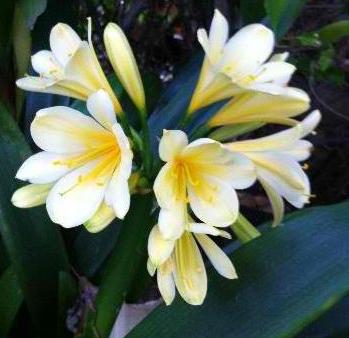
Kaffir lily is a reliable perennial.

Annuals live for only one year. Biennials live for only two. Technically, all other plants are perennials. Horticulturally, this classification is much more specific. Generally, It does not include vegetation that qualifies as something else. Also generally, plants that qualify as perennial are herbaceous rather than woody. Of course, this is not as simple as it seems.

Palm trees that develop substantial trunks, for example, classify as herbaceous trees. So do arboriform yuccas, such as Joshua tree. Palms and yuccas that do not develop trunks can classify merely as perennials though. Different species of one genus could therefore classify very differently. Tree ferns may also qualify as herbaceous trees as they mature.

Many palms and yuccas, as well as agaves, bamboos and banana trees, are perennials. They might not seem as if they should be, since they can grow so large. Spring bulbs are more recognizable as perennials likely because of their small size. Lavenders and some salvia develop more woody stems than banana trees. They are perennials nonetheless.

Perennials are generally self perpetuating. Lavenders and similarly twiggy sorts may not not seem like they are, but they can be. Their lower stems that sprawl over the surface of the soil can grow adventitious roots. These adventitiously rooted stems can grow as new plants to replace the old. Herbaceous perennials are more overt about self perpetuation.

Lily of the Nile, for example, constantly produces new rhizomes to replace the old. It can do so indefinitely. Some may have done so longer than the oldest bristlecone pines have been alive. They do not retain old growth as evidence of their age. This self perpetuation is an advantage in home gardens. It facilitates both sustainability as well as propagation.

Lily of the Nile, Daylily, Kaffir lily and African iris are very simple to propagate by division. Once separated, either after bloom or while dormant, their rhizomes grow as new plants. Many perennials actually perform better after occasional division. It alleviates congestion by providing more space to grow and bloom. Canna and ginger rhizomes grow very fast. Canna may benefit from annual division.

Not All Pruning Happens In Winter

If necessary, Oregon grape can be pruned to the ground now.

Spring has sprung; and winter has wenter . . . or whatever winter does to get out of the way of spring. Plants are more active now than at any other time of year. Deciduous plants that were dormant and bare through winter have already started to bloom and produce new foliage. Evergreen plants are now making new foliage to replace their tired old foliage that lingered through cold, wet and windy winter weather. 

Frost is very unlikely this late. It is safe to sow seeds for all sorts of warm season vegetables and annual flowers, like beans, okra, zucchini, nasturtiums and sunflowers. It is likewise time to plant small plants for certain vegetables and flowers that are too slow to start from seed, like tomatoes, peppers, eggplants, petunias and impatiens.

Winter was the time to prune almost all deciduous plants (which defoliate) and many evergreen plants while they were dormant. However, pruning of plants that are susceptible to frost damage needed to be delayed until about now, even if they had been damaged earlier. Premature pruning would have stimulated new growth, which would have been even more sensitive to subsequent frost.

Any lavender starflower, bougainvillea, marguerite daisy or blue potato bush foliage that was damaged by earlier frost can now be pruned away. New foliage should already be appearing. Also, any mushy frost damaged leaves of giant-bird-of-Paradise and banana can be removed, and should be replaced by new foliage as the weather gets warmer.

The end of winter and beginning of spring is also the best time for any necessary severe restorative pruning of plants that can be damaged by frost, as well as many heartier evergreen plants. It is late enough to avoid frost, while early enough to take advantage of the first new growth phase of the season.

For example, lavender starflower that is both overgrown and damaged by frost can be pruned back to the main stems now, instead of merely shorn to remove damaged foliage. If pruned earlier, it would have not only been more sensitive to frost, but would have remained unsightly as long as weather remained too cool for it to regenerate new foliage.

It likewise can not be pruned much later without wasting most of the new spring growth that is presently developing, which would be very stressful and delay bloom. Pruning severely now will be unsightly for the least amount of time before new growth regenerates and blooms. It would also be less stressful, since it coincides with natural dormancy and regenerative cycles.

Privets, junipers, oleanders, photinias, bottlebrush and pittosporums that need restoration should also get it now, not because they are sensitive to frost, but so that they recover as efficiently as possible as weather gets warmer. Besides, bottlebrush, pittosporum and some other plants are susceptible to disease if pruned during winter, because pruning wounds are easily infected during rainy weather.

Watering Increases As Rain Decreases

Automated irrigation should help conserve water.

Rain is less abundant and less frequent now that winter has become spring. Humidity is decreasing. Temperatures are increasing. Moisture within both the soil and the air is less abundant than it had been. Irrigation that discontinued as the rainy season began should resume soon. Only supplemental watering compensates for the increasing lack of water.

Warmer and drier weather does more than simply deprive vegetation of natural moisture. It also accelerates new growth of formerly dormant or partially dormant vegetation. Such growth requires more moisture as it becomes less available. Increasing day lengths with intensifying sunlight enhance this need for watering. Although natural, it all seems ironic.

This recent need for watering is progressive. Rain still sometimes interrupts it, but will be less frequent as spring progresses. Rain will be very unlikely after later spring. Humidity will continue to decrease as temperatures continue to increase. Watering frequency and volume must increase accordingly. They might not begin to decrease until after summer.

Soil composition and texture also influence the increasing need for watering. Organically rich soils retain moisture more efficiently than sandy soils, for example. Gravely soils that drain well may necessitate frequent watering, even if less copious. Potted plants require frequent watering because they can not disperse roots. Hanging pots require even more.

Furthermore, different types of vegetation need different or specialized types of watering. Fibrous but shallow roots usually need frequent watering, even if they do not need much. Species with deep roots usually need watering less frequently. Some of them need more significant volumes of water than others. Some vegetation prefers only minimal watering.

With all these many variables, there are no simple formulas to determine watering rates. Manual irrigation is easiest to monitor, but is also tedious. Automated irrigation, although less tedious, requires more diligent monitoring. For any particular type of vegetation, soil should not remain too dry for too long. Also, vegetation should not exhibit any symptoms from desiccation.

Shade Tolerant Species

Kaffir lily is famously resilient to shade.

Most gardens have some sort of shade. Those that are not shaded by substantial trees likely have shadows from houses or fences. Big eaves of ranch architecture make big shadows. So do tall Victorian houses. Yet, the disproportionately small gardens of bulky modern homes with high fences are shadiest.

There are not many trees that do well in shade. Most of those that do are rather small ‘understory’ trees that naturally prefer to be in the partial shade of taller trees. The many different Japanese maples are perhaps the most familiar. Vine maple is a similar maple from North America. Many dogwoods are likewise understory trees.

Eastern redbud, parrotia, strawberry tree, sweet bay and various podocarpus are not necessarily understory trees, but are quite tolerant of partial shade. However, stems that reach beyond the shade are likely to thrive at the expense of shaded parts if not pruned for confinement. For example, a fern pine (podocarpus) can be happy on the north side of a house, but can develop such a thick canopy where it gets good sun exposure on top, that lower growth gets shaded out. All palms tolerate significant shade while young, but most eventually grow beyond it.

There is more shade tolerant shrubbery to choose from, since shrubbery is naturally lower and more likely to be shaded by trees. Rhododendron, azalea, camellia, hydrangea, pieris, fuchsia, aucuba and Japanese aralia are about as familiar as Japanese maple is. Heavenly bamboo (Nandina spp.), Oregon grape, mountain laurel, flowering maple and various hollies are also worth investigating. 

Because low growing perennials are naturally lower than both trees and shrubbery, many are naturally more tolerant to shade. Bear’s breech, cast iron plant, perwinkle, tradescantia, arum and forget-me-not can be so happy in shade that they can actually be invasive. Kaffir lily, bergenia, hosta, lily turf, ginger lily, coral bells and various ferns are much better behaved.

Foxglove, cyclamen and balsam (Impatiens spp.) are good annuals for shady spots. Cyclamen is actually a perennial that deteriorates during warm summer weather, but can regenerate as weather gets cool in autumn, to bloom through winter and early spring. Balsam does just the opposite, thriving through warm weather, but deteriorating with frost. Caladium and coleus can provide remarkably colorful foliage until frost. (Foxglove is actually biennial. Caladium grows from bulbs, but is rarely perennial.)

Despite their reputation as being aggressively invasive, both Algerian and English ivies can be resilient ground covers in significant shade. Baby’s tears likewise spreads as far as it gets water. Star jasmine is more complaisant, but only tolerant of moderate shade, and will not bloom as well as it does with better exposure.

Grooming Deteriorating Bloom Conserves Resources

Daffodil are tidier with timely grooming.

Spring bulbs are now blooming, and some are already done. Summer bulbs will bloom a bit later, and some will continue until autumn. Annuals, perennials, shrubbery, vines and all sorts of other vegetation also bloom. Most simply shed their deteriorating flowers after bloom. Some may benefit from grooming to remove such flowers before they go to seed.

Grooming to remove lingering deteriorated flowers, or deadheading, is obviously neater. Flowers that continue to bloom are more prominent without their decaying predecessors. Camellias may not need such grooming, since their flowers fall away as they deteriorate. However, removal of fading flowers, before or after they fall, eliminates their mess below.

Perhaps more importantly, grooming to remove fading flowers conserves vital resources. Although most bulbs are sterile hybrids, some try to generate fruiting structures for seed. This consumes substantial resources. Removal of fruiting structures before they develop diverts resources to other growth. Canna diverts such resources into subsequent bloom.

For some species, grooming to remove fruiting structures stimulates subsequent blooms. After all, seed production is their priority, and the objective of bloom. If they perceive any deprivation of seed, they are compelled to produce more. Several dahlias bloom initially with single flowers. After grooming, the stems below branch for a few secondary flowers.

For a few potentially invasive species, grooming eliminates unwanted seed. Montbretia, which is famously invasive, is less so if deprived of its seed. African iris might disperse a few unwanted seed and get shabby without grooming. Summer snowflake and common grape hyacinth often disperse their seed. Both are too small and numerous for grooming.

Fortunately, summer snowflake and common grape hyacinth are true to type. Freesia are not. Without grooming, they can produce feral progeny that are similar to their ancestors. Such feral progeny are more prolific with seed for more of the same. Eventually, they can displace the desirable original varieties. Although more fragrant, they are not as colorful.

San Francisco Flower & Garden Show

(This is an old recycled article that includes very outdated information, some of which was omitted, but the website for the San Francisco Flower & Garden Show is the same.)

Bonsai, composting, palms, flower arranging and lawn alternatives, as well as rare, edible and drought tolerant plants; there will be seminars for almost every horticultural topic imaginable at “Life in the California Garden”, the 26th annual San Francisco Flower and Garden Show. Xeriscapes, contemporary garden design and water conservation; there will be something for anyone who enjoys any kind of gardening. A schedule of seminars and any other information can be found at www.sfgardenshow.com.

The most spectacular display will be the twenty gardens created by some of the most innovative local, and perhaps not so local, landscape designers and horticultural professionals. There will be everything from contemporary to traditional and functional to ‘artistic’ landscapes. Anyone who has been to a San Francisco Flower and Garden Show knows what ‘artistic’ can mean, but will be surprised nonetheless. 

Just about anything that can be done in the garden will be done at “Life in the California Garden”. Bee keeping, practical pest control and water management will all be there. “The Modern Homestead” designed by Star Apple Edible Gardens of Oakland will be a 6,000 square foot exhibit featuring aesthetic vegetable plantings and an elegant chicken coop, as well as beer and jam making demonstrations.

The Marketplace will include more than 200 vendors with all sorts of seeds, plants, tools, gifts, patio furniture, pottery and garden sculpture. Plants will range from orchids, dahlias, epiphytes, vegetable plants, cacti and succulents, to name a few. The Farmers’ Market will have flowers and produce available. Sproutopia will feature interactive gardening experiences and demonstrations for children.

Many very impressive bonsai will be exhibited by the prestigious Bonsai Society of San Francisco. Many of the bonsai subjects that are decades old have been returning to the San Francisco Flower and Garden Show for many years. There will also be bonsai demonstrations.

Horticulturists of the Western Horticultural Society will be available to discuss rare and recently introduced plants, as well as more traditional plants that are regaining popularity. Some recent introductions are not yet available in nurseries. California Garden Clubs will have representatives from many of the various horticultural associations, with information about membership.

Herbs

California bay can work somethin like culinary sweet bay.

While the winter weather is still cool and damp, most of the herbs in the garden are not very impressive. Like vegetables though, herbs that are new to the garden should be planted as winter ends when no more frost is expected. Also like vegetables, some herbs are easier to grow from small plants or seedlings purchased from nurseries, and others are easier to sow directly from seed. Some are annuals or biennials. Others are perennials. Still others are woody plants.

Basil, cilantro and dill are commonly and easiest to grow from seed. Tarragon, sage, marjoram, mint and thyme are probably easier to grow from small plants found in nurseries. Chives, oregano, fennel and parsley are easy to grow by either means. Woody plants like rosemary, lavender and sweet bay can be grown either from small plants in the herb section of a nursery, or more substantial landscape plants.

All sorts of plants are grown as herbs to be used as seasoning, aroma (foliar fragrance) or even medicinally. Some are best grown strictly as herbs in an herb garden or incorporated into the vegetable garden because they lack visual appeal or because they eventually get cut and harvested. Others function quite well out in more refined landscapes.

Basil, cilantro, tarragon, sage, dill and marjoram are more utilitarian but less visually appealing herbs for the herb or vegetable garden, although some look good until they get harvested. Chives, mint, oregano, parsley and thyme look good enough for a landscape, and are not often harvested in quantities large enough to compromise their appearance. Fennel also looks good enough for the landscape, but then gets removed completely when harvested.

A few herbs are actually more often grown for their practicality in the landscape than in the herb garden. Thyme sometimes gets planted as a ground cover between stepping stones, since it is so compact and imparts its fragrance if trampled. Rosemary is actually a rather common ground cover where the soil does not hold enough moisture for more demanding plants. The various lavenders are nice ‘perennial’ shrubs. (‘Perennial’ shrubs do not last as long as woody shrubs.) Sweet bay is a nice small tree where space is limited, or can be shorn into a small hedge.

It seems that most herbs like good sun exposure and warmth during the summer, with well drained soil. Most do not need too much water once established. Only basil and parsley need regular watering. Chives and mint are not so needy, but do prefer to be watered regularly as well. Mint is commonly grown in pots because it can be somewhat invasive.

Invasive Weeds Begin Their Invasion

Some invasive weeds are wildflowers.

Wildflowers may not be what they seem to be. California poppy, various lupines, various sages and several others are native species. Saint John’s wort, periwinkle, mustard and several others are not native. They are exotic but naturalized, so can proliferate as if they are native. In other words, several of the most familiar of wildflowers are invasive weeds.

In fact, some of the most invasive weeds were once more popular for their pretty flowers. These includes Saint John’s wort and periwinkle. Pampas grass, various brooms, yellow flag iris and Hottentot fig are more examples. Mustard likely originated as a home garden vegetable. Many grassy weeds were livestock fodder. Not many weeds were accidental.

Nonetheless, invasive weeds are here and established within local ecosystems now. By their simplest definition, weeds are merely unwanted vegetation. Native brambles qualify as invasive weeds as they invade home gardens. Because they are native, though, they are not invasive in the wild. Most of the most aggressive weeds just happen to be exotic.

Invasive weeds become invasive because of their various unfair advantages. Many lack pathogens that limit their proliferation wherever they are native to. Many lack competition from vegetation that they shared their natural ecosystems with. A few may actually prefer local climate to their natural climates. Weeds exhibit too much variety for generalization.

Although, generally, invasive weeds are accelerating their growth with warming weather. Most are proficient at growing faster than their competition and other preferable species. Several bloom and disperse seed before some deciduous species foliate. Weeds exploit resources before desirable species can. Several rampantly overwhelm their competition.

This is therefore a convenient time for weeding, before invasive weeds grow much more. Their roots will disperse more and be more difficult to pull from drier soil later. With more time, most weeds disperse more seed for subsequent generations. Diligence now might not eliminate all weeds for very long, but it helps. Later, weeds should be less abundant.

Tree Selection

Some trees grow too large for urban situations.

Trees are the most significant components of the landscapes that they inhabit. They get larger than all other plants, and live for decades or centuries. Because inappropriate trees have such potential to cause such serious problems, and can be so difficult and expensive to remove, it is important to select trees that are appropriate to each particular application.

Size and form of trees when they mature are important considerations. Crape myrtles are small to midsized trees that fit nicely into tight spots, but are too dinky to be good street trees. London plane trees are more proportionate as street trees, but eventually displace sidewalks and curbs with their aggressive buttressed roots. Chinese elms can be good street trees, but need to be pruned regularly to maintain clearance. Red maples are a better choice because they get large enough without getting too big, have complaisant roots, and are easily pruned for adequate clearance.

Other features in the area can limit tree selection. Poplars and willows have aggressive roots that invade septic systems or old unsealed iron or terra cotta sewer pipes. Queen palms eventually reach utility cables, but can not be pruned to go around them. Any good shade tree can provide too much shade over solar panels. Partial shade from large trees or structures is a problem for most other trees, but is actually preferred by a few ‘understory’ trees like vine maples, Japanese maples and dogwoods.

Trees that are expected to provide shade through summer should probably be deciduous, like red oaks or silk trees, to allow warming sunlight through during winter, particularly close to the home. However, trees that should obscure unwanted views should be evergreen, like Southern magnolias or arborvitaes.

Some trees that need more attention than others are only appropriate where they will get the attention they need. Mexican fan palms are easy to care for while young, but eventually grow out of reach and need to be groomed by professional arborists. Of course, every tree is limited to particular climates. Various ficus trees that are common in nurseries in San Diego will not survive even a mild frost, which is why they are not available in San Jose.

Rotating Vegetables Should Enhance Productivity

Tomato plants are greedy for nutrients.

Warm season vegetables are beginning to replace cool season vegetables. Some types prefer to start earlier than others. A few might displace lingering predecessors before the predecessors finish. Timing is not everything, though. Location may be as relevant. If the garden did not move, some vegetables should. Many or most benefit from rotating crops.

Vegetable plants are innately greedy in regard to particular nutrients. They might deplete such nutrients from their soil within a few years. Some may not take that long, particularly within less than ideal soils. However, different types of vegetables deplete different types of nutrients. Rotating vegetable plants disperses and decelerates this nutrient depletion.

Tomato plants deplete their favorite nutrients. Therefore, new tomato plants should likely avoid soil that tomatoes formerly occupied. Corn can use such soil instead, and may not notice a deficiency of nutrients. After all, each craves something different. Beans can use the same soil afterward for the same reason. Rotating crops shares resources equitably.

Bell peppers are related to tomatoes, so deplete similar nutrients. Therefore, they should also avoid soil that tomatoes formerly occupied. All types of beans should similarly avoid soil that any type of bean utilized. Fortunately, warm season vegetables are unrelated to most cool season vegetables. What grew last summer is now relevant for rotating crops.

Nutrient depletion is not permanent, though. Rotating crops, while accommodating such depletion, also accelerates replenishment. For example, beans should not deplete much of what tomatoes crave. They instead replenish some of what tomatoes crave. Tomatoes, can therefore eventually return to where they grew before. After all, rotation goes around.

Warm season vegetables generally require more nutrients than cool season vegetables. That is because so many warm season vegetables are actually fruits that contain seeds. Most cool season vegetables are vegetative, without seed. Consequently, warm season vegetables are more appreciative of rotating. Cool season vegetables are more passive. Cool season vegetables do not grow long enough locally to deplete much anyway.