
Sunday Best – Epiphyllum
A few late bloomers are making up for lost time. Hydrangea, although late, is somewhat earlier than it typically is. Bluegum is not blooming, but contributes its own sort of color with bark.
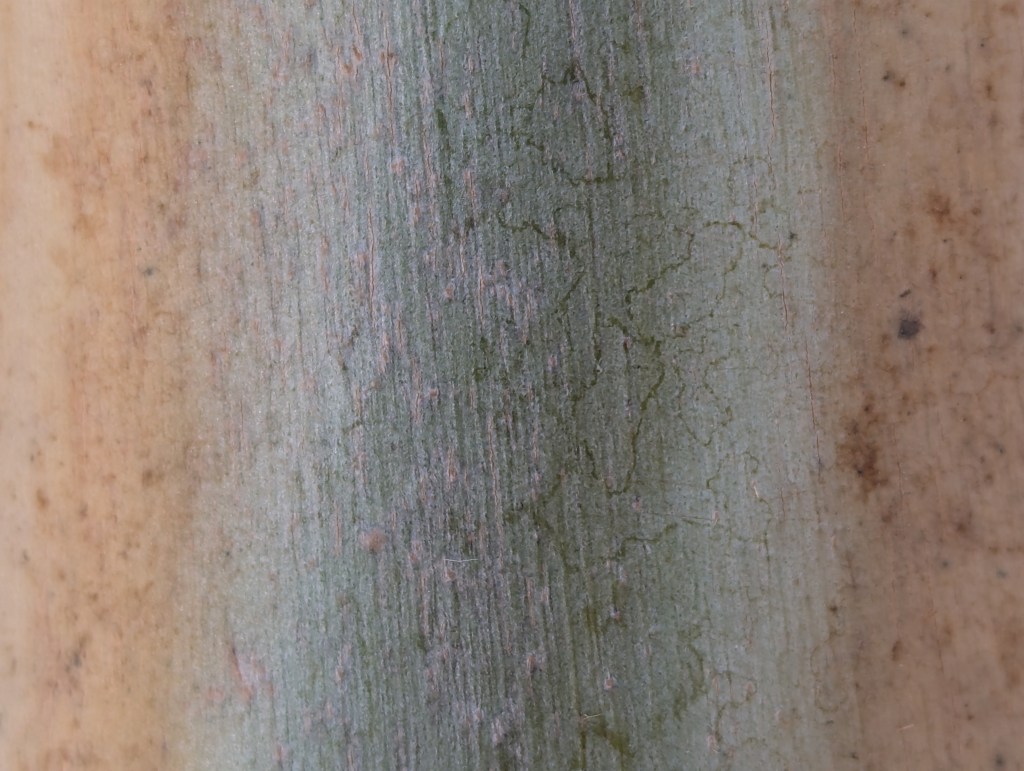
1. Eucalyptus globulus, bluegum remains canned because it grows too big too vigorously to go into the ground. Ultimately, it will likely need to be destroyed. For now, it provides both aromatic juvenile foliage and pretty adult foliage. It also has pretty watercolor bark.
2. Yucca recurvifolia, curve leaf yucca is known as Yucca gloriosa var. tristis now. What was wrong with its former botanical name? Its boring common name should be changed instead. Anyway, I am impressed that it is blooming so soon after relocation last winter.

3. Hibbertia scandens, guinea gold vine grew like a weed from a cutting last year, and is now beginning to bloom for the first time. This is the first of many flower buds to unfurl. Its bloom was expected, but its profusion is unexpectedly impressive. It remains canned.

4. Hemerocallis fulva, daylily was similarly expected to bloom and is similarly blooming with unexpected profusion. I have no idea what cultivar this is, but I suspect that it may be the straight species. We grow just one other daylily cultivar, and it is relatively docile.

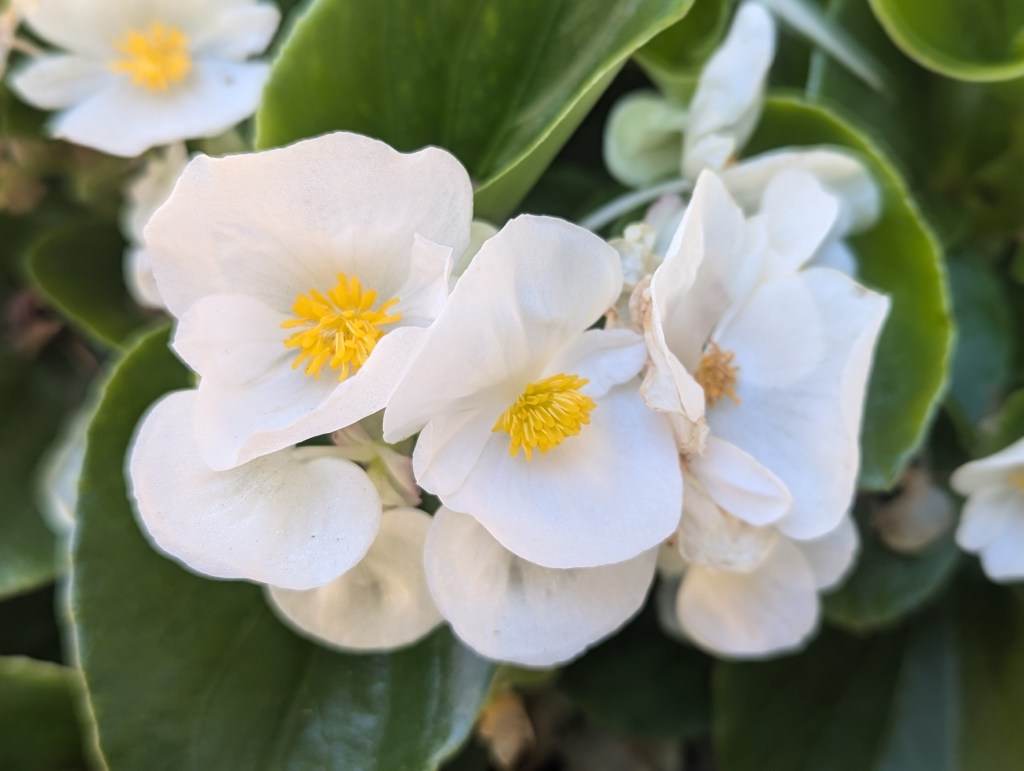
5. Begonia semperflorens-cultorum, wax begonia had languished for years in its planter box full of aggressive redwood roots. It now grows much more happily in its new planter box within its old planter box, which is elevated on cinder blocks above an empty space.
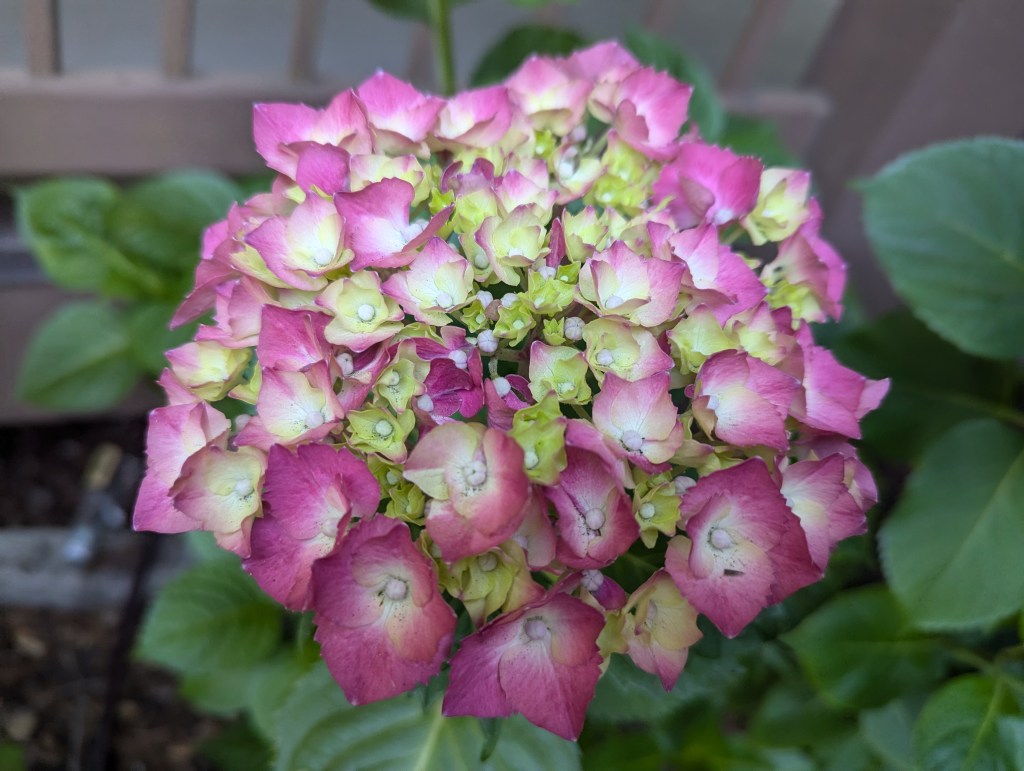
6. Hydrangea macrophylla, hydrangea typically blooms later on axillary stems because I prune the terminal buds off with winter dormant pruning. My concern was that, if I left the canes intact as I should, they would flop over. They are flopping, but it was worth it.
This is the link for Six on Saturday, for anyone else who would like to participate: https://thepropagatorblog.wordpress.com/2017/09/18/six-on-saturday-a-participant-guide/

White is my favorite color. It is not the best color for all flowers, but it is the only color that I allow within the White Garden, which is really just the meager landscape of the Mount Hermon Memorial Chapel. Creamy white, such as white nasturtium and white canna, are not white enough. I am adamant about this. After replacing a few blue lily of the Nile with a white hydrangea, I needed to remove the hydrangea as it began to bloom with a slight pinkish blush. About that time, two winters ago, we added a white climbing rose. It was a perfect fit, and produced a straight cane that extended from the top of an original cane to the eave during its first summer. Because it was still young and small, it bloomed mildly but sufficiently. More importantly, it bloomed white. It got pruned over winter. Now that it is a bit larger, it is blooming a bit more fuller. However, it no longer seems to be blooming pure white! Young flowers unfurl with a creamy pale yellow blush before fading to white. It is too pretty to remove, especially without a replacement. This could become a major dilemma!
Banana trees have grown slowly through the oddly cool weather of spring. They are only now beginning to slowly recover from last winter.
1. Ariolimax columbinanus, banana slug is obviously unrelated to bananas, but seems as if it should not be. It is about as big as a small banana, but fortunately does not consume much viable vegetation. It prefers redwood detritus. It is rarely out during arid weather.

2. Actinidia deliciosa, kiwi vine is obviously as unrelated to bananas as a mollusk, but is something that I want to show off. These remaining three of five original cuttings are my second attempt to grow a male pollinator for a female vine that grew here two years ago.
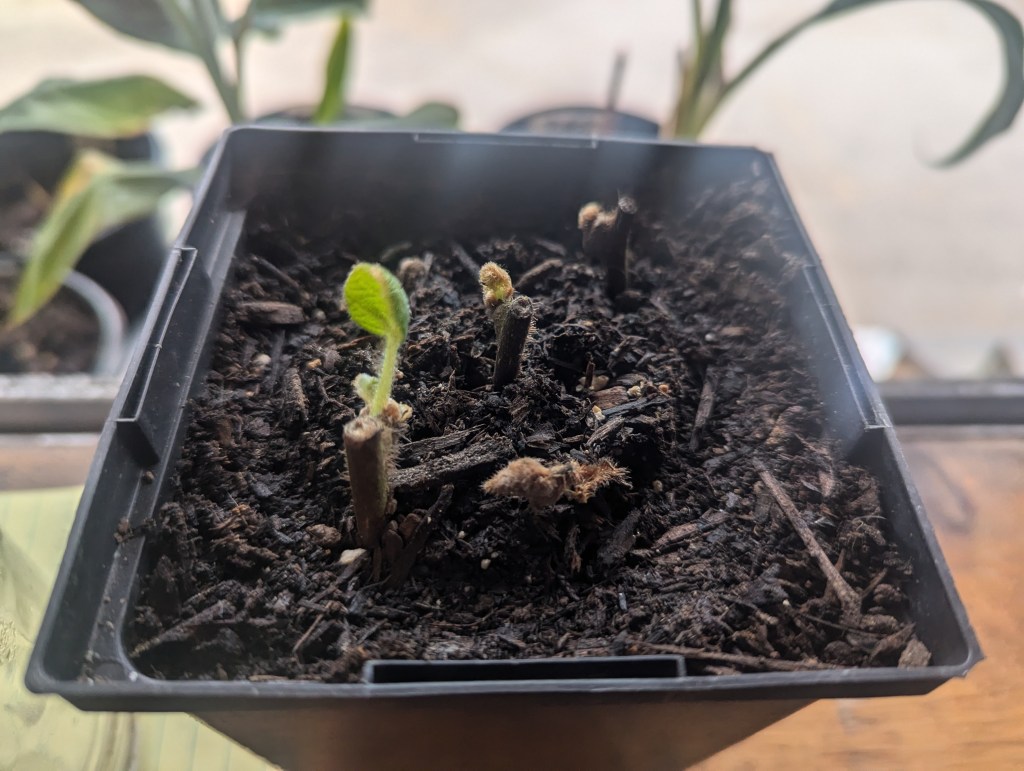
3. Musa ingens, oem or giant highland banana produced a pup that grew big enough for separation. A smaller secondary pup remains attached as a potential replacement for the primary trunk when it finishes, but additional pups will likely develop through summer.
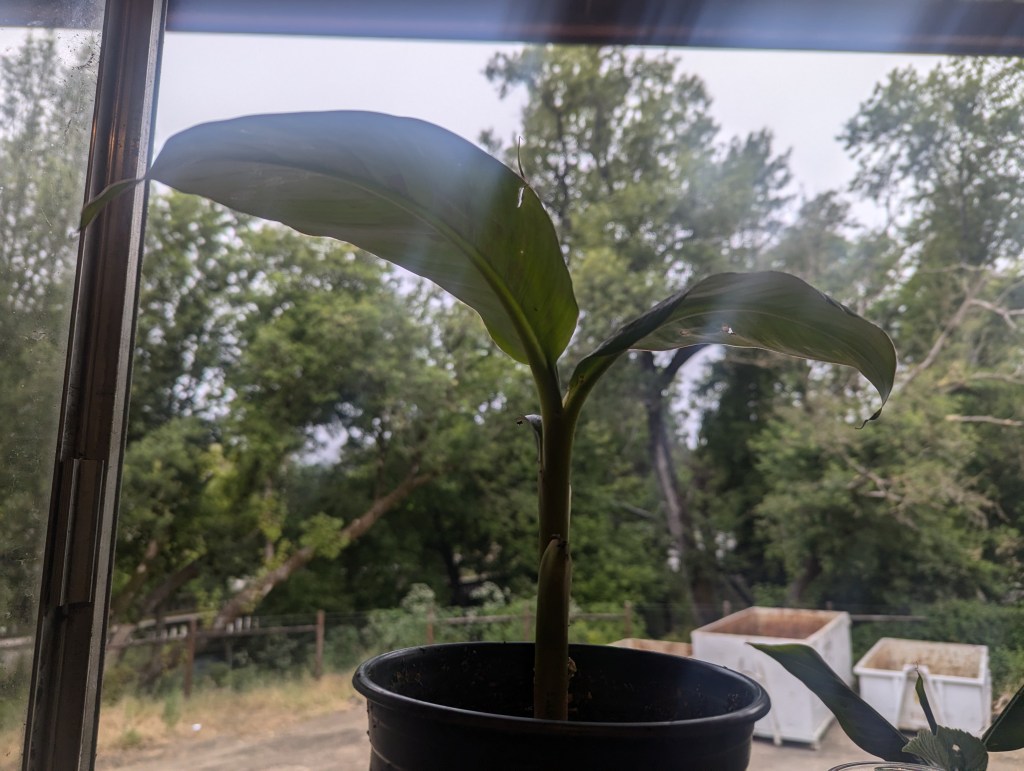
4. Musa itinerans var. xishuangbannaensis ‘Mekong giant’ banana also produced a pup. It is still dinky and now seems to be blinding out without a new leaf within its latest leaf. Another pup is only beginning to appear. I hope that more pups will eventually develop.
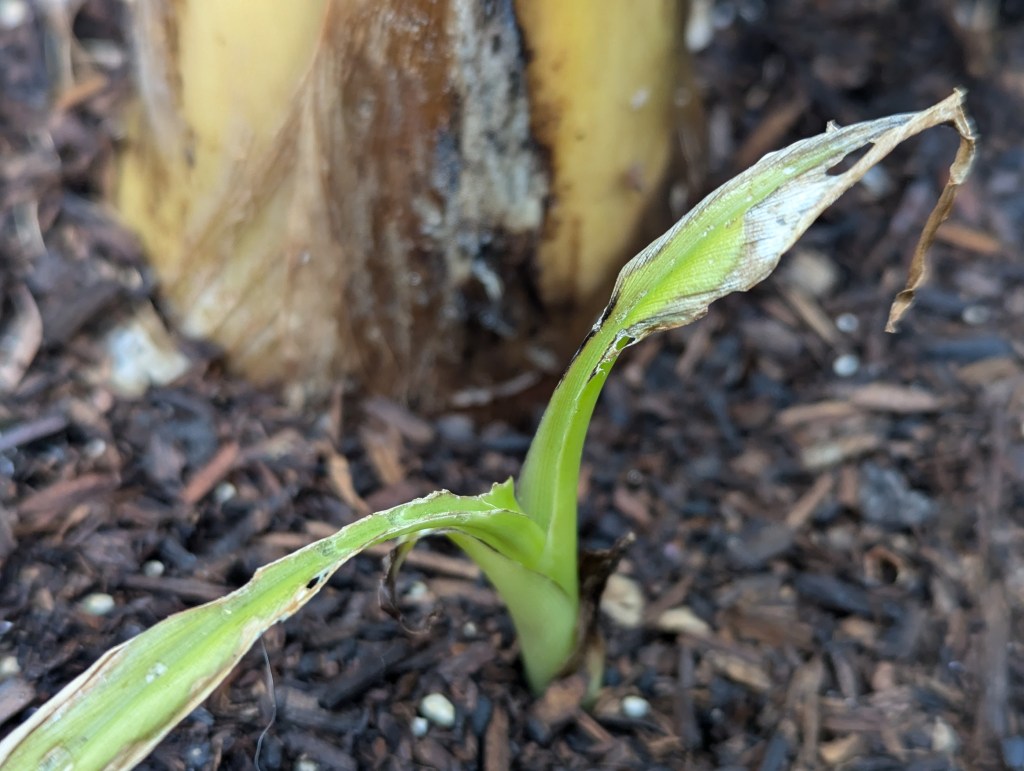
5. Musa, banana of an unidentified species and cultivar is recovering slowly from winter. It was here through last summer, so, unless it is a dwarf, it should be bigger by now. The shabbier specimen to its far left is Musa X balbisiana ‘Blue Java’ or ‘Ice Cream’ banana.

6. Rhody is who everyone who reads my Six on Saturday really wants to see. I have been negligent in posting pictures of him. He is not exactly easy to get a good picture of. Even this picture should have been centered better. Obviously, he knows his fans do not mind.

This is the link for Six on Saturday, for anyone else who would like to participate: https://thepropagatorblog.wordpress.com/2017/09/18/six-on-saturday-a-participant-guide/
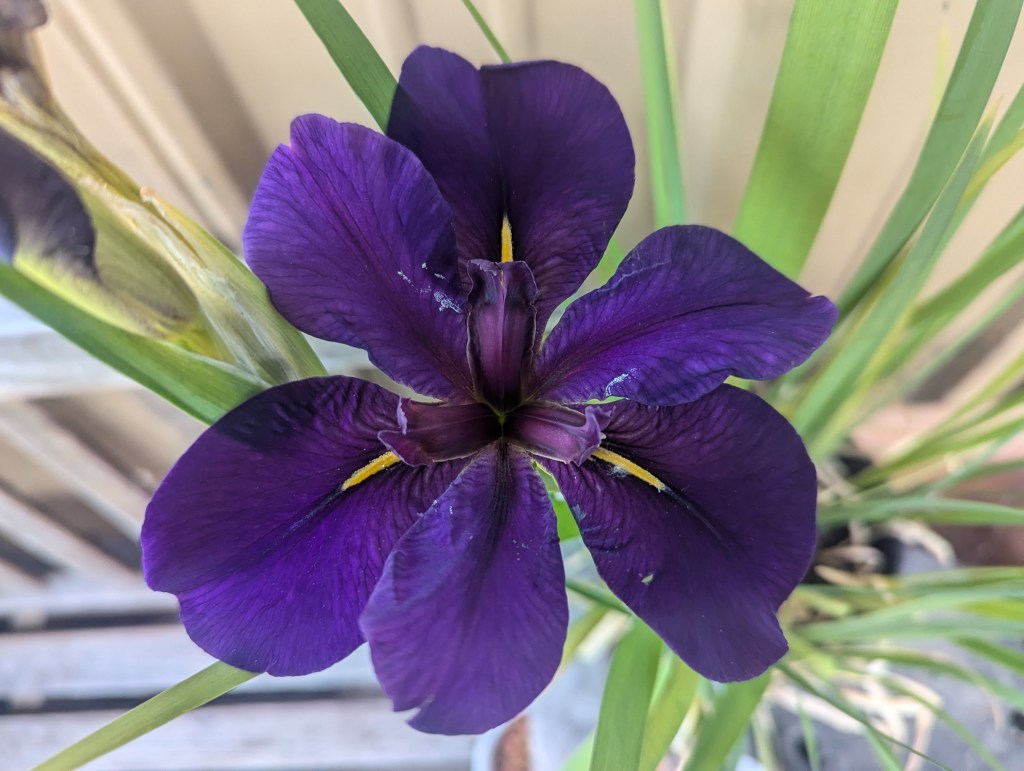
Finally, after two years, ‘Black Gamecock’ Louisiana iris from Tangly Cottage Gardening are blooming! At the end of winter of 2023, I divided a significant clump of them into enough pups for a thirty foot long row on the edge of the irrigation pond. They grew through summer, and should have bloomed for the following spring. Instead, a gopher ate all but a few pups. At the end of winter of 2024, I divided another clump into enough pups for a twenty foot long row in the same location, but closer to the water. Again, they grew through summer, and should have bloomed this spring, but instead, all but a few were eaten by a gopher. These that are now blooming are the survivors from the original batch, which were canned for their safety. They are blooming late, probably because they would rather be in the ground than canned. I will divide these into more cans now so they can proliferate and be divided again later, until there are twice as many as necessary for the edge of the pond. Then, I will plug some at the edge of the pond, into saturated soil that gophers can not dig under.

This is an intentional attempt to eschew the most obvious options.
1. Tanacetum parthenium ‘Aureum’, golden feverfew is the only of these six that I know the cultivar of, but only because it is the only cultivar that I am aware of with such sickly chartreuse foliar color that passes for golden. Its little daisy flowers are splendid though.

2. Dianthus caryophyllus, mini carnation is one of those cool season annuals that never gets removed at the end of its season. It neither flourishes nor dies, so has been here for several years. It will probably die back partially now that the weather is getting warmer.

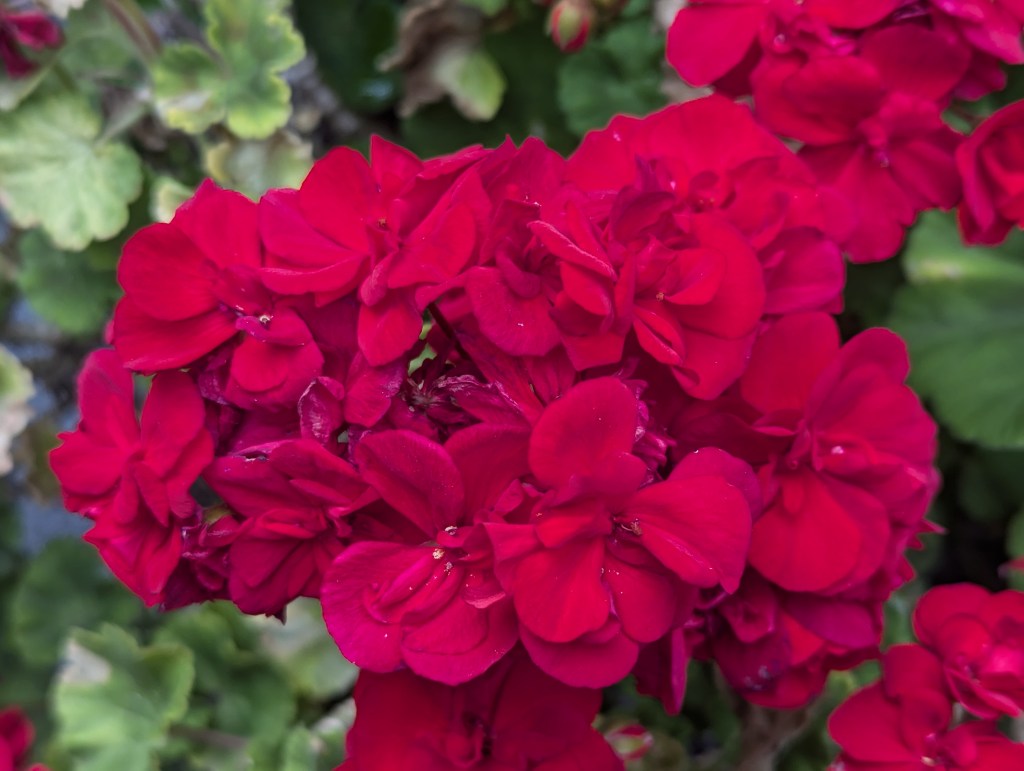
3. Pelargonium X hortorum, zonal geranium may seem to be cheap and common, but it has been very reliable. Besides, I happen to be fond of them. They were some of the first perennials that I grew during my childhood. This and others like it are modern cultivars.
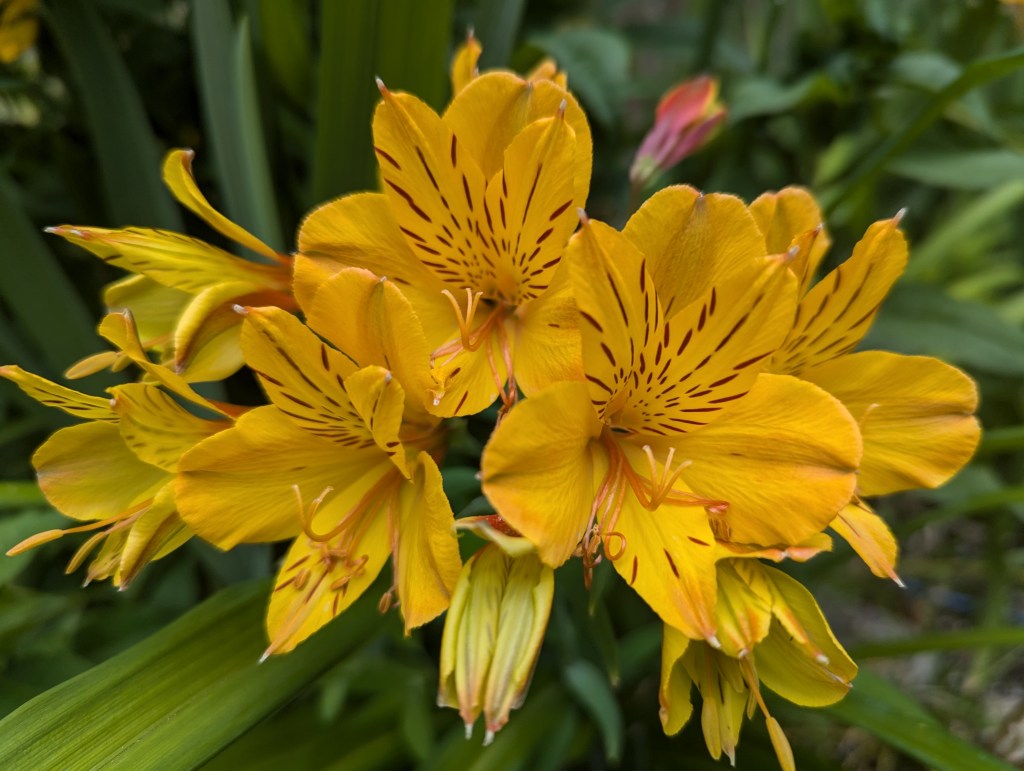
4. Alstroemeria spp., Peruvian lily was the first large scale cut flower crop that I worked with during the summer of 1986, while I was studying horticulture at Cal Poly, San Luis Obispo. This and a few cultivars at work seem to be as old fashioned as those from 1986.
5. Lilium auratum, Asiatic lily was a gift from a neighbor while its bulbs were dormant a few winters ago. It was not expected to perform as well as it has. Not only has it become reliably perennial, but it has multiplied so much that I must eventually dig and divide it.

6. Cornus florida, flowering dogwood is the last dogwood to bloom so late. This could be because of distress associated with its relocation last winter. I do not remember when it bloomed last year, or if it should bloom as late next year. I suppose that we will see then.

This is the link for Six on Saturday, for anyone else who would like to participate: https://thepropagatorblog.wordpress.com/2017/09/18/six-on-saturday-a-participant-guide/

What makes this particular white bearded iris so special? Well, all three of the bearded iris that bloom white in my gardens are special. Each arrived with history, from other important gardens. I am impressed with this one now because it is so white. I did not know what color it was when I acquired it from its garden in Monterey so many years ago. I just wanted a souvenir from that particular garden after the owner passed away, so grabbed a bit of it during the estate liquidation. It bloomed for its first season, but was a dingy grayish white. I thought it might get whiter for its second season, but continued to bloom annually with the same unimpressive color. I could not eliminate it from my collection because of its historical significance. Because it is so uninteresting, I had not shared it or, until recently, tried growing it anywhere else. Then, because bearded iris grow and proliferate as they do, I brought a small bit of it to the Iris Bed at work, where I got this picture of it. I can not explain why it is so much whiter than it had been, but I am impressed.

 Tony Tomeo