What Is Killing The Box Elders?

P71004Remember our concern about the mistletoe? (https://wordpress.com/view/tonytomeo.wordpress.com) You might think that everyone would be pleased to see it gone. Yet, there is the concern that whatever killed the mistletoe might kill something else. That is what happened when the SODS killed so many coast live oaks after being ignored for a long time in the tan oaks. We were aware that the tan oaks were dying, but because the trees were so unpopular, we were not too concerned about it.

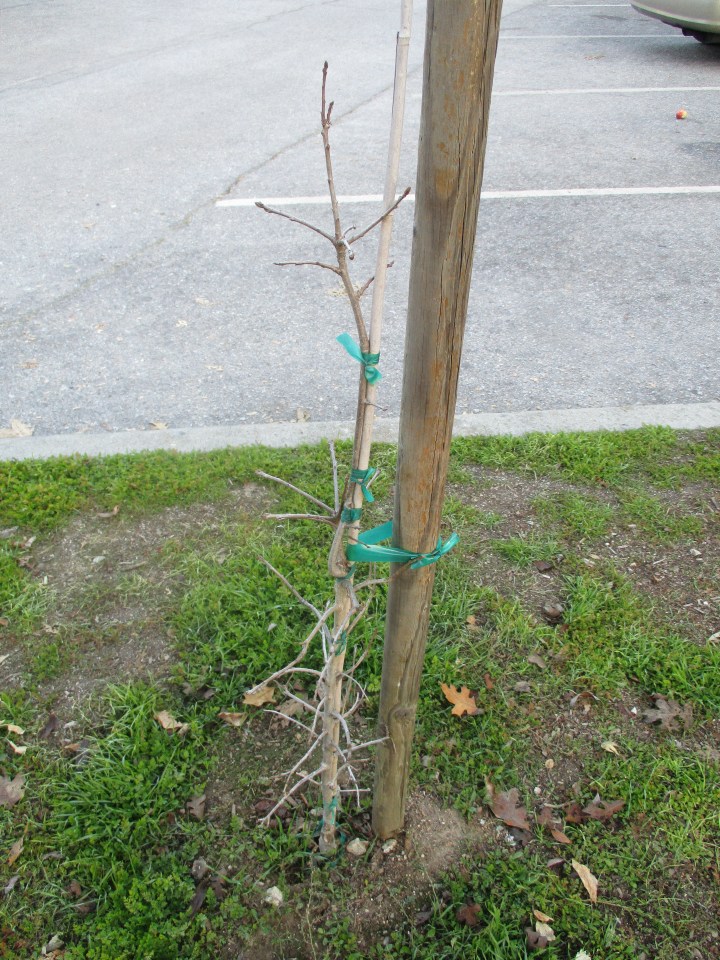
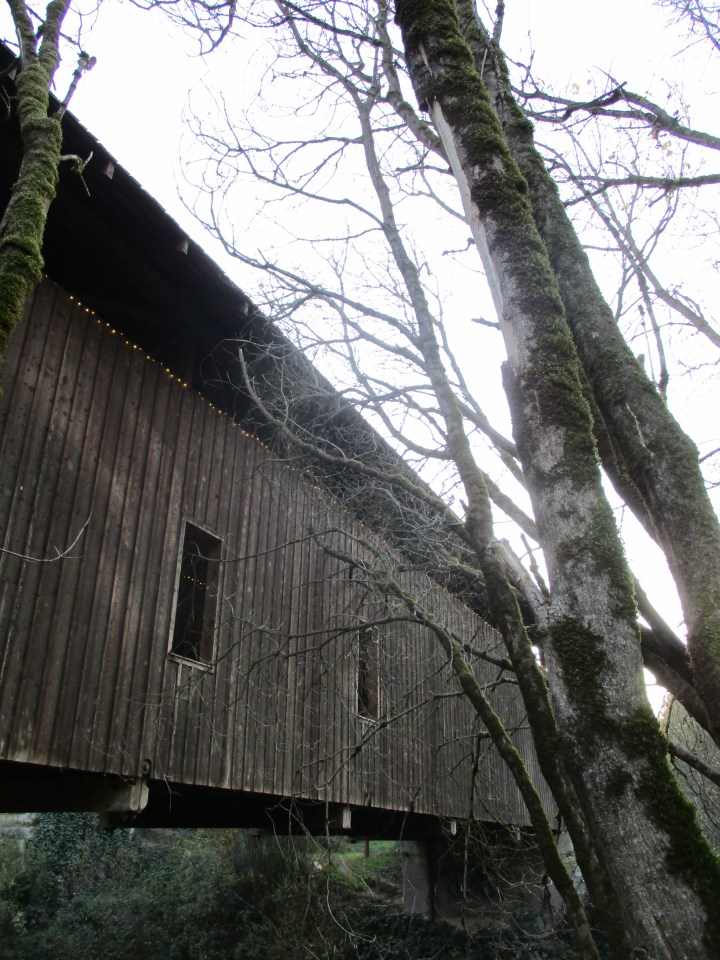
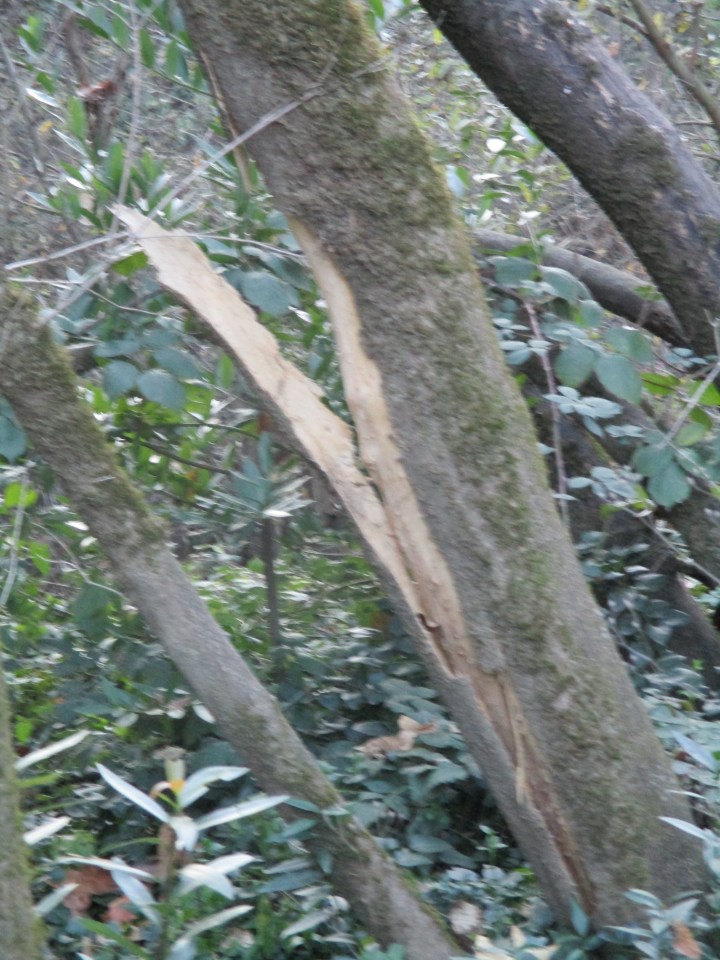
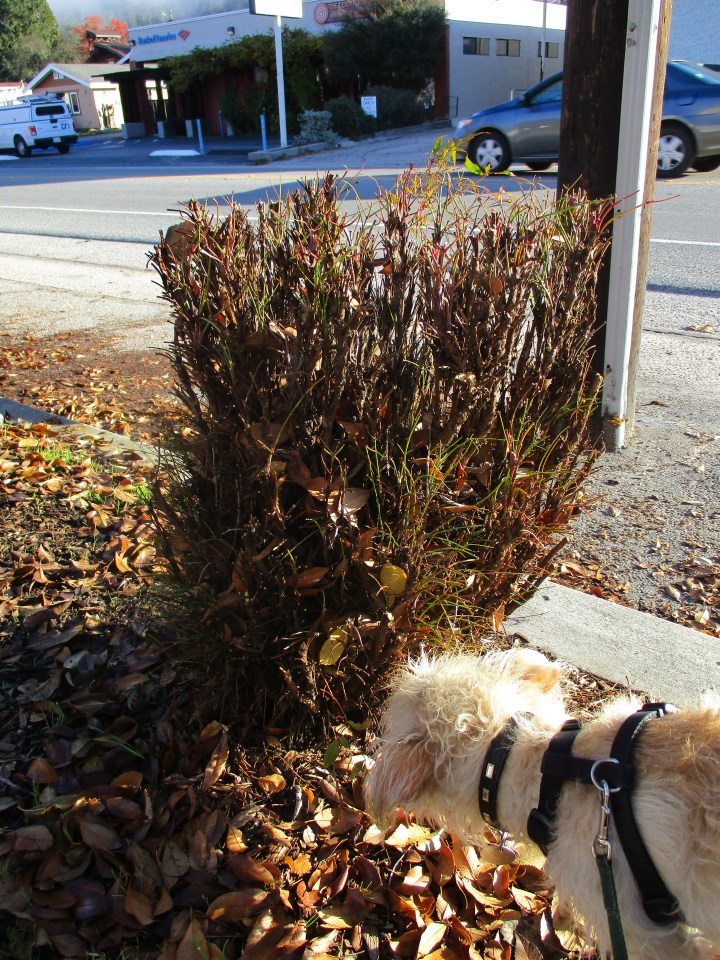
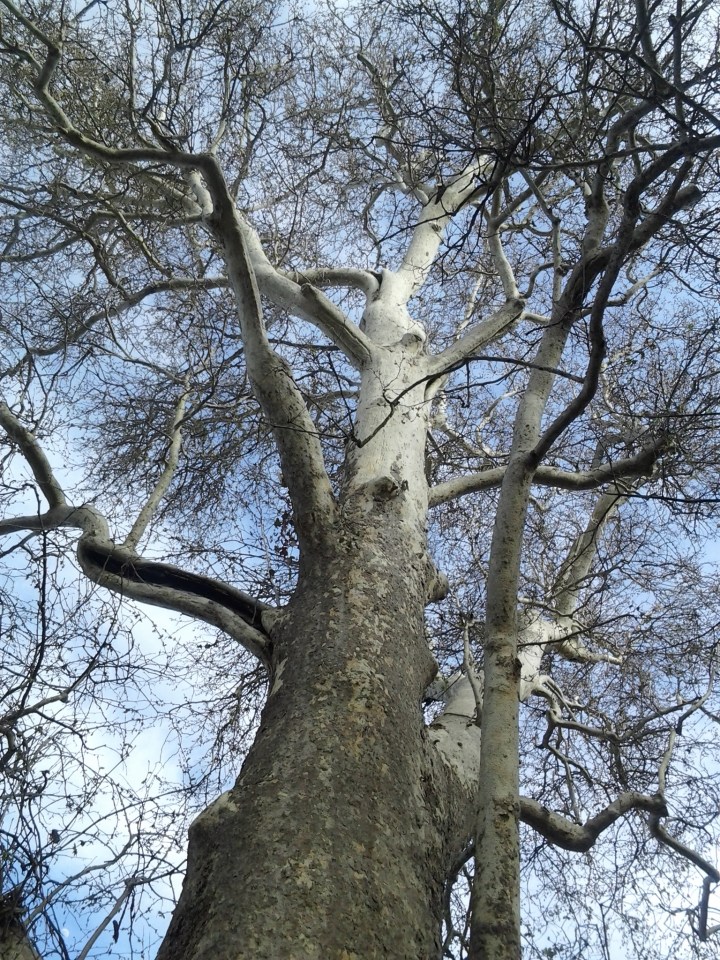
Now the box elders are dying around Felton. It is hard to say how widespread the problem is because it has not been investigated yet. Like tan oaks and mistletoe, the native box elders are not exactly popular trees. They do not even make good firewood. We only use them as firewood to get rid of them. However, when so many are die, it leaves big holes in the forest canopy. This is not really a problem, since the forest will have no problem filling the holes in, but it certainly gets our attention. Will the disease or insect pathogen that killed the box elders kill something else next?

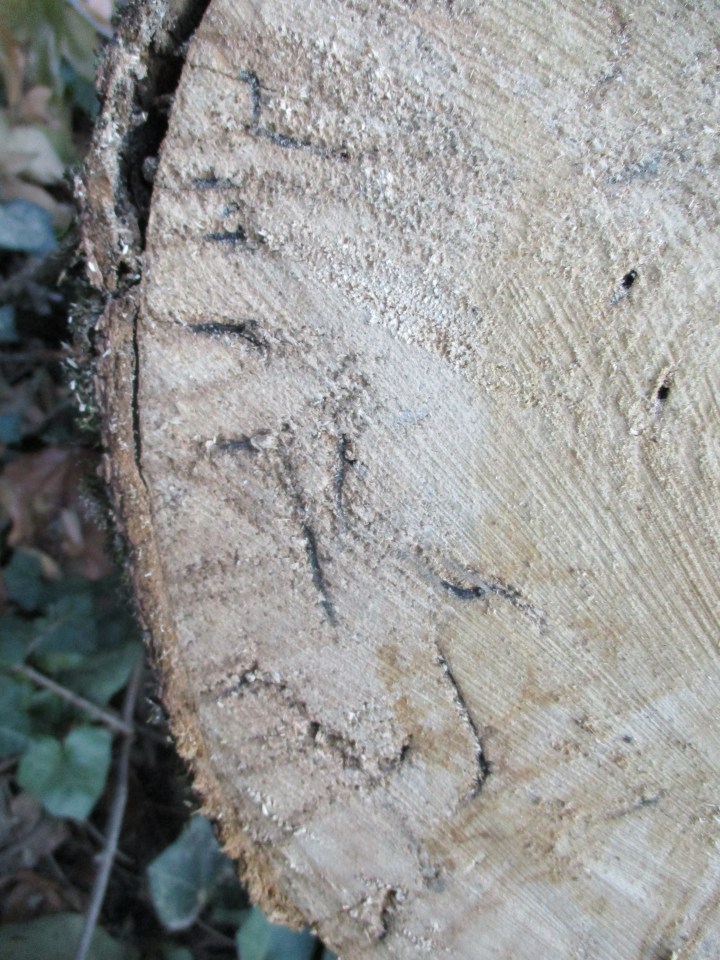
The trees seemed healthy as they defoliated last autumn. They were bare through winter when the San Lorenzo River came up higher than it had since 1982. A few box elders got taken away by the River, along with all sorts of other riparian trees from the flood zone, but that is to be expected. Then, after the River receded, many box elders that were in the flood zone did not foliate in the spring. A few foliated, only to have their new foliage shrivel and die shortly afterward. Some of the dead trees became infested with boring beetles. All of the dead trees deteriorated rapidly through summer, and some have dropped big limbs or fallen over.

What is happening with the box elders could be completely normal, and caused by an endemic pathogen; but it makes one wonder. There are so many new insects and diseases being brought in with plants arriving from all over the world, without any regulations to limit the spread of such insects and diseases.P71004+

War Of The Worlds

P71003To a little kid, it really had the potential to be a scary movie. I did not understand all of it, but I got the important parts. Mars was red, so was probably near Oklahoma. Apparently, the people from Mars had big scary machines that destroyed anything and anyone that was in their way. I did not perceive much of a threat because my parents let me watch the movie. (We children could not watch really scary movies.)

Shortly after watching War of the Worlds, I went for a long walk with my older sister and some of her friends into the last remnant or orchard that was such a prominent part of our world. We went out onto a new section of roadway beyond where our street used to end, and turned east on a completely new street that was not there before. The fresh new pavement and neat curbs seemed so flat and desolate . . . and expansive compared to the orchard that it now divided. I wondered how the trees got out of the way of this thing. Obviously, some moved to the left, and others moved to the right.

We eventually arrived at a larger clearing off to the left of this new street. Within this clearing, there were huge concrete rectangles with short pieces of rebar sticking up from their perimeters. One of the concrete rectangles lacked rebar, but was outfitted with four tall poles that curved on top. They looked something like those scary weapons on top of those machines that came from Mars. My sister confirmed my suspicions by explaining that the big concrete rectangles where where the flying machines landed when they arrived. Now I was getting a bit scared.

A few days later, we started to hear strange noises coming from the orchard. I was not allowed to go that far into the orchard without my sister, and was too afraid to go investigate anyway. The noises were mechanical and metallic, mixed with the sound of what seemed to be a big diesel engine and wood breaking. I dismissed them as not ‘too’ terribly threatening at first; but by the next day, they were closer! Each day, they got closer, until I could actually see motion through the trees. Something yellow was moving around in there, and small puffs of black smoke sometimes squirted out above the trees. I was terrified! I told my mother that the mean people from Mars were out there destroying everything like in the War of the Worlds!

She explained that there were no mean people from Mars in the orchard, but that a new park was being built on the site. Well that did not help much. What is this ‘park’? My mother explained that it would be a place where kids could play and run around and climb things and play games . . . and you know. Well duh, that is what the orchard is for. She said that it would be better. I wondered what could possibly be better than the orchard. This is something that I need to see!

Well, for the next two days or so, as they tore out the last two rows or so of trees, it became apparent that they yellow machines from Mars that spurted out black smoke were bulldozers gouging the trees right out of the ground. No one even bothered to cut up the firewood to leave on the side of the road like was typically done. The trees were unceremoniously piled up and burned. I was no longer terrified. I was saddened and confused. I could not understand why anyone would want to do this to the most important part of our world.

The big concrete rectangles with rebar protrusions were not landing pads for the flaying machines from Mars. They were the foundations and floors of the Recreation Center for the new park. The concrete rectangles with the four curved poles that seemed to be an assembly site for the weaponry from Mars simply became two basketball courts. The curved poles were outfitted with backboards and hoops. The orchard, devoid of trees, was leveled in most areas and mounded in others, and mostly covered with a vast lawn. New trees were planted around the perimeter and within landscaped areas around the Recreation Center. I suppose as far as parks go, it was a nice one.

The only problem with it was that we did not know what to do with it. The new trees were too small to climb or hide behind or really to do anything with. The lawn was nice, but there was way too much of it. The Recreation Center was nice inside, but we wanted to be outside. Eventually, we learned how to enjoy our park, and it really was nice; although it will never be an adequate substitute for an orchard. Our suburban (or some might say ‘rural’) world was invaded and, unlike in the movie, conquered by a more urban culture.

I would not say that one culture is any better than the other. However, I will say that I believe that there was a certain advantage to knowing the orchard and some of the nearby undeveloped wildlands the way that we did. I really believe that it was more educational than the refined and synthetic landscape of the new park. The maintenance of the park certainly required some degree of horticulture. There are trees, lawn and all sorts of shrubbery and perennials. The orchard had only trees and mustard. We interacted with it differently somehow. This is something that I can not explain adequately. It can only be experienced.

Blue Ribbon

P71001Somewhere in the San Lorenzo Valley, there is a little old lady who is stitching a blue quilt. It is made of all the blue ribbons that she wins every year at the Jelly and Jam Contest of the Santa Cruz Mountains Harvest Festival. I do not know who she is, but I recognize her squiggly writing on the fancy labels. It is barely legible. Her hands are worn and tired from three quarters of a century off picking fruit, processing it into jelly and jam, and then stitching all her blue ribbons together. She probably giggles as she works, and thinks about everyone who wins only red or white ribbons.

Three years ago, I submitted my blue elderberry jelly and ‘Shiro’ white plum jam into the contest. They both won! Blue elderberry won second place. White plum won third. Two years ago, the blue elderberry jelly won second place again, although the white plum jam did not win anything.

Last year, I submitted the maximum of five jellies and jams. I was determined to get my blue ribbon! In conjunction to blue elderberry jelly and white plum jam, I also submitted peach jam, blackberry jelly and Santa Catalina Island cherry jelly. However, the Jelly and Jam Contest was not publicized like it should have been. Very few people were aware of it. Consequently, there was only ONE other entry! It was a sloppy and seedy strawberry and kiwi jam made from fruit that was not likely home grown. I knew I would finally win my blue ribbon, and probably red and white too! Technically, it was not cheating. It was just the way things worked out.

It was no surprise that the blackberry jelly won third place. It was a bit of surprise that the blue elderberry won second place, even though it had done so twice before. I was hoping that it would be the blue ribbon winner. That was not a problem. I was sure it won second place only because one of the other three had won first place. I stepped off the grandstand after claiming each of the two ribbons, but thought about just staying there for the third. I did the tactful thing and walked off stage.

Finally, the first place winner of the blue ribbon in the Jelly and Jam Contest was to be announced. I was halfway into my first step back to the grandstand when I heard “STRAWBERRY AND KIWI JAM”! What?! How was this possible? What was she putting in that jam?! The winner was not present to claim her ribbon, but she won nonetheless. I imagined her watching with a telescope from the window of her secret hideout in the mountains above town, and laughing maniacally.

Well, the Santa Cruz Mountains Harvest Festival was yesterday. For the Jelly and Jam Contest, I submitted only two entries; blue elderberry jelly and blackberry jelly. There were only four other entries; fig jam, peach jam, another blackberry jelly and the infamous strawberry and kiwi jam. I was pleased that my blackberry jelly won third place, and I still hoped for the blue elderberry jelly to win second or first. The peach jam won second. It was made by . . . WHO? MY MOTHER’S PEACH JAM WON SECOND PLACE?! This was intolerable! I ALWAYS win at least second place! What made it worse is that I lost to my MOTHER’S peach jam! Where did she learn how to make jam? . . . and from peaches from the tree that I grew? Before I could recover from this baffling revelation, the first place winner was announced; and it was again, the strawberry and kiwi jam.

Wow! I do not know what to think. I got to meet the lady who makes the strawberry and kiwi jam. She is not a little old lady who lives in a secret hideout. She is a pretty young lady, and she actually told me that she does not intend to compete next year, and told me that I should try her recipe. I thanked here but declined. I do not want to use store bought produce. Now the difficult part. I need to deliver the second place red ribbon to my mother who was not there to claim it.

Automotive Horticulture

P70929The nomenclature of horticulture, or the ‘naming’ of plants, is very similar to that of automobiles. All those confusing Latin names work just like the names of cars, with species, genus and even family. The Electra is made by Buick, which is a subsidiary of General Motors. I write an article about this every so often. It probably made more sense back many years ago, when both cars and plants were simpler.

Nowadays, it is difficult to distinguish between the different kinds of cars. There are so many different kinds, and they all look so similar. Buicks are not nearly as stylish and distinctive as they once were, and do not look much better than a well outfitted Honda! Cadillac and Lincoln make station wagons, which are now known as SUVs; and they even made pickups! Many cars have one name on the outside, and another, or a few on the inside. A Chrysler might be made by Mercedes Benz, with a Japanese engine! Many cars that had been ‘imports’ are make locally. There are so many different models that some do not even get names. They just get numbers. What is the point of trying to keep track of them all?

Plants have done the same. So many of the reliable and standard specie that had been around until the 80s have been replaced by too many modern cultivars and hybrids to count. Some have been hybridized so extensively between different specie of the same genus that they are not even assigned a specie name! They are merely known by their cultivar name. For example, Grevillea ‘Peaches and Cream’ lacks a species name because no one know who the parents were. (It might be a Grevillea banksii X Greillea bipinnatifida hybrid. See the article about it at https://tonytomeo.wordpress.com/2017/09/30/peaches-and-cream-grevillea/.) What is the point of using standardized nomenclature without the standards? This is not like Madonna or Cher, who do not need last names because they are so unique. Plants need their names more than before because there are so many new ones.

Cars have been improved in the most important ways. They are much safer than older cars. They are also much more efficient and remarkably more durable. The main problem with these improvements is that cars are so difficult to maintain for those who are not professional automotive technicians. Those of us who were inclined to maintain our own vehicles years ago must now take them to mechanics. Although vehicles are designed to need much less maintenance and to last longer, they eventually need to be replaced when maintenance is no longer practical. They are not as sustainable as old cars that can sometimes be repaired with part found in a common hardware store.

Plants have likewise been improved to do what we want them to do better. Foliage is better and more resilient, and in some cases, more colorful. Flowers are more abundant, more colorful, and last longer. Whatever plants were supposed to do before, many do better now. The main problem with all the breeding and hybridizing necessary for these unnatural improvements is that it interferes with what plants need to do naturally. Some are not able to produce viable seed, (although this is an advantage for potentially invasive plants). Others are genetically weak, and therefore more susceptible to disease and insect infestation. Perennials that once perpetuated themselves indefinitely now die out in only a few years. Plants that were once easy to propagate are now not so cooperative. Like modern cars, plants can not be maintained as long as they once were, so need to be replaced instead of sustained.

The Coffee Shoppe That Grows Its Own

P70928There are certain things that we expect to find in a coffee shoppe. Mainly, we expect to find . . . coffee. Yes, coffee, . . . duh. We can get all sorts of coffee beverages; hot, chilled, steamed, infused with things that have no business going into coffee. They have all sorts of cool sounding but strangely irrelevant Italian names that white people enjoy telling people of Italian descent how to pronounce. Yes, my name is Tony Tomeo; and I don’t want twenty cups of coffee with bread. Well, besides the coffee beverages, there are plenty of coffee beans; all sorts of roasts. I do not know of any coffee shoppe that grows any of the beans that it sells, but there is nice coffee shoppe in Felton, The Mountain Roasting Company, that grows coffee trees.

Yes, that is unique. I noticed a few years ago that besides the typical Ficus benjamina, there are three large coffee trees. They look similar to the Ficus benjamina, but are a bit less refined, and lack the braided trunks. They grow up to the ceiling before getting cut back to stumps to start the process all over again. The Ficus benjamina do not grow that well; but the coffee trees are happy enough to bloom there.

I have not asked how they get pollinated. I really do not know how coffee flowers get pollinated in the wild. Somehow, they make a few fruits, known as coffee cherries, with viable coffee beans inside. The seeds get collected, germinated, and potted for customers who have an appreciation for growing something unique. Small coffee trees can now be found in well outfitted nurseries, but it would be so much cooler to grow one that was grown at a local coffee shoppe.

I am embarrassed to say that I do not know how to grow coffee trees. I think of them as tropical plants, but I really do not know. Just because they are cultivated closer to the tropics does not mean that they originated there. I do believe that they are understory trees, that prefer to live in the partial shade of larger trees. Old text, as well as a few not so old gardening books from the 1960s, describe them as houseplants. There is not much mention of them after that. They only recently started appearing in nurseries. I like when old traditional plants make a comeback, particularly if it happens to be an alternative to a boringly common plant like Ficus benjamina.

ROCKS!

blog12This has very little to do with gardening; but like I said in the description of this blog, anything goes when it comes to the ‘Elaborations’ category. Anyway and furthermore, I do not like to write about garden sculpture, garden art, or any of those knick-knack fads that involve putting more than plants and the necessary infrastructure to sustain them into the garden. I do happen to like certain tasteful garden statuary, like Saint Francis, or Saint Fiacre (the rarely seen ‘real’ patron saint of gardening) or any of the saints; but only if I have a suitable space for them. This is nothing like that; but is just excellent enough that I wanted to mention it.

Painted rock are appearing everywhere! They are cute. They are weird. They just might cheer you up if you happen to find one. If you like, you can take them home to put in your garden for a while (if they seem to be intended for that. Please do not steal rocks from someone’s garden.). You might want to just put them somewhere else to make someone else a bit happier, or just make them . . . wonder who has time for this sort of thing. Heck, you might just want to leave them where they are.

Many rocks have directions to follow them online. You can post selfies with any rock you find. You might provide clues about where you put it for someone else to find. You might be able to see where particular rocks came from, or where they go to. Some end up far from home. If you like, you can paint your own rocks and add them to the mix. You just might see it online somewhere. You may only know that it brightened someone’s day, but never hear from it again.

There are very few common sense rules. Basic guidelines can be found at Facebook pages about art rocks in all sorts of communities. Two that I found are Santa Cruz County Rocks at https://www.facebook.com/groups/1354197601364064/?ref=bookmarks or Trona, Ca ROCKS! at https://www.facebook.com/search/top/?q=trona%2C%20ca%20rocks! (These are not actual links. You need to be logged into Facebook for them to work.)

Where Has All the Mistletoe Gone?

oklahoma

Locust and alder trees in my region are commonly infested with mistletoe. Some were severely infested. A few of the locust trees downtown were actually unsightly because they are so stressed and sparse from mistletoe infestation, and also because they were so full of big shaggy mistletoe bushes that obviously do not belong there. Now, viable mistletoe can not be found. Even the carcases of the big dead mistletoe bushes are hard to find. They seem to have died and deteriorated before anyone noticed. The formerly infested trees are noticeably healthier, and producing more healthy foliage than they normally do, partly hiding any remnants of dead mistletoe.

No one here seems to know what happened. Is this part of their natural life cycle? Is there something that sets them off to die all in the same season like some specie of bamboo do? Is there a disease or insect that we should know about? Is this isolated to our region, or is it happening elsewhere as well?

I know I should be pleased that the mistletoe is gone, even if it is only temporary. It is such a destructive parasitic weed! The concern is that we just do not know what happened.

Years ago, Phytophthora ramorum started killing tan oaks. At first, not many of us minded. After all, tan oaks are considered to be trashy trees that clutter otherwise pure redwood stands, or compete with more desirable oaks. Dead tan oaks were better than live ones, and only needed to be cut and split to be sold as seasoned firewood.

The following year, the same disease started to kill coast live oaks. Then we had a problem. Coast live oak is one of the two most majestic oaks in our region (and the most majestic in the Santa Cruz Mountains where the valley oak is uncommon). It took a long time to identify the disease because the ambrosia beetle, which is a secondary pathogen, was initially blamed for the widespread death, which became known as Sudden Oak Death Syndrome, or SODS. It took a few years for the worst of the SODS epidemic to subside, and it continues to kill oaks sporadically.

That is why it is hard to ignore what is happening with the mistletoe, even though we really should be pleased to see it go.

Felony Garden

blog11Brent and I met in college, when we were assigned to the same dorm room in Fremont Hall at Cal Poly in San Luis Obispo. Our similarities were remarkable. He came two hundred miles north from west of Los Angeles. I came two hundred miles south from west of San Jose. We were both the middle of three children, although I had just acquired an extra younger sister the year before. While the other boys we grew up with were playing with Hot Wheels, Brent and I were busy planting miniature trees around the miniature roadways. His childhood dog was Speckles. Mine was Freckles. We were weirdly similar prior to September of 1986, but have been perfecting our differences since then.

Brent is now a famous landscape designer in West Hollywood. He has landscaped some of the most prominent homes in the region, including the Osbourne Residence of formerly popular realty show, ‘the Osbournes’. Many of the streets of Los Angeles are now outfitted with street trees that Brent installed. He regularly installs mature plants and large boxed trees, without giving much thought about where they came from.

I just grow things. Back in the early 1990s, I grew citrus trees. By 1995, I was involved with the production of mostly rhododendrons, as well as azaleas, camellias, pieris, and a few other minor crops of similar cultural requirements. I provide the plant material for landscapers like Brent, but do not give much thought about what they do with it.

While we were in school, Brent and I would often see plants around town that we wanted to grow in our own gardens. Sometimes they were old fashioned plants that we could not find in nurseries. Sometimes they were plants from other regions that we did not have access too. Usually though, they were just plants that we wanted but could not afford as starving students.

Being the grower that I am, it was up to me to procure pieces or seeds of these desired plants to propagate. Sometimes, we got entire plants. I did all the work; but usually by the time the copies were produced, Brent would take them back to Los Angeles, where many died because he did not care for them properly. However, in the Miracle Mile neighborhood, there is still a coastal redwood that Brent and I procured on one of our adventures. It does not like the climate much there, but it is surviving.

Our techniques were not as bad as stealing the un-pink bearded iris. (see The Colors Of Karma, https://tonytomeo.wordpress.com/2017/09/12/the-colors-of-karma/.) We merely took pieces that no one would miss. We got several types of succulents and geraniums. (I had actually acquired my favorite geranium years before I ever met Brent, so I knew how easy they were.) We sometimes took plants from compost piles and trash bins, and plants that were to be discarded from a nursery where Brent worked. You can imagine my delight when San Jose started curbside greenwaste recycling! I got piles of bearded iris; and I did not care what color they were. I got yuccas, New Zealand flax, African iris, banana trees, cannas, calas, bergenias and really too many cool plants to list.

Well, as tradition dictates, Brent had to come up with something derogatory to say about my gardening style. After all, even though he benefited more from out techniques of acquiring plants, more of mine survived. His garden was lavishly landscaped with plants that he purchased from nurseries, while most of what he got from me got shaded out. My garden was meagerly landscaped almost exclusively with plants I had propagated and grown. Well, making the observation that very few plants in my garden were acquired ‘legally’, he named the main part off my garden the Felony Garden. Yes, and to the south of that was the White Supremacy Garden. (See White Supremacy, https://tonytomeo.wordpress.com/2017/09/21/white-supremacy/.) Out back, we kept the Fruits and Nuts. Oh, the joy of gardening!

The Physics Of Fruit

datsun_b210_1_76Sir Isaac Newton had something to say about an apple that was a victim of gravity. My high school physics professor was even better. He taught us all about velocity, force, inertia, vectors and much of what he had to teach us about physics with the help of a very ripe persimmon . . . and an insipid green 1976 Datsun B210.

I was reminded about these lessons a few years ago while Brent and I were in his old neighborhood in Los Angles. He pointed out an old burnt-orange Caprice that was in remarkably good condition. It had less than the typical wear and tear for a car that was nearly as old as we were. Brent pointed out a nearly imperceptible but specific dent in the driver side tail flank, and explained that it was made by a hard under-ripe peach. I did not need to ask how a green peach had attained sufficient force to cause such damage. I grew up in the Santa Clara Valley, where we all know the joy of attacking cars with fruit.

Most of our ammunition was apricots in various stages of ripeness. While in season, the orchard provided an unlimited supply. While they were out of season, we took what we could get from other fruit trees. Winter was meager; but just before 1977 became 1978, we discovered the gloriously humongous and squishy fruit of the ‘Hachiya’ persimmon tree in a neighbor’s front yard. Each fruit had the destructive force of a large ‘Marsh’ grapefruit, but with a squish factor of tapioca pudding! We had never seen anything like it!

Our first victims probably did not know what hit them. They probably heard the mild thuds on their cars, and drove home believing that they had been hit with the typical and mess-less lemons or oranges that are available in winter. Only after parking their shiny cars and getting out did they witness the horror or ‘Hachiya’ persimmon! Perhaps that is how ‘Hachiya’ got its name. It sounds Japanese for something someone would say in response to such a hideous mess. “Hachiya! What happened to my Mitsubishi?!” I do not know if Mitsubishi was around back then. Most of our targets were big American cars.

Then one day, we got a more challenging and more appropriately Japanese victim; a bland green Datsun B210. It was a smaller and speedier target than what we were accustomed to. Our small herd of neighborhood boys ran out to greet it; but then something unexpected happened. The car stopped. The red-headed leprechaun driving it saw us coming and just stopped there before the first persimmon took flight.

We were baffled. The other boys dropped their fruit and ran. I was too annoyed. I did not want to waste the big fruit that the persimmon tree had put so much work into. So, . . . I threw it. It made first contact on the right side of the windshield, and slid its sloppy ripe goo over most of the windshield to the driver’s side. Yes, it was glorious!

I stood there briefly in awe before I realized that the driver of the car was just glaring back at me . . . with the LOOK! Yes, it was the look; the look that said, “If I did not have these short leprechaun legs, I would run after you and beat you into the mud!”. Then I ran off to join the other boys, believing that was the end of it. I occasionally saw the Datusn around the neighborhood afterward, but did not think much of it, unless the leprechaun driving it happened to glare menacingly back at me.

We started high school a few years later. Part way through the first day, I got to my physics class just before the teacher arrived. I was already seated when he walked in, and glared right at me. Yes, it was HIM; the leprechaun! For the first time ever, I saw him smile. He did not have long fangs dripping with blood, but he was terrifying nonetheless. This was going to be a long nine months!

It wasn’t that bad. In fact, the leprechaun was one of many excellent professors at my high school. We all liked him. He did have an odd way with word problems though; you know, those situations involving ‘object A’ and ‘object B’. We had word problems like, “If object ‘persimmon’ weighs .75 pounds and is traveling east at 25 mph, and object ‘Datsun’ weighs 2,000 pounds and is traveling southwest at 25 mph, how much force will object ‘persimmon’ exert against object ‘Datsun’ when they collide?”.

White Supremacy

winchesterMany people have a favorite color. I learned how seriously some people can take their preference for a particular color when I was in high school, and taking care of the yardwork for a few homes in the neighborhood. There were three tract homes next to each other. One was grayish blue, with a silvery blue Sedan deVille in the garage, and a garden of blue flowers. The middle house next door was soft amber yellow, with a buttery yellow Oldsmobile 98 in the garage, and a garden of exclusively yellow flowers. The house next door to that was iron oxide red, with an exquisite rich red Electra in the garage, and a garden of, you guessed it, red flowers.

The blue garden was the most challenging because true blue is not easy to find, and the big hydrangea kept trying to bloom pink in the slightly alkaline soil. Yellow was the easiest. There is no such thing as too many marigolds; and I really like nasturtiums! Red was my favorite because it included a few white flowers to contrast with the rich dark shades of red. Between the dark green juniper hedge and the deep red petunias, I grew a row of white petunias. A few white pansies got mixed with two shades of red pansies. I grew my first white geranium there, with several shades of pink and red. I really liked the white flowers.

Then I went to school with Brent. He was from a neighborhood with a purple Bonneville and an orange Caprice with a small dent in the driver side tail flank (which I can explain in another essay). Brent loves color! To him, white is only good for brightening dark areas or highlighting other colors. I can not argue with him. He is a landscape designer. I am primarily a grower. He knows a lot more about color than I do.

Well, by the 1990s, while I was growing citrus trees (which, incidentally bloom primarily white), ‘white gardens’ became a fad. How annoying! I always liked white; but loathed fads! I had this thing down long before it became a quaint coffee table book! It was mine! Brent thought that it was funny, especially since my garden had very little white in it. I would not give up my brightly colored nasturtiums and geraniums that I had taken with me to every home I lived in since childhood. I grew sunflowers, and yellow and orange gladiolus in front because they looked so good on my old apartment building. Too much white just would not have been right.

Eventually, I moved my blue lily-of-the-Nile and roses from a side yard that was not visible from out front, and planted only white flowers around a big white oleander tree. I had callas, daisies, iris, dahlias and white lily-of-the-Nile. There was not a lot of bloom at any one time, but there was enough for me to brag to Brent about. I had such attitude about it that Brent said it was more than a mere ‘white garden’. He said it was my ‘White Supremacy Garden’! Oh my! Take a look at the picture above. That is Brent and me back in the early 1990s. I am on the right. When we were in school, Brent would sometimes get marked absent at our night classes.